What Ohio Gardeners Can Save Before The First Frost (And What Isn’t Worth The Trouble)
It’s late October in central Ohio, and the weather app just flashed a frost warning for tonight without much advance notice.
A gardener stands on the back steps with a shovel in one hand and a flashlight in the other, looking out at a yard full of dahlias, cannas, impatiens, and a basil plant that still smells amazing.
The honest truth is that not everything out there is worth rescuing tonight. Knowing the difference saves hours of work and a garage full of mushy, moldy disappointment come spring.
Most gardeners just grab everything in a panic, hauling in whatever fits before the frost hits.
That instinct wastes effort on plants that were never going to survive the winter anyway, while sometimes missing the ones actually worth the trouble.
Here’s a practical look at which plants pay you back for the effort and which ones are cheaper and easier to simply replace next spring.
1. Dahlia Tubers Are Worth Digging Up
If there is one plant worth grabbing a shovel for tonight, it’s the dahlia sitting proudly at the back of the bed.
A single clump you dig this fall often multiplies into several plants by next summer, which means free flowers instead of another trip to the garden center.
OSU Extension guidance suggests waiting until frost blackens the foliage before lifting tubers. That cold snap signals the plant to finish storing energy underground, so patience actually works in your favor here.
Cut the stems back to about four to six inches, then loosen the soil about a foot out from the stem so you don’t slice through the tuber clump by accident.
Lift the whole mass gently and shake off loose dirt as you go.
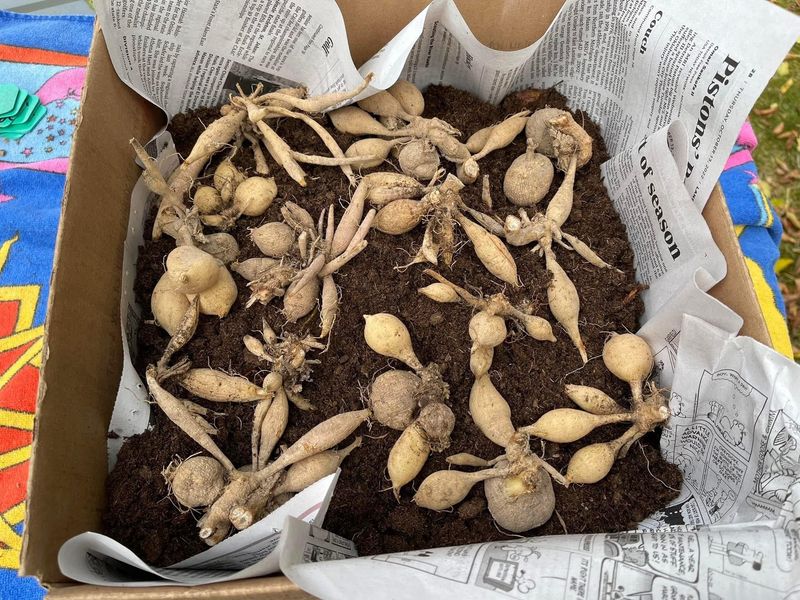
Let the clumps air-dry in a shady, protected spot for a few days so the skins firm up properly. Then pack them in a box or crate with peat moss, vermiculite, or slightly dampened wood shavings.
Storage temperature matters more than anything else here. Aim for a spot that stays around 40 to 50 degrees, like an unheated basement corner or an insulated garage that never freezes.
Check the box once a month through winter without fail. Toss anything soft or moldy, and mist the packing material lightly if tubers start shriveling too much.
2. Canna Rhizomes Store Well Through Winter
Cannas are the forgiving cousins in this group, honestly. Their thick, chunky rhizomes handle handling, drying, and storage with far less fuss than most tender bulbs.
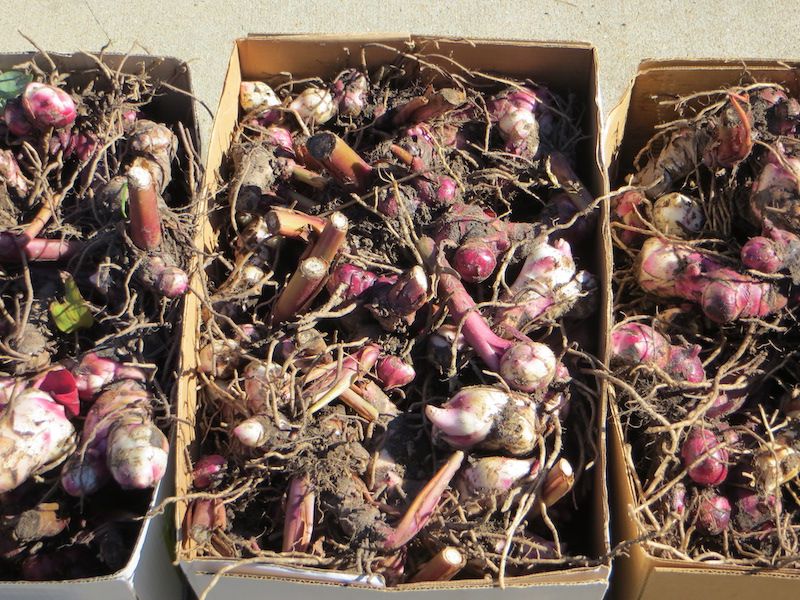
Wait for frost to knock down the big tropical leaves, then cut the stalks back to roughly four to six inches above the ground. Dig a wide circle around each clump, since canna rhizomes spread sideways more than you’d expect.
Knock off the excess soil, but there’s no need to scrub them clean. A thin coating of dry dirt actually helps protect the skin during storage over winter.
Give them several days to cure in a dry, frost-free spot with decent air movement. Once the cut ends feel dry to the touch, nestle the rhizomes in peat moss, shredded paper, or wood shavings inside a ventilated box.
Your Ohio Garden Changes Every Week. Your Plan Should Too.
Gardening in Ohio changes quickly throughout the season. Every Friday you’ll receive a simple weekly plan showing exactly what to plant, prune, fertilize, harvest, and protect so you never miss the right timing.
A basement or crawl space holding around 45 to 50 degrees works nicely for this purpose. Avoid sealed plastic bins, because trapped moisture invites rot faster than cold does.
Here’s the fun part worth mentioning. One clump often doubles or triples in size over a single Ohio growing season. Come spring, you can divide the rhizomes, keep what you want, and hand the rest to neighbors.
3. Gladiolus Corms Reward A Little Effort
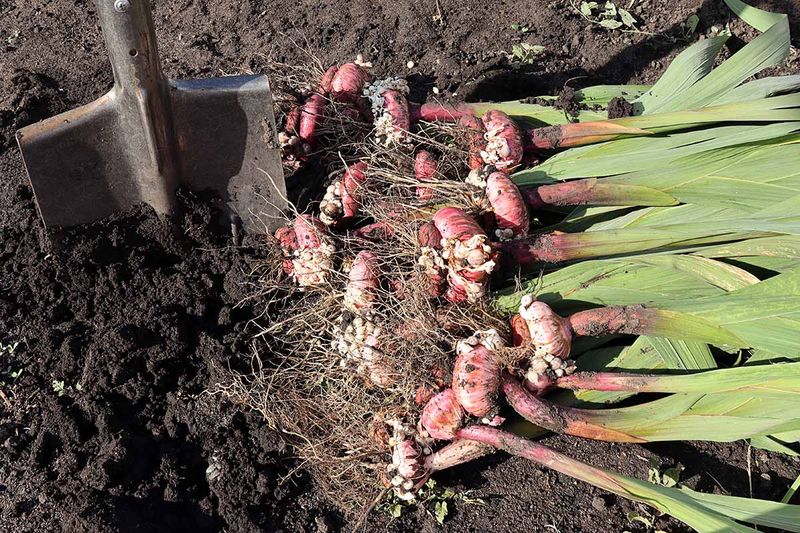
Timing separates gladiolus success from gladiolus mush, more than with almost any other bulb on this list. Unlike dahlias, glads shouldn’t wait around for a hard freeze.
Their corms do best when lifted while the foliage is still partly green or just starting to yellow, rather than after frost fully hits.
Most Ohio gardeners can start lifting roughly six to eight weeks after the flower spikes finish blooming. Extension guidance generally points to digging before heavy frost damages the corms.
Loosen the soil with a fork and pull up the whole plant. Trim the foliage down to about an inch above the corm and shake the soil free from the roots.
Curing is the step people skip, and it’s the one that matters most for long-term storage. Spread the corms in a single layer on screens or trays somewhere warm and airy for two to three weeks.
After curing, you’ll notice the old shriveled corm attached underneath the new one. Snap that spent piece off and discard it, along with any corms showing soft spots or dark scabby patches.
Store the cleaned corms in mesh bags, paper sacks, or old nylon stockings hung in a cool, dry place around 35 to 45 degrees. Good airflow keeps mold from spreading through the batch.
4. Caladiums Need Warmth To Survive Storage
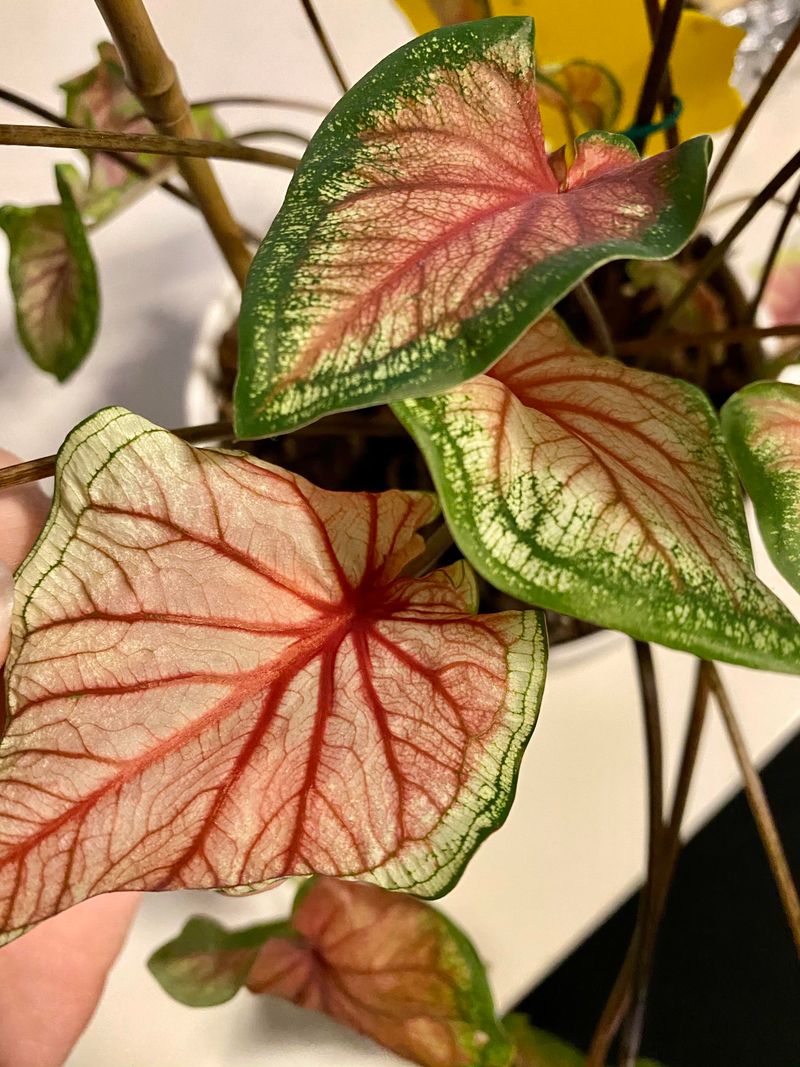
Caladiums break the rules that work for the rest of this list, worth noting up front. These tropical beauties come from truly warm climates, and cold storage will ruin them even if they look fine going into the box.
Don’t wait for frost with these particular tubers. Dig them once nighttime temperatures start dipping into the 50s, which in much of Ohio means sometime in September or early October.
Lift the tubers carefully with the leaves still attached, then set the whole thing somewhere dry and warm for a week or two. The dying foliage feeds energy back into the tuber as it withers naturally.
Once the leaves are papery, twist them off and brush away loose soil. Pack the tubers in dry peat moss, sphagnum, or vermiculite in an open container.
The critical difference here is temperature. Caladiums want storage around 60 to 70 degrees, warmer than dahlias, cannas, or glads, so a closet inside the house beats the basement or garage every time.
Chilled caladium tubers often rot or simply refuse to sprout, which frustrates a lot of gardeners who did everything else right. If your only cool-free space is questionable, buying fresh tubers in spring is a fair trade-off.
5. Impatiens Rarely Justify The Extra Work
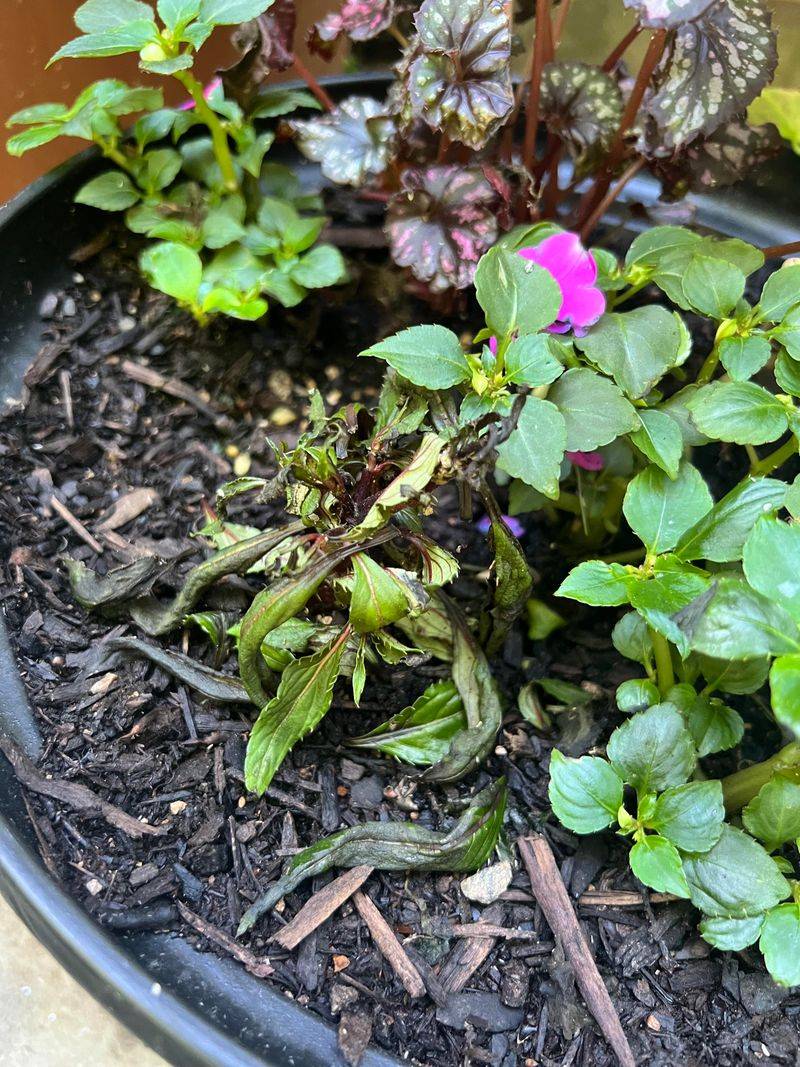
Plenty of gardeners have tried hauling a big impatiens plant indoors, and plenty have watched it drop every leaf by Thanksgiving without much warning.
Whole-plant rescue attempts with tender annuals usually end in a leggy, aphid-covered stem sitting sadly on a windowsill.
The math just doesn’t favor it here. Impatiens grow fast, cost very little as spring transplants, and reach full size within weeks of planting back outside.
Root disturbance hits them hard too. Digging up an established plant in October means shocking a root system that was never built to be moved, and indoor light levels in an Ohio winter are far weaker than what the plant is used to.
Spider mites and whiteflies love stressed indoor annuals like this. One infested impatiens can quietly spread pests to every houseplant in the room, turning a free plant into an expensive problem fast.
There’s also downy mildew to consider, a disease that has hammered garden impatiens in many regions recently. Bringing a possibly infected plant indoors isn’t doing next year’s garden any favors.
If you genuinely love a particular color, take a few stem cuttings instead of the whole plant. Impatiens root readily in water or moist potting mix, taking up almost no space at all.
6. Tender Herbs Do Better As Cuttings
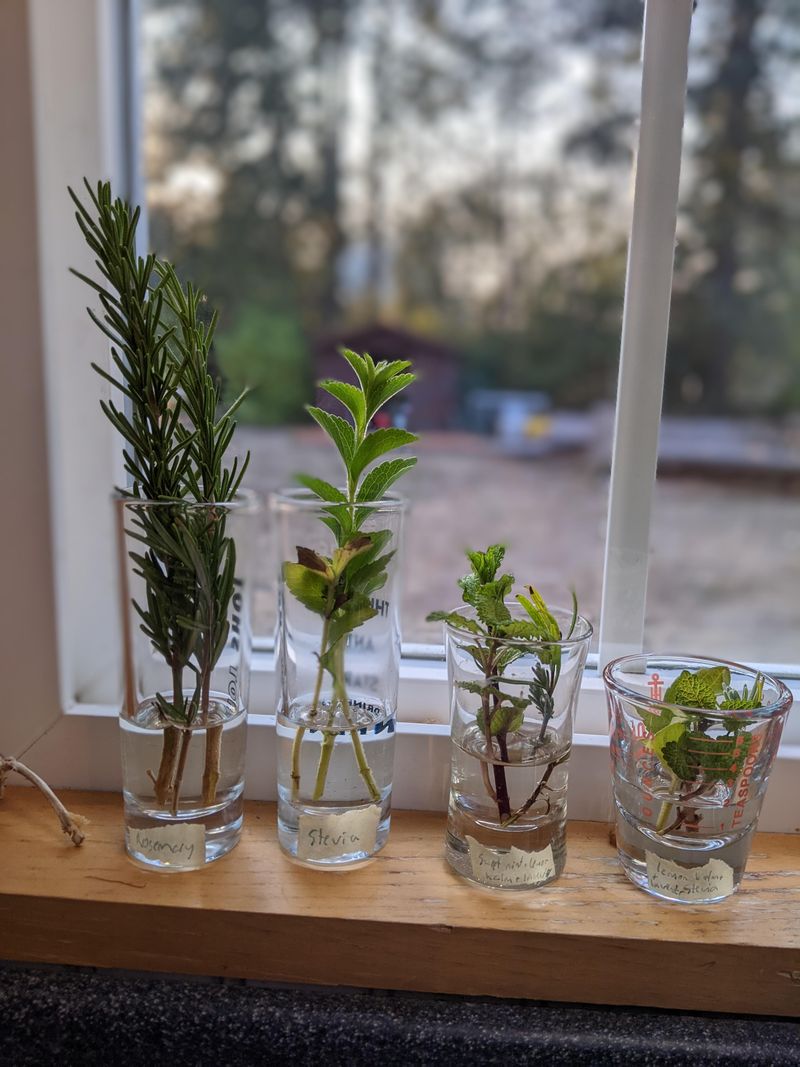
Basil lovers, listen up here. Dragging a full-grown basil plant inside almost never works, because by autumn that plant has flowered, gone woody, and used up most of its enthusiasm for growing.
Cuttings flip the situation around entirely. Snip four to six inch pieces from healthy, non-flowering stems, strip the lower leaves, and set them in a jar of water on a bright kitchen windowsill.
Basil roots in about a week or two under the right conditions. Once white roots reach an inch long, pot the cutting into fresh potting mix and you have a young, vigorous plant instead of a tired old one.
Rosemary, lemon verbena, scented geraniums, and tender sage respond well to the same treatment, though woodier stems root faster in damp perlite or vermiculite than in plain water.
Cuttings dodge most of the problems that come with digging up whole plants. No heavy root ball, no garden soil full of fungus gnat eggs, and no shock from losing half the root system.
Space is another win here worth mentioning. Six cuttings fit on a windowsill where one mature rosemary would need a bucket-sized pot and a south-facing window all to itself.
7. Sweet Potato Vines Can Overwinter As Cuttings
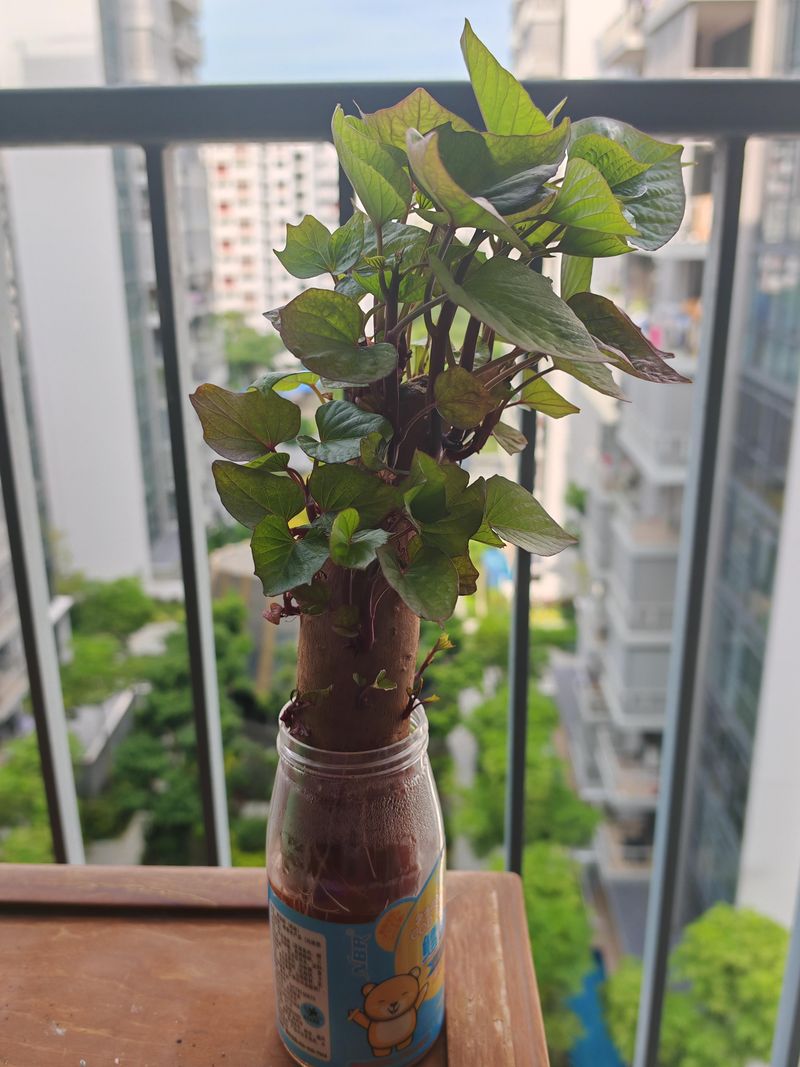
Ornamental sweet potato vine, that trailing chartreuse or purple-black spiller in so many Ohio containers, actually has an easy path through winter that most gardeners never try.
Rather than digging the whole root system, which tends to be sprawling and awkward to store, take four to six inch stem cuttings from healthy vine tips before frost hits.
Strip the lower leaves and set the cuttings in a jar of water on a bright windowsill, the same way you would with basil or other tender herbs mentioned earlier.
Roots typically appear within one to two weeks, sometimes faster given how vigorously this plant grows during the summer season.
Once a good root system develops, pot the cutting into fresh potting mix and keep it in a sunny window through winter, trimming occasionally to keep growth compact rather than leggy.
The mature tuberous roots can technically be dug and stored like a sweet potato itself, cured and kept warm and dry, but this method demands more space and effort than most container gardeners find worthwhile.
Cuttings solve the same problem far more efficiently, giving you a head start on next year’s containers without hauling in a bucket of soil and roots.
By spring, a few small cuttings taken in September can easily supply enough vine to fill several hanging baskets, at no cost beyond a little windowsill space through the colder months.
8. Elephant Ears Follow The Same Rules As Caladiums
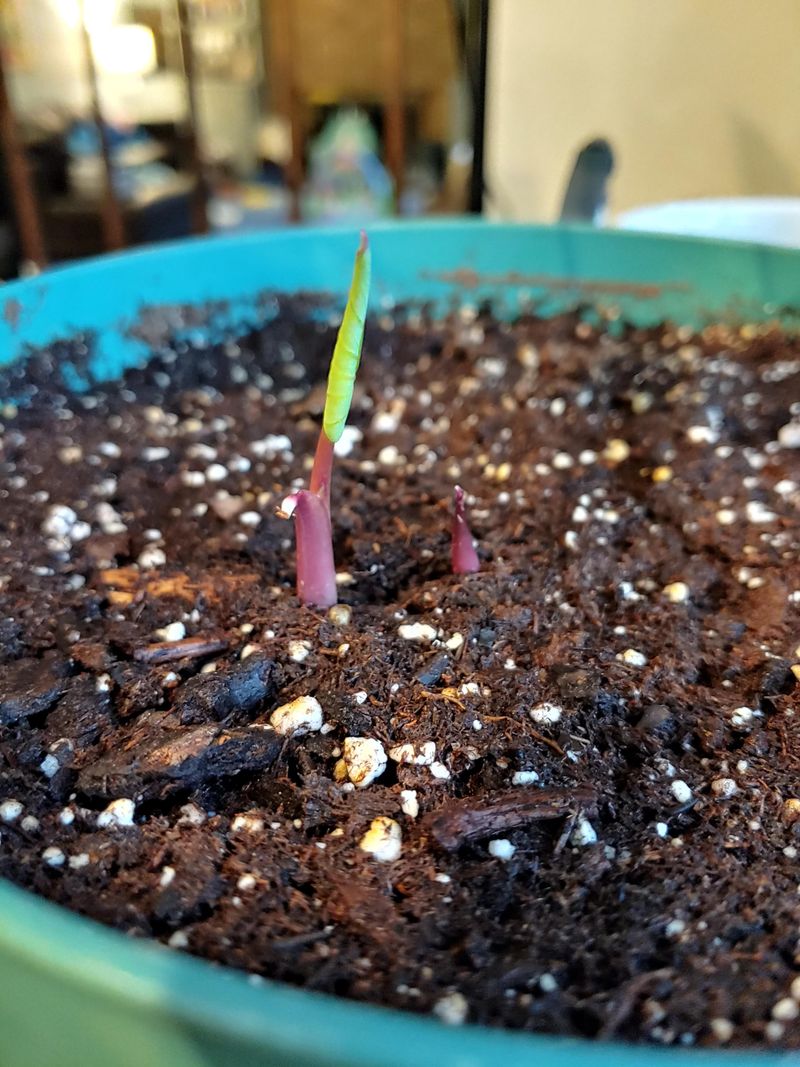
Elephant ears, those dramatic tropical plants with leaves the size of dinner platters, share close botanical ties with caladiums and follow nearly identical storage rules as a result.
Like caladiums, these tubers come from warm climates and do not tolerate cold storage well, so digging them before a hard freeze rather than after makes a real difference in survival rates.
Watch for nighttime temperatures dipping into the 50s as your cue to start lifting, generally sometime in September or early October across most of Ohio depending on the fall.
Dig carefully around the base, since elephant ear tubers can be surprisingly large and brittle, especially on mature plants that have had a full summer to bulk up.
Let the foliage fade back naturally for a week or two in a dry, warm spot before removing it, allowing the plant to pull remaining energy down into the tuber itself.
Once leaves are papery and easy to twist off, brush away loose soil and pack the tubers in dry peat moss or vermiculite, avoiding anything that traps excess moisture around the tuber.
Storage temperature should stay warm, ideally 60 to 70 degrees, matching what caladiums need rather than the cooler range that suits dahlias or cannas.
Given how large and visually dramatic these plants get by midsummer, and how expensive replacement specimens can run at nurseries each spring, elephant ears earn their spot among the tubers worth the extra effort to save.
9. Know Which Battles Are Worth Fighting
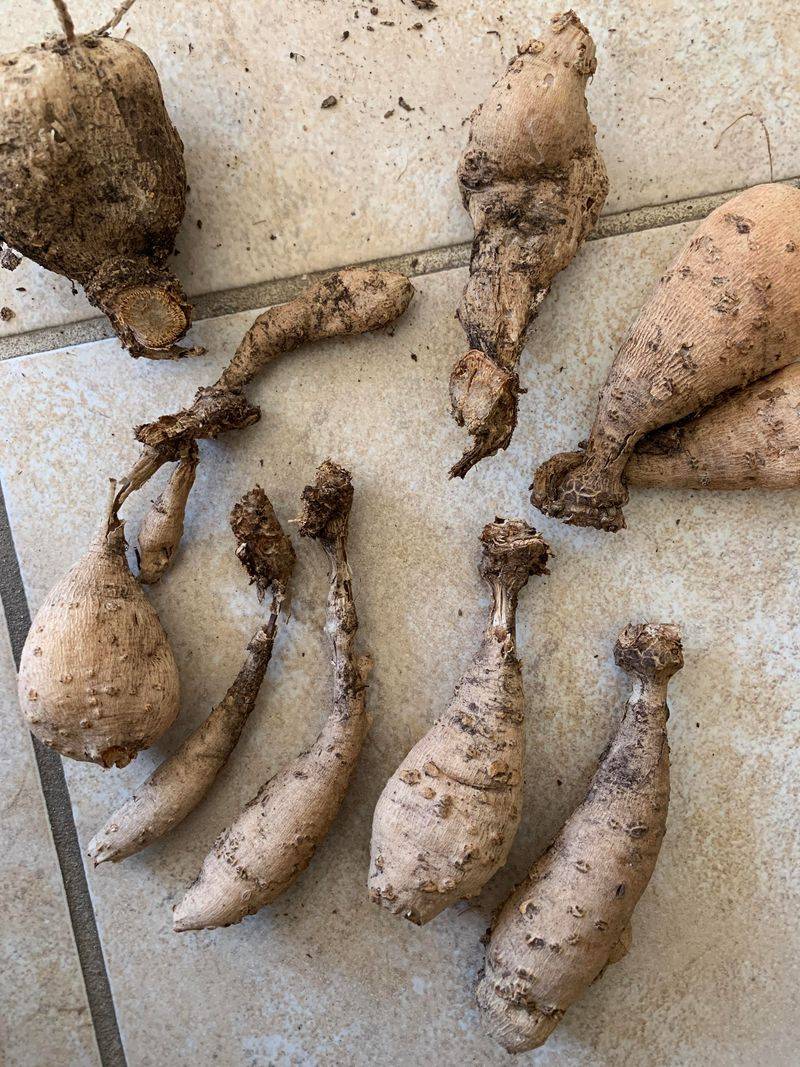
Three questions settle almost every frost-season decision you’ll face this fall. What does this plant cost to replace, how much storage space does it demand, and how likely is it to survive until spring?
Tender bulbs win on all three counts here. Dahlias, cannas, gladiolus, and caladiums store as dormant structures, take up little room, and reliably wake up when planted again next year.
Tender annuals lose on all three counts by comparison. They’re cheap, they need light and warmth all winter long, and they arrive at spring looking worse than the transplants at any garden center.
Sentimental value counts too though. A dahlia handed down from a grandparent or a hard-to-find canna color is worth more effort than its price tag suggests on paper.
Be honest about your storage options before you start digging anything up tonight. If you don’t have a spot that stays cool without freezing, or a warm closet for caladiums, saving those tubers may be wasted work.
Labeling deserves a mention too, since unlabeled tubers in March all look identical to each other. A permanent marker and a few plastic tags cost almost nothing and prevent real annoyance later.
Skipping something isn’t failure here. Choosing three clumps you truly love over twelve you feel obligated to save usually means better results and a garage you can still park in come winter.