What Ohio Gardeners Should Do When Tomato Leaves Start Curling
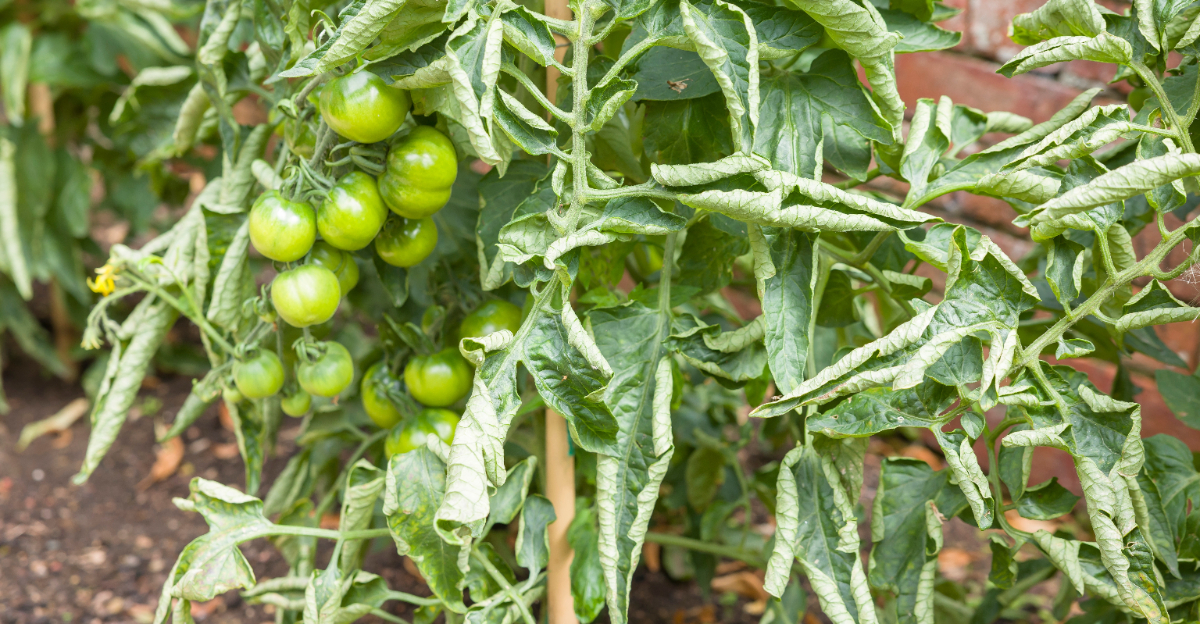
Tomato leaves do not curl for one reason. They curl for several, and some of them are nothing to worry about while others need sorting out quickly.
Ohio gardeners who grow tomatoes long enough will see it happen at least once a season and the instinct is always to assume the worst. Most of the time that instinct is wrong.
Heat, water habits, pests, and disease can all show up looking identical on a tomato leaf. That is what makes the curl so confusing and so easy to misread.
Before changing anything in the garden, it pays to spend two minutes figuring out what is actually going on. The fix is usually simpler than the panic suggests.
1. Check The Weather Before You Panic
Sunny skies and warm temperatures feel like perfect tomato weather, but rapid weather swings can stress plants in ways that show up fast on the leaves.
In many parts of this state, temperatures can jump 20 degrees or more between a cool night and a blazing afternoon.
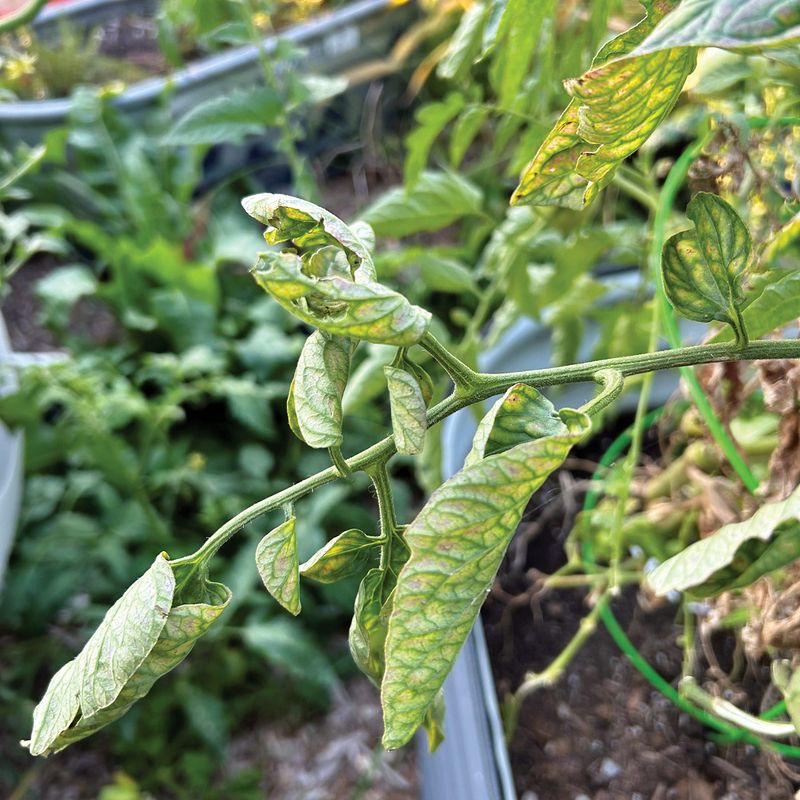
That kind of swing pushes tomato plants to curl their leaves inward as a way to reduce moisture loss, a response called physiological leaf roll.
Physiological leaf roll is one of the most common and least alarming reasons tomato leaves curl. It tends to appear on the lower and middle portions of the plant first.
The leaves may roll tightly, especially during the hottest part of the day, and then relax again in the evening or after a cloudy stretch. The plant still looks healthy otherwise, with strong stems, good color, and no spots or stunted new growth.
Wind is another weather factor worth checking. Strong winds, especially the kind that blow through raised beds or exposed garden rows, can pull moisture out of leaves faster than roots can replace it.
That stress shows up as curling or cupping, sometimes on just one side of the plant depending on which direction the wind comes from.
Before assuming a pest or disease problem, check the forecast for the past few days. If there was a sudden heat spike, strong winds, or a cool night followed by bright sun, weather stress is a reasonable first explanation.
Watch the plant for a day or two. If no other symptoms appear and the curling eases when conditions settle, no action is needed beyond keeping soil moisture steady.
2. Water Deeply And Keep Moisture Steady
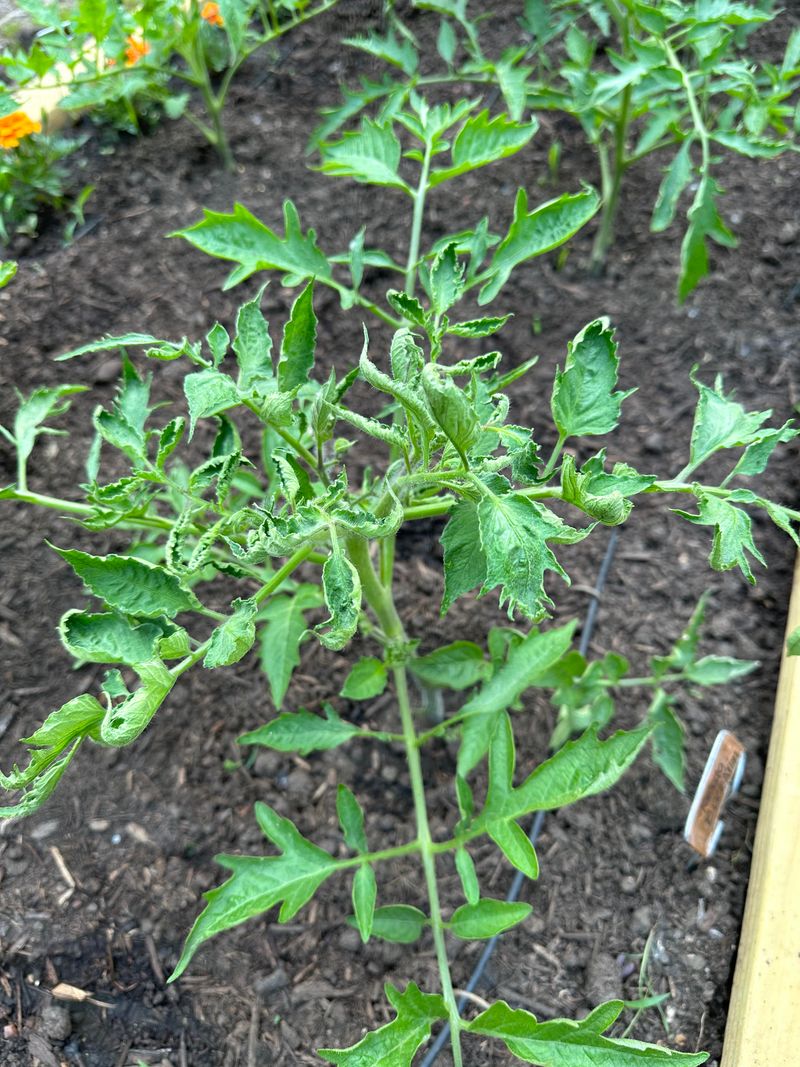
Inconsistent watering is one of the most common causes of leaf curl that gardeners overlook, mostly because the signs can look similar to other problems. When tomato roots swing between too dry and too wet, the plant reacts with stress.
Leaves may curl upward, cup inward, or feel slightly stiff. The fix is not complicated, but it does require paying closer attention to what the soil is actually doing beneath the surface.
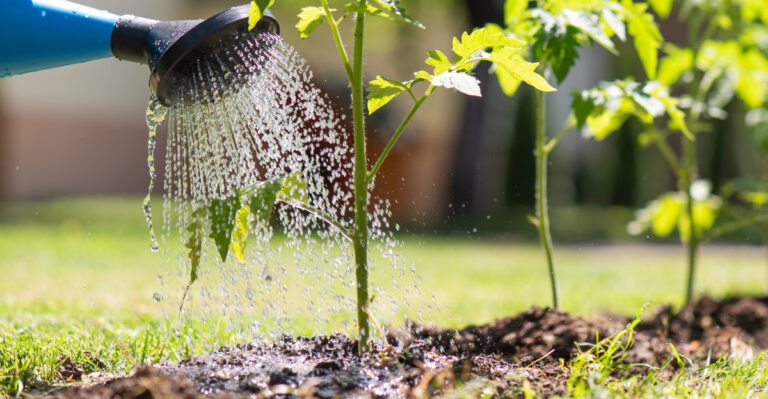
Deep watering encourages roots to grow downward, which helps plants handle dry spells better. A quick splash at the surface does not get moisture down where it counts.
Your Ohio Garden Changes Every Week. Your Plan Should Too.
Gardening in Ohio changes quickly throughout the season. Every Friday you’ll receive a simple weekly plan showing exactly what to plant, prune, fertilize, harvest, and protect so you never miss the right timing.
Aim to water slowly and deeply, letting water soak several inches into the soil. A simple way to check is to push a finger or a small trowel a few inches into the soil near the plant.
If it feels dry at that depth, water thoroughly. If it still feels damp, hold off.
Container gardens and raised beds with sandy or fast-draining soil dry out faster than in-ground beds, sometimes within a day during a hot stretch. These spots need closer monitoring, especially during the warmer parts of our growing season.
Mulching around the base of plants with straw or wood chips helps hold moisture longer and keeps soil temperatures more stable.
Soggy soil causes its own set of problems. Tomato roots need oxygen, and waterlogged soil cuts that supply off.
Overwatered plants can also show curling or wilting that looks a lot like drought stress. Check drainage in your beds and containers, and make sure water is not pooling around the base of the plant after a heavy rain.
3. Inspect Leaves For Aphids, Mites, And Whiteflies
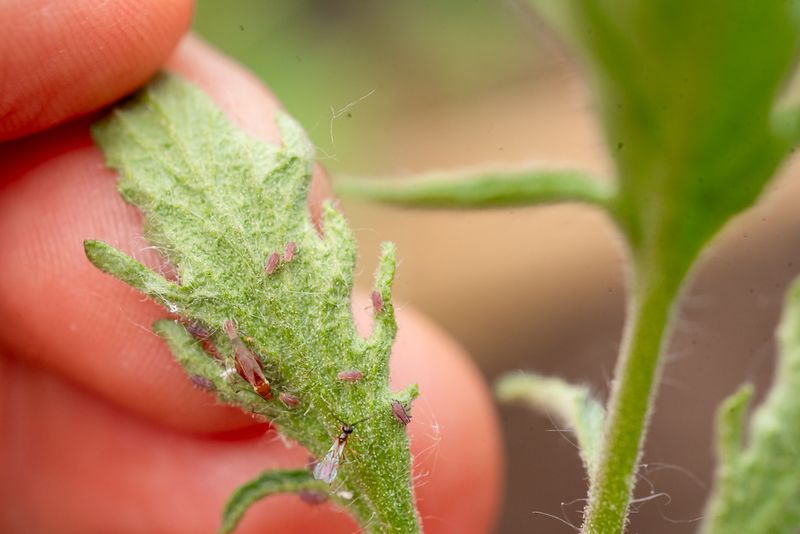
Flip a curling leaf over and take a close look at the underside. That is where many of the smallest Ohio garden pests spend most of their time.
Aphids, spider mites, and whiteflies are all sap-feeding insects that can cause tomato leaves to curl, twist, or cup as they feed.
They are small enough that many gardeners walk right past them without noticing, especially early in the season when populations are just getting started.
Aphids tend to cluster near tender new growth, stem tips, and the undersides of young leaves. They leave behind a sticky residue called honeydew, which can also attract ants or lead to a sooty, dark coating on the leaf surface.
Spider mites are even tinier and may leave fine webbing along stems and leaf undersides, along with a stippled or dusty appearance on the upper leaf surface.
Whiteflies scatter in a small cloud when the plant is disturbed and tend to favor warm, sheltered spots.
Check nearby weeds too, since many pest populations move from weeds into garden plants as the season heats up. Look along stems and at the base of new leaf clusters where growth is soft and easy to pierce.
For aphid populations that are not too heavy, a firm spray of water from a garden hose directed at the undersides of leaves can knock numbers down significantly. Remove heavily infested leaves and dispose of them away from the garden.
Avoid reaching for broad-spectrum insecticides right away, since those can also remove beneficial insects that naturally keep pest numbers in check. Watch the plant for a few days after treatment to see if the population rebounds.
4. Watch For Herbicide Drift After Windy Days
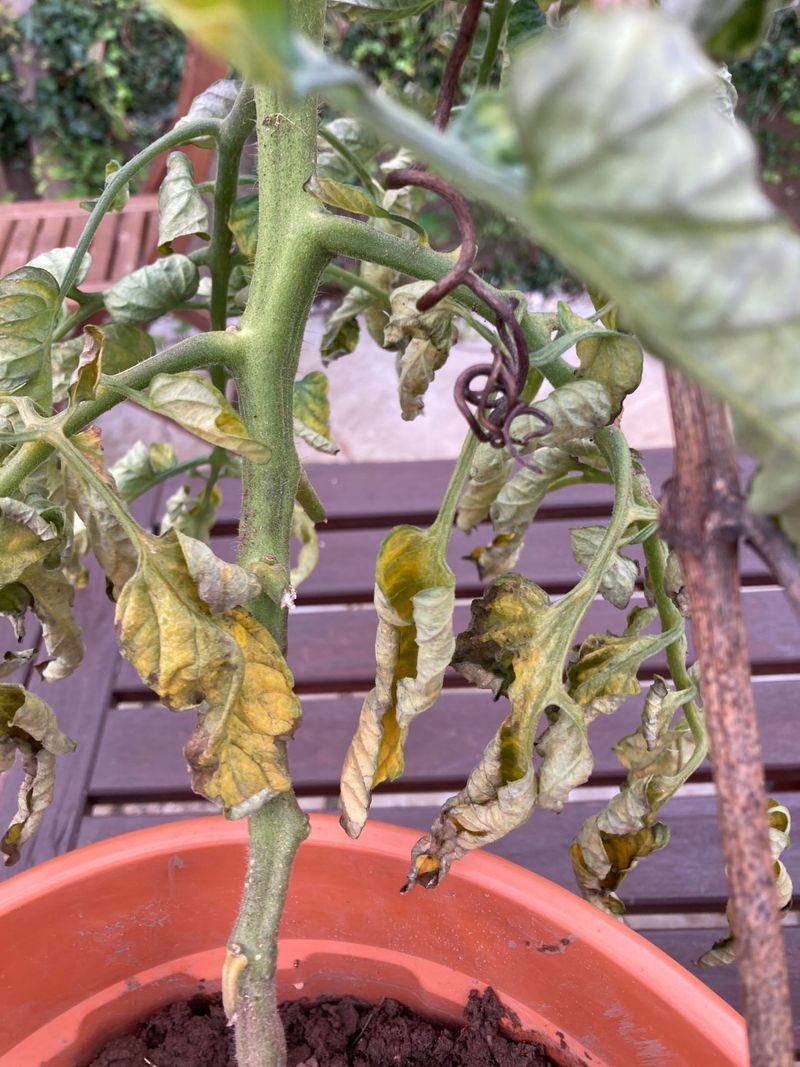
Not every curling problem starts in the garden itself. Sometimes the cause drifts in from somewhere else entirely.
Tomatoes are famously sensitive to certain herbicides, particularly the broadleaf types used in lawn care and pasture management. When those products travel through the air on a windy day, tomato plants can show very specific and alarming symptoms.
The same can happen when compost, mulch, or hay was treated before it was harvested.
Herbicide injury tends to look different from typical weather stress or pest damage. New growth is often the most affected, and it may come in twisted, narrow, cupped, or fern-like rather than developing normally.
Stems may curl in a distinct way. Older leaves might look relatively normal while the newest growth looks distorted and strange.
The plant may also grow very slowly or seem stuck despite otherwise decent conditions.
Think back to what happened in the days before you noticed the curling. Was it windy when a neighbor was treating their lawn?
Did you recently add new mulch, hay, or compost from an unfamiliar source? Certain persistent herbicides can remain active through composting and show up in treated organic materials long after application.
This is a known issue with some aminopyralid and clopyralid-based products used in pasture and hay production.
If herbicide drift or contaminated material seems likely, remove the suspected mulch if possible and water the area well to help flush the soil. Document what you see with photos.
Contact your local extension office if symptoms are severe or spread quickly. They can help you assess the situation and determine whether the damage is recoverable or whether replanting in a different spot makes more sense for this season.
5. Look For Virus Signs Beyond Simple Curling
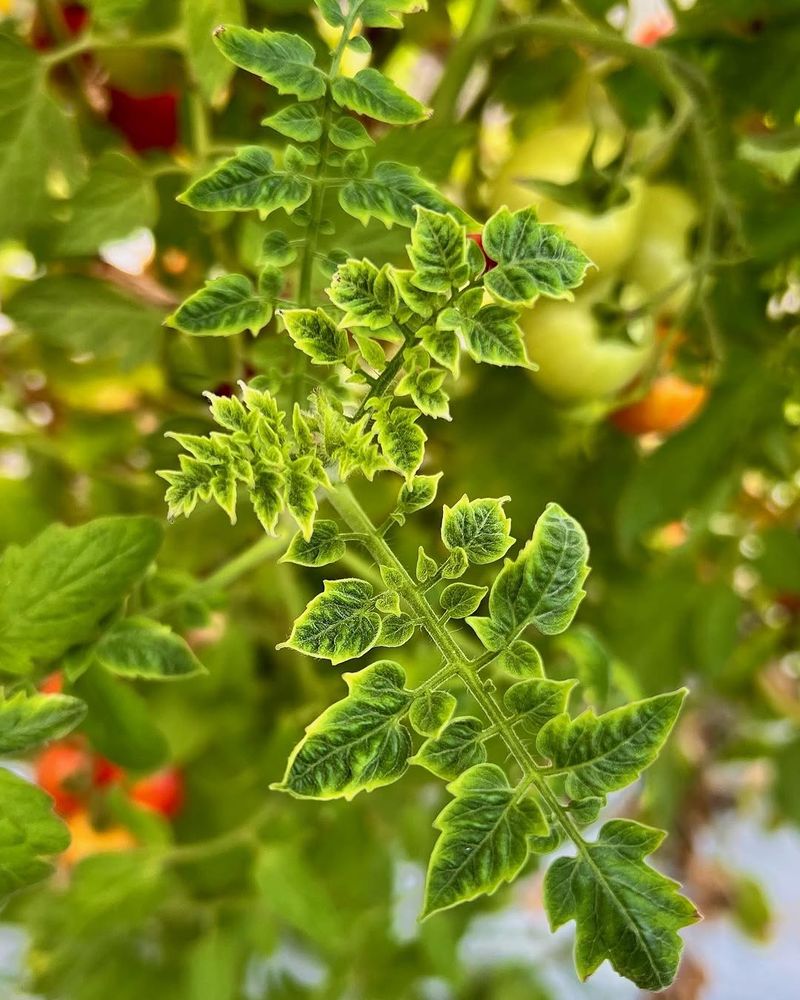
A single curled leaf does not mean a virus. That is worth saying upfront, because viral diseases in tomatoes come with a broader set of warning signs that go well beyond simple leaf roll.
Knowing what to look for makes the difference between pulling a healthy plant unnecessarily and catching a real problem before it spreads through the garden.
Tomato mosaic virus, tomato spotted wilt virus, and cucumber mosaic virus are among the diseases that can cause leaf curling alongside other symptoms.
Look for mottled or uneven coloring on the leaves, including light green or yellow patches mixed with darker green.
Also watch for distorted leaf edges or leaves that seem smaller and more narrow than normal. Stunted overall growth, especially on new shoots, is another clue worth paying attention to.
These symptoms often appear on multiple plants in a pattern, not just one isolated leaf.
Compare the newer growth at the top of the plant with older growth lower down. Viruses tend to affect new growth first and in noticeable ways.
If older leaves look fine but new growth is consistently distorted, yellowed, or mottled, that pattern is worth investigating further rather than waiting out.
Many viral diseases are spread by sap-feeding insects, especially aphids and thrips, which is one more reason to check for pest activity at the same time. There is no chemical cure for viral diseases in tomatoes once a plant is infected.
If you suspect a virus and symptoms are severe, contact your local extension office or send a sample to a plant diagnostic lab. The OSU Plant and Pest Diagnostic Clinic is a good resource for gardeners in this state who need a reliable identification.
6. Avoid Overfeeding With Too Much Nitrogen
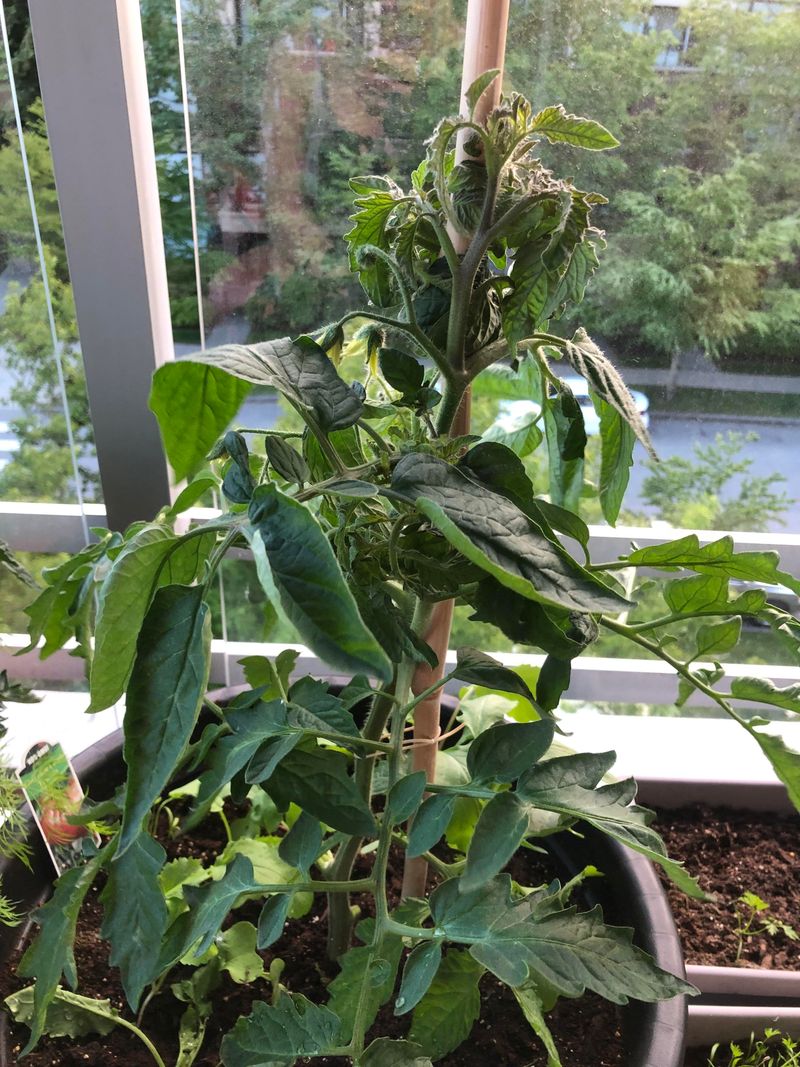
More fertilizer does not always mean a healthier plant. Nitrogen is the nutrient that drives leafy, green growth, and tomatoes do need some of it, especially early in the season.
But when nitrogen is applied too heavily or too often, plants can put most of their energy into producing thick, dark green foliage rather than setting flowers and fruit.
That excessive leafy growth can also come with some leaf curling or a slightly stressed, unbalanced look to the plant overall.
Heavy nitrogen feeding does not fix leaf curl if the real cause is weather stress, pest activity, herbicide exposure, or uneven watering.
Reaching for fertilizer as a first response to curling leaves is a common mistake that can make other problems harder to identify.
If a plant is already under stress from one of those causes, adding a heavy dose of nitrogen can push the plant further out of balance rather than helping it recover.
Soil testing is the most reliable way to know what your soil actually needs before you add anything to it. The OSU Extension recommends soil testing for home vegetable gardens, and test kits are available through local extension offices.
Testing takes the guesswork out of fertilizing and can prevent the kind of nutrient imbalance that makes plants more vulnerable to stress.
If you do fertilize, follow label directions carefully and choose a product balanced for vegetable gardens rather than one designed for heavy lawn feeding.
Once tomato plants begin flowering, ease back on nitrogen and focus on phosphorus and potassium to support fruit development.
Steady, moderate feeding through the season beats heavy applications that push the plant to grow faster than it can handle.
7. Give Plants Space Before Humidity Builds
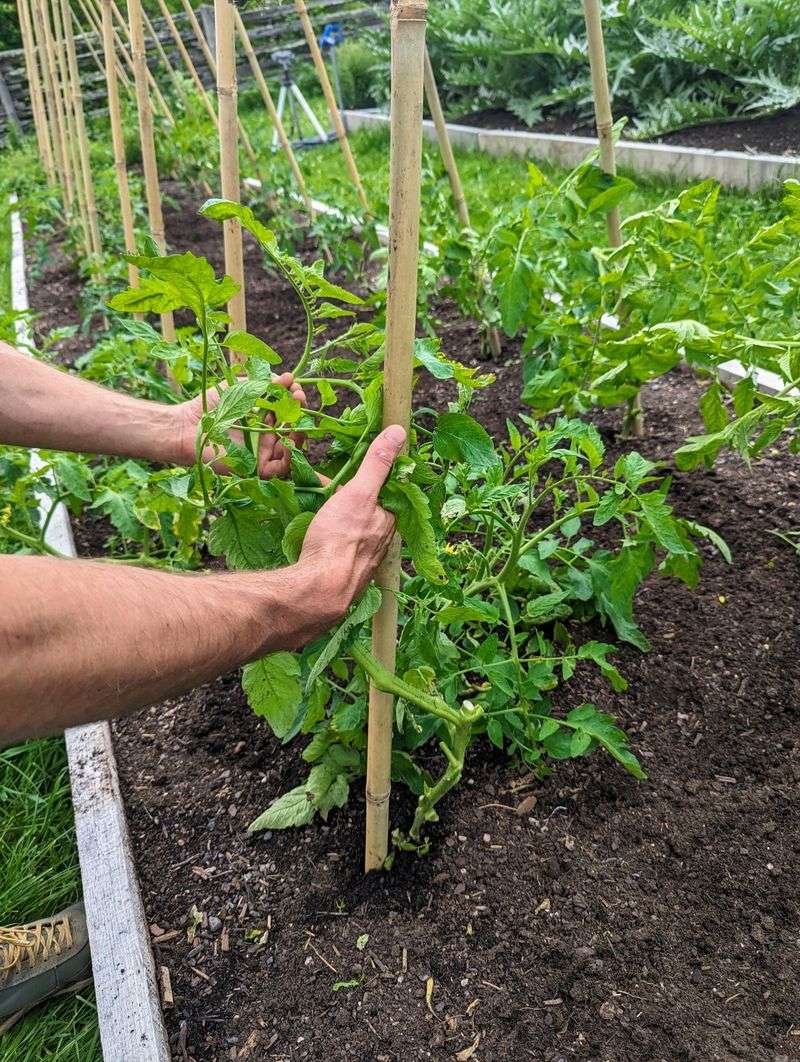
Crowded plants create their own problems, and in a humid summer garden, those problems can pile up fast. When tomato plants grow too close together, air cannot move freely through the foliage.
Leaves stay wet longer after rain or morning dew, which creates conditions where fungal diseases can get a foothold.
Dense plantings also make it much harder to spot early warning signs like pest activity, discolored leaves, or the kind of curling that needs a closer look.
Proper spacing is something to plan before the season starts, but it is never too late to thin things out a little if plants are crowding each other.
The general guideline for most staking or caging setups is about 18 to 24 inches between plants, with rows spaced wider to allow room to walk and work.
Indeterminate varieties that keep growing through the season need more room than compact determinate types.
Staking and caging keep plants upright so foliage stays off the ground and air can circulate around the whole plant. Pruning lower leaves, especially those that touch the soil, reduces the chance of soil-borne disease splashing up onto the plant during rain.
It also opens up the base of the plant so you can see what is going on down there without digging through a tangle of stems.
Removing weeds from around tomato plants matters too. Weeds compete for water and nutrients, and they can harbor pests that move onto tomato plants as the season progresses.
A tidy, well-spaced garden bed is easier to monitor and easier to water correctly.
It also produces healthier plants that are better equipped to handle whatever the season brings their way.