Who Pays When a Neighbor’s Tree Roots Crack Your Driveway
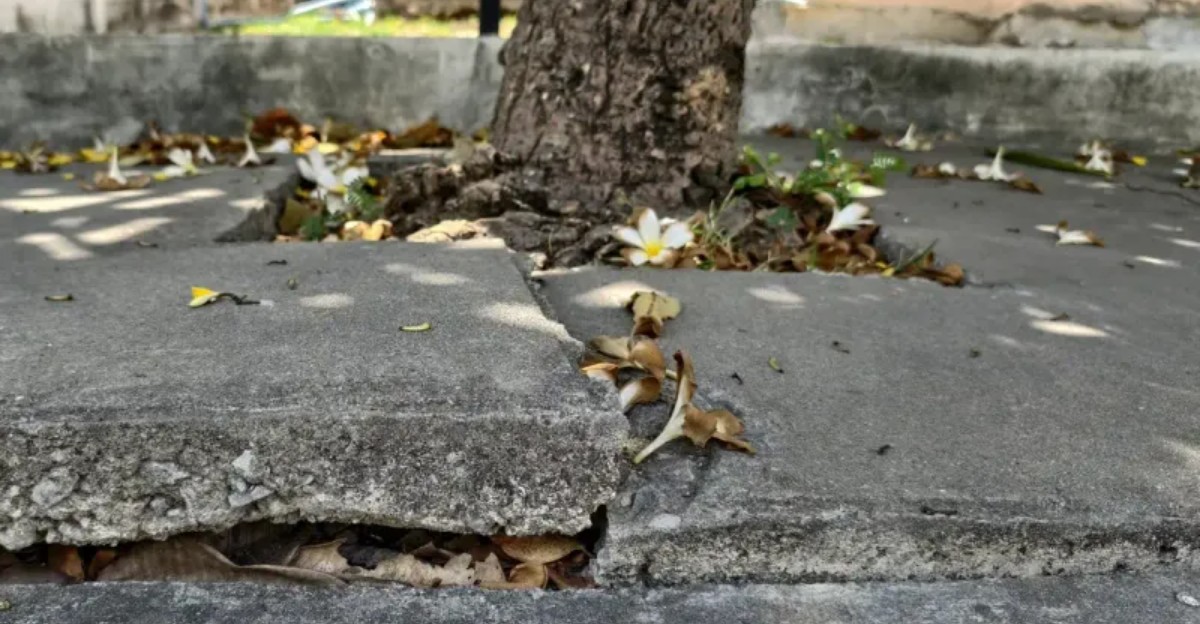
A single tree root can lift a slab of concrete several inches, and it does the job slowly, quietly, and without asking permission.
I learned the hard way that roots rarely attack pavement on purpose. They chase moisture and oxygen, and the soil under a driveway often traps both. The crack you trip over in spring may have started forming years earlier.
Funny thing is, most homeowners assume the tree owner foots the bill. Courts in many states see it differently, and the answer can hinge on one small detail about what your neighbor knew. Insurance adds its own twist.
I get it, nobody wants a feud over a maple. Still, a few smart moves can protect your wallet and your friendship next door. Is it the tree owner or the homeowner who writes the check when roots turn a driveway into a ski jump?
Those Driveway Cracks From Next Door Come With a Legal Catch
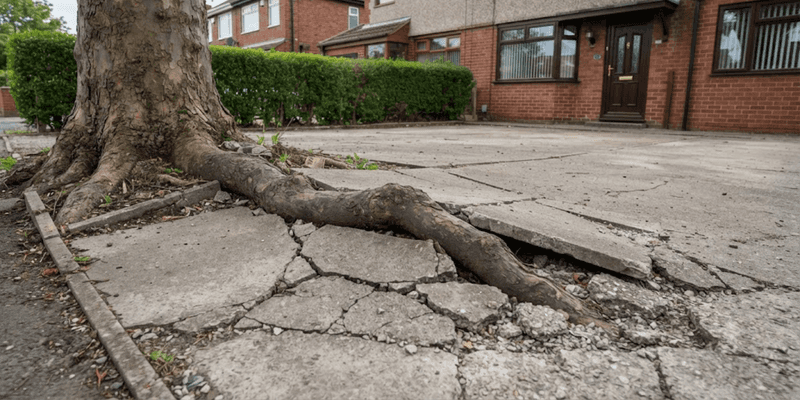
Most folks expect a simple rule like their tree, their bill. Real life is messier. In many U.S. states, encroaching roots are treated as a natural growth issue, and the person dealing with the damage often handles the first round of cleanup.
Courts usually follow what lawyers call the self-help rule. You may trim roots and branches that cross onto your property, right up to the property line. The catch is that you typically pay for that trimming yourself.
A few states go further and let you sue for damage from healthy trees in certain cases, while others protect tree owners unless something more is involved. California, for example, treats encroaching roots that cause real harm as a possible nuisance. Rules shift from state to state and sometimes city to city.
Fair warning, the self-help rule has limits. You generally cannot harm the overall health of the tree while cutting. If your pruning causes it to topple or decline, you could end up owing your neighbor money instead.
So before you grab a saw, check your state statutes and local ordinances. A quick call to your city office or a local real estate attorney can clear up a lot of guesswork fast.
Neglect Is What Usually Shifts the Repair Bill to Your Neighbor
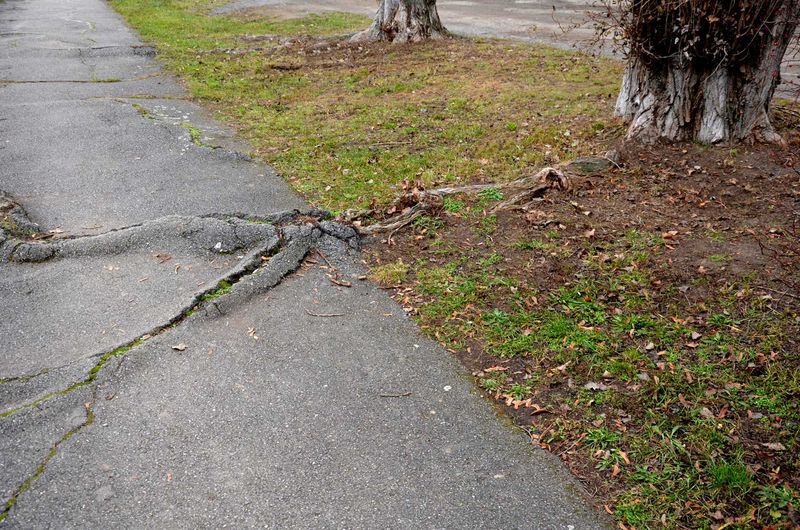
Here comes the detail that matters most. Your neighbor usually becomes responsible for repair costs when they were negligent about the tree.
Negligence means they knew, or reasonably should have known, that the tree posed a risk and did nothing about it. A healthy tree quietly growing roots under your slab often does not meet that bar. A visibly struggling, rotting, or hazardous tree after you raised concerns is a different story.
Notice plays a big role. If you told your neighbor about lifting concrete, shared photos, and asked them to act, their silence can strengthen your case. Courts like clear proof that the owner had a fair chance to fix things.
Some states also allow extra damages if a neighbor ignores repeated warnings. Others focus strictly on whether the harm was foreseeable. That variety is why a short consultation with a local attorney can be worth every penny.
On the flip side, if the tree is healthy and nobody saw trouble coming, you may be the one paying for repairs. Not thrilling, I know. Still, knowing this early helps you choose your next step wisely instead of starting an argument you cannot win.
Your Homeowners Insurance Policy May Not Love Slow Root Damage
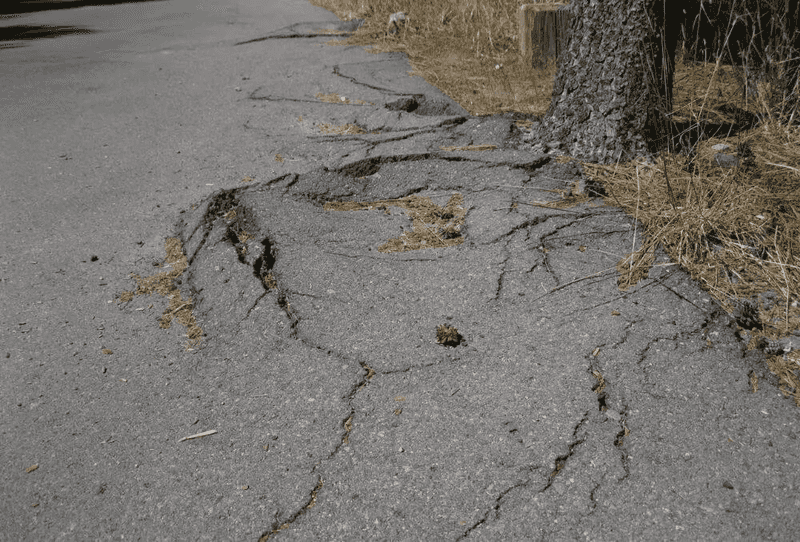
Not going to lie, insurance language can feel as dense as compacted clay. Still, your policy deserves a close read before you file anything.
Standard homeowners policies often cover sudden events, like a tree falling on your driveway during a storm. Slow root damage is another matter. Many insurers treat gradual cracking as wear and tear or a maintenance issue, which is commonly excluded.
When coverage does apply, expect limits. Policies often cap tree-related claims and you still pay your deductible. For a modest driveway repair, the deductible alone might cover most of the bill, making a claim not worth the hassle.
One helpful tool is subrogation. If your insurer pays you and the neighbor was negligent, your company may seek repayment from the neighbor or their insurer. That keeps you out of the middle of the dispute.
My advice is to call your agent and ask direct questions. Does the policy cover gradual root damage to driveways? What is the limit for other structures? Will a claim affect my premium? Write down the answers, along with the name of the person you spoke with and the date of the call.
Snap Photos of Every Lifted Slab and Root Before Anything Gets Fixed
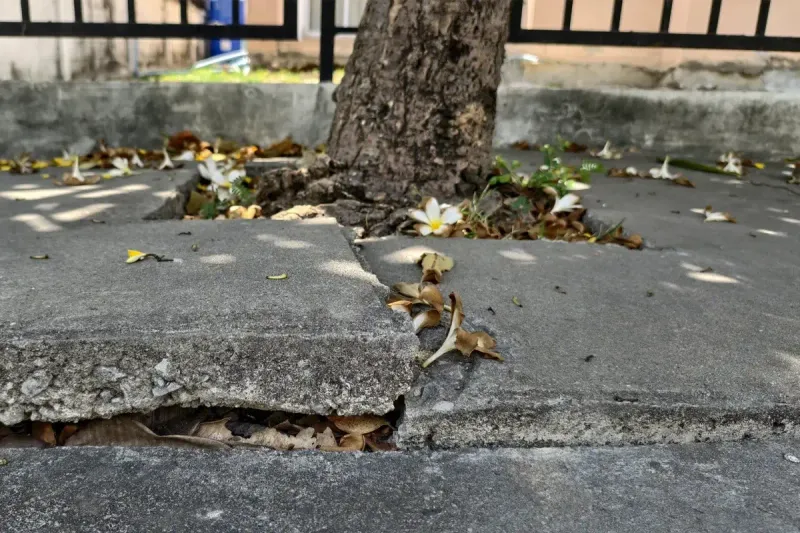
Evidence is your best friend in any root dispute. Without it, even a strong case can fall apart quickly.
Start with photos from several angles. Lay a tape measure across cracks and next to raised edges so the size is clear. Take wide shots that show where the tree sits compared to the damage.
Repeat those photos every few months. A timeline showing the slab rising over seasons is powerful proof that roots, not frost or poor construction, caused the problem. Freeze-thaw cycles and weak base gravel crack plenty of driveways too, so you need clear proof.
Next, bring in a certified arborist. The International Society of Arboriculture lists certified pros by zip code. A written report linking the roots to the damage, and noting the health of the tree, carries real weight with insurers and courts.
Collect two or three repair estimates from licensed contractors as well. Keep copies of every text, email, and letter to your neighbor in one folder. I keep a simple log with dates and short notes after each chat. It feels a bit fussy at first, but it pays off fast if things ever turn serious.
A Friendly Chat Over the Fence Beats a Lawsuit Most Days
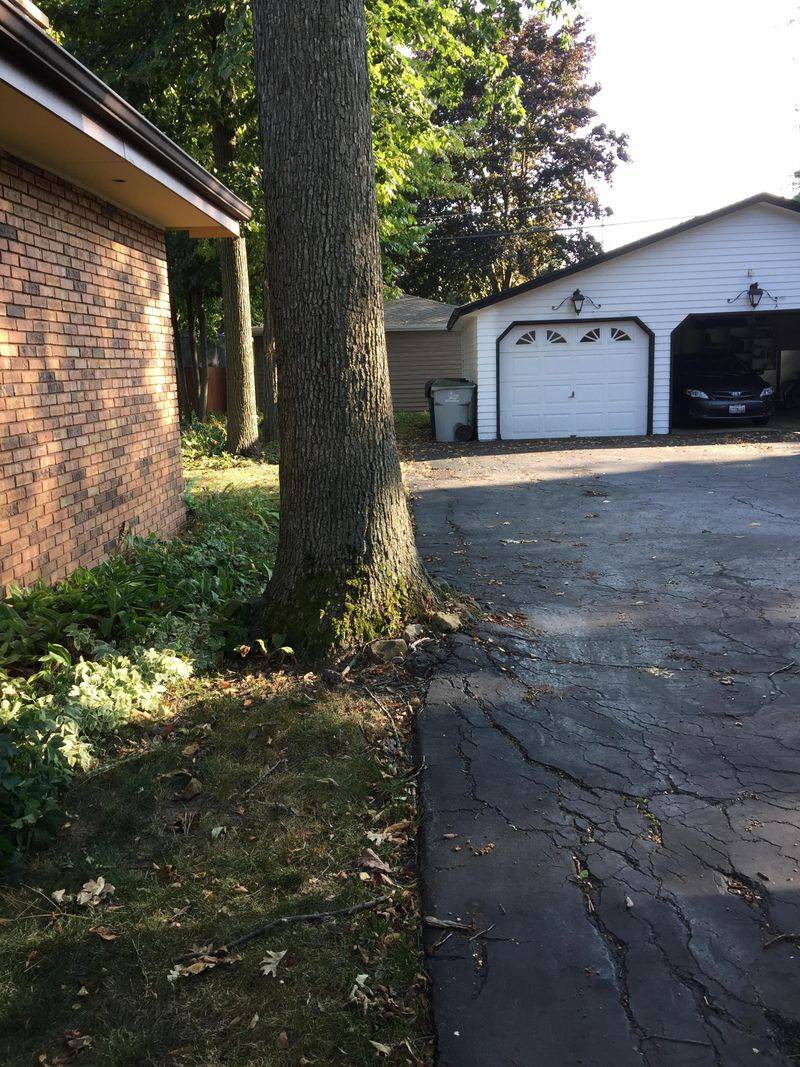
Lawsuits over trees can cost far more than the driveway itself. A calm conversation is often the cheapest fix around.
Pick a relaxed moment, not right after you scraped your bumper. Bring a few photos and keep the tone curious rather than accusing. Many neighbors have no idea their tree is causing trouble underground.
Come with options instead of demands. You might split the cost of an arborist visit, share the expense of a root barrier, or agree on who handles pruning. Some neighbors even offer to remove a tree they were already worried about.
If talking stalls, send a polite written letter. Describe the damage, attach the arborist report, and suggest a reasonable next step with a clear timeline. That letter also creates a record of notice, which matters if negligence ever comes up.
Mediation is another solid path. Many counties offer free or low-cost community mediation for neighbor disputes. A neutral person helps both sides talk it out without a judge.
Trust me on this one, you will live next to this person for years. Keeping things civil protects your peace of mind and your property value too.
Cutting Tree Roots at the Property Line Takes a Careful Hand
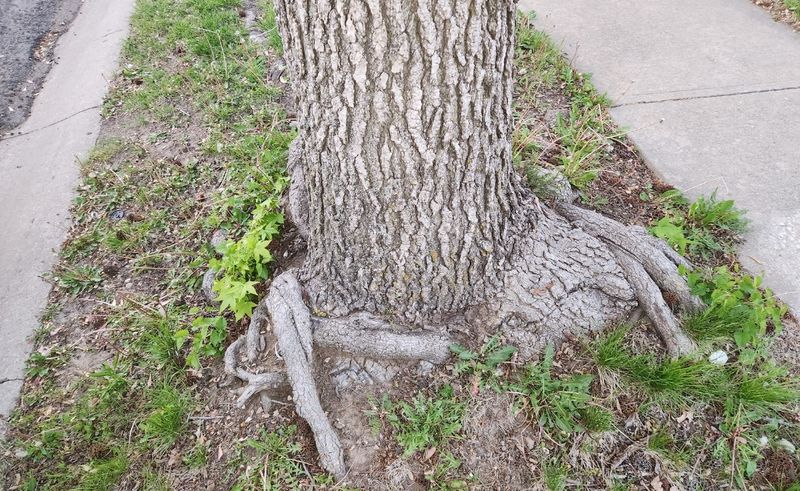
Grabbing a chainsaw and hacking away feels satisfying for about five minutes. Then the trouble starts.
Large structural roots anchor a tree. Cutting too many, or cutting too close to the trunk, can make the tree unstable or send it into decline. If it later topples onto a house, you could share the blame.
Arborists often suggest a cautious rule of thumb. Cutting roots closer to the trunk than about three to five times the trunk diameter raises real risk. Smaller roots, roughly under two inches across, are usually safer to prune, though every tree is different.
Hire a certified arborist to decide which roots can go. They use clean cuts with proper tools, which helps the tree seal wounds. Ragged tears from a backhoe invite decay.
Some states, including Washington and Oregon, have timber trespass laws that allow extra damages for harming a neighbor’s tree. Protected species or heritage trees may also need a city permit before any work happens.
Timing helps too. Many arborists prefer root work during dormancy in late fall or winter, when trees handle stress more easily. Ask your pro what fits your tree and climate.
Flexible Pavers and Root Barriers Give Driveways a Fighting Chance
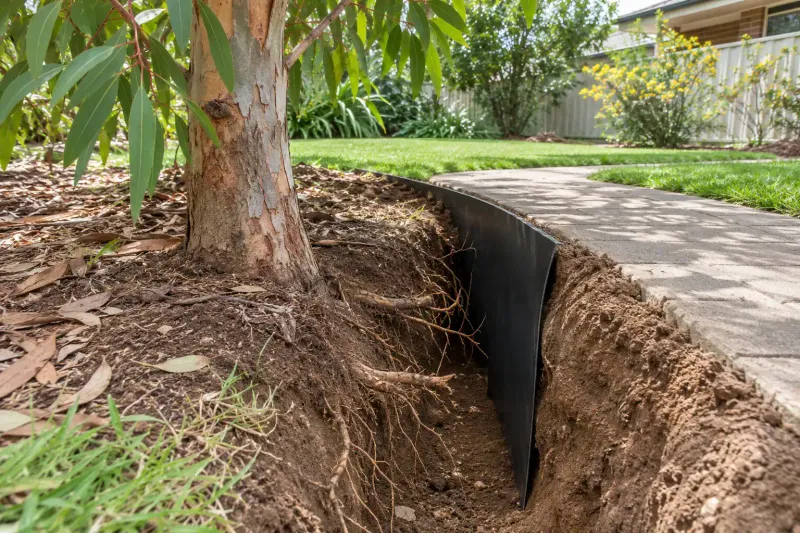
Patching concrete without addressing the roots is like mopping during a leak. The cracks will return.
Root barriers are a popular long-term fix. They are panels of plastic or heavy-duty fabric installed vertically in a trench, usually about 18 to 30 inches deep. They steer roots downward and away from pavement instead of under it.
Material choice matters too. Interlocking pavers can be lifted, leveled, and reset when roots shift, which beats tearing out a whole slab. Asphalt flexes a bit more than concrete and is often cheaper to patch.
Permeable pavers deserve a look. They let water soak into the soil, which may reduce how much roots crowd right under the surface hunting moisture.
A solid base helps as well. Contractors can add deeper compacted gravel and sometimes a geotextile layer to spread loads and resist heaving.
Talk with your neighbor about the barrier if it runs along the shared line. Placement on your side keeps things simple. Ask your arborist how close the trench can go without harming the tree, since barriers often require cutting some roots during installation.
Smart Tree Choices Today Spare Tomorrow’s Concrete
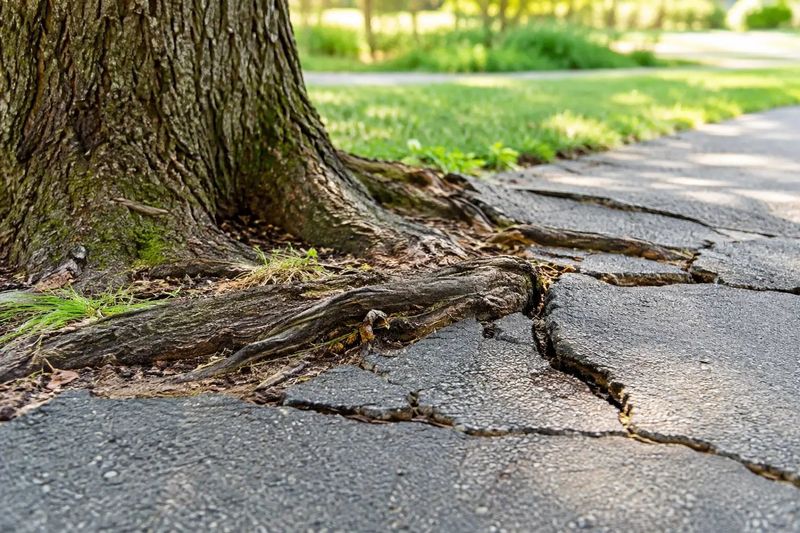
Every tree is a long-term roommate. Choosing well now saves you and future neighbors a lot of grief.
Some trees earn a reputation for surface roots and pavement trouble. Silver maples, willows, and many poplars are common culprits. Norway maple is also invasive in many states, so skip that one entirely.
Smaller native options tend to play nicer near hardscapes. Eastern redbud, serviceberry, and flowering dogwood are popular picks across much of the country. Your local cooperative extension office can suggest species suited to your USDA zone and soil.
Spacing matters as much as species. A common guideline is to plant far enough from pavement to account for the tree’s mature size. Larger shade trees often need 15 to 20 feet or more.
Deep, infrequent watering encourages roots to grow downward instead of hugging the surface. Shallow daily sprinkling does the opposite.
The big takeaway is simple. Know your state rules, document everything, talk first, and plan plantings with the future in mind. Do that, and a cracked driveway becomes a solvable chore instead of a neighborhood saga.