Who’s Responsible When A Neighbor’s Tree Lands In Your Oregon Yard?
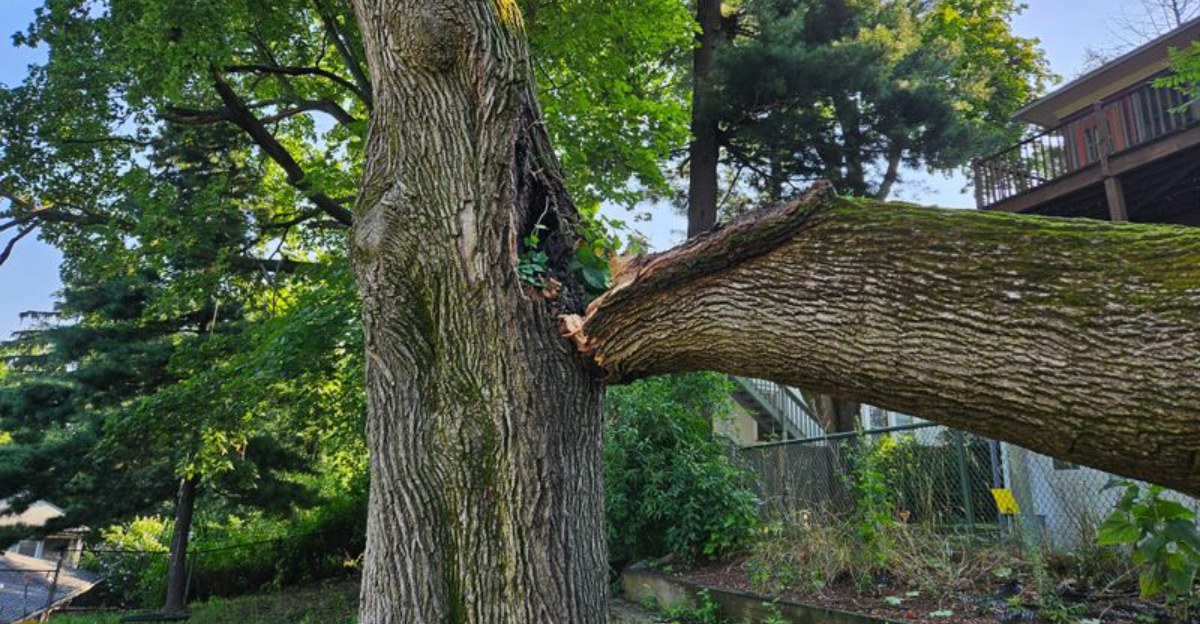
Stormy weather and strong winds are common in Oregon. And sometimes that means a neighbor’s tree ends up in your yard.
When it happens, the first reaction is usually shock, followed by a lot of questions. Who cleans it up?
Who pays for the damage? And what happens next?
I’ve seen this situation cause stress and awkward conversations between neighbors. It feels confusing, especially when property lines and insurance are involved.
Many homeowners assume the answer is simple, but Oregon law can surprise people.
Knowing your rights ahead of time can save you time, money, and frustration. It also helps you handle the situation calmly instead of guessing your way through it.
This guide breaks it down in a clear and simple way. Just practical information every Oregon homeowner should understand before the next big windstorm hits.
1. Oregon Tree Liability Laws
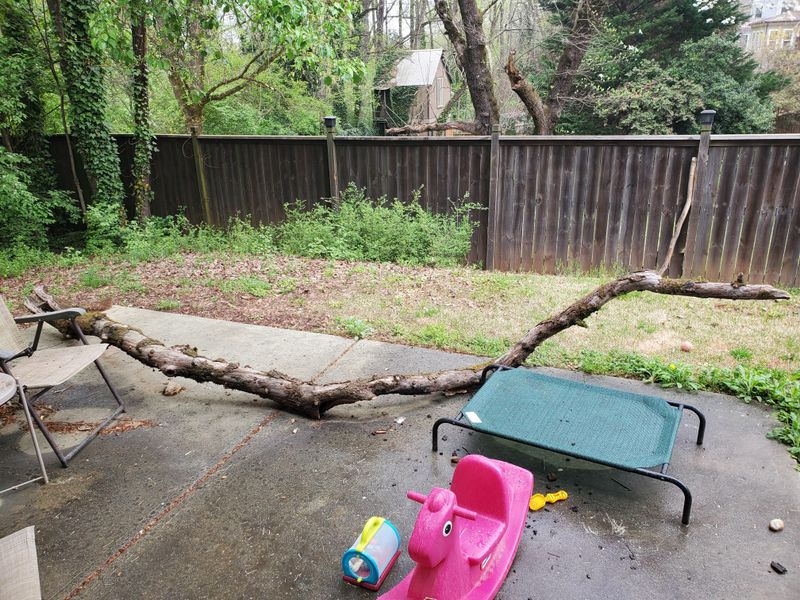
Imagine stepping outside to find a massive oak branch crushing your garden shed. Your first thought?
Someone has to pay for this. In Oregon, tree liability hinges on one main question: was the tree owner negligent, or was this an act of nature?
Oregon follows a reasonableness standard when it comes to trees. If your neighbor knew, or should have known, their tree was diseased, damaged, or dangerously leaning, they could be held liable for damage.
This is rooted in nuisance law, which says property owners should maintain their land in a way that doesn’t harm others.
However, if a healthy tree falls during a storm with no warning signs, your neighbor likely is not responsible. The law doesn’t expect homeowners to predict every possible act of nature.
That’s where your own homeowners’ insurance typically steps in.
Oregon courts have ruled that property owners can trim branches that cross property lines, but they usually cannot demand a neighbor remove a healthy tree just because it might fall someday. Documentation is important.
If you’ve warned your neighbor about a dangerous tree and they ignored it, you have a stronger case if damage occurs later.
Knowing these basics helps you approach the situation with confidence and clarity, rather than anger or confusion.
2. When Natural Events Are To Blame
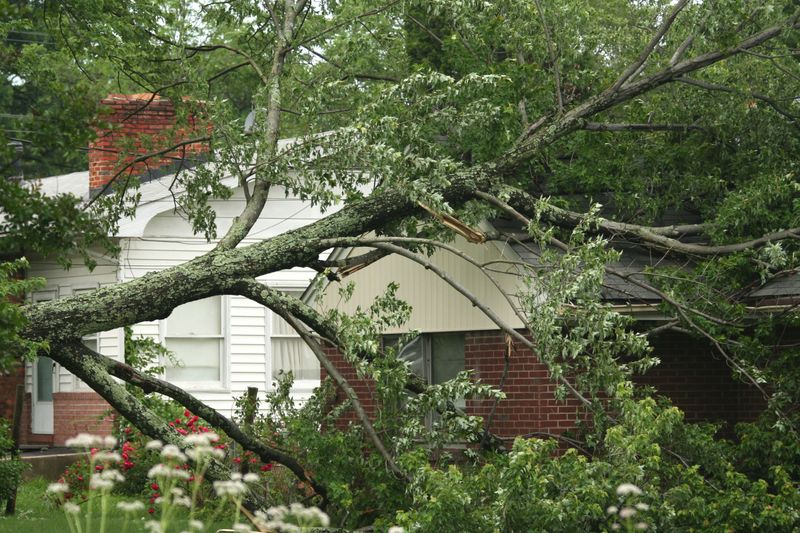
In Oregon, if a tree falls due to a natural event like a storm, earthquake, or heavy snow, and the tree was healthy beforehand, the property owner where the tree lands is often responsible for cleanup. This is commonly referred to as the “act of God” rule.
Your neighbor may not be liable unless they were negligent in maintaining the tree.
This can feel unfair, especially when the fallen tree came from another property. However, insurance companies and courts often treat these situations as unavoidable accidents.
Your homeowners’ insurance typically covers removal and repairs under your property damage coverage, minus your deductible.
An important factor is showing the tree’s condition before it fell. If you can show the tree had visible rot, damaged limbs, or a severe lean before the storm, your neighbor’s liability may increase.
Take photos of the tree’s condition and any prior warnings you gave. Keep records of weather reports too, they can help support your insurance claim.
Natural disasters are stressful enough without added legal confusion. Knowing where responsibility usually falls helps you focus on recovery instead of conflict.
3. Was Your Neighbor Negligent?
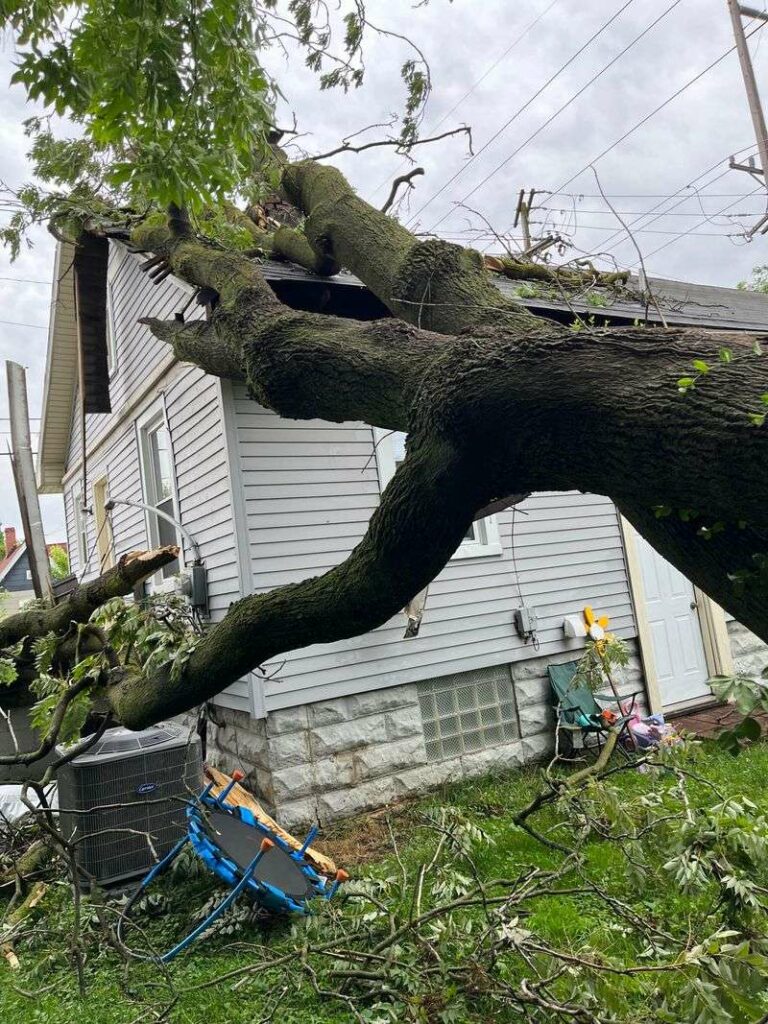
Negligence plays a central role when it comes to tree liability in Oregon. Negligence means the tree owner failed to take reasonable care of their property.
In Oregon, if a neighbor ignores obvious warning signs like damaged limbs, visible rot, fungal growth, or a dangerous lean, they can be held responsible for resulting damage.
The key word is “reasonable.” Courts don’t expect homeowners to inspect every tree with expert precision, but they do expect basic upkeep.
If you suspect a neighbor’s tree is hazardous, document it. Take photos with timestamps.
Send a polite written notice, via email or certified mail, describing the risk. This creates a paper trail showing you raised the concern.
If they still do nothing and the tree causes damage, you may have strong grounds for a negligence claim.
Oregon law also allows you to trim branches that cross your property line, as long as you don’t harm the tree’s health. But you cannot enter their yard or remove the tree without permission.
If your neighbor refuses to address a dangerous tree, you may need to involve local authorities or an attorney.
Negligence cases can succeed, but they rely on solid evidence and clear communication.
4. Documenting The Damage Properly
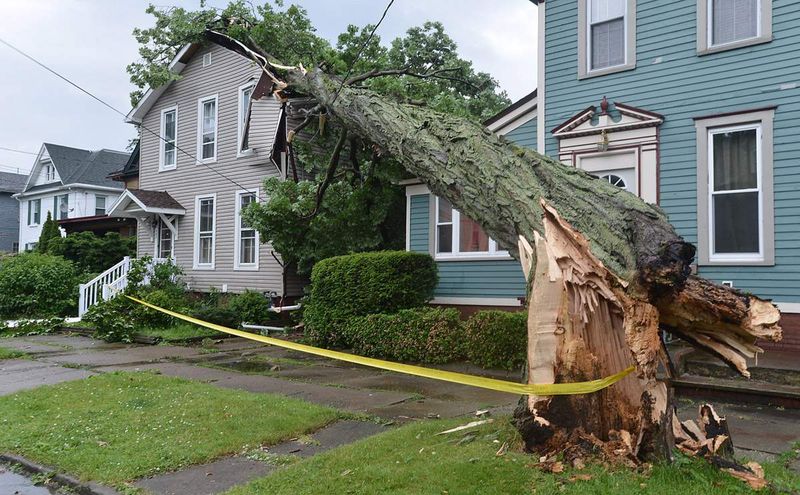
After a tree crashes into your yard, your first instinct might be to start cleaning up immediately. But wait, grab your phone first.
Proper documentation is one of your most helpful tools, whether you’re filing an insurance claim or pursuing a negligence case against your neighbor.
Start by taking wide-angle photos of the entire scene. Capture where the tree fell, what it damaged, and its point of origin.
Then zoom in on specific damage: crushed fences, broken windows, roof dents, or destroyed landscaping. Include photos of the tree’s base and trunk, especially if you see rot, fungal growth, or hollow sections.
Write down the date, time, and weather conditions. If neighbors witnessed the fall, ask for their contact information.
Oregon courts and insurance adjusters often rely on visual evidence, so the more you document, the more helpful it can be.
Don’t remove the tree or debris until your insurance company inspects it. If you must move it for safety reasons, take extensive photos first.
Save all receipts for emergency repairs, tarp costs, or temporary fencing. These are commonly reimbursable expenses.
If you suspect negligence, document any prior warnings you gave your neighbor. Print emails, texts, or letters.
This timeline can support your case significantly. In Oregon, where tree disputes often hinge on proof of negligence, thorough documentation can influence whether the outcome is smooth or turns into a costly legal battle.
5. Talk To Your Neighbor
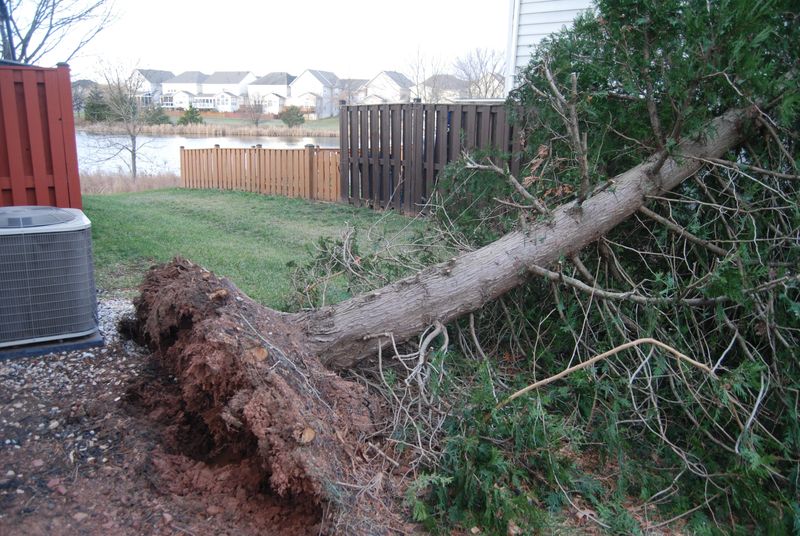
After a neighbor’s tree blocks access to your driveway or damages your property, emotions can run high. Frustration and stress are common reactions.
But before contacting your neighbor and demanding immediate action, pause for a moment. How you communicate at this stage can strongly influence whether the situation leads to cooperation or ongoing conflict.
Start with empathy. Your neighbor may also be surprised or stressed by the situation.
Knock on their door or send a friendly message: “Hey, I know this is a tough situation for both of us. Can we talk about what happened?” A calm, respectful tone helps encourage problem-solving instead of blame.
Explain the damage clearly and share your documentation. Avoid accusatory language like “Your tree destroyed my property.” Instead, try “The tree from your yard fell and caused some damage.
I wanted to show you and discuss possible next steps together.” This approach keeps emotions in check and supports productive conversation.
If your neighbor becomes defensive or uncooperative, avoid escalating the situation. Suggest involving your insurance companies to handle the details.
Sometimes a third party can help guide the process more smoothly. Keep all communication in writing, texts, emails, or letters, so you have a record if things become complicated.
In Oregon, tree disputes are often resolved more smoothly when neighbors approach each other with respect and honesty. A little patience and courtesy can help reduce time, cost, and stress for everyone involved.
6. Involving Homeowners’ Insurance
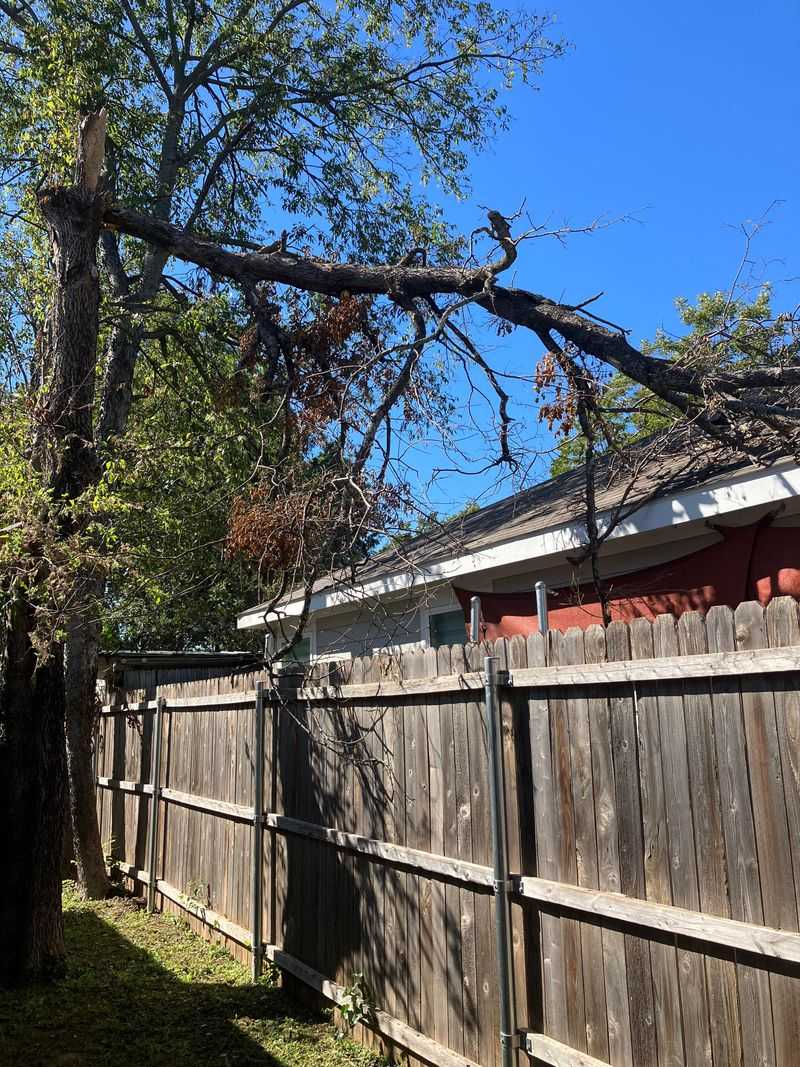
Once you’ve documented the damage and spoken with your neighbor, the next step often involves homeowners’ insurance. Knowing how the process works can help you move forward with fewer surprises.
In Oregon, homeowners’ insurance typically covers damage caused by falling trees, regardless of where the tree originated. This usually falls under dwelling coverage for home damage or other structures coverage for sheds, fences, and garages.
Many policies also include debris removal, though there is often a coverage cap, commonly ranging from $500 to $1,000.
Contact your insurance company as soon as possible. Provide photos, written documentation, and a clear description of what occurred.
Ask about your deductible and specific coverage limits. If a fallen tree damages your vehicle, that claim usually goes through auto insurance rather than homeowners’ coverage.
If your neighbor was negligent, your insurer may pay your claim and then seek reimbursement from your neighbor’s insurance through a process called subrogation. You typically do not need to manage this yourself, as your insurer handles the process.
However, if your neighbor is uninsured or refuses to cooperate, filing a small claims or civil case may become necessary.
Keep receipts for emergency repairs and temporary fixes. Oregon insurers are required to act in good faith, so if a claim is denied unfairly, you may have legal options.
Understanding your policy and responding quickly can help reduce the risk of paying out of pocket for damage caused by another property’s tree.
7. Hiring An Arborist
Sometimes, figuring out who’s responsible for a fallen tree isn’t straightforward. Was the tree healthy or diseased?
Could the damage have been prevented? When the answers aren’t obvious, hiring a certified arborist can offer helpful clarity and evidence.
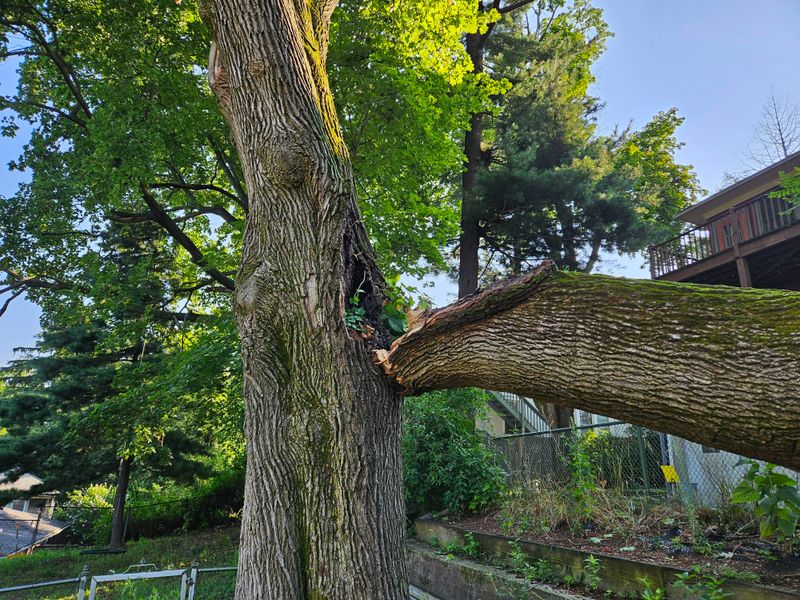
An arborist is a tree care professional trained to assess tree health, structural integrity, and risk factors. In Oregon, a certified arborist can examine the fallen tree and determine whether it showed signs of disease, rot, pest damage, or structural weakness before it fell.
Their report can be useful if you’re filing an insurance claim or pursuing a negligence case.
Arborists look for things the average homeowner might miss: fungal growth, internal decay, root damage, or improper pruning that weakened the tree. They can also assess whether the tree was maintained according to industry standards.
If the arborist finds the tree was clearly hazardous and your neighbor ignored it, that supports your case better.
Hiring an arborist costs anywhere from $200 to $500 in Oregon, depending on the scope of the inspection. It’s a helpful investment if you’re dealing with serious damage or an uncooperative neighbor.
Their written report is accepted in court and holds value with insurance companies.
Ask for a certified arborist through the International Society of Arboriculture (ISA). Make sure they’re licensed and insured.
Their expert opinion can help move a murky situation toward a clearer case, giving you leverage you need to resolve the dispute fairly.
8. When Friendly Solutions Don’t Work
You’ve taken several important steps. You documented the damage, communicated respectfully, filed an insurance claim, and even hired an arborist.
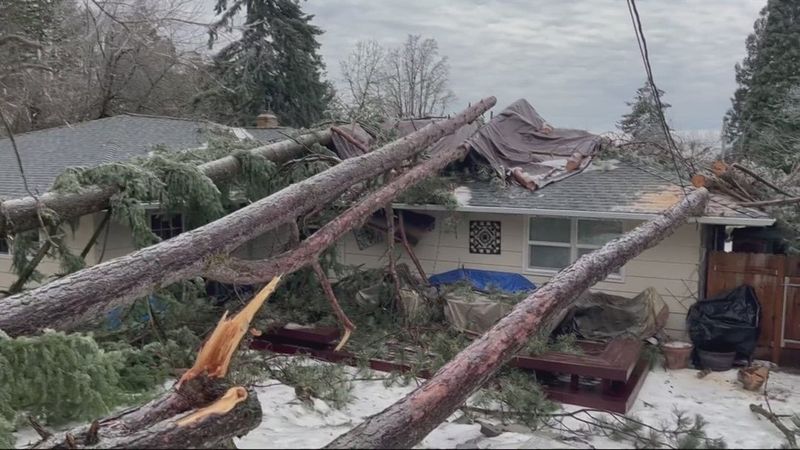
But your neighbor still refuses to take responsibility, and you’re dealing with thousands of dollars in damage. At this point, it may be time to consider legal action.
In Oregon, if your neighbor was negligent and caused property damage, you may be able to file a lawsuit to recover costs. Start by sending a formal demand letter outlining the damage, your evidence, and the amount you’re seeking.
Sometimes, a letter from an attorney can encourage action. If not, your next step may be small claims court or civil court, depending on the amount.
Small claims court in Oregon handles disputes up to $10,000. It’s faster, cheaper, and does not require an attorney, though you can hire one if you choose.
You’ll present your evidence, photos, arborist reports, repair estimates, and communication records, and a judge will review the case. Filing fees are often under $100.
For claims over $10,000, you may need to file in circuit court, which often involves legal representation. Oregon law may allow you to recover damages, court costs, and sometimes attorney fees if you win.
However, lawsuits take time and money, so weigh the cost-benefit carefully.
Before heading to court, consider mediation. Many Oregon counties offer low-cost mediation services for neighbor disputes.
A neutral third party can help you reach a settlement without the stress and expense of litigation. Legal action is often a final option, but it can be useful when other approaches have not worked.
9. Preventing Future Tree Disputes
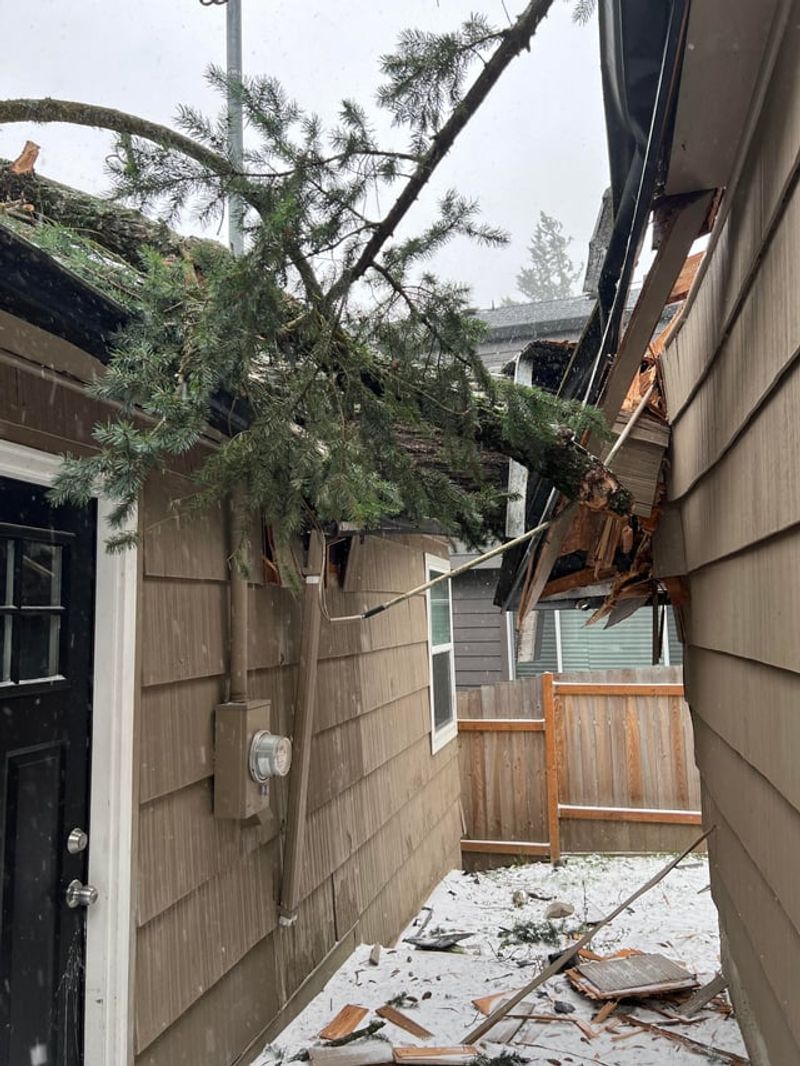
After dealing with a fallen tree, many homeowners hope to avoid a repeat situation. The good news is that many tree disputes can be reduced with proactive communication and regular maintenance on both sides of the fence.
Start by inspecting your own trees and nearby trees that are close to the property line. Look for warning signs: damaged branches, leaning trunks, fungal growth, cracks, or exposed roots.
If you spot a concern on your neighbor’s side, mention it early and kindly. A casual “Hey, I noticed that branch looks damaged, might be worth checking out” may help reduce risk down the road.
Consider hiring an arborist for a routine inspection every few years, especially if you have large, mature trees. In Oregon’s wet climate, trees can develop hidden issues like root rot that aren’t visible from the ground.
Catching problems early can reduce costs and limit damage.
If you’re planting new trees, choose species appropriate for Oregon’s climate and keep them a safe distance from structures and property lines. Avoid fast-growing, shallow-rooted trees near fences or homes.
Good tree placement now can reduce future issues.
Finally, maintain positive relationships with your neighbors. Regular, friendly communication makes it easier to address concerns before they turn into legal disputes.
In Oregon, where tree conflicts are common, a little prevention and neighborly goodwill can help protect your property and peace of mind.