Why Aphids Appear In Michigan’s Early Spring And How To Stop Them
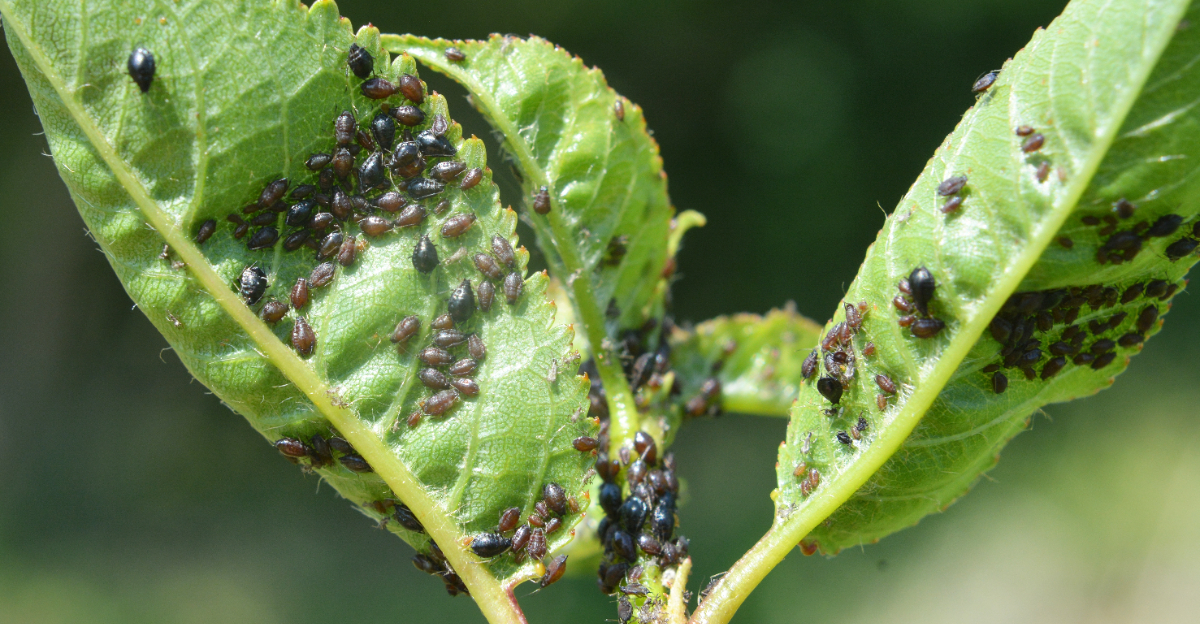
One warm spring morning in Michigan, your garden can look perfectly healthy. The next day, leaves are suddenly covered with tiny green or black insects that seem to have appeared overnight.
Aphids are one of the most common pests in Michigan gardens, and their timing often catches gardeners off guard. Across the Upper and Lower Peninsulas, aphids show up just as new growth begins.
Tender leaves and young stems give them the perfect food source, allowing their populations to grow surprisingly fast. Because these insects reproduce quickly, a small problem can spread through a garden before many people even notice what is happening.
The good news is that aphids are much easier to manage when you understand their patterns.
By knowing why they appear early in spring and what attracts them to certain plants, Michigan gardeners can take simple steps to protect their gardens before the problem grows.
1. Overwintering Eggs Hatch As Temperatures Warm
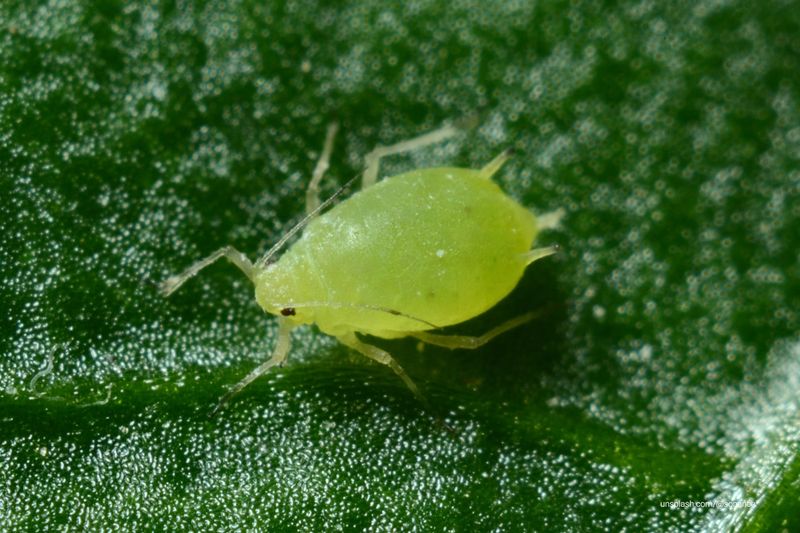
Buried in plain sight all winter long, aphid eggs cling to plant stems and buds just waiting for warmer days to arrive. Many aphid species in Michigan survive the cold months by laying eggs in late fall, tucking them onto host plants like roses and apple trees.
When soil and air temperatures climb into the 50°F range, those eggs hatch into tiny nymphs ready to feed.
Apple trees, known scientifically as Malus domestica, and Rosa species are two of the most common early targets in Michigan yards and gardens. The nymphs are small but hungry, and they begin feeding on tender new growth almost immediately after hatching.
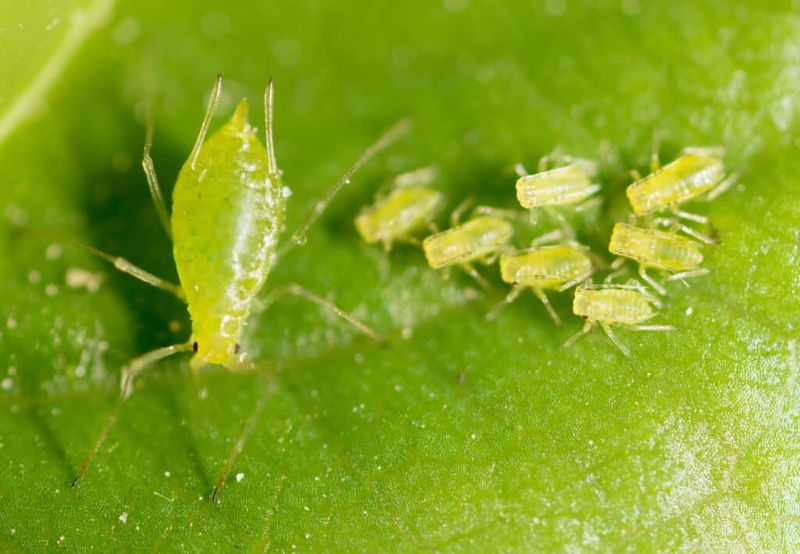
Because they blend in so easily with plant tissue, many gardeners miss the early signs until a full colony has formed.
Getting ahead of this means inspecting your plants closely as soon as buds begin to swell in early spring. Look along stems and the undersides of new leaves for clusters of pale green or yellow insects.
A strong spray of water from a garden hose can rinse small colonies off before they establish, and it costs nothing at all.
Checking your plants at least once a week during March and April in Michigan gives you the best chance of catching hatching nymphs early and keeping your garden clean all season long.
2. Tender Spring Growth Attracts Aphids
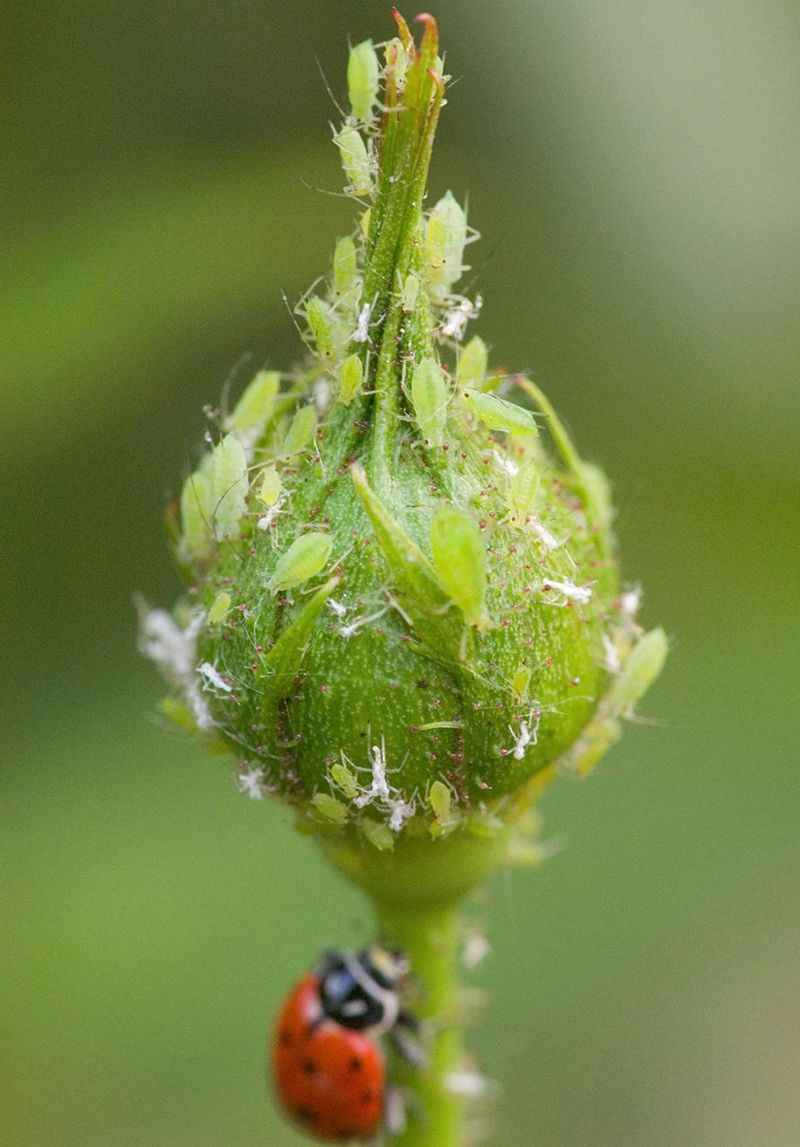
Fresh spring growth is basically an open invitation for aphids. When Michigan plants push out their first soft, bright green shoots of the season, aphids are among the first insects to notice.
New leaves are thin, easy to pierce, and loaded with the sugary plant sap that aphids crave most.
Vegetables in the Brassica oleracea family, which includes cabbage, broccoli, and kale, are especially attractive targets. These plants produce lush, tender foliage in cool spring weather, which is exactly the kind of growth aphids prefer to feed on.
Ornamental plants also suffer early in the season when their new growth is at its softest and most nutritious.
One of the most effective ways to manage this is to monitor your plants weekly starting in mid-March. Walk through your Michigan garden and pay close attention to the newest growth at the tips of stems and leaves.
Pinching off heavily infested shoot tips removes a large chunk of the colony in one quick motion, and it stops aphids from spreading further down the plant. Pairing that habit with regular water sprays keeps populations from bouncing back too fast.
Healthy, well-watered plants also tend to grow more resilient tissue over time, making them slightly less appealing to aphids looking for the easiest meal available in your garden this spring.
3. Rapid Reproduction Allows Colonies To Grow Quickly
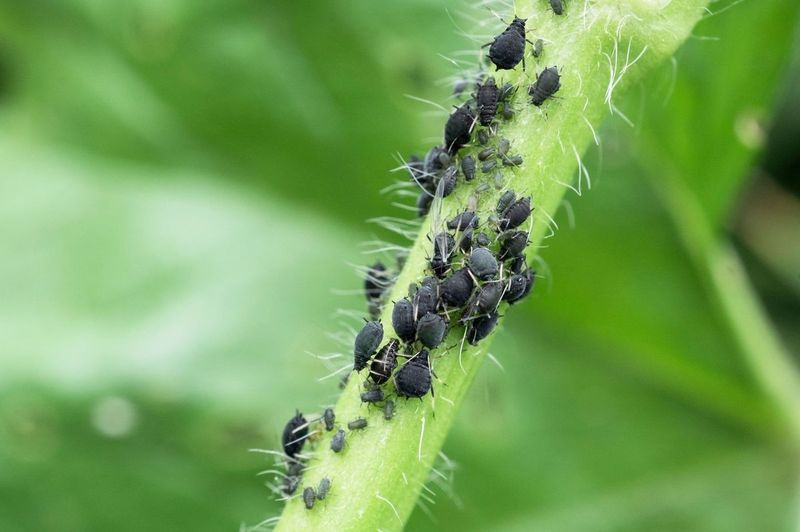
Here is something that surprises most gardeners: a single aphid can produce dozens of offspring without ever mating. Female aphids in Michigan gardens can give birth to live young through a process called parthenogenesis, skipping the mating step entirely.
This means a small group of aphids can turn into a massive colony within just a week or two.
Cool spring temperatures actually help aphids in Michigan because they slow down the insects that eat them while barely slowing aphid reproduction at all.
A colony that goes unnoticed for even ten days can grow large enough to cause real damage to vegetable crops and ornamental plants.
That fast growth rate is exactly why early action matters so much in Michigan’s spring garden season.
Insecticidal soap spray is one of the most reliable early-season tools available to home gardeners. It works by breaking down the soft outer coating of aphids on contact, and it is safe to use around most edible plants.
Neem oil is another strong option, especially for larger infestations that keep returning after water sprays. Both products work best when applied in the early morning or late afternoon to avoid leaf burn in bright sunlight.
Treating plants before colonies grow large keeps the problem manageable and protects your Michigan garden from the kind of widespread infestation that takes weeks to bring under control.
4. Ants Protect Aphids For Honeydew
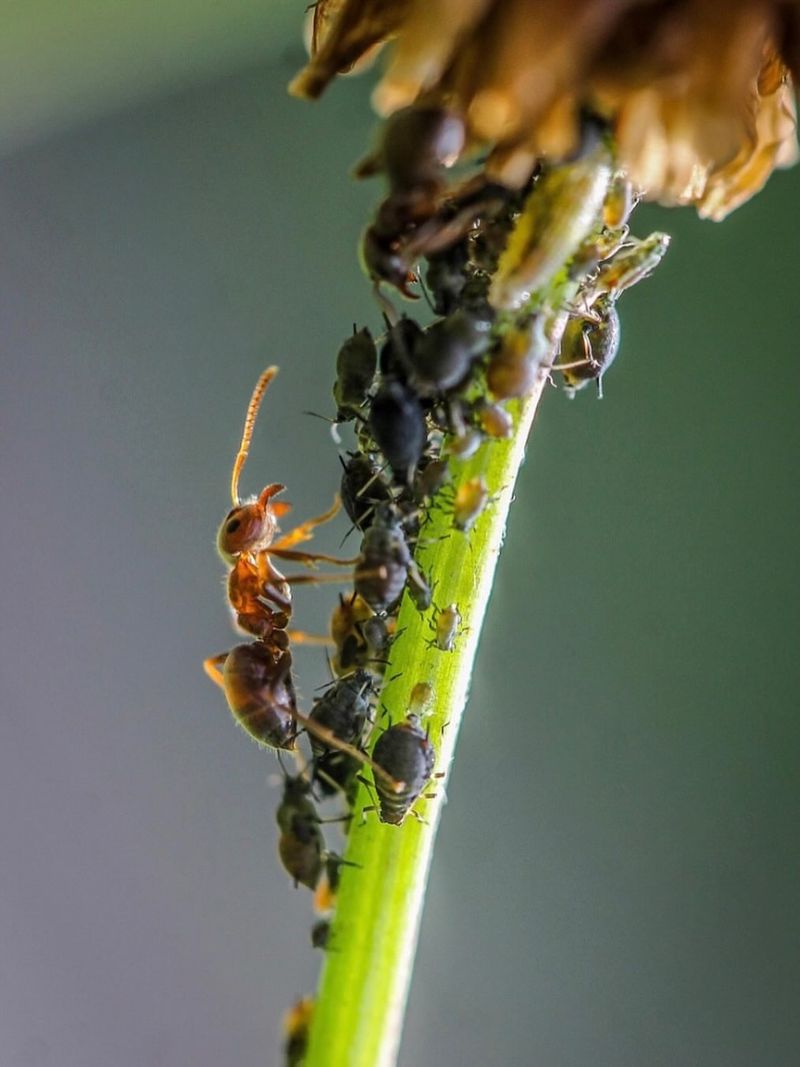
Not every garden pest works alone, and aphids have one of the most interesting partnerships in the insect world.
Ants actively protect aphid colonies from predators in exchange for a sweet liquid called honeydew, which aphids produce as a byproduct of feeding on plant sap.
If you spot ants climbing up your plant stems in spring, there is a very good chance aphids are already there too.
This relationship makes aphid infestations in Michigan gardens harder to manage because ants will physically push away or attack beneficial insects that try to reach the colony.
Ladybugs and lacewings that might otherwise help control aphid numbers get chased off by the ants guarding their food source. Breaking that partnership is one of the smartest moves you can make early in the season.
Sticky barriers wrapped around plant stems or tree trunks can stop ants from climbing up and reaching aphid colonies. Products like Tanglefoot work well for this purpose and are widely available at Michigan garden centers.
Eliminating ant trails near raised beds and containers also reduces the chance of a new aphid-ant relationship forming on your plants. Keeping the area around your garden beds free of food scraps and standing water helps discourage ant activity in general.
Disrupting the ant connection gives natural predators a better chance to move in and help you manage aphid populations on their own throughout the spring season.
5. Mild Winters Allow More Aphids To Survive
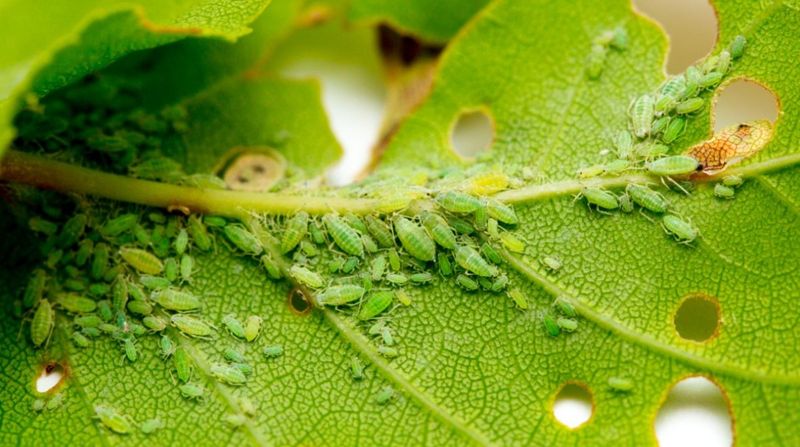
Michigan winters are not always brutally cold, and that matters more than most gardeners realize. When temperatures stay relatively mild through December, January, and February, a larger number of aphid eggs survive on plant stems and woody debris.
More surviving eggs means a bigger wave of hatching nymphs once spring arrives, giving you a larger problem to deal with right from the start.
Warmer-than-average winters have become more common across Michigan in recent years, and pest populations have responded accordingly.
Gardeners who experienced a mild winter should expect to be more vigilant about aphid scouting once March rolls around.
Getting ahead of the problem before plants are fully leafed out is much easier than trying to manage a full-blown infestation later.
Cleaning up plant debris in late winter is one of the best ways to reduce the number of overwintering eggs in your garden.
Fallen leaves, old stems, and garden litter provide shelter for eggs through the cold months, so removing them before spring warmth arrives cuts down on the population that hatches.
Pruning back any stems that showed aphid damage the previous season also removes a significant number of eggs before they ever get a chance to hatch.
A quick garden cleanup in late February can make a noticeable difference in how many aphids you see on your Michigan plants by the time April arrives.
6. Overfertilizing Plants Encourages Aphids
More fertilizer does not always mean healthier plants, and your aphid problem might actually start in the bag of fertilizer you reach for each spring.
When plants receive too much nitrogen, they push out an abundance of soft, lush growth that is packed with the amino acids and sugars that aphids love most.
Overfed plants are essentially rolling out the welcome mat for every aphid in your Michigan neighborhood.
Synthetic fertilizers with high nitrogen content are the biggest culprits. Granular lawn fertilizers sometimes get used in garden beds by mistake, and even well-meaning vegetable gardeners can overdo it with liquid feeds early in the season.
The result is fast, weak growth that aphids can pierce and feed on far more easily than the firmer tissue that develops on moderately fed plants.
Switching to compost or a balanced, slow-release fertilizer makes a real difference in plant tissue quality over time. Compost feeds plants gradually and improves soil structure without triggering the kind of rapid, soft growth that attracts aphids.
If you do use a packaged fertilizer in your Michigan garden, look for one with roughly equal nitrogen, phosphorus, and potassium levels rather than a formula heavy on nitrogen.
Feeding your plants just enough to support steady, healthy growth, rather than maximum speed, keeps them stronger and far less appealing to the aphids that scout your garden every spring looking for the easiest target available.
7. Natural Predators May Not Be Active Yet

Timing is everything in the garden, and aphids know how to take advantage of it. In Michigan’s early spring, aphid populations often explode before the beneficial insects that feed on them have fully woken up for the season.
Ladybugs, lacewings, and parasitic wasps are all powerful natural aphid controllers, but they need warmer temperatures and more daylight hours to become truly active.
The seven-spotted lady beetle, known scientifically as Coccinella septempunctata, is one of the most effective aphid predators in Michigan gardens.
Green lacewings, or Chrysoperla carnea, are another excellent ally whose larvae can consume hundreds of aphids during their development.
Both of these beneficial insects are simply not present in large enough numbers during early spring to keep aphid populations in check on their own.
Planting pollinator-friendly flowers like alyssum, dill, fennel, and yarrow throughout your Michigan garden creates habitat that draws beneficial insects in earlier and in greater numbers.
These plants provide nectar and shelter that ladybugs and lacewings rely on before aphid populations are large enough to sustain them.
Avoiding broad-spectrum pesticides is equally important because those products harm beneficial insects just as readily as they affect aphids.
Protecting the predators that naturally patrol your garden means you build a living defense system that grows stronger with every passing season, reducing your dependence on sprays and making your Michigan garden more resilient from spring through fall.