Why Barred Owls Are Louder Around Missouri Homes This Winter
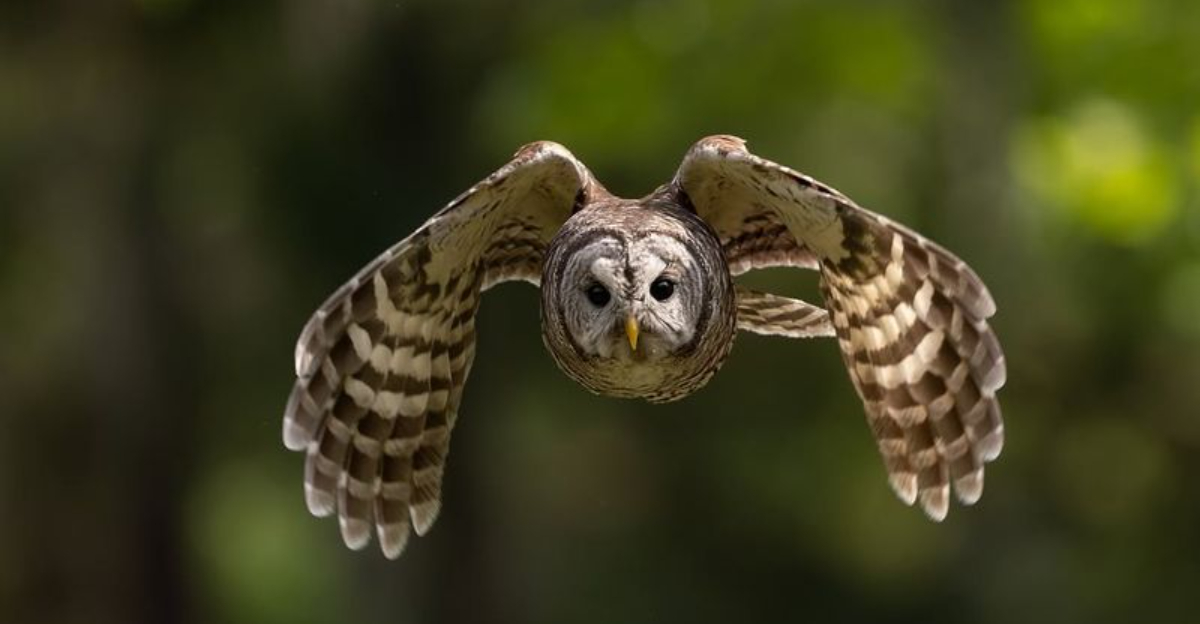
Missouri winter nights are known for their stillness, but lately that quiet has been broken by deep, echoing hoots drifting through neighborhoods.
Barred owls are making their presence known, calling out more often and more boldly than usual.
For many homeowners, the sound can feel like it comes out of nowhere, yet it is part of a seasonal rhythm that plays out every year.
As winter settles in, barred owls adjust their routines to stay ahead of the game.
Food becomes harder to find, territories matter more, and clear communication turns into a top priority.
Calling helps them mark space, locate mates, and keep tabs on rivals.
Colder air also carries sound farther, making each call seem louder and closer than it really is.
Homes and wooded neighborhoods offer a mix of shelter and opportunity.
Mature trees, open yards, and nearby prey turn residential areas into comfortable hunting grounds.
When conditions line up just right, owls speak up.
Their calls are not a warning sign but a reminder that wildlife keeps moving even in the winter.
In Missouri, those nighttime hoots signal nature working overtime to adapt when the season stacks the deck.
1. Mating Season Brings Out The Vocals
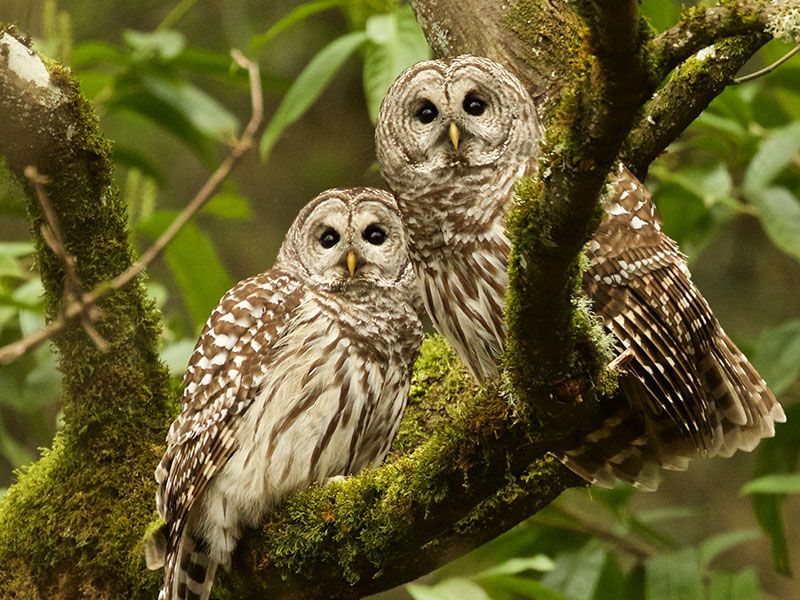
Winter marks the beginning of courtship for barred owls throughout Missouri, and that means a whole lot of hooting.
Unlike many birds that wait for spring, these owls start their romantic pursuits as early as January.
Males become especially talkative as they try to attract females and defend their chosen territories from rival suitors.
The calls you hear aren’t just random noises but carefully crafted messages.
A male barred owl will hoot loudly to announce his presence and show potential mates that he controls a quality territory with plenty of food sources.
Females respond with their own vocalizations, creating duets that can last for hours throughout the night.
Missouri’s mix of forests and suburban areas provides ideal habitat for these owls, bringing them closer to human homes.
When territories overlap with neighborhoods, residents become unwilling audiences to these nocturnal love songs.
The intensity of calling increases as competition heats up, with multiple males sometimes gathering in the same area.
These mating calls serve a crucial biological purpose beyond just finding a partner.
They help establish pair bonds that can last for years and set boundaries that reduce conflicts later.
The louder and more persistent a male owl sounds, the better his chances of securing both a mate and prime hunting grounds.
So when you hear that persistent hooting outside your Missouri window this winter, remember you’re witnessing an ancient ritual.
These vocal displays have been part of barred owl behavior for thousands of years, long before humans built homes in their habitat.
2. Defending Territory Against Intruders
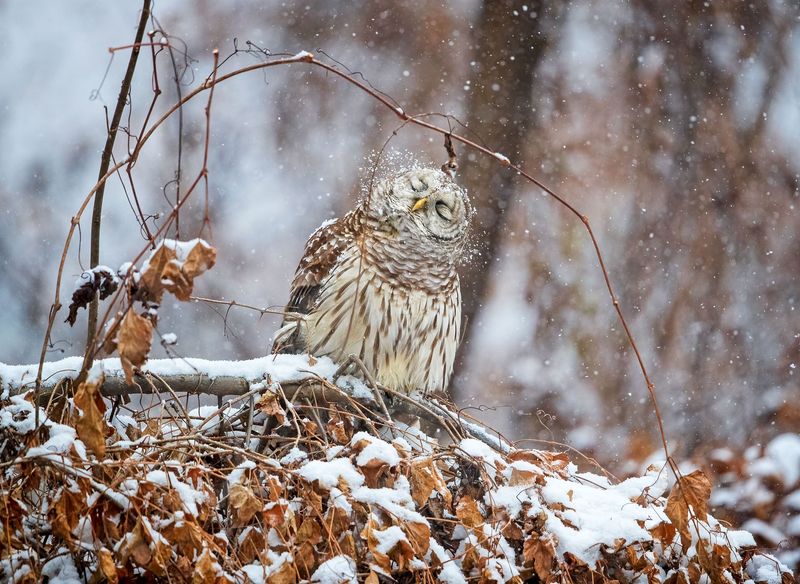
Territorial disputes among barred owls reach their peak during winter months across Missouri.
These birds take property rights seriously, and they’re not shy about letting everyone know where their boundaries lie.
A single pair of barred owls can claim anywhere from 200 to 400 acres as their exclusive hunting ground, and they’ll vocalize loudly to keep others away.
When another owl crosses into claimed territory, the resident birds respond with aggressive calling patterns.
These warning hoots sound different from mating calls and carry a more urgent, harsh quality.
The goal is to intimidate the intruder without resorting to physical confrontation, which could result in injury for both birds.
Missouri’s growing owl population means territories are getting more crowded.
Young owls that hatched the previous spring are now searching for their own spaces, leading to increased boundary disputes.
Established pairs must constantly reinforce their claims through vocal displays, especially during the hours just after sunset and before dawn.
Suburban areas near forests create particularly contentious zones.
These edge habitats offer excellent hunting for mice, voles, and other small creatures that barred owls prefer.
When multiple owls recognize the value of these areas near Missouri homes, the competition intensifies and the noise level rises accordingly.
The territorial calling you hear serves as an acoustic fence.
Rather than patrolling every inch of their land, owls use sound to create an invisible barrier.
This energy-efficient strategy allows them to maintain large territories while conserving calories during the cold winter months when food can be scarce.
3. Cold Weather Increases Hunting Activity
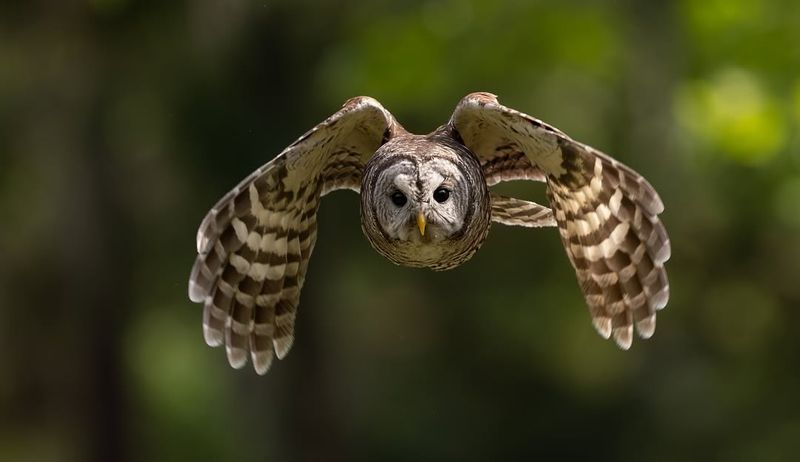
Freezing temperatures force barred owls to hunt more frequently throughout Missouri winters.
These birds need significantly more calories when the thermometer drops, pushing them to be more active and vocal during their hunting expeditions.
The energy required to maintain their body temperature in cold weather means they can’t afford to miss meals.
Hunting success often depends on communication between mated pairs.
Barred owls sometimes coordinate their efforts, with one bird flushing prey while the other waits to ambush.
This teamwork requires vocal signals, adding to the overall noise levels around Missouri neighborhoods where these hunts take place.
Snow cover changes the hunting landscape dramatically.
When deep snow blankets the ground, small mammals tunnel beneath the surface, making them harder to locate.
Barred owls respond by spending more time calling from different perches, possibly using echolocation-like techniques to detect prey movements or simply announcing their presence to scare creatures into revealing themselves.
The hours around dawn and dusk become particularly noisy.
These twilight periods offer the best hunting opportunities, and barred owls maximize their chances by being extra vocal.
They call while moving between perches, scanning different areas of their territory for any sign of food.
Missouri’s mix of wooded areas and open spaces near homes creates perfect hunting corridors.
Barred owls follow these pathways, calling as they go.
Residents living along these natural routes hear more owl sounds simply because they’re positioned along the birds’ regular hunting circuits during the critical winter feeding season.
4. Juvenile Owls Are Finding Their Voice
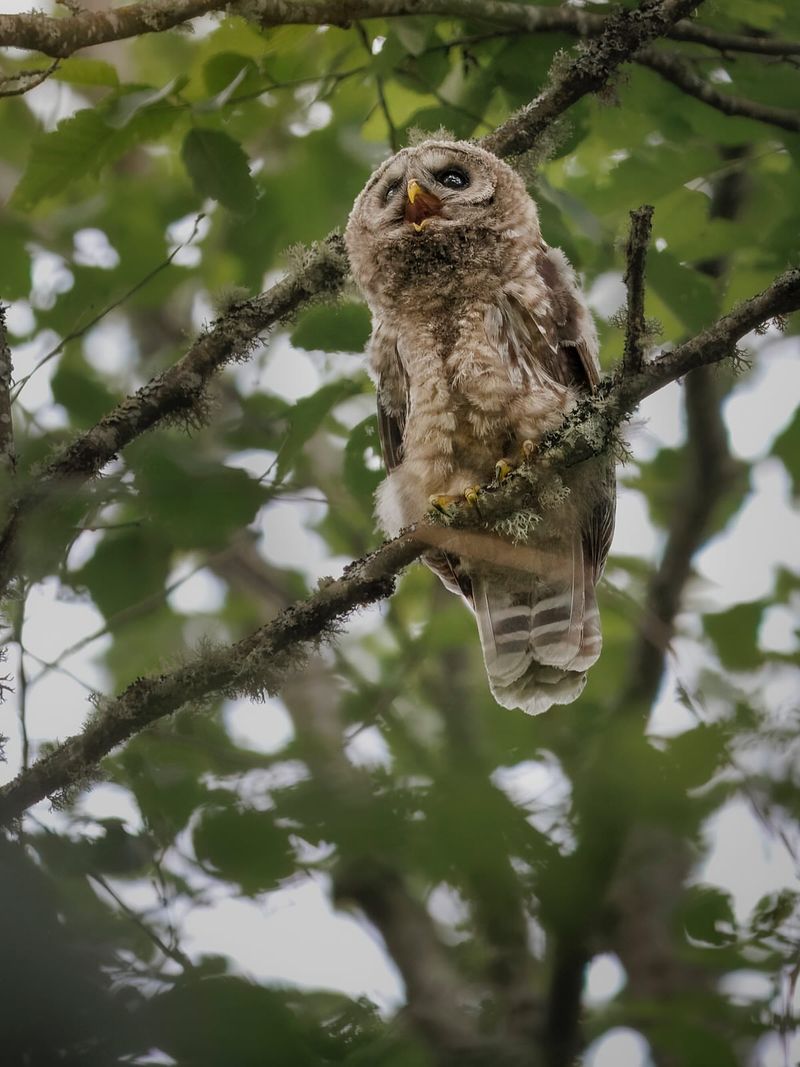
Young barred owls born last spring are now experiencing their first winter away from their parents.
These juvenile birds are learning to vocalize properly, and like teenagers finding their voice, they practice constantly.
Their calls often sound less polished than adult hoots, with squeaky or raspy qualities that can be particularly noticeable around Missouri homes.
Independence comes with challenges for these young owls.
They must establish their own territories while avoiding conflicts with established adults.
This delicate social navigation requires lots of calling, both to announce their presence and to test boundaries.
When they misjudge and wander into occupied territory, the resulting vocal exchanges can be quite dramatic.
Juvenile owls also call more frequently because they’re less efficient hunters.
Without years of experience, they miss more prey attempts and must spend additional time searching for food.
This extended hunting time means more hours of potential calling throughout the night across Missouri’s neighborhoods.
Learning proper owl communication takes practice.
Young barred owls experiment with different call types, durations, and volumes as they figure out what works.
Residents might notice unusual or irregular hooting patterns as these juveniles refine their vocal skills through trial and error.
The presence of multiple young owls in an area creates a chorus effect.
When several juveniles are practicing and exploring simultaneously, the combined noise can seem overwhelming.
Missouri’s healthy barred owl population means many neighborhoods host several of these vocal learners each winter, contributing significantly to the increased sound levels residents notice.
5. Shorter Days Mean More Nighttime Activity
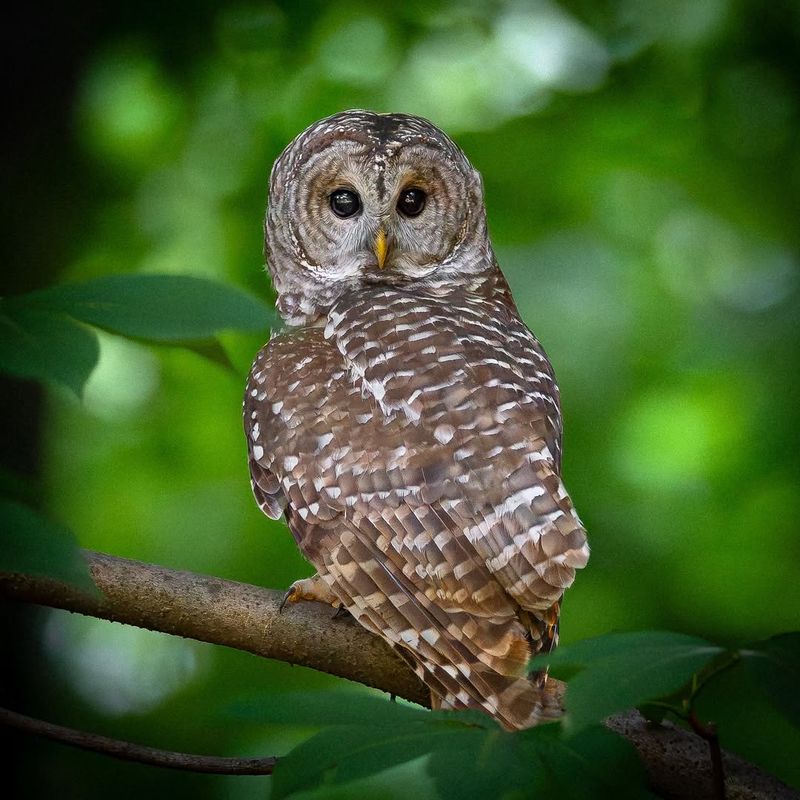
Winter’s extended darkness gives barred owls more hours to be active around Missouri homes.
These nocturnal hunters naturally do most of their calling after sunset, and with night falling before 5 p.m. during December and January, their vocal period overlaps more with human evening routines.
What might have gone unnoticed during summer’s late sunsets becomes impossible to ignore in winter.
Longer nights also mean owls can spread their activities over more hours.
Rather than cramming all their hunting, territorial defense, and social interactions into a shorter window, they have the luxury of time.
This can make it seem like the calling never stops, especially on particularly cold nights when owls are most active.
Human activity patterns compound the issue.
People are home more during winter evenings, inside their houses where sounds from outside seem amplified.
The same owl calls that might blend into summer’s background noise of crickets and air conditioners become the dominant sound in winter’s quieter acoustic landscape.
Barred owls take advantage of the darkness to move closer to human structures.
Porch lights, street lamps, and outdoor fixtures attract insects and small mammals, which in turn attract owls.
Missouri neighborhoods become prime hunting spots, bringing these vocal birds right up to bedroom windows and backyard decks.
The combination of biological needs and environmental conditions creates perfect circumstances for noisy nights.
Owls aren’t necessarily calling more than usual, but the timing and location of their vocalizations make them far more noticeable to Missouri residents trying to enjoy peaceful winter evenings indoors.
6. Food Sources Concentrate Near Human Homes
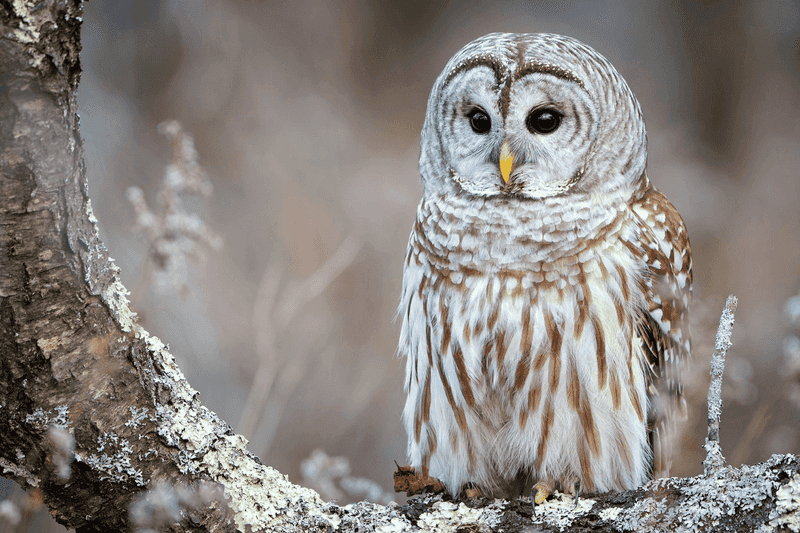
Mice, rats, and other small rodents flock to human neighborhoods during Missouri winters, and barred owls follow their food supply.
Bird feeders scatter seeds that attract rodents, garbage bins provide additional food sources, and warm buildings offer shelter.
This concentration of prey brings owls closer to homes, where their calling becomes impossible to ignore.
Suburban landscapes offer unexpected advantages for winter hunting.
Manicured lawns, gardens, and landscaping create open areas where owls can easily spot prey movement.
These spaces require less energy to hunt than dense forests, making neighborhoods increasingly attractive to barred owls during the demanding winter months.
Outdoor pet food left on porches or in garages attracts unwanted visitors.
Squirrels, chipmunks, and rodents come for easy meals, and barred owls come for them.
The resulting hunting activity happens just feet from human living spaces, with all the associated vocalizations that accompany owl hunting behavior.
Compost piles and vegetable gardens provide another magnet for prey animals.
Even in winter, these areas harbor insects, seeds, and organic matter that sustain rodent populations.
Smart barred owls learn these patterns and regularly patrol Missouri yards, calling to communicate with mates and warn off competitors.
The irony is that human efforts to help wildlife often increase owl noise.
Providing food for songbirds inadvertently feeds rodents, which feeds owls.
Missouri homeowners unknowingly create perfect owl habitat right outside their windows, then wonder why the hooting seems so loud and persistent throughout the winter season.
7. Sound Travels Farther In Cold Air
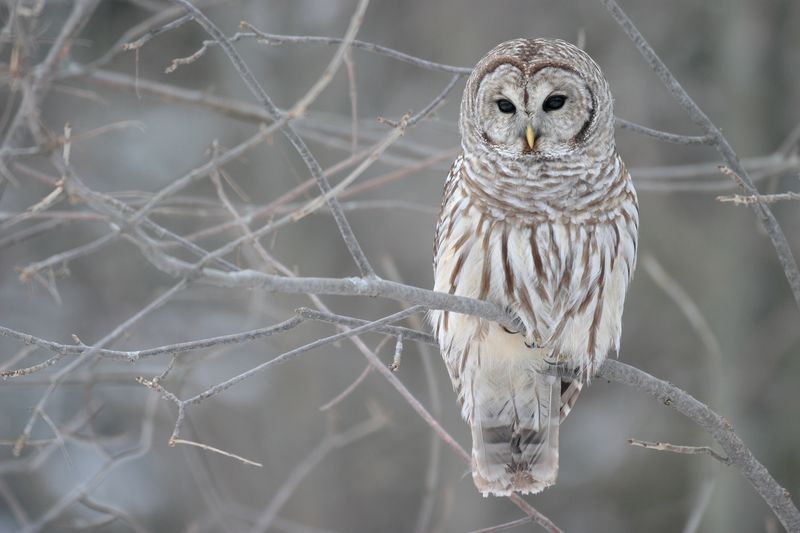
Physics plays a surprising role in why barred owls seem louder around Missouri homes this winter.
Cold air is denser than warm air, allowing sound waves to travel more efficiently over greater distances.
The same owl calling from the same tree will sound noticeably louder on a freezing January night than on a warm July evening.
Winter’s bare trees remove natural sound barriers.
During growing season, leaves and vegetation absorb and deflect sound waves, muffling owl calls.
Once trees drop their leaves across Missouri, nothing blocks the path between a hooting owl and your bedroom window.
The acoustic landscape becomes much more open and transmissive.
Temperature inversions common during winter nights create natural amplification.
When cold air sits beneath a layer of warmer air, sounds bounce off this boundary layer like off a ceiling.
Owl calls can travel horizontally for remarkable distances, reaching homes far from where the bird actually perches.
Snow cover contributes to the effect by reflecting rather than absorbing sound.
Fresh snow acts like an acoustic mirror, bouncing owl calls in multiple directions.
Missouri residents might hear the same owl from several angles simultaneously, creating the impression of multiple birds or louder volumes than actually exist.
Reduced background noise in winter makes owl calls stand out more prominently.
Without crickets chirping, frogs calling, or leaves rustling in the breeze, barred owl hoots dominate the soundscape.
The relative silence of Missouri winter nights means nothing competes with or masks these vocalizations, making them seem dramatically louder even when the owls aren’t actually calling more intensely than usual.