Why Barred Owls Are Visiting North Carolina Backyards More Often
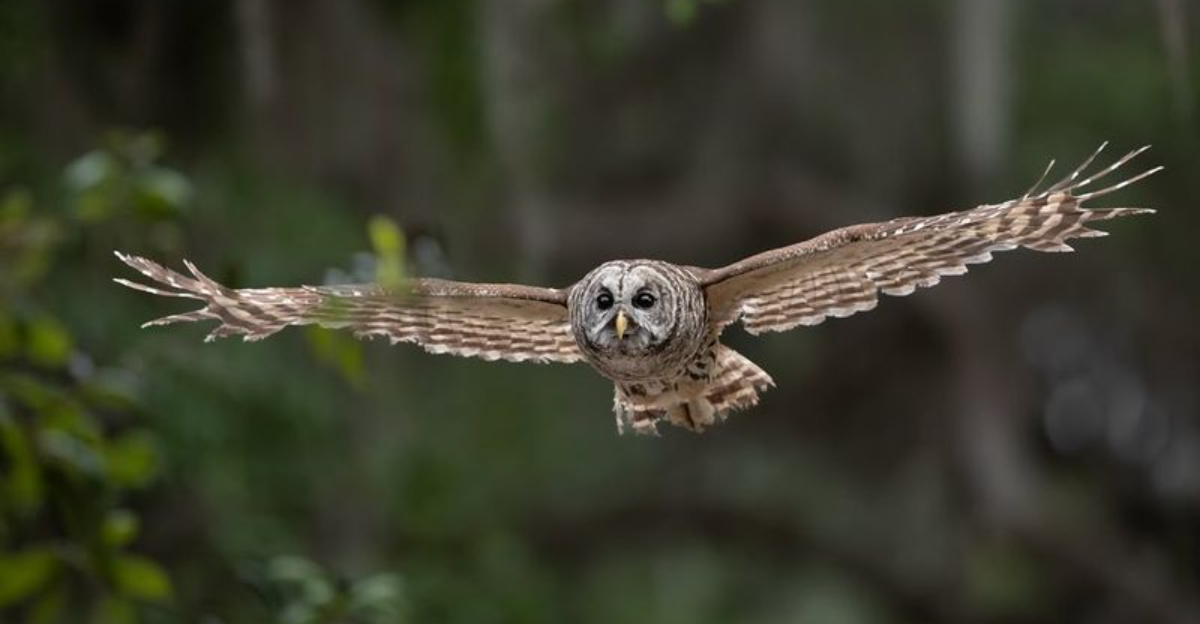
On quiet Carolina nights, a round-eyed neighbor now claims the fence post.
Barred Owls drift from deep woods toward yards, and the shift sparks awe and surprise.
Suburban growth trimmed forests, yet left tasty borders of trees, ponds, and mice.
Mild winters kept prey active, while streetlights cast long shadows that favor a patient hunter.
Feeders drew songbirds; spilled seed drew rodents; opportunity knocked.
Calls echo like a laugh and a question, bold as brass, close as a whisper.
For homeowners, the moment feels like lightning in a bottle, a brush with wild grace at arm’s length.
For the owl, the backyard offers shelter, supper, and safe perches.
Expect curiosity, caution, and respect to guide coexistence across patios, pines, porches, and paths.
Abundant Rodent Population In Suburban Areas

Mice, voles, and rats thrive in neighborhoods where food scraps, bird seed, and garden waste provide easy meals.
Barred owls have sharp hearing that allows them to detect even the smallest movements of rodents scurrying through grass or under bushes.
A single owl can consume several rodents each night, making backyards with active rodent populations prime hunting grounds.
Homeowners who notice owls around their property often discover they have fewer pest problems as a result.
The birds patrol yards silently, swooping down on unsuspecting prey with incredible precision.
Suburban areas offer a steady supply of these small mammals year-round, unlike forests where populations fluctuate seasonally.
Compost piles, storage sheds, and woodpiles create perfect hiding spots for rodents, which in turn attract hungry owls.
Gardens with vegetables and fruits also draw rodents seeking food, and barred owls follow their prey to these locations.
As neighborhoods expand into previously wooded areas, the concentration of rodents increases, providing owls with reliable food sources.
This natural pest control benefits both the owls and homeowners who prefer wildlife solutions over chemical treatments.
Loss Of Natural Forest Habitat
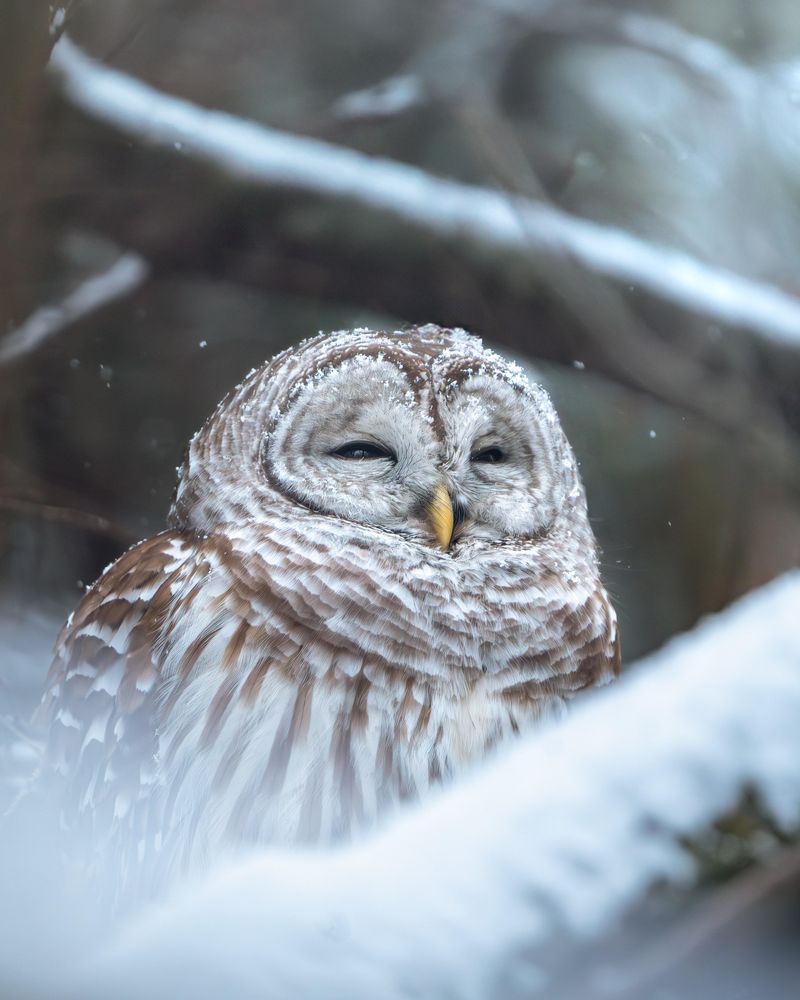
Development projects throughout North Carolina have transformed vast stretches of woodland into housing communities and commercial centers.
Barred owls once nested deep in mature forests now find themselves with fewer options as trees disappear.
When their traditional territories shrink, these adaptable birds must search for new places to roost and hunt.
Backyards with mature trees offer substitute habitat that resembles their natural environment.
Many residential areas retain some older trees that provide suitable nesting cavities and perching spots.
Owls that would normally avoid human activity become more tolerant when their preferred forest homes vanish.
The transition from wild to suburban living happens gradually as development encroaches on owl territories.
Some barred owls establish new territories that overlap residential zones, creating more frequent human-wildlife encounters.
Property owners with wooded lots essentially maintain small forest fragments that owls incorporate into their hunting ranges.
Conservation efforts cannot keep pace with development, forcing wildlife to adjust to changing landscapes.
Barred owls demonstrate remarkable flexibility by accepting suburban environments when natural forests become unavailable.
Presence Of Tall Trees For Roosting
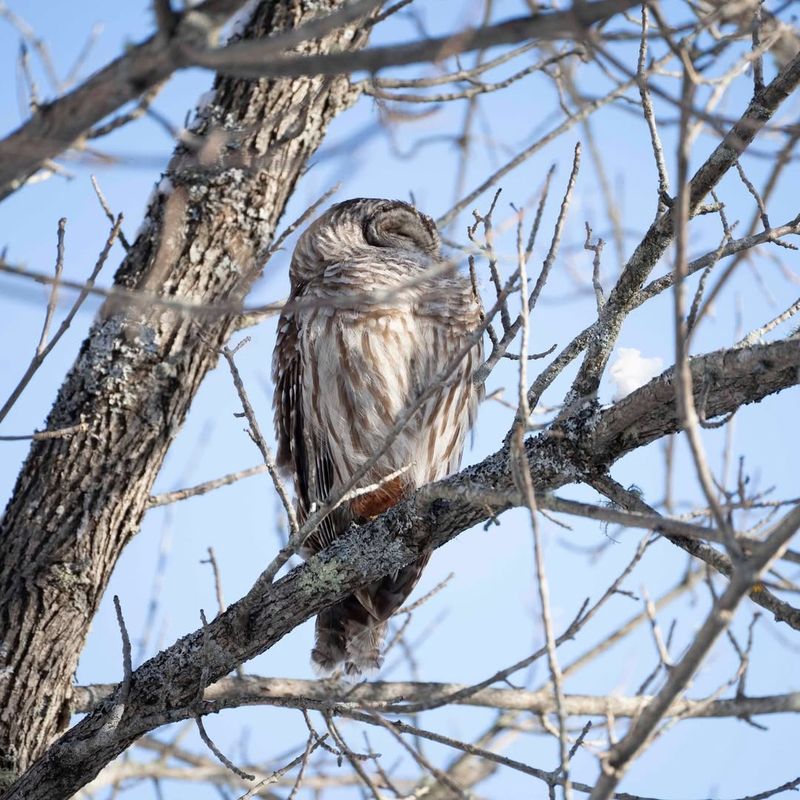
Oak, pine, and maple trees that tower over homes create perfect daytime roosting spots for barred owls.
These birds prefer to rest in dense foliage that conceals them from potential predators and curious onlookers.
Older neighborhoods often feature mature trees planted decades ago that now reach impressive heights.
Barred owls select branches close to the trunk where thick leaves or needles provide shade and camouflage.
From these elevated perches, they can observe their surroundings while remaining hidden from view.
Many homeowners never realize an owl roosts in their yard because the bird blends seamlessly with tree bark and branches.
Tall trees also offer protection from ground-based threats and give owls quick escape routes if disturbed.
During hot summer months, the canopy provides cooling shade that helps owls conserve energy.
In winter, evergreen trees offer shelter from wind and precipitation while deciduous trees expose owls to warming sunlight.
Yards with multiple tall trees become especially attractive because owls can move between roosting sites based on weather conditions and disturbance levels.
Property owners who maintain mature trees inadvertently create valuable habitat that supports owl populations.
Availability Of Bird Feeders Attracting Prey
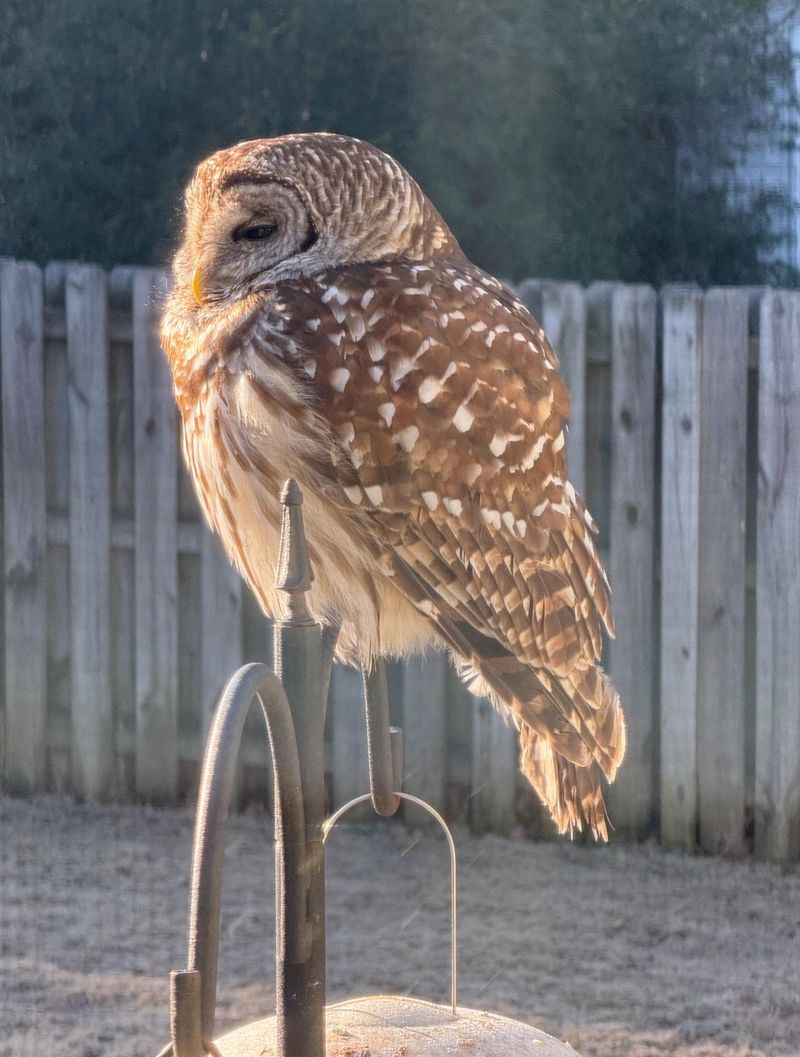
Feeders stocked with seeds, suet, and nuts draw flocks of songbirds, sparrows, and finches to backyards throughout the day.
Squirrels and chipmunks also visit feeders regularly, creating a buffet of potential prey for barred owls.
While owls primarily hunt rodents, they occasionally catch smaller birds that gather in concentrated areas.
The predictable presence of prey animals near feeders makes these spots efficient hunting locations.
Owls perch in nearby trees and watch for vulnerable targets that stray from protective cover.
Dawn and dusk feeding times coincide with peak owl activity, increasing the likelihood of successful hunts.
Homeowners who maintain feeders year-round provide consistent food sources that support diverse prey populations.
Spilled seed on the ground attracts rodents that feed at night when owls are most active.
This creates an indirect relationship where bird feeders ultimately support owl populations through the food chain.
Some people welcome owls as natural controllers of feeder pests like rats and aggressive squirrels.
The concentration of animal activity around feeders transforms ordinary backyards into productive hunting territories for barred owls seeking easy meals.
Reduced Competition From Other Predators
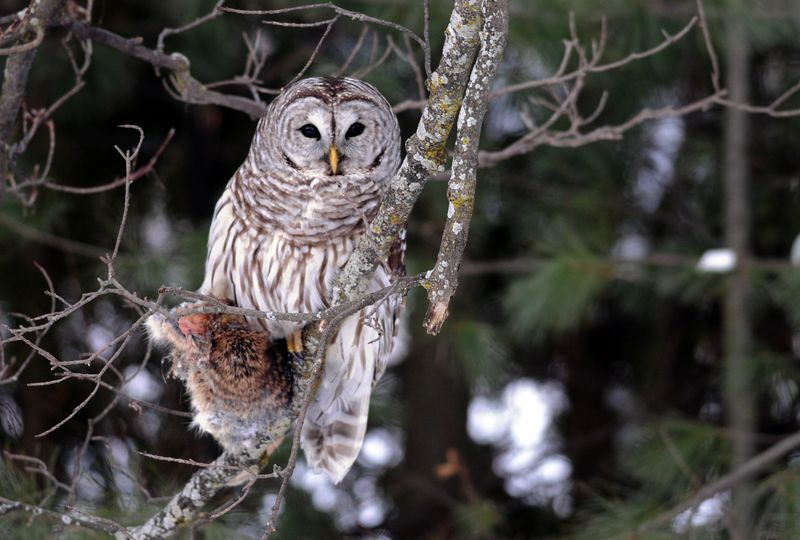
Great horned owls and hawks, which typically dominate forest hunting territories, appear less frequently in residential neighborhoods.
Barred owls face fewer challenges from competing raptors when they hunt in suburban environments.
Foxes, bobcats, and other mammalian predators avoid densely populated areas where people and pets pose threats.
This absence of competition allows barred owls to claim suburban territories with minimal conflict.
In natural forests, multiple predator species compete for the same prey animals, reducing food availability for each hunter.
Backyards offer barred owls exclusive access to abundant rodent populations without interference from larger, more aggressive raptors.
The owls establish hunting patterns and territories that go unchallenged by other predatory birds.
Smaller owl species like screech owls occupy different niches and rarely compete directly with barred owls for resources.
Human presence discourages some predators but does not significantly bother barred owls, which adapt well to nearby activity.
With reduced competition, individual owls can hunt more efficiently and maintain better body condition throughout the year.
This competitive advantage makes suburban territories particularly valuable for barred owls seeking reliable food sources and safe nesting locations.
Water Sources Like Ponds And Birdbaths
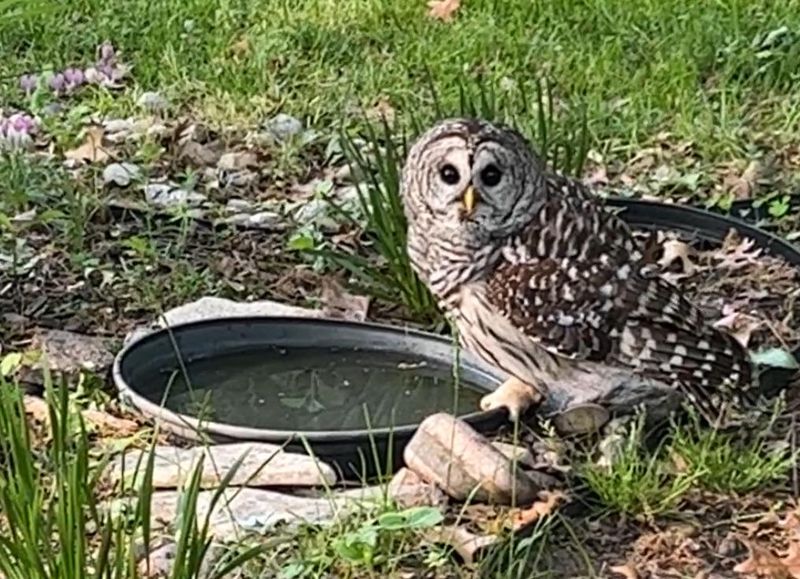
Decorative ponds, fountains, and birdbaths provide essential drinking water that barred owls need daily.
While owls obtain some moisture from their prey, they still require fresh water for drinking and bathing.
Backyard water features attract amphibians like frogs and salamanders, which owls occasionally consume as supplemental food.
Ponds also support populations of small fish, insects, and other creatures that draw rodents and birds to drink.
This concentration of animal activity around water sources creates productive hunting zones for patient owls.
During dry summer months, natural water sources in forests may diminish, making backyard ponds particularly valuable.
Owls visit water features during early morning or evening hours when they feel most secure.
Shallow birdbaths allow owls to wade in and splash water over their feathers to maintain plumage condition.
Property owners who maintain clean, accessible water year-round support not only owls but entire backyard ecosystems.
In winter, heated birdbaths or ponds with aerators provide liquid water when natural sources freeze solid.
The presence of reliable water makes suburban yards more attractive to barred owls compared to forest areas where water availability fluctuates seasonally.
Quiet Nighttime Environment For Hunting

Most residential neighborhoods become remarkably quiet after dark when people retreat indoors for the evening.
This nocturnal calm creates ideal conditions for barred owls to hunt using their exceptional hearing.
The birds can detect the faint rustling of mice moving through grass or leaves from significant distances.
Street lights and porch lights provide enough illumination for owls to spot prey without interfering with their night vision.
Unlike busy forests with competing nocturnal animals, suburban yards offer relatively undisturbed hunting opportunities.
Owls patrol backyards methodically, moving from perch to perch while listening for prey movements below.
The absence of loud nighttime activity allows them to focus entirely on hunting without constant disturbances.
Occasional car traffic or barking dogs rarely interrupt their hunting patterns for long periods.
Weeknight evenings prove especially productive when neighborhoods settle into predictable quiet routines.
Barred owls learn the rhythms of residential areas and time their hunting activities accordingly.
The peaceful nighttime atmosphere of suburbs contrasts with forests where wind, falling branches, and other animals create constant background noise that masks prey sounds.
Nesting Cavities In Older Trees
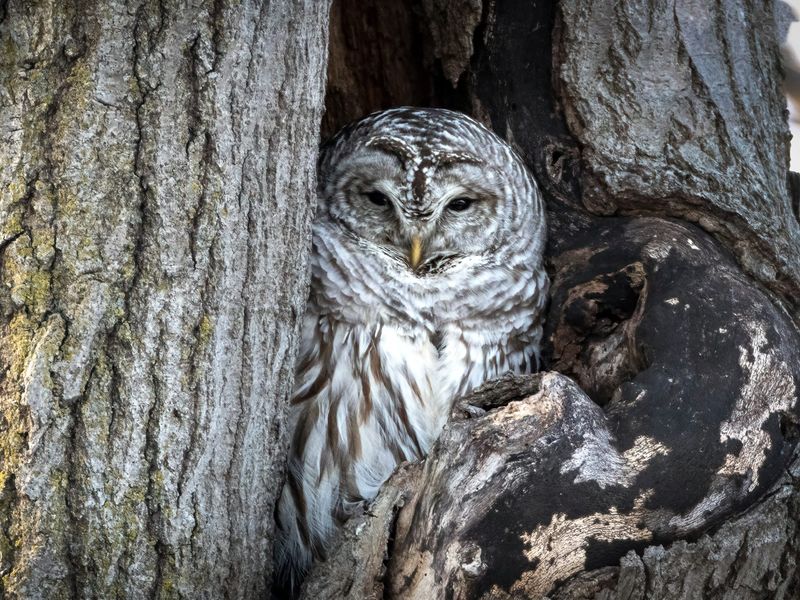
Barred owls do not build their own nests but instead rely on existing cavities in mature trees.
Older neighborhoods feature trees with natural hollows created by decay, woodpecker excavations, or broken branches.
These ready-made nesting sites prove essential for owl reproduction and territory establishment.
A suitable cavity must be large enough to accommodate an adult owl and eventually a clutch of eggs.
Trees between 50 and 100 years old often develop the perfect combination of size and cavity formation.
Homeowners who preserve old trees provide critical nesting habitat that may be scarce in surrounding forests.
Owls return to successful nesting sites year after year, establishing long-term residence in favorable backyards.
The presence of multiple cavity trees in a neighborhood supports several breeding pairs within a small area.
Dead standing trees, called snags, offer particularly good nesting opportunities but are often removed for safety concerns.
Property owners who leave snags standing in low-risk locations contribute significantly to local owl populations.
Artificial nest boxes designed for owls can supplement natural cavities, though barred owls strongly prefer natural sites when available.
Climate Changes Affecting Behavior Patterns

Warmer winters and shifting seasonal patterns influence when and where barred owls hunt and nest.
Milder temperatures allow prey animals to remain active throughout winter months, providing consistent food sources.
Extended growing seasons in backyards mean more vegetation that supports larger rodent populations year-round.
Climate shifts also affect insect populations, which in turn impact the small mammals that owls hunt.
Some barred owls adjust their breeding schedules in response to earlier springs and longer warm periods.
Suburban areas often experience microclimates that differ from surrounding forests, staying slightly warmer due to buildings and pavement.
These temperature differences make residential zones more comfortable for owls during extreme weather events.
Drought conditions in forests drive owls toward backyards where irrigation maintains green spaces and active prey populations.
Severe storms and changing precipitation patterns damage forest habitat while leaving suburban trees relatively intact.
Barred owls demonstrate behavioral flexibility by adapting their movement patterns to take advantage of climate-related changes.
Scientists continue studying how warming trends influence owl distribution and whether suburban adaptation represents a long-term shift in habitat preferences.
Increased Tolerance Of Human Activity
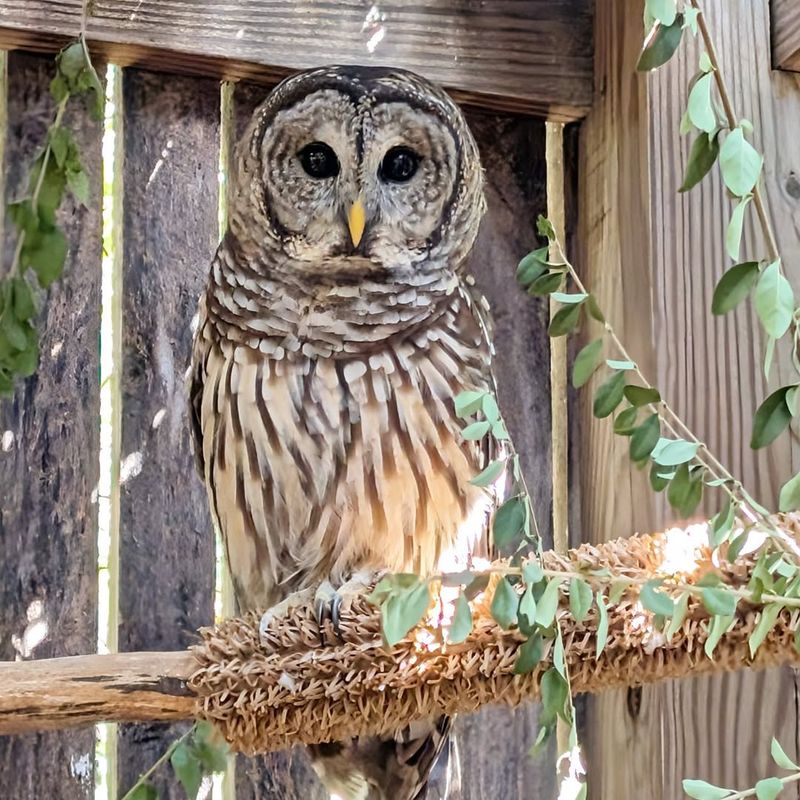
Younger generations of barred owls grow up in environments where human sounds and activities are normal background experiences.
These birds learn that people generally pose no direct threat, allowing them to hunt and roost closer to homes.
Owls distinguish between threatening and benign human behaviors, ignoring routine activities like yard work or evening walks.
Property owners who avoid direct harassment help owls feel secure enough to establish permanent territories nearby.
Many barred owls perch on deck railings, fence posts, or low branches just meters from occupied houses.
The birds observe human activity with calm curiosity rather than fear, suggesting successful adaptation to suburban life.
Children playing, dogs barking, and cars passing become familiar sounds that owls incorporate into their understanding of safe environments.
This habituation process happens gradually as owls test boundaries and learn which situations require caution.
Photographers and birdwatchers report increasingly close encounters with barred owls that show little concern about human observers.
However, owls maintain healthy wariness and will relocate if they feel directly threatened or excessively disturbed.
The growing tolerance benefits both species by allowing peaceful coexistence in shared spaces.