Why Barrel Cactus Is A Smart Choice For Arizona Landscapes
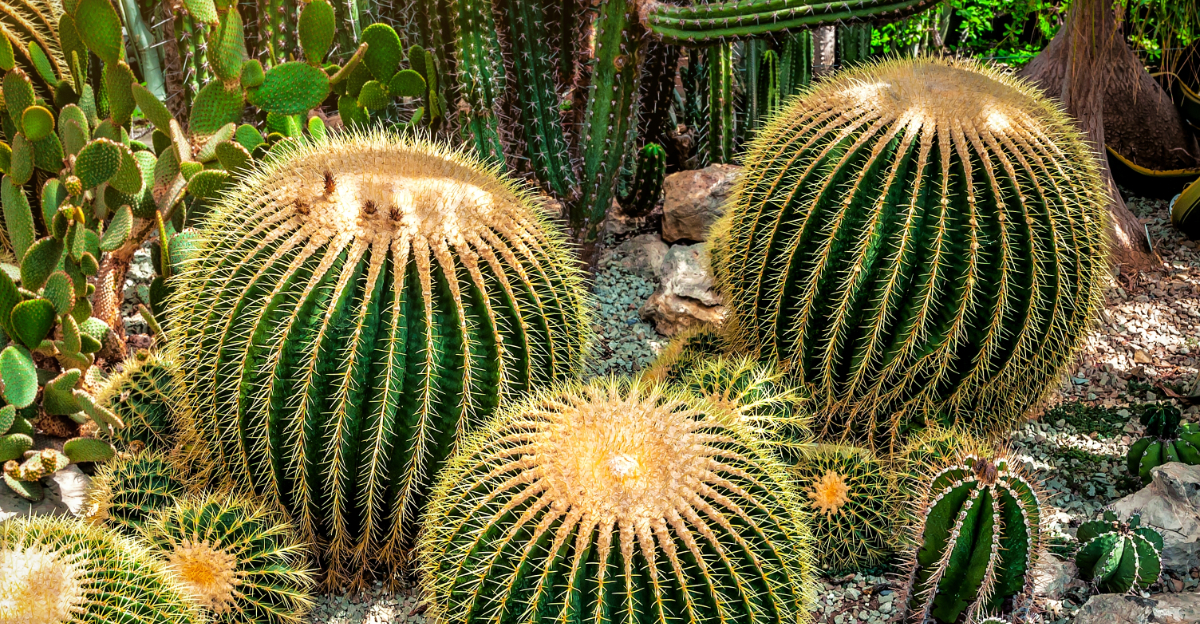
Barrel cactus stands out in Arizona landscapes because it delivers structure without complication. Its rounded form anchors gravel beds and desert plantings in a way few other plants can.
The shape stays clean and defined even under relentless sun.
Heat, reflected light, and extended dry periods rarely affect its overall appearance. It maintains firm growth and consistent color as seasons shift, which makes it dependable in exposed areas that challenge softer plants.
For landscapes that aim for strong form, low water use, and long-term stability, barrel cactus provides a steady presence that does not fade or require constant correction.
1. Handles Extreme Arizona Heat Without Extra Water
Summer in Arizona is not gentle. Temperatures regularly push past 110 degrees Fahrenheit in cities like Phoenix and Tucson, and most plants struggle to survive without extra irrigation.
Barrel cactus just stands there and takes it.
Unlike ornamental plants shipped in from cooler climates, the barrel cactus evolved right here in the Sonoran Desert. Its thick outer skin acts almost like a shield, reflecting heat and slowing down moisture loss.
The ribs on its body expand and contract depending on how much water is stored inside, which helps it handle temperature swings without cracking or shriveling.
A lot of Arizona homeowners make the mistake of planting heat-sensitive shrubs along south-facing walls, then wonder why those plants look burned by July. Barrel cactus placed in the same spot will not flinch.
It actually prefers full, direct sun with no shade cover at all.
Even during the intense stretch from June through August, when the ground gets scorching hot and the air feels like a furnace, barrel cactus holds steady. No wilting, no drooping, no yellowing leaves to deal with.
For anyone managing a yard in Arizona without a lot of time to check on plants daily, that kind of reliability is genuinely valuable.
Planting one near a rock bed or gravel path in your Arizona yard means one less thing to worry about all summer long. Tough conditions are where this plant simply feels at home.
2. Stores Moisture Efficiently During Long Dry Periods
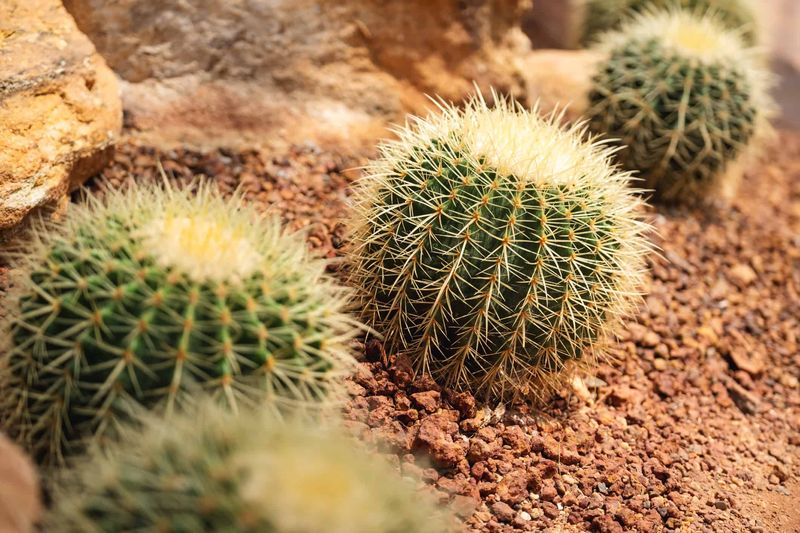
Months can pass in Arizona without a single drop of rain, especially between October and June. Most plants need regular watering to survive that stretch.
Barrel cactus handles it differently.
Inside that rounded, ribbed body is a thick, spongy tissue that holds water absorbed during rain events. When the soil dries out completely, the plant slowly draws from that internal reserve instead of pulling from the ground.
It is essentially carrying its own water supply wherever it goes.
A common myth is that you can cut open a barrel cactus and drink the water inside. That is not accurate.
The liquid stored in the tissue is thick and slightly toxic to humans. But for the plant itself, that internal moisture system is brilliantly efficient and perfectly suited to Arizona conditions.
During extended dry spells, barrel cactus actually shrinks slightly as it uses up stored moisture. Then, after a good monsoon rain, it plumps back up within days.
Watching that happen in your own yard is one of the more interesting things about growing desert plants.
For Arizona gardeners trying to cut their water bills, this storage ability is a real advantage. You do not need to set up irrigation for barrel cactus the way you would for roses or lawn grass.
Watering once or twice a month during summer, or relying mostly on monsoon rainfall, is usually enough to keep one healthy and looking sharp in your landscape.
3. Thrives In Poor Rocky And Alkaline Desert Soil
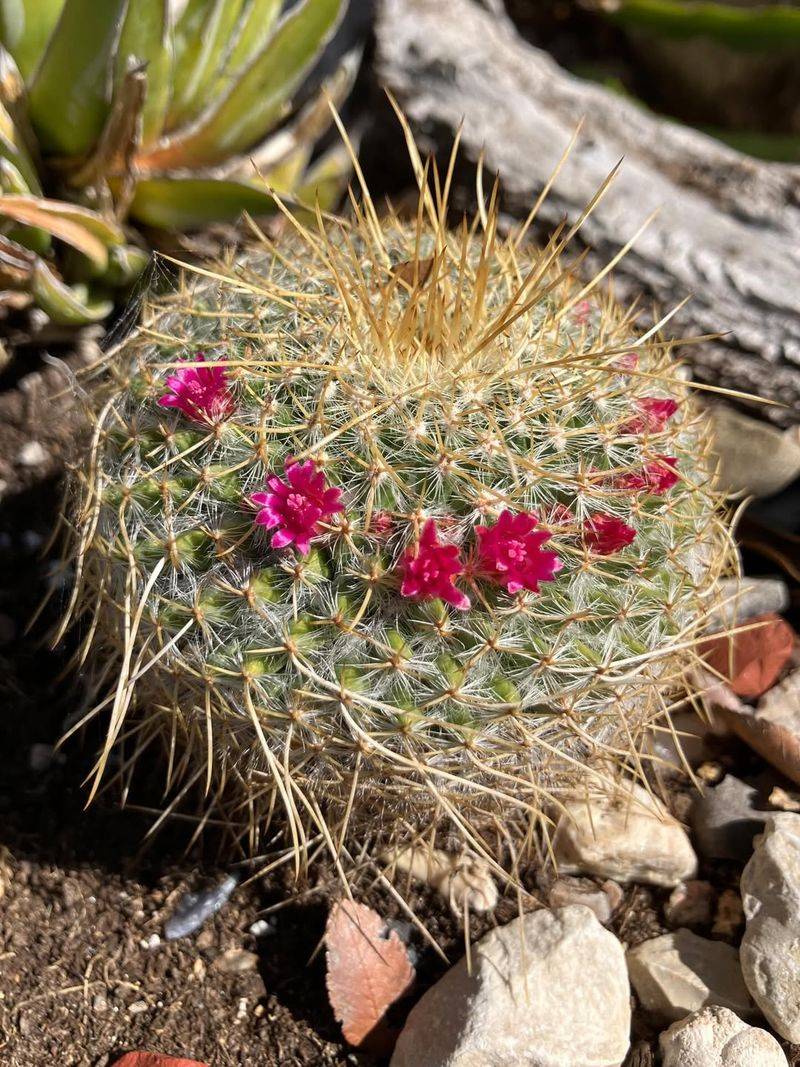
Arizona soil is not exactly gardener-friendly. Much of it is rocky, compacted, low in organic matter, and highly alkaline.
Plants that need rich, well-draining soil simply struggle here without major soil amendments.
Barrel cactus skips all of that. It grew up in the exact kind of poor, gravelly, alkaline ground that covers most of the Sonoran Desert.
Planting it in heavily amended soil can actually cause problems, since overly rich or moisture-retaining soil increases the risk of root rot.
When you are setting up a new landscape bed in Arizona, you often have two choices: spend a lot of money improving the soil, or choose plants that already belong in it. Barrel cactus falls firmly in the second category.
Drop it into a hole dug in native rocky ground, backfill with the same soil you pulled out, and it will settle in without complaint.
One thing worth knowing is that barrel cactus prefers good drainage above almost everything else. If your yard has a low spot where water pools after monsoon storms, that is not the right place for it.
A slightly raised area or a spot with naturally rocky ground will serve it much better.
For Arizona homeowners dealing with caliche layers or hard-packed desert soil that makes planting frustrating, barrel cactus is one of the few plants that genuinely does not mind. Harsh soil is not a problem for it.
Soft, soggy soil is the one thing to avoid.
4. Requires Minimal Maintenance Once Established
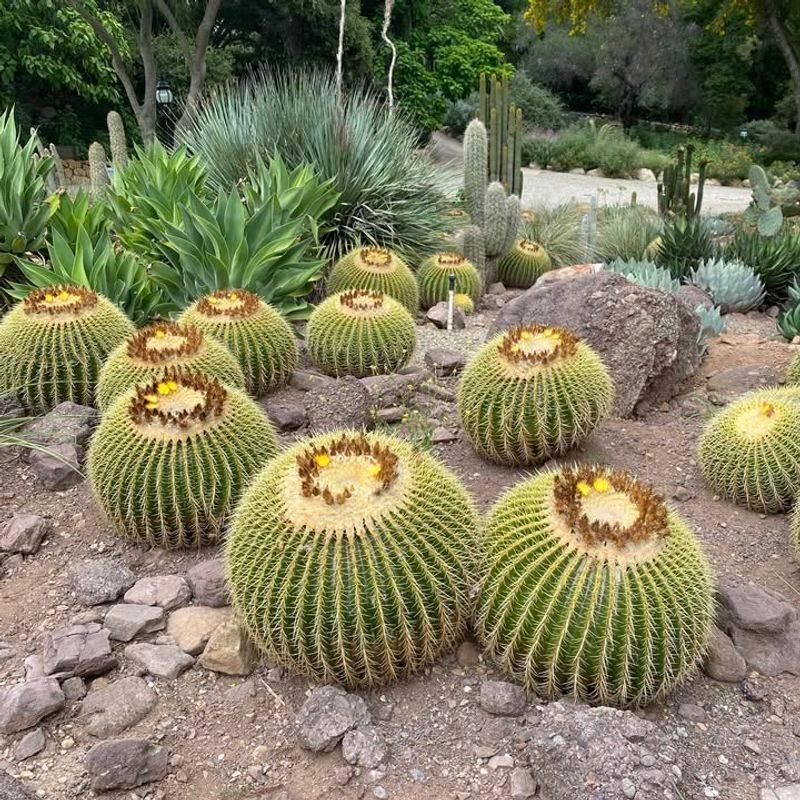
Ask any experienced Arizona gardener what they wish they had planted more of, and barrel cactus comes up often. Not because it looks exotic or rare, but because it simply does not ask for much once it is in the ground.
No pruning, no fertilizing, no pest sprays, no seasonal cleanup. Barrel cactus drops no leaves, grows slowly and predictably, and does not spread aggressively into surrounding areas.
For someone managing a large yard or a property they visit only occasionally, that matters a lot.
Watering needs drop off significantly after the first year or two. During that initial period, some supplemental watering helps the root system get established in Arizona’s hard, dry ground.
After that, natural rainfall combined with the occasional deep soak during prolonged dry spells is usually all it needs.
Fertilizer is not necessary. In fact, pushing growth with fertilizer can make barrel cactus look unnatural and can stress the plant.
Native desert soil, even the poor rocky kind found across most of Arizona, provides enough nutrients for it to grow at its own steady pace.
Weeding around the base is the only real chore, and even that is minimal if you use gravel or decomposed granite as ground cover. Barrel cactus pairs naturally with those materials.
Keep the area around it clean and dry, give it full sun, and it will look after itself season after season without any extra encouragement from you.
5. Provides Year Round Structure And Bold Form
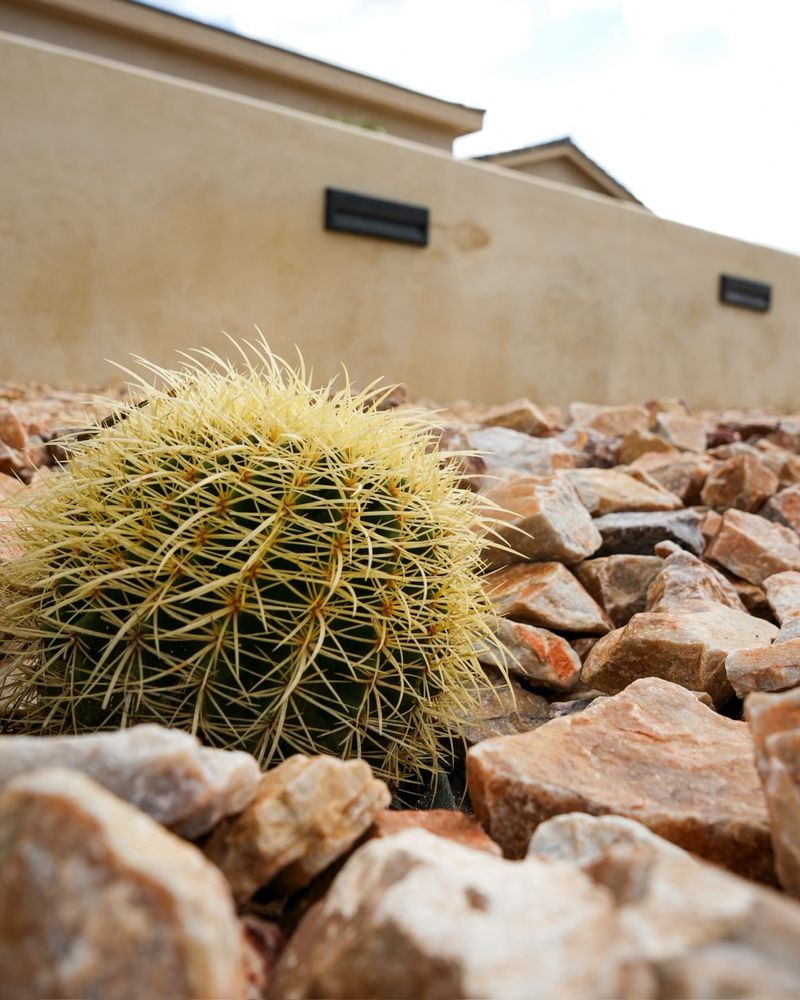
Most flowering plants in Arizona look great for a few weeks and then fade into the background. Barrel cactus does not work that way.
Its bold, rounded shape and dense golden or reddish spines make it a visual anchor in any landscape setting, all twelve months of the year.
Structure matters a lot in desert landscaping. Without it, a yard can feel like a random collection of gravel and scattered plants.
A well-placed barrel cactus gives the eye somewhere to land and creates a natural focal point that holds the design together even in the middle of January or during the flat, dry stretch before monsoon season.
In Phoenix and Tucson, where outdoor spaces are used year-round, having plants that look intentional in every season is genuinely useful. Barrel cactus does not go dormant in a way that makes it look scraggly or bare.
Its form stays consistent and clean no matter what the season brings.
Grouping three barrel cacti of slightly different sizes together in a rock garden creates a natural, layered look without much effort. Planting a single large specimen as a standalone feature near an entry path works just as well.
Either approach gives the landscape a sense of permanence and purpose.
Few plants in Arizona deliver that kind of steady visual presence without needing seasonal replanting, cut-back schedules, or constant grooming. Barrel cactus earns its place in the yard by simply being there, looking exactly like it belongs.
6. Produces Bright Seasonal Blooms In Full Sun
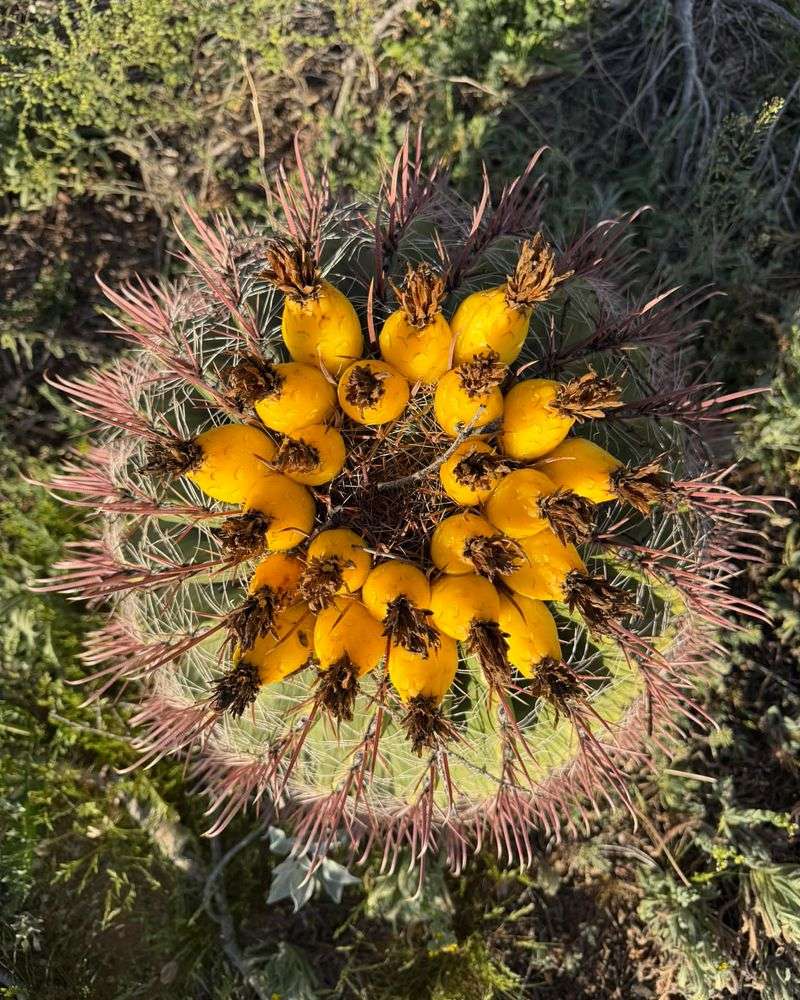
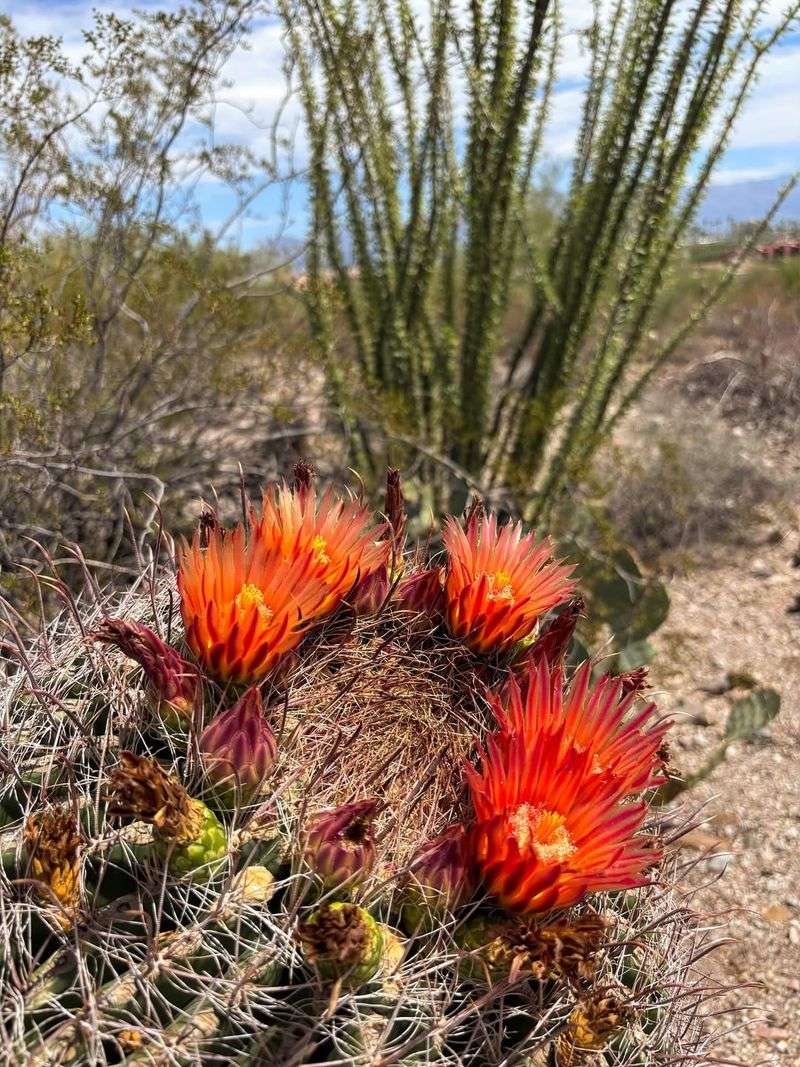
Bright yellow flowers crowning the top of a barrel cactus in late summer are one of the more pleasant surprises this plant has to offer. Most people think of it as purely structural, but come July or August, it puts on a real show.
Blooming usually happens after the monsoon rains begin in Arizona. The flowers appear in a tight ring near the top of the plant and can be yellow, orange, or occasionally red depending on the variety.
They are not huge, but against the spiny green body of the cactus, the contrast is sharp and genuinely striking.
After the flowers fade, small yellow fruits develop in the same ring formation. They stay on the plant for months, sometimes through the following spring, adding a second layer of seasonal interest.
Birds and small wildlife in Arizona are drawn to those fruits, which adds a little life and movement to the yard.
Getting barrel cactus to bloom reliably comes down to placement. Full, unobstructed sun is essential.
Plants tucked under a palo verde tree or near a shaded wall may grow fine but bloom inconsistently or skip the season entirely. A south or west-facing spot with no overhead shade gives the best results.
For Arizona gardeners who want seasonal color without dealing with annuals or high-water perennials, barrel cactus blooms are a low-effort reward. Plant it right, leave it alone, and it will deliver color on its own schedule without any prompting from you.
7. Works Well In Xeriscape And Low Water Designs
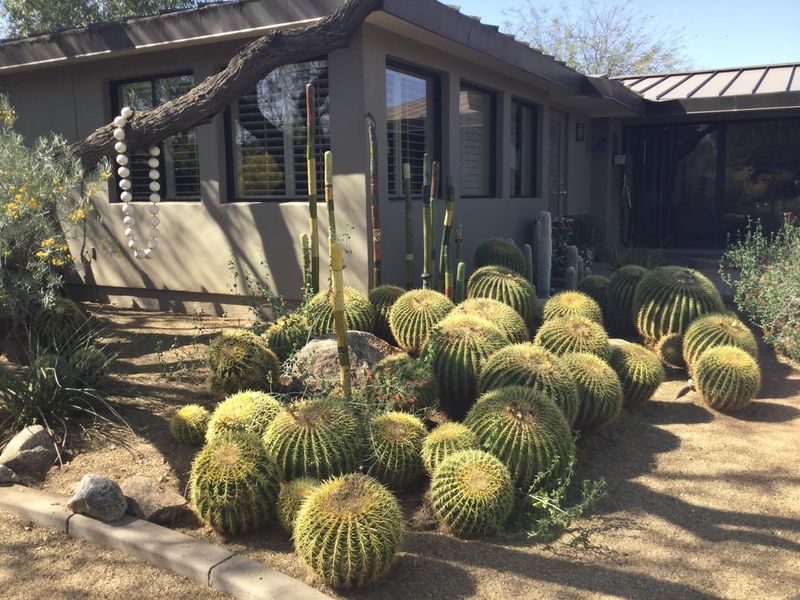
Water restrictions are a real concern across Arizona, especially in the greater Phoenix metro area where population growth keeps pushing demand higher.
Xeriscape design, which focuses on using plants that need little to no irrigation, has become less of a trend and more of a practical necessity.
Barrel cactus fits xeriscape planning almost perfectly. It needs no permanent irrigation system, tolerates long gaps between watering, and pairs naturally with other low-water desert plants like palo verde, agave, brittlebush, and desert marigold.
Building a cohesive design around it is straightforward because so many Arizona natives share its basic requirements.
Decomposed granite and crushed gravel are the go-to ground covers in xeriscape yards, and barrel cactus looks completely at home surrounded by either material.
The colors of the spines, ranging from gold to red to gray depending on the variety, complement the warm tones of Arizona gravel beautifully without any forced styling.
One practical tip: when placing barrel cactus in a xeriscape layout, give it enough room to grow. A mature specimen can reach three to four feet tall and nearly as wide.
Crowding it against a wall or other plants creates problems over time and takes away from the clean, open look that makes desert landscaping feel intentional.
Arizona homeowners who switch to xeriscape designs typically see significant drops in their water bills. Adding barrel cactus to that plan is one of the easiest decisions in the whole process.
It belongs in this landscape the way gravel and sunshine do.