Why California Homeowners Are Growing Lavender Near Their Front Doors
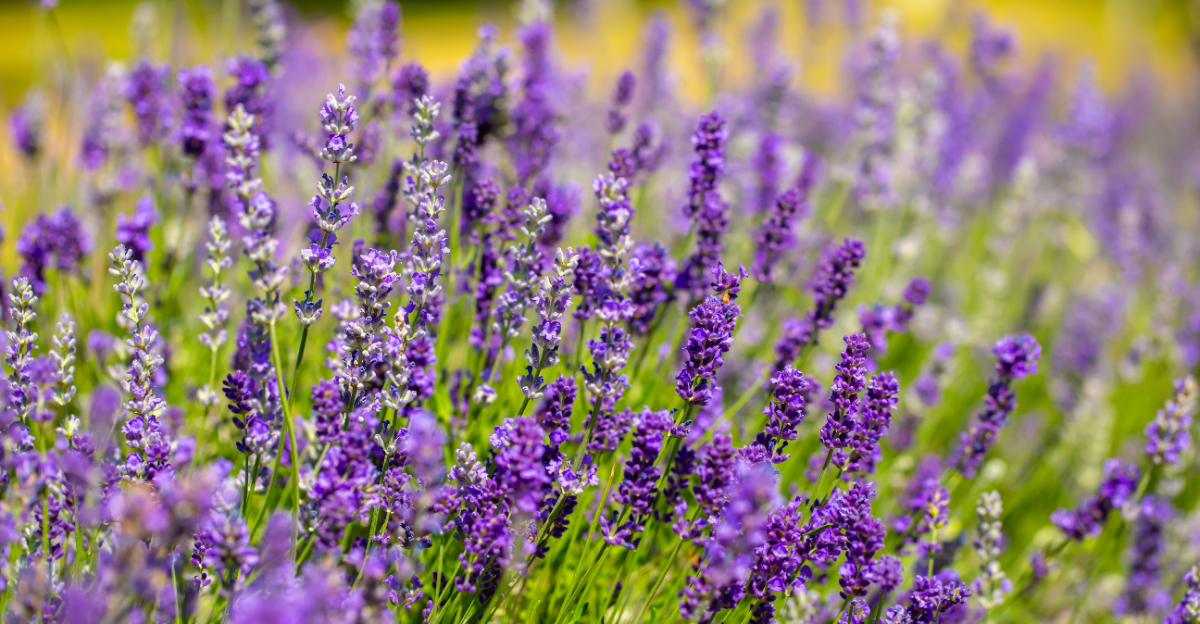
Step up to a California home framed with lavender and you notice it right away. The soft purple blooms, the calming scent drifting in warm air, and the gentle buzz of busy bees create a warm and welcoming feel.
Planting lavender near the front door has become a popular choice, and it is not just for looks.
This sun loving herb thrives in dry conditions, needs very little water, and stays beautiful and fragrant through long bright seasons.
Many homeowners love the relaxed, fresh atmosphere it brings to entryways, almost like nature offering a soothing greeting every time you arrive. Lavender also attracts pollinators, boosts curb appeal, and releases a clean scent that lingers in the air.
Simple, practical, and easy to grow, it fits perfectly with California living and adds charm the moment you walk up to the door.
1. The Scent That Welcomes You Home
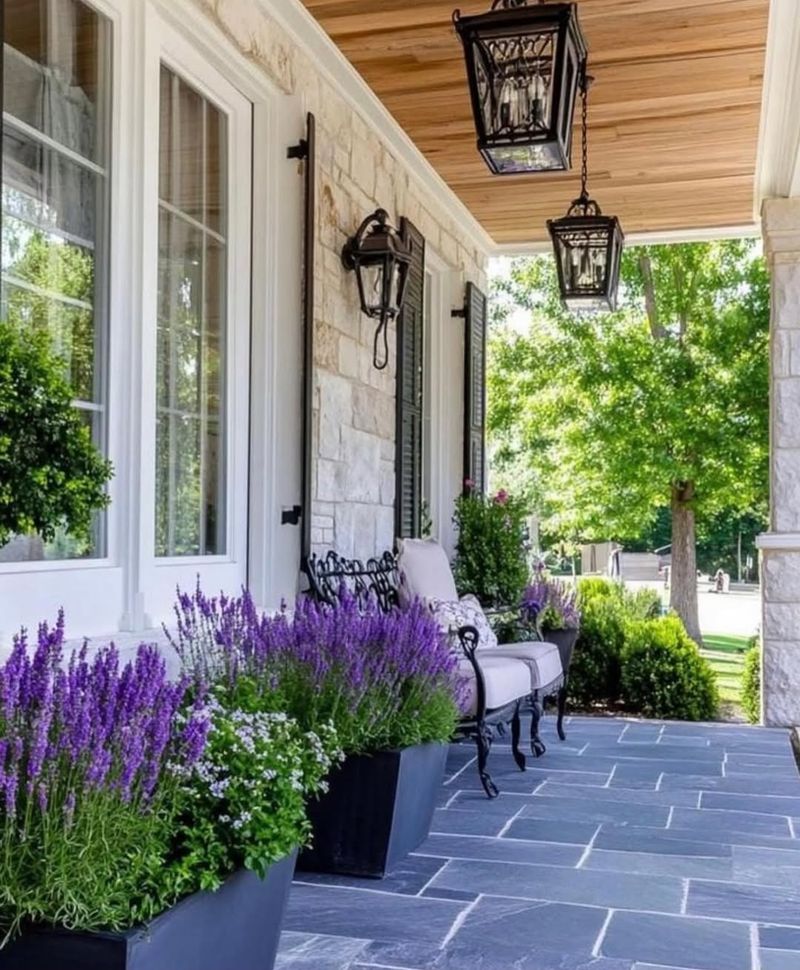
Walking up to your door after a long day and catching the scent of lavender can create an immediate sense of calm. Its natural fragrance is released as the sun warms the plant’s aromatic oils in the leaves and flowers, offering a gentle alternative to artificial scents.
California’s abundant sunshine often enhances this effect. On warm afternoons, the heat can intensify the aroma without making it overwhelming, and even lightly brushing the stems may release a subtle burst of fragrance that lingers briefly in the air.
Some homeowners wonder whether the scent will fade or become too strong, but lavender is generally known for a balanced fragrance, noticeable yet usually not overpowering.
The scent tends to be strongest during peak bloom in late spring to early summer, then gradually softens while remaining present.
Planting lavender near a walkway or entrance allows its fragrance to be enjoyed regularly. Many people find the aroma soothing, helping create a relaxing transition when arriving home.
This simple sensory detail can make an entryway feel more welcoming and memorable each day.
2. Natural Pest-Repelling Power
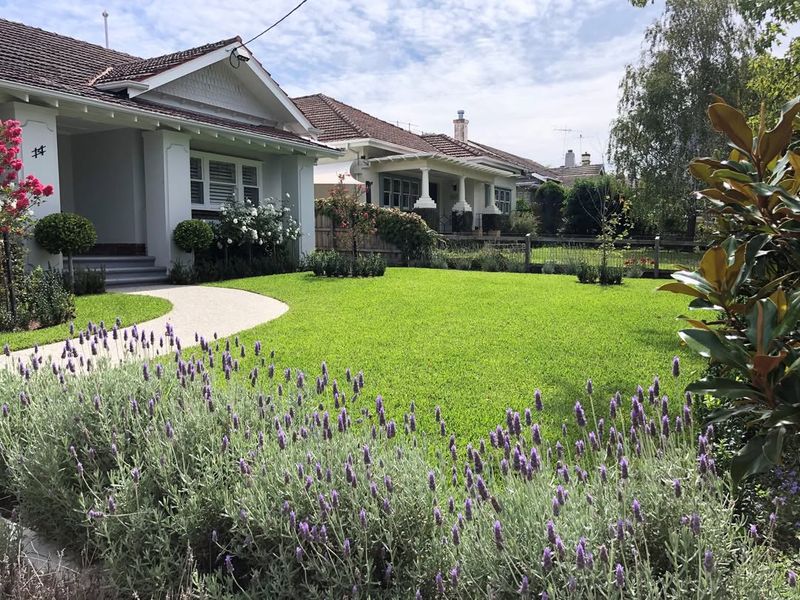
Lavender is often noted for its aromatic oils, which some people associate with discouraging certain insects around entryways. While not a complete barrier, the scent may help make the immediate area less attractive to some flying pests compared with unscented spaces.
Planting lavender near a doorway can contribute to a more pleasant, less pest-friendly environment.
This can be especially welcome during warmer California evenings when insects are more active. Although lavender alone does not replace other mosquito-control measures, it offers a natural, low-maintenance addition that works continuously as part of the garden.
Large hedges are not required to enjoy these benefits—several well-placed plants near entry points or seating areas can help concentrate the fragrance where it is most noticeable.
Air movement can carry the scent beyond the planting area, subtly extending its presence.
Lavender is also commonly less favored by deer and rabbits compared with many tender garden plants. While not completely animal-proof, it is often avoided, which can help keep entry plantings looking tidy and intact in areas where browsing wildlife is common.
3. Drought-Tolerant And Water-Wise
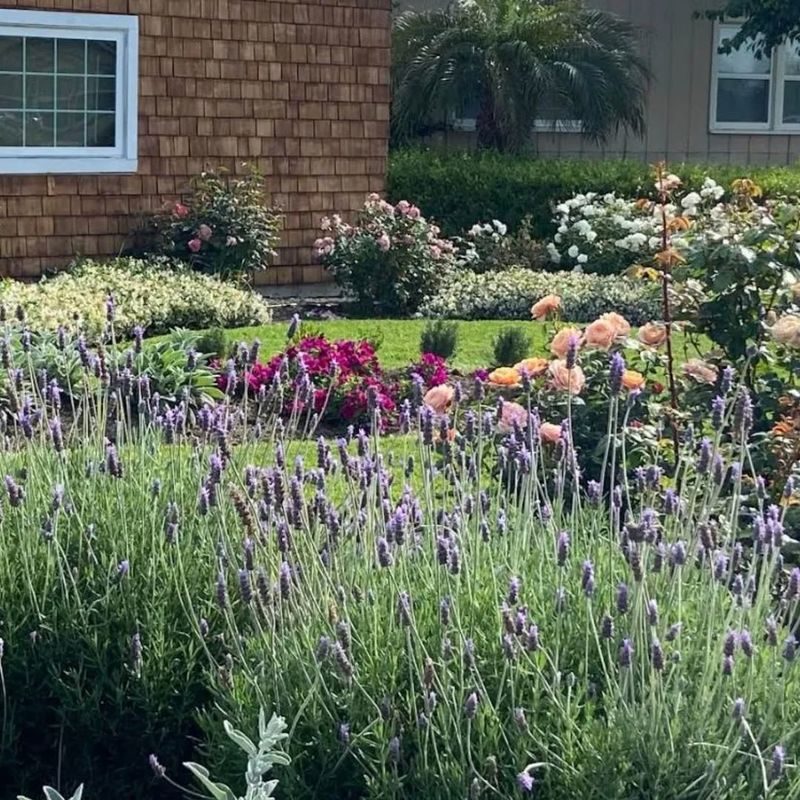
California’s ongoing water challenges have changed how many people approach landscaping, and lavender fits well into water-wise designs.
Once established, these plants generally require relatively little irrigation, sometimes only occasional deep watering during extended dry periods.
Their Mediterranean origin suits them to climates with hot, dry summers similar to many parts of California.
Newly planted lavender benefits from consistent watering during the first several months while roots establish. Afterward, irrigation can usually be reduced.
Excess watering, especially in poorly drained soil, may increase the risk of root or fungal problems.
Some homeowners replace small lawn areas near entrances with drought-tolerant plantings such as lavender to reduce water use while maintaining year-round visual interest.
Established plants often remain attractive through warm, dry weather when more water-demanding plantings may struggle.
Good drainage is important. In heavier clay soils, improving drainage with coarse material or planting on mounds or raised areas can help lavender grow more successfully.
Proper soil preparation at planting supports long-term plant health and reduces future maintenance needs.
4. A Magnet For Bees And Pollinators
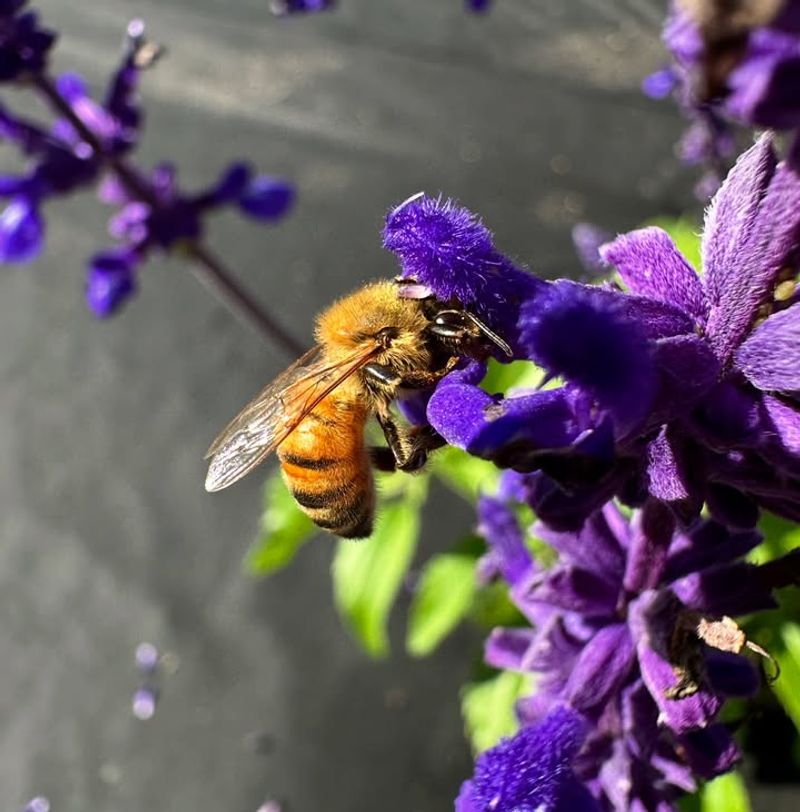
On a warm California morning, lavender in bloom often becomes a lively center of activity. Honeybees, bumblebees, and a range of native pollinators may visit regularly, moving from flower to flower in search of nectar and pollen.
Observing this activity near your entryway can offer a simple connection to the surrounding ecosystem and a sense of calm engagement with nature.
Pollinators benefit from a variety of flowering plants, and lavender can provide nectar over an extended bloom period during much of the growing season.
Its small tubular flowers are accessible to many bees, and long-lasting blooms can serve as a consistent food source when other flowers are less abundant.
Including lavender in plantings can contribute to pollinator-friendly garden spaces.
Some people are concerned about bees near entrances, but foraging bees are usually focused on flowers rather than nearby activity. With normal caution and respect for wildlife, many gardeners comfortably share space with pollinators visiting their plants.
Lavender may also attract butterflies, adding movement and seasonal interest. This creates a more dynamic garden environment and offers opportunities for observation and learning about beneficial insects that play important roles in California garden ecosystems.
5. Low Maintenance, Big Impact
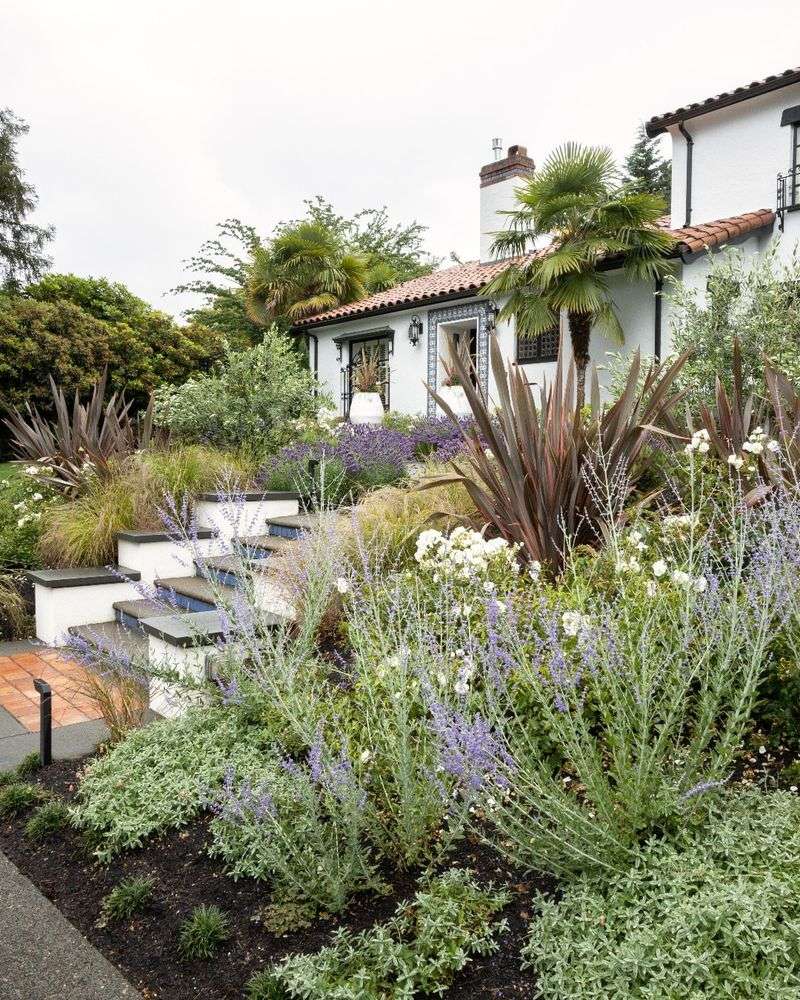
Busy homeowners often appreciate lavender for its strong visual presence paired with relatively simple care. It typically does not require frequent deadheading or intensive feeding, and once established it can grow and bloom with modest attention.
This makes it well suited to entry areas where consistent appearance is desired without high maintenance.
Occasional pruning is one of the main routine tasks. Lightly trimming back a portion of the plant after flowering can help maintain a compact shape and encourage fresh growth.
Without periodic pruning, plants may become woody and less dense over time, though they can still persist for years under suitable conditions.
Fertilizer is usually unnecessary in many California soils. Lavender often performs best in relatively lean conditions, and excessive fertility can lead to overly soft growth.
This can reduce both time and cost compared with plants that require regular feeding.
Serious pest or disease problems are uncommon when lavender is grown in proper conditions, particularly with good drainage and moderate watering.
With basic care, the plant can remain attractive and fragrant while requiring comparatively little ongoing maintenance, making it a practical choice for entry landscapes.
6. Year-Round Beauty and Structure
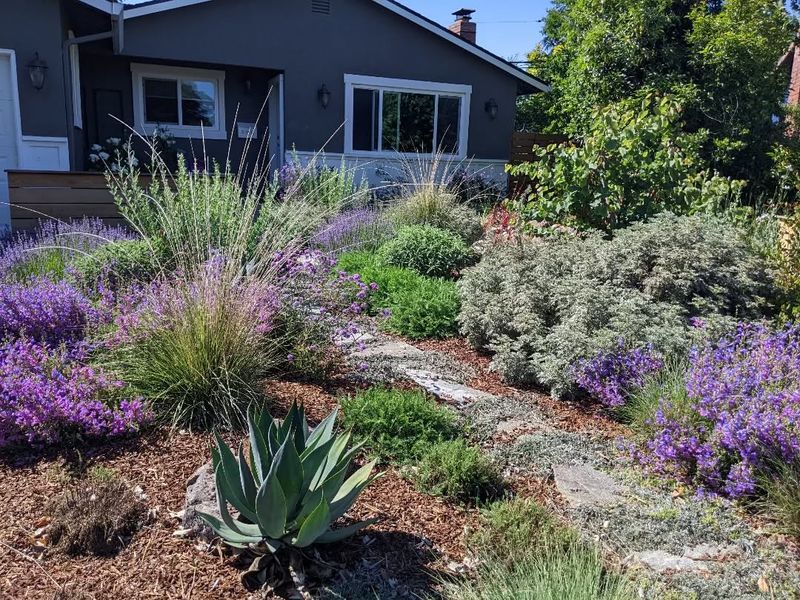
Even when not in bloom, lavender contributes with its silvery-green foliage, which often remains present year-round in many parts of California’s mild climate.
This evergreen or semi-evergreen habit provides steady structure and color when some perennials are less active, helping entry areas maintain a cared-for appearance even in winter.
The soft, silvery tone contrasts well with darker greens, wood, and stone, while the naturally mounded form creates pleasing repetition when planted in groups.
The fine texture helps soften harder landscape features such as paving or walls, which is one reason designers frequently include lavender in planting schemes.
During flowering, the familiar purple spikes provide seasonal color, with bloom length varying by type and conditions.
Some gardeners combine different lavender varieties with staggered bloom times to extend the overall flowering season, as certain types bloom earlier while others follow later.
After flowering, dried seed heads can remain as a rustic, textural feature or be trimmed for a tidier look. In either case, lavender offers visual interest across seasons, making it a reliable, year-round element in many California garden settings.
7. Perfect For Sunny Entryways
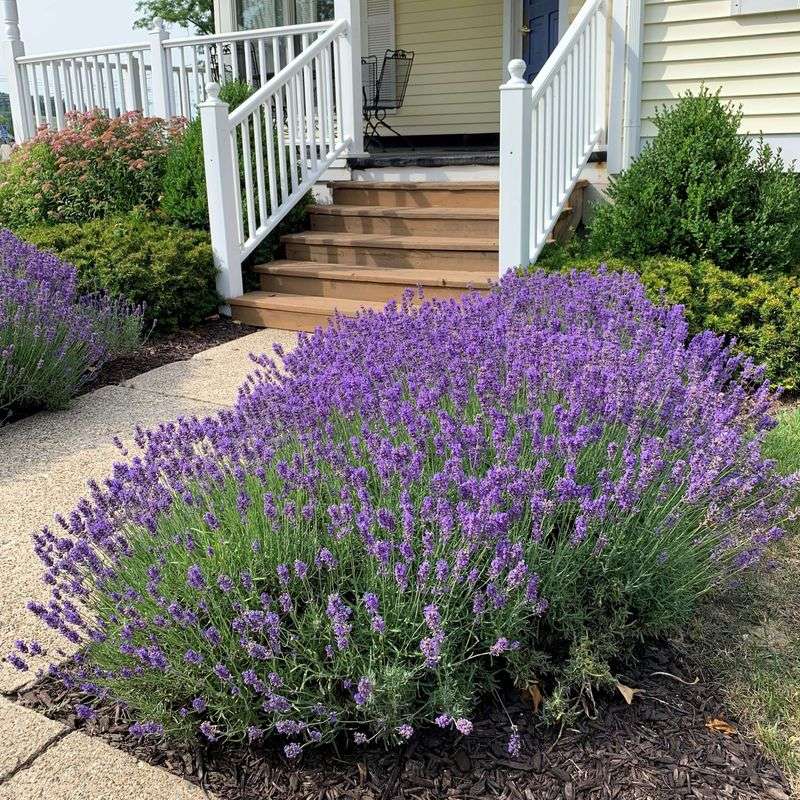
Many California front doors receive strong sunlight for much of the day, especially when oriented toward the south or west.
While some plants struggle under these conditions, lavender generally performs well in full sun and often develops its best fragrance, color, and compact form with ample light and warmth.
Bright, open exposure typically supports healthy growth in suitable soil.
Too much shade can reduce performance. In lower light, lavender may grow more loosely, produce fewer blooms, and become more prone to moisture-related issues.
Plants tend to stretch toward available light rather than forming a dense, rounded shape. Locations receiving several hours of direct sun are usually best, though site suitability can vary.
Reflected heat from nearby surfaces such as pavement or walls is often tolerated, and warm conditions can enhance aromatic oil production. Choosing a plant suited to sunny, dry exposures can help match planting to site conditions rather than working against them.
In coastal climates, periods of fog are often balanced by later sun, while inland regions provide strong summer heat.
Lavender can grow in both when drainage is adequate. Its adaptability across a range of sunny microclimates contributes to its reliability in many parts of California.
8. Simple Tips To Keep Lavender Thriving
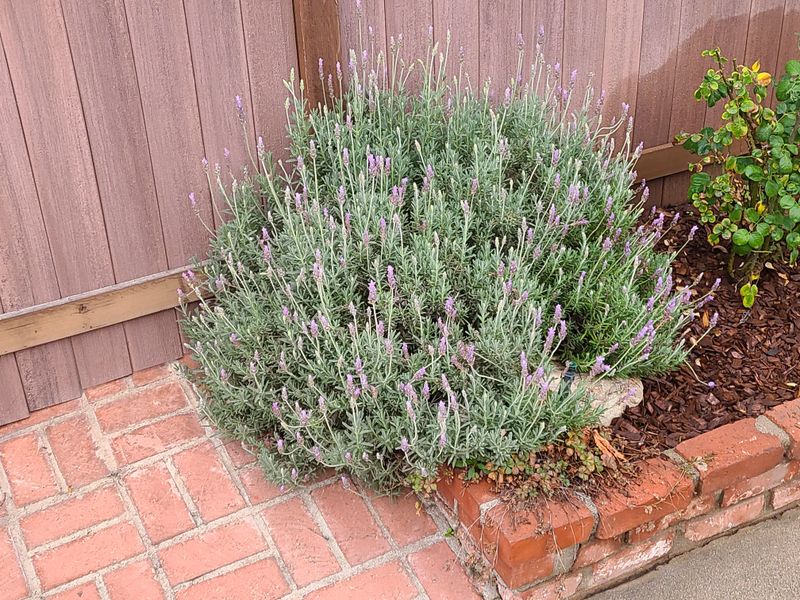
Getting lavender established successfully starts with proper planting depth. Set the crown slightly above soil level rather than burying it deeply, which helps prevent excess moisture from collecting around the stem base where rot can develop.
In heavier soils common in parts of California, careful planting depth can strongly influence long-term plant health and survival.
Water deeply but infrequently once established. Allowing soil to dry between waterings encourages deeper root development that improves drought tolerance.
Frequent shallow watering can lead to weaker, surface-level roots. During summer, established lavender may need deep watering only every couple of weeks, sometimes less in cooler coastal climates, depending on soil and conditions.
Prune in early spring or after the main bloom, trimming back roughly one-third of the plant while avoiding cuts into older woody stems. Cutting where green growth is present helps maintain a compact form and encourages fresh shoots that support flowering.
Without periodic pruning, plants can gradually become woodier and less dense over time.
Select varieties suited to your local conditions. English lavender often performs well in cooler, fog-influenced coastal areas, while Spanish and French types tend to tolerate hotter inland climates.
Cultivars such as ‘Hidcote’ and ‘Munstead’ are commonly grown English types, while selections like ‘Goodwin Creek Grey’ are frequently used in warmer regions.
Choosing a suitable variety for your microclimate supports healthier, longer-lasting plants and more consistent garden performance.