Why Coneflower Seed Heads Are More Valuable In Fall Than Ohio Gardeners Realize
It usually happens on a cool Saturday in October.
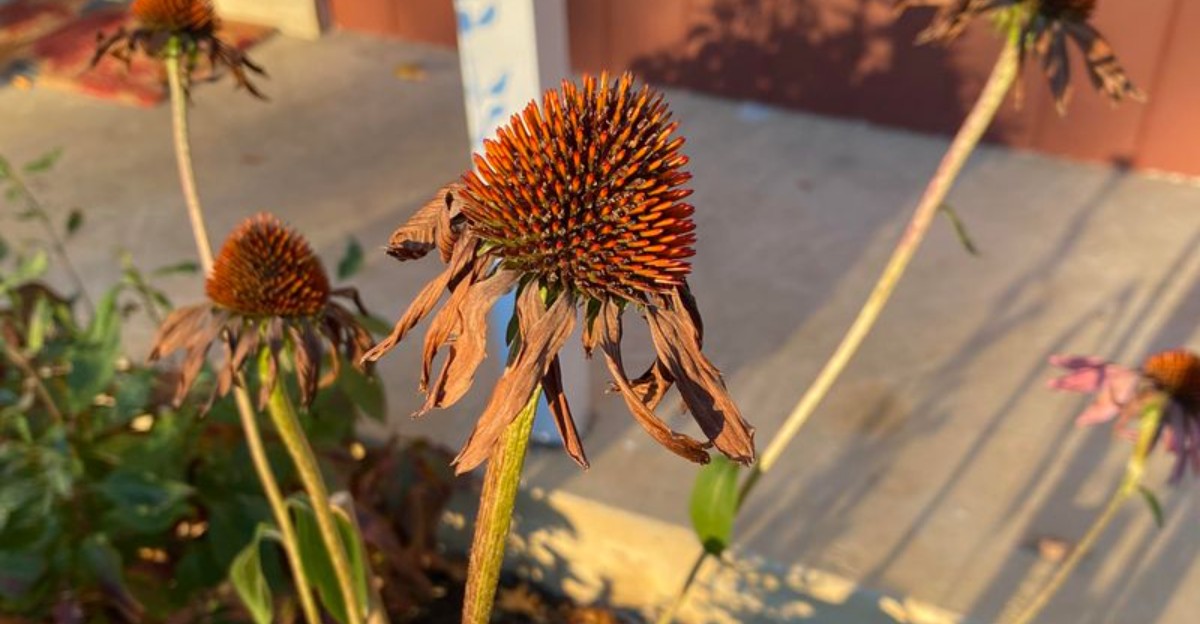
A gardener walks out with pruners already in hand, spots a row of brown, crispy coneflowers slumping at the back of the bed, and starts snipping out of pure habit before even thinking twice about it.
What lands in that yard waste bag, though, is not just tired plant material. It is thousands of seeds that goldfinches and other birds have been quietly counting on for the next few months of lean weather ahead.
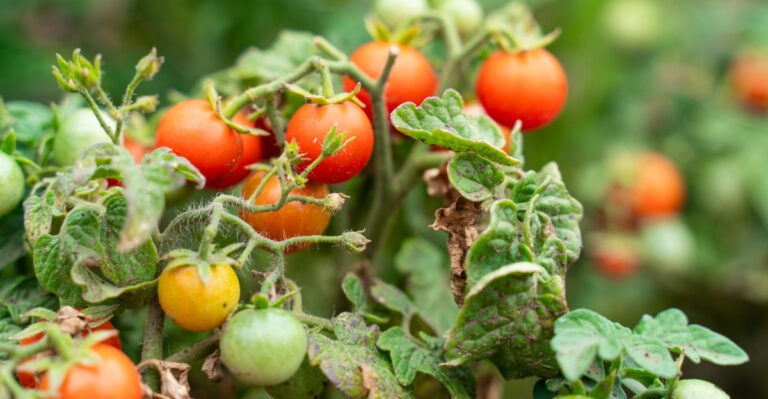
Those spiky brown cones look finished from the porch. Up close, they are still fully loaded, still doing real work long after the purple petals dropped away back in August.
Leaving them standing takes a bit of restraint, especially for anyone who likes a tidy fall bed. The payoff for Ohio wildlife, and honestly for next year’s garden too, runs bigger than most people ever expect from something so simple to skip.
Here is what those crispy old cones are actually doing while everyone else reaches for the pruners.
1. Goldfinches Depend On Them For Food
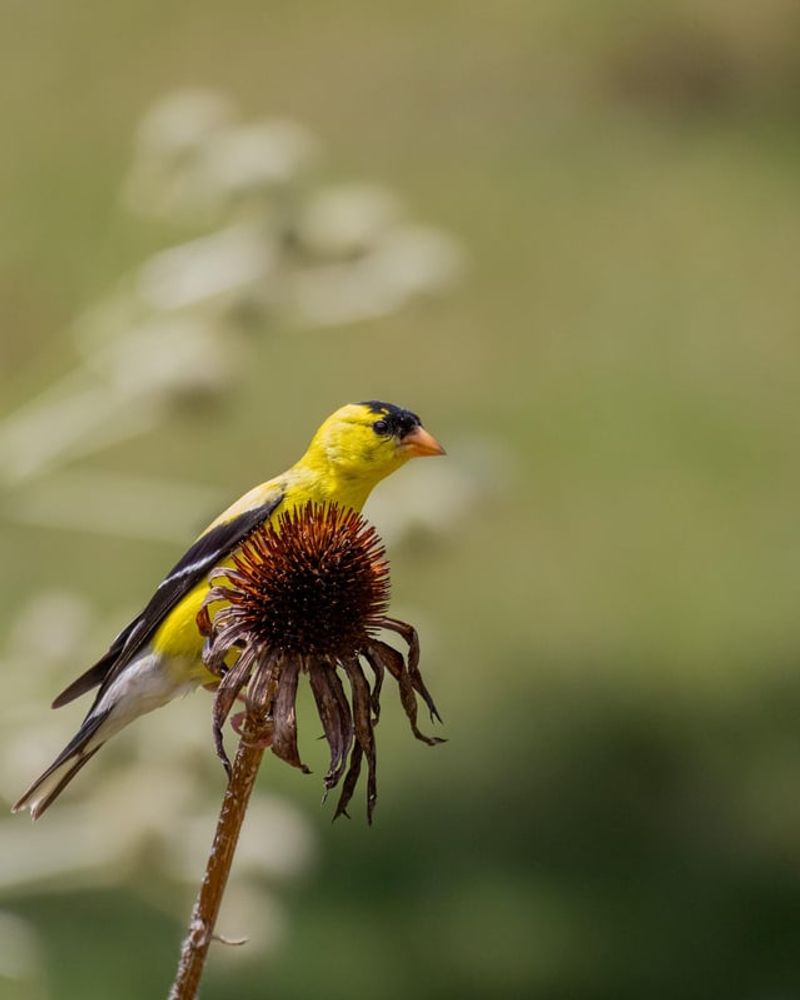
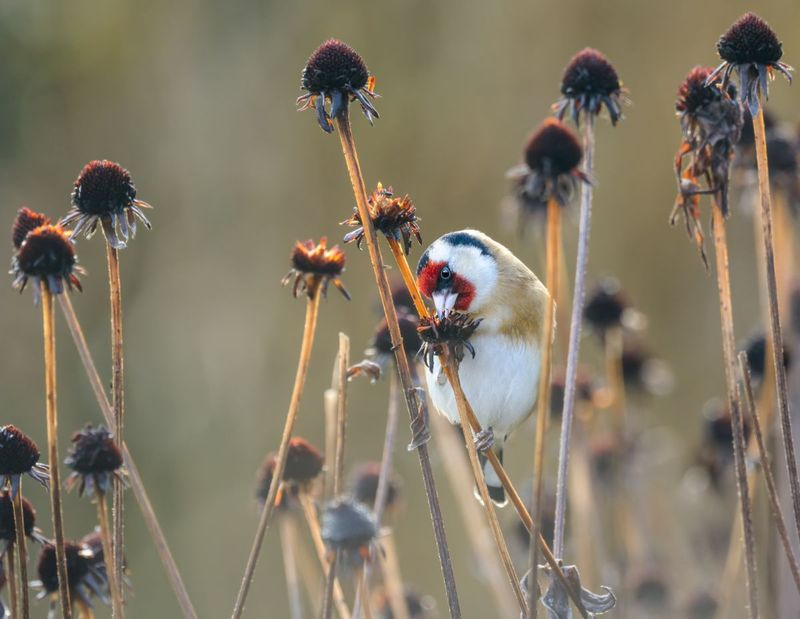
A flash of olive-yellow drops onto a browned coneflower in October, and the stiff stem barely bends under the weight.
That visitor is almost certainly an American goldfinch, one of the most dependable seed-eating birds found in Ohio yards.
Goldfinches are strict seed specialists.
The Cornell Lab of Ornithology notes they feed heavily on plants in the aster and composite family, a group that includes purple coneflower directly.
Watch closely, and the technique becomes obvious pretty fast.
The bird grips the spiky cone sideways, tugs a seed loose with its short conical bill, cracks the hull open, then lets the empty shell fall away.
A single mature cone holds dozens of seeds, so one good plant can keep a small flock busy for several mornings running.
Ohio State University Extension regularly encourages gardeners to leave Echinacea seed heads standing for exactly this reason.
That guidance has nothing to do with decoration. A seed head is working food, still attached to the stem, still held up off the soaking wet ground where seeds would otherwise rot or vanish into the mud.
Goldfinches also nest unusually late, often into August, because they time breeding around seed supply directly.
The birds working your cones in November may be the very same ones raised just a few yards away that same summer.
Leaving even three or four plants uncut gives them something reliable within sight of a kitchen window.
The only real cost is tolerating a slightly messier-looking border for a while longer than usual.
2. Seeds Provide Energy Through Early Winter
Food gets scarce fast once Ohio hits late November.
Insects vanish almost overnight, soft fruit freezes or rots on the branch, and the easy pickings of September are long gone by then.
Seed heads that stayed upright through fall become one of the few grocery shelves still fully stocked at that point.
Coneflower seeds are small but genuinely calorie-dense, carrying the fats and oils small birds burn through overnight just to stay warm enough to survive.
Your Ohio Garden Changes Every Week. Your Plan Should Too.
Gardening in Ohio changes quickly throughout the season. Every Friday you’ll receive a simple weekly plan showing exactly what to plant, prune, fertilize, harvest, and protect so you never miss the right timing.
A chickadee or goldfinch can lose a noticeable share of its body weight during just one cold night. Replacing that loss means feeding steadily from first light straight until dusk.
The plant’s own build helps here too.
Echinacea cones ride on rigid stems that stay above snow through moderate storms, so even a four-inch snowfall does not bury the food the way it buries anything scattered loose on the ground below.
After a heavier storm rolls through, those dark cones are often the first shapes poking back through the white.
Ohio winters swing hard between thaws and deep freezes, which makes reliability worth quite a lot.
Backyard feeders run empty fast when people travel or simply forget to refill them. Plants never do that.
Sparrows, juncos, and the occasional downy woodpecker will also pick at seed heads or clean up whatever drops beneath them.
To stretch the supply further, leave coneflowers clustered together rather than scattered as singles, and pair them with black-eyed Susan, aster, and native grasses nearby.
3. Standing Stems Shelter Other Insects Too
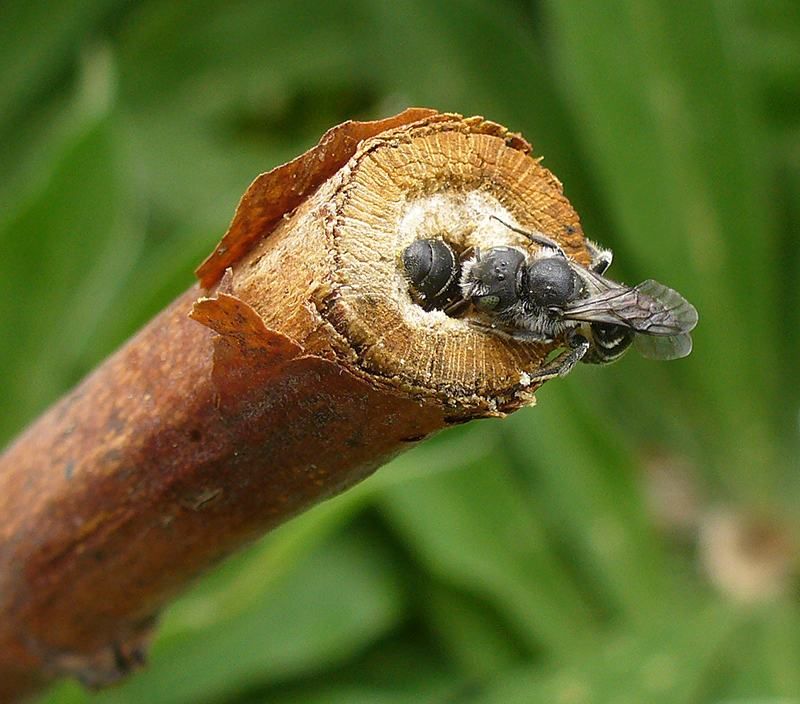
Snap a dried coneflower stem in half some March afternoon, and you might find a genuine surprise tucked inside.
A tiny sealed chamber holding a sleeping insect, quietly waiting out the cold months in there.
Hollow and pithy stems serve as winter housing for small native bees, tiny wasps, and other beneficial insects that overwinter either as larvae or full adults.
Clearing beds in October evicts every one of them before winter even properly starts.
Ohio State University Extension has promoted this exact idea through its pollinator habitat guidance, urging gardeners to keep standing stems and some leaf litter around rather than stripping beds down to bare soil every fall.
The debris around the crown matters just as much as the stems themselves.
Fireflies, lady beetles, and many butterfly and moth species spend the coldest months hidden away in that same layer of litter.
Birds cash in on the whole arrangement as well.
Chickadees, wrens, and nuthatches work over stems and stalks hunting for dormant insects and eggs, which turns a single standing perennial into both a pantry and a hunting ground during the leanest stretch of the year.
Snow catches in the tangle of stems too, and that trapped snow acts almost like a quilt, holding soil temperatures steadier than bare, exposed dirt ever could.
The coneflower’s own roots benefit from that same insulation during rough freeze-thaw swings.
None of this means letting the whole yard go completely feral.
Pick the back third of a border and leave that section standing. The front edge can stay neatly trimmed, and the insects will never notice the difference.
4. Self Seeding Fills Gaps For Free
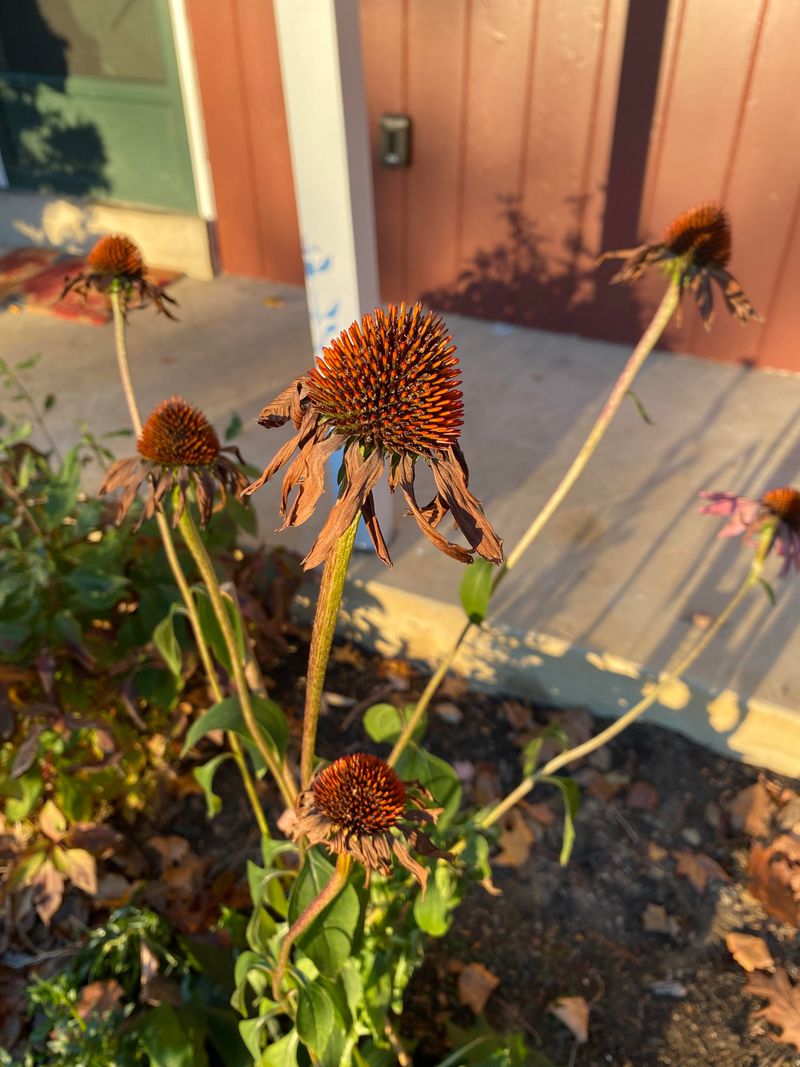
Free plants are the quiet bonus nobody ever prints on the seed packet.
Purple coneflower reseeds itself readily once cones are allowed to dry out, shatter, and scatter wherever they happen to fall.
By May or June, small rosettes start showing up around the parent plant, ready to thin out or move somewhere else in the bed entirely.
Dropped seed benefits from months of cold, damp weather sitting right on the soil surface, a process called cold stratification that breaks natural dormancy wide open.
An Ohio winter handles that whole step completely for free. No refrigerator involved, no damp paper towels, no plastic baggies needed anywhere.
Not every seedling will match its parent plant exactly.
Named cultivars, especially the flashy orange and coral hybrids, often produce offspring that revert back to plain purple-pink or come out with odd, floppy petals instead.
Straight species Echinacea purpurea comes true far more reliably, which is one good argument for planting some of the plain kind alongside the fancier ones.
Volunteers usually spend their whole first season just building leaves and roots, then bloom properly in year two.
Learn what a young coneflower actually looks like, or you risk accidentally weeding out your own free stock during spring cleanup.
Gardeners wanting some control can snip a few cones in late winter and shake them exactly where new plants are wanted, leaving the rest standing untouched.
Anyone hoping for zero volunteers can cut the heads in January instead, after birds have already picked them over thoroughly.
5. Winter Interest Beats An Empty Bed
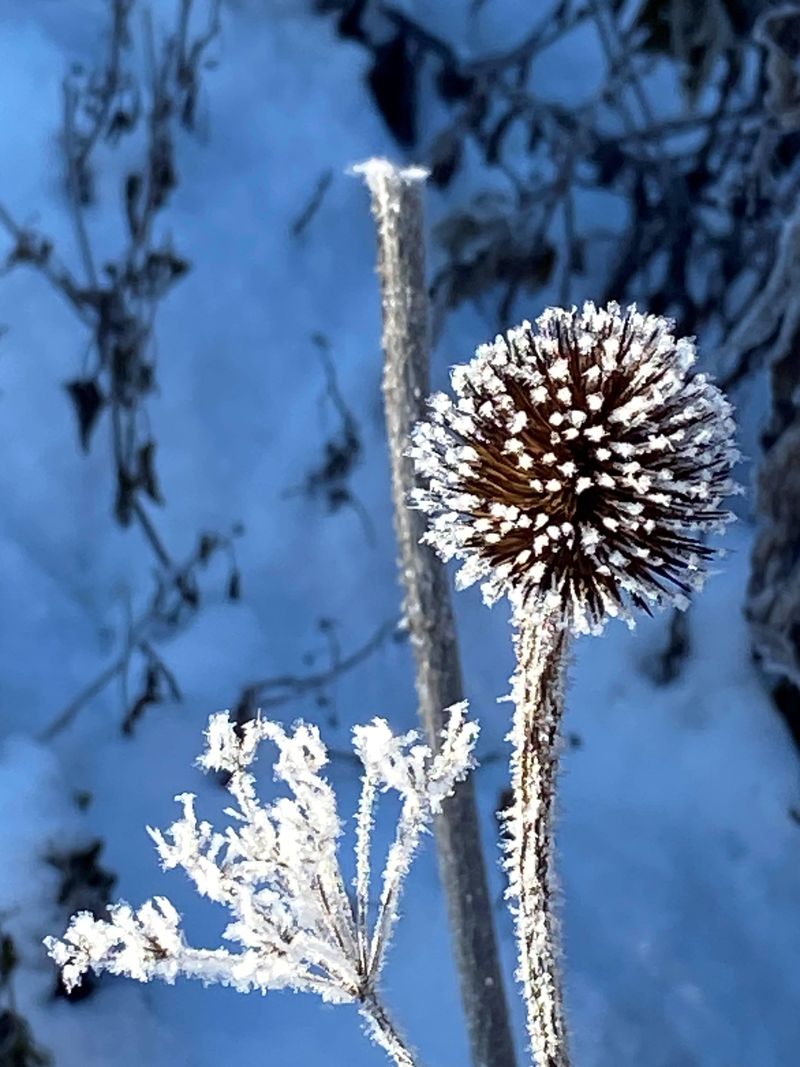
Picture a February morning in central Ohio. Flat gray sky, crusty old snow, and a perennial bed shaved down to bare mud with nothing left standing anywhere.
Now picture that same bed with fifty dark cones standing at staggered heights instead, frost clinging to every spiky center like tiny crowns.
One version looks abandoned. The other looks genuinely planned.
Seed heads read almost like sculpture once the growing season fully ends.
Their strong vertical lines and rounded tops give the eye something worth following when nothing else in the yard offers real shape or color.
Frost and ice actually improve them rather than ruining anything.
A heavy hoarfrost turns each cone into a tiny crystal ball, and low afternoon sun lights the whole group from behind around four o’clock, glowing right through the ice.
Group them with switchgrass, little bluestem, sedum heads, or the dark clusters of black-eyed Susan, and a fully dormant bed suddenly gains real layers.
Tuck a few evergreens behind the planting, and the whole picture holds together nicely from the kitchen window straight through the season.
Movement counts as visual interest too.
A goldfinch working a cone at eye level beats any garden ornament money can buy, and nobody has to purchase it at all.
Designers who build prairie-style plantings have made this exact case for decades now. The fourth season is real, and shearing a bed in October throws away five full months of structure for nothing.
6. Cutting Early Costs Wildlife A Food Source
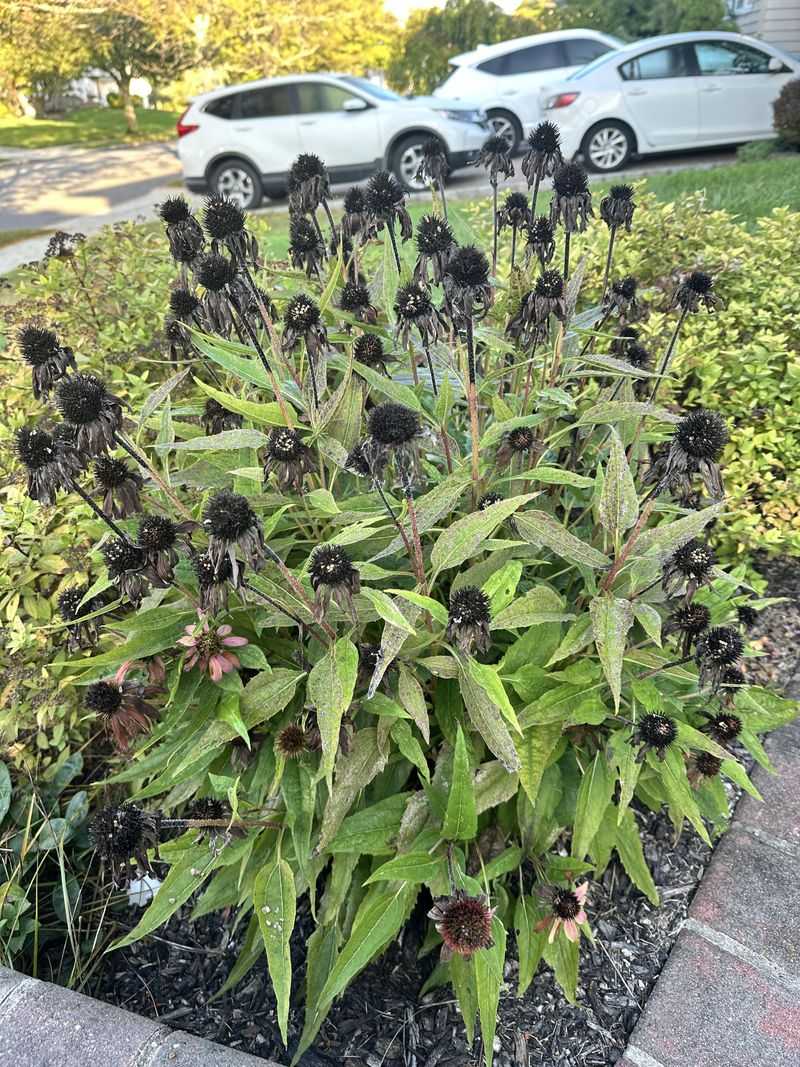
Here is the tradeoff stated plainly.
Shears in September remove actual food, not just tired-looking plant parts nobody wants to see anymore.
A spent coneflower head is really a loaded seed container, and that container shows up at the exact moment birds start hunting harder for calories heading into the cold months.
Trimming during bloom season is a completely different job with a different purpose behind it.
Snipping faded flowers in July can encourage a second flush of blooms and keep plants looking fresh through late summer. Once late August rolls around though, that same cut is simply hauling off the harvest before anyone gets to eat it.
Plenty of gardeners cut in fall purely from habit, following some tidy-up routine learned from a parent or copied straight off a lawn service schedule.
Habit makes a pretty weak reason to empty out the buffet early.
Think about the actual numbers involved here.
A healthy plant may carry twenty to forty cones, each holding dozens of seeds, adding up to thousands of seeds stuffed into one yard waste bag.
Multiply that across a whole neighborhood cutting on the same October weekend, and the local food supply drops hard in a single afternoon.
Disease is really the one fair exception to all of this.
Plants showing aster yellows, heavy powdery mildew, or serious leaf spot should be cut and hauled away rather than left standing through winter.
Healthy plants lose nothing at all by staying up. The stems are already spent tissue, the roots are fully dormant, and the only thing early cutting really protects is somebody’s idea of neatness.
7. Spring Cleanup Is Time Enough
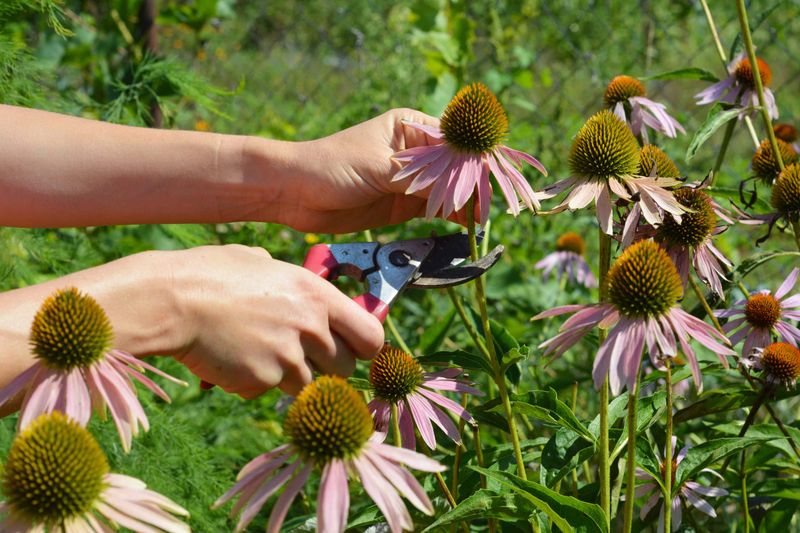
Good news for anyone picturing a permanently messy yard. Waiting costs the plant absolutely nothing in the end.
Coneflowers do not need fall pruning to survive, bloom well, or stay healthy going into next year.
New growth pushes up from the crown at soil level every spring, never from last year’s old stems directly.
Timing in Ohio usually lands somewhere between late March and mid April, once daytime temperatures hold in the fifties for several days running.
Overwintering insects need that warmth to crawl out of hollow stems before those same stems head off to the compost heap.
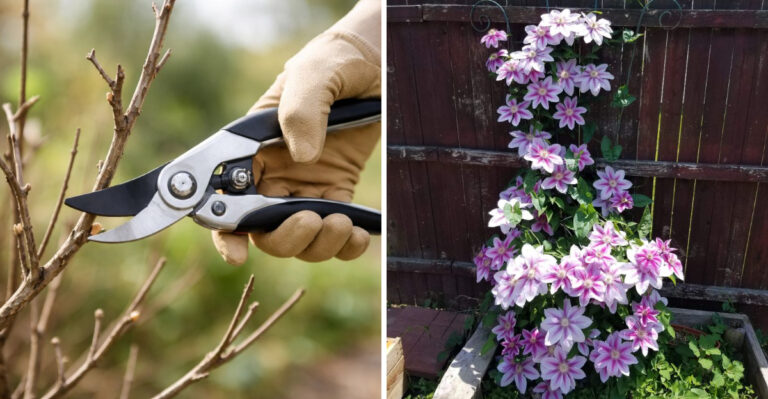
Cut the old stalks back to roughly four to six inches above the ground.
Hand pruners handle the job easily enough, since dry stems snap apart with almost no effort required at all.
Some gardeners bundle the trimmings and stack them in a back corner for a few extra weeks, giving late-emerging insects time to finish their exit before the pile gets moved elsewhere.
Spring cleanup carries a practical bonus too.
Spent top growth turns brittle and feather-light by April, much easier to gather up than the damp, stringy mess you would otherwise wrestle with back in October.
Divide crowded clumps during that same session, roughly every three or four years, once the center of the plant starts thinning out noticeably.
One spring pass ends up covering cleanup, division, and a mulch touch-up all together in a single afternoon.