Why Deer Keep Destroying Azaleas In North Carolina And How To Stop Them

Azaleas are one of the most beloved shrubs in North Carolina gardens, but they can also attract some unwanted attention.
Many gardeners step outside to admire their plants only to find leaves missing and branches looking badly damaged overnight. In many cases, deer are the reason.
Across the Coastal Plain, Piedmont, and Mountain regions, deer frequently wander into neighborhoods searching for fresh, tender plants.
Azaleas happen to be one of their favorite snacks, especially during seasons when natural food sources are limited.
A quiet nighttime visit can quickly leave shrubs looking far from their best. The key to protecting your garden is understanding why deer are drawn to these plants in the first place.
Once you know what attracts them to azaleas, it becomes much easier to take steps that help keep your North Carolina garden safe.
1. Tender New Growth Is Highly Appealing

Every spring in North Carolina, azaleas push out fresh, soft, juicy new growth that deer simply cannot resist. The young leaves and flower buds are incredibly tender, full of moisture, and easy to chew.
For deer, finding a yard full of blooming azaleas is basically like discovering a buffet with no line and no closing time.
New plant growth in early spring contains high levels of nutrients and water, making it especially attractive to wildlife that has spent the colder months searching for food.
Deer have strong preferences for soft vegetation over tough, woody material, and azalea buds fit that preference perfectly.
North Carolina gardeners often notice the worst damage right around late March through April when new growth first emerges. Protecting your azaleas during this window is absolutely critical.
Applying a commercial deer repellent spray before new growth fully opens gives your plants a fighting chance.
Products containing putrescent egg solids or capsaicin work well when applied consistently every two weeks. Reapply after rain to keep the protection strong.
Starting early in the season, before deer establish a browsing routine around your yard, makes a noticeable difference in how much damage you end up dealing with come mid-spring.
2. Azaleas Are Low To The Ground

One reason deer target azaleas so consistently is surprisingly simple: the plants are easy to reach.
Most azalea varieties grow between two and six feet tall, putting their foliage right at the perfect browsing height for white-tailed deer.
There is no stretching, no struggle, and no effort involved for a hungry deer walking through a North Carolina neighborhood.
Younger deer, especially fawns still learning to forage, find low shrubs like azaleas especially convenient. Their compact, bushy shape also means there is plenty of foliage packed into a small space.
A single shrub can offer a deer a satisfying meal without much movement required, which makes it a highly efficient food source in residential yards. Raising the effective browsing height through strategic planting can help reduce damage.
Placing taller, deer-resistant shrubs like American beautyberry or inkberry around your azaleas creates a natural buffer that makes access slightly more inconvenient.
While deer are capable jumpers, they prefer easy meals and will often move on if a plant requires extra effort.
Adding wire cages around smaller or newly planted azaleas is another reliable method that North Carolina homeowners use with consistent success, especially during the first few years when plants are most vulnerable to significant browsing pressure.
3. Lack Of Alternative Food Sources In Early Spring

Late winter and early spring can be surprisingly lean times for deer in North Carolina.
Most native grasses, wildflowers, and deciduous plants have not yet leafed out, leaving very little fresh food available across fields and forest edges.
When natural food sources are scarce, deer expand their search and start wandering into neighborhoods and gardens with much more determination than usual.
Azaleas, being among the earliest plants to show new growth, suddenly stand out as one of the only fresh food options available.
Deer that might otherwise stick to woodland areas start pushing into residential zones across the Piedmont and Coastal Plain regions of North Carolina specifically because garden plants offer what the wild landscape temporarily cannot.
The timing of this food gap lines up almost perfectly with azalea blooming season, which makes the problem especially frustrating for homeowners.
One smart strategy is to supplement the area around your yard with deer-friendly plantings placed away from your garden beds.
Planting clover, native grasses, or fruit-bearing shrubs along your property edges can redirect deer attention before they ever reach your azaleas.
This approach works best when combined with repellent sprays applied directly to the azaleas themselves.
Giving deer an easier food option farther from your prized plants reduces the pressure on your garden beds significantly during those critical early spring weeks.
4. Urban And Suburban Deer Populations Are High

North Carolina has seen a dramatic increase in suburban deer populations over the past few decades.
As natural habitats shrink due to development across the Triangle, Charlotte metro, and Triad areas, deer adapt remarkably well to living alongside humans.
They learn quickly that neighborhoods offer reliable food, water, and shelter with far fewer threats than rural environments.
Studies from NC State University Extension confirm that suburban deer populations can reach densities much higher than what forested land would naturally support.
A neighborhood with mature landscaping, ornamental shrubs, and water features can attract and sustain a surprisingly large number of deer year-round.
More deer in a smaller area means more browsing pressure on every plant in the yard, and azaleas are always near the top of the preferred menu.
Managing deer damage in high-density suburban areas requires a layered approach rather than relying on a single solution.
Motion-activated sprinklers, repellent sprays, and physical barriers all work better together than any one method alone.
Coordinating with neighbors to apply deterrents simultaneously across multiple yards is also highly effective, since deer simply move to the next available yard if only one property is protected.
Community-level awareness and consistent action make a real difference in neighborhoods throughout North Carolina where deer populations remain stubbornly high year after year.
5. Azaleas Are Evergreen Or Semi-Evergreen

Most azaleas grown in North Carolina are either fully evergreen or semi-evergreen, meaning they hold their leaves through winter rather than dropping them completely.
This characteristic makes them stand out dramatically in a landscape where most surrounding plants go bare.
From a deer’s perspective, an azalea in December looks like a bright green island of food in a sea of brown sticks and dry leaves.
This evergreen quality is one of the main reasons azaleas face browsing pressure not just in spring but throughout the entire year.
Even during the coldest months in the Piedmont and western NC mountain foothills, deer can locate these shrubs easily because the foliage remains visible and accessible.
The leaves may be slightly tougher in winter than the soft spring growth, but hungry deer will still browse them willingly when other options run out.
Wrapping azaleas in burlap or deer netting during late fall and winter provides solid protection during this extended vulnerable period.
Burlap barriers also protect plants from wind damage and frost burn, giving you two benefits from one effort.
For homeowners with larger plantings, applying a long-lasting deer repellent in late October before deer pressure increases can carry protection well into the new year.
Staying proactive before winter sets in keeps your North Carolina azaleas looking full and healthy when spring finally arrives.
6. Deer Are Creatures Of Habit

Once a deer finds a reliable food source, it will return to that exact spot again and again with impressive consistency.
White-tailed deer in North Carolina establish feeding routes that they follow daily, sometimes for months or even entire seasons.
If your azaleas are on that route, you can count on regular visits until something changes to break the pattern.
Wildlife researchers note that deer use scent memory heavily to navigate their home ranges.
After a deer browses your azaleas even once, it leaves scent markers and remembers the location as a food source.
Young deer also learn feeding routes from their mothers, meaning a habit established in one season can carry forward and even spread to new animals in following years.
This is why homeowners often report that deer damage seems to get worse each spring rather than better.
Breaking an established deer habit requires consistent deterrence over several weeks, not just a one-time effort.
Rotating between different repellent scents prevents deer from becoming desensitized to a single product.
Changing the visual landscape near your azaleas by adding reflective tape, pinwheels, or garden art can also disrupt familiar patterns.
North Carolina homeowners who commit to a rotating, multi-method approach for at least four to six consecutive weeks report the best long-term results in reducing repeat visits from deer that have already discovered their garden beds.
7. Attractive Fragrance And Color
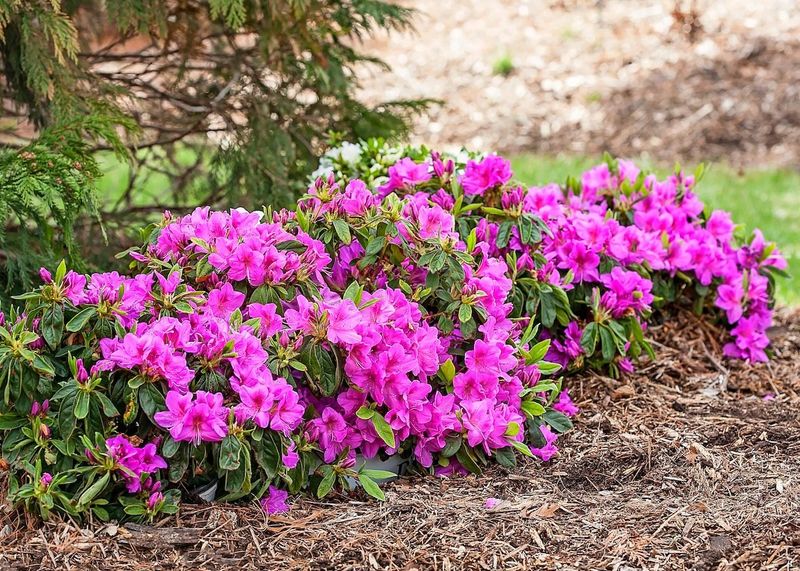
Azaleas put on one of the most spectacular floral displays of any shrub in the Southeast, and that beauty comes with a strong, sweet fragrance that carries well through the air.
While gardeners plant azaleas specifically for those vibrant blooms, the same qualities that make them so appealing to humans also attract deer.
The combination of bright color and detectable scent creates a signal that is hard for browsing animals to ignore.
Deer have an exceptionally strong sense of smell, far more powerful than a human’s, and they use it constantly to locate food.
The aromatic compounds released by azalea flowers during peak bloom are detectable from a considerable distance, drawing deer toward gardens even when visibility is limited.
North Carolina’s warm spring temperatures cause azaleas to release fragrance more strongly, which means the blooming season is also the highest-risk period for deer activity around your plants.
Masking or overpowering that scent with strong-smelling deterrents placed near your azaleas can confuse deer and reduce their interest.
Hanging small mesh bags filled with Irish Spring soap or human hair near the plants creates an unfamiliar scent barrier that many deer find off-putting.
Planting strongly scented herbs like lavender, catmint, or Russian sage nearby adds an additional layer of olfactory deterrence that blends naturally into a North Carolina cottage or pollinator garden without looking out of place.
8. Lack Of Physical Barriers

Most residential yards in North Carolina have no physical barriers between the street, sidewalk, or surrounding woodland and the garden beds where azaleas grow.
Open lawns and unfenced landscapes essentially send an open invitation to deer that roam through neighborhoods at night.
Without something physically in the way, deer face zero resistance when walking straight up to your shrubs and helping themselves. Fencing is the single most reliable long-term solution for serious deer pressure.
According to NC State University Extension, a fence needs to be at least eight feet tall to reliably prevent white-tailed deer from jumping over it.
Solid privacy fences work especially well because deer are reluctant to jump barriers they cannot see through.
For homeowners who cannot install a full fence, individual plant cages made from wire mesh or hardware cloth offer targeted protection for the most valuable or vulnerable azaleas in your yard.
Deer netting draped over azalea shrubs during peak browsing season is a budget-friendly option that works well for seasonal protection.
It is lightweight, easy to install, and nearly invisible from a distance, so it does not disrupt the visual appeal of your landscaping. Securing the netting all the way to the ground prevents deer from pushing underneath it.
North Carolina gardeners who combine netting with repellent sprays consistently report lower levels of browse damage compared to those relying on repellents alone throughout the growing season.
9. Stop Deer With Deterrents And Companion Planting

Protecting azaleas in North Carolina does not have to feel like an endless battle. A smart combination of deterrents and thoughtful companion planting can dramatically reduce deer browsing without turning your yard into a fortress.
The key is using multiple strategies at once so deer never feel fully comfortable settling into a feeding routine near your plants.
Commercial deer repellents containing putrescent egg solids, garlic oil, or hot pepper extract are among the most effective sprays available and are widely sold at garden centers across North Carolina.
Apply them directly to foliage and branches every two weeks, and always reapply after heavy rain.
Motion-activated sprinklers add another layer of protection by startling deer with a sudden burst of water when they approach at night, which is when most browsing activity occurs in suburban areas.
Companion planting is one of the most natural and visually appealing ways to protect your azaleas over the long term.
Surrounding them with deer-resistant plants like daffodils, lavender, catmint, and salvia creates a living buffer zone that deer tend to avoid.
Daffodils are especially effective because they contain alkaloids that deer find unpleasant, making them a reliable front-line defense.
Mixing these companions into your existing beds adds seasonal color while quietly doing the work of keeping deer at a distance.
North Carolina gardeners who layer repellents, motion deterrents, and companion plants together enjoy the strongest and most consistent protection season after season.