Why Gila Woodpeckers Become More Active In Arizona Yards In May
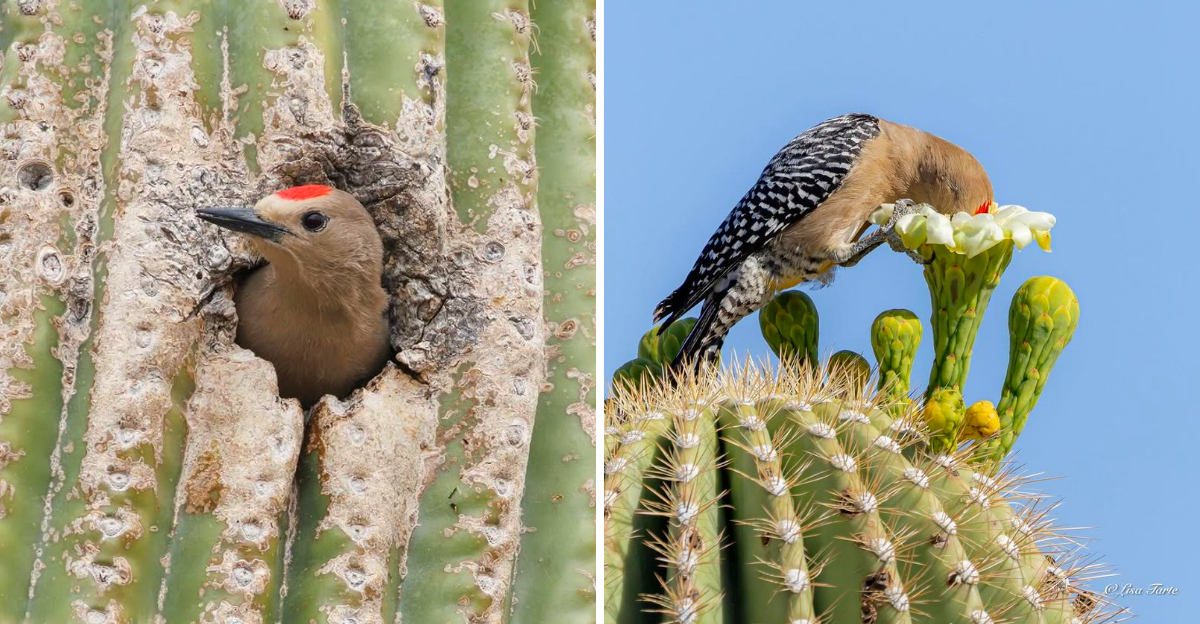
May in Arizona comes with a soundtrack, and a surprising amount of it is made by Gila Woodpeckers.
One minute the yard feels peaceful, and the next you hear tapping on a palm tree, chirping near the patio, and wings fluttering across the block wall like a tiny construction crew just clocked in for work.
These desert birds get especially active during late spring, and Arizona neighborhoods suddenly become very interesting places for them.
Saguaros, shade trees, fruiting plants, and even backyard structures can all turn into feeding spots, nesting sites, or noisy announcement boards.
Gila Woodpeckers are not exactly shy about making their presence known either. For homeowners who enjoy wildlife, this busy season can be one of the most entertaining parts of spring.
Your Arizona yard might feel a little livelier than usual, but honestly, that is part of the charm.
1. Nesting Season Is Well Underway
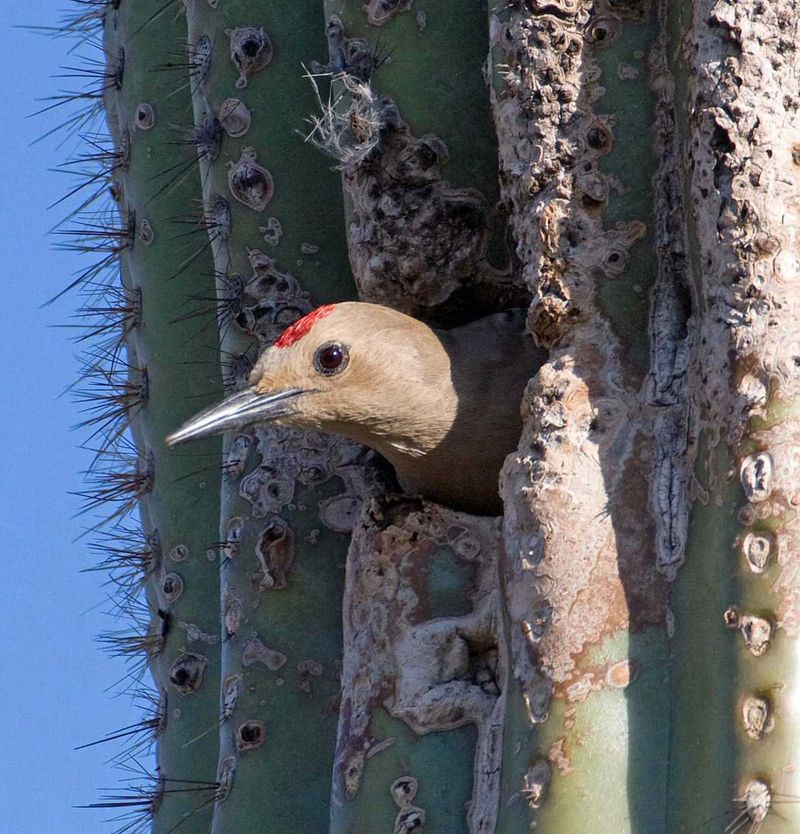
By the time May arrives in Arizona, Gila Woodpeckers are not just thinking about nesting – they are already deep into it. Pairs that began scouting cavities and establishing bonds in late winter are now actively incubating eggs or tending to newly hatched chicks.
This stage of the breeding cycle drives a noticeable surge in visible activity around desert yards.
Homeowners may spot birds flying back and forth repeatedly between a saguaro or tree cavity and nearby food sources.
The urgency of feeding a growing family pushes parent birds to move more frequently and cover more ground than they would during quieter times of year.
That constant back-and-forth can make them seem far more abundant than they were just a few weeks earlier.
In Arizona, nesting timelines can shift slightly depending on local weather patterns, elevation, and habitat conditions.
Warmer spring temperatures tend to accelerate breeding activity, while cooler or wetter years may push things back a bit.
Regardless of exact timing, May is generally one of the most active months for Gila Woodpeckers across much of their Arizona range, making it a great time to observe their natural behaviors up close.
2. Pairs Defend Nesting Territories More Noticeably
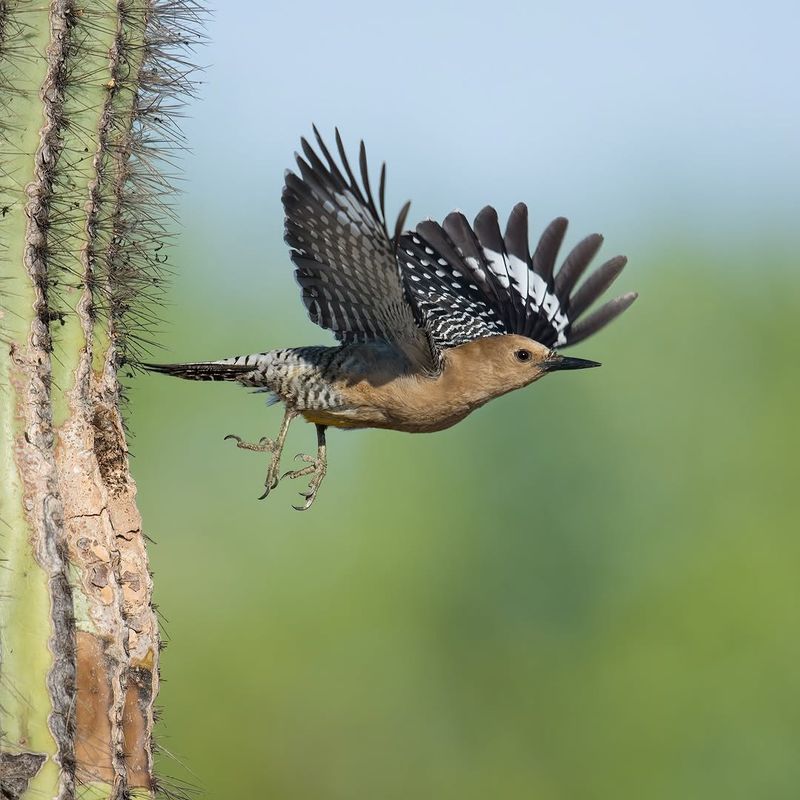
Watch a Gila Woodpecker closely in May and you might catch it doing something that looks surprisingly assertive. Mated pairs become territorial around their chosen nest sites, and they will actively chase off other woodpeckers or birds that wander too close.
This behavior shows up clearly in Arizona yards where multiple pairs may live in relatively close proximity.
Territory defense often involves loud calling, rapid wing displays, and short aerial chases that zip through yards and between trees or cacti. These interactions can look dramatic, but they are a normal and healthy part of the breeding season.
Homeowners sometimes mistake this behavior for distress or aggression toward people, but the birds are almost always focused entirely on other birds rather than humans nearby.
The size of a defended territory can vary based on available food, nesting sites, and competition from neighboring pairs.
In yards with multiple saguaros, mature shade trees, and reliable food sources, territorial boundaries may overlap in interesting ways.
Your Arizona Garden Changes Every Week. Your Plan Should Too.
Gardening in Arizona changes quickly throughout the season. Every Friday you’ll receive a simple weekly plan showing exactly what to plant, prune, fertilize, harvest, and protect so you never miss the right timing.
Paying attention to where the chasing starts and stops can actually help you map out which pair considers your yard part of their home range during this busy stretch of the Arizona spring.
3. Drumming And Calling Increase Around Homes
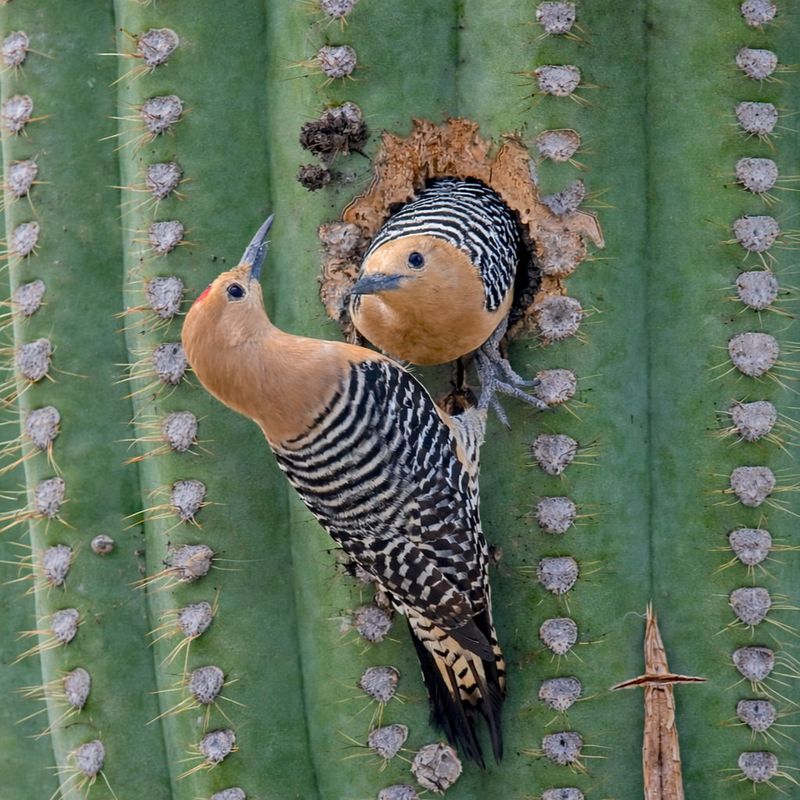
Few sounds in an Arizona yard are as instantly recognizable as the sharp, churring call of a Gila Woodpecker cutting through the morning air.
In May, both calling and drumming ramp up significantly as birds reinforce pair bonds, announce territory boundaries, and communicate with their mates near the nest.
This vocal surge is one of the main reasons homeowners suddenly feel like woodpeckers have moved in overnight.
Drumming – the rapid, rhythmic tapping used for communication rather than foraging – can happen on saguaros, palm trunks, wooden fences, roof eaves, metal vents, and even utility poles.
Hard surfaces that produce a loud, resonant sound are especially attractive because they carry the signal farther.
This is why some Arizona homeowners hear drumming on their homes in spring even when no cavity is being excavated.
The good news is that most May drumming on structures is communicative rather than destructive. Birds are typically not trying to create a nest hole in a stucco wall or wood trim – they are simply using the surface as a natural amplifier.
Understanding this distinction can help homeowners stay calm and appreciate the behavior rather than assuming damage is being done to their property.
4. Saguaro And Tree Cavities Become Important Nest Sites
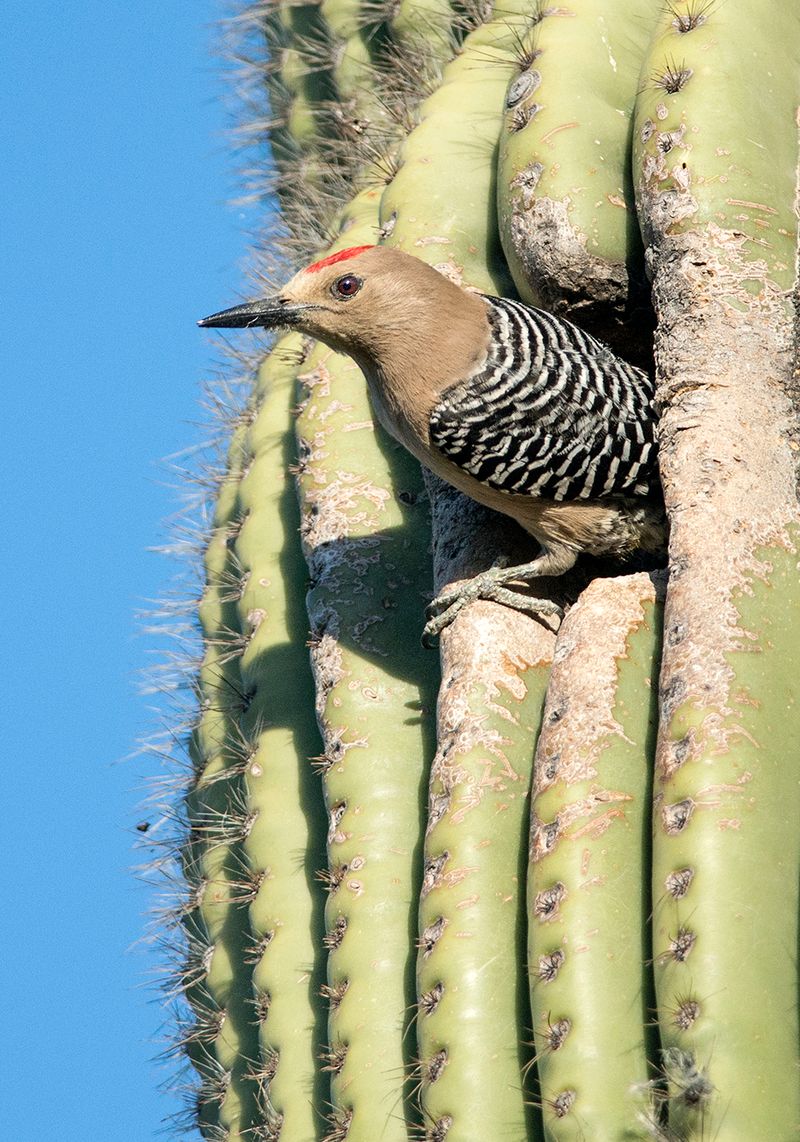
Saguaros are at the heart of Gila Woodpecker life in Arizona, and May is when the relationship between these birds and these cacti becomes most visible.
Gila Woodpeckers excavate cavities in saguaro trunks and arms, and these hollows serve as insulated nest chambers that stay cooler than the outside air during Arizona’s warming spring days.
A saguaro with multiple cavities at different heights is a particularly valuable resource.
Beyond saguaros, Gila Woodpeckers in Arizona also use cavities in large cottonwood trees, palm trunks, and occasionally other substantial trees found in desert riparian areas or landscaped yards.
Mature trees with softer heartwood or natural decay offer excavation opportunities similar to what a saguaro provides.
Yards that include a mix of saguaros and large shade trees can attract woodpecker activity from multiple angles.
Once a cavity is excavated, the inside walls of a saguaro harden into a tough, boot-like shell that holds its shape for many years.
This means old cavities remain usable long after a woodpecker has moved on, creating a kind of natural housing inventory that benefits many other Arizona wildlife species.
In May, the competition for prime cavities can itself drive some of the increased activity homeowners notice in their yards.
5. Parent Birds Search More Actively For Food
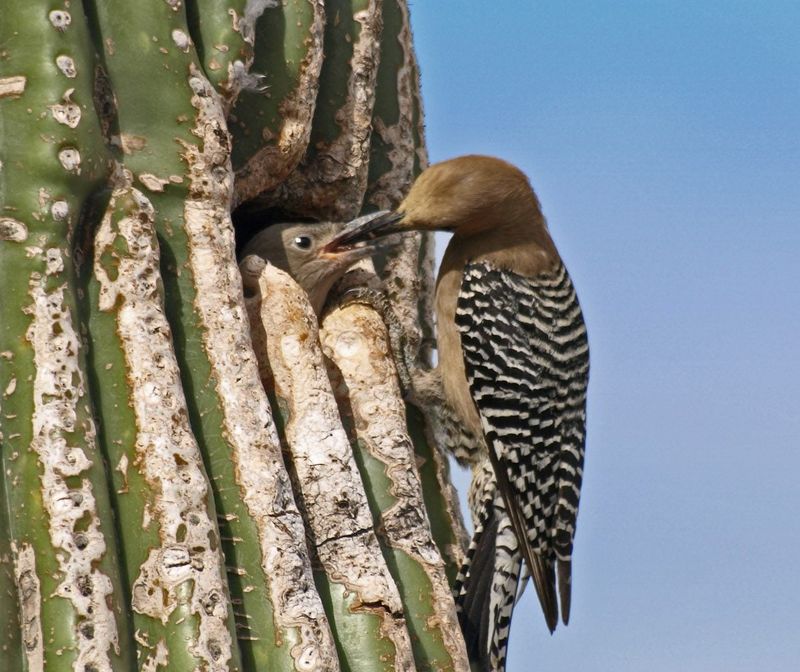
Feeding nestlings is demanding work, and parent Gila Woodpeckers in May are essentially running a constant delivery service from dawn until dusk.
Both the male and female take turns foraging and returning to the nest with food, which means the same pair of birds may pass through a yard dozens of times throughout a single day.
This foraging intensity is one of the clearest reasons activity levels spike so noticeably in May.
Gila Woodpeckers eat a wide range of foods depending on what is available, including insects, larvae, cactus fruit, berries, nectar, and even small lizards on occasion.
In spring, insect populations in Arizona are climbing rapidly, and woodpeckers take full advantage by probing bark, digging into soft wood, and hunting across a variety of surfaces.
Yards with diverse plantings tend to support more insect life and can therefore attract more foraging attention.
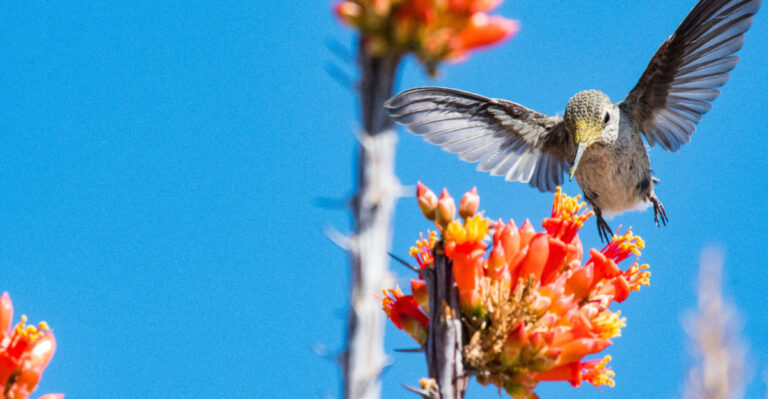
Parent birds may also visit hummingbird feeders for nectar and sugar water, which provides a quick energy boost between longer foraging trips.
Some Arizona homeowners are surprised to see woodpeckers at their feeders, but this is fairly common behavior during the breeding season.
Keeping feeders clean and well-stocked during May can make a yard a more reliable stop on a busy parent bird’s daily route.
6. Arizona Yards Offer Useful Food Sources
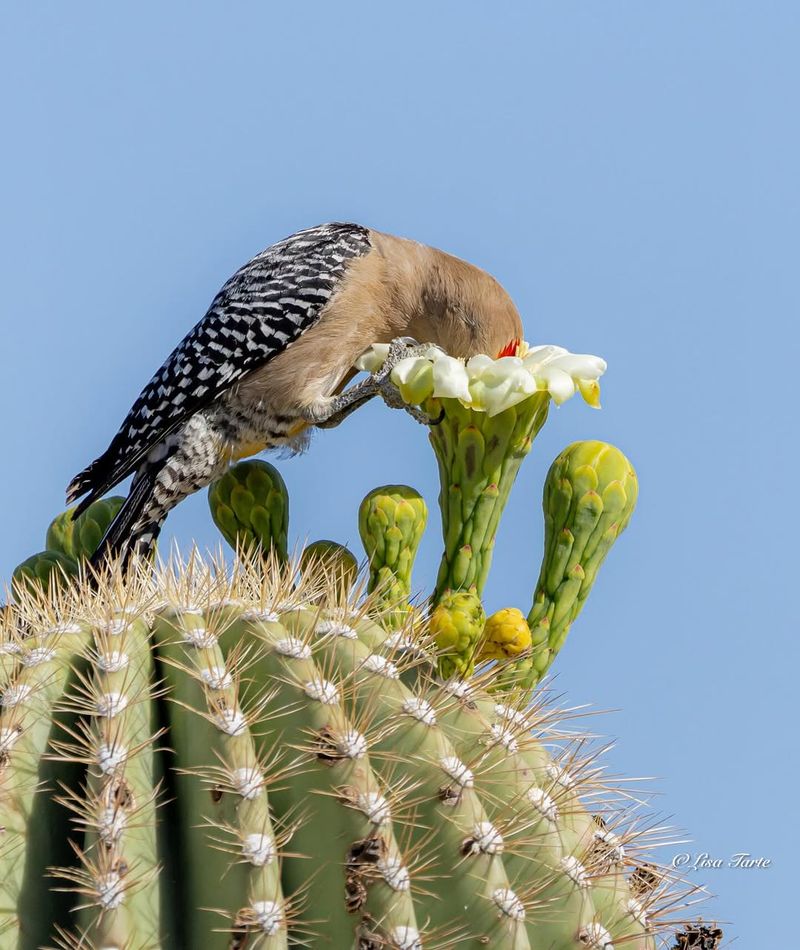
Arizona yards planted with native and desert-adapted species can unintentionally become excellent foraging grounds for Gila Woodpeckers during May.
Saguaro blooms are transitioning toward fruit development, palo verde trees are buzzing with insect activity, and fig trees or other fruiting plants in landscaped yards may be producing early-season fruit.
This combination of food types concentrated in a small area draws woodpeckers in regularly.
Insects are a particularly important food source during breeding season, and yards with healthy soil, native plants, and minimal pesticide use tend to support robust insect populations.
Gila Woodpeckers will probe woody stems, tree bark, and even fence posts for beetle larvae and other invertebrates.
A yard that feels alive with bugs may not be everyone’s preference, but for a woodpecker family in May, it is a highly attractive destination.
Hummingbird feeders filled with plain sugar water can also draw Gila Woodpeckers, especially in yards where natural nectar sources are limited.
Homeowners who notice woodpeckers dominating a feeder can try placing a second feeder in a slightly different location to give hummingbirds more access.
Thoughtful feeder placement and native plant choices can help balance the needs of multiple bird species sharing an Arizona yard during the spring rush.
7. Backyard Structures Can Draw Attention
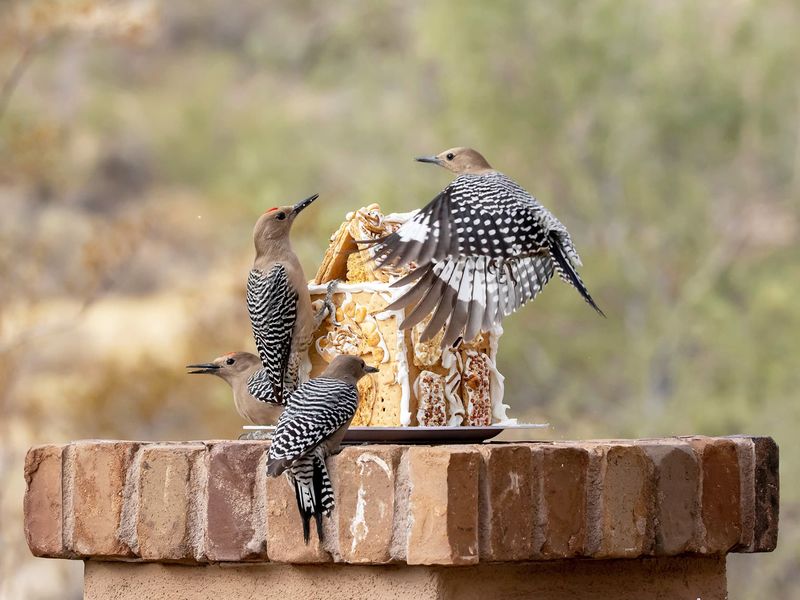
Something about the built environment of an Arizona yard seems to catch a Gila Woodpecker’s attention in ways that go beyond just food.
Wooden eaves, patio covers, fence posts, utility poles, and even metal rain gutters can all become targets for drumming, perching, or exploratory pecking during May.
The increased boldness of birds in breeding mode means they are less hesitant to approach structures they might avoid at other times of year.
Palm trees planted as ornamentals in Arizona yards are a particularly common magnet for Gila Woodpecker activity.
The fibrous skirt of damaged fronds at the base of fan palms creates a sheltered, insulated space that woodpeckers find attractive for both roosting and potential nesting.
Homeowners with mature palms may notice birds disappearing into the frond skirt and reappearing repeatedly throughout the day.
Block walls, stucco surfaces, and wooden fences bordering Arizona properties also provide perching and drumming platforms that become busier in May.
While most of this activity causes no lasting damage, homeowners concerned about repeated pecking at wood trim or fascia boards can try attaching visual deterrents or reflective tape near problem areas.
Addressing potential entry points early in the season is generally more effective than waiting until a habit has formed.
8. Old Woodpecker Cavities Support A Busy Yard Ecosystem
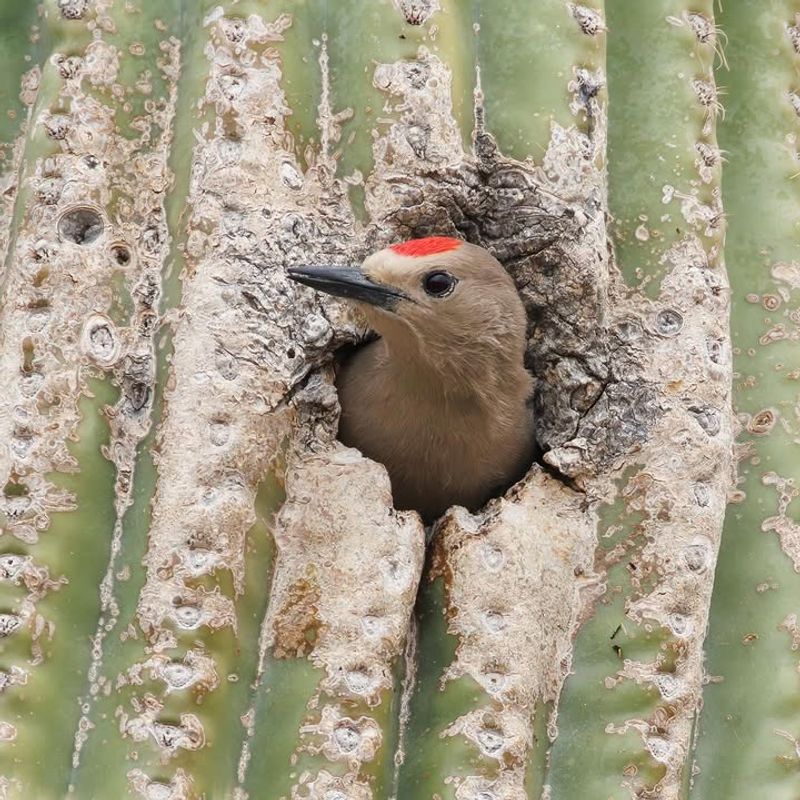
One of the most fascinating side effects of Gila Woodpecker activity in Arizona yards is the ecosystem that builds up around their old cavities.
Once woodpeckers finish with a cavity, a long list of other species moves in – elf owls, western screech-owls, Lucy’s warblers, cactus wrens, and even introduced species like European starlings all compete for these ready-made shelters.
In May, this secondary activity adds another layer of noise and movement to yards that host mature saguaros.
Watching a saguaro in May can feel like watching a small apartment building. Different cavities may house different tenants, and the comings and goings of multiple species at once create a surprisingly lively scene.
Homeowners who notice a variety of birds investigating the same saguaro are likely watching this cavity competition play out in real time.
Preserving mature saguaros and large trees in Arizona yards has long-term benefits that extend well beyond woodpeckers alone. A single old saguaro with several cavities can support multiple generations of cavity-nesting wildlife over decades.
Avoiding unnecessary trimming, herbicide use near saguaro roots, or physical damage to large cacti helps protect these natural housing structures and keeps the broader yard ecosystem healthy and active throughout the Arizona spring and beyond.