Why Hydrangeas Won’t Bloom In Georgia (And What Actually Works)
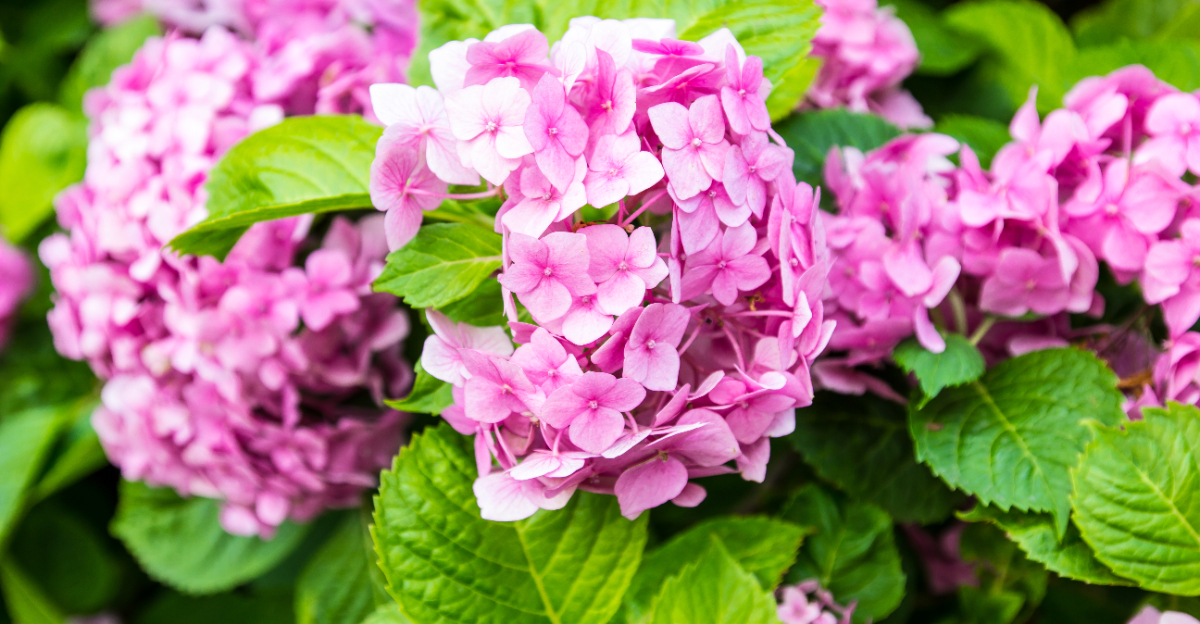
Hydrangeas can be one of the prettiest parts of a Georgia yard, which is exactly why it feels so frustrating when the leaves look fine but the flowers never show up. At first, it can seem like the plant just needs more time, a little more sun, or a bit of extra care.
Then another season passes, and it is still all green with no real payoff.
That is where a lot of gardeners in Georgia start second guessing everything. Was it pruned at the wrong time?
Is the plant in the wrong spot? Is the soil part of the problem?
When blooms do not appear, the reason is not always as obvious as people expect, and that is what makes hydrangeas so tricky.
The good news is that a bloomless hydrangea does not always mean the plant is failing. Sometimes the issue starts with one small detail that is easy to miss, but once it is fixed, the whole plant can respond very differently.
1. Pruning At The Wrong Time Removes Next Season’s Flower Buds
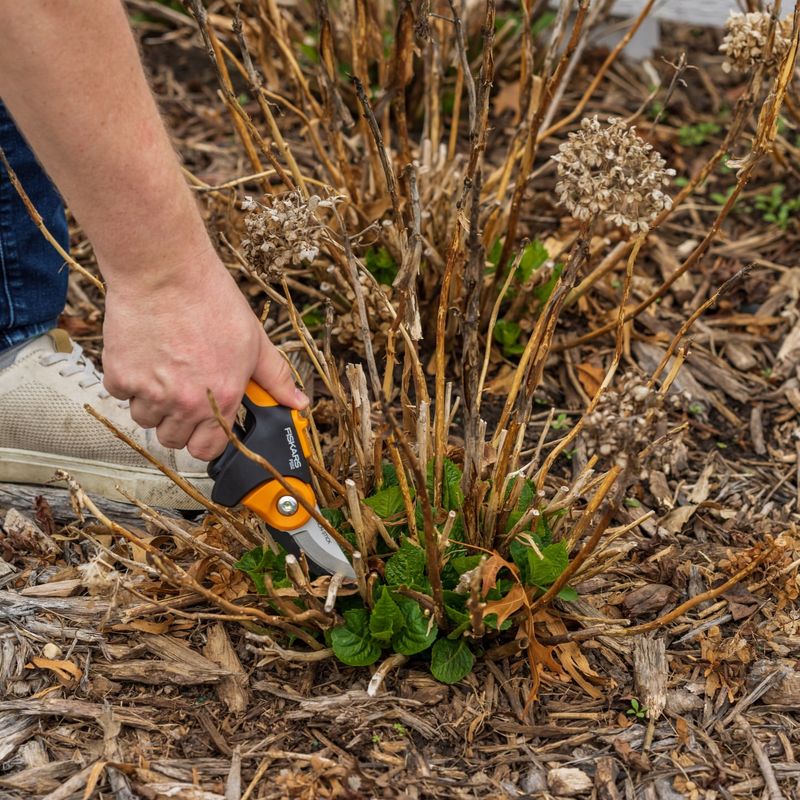
Cut at the wrong time and you have basically erased next year’s flowers before they even had a chance. Bigleaf and oakleaf hydrangeas, two of the most popular types planted across Georgia, bloom on old wood.
That means the flower buds actually form on the stems from the previous growing season, not on fresh new growth.
Pruning these types in fall or early spring feels logical, but it removes exactly what you need. Those stems you are cutting off were already carrying the buds for this coming summer’s blooms.
Once they are gone, you will get a full season of lush green leaves and absolutely nothing else.
Wait until your hydrangea finishes blooming in late summer, then prune right away. That window between late July and early August in Georgia gives the plant enough time to set new buds before winter arrives.
Panicle and smooth hydrangeas work differently since they bloom on new wood, meaning fresh stems grown in the current season. Pruning those in late winter or early spring is perfectly fine.
Knowing which type you have is honestly the most important first step before you ever pick up a pair of pruners.
2. Late Cold Snaps Damage Developing Buds Before They Open
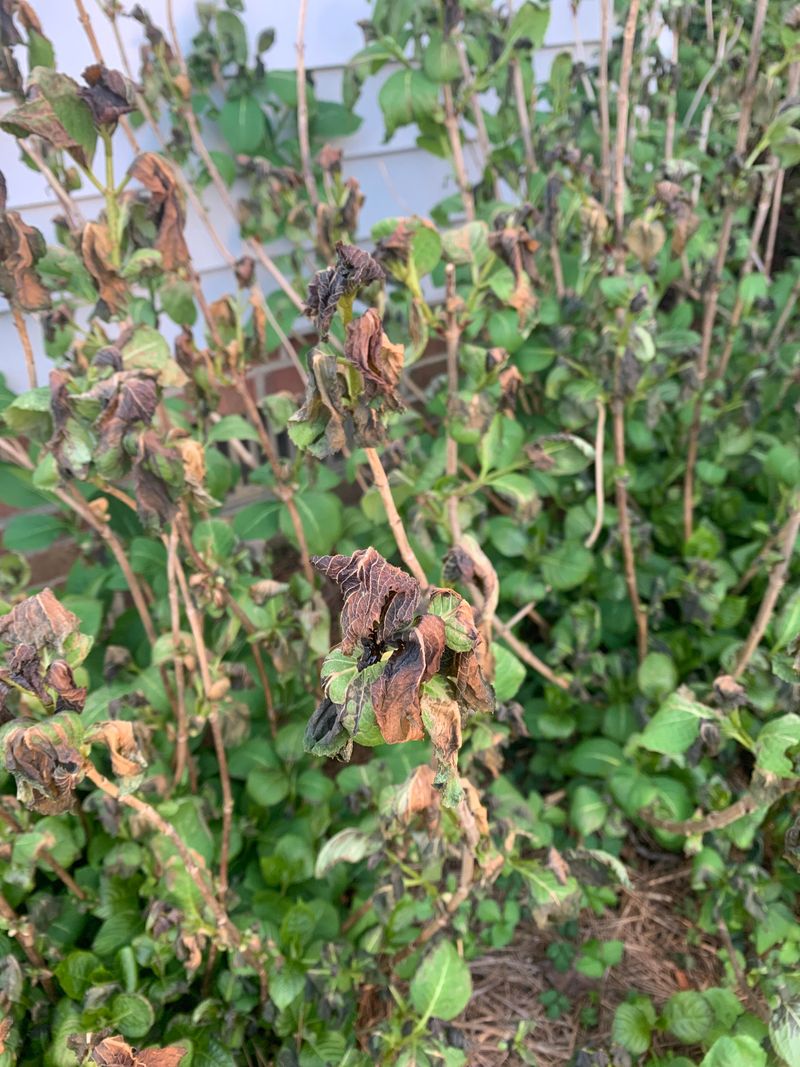
Georgia weather has a sneaky habit of feeling like spring is fully here and then dropping temperatures hard in late March or early April. Hydrangeas respond to warming soil and longer days by pushing out new growth and developing buds early.
A sudden cold snap right at that moment can wipe out an entire season of flowers overnight.
Bigleaf hydrangeas are especially vulnerable because they break dormancy earlier than other types. The buds start swelling and emerging when temperatures climb, then a late frost hits and browns them completely.
You will notice the damage within a day or two as buds turn dark brown or black and never recover.
Covering plants with frost cloth or even old bedsheets on nights when temperatures are expected to drop below freezing can make a real difference. Lay the cover loosely over the whole shrub and remove it the next morning once temps rise.
Leaving it on during the day traps heat and can cause its own problems.
Adding a thick layer of mulch around the base of your hydrangeas in late fall helps insulate the root zone and slow down that early spring surge of growth.
Slowing the plant down even slightly reduces the chance that buds develop before Georgia’s last cold snap has passed.
Timing matters more than most people realize when it comes to protecting those early buds.
3. Too Much Shade Limits Flower Production Even If Plants Look Healthy
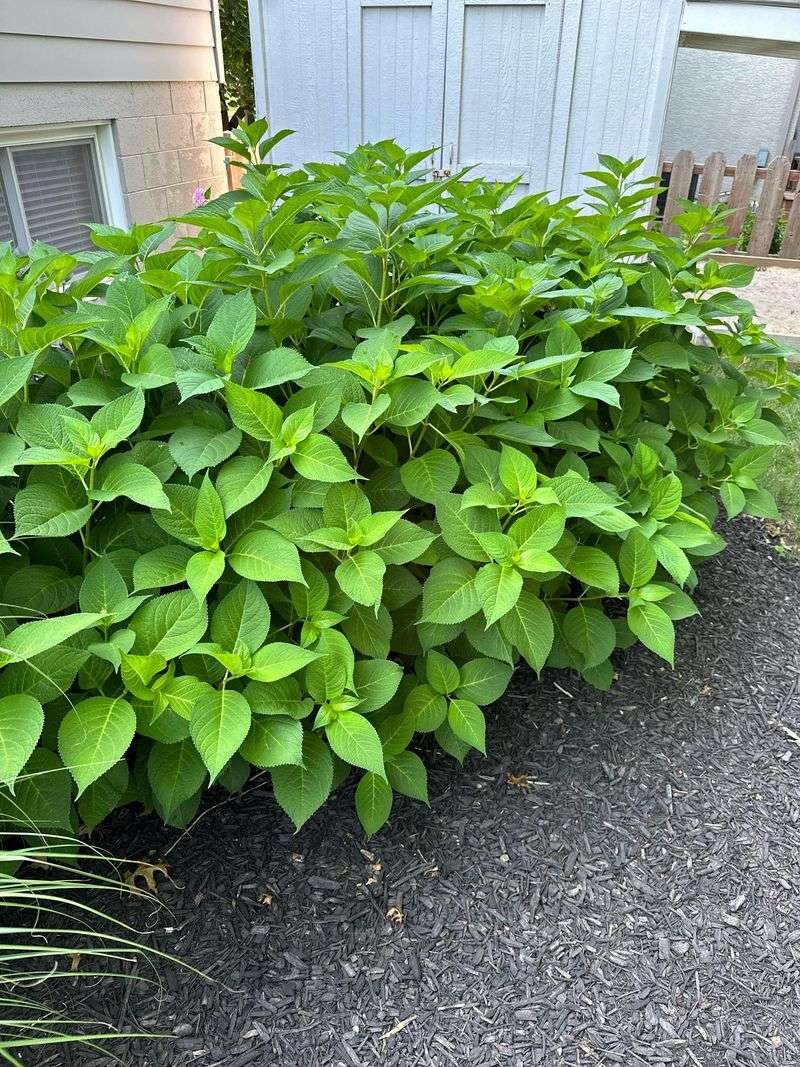
Plenty of hydrangeas in Georgia look absolutely gorgeous with thick, dark green leaves and strong stems, yet never produce a single bloom. Shade is usually the culprit.
When a plant gets too little light, it puts all of its energy into keeping its leaves alive rather than producing flowers.
Hydrangeas are not full-sun plants, but they are not deep-shade plants either. Spots under large oak trees or on the north side of a house where almost no direct light reaches tend to starve them of what they need.
A plant can survive in those conditions for years and still never bloom reliably.
Morning sun is what works best across most parts of Georgia. About four to six hours of direct light in the morning, followed by shade during the hottest afternoon hours, gives hydrangeas exactly the energy they need to set buds without getting heat-stressed.
East-facing spots in the yard tend to hit that sweet spot naturally.
If moving your plant is not an option, look at whether nearby trees or shrubs have grown significantly since the hydrangea was first planted. Canopies spread over time and gradually steal light from plants below.
Trimming lower branches on surrounding trees to let more light filter through can sometimes be enough to bring a non-blooming hydrangea back to life without relocating it entirely.
4. Overfertilizing Pushes Leaf Growth Instead Of Blooms
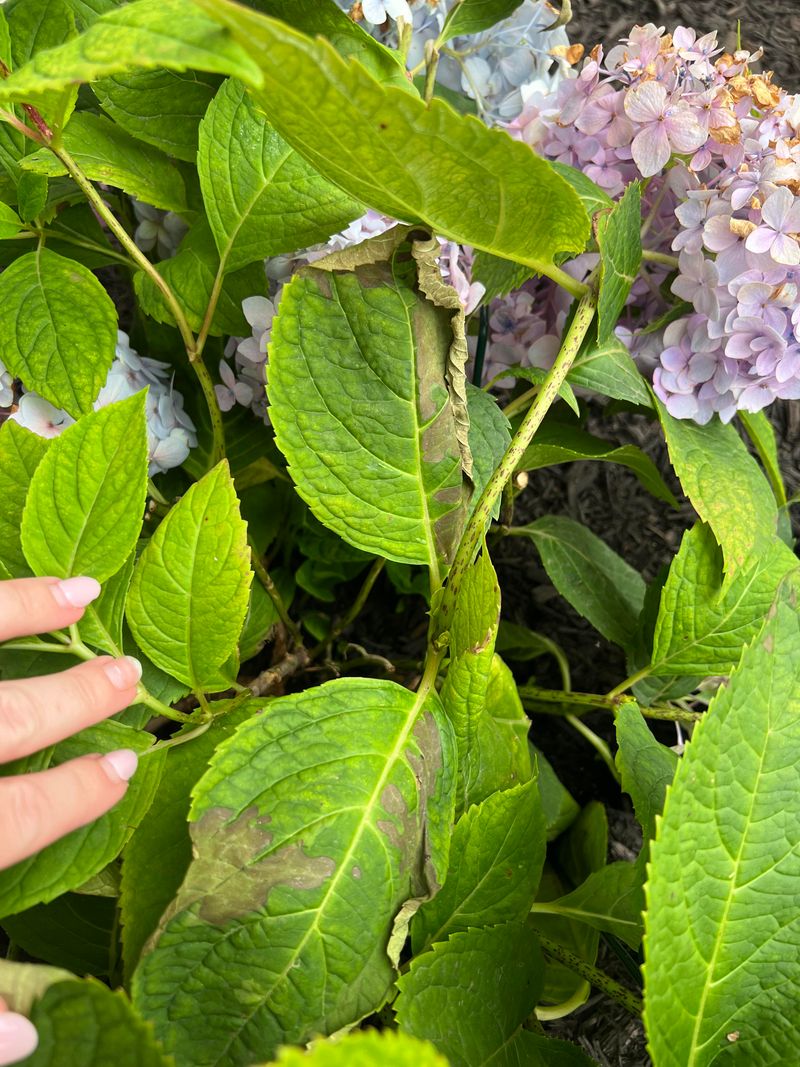
Walk through almost any Georgia neighborhood in spring and you will spot hydrangeas that are absolutely loaded with leaves but completely empty of flowers. Overfertilizing, especially with high-nitrogen products, is one of the most common reasons this happens.
Nitrogen is great for grass and leafy vegetables, but it tells flowering shrubs to grow foliage instead of blooms.
Lawn fertilizers are a sneaky cause of this problem. If you spread granular lawn fertilizer near your hydrangeas, the roots pick it up just as readily as the grass does.
Nitrogen-heavy formulas push the plant into vegetative overdrive, producing big beautiful leaves at the expense of everything else.
Switch to a balanced slow-release fertilizer with roughly equal parts nitrogen, phosphorus, and potassium. Apply it just once in early spring as growth begins.
Phosphorus specifically supports root development and flower production, so a formula slightly higher in phosphorus than nitrogen is even better for hydrangeas that have been slow to bloom.
Skip fertilizing altogether if your soil is already reasonably healthy. Georgia soils vary a lot by region, but many areas have decent organic content that supports hydrangeas without any added fertilizer.
Getting a basic soil test through your local county extension office costs very little and tells you exactly what your soil needs. Feeding a plant that does not need feeding is one of the easiest ways to accidentally prevent it from blooming season after season.
5. Prune Only After Flowering Or Choose Varieties That Bloom On New Wood
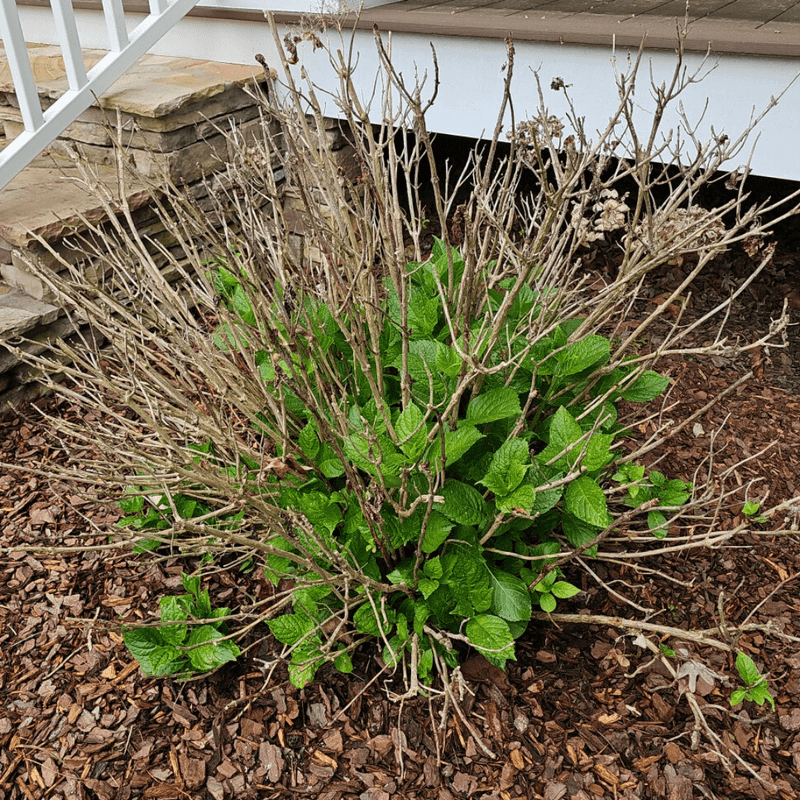
Switching up when you prune can genuinely transform a hydrangea that has not bloomed in years. Old wood bloomers like bigleaf and oakleaf types need their stems left intact through fall and winter.
Right after the last flower fades in late summer is your window. Cut back the stems that just finished blooming, remove anything weak or crossing, and then leave the plant alone until the following summer.
Resisting the urge to tidy it up in spring is harder than it sounds, but it is absolutely worth it across Georgia’s growing season.
Alternatively, swapping to a variety that blooms on new wood removes the timing problem entirely. Panicle hydrangeas like Limelight or Quick Fire, and smooth hydrangeas like Incrediball or Annabelle, produce their flowers on stems grown in the current season.
Pruning them in late winter causes zero damage to next year’s bloom potential.
Reblooming varieties like Endless Summer were developed specifically to bloom on both old and new wood, which gives them a built-in recovery system after frost damage or mistimed pruning.
Gardeners across Georgia who have struggled with bigleaf types for years often find that switching to a panicle variety or a reblooming cultivar finally gives them the full, reliable bloom display they have been chasing all along.
6. Protect Plants From Late Frost To Prevent Bud Damage
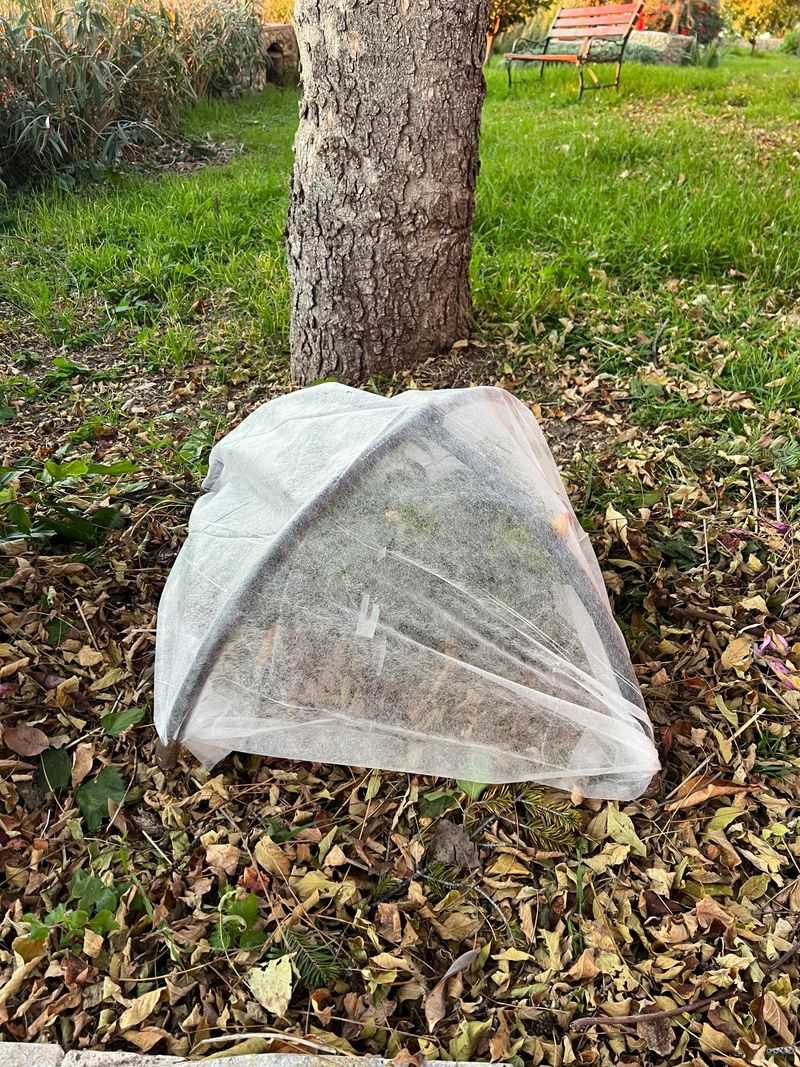
Late frost protection sounds like something gardeners in Minnesota worry about, not Georgia. But late freezes in March and April catch people off guard here regularly, and hydrangeas pay the price.
Buds that have already started emerging are far more sensitive to cold than dormant stems, and even a brief dip below freezing can brown them beyond recovery.
Keeping a few yards of frost cloth or row cover fabric on hand through early spring makes a real difference. Check the forecast before bed and toss the cover loosely over the shrub anytime overnight lows are expected near or below 32 degrees.
You do not need to wrap it tightly or secure it perfectly, just draping it over the plant traps enough warmth to protect developing buds.
Mulching generously around the base of your hydrangeas in late fall serves a dual purpose. It insulates the root zone through winter and also slows the plant’s response to warming temperatures in early spring, which delays bud emergence slightly.
Even a one-week delay in bud development can mean the difference between a full bloom season and a blank summer in Georgia.
Planting hydrangeas on the east or north side of a building also helps. Walls that face away from the afternoon sun warm up more slowly in late winter, which naturally delays the plant’s internal clock just enough to dodge the worst late-season cold.
Thoughtful placement at planting time prevents a lot of headaches down the road.
7. Give Enough Morning Sun To Support Strong Blooming
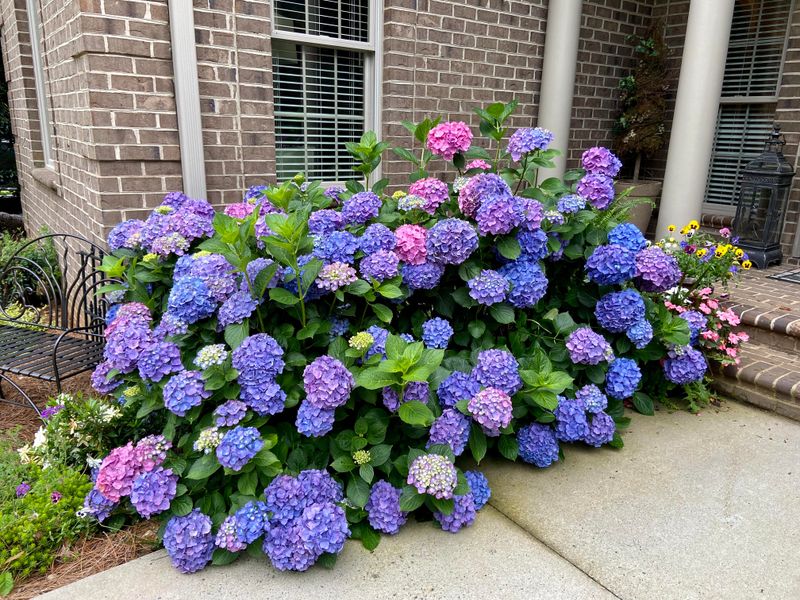
Morning sun is the secret ingredient that separates hydrangeas that bloom every year from ones that just sit there looking green. Across Georgia, the combination of intense afternoon heat and high humidity makes full-day sun genuinely tough on these plants.
But pulling them too far into shade to compensate tips the balance the other way and shuts down flowering.
Aim for a spot that gets four to six hours of direct sun before noon. East-facing beds naturally provide this without any extra effort.
North-facing spots and spots tucked under dense tree canopies rarely get enough light, no matter how well you water or fertilize.
If you are planting new hydrangeas, take a full day to actually watch how light moves across your yard before choosing a location. Shade patterns shift dramatically between morning and afternoon, and a spot that looks bright at 8 a.m. might be in deep shadow by 10.
Spending thirty minutes observing light at different times of day saves years of frustration.
Established plants that are not blooming can sometimes be helped by selectively removing lower limbs from nearby trees to open up the canopy.
Even adding a few extra hours of filtered morning light can be enough to trigger consistent flowering in a plant that has been struggling.
Georgia gardeners who make this one adjustment often see a dramatic improvement in bloom production the very next season without changing anything else about their care routine.