Why Norfolk Pines Lean In New York Apartments And What To Do
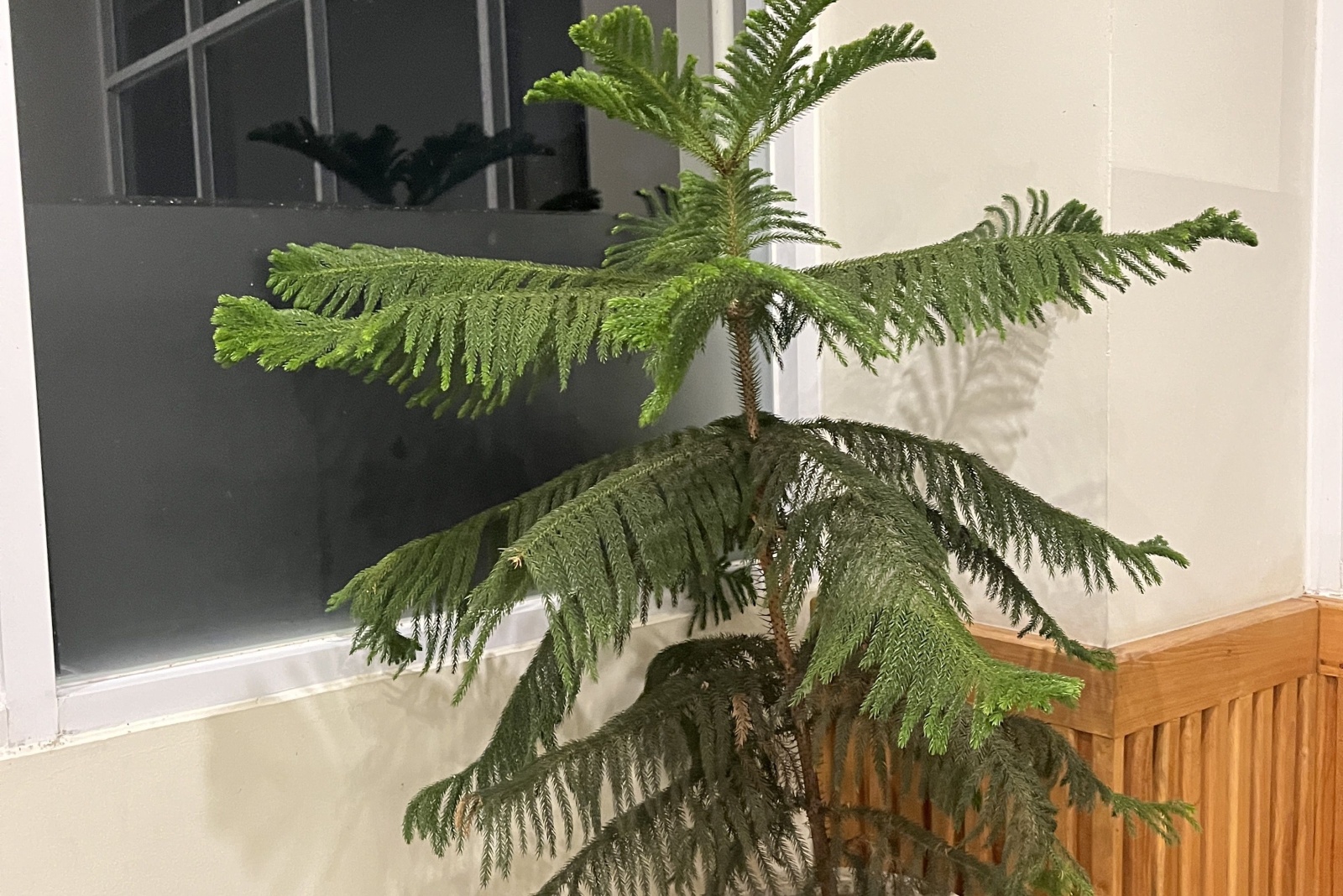
Norfolk pines add calm and height to New York apartments, yet many tilt like they chase the window.
One day the trunk stands proud, the next it lists to one side and tests patience.
City light enters from one direction, heat rises from pipes, and cramped corners skew balance.
These trees follow light with quiet resolve, even when the source sits far away.
Owners often blame weak roots, yet the cause runs deeper than soil alone.
Smart moves restore posture and keep needles lush.
A quarter turn, better placement, and steady care can shift the story fast.
Ignore the lean, and shape suffers. Act with purpose, and symmetry returns.
This piece explains why Norfolk pines tip indoors, how apartments push the habit, and which fixes bring results without stress.
With a few adjustments, a once-wobbly tree can stand tall again, frame a room with grace, and prove.
Light Direction Causes Uneven Growth Patterns
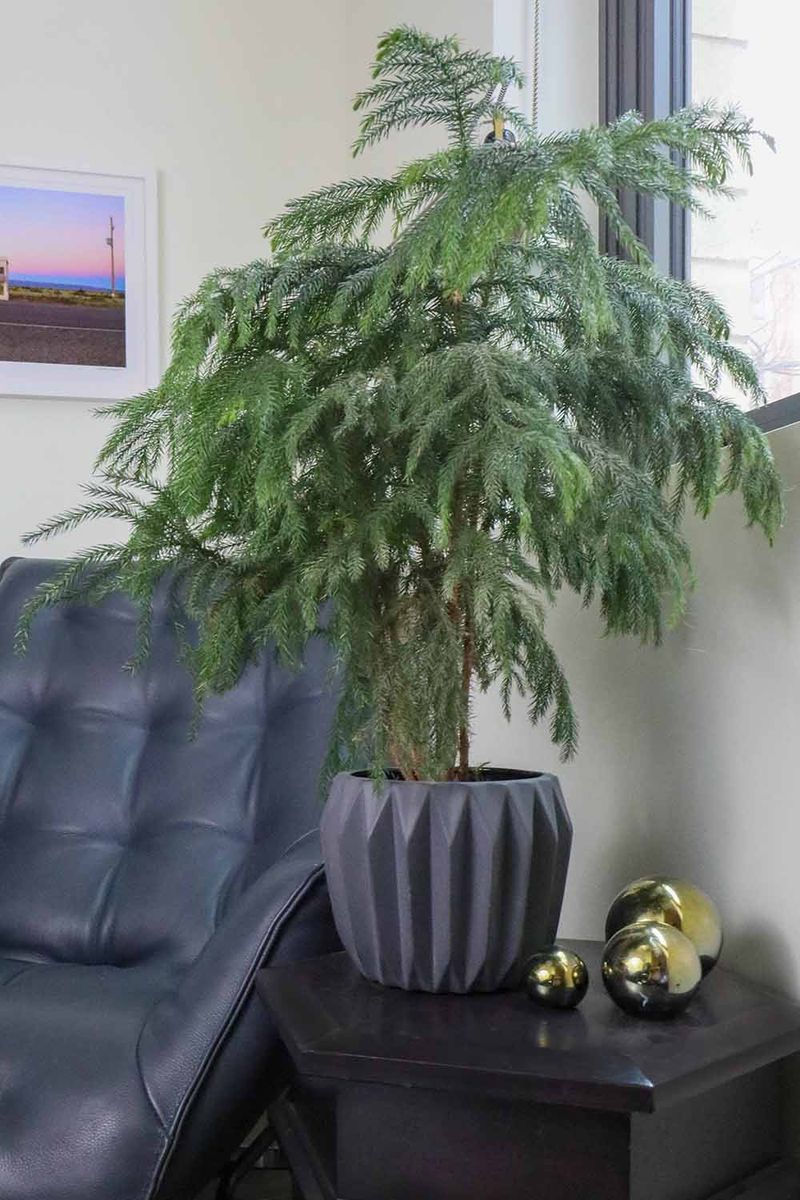
Plants naturally grow toward their light source, and Norfolk Pines are no exception to this rule.
When your tree sits near a window in your New York apartment, it stretches toward the brightest area to maximize photosynthesis.
Over weeks and months, this consistent reaching creates a noticeable lean that can make your plant look lopsided.
The side facing away from the window grows slower because it receives less energy from sunlight.
This phenomenon, called phototropism, is completely natural but can become extreme if ignored.
To fix this issue, rotate your Norfolk Pine a quarter turn every week so all sides receive equal light exposure.
Consistency matters more than perfection when rotating your plant.
Set a reminder on your phone for the same day each week to help you remember this simple maintenance task.
Within a few months of regular rotation, you should notice your tree growing more symmetrically and standing straighter.
If your apartment has limited natural light, consider supplementing with a grow light positioned above the plant.
This overhead lighting encourages upward growth rather than sideways stretching.
Proper light management keeps your Norfolk Pine looking balanced and healthy throughout the year.
Heavy Branches Weigh Down One Side
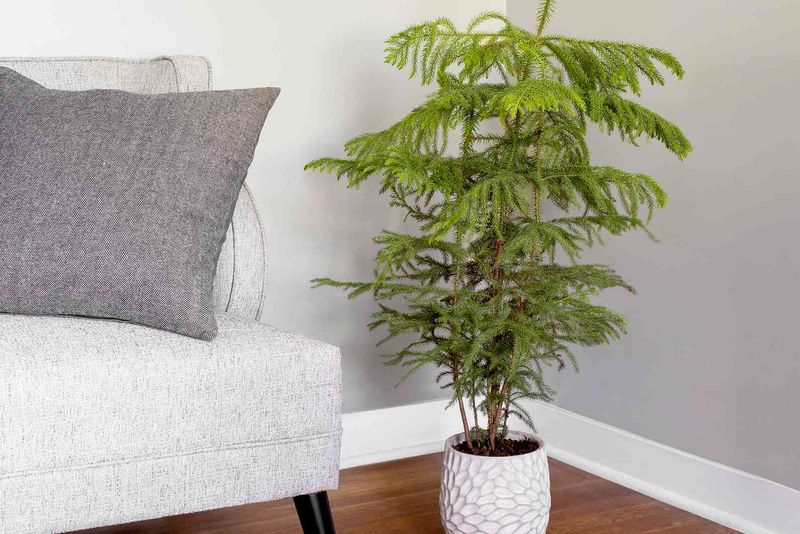
Sometimes Norfolk Pines develop more branches on one side than the other, creating an imbalance.
These trees naturally grow in a tiered pattern with horizontal branches extending from the main trunk.
When certain branches become fuller or longer, their weight pulls the entire plant in that direction.
This problem often develops slowly, so you might not notice until the lean becomes quite pronounced.
Branch weight issues can combine with light-seeking behavior to make leaning even worse in New York apartments.
The solution involves careful pruning to redistribute the weight more evenly across your tree.
Use clean, sharp scissors or pruning shears to trim back the longest or heaviest branches.
Focus on maintaining the natural tiered shape while removing excess growth from the heavier side.
Never remove more than one-third of the foliage at once, as this can stress your plant.
After pruning, your Norfolk Pine may still lean slightly, but the tendency should decrease over time.
You can also stake the trunk temporarily to help it grow straighter while the branches balance out.
Regular maintenance pruning prevents future weight distribution problems from developing.
Root System Has Developed Unevenly
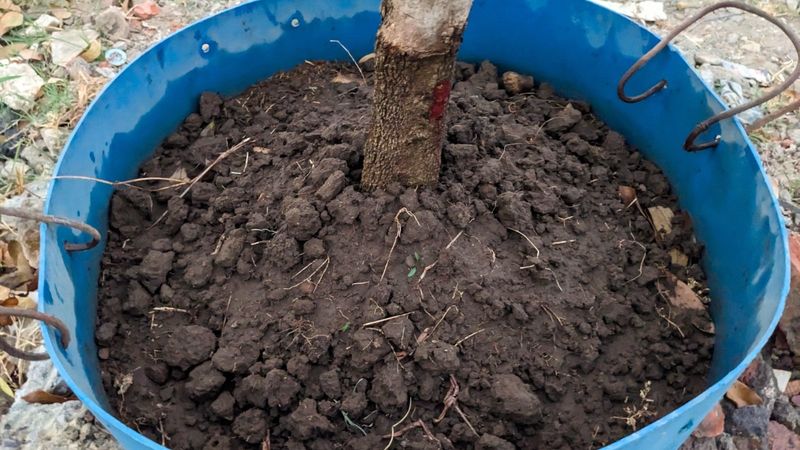
Roots anchor your plant and provide stability, but sometimes they grow unevenly inside the pot.
When roots develop more strongly on one side, they fail to support the tree properly from all angles.
This imbalance causes the trunk to lean away from the weaker root side in New York apartment conditions.
Root problems often start when the plant is young or when it sits in the same position for years.
Compacted soil or obstacles in the pot can also force roots to grow in unusual patterns.
Checking your root system requires gently removing the plant from its container during repotting season.
Look for roots that circle the pot or clump heavily on one side rather than spreading evenly.
If you notice uneven root development, gently loosen the root ball with your fingers.
Trim any damaged or excessively long roots with clean scissors to encourage new, balanced growth.
Repot your Norfolk Pine in fresh, well-draining soil that allows roots to spread in all directions.
Choose a pot that is only slightly larger than the current one to prevent overwatering issues.
Over the next growing season, the root system should develop more evenly and provide better support.
Weak Trunk Structure From Rapid Growth
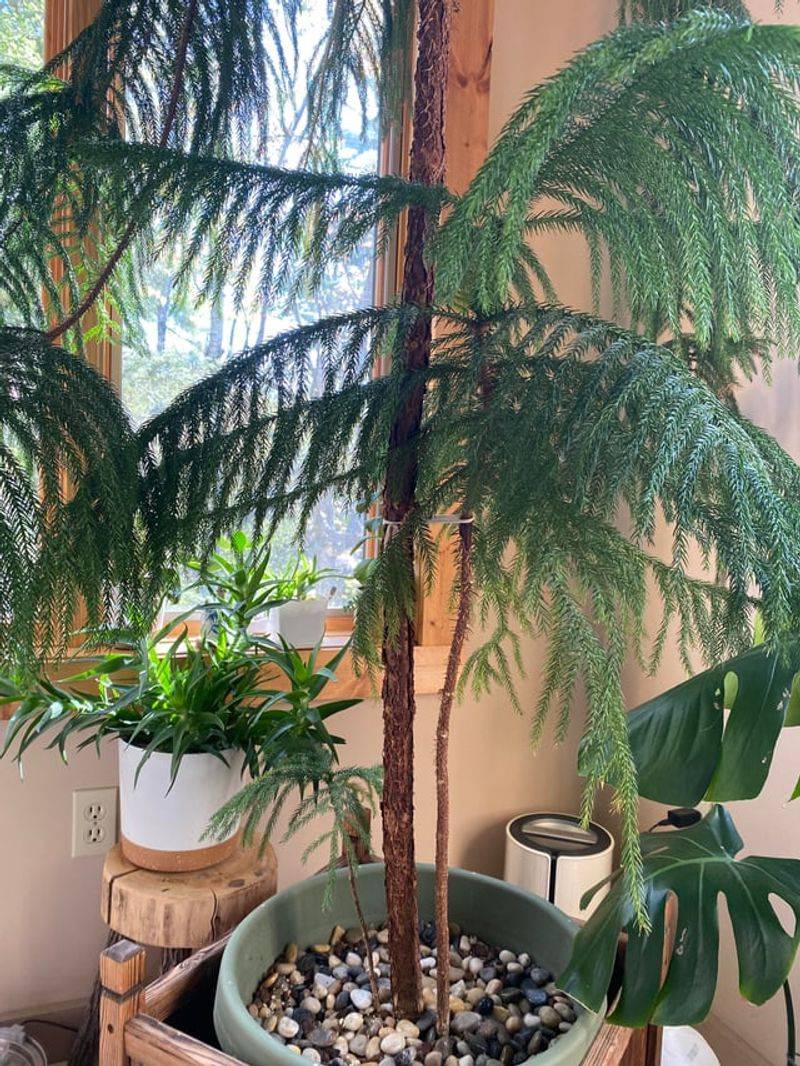
Norfolk Pines sometimes grow faster than their trunk can strengthen, especially when conditions are ideal.
Young trees fed with too much fertilizer may shoot up quickly without developing the structural integrity needed.
This creates a tall but weak trunk that cannot support its own weight properly.
The problem becomes more noticeable as the tree gains height in your New York apartment.
Environmental factors like low light can also contribute to weak, spindly growth patterns.
When plants stretch for light, they prioritize height over thickness, resulting in a fragile trunk.
To address this issue, focus on slowing growth while strengthening existing structure.
Reduce fertilizer applications to once every two or three months during the growing season.
Ensure your plant receives adequate bright, indirect light to promote sturdy rather than stretched growth.
You can provide temporary support by inserting a bamboo stake next to the trunk.
Tie the trunk loosely to the stake using soft plant ties or strips of cloth.
This support helps the tree grow straighter while the trunk gradually thickens and strengthens over time.
Pot Size And Stability Issues
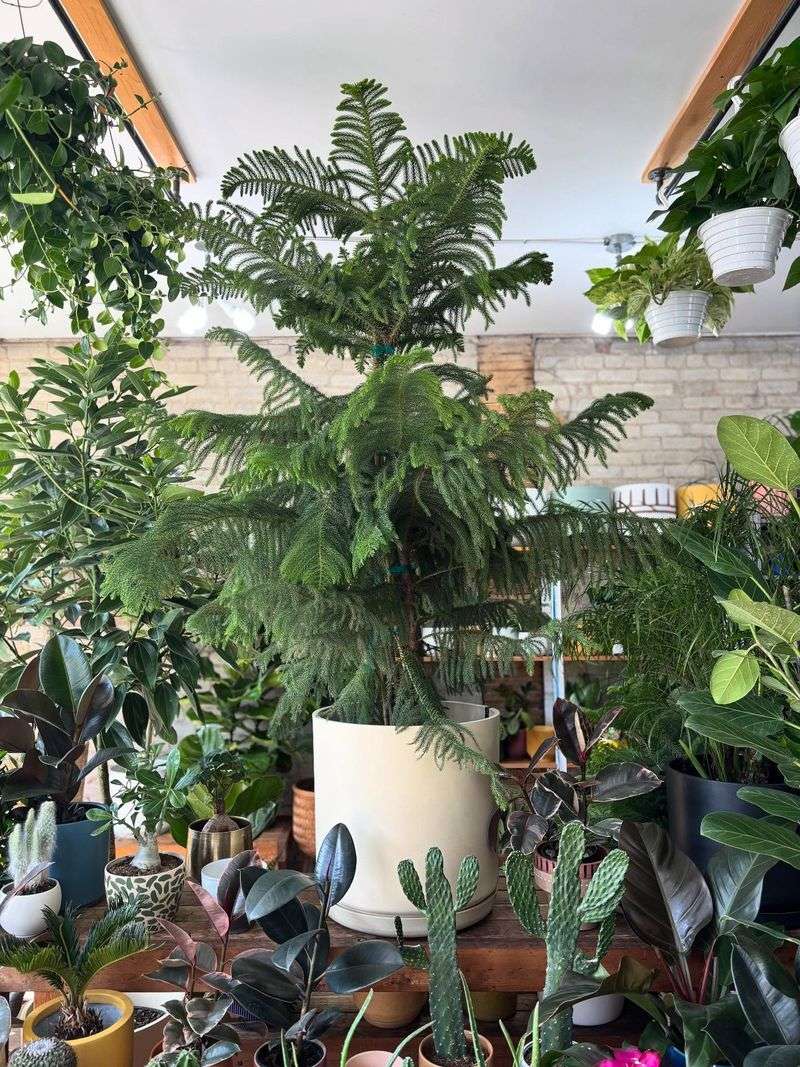
A pot that is too small or lightweight cannot provide adequate support for a growing Norfolk Pine.
As your tree increases in height and develops more branches, it becomes top-heavy.
Without sufficient weight in the base, the entire plant tips easily to one side.
This problem is particularly common in New York apartments where space limitations encourage smaller containers.
Plastic pots are especially prone to tipping because they lack the weight of ceramic or terracotta options.
To solve stability problems, consider upgrading to a heavier pot made from ceramic or concrete.
The container should be wide enough to create a stable base relative to the height of your tree.
As a general rule, the pot diameter should be at least one-third the height of the plant.
You can also add decorative rocks or gravel to the bottom of the pot for extra weight.
Make sure drainage holes remain uncovered so water can still escape freely.
Place your Norfolk Pine on a stable, level surface away from high-traffic areas where it might get bumped.
Proper pot selection and placement prevent tipping accidents and encourage upright growth habits.
Inconsistent Watering Creates Stress
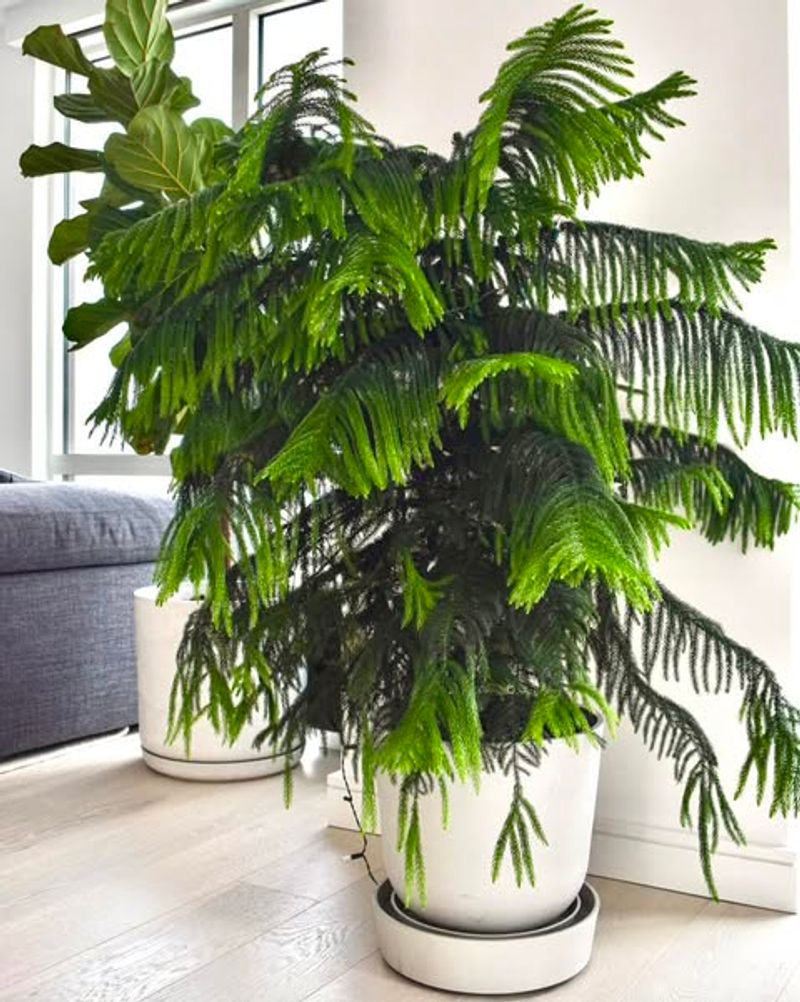
Water stress affects how well your Norfolk Pine can maintain its upright posture and structural integrity.
When soil dries out completely between waterings, the tree loses turgor pressure in its cells.
This causes branches to droop and the trunk to sag, creating a temporary or permanent lean.
Overwatering creates equally serious problems by rotting roots that normally anchor and support the plant.
New York apartment conditions with dry indoor air and heating systems can make watering schedules tricky.
The key is finding a consistent routine that keeps soil evenly moist but never waterlogged.
Check the top two inches of soil with your finger before watering your Norfolk Pine.
When this layer feels dry to the touch, water thoroughly until excess drains from the bottom.
Empty the saucer after fifteen minutes so roots do not sit in standing water.
During winter months when growth slows, reduce watering frequency but never let soil become bone dry.
Consistent moisture helps your tree maintain cell structure and stand tall without drooping.
Keep a simple watering log on your phone to track when you last watered and how the plant responded.
Natural Growth Habit And Genetics
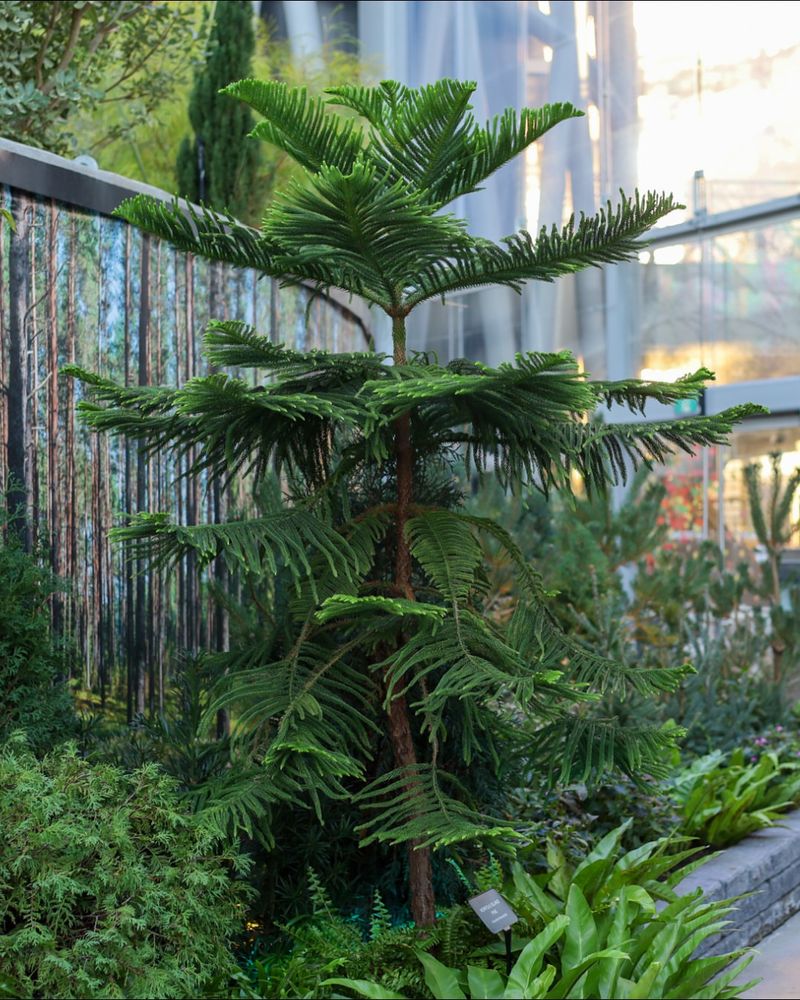
Not all leaning is a problem that needs fixing, as some Norfolk Pines naturally grow with character and asymmetry.
Individual trees have genetic variations that influence their growth patterns and overall shape.
A slight lean might simply be part of your specific plant’s natural tendency rather than a sign of trouble.
In their native habitat, Norfolk Pines grow outdoors and develop unique forms influenced by wind and terrain.
Your apartment tree may express similar individuality even in controlled indoor conditions throughout New York.
Before trying to correct a lean, assess whether your plant appears healthy otherwise.
Look for vibrant green needles, steady growth, and no signs of pests or disease.
If your Norfolk Pine seems happy except for the lean, you might choose to embrace its unique character.
Many plant enthusiasts appreciate the personality that comes with naturally asymmetrical growth.
You can still rotate the plant occasionally to prevent the lean from becoming more extreme.
However, trying to force a naturally leaning tree into perfect symmetry may cause unnecessary stress.
Sometimes the best approach is accepting your Norfolk Pine’s individual charm while ensuring its basic needs are met.