Why Norfolk Pines Lose Branches In Georgia Homes This Christmas
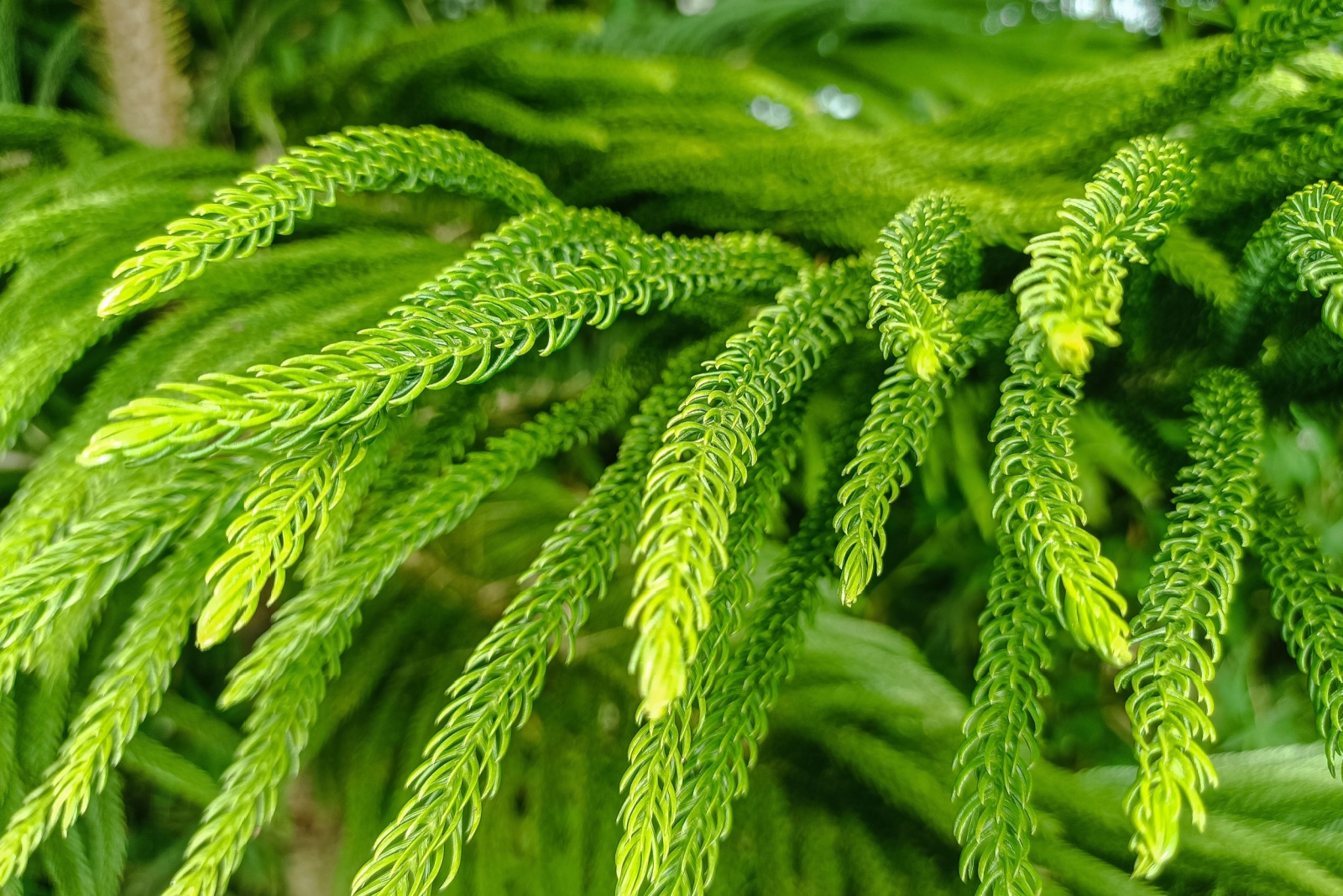
Christmas in Georgia adds a Norfolk pine to many family rooms, all tall, soft, and full of promise. Then trouble strikes.
Branches drop, gaps show, and panic sets in. Homeowners blame bad luck, yet the cause sits close to home.
These trees hail from mild, moist coasts, not dry, heated houses that run day and night.
Warm air pulls moisture fast, and stress hits like a sucker punch. Light shifts, tight pots, and poor air flow stack the deck even more.
One weak link, and the tree folds like a cheap suit.
This holiday heartbreak cuts deep, since Norfolk pines serve as long term keepsakes, not throwaway décor.
With the right care, damage stays off the table and green limbs hold firm.
Know the pitfall, play it smart, and this Christmas tree keeps its shape, charm, and pride well past the season, not stripped of cheer intact.
Sudden Temperature Changes Shock The Tree

Moving a Norfolk Pine from a garden center into your warm Georgia home creates an immediate shock to its system.
The tree experiences stress when temperatures shift by more than 10-15 degrees in a short time.
Your home’s cozy 72-degree environment feels drastically different from the cooler outdoor conditions or even the garden center where it lived before.
Norfolk Pines evolved on a South Pacific island with stable, moderate temperatures year-round.
They prefer consistent conditions between 60-70 degrees Fahrenheit.
When placed near heating vents, fireplaces, or drafty windows, the tree cannot regulate its moisture properly.
Temperature stress causes the tree to shut down certain branches to conserve energy and water.
Lower branches often turn brown first because the tree prioritizes its top growth.
You might notice needles turning yellowish-brown before entire branches droop.
Keep your Norfolk Pine away from heat sources and cold drafts.
Position it in a room with stable temperatures, away from frequently opened doors.
A hallway or living room corner away from vents works perfectly.
Monitor your thermostat and avoid dramatic temperature swings between day and night.
Gradual acclimation when you first bring the tree home helps reduce shock.
Low Humidity Levels Cause Branch Browning
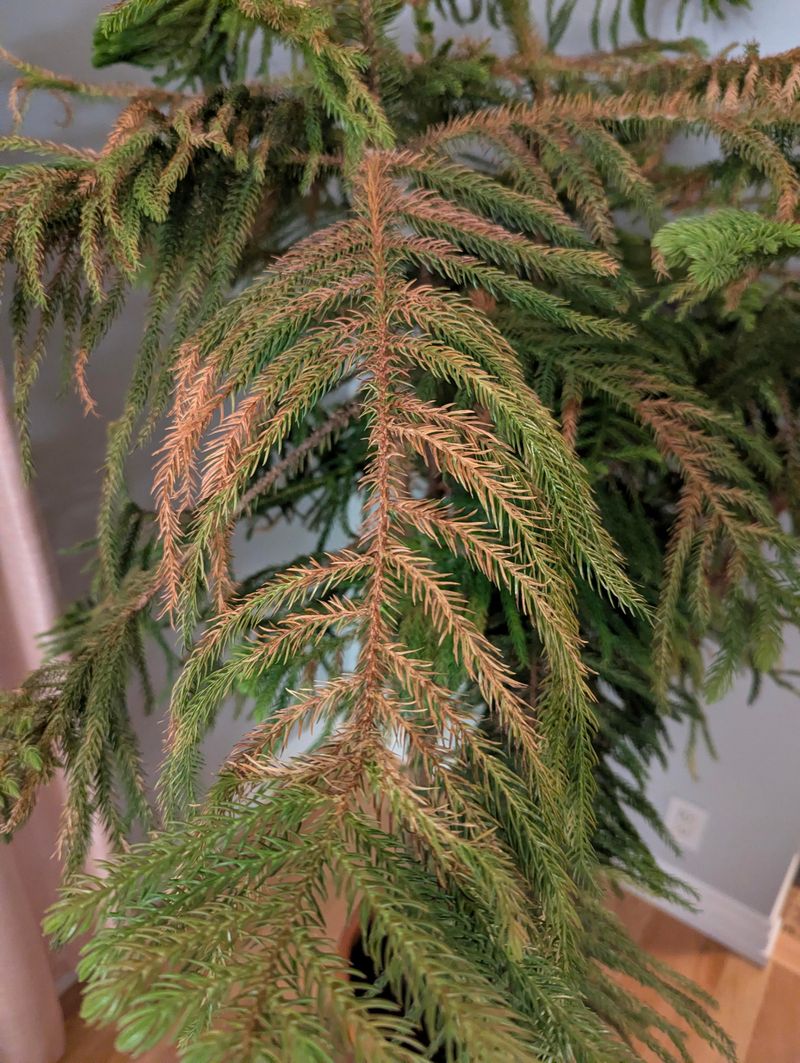
Georgia winters bring surprisingly dry air inside homes, especially when heating systems run constantly.
Norfolk Pines need humidity levels around 50-60 percent to thrive, but most heated homes drop to 20-30 percent.
This drastic difference stresses the tree and leads to rapid moisture loss through its delicate needles.
Picture your Norfolk Pine as a tropical island resident suddenly transported to a desert.
The dry air pulls moisture from the needles faster than the roots can replace it.
Branch tips turn crispy and brown, starting from the bottom and working upward.
Without adequate humidity, even well-watered Norfolk Pines suffer.
The tree cannot absorb enough water through its roots to compensate for what evaporates from its foliage.
You might see entire lower branches turn completely brown within just a few weeks of bringing the tree indoors.
Increase humidity around your Norfolk Pine with several simple methods.
Place a shallow tray filled with pebbles and water beneath the pot, ensuring the pot sits above the waterline.
Group several houseplants together to create a more humid microclimate.
Run a cool-mist humidifier nearby, or mist the branches lightly every few days with room-temperature water.
Overwatering Damages Root Systems
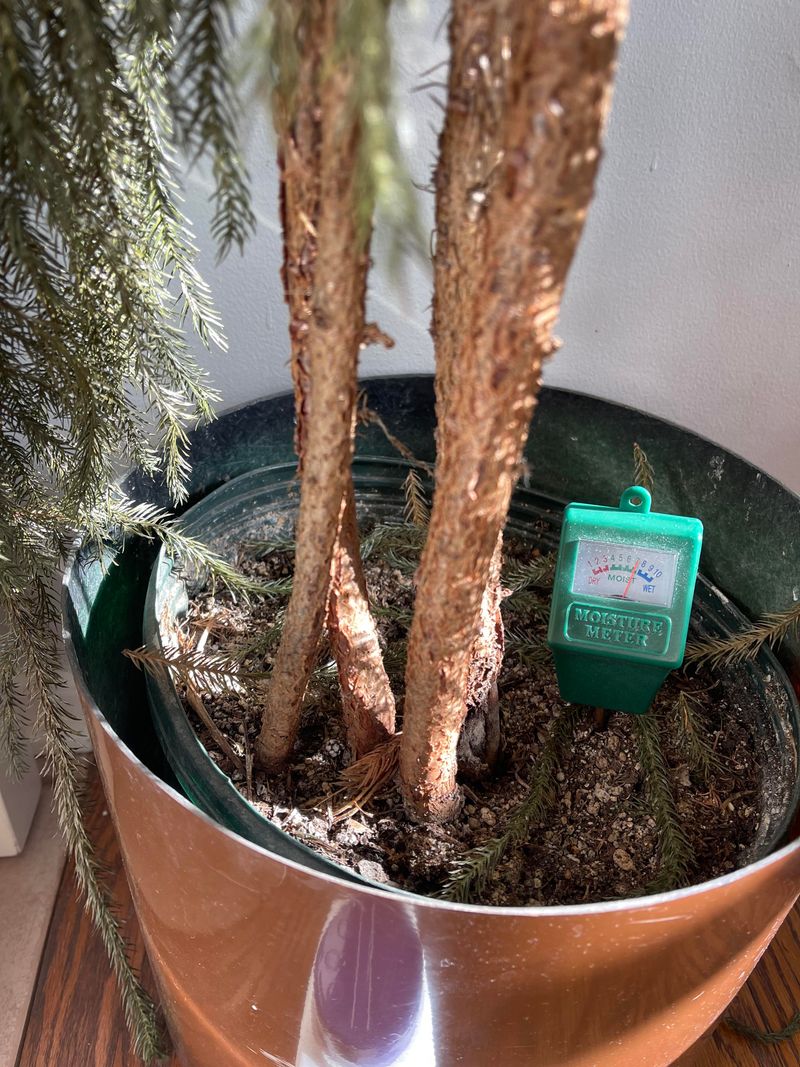
Many well-meaning plant owners assume their Norfolk Pine needs frequent watering, especially during the holiday season when homes feel extra warm.
However, these trees actually prefer their soil to dry out slightly between waterings.
Soggy roots cannot breathe properly and begin to deteriorate, which cuts off nutrient and water flow to branches.
Root damage from overwatering shows up first in the lower branches of Norfolk Pines.
You might notice branches turning yellow or brown despite your consistent watering schedule.
The pot feels heavy, and water sits on the soil surface instead of absorbing quickly.
Waterlogged soil creates an oxygen-poor environment where roots suffocate.
Damaged roots cannot support the entire tree, so the plant sheds branches to survive.
This problem becomes more common during winter when Norfolk Pines grow more slowly and need less water.
Check the soil moisture before watering by inserting your finger two inches deep into the soil.
Water only when the top two inches feel dry to the touch.
Ensure your pot has drainage holes and never let the pot sit in standing water.
Empty the drainage tray 30 minutes after watering.
Reduce watering frequency during winter months when growth naturally slows down.
Insufficient Light Weakens Branch Health

Bright, indirect light fuels healthy growth in Norfolk Pines, but many Georgia homes lack sufficient natural light during short winter days.
When placed in dark corners or rooms with only north-facing windows, these trees struggle to produce enough energy through photosynthesis.
Weak, light-starved branches cannot maintain their structure and eventually drop.
Your Norfolk Pine might look festive in that corner by the staircase, but if it receives less than six hours of bright, indirect light daily, branches will suffer.
The tree naturally sheds lower branches when light levels decrease because it cannot support all its foliage.
You may notice the tree growing lopsided as it leans toward the nearest light source.
Indoor lighting during winter rarely matches the intensity Norfolk Pines need.
Even rooms that seem bright to human eyes might not provide enough light for healthy plant growth.
Without adequate light, the tree enters a stressed state and prioritizes survival over maintaining all its branches.
Position your Norfolk Pine near an east or west-facing window where it receives several hours of gentle morning or afternoon sun.
Rotate the pot a quarter turn weekly to ensure even light exposure on all sides.
Supplement with a grow light if natural light is limited in your home.
Avoid direct southern sun, which can scorch needles through window glass.
Poor Drainage Traps Excess Moisture
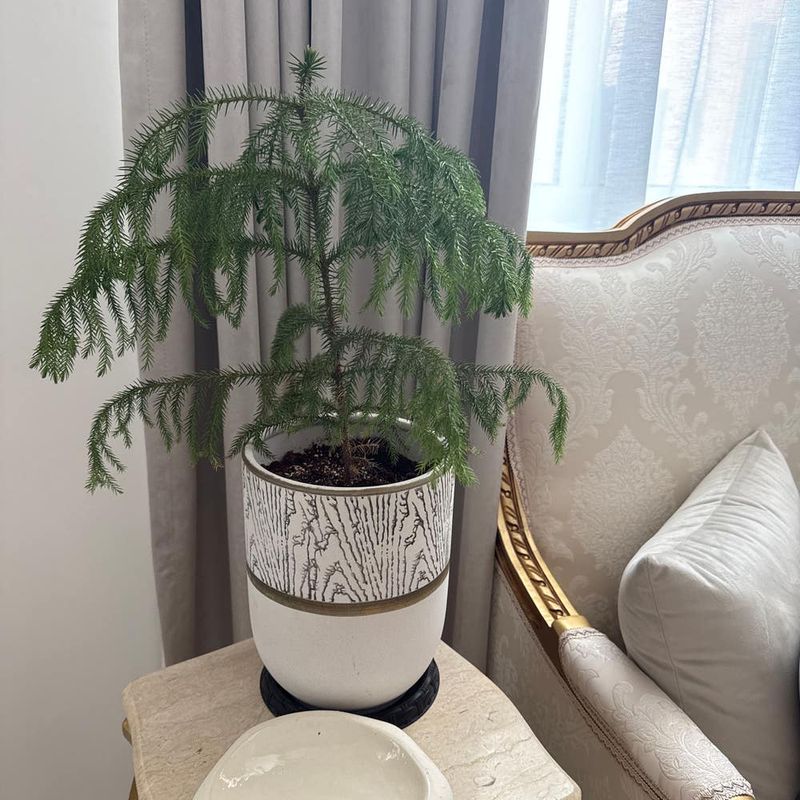
Decorative holiday pots often prioritize appearance over function, lacking proper drainage holes.
Many people place their Norfolk Pine in attractive cache pots or wrap the original pot in festive covers that trap water at the bottom.
This creates a swampy environment where roots sit in stagnant water, leading to rapid branch decline.
Water needs an escape route to prevent root suffocation.
Without drainage holes, excess water accumulates at the pot’s bottom, even if you water carefully.
The lower roots stay constantly wet while surface soil appears dry, tricking you into watering more frequently.
Trapped moisture encourages harmful conditions that damage root systems.
Branches begin to droop and turn brown as compromised roots fail to deliver nutrients and water upward through the tree.
The damage often happens gradually, with lower branches affected first before problems spread upward.
Always use pots with drainage holes for your Norfolk Pine.
If you want to display the tree in a decorative container, use it as an outer cache pot only.
Remove the plant from the decorative container during watering, allowing excess water to drain completely before returning it.
Place pebbles at the bottom of cache pots to elevate the inner pot above any trapped water.
Check weekly that water has not accumulated in outer containers.
Natural Branch Shedding Occurs With Age

Norfolk Pines naturally shed their lowest branches as they mature, just like they do in their native habitat.
This process happens more noticeably when trees move indoors because stress accelerates the natural aging pattern.
Lower branches receive less light and gradually turn brown, then drop off as the tree focuses energy on upper growth.
In their island home, Norfolk Pines grow into towering trees with bare lower trunks and lush canopies high above.
Your indoor tree mimics this growth pattern on a smaller scale.
The bottom tier of branches typically browns and falls off first, which is completely normal behavior.
Stress from indoor conditions speeds up this natural process.
What might take years in ideal outdoor conditions can happen within months indoors.
You should not panic when the lowest branches brown if the rest of the tree looks healthy with vibrant green needles on upper branches.
Accept that some lower branch loss is normal and unavoidable.
Focus on keeping the upper two-thirds of your tree healthy with proper light, water, and humidity.
Prune brown branches cleanly at the trunk once they turn completely brown.
Maintain excellent care for remaining branches to slow the progression.
Consider this natural habit when choosing the size of Norfolk Pine for your space.
Fertilizer Imbalances Stress The Plant
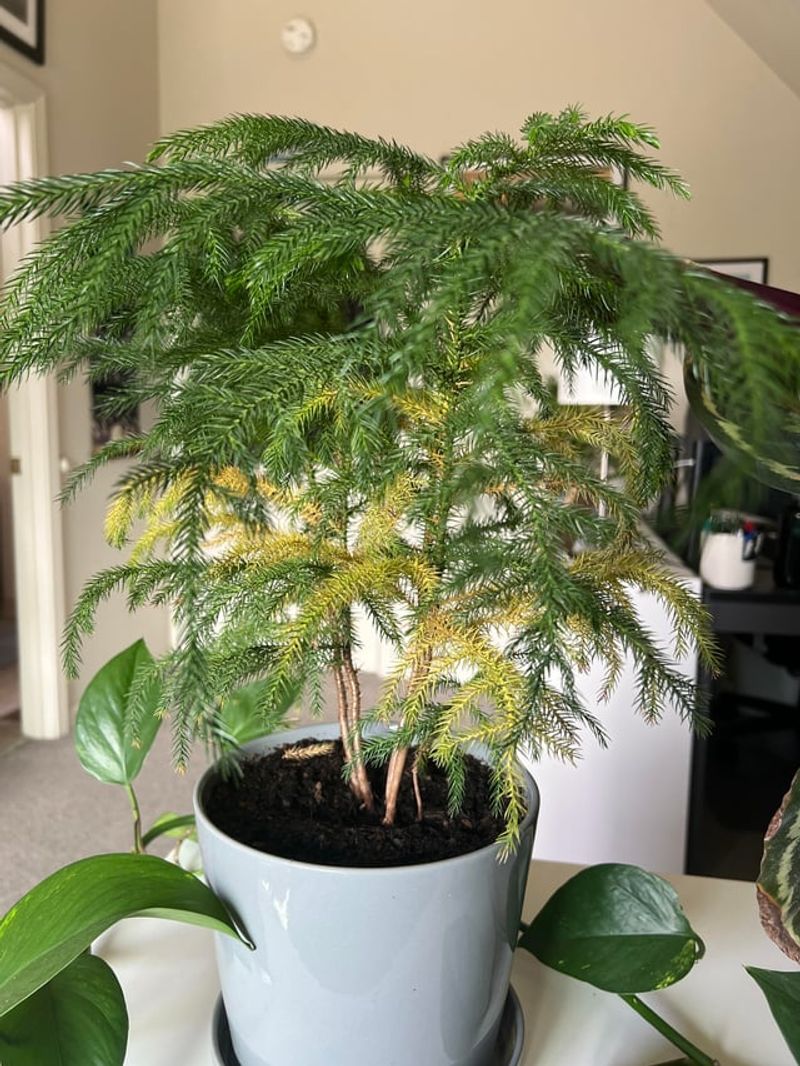
Well-meaning plant owners often fertilize their Norfolk Pine too frequently during the holiday season, hoping to keep it looking perfect for guests.
However, these trees grow very slowly during winter months and need minimal nutrients.
Excess fertilizer builds up salts in the soil that burn roots and cause branches to brown and drop.
Salt accumulation from over-fertilization shows as white crusty deposits on the soil surface or around drainage holes.
The tree’s roots become damaged by the concentrated salts, which prevents proper water and nutrient absorption.
Branches turn brown from the tips inward, and needles may appear scorched at the edges.
Conversely, Norfolk Pines that never receive any nutrients eventually deplete the soil and show yellowing branches.
The tree needs some nutrition but in much smaller amounts than most houseplants.
Balance is crucial for healthy branch maintenance.
Fertilize your Norfolk Pine only during active growing months from April through September.
Use a balanced, water-soluble fertilizer diluted to half the recommended strength.
Skip fertilization completely from October through March when the tree grows slowly.
Flush the soil with plain water every few months to remove salt buildup.
If you suspect over-fertilization, water thoroughly several times to leach excess salts from the soil.
Watch for new green growth as a sign of recovery.
Pest Infestations Weaken Branch Structure
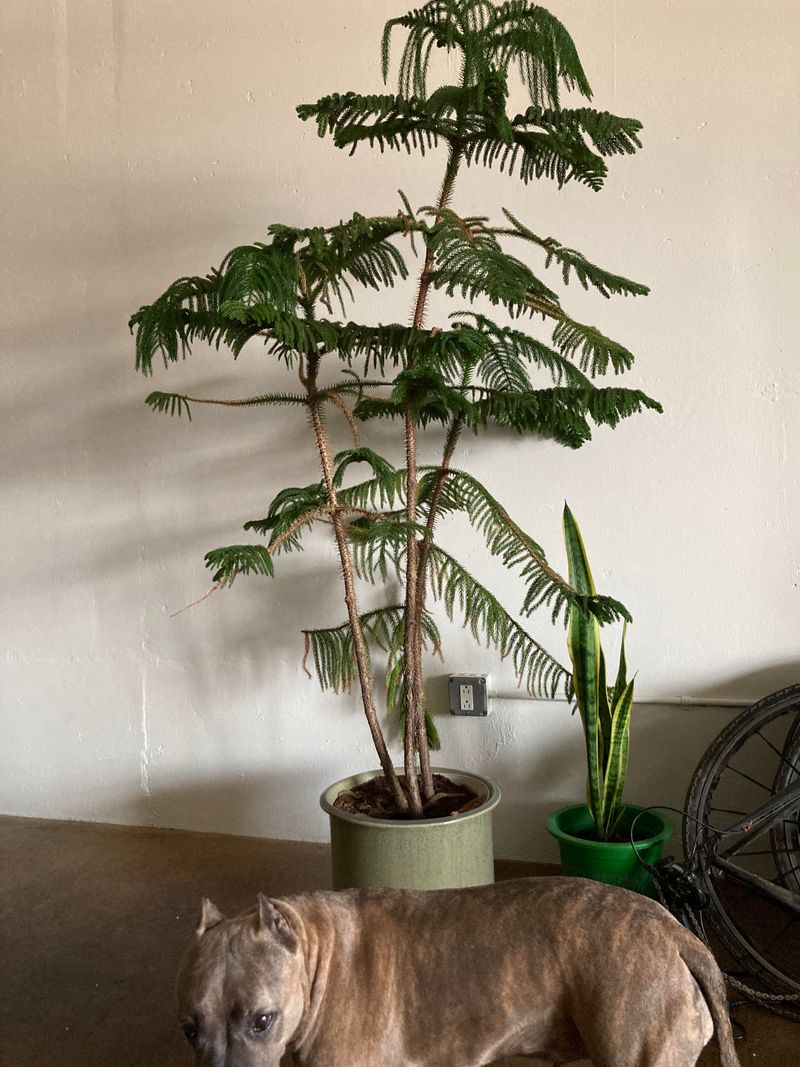
Spider mites and scale insects love the warm, dry conditions of Georgia homes during winter, making Norfolk Pines vulnerable to infestation.
These tiny pests feed on plant sap, draining vital nutrients and moisture from branches.
Heavy infestations cause needles to turn yellow or brown, and branches eventually weaken and fall off.
Spider mites create fine webbing between needles that looks like dusty cobwebs.
You might notice tiny moving specks on the undersides of branches or see stippled, discolored needles.
Scale insects appear as small brown or tan bumps stuck to branches and needles, often mistaken for part of the tree.
Both pests multiply rapidly in the warm, dry indoor environment that already stresses Norfolk Pines.
The combination of environmental stress and pest damage quickly overwhelms the tree.
Infested branches cannot photosynthesize properly and become a drain on the tree’s resources.
Inspect your Norfolk Pine weekly for signs of pests, especially on lower branches and needle undersides.
Spray the entire tree with room-temperature water to dislodge spider mites and increase humidity.
Wipe scale insects off with a cotton swab dipped in rubbing alcohol.
Apply insecticidal soap or neem oil for serious infestations, following product directions carefully.
Isolate infested plants from other houseplants to prevent pest spread.
Maintain good humidity levels to prevent future spider mite problems.