Why So Many North Carolina Homeowners Plant Camellias Near Their Front Doors
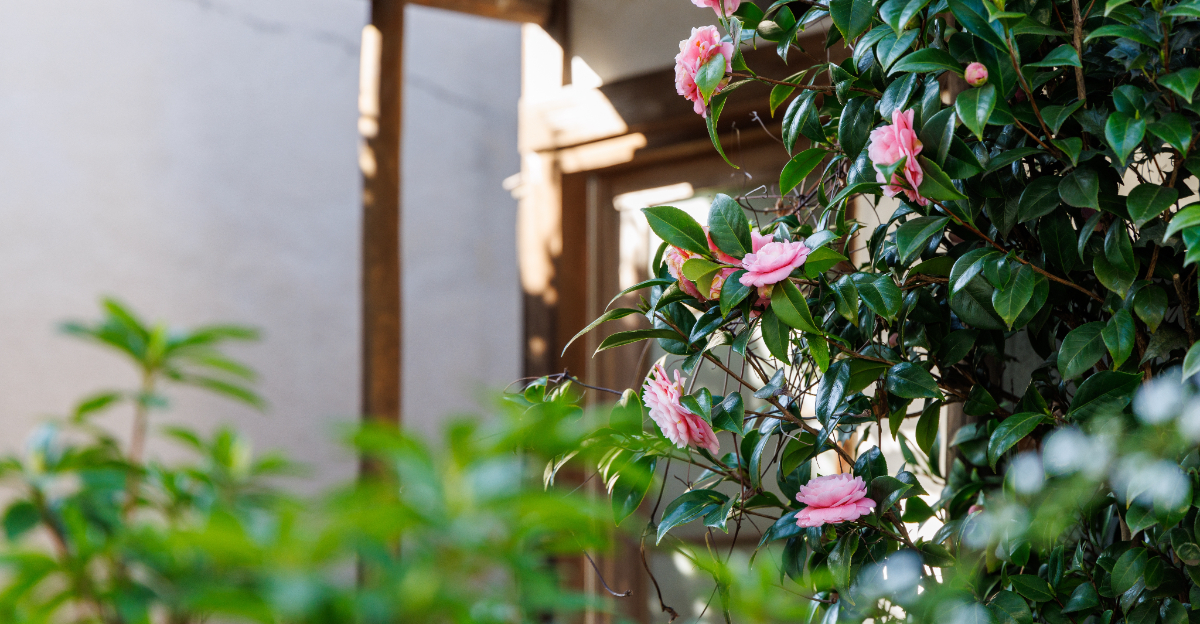
A welcoming front entrance often begins with more than a doorway, it begins with plants that frame the home with timeless beauty.
In neighborhoods across North Carolina, glossy green camellia shrubs have become a familiar and elegant sight, standing proudly beside front doors with their refined blooms and rich foliage.
These classic plants earned their place in Southern landscapes through a rare combination of year round structure, seasonal color, and dependable growth. Even when many garden plants rest, camellias continue to provide lush greenery and graceful presence.
North Carolina’s climate suits them well, allowing strong roots, steady development, and reliable flowering with minimal effort. Beyond their beauty, camellias create a sense of charm and tradition that enhances curb appeal and welcomes visitors warmly.
Understanding why these shrubs are so often planted near entryways reveals why many North Carolina homeowners choose to feature camellias as a lasting and beautiful focal point.
Evergreen Foliage Keeps Entryways Attractive Year Round
Most flowering shrubs go bare and dull when cold weather arrives, leaving front entryways looking stripped and uninviting for months. Camellias break that pattern completely.
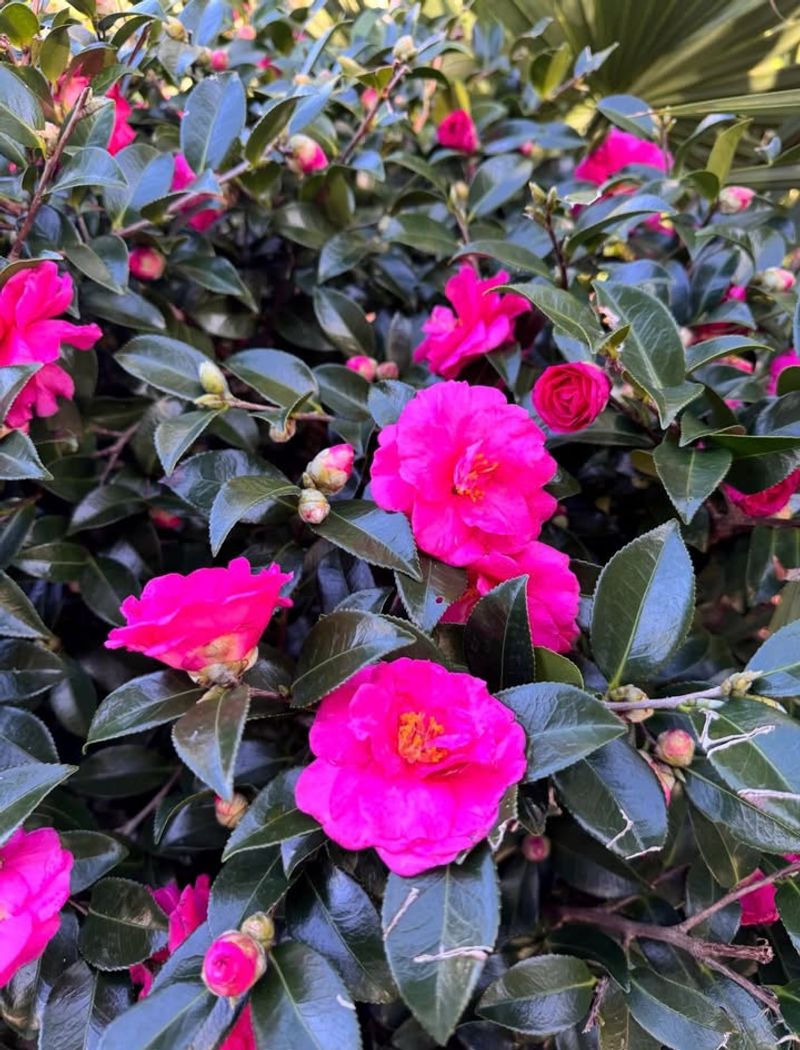
Their thick, waxy, deep green leaves stay firmly in place through every season, giving your entryway a polished, well-tended look no matter what the calendar says.
Gardeners often describe camellias as the backbone of a Southern landscape because their structure holds the design together when other plants fade. The glossy foliage reflects light beautifully, making even a shaded entryway feel bright and welcoming.
Homeowners in North Carolina rely on this evergreen quality to maintain curb appeal without constant replanting or seasonal swaps.
Beyond looks, the dense leafy growth also acts as a natural windbreak near entryways, offering a subtle buffer against cold winter gusts. Camellias belong to the Theaceae family, the same family as the tea plant, and share that plant’s signature lustrous foliage.
Planting one near your front door means you gain a living, breathing piece of landscape architecture that stays attractive and structured throughout spring, summer, fall, and winter without missing a beat.
Winter And Early Spring Blooms Add Color When Little Else Flowers
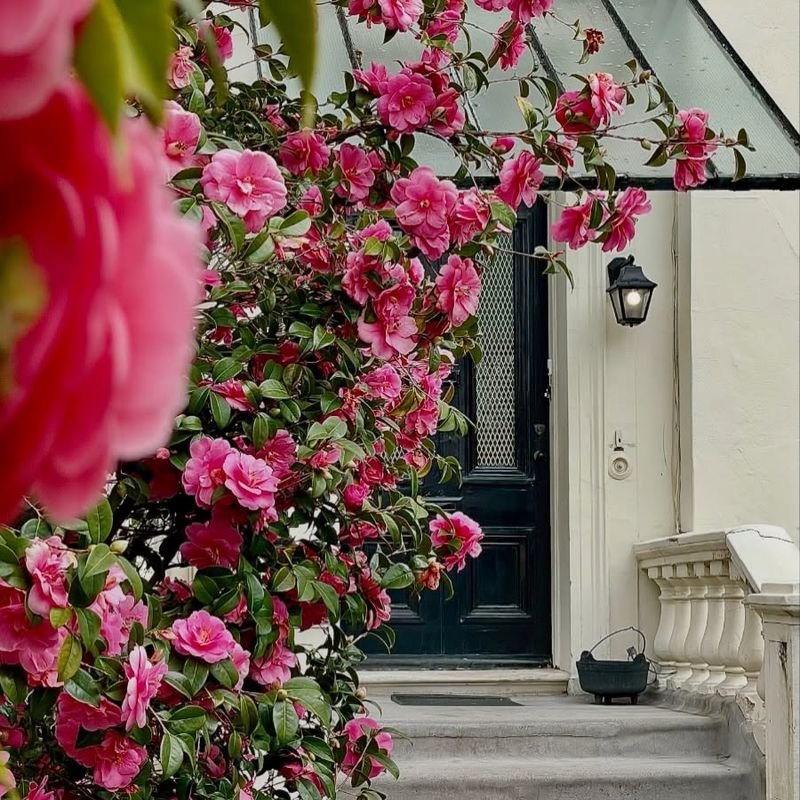
Imagine stepping outside on a gray January morning and being greeted by a shrub absolutely covered in rose-like blooms. That is the magic camellias bring to a front entryway during the quietest months of the garden year.
While most plants sit dormant through winter, camellias put on their best show from November through March depending on the variety.
Camellia japonica typically blooms from late winter into early spring, while Camellia sasanqua often starts flowering in October and November. This staggered bloom time means a homeowner can select varieties that provide continuous color across several months.
The flowers range from pure white to deep crimson, soft pink, and even lavender-tinged shades, offering plenty of options to complement any home exterior.
North Carolina winters rarely bring the kind of brutal cold that destroys camellia buds, which makes the state an ideal place for enjoying their off-season blooms.
Neighbors and visitors frequently pause to admire a camellia in full flower during February when everything else looks bare and brown.
Planting one near your front door turns a typically dull season into something genuinely beautiful, giving your home a distinctive, welcoming character that stands out in the neighborhood from late fall all the way through early spring.
Well Suited To The Mild Climate Of North Carolina
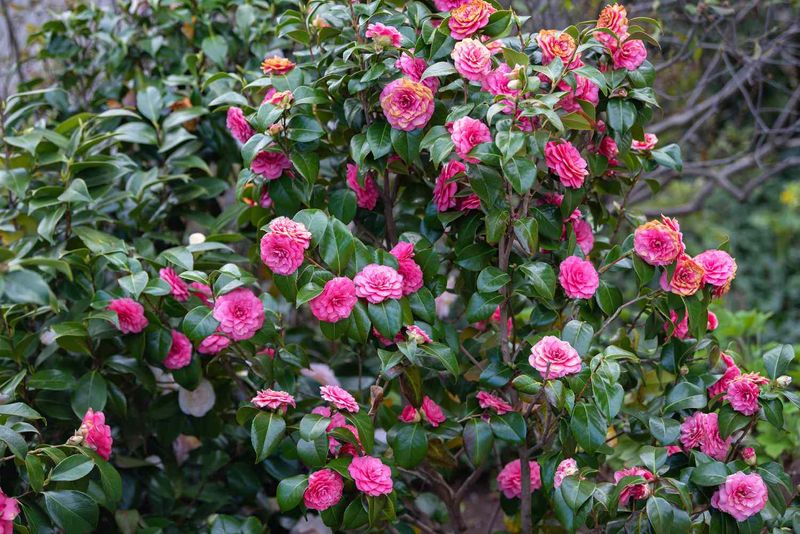
North Carolina sits in a sweet spot for camellia growing, and experienced gardeners across the state know it well.
The state spans USDA hardiness zones 5b through 8b, and most of the Piedmont and coastal plain regions fall squarely in zones 7 and 8, which camellias absolutely love.
Mild winters, moderate humidity, and well-defined seasons align perfectly with what these shrubs need to thrive.
Camellias prefer temperatures that rarely drop below 10 to 15 degrees Fahrenheit for extended periods, and most of North Carolina fits that description comfortably.
The state’s naturally acidic soil, which is common throughout much of the region, also suits camellias beautifully since they prefer a soil pH between 5.5 and 6.5.
Homeowners often find that camellias settle in with minimal soil amendment compared to other ornamental shrubs.
Humidity plays a role too. Camellias appreciate moist air, and North Carolina’s climate provides that without much extra effort from the gardener.
Coastal areas offer especially favorable conditions, though Piedmont gardens produce equally impressive plants with proper placement. Gardeners in the mountain regions of western North Carolina should select cold-hardy varieties like Camellia oleifera hybrids for best results.
The climate compatibility between North Carolina and camellias is so strong that these shrubs often outperform expectations with surprisingly little intervention from homeowners.
Traditionally Planted Near Homes In Southern Landscapes
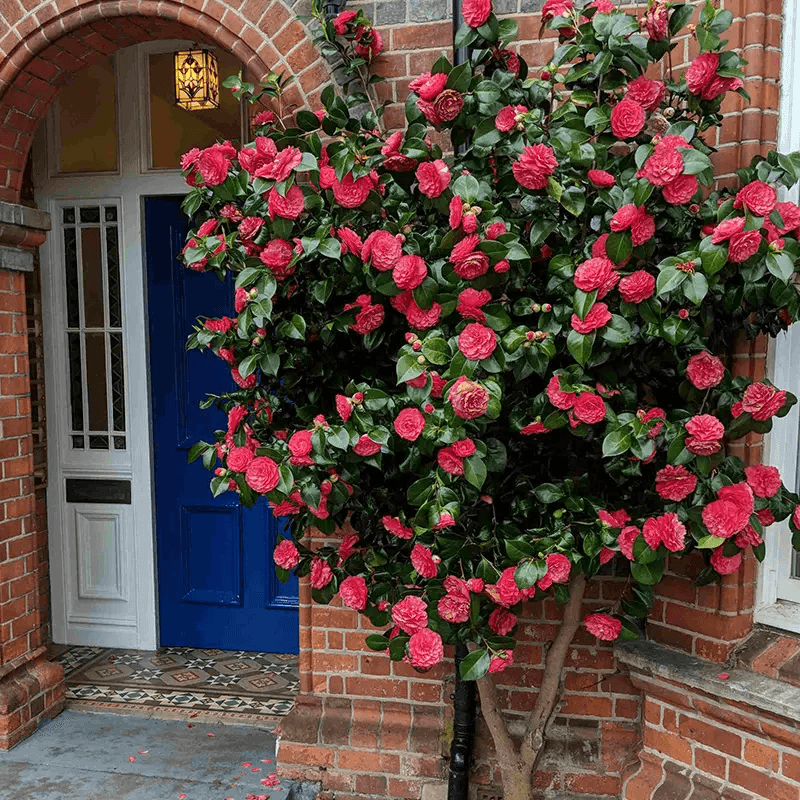
Few plants carry as much cultural weight in the American South as the camellia. Brought to the United States in the late 1700s, camellias quickly became a fixture in Southern gardens, appearing near the front doors of plantations, farmhouses, and town homes alike.
Their presence near an entrance became a symbol of gracious Southern hospitality and refined garden taste.
In North Carolina specifically, camellias appear in historic gardens across the state, from the coastal plain to the Piedmont.
Old family homes often feature camellias that are decades old, passed down through generations or transplanted with care when families moved.
Garden historians note that camellias were among the first ornamental shrubs widely cultivated in the Southeast during the 18th and 19th centuries.
This deep-rooted tradition still influences planting choices today. Homeowners who grew up seeing camellias at their grandparents’ front doors naturally gravitate toward planting them at their own homes.
The shrub carries a sense of continuity and regional identity that few other plants can match.
Choosing a camellia for your entryway connects your home to a rich horticultural tradition that stretches back through generations of Southern gardeners who valued beauty, permanence, and a strong sense of place in their outdoor spaces.
Prefers Partial Shade Often Found Near Houses
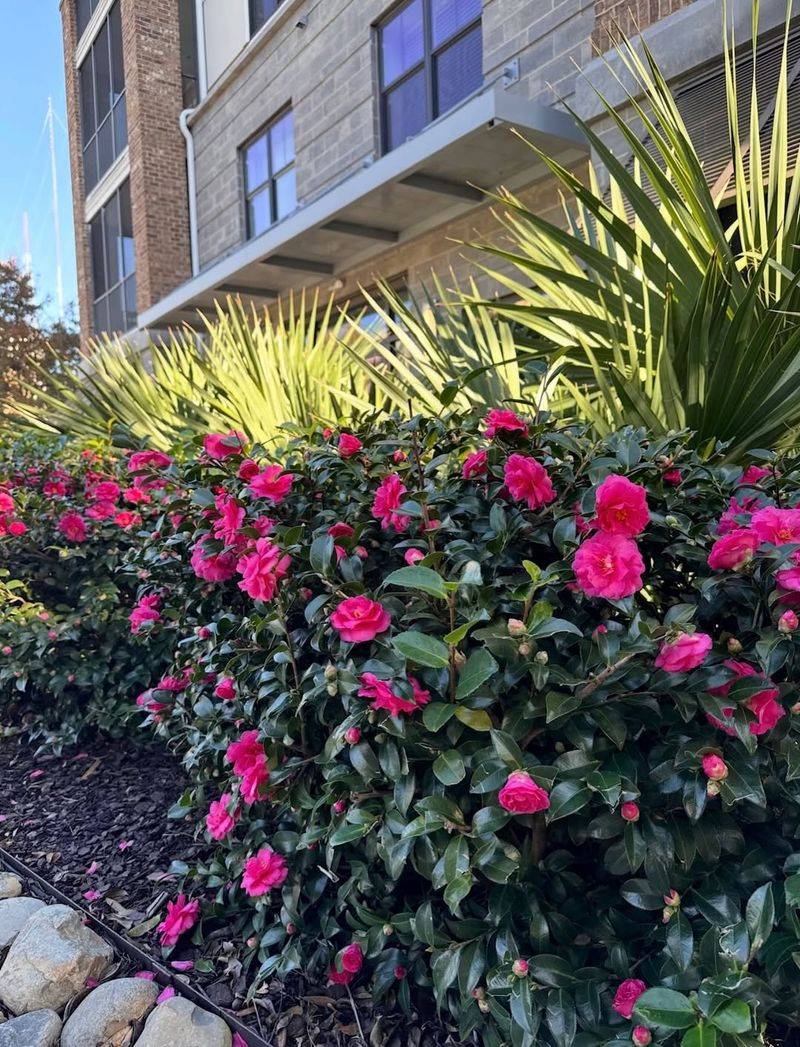
One of the most practical reasons camellias end up near front doors is surprisingly simple: the light conditions near a house suit them perfectly.
Camellias grow best in partial shade or filtered sunlight, and the east or north side of a home naturally provides exactly that kind of gentle, indirect light throughout the day.
Full afternoon sun can scorch camellia leaves and stress the plant, especially during hot North Carolina summers.
A spot near a house wall or under the canopy of a nearby tree gives the plant protection from harsh direct rays while still providing enough light for healthy growth and generous blooming.
This makes the area around a home’s foundation an almost ideal planting zone for camellias without requiring any special setup.
Gardeners who try to grow camellias in open, fully sunny spots often struggle with leaf burn and reduced flowering. Moving them closer to a structure fixes the problem naturally.
Established trees in older neighborhoods create similar shading effects, which is part of why camellias thrive so well in mature residential landscapes across North Carolina.
Choosing the right spot near your entryway, particularly on the north or east-facing side, sets your camellia up for strong, healthy growth and reliable blooms year after year without a lot of guesswork involved.
Dense Growth Provides Natural Screening And Structure
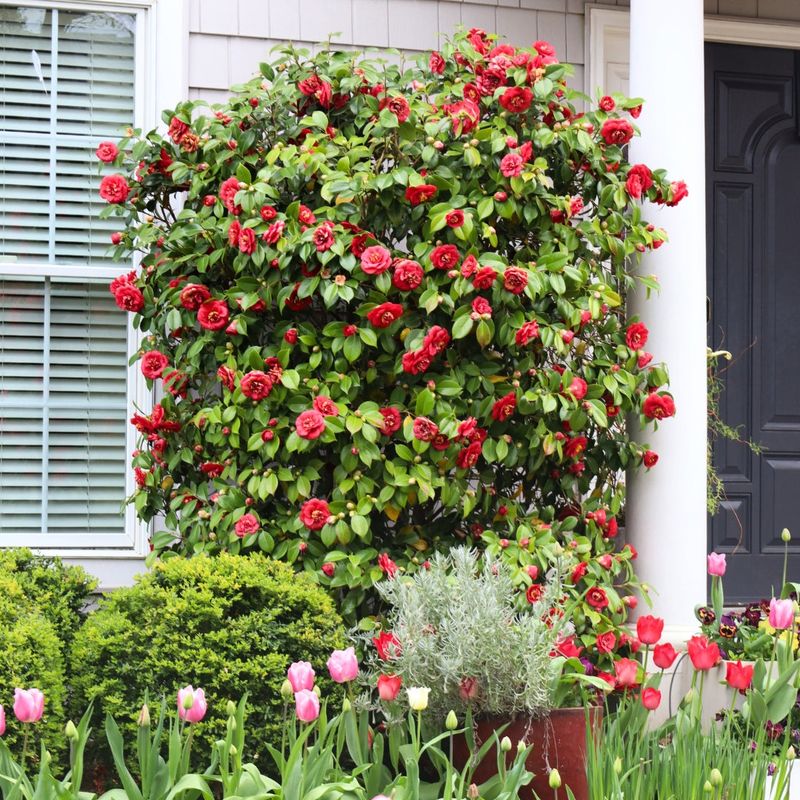
A camellia near your front door does more than look pretty. Over time, these shrubs develop into full, rounded forms with branches that grow densely from the ground up, creating natural structure and a sense of enclosure around an entryway.
That architectural quality is something landscape designers actively seek when planning residential front gardens.
Mature camellias can reach heights of 6 to 12 feet depending on the variety, and their width often matches their height, filling a space generously without requiring constant pruning to maintain a tidy shape.
Homeowners who want privacy near ground-floor windows or a natural buffer between the front door and the street often find that a well-placed camellia handles the job beautifully.
The dense branching pattern makes the shrub effective as a screen even in winter when many other plants lose their leaves.
Landscape professionals in North Carolina frequently recommend camellias as anchor plants for entryway designs because they provide year-round mass and visual weight. Paired with lower-growing plants in front, a camellia creates a layered look that feels intentional and polished.
Homeowners appreciate that the shrub grows steadily into its role without becoming invasive or unruly.
With minimal shaping once or twice a year, a camellia near your front door frames the entrance with natural elegance that genuinely improves over time as the plant matures.
Long Lived Shrubs That Can Thrive For Decades
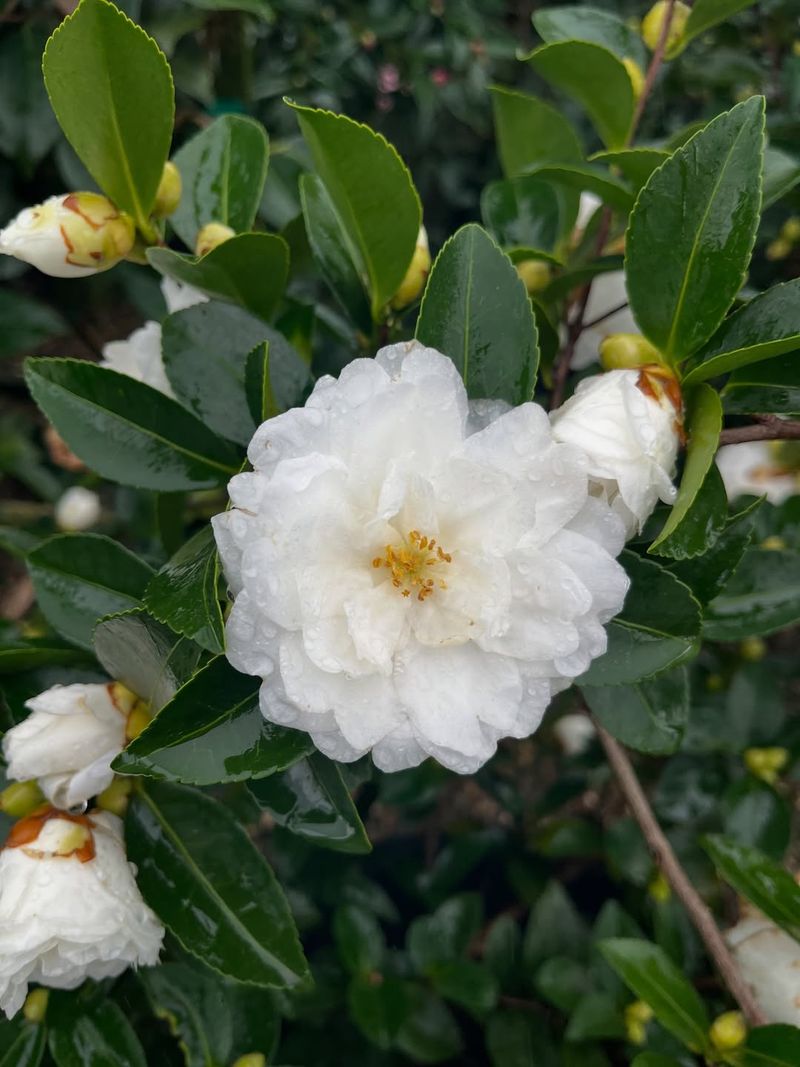
Some plants are here today and struggling tomorrow, but camellias operate on a completely different timeline.
These shrubs are famously long-lived, with specimens in the American Southeast documented at well over 100 years old and still flowering reliably season after season.
Planting a camellia near your front door is genuinely a multigenerational investment in your landscape.
In North Carolina, it is not unusual to find camellias on older properties that predate the current homeowners by many decades. These plants become landmarks in their own right, growing thick-trunked and magnificent over time.
Unlike many ornamental shrubs that need replacing every decade or so, a camellia planted in good conditions can outlast the house itself. That kind of staying power gives homeowners real confidence in their planting decision.
Botanically, camellias are woody perennials that develop an increasingly robust root system as they age, making established plants remarkably resilient to drought, pest pressure, and seasonal stress.
A well-sited camellia requires progressively less attention as the years pass, settling into its spot with quiet confidence.
Homeowners who plant one near their front door today are creating something that future owners of the home may admire and enjoy for generations.
Few garden investments offer that kind of lasting return, which makes camellias one of the smartest long-term choices for any North Carolina entryway planting.
Low Maintenance Once Established
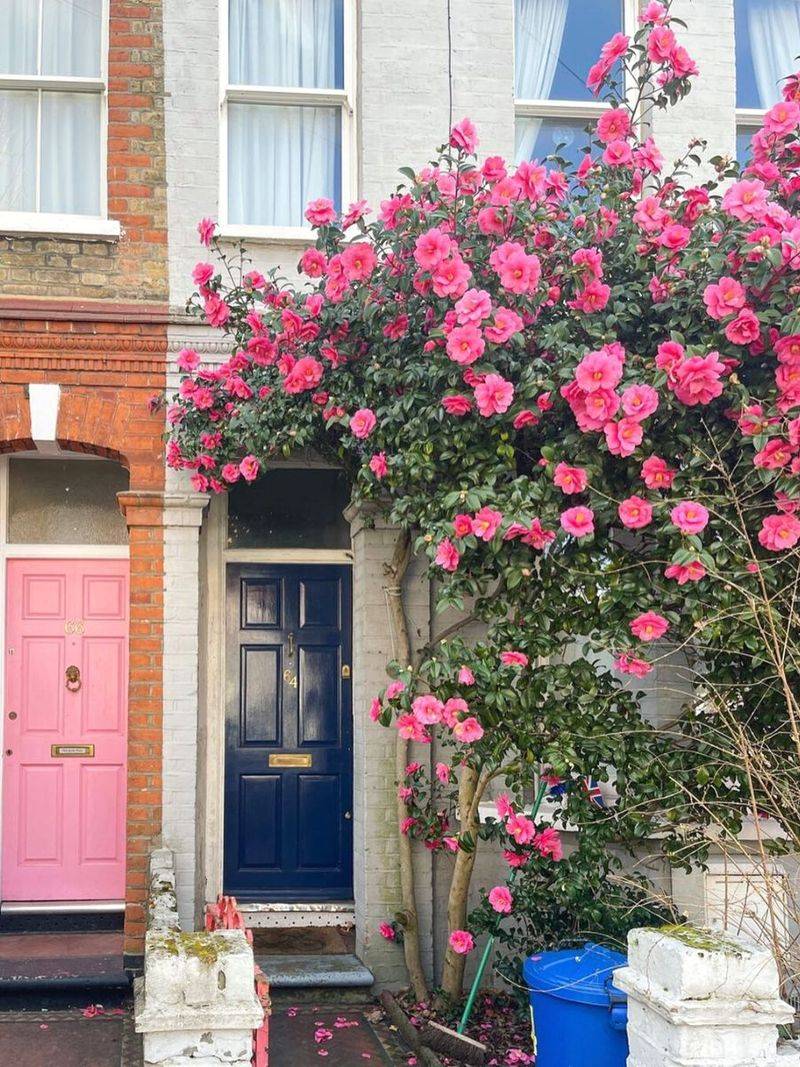
Gardening near a front door should be enjoyable, not exhausting. Camellias earn high marks from North Carolina homeowners precisely because they ask for very little once they settle into their spot.
During the first year or two after planting, regular watering helps the root system establish itself, but after that the shrub becomes remarkably self-sufficient in most of the state’s growing regions.
Established camellias rarely need fertilizing more than once a year, and a light application of an acid-forming fertilizer in late winter or early spring keeps them growing vigorously. Pruning needs are minimal too.
Most homeowners simply remove spent blooms and occasionally trim a wayward branch to maintain the natural shape. Unlike roses or many other flowering shrubs, camellias do not require complex seasonal pruning routines or frequent pest treatments.
Pest and disease issues do occasionally arise, with camellia petal blight and scale insects being the most common concerns in North Carolina.
However, choosing disease-resistant varieties and maintaining good air circulation around the plant prevents most problems before they start.
The overall care commitment is genuinely low compared to the visual reward these shrubs provide.
Busy homeowners who want a beautiful, reliable front garden without spending every weekend on maintenance consistently find that camellias deliver exactly the right balance of beauty and easy upkeep throughout the entire year.
Flowers Hold Up Well In Cool Weather Near Entryways
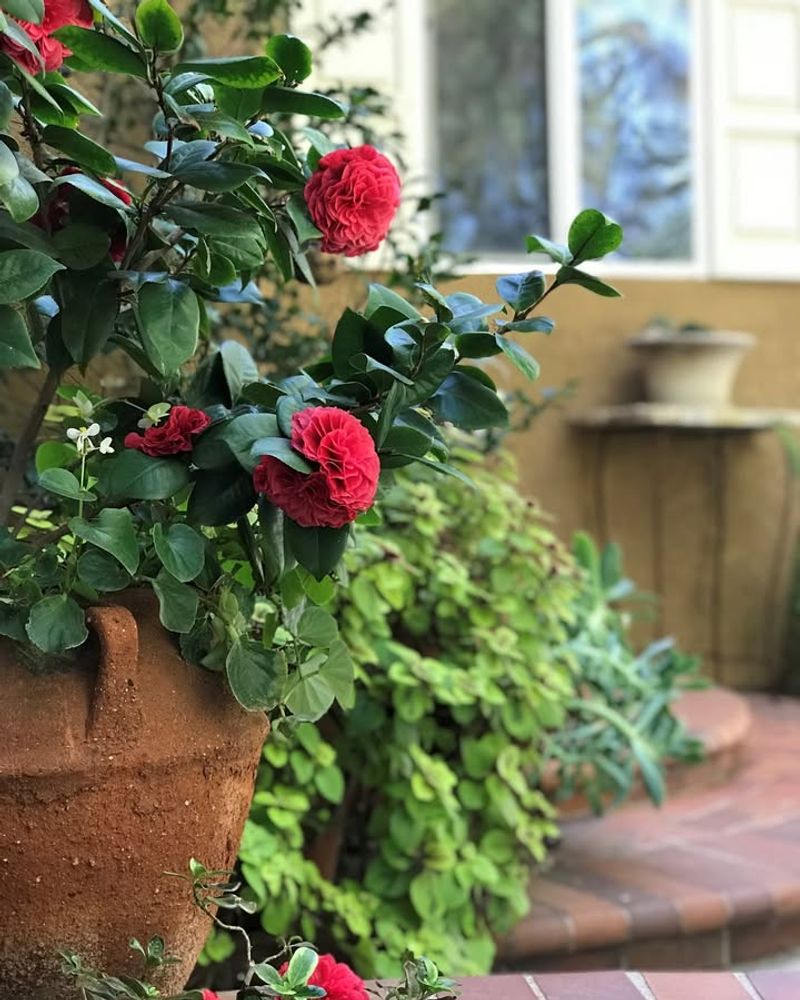
One of the most impressive qualities of camellia flowers is how well they hold together in cold weather. While many blooms collapse at the first sign of a freeze, camellia flowers tolerate temperatures down into the mid-20s Fahrenheit without losing their shape or color.
That cold tolerance makes them uniquely suited for displaying near front doors during the cooler months when outdoor entertaining and curb appeal still matter.
Camellia sasanqua varieties tend to handle cold snaps especially well, with blooms that continue opening through light frosts without significant damage.
Camellia japonica flowers are slightly more sensitive to hard freezes but recover quickly when temperatures rebound, which happens often in North Carolina’s variable winter weather.
Homeowners appreciate that the flowers near their entryway remain presentable through the kinds of temperature swings that typically wreck other flowering plants completely.
The waxy texture of camellia petals contributes to their cold resilience, providing a natural protective coating that helps maintain structure even when temperatures dip overnight.
Planting camellias on the south or east side of a home offers additional protection from cold north winds, helping blooms last even longer into the season.
Visitors arriving at your front door during December, January, or February will often pause to admire flowers that look almost too perfect for winter, making camellias a genuinely impressive and conversation-starting choice for any North Carolina entryway.
Enhances Curb Appeal With Classic Southern Garden Style
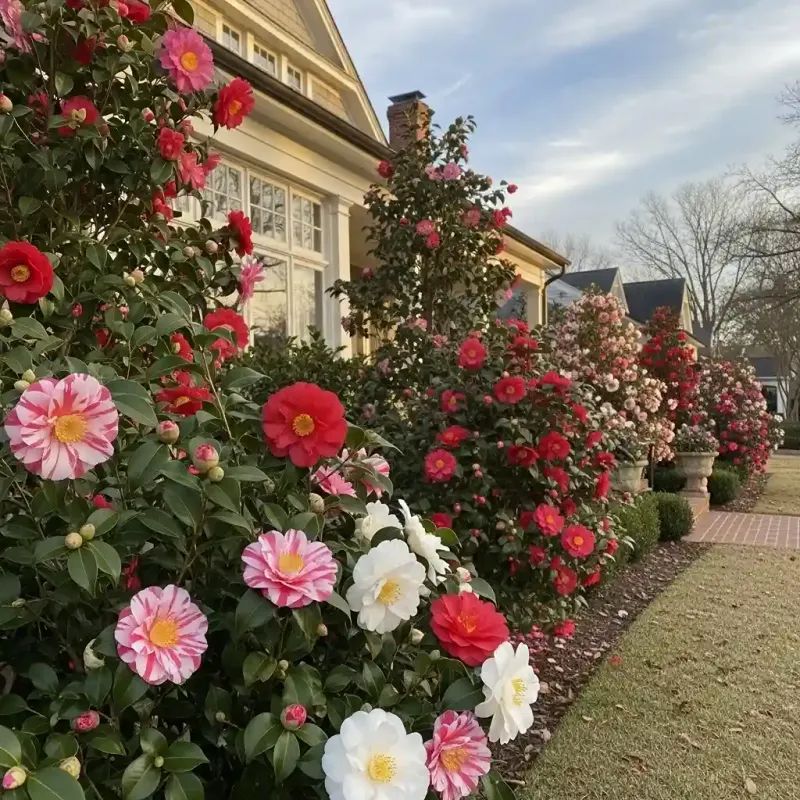
Real estate agents in the South know that a well-planted front garden sells homes faster, and camellias near the front door are part of that formula.
Few shrubs communicate classic Southern garden elegance as clearly as a camellia in full bloom, with its large, perfectly formed flowers and deep green foliage creating an immediate impression of care and refinement.
That visual impact translates directly into curb appeal that neighbors and buyers notice. Camellias pair beautifully with other traditional Southern garden plants like azaleas, gardenias, and boxwoods, creating a layered, cohesive look that landscape designers call the classic Southern foundation planting.
This combination has appeared in North Carolina gardens for generations and continues to feel fresh and inviting rather than dated.
The variety of flower forms available, including single, semi-double, formal double, and peony forms, allows homeowners to select a camellia that complements their home’s architectural style.
Color choices are equally flexible. White-flowered varieties create a crisp, formal look against brick or painted siding, while deep red and pink varieties add warmth and romance to cottage-style homes.
Light lavender-tinted cultivars offer something truly unexpected near a front door, drawing admiring glances from passersby.
Investing in even one or two camellias near your entryway upgrades the entire front garden immediately, giving your home a distinguished, timeless character that reflects genuine pride of ownership and a love for the Southern gardening tradition.