Why That Mysterious Ball Of Leaves In Your Oregon Tree Isn’t What You Think It Is
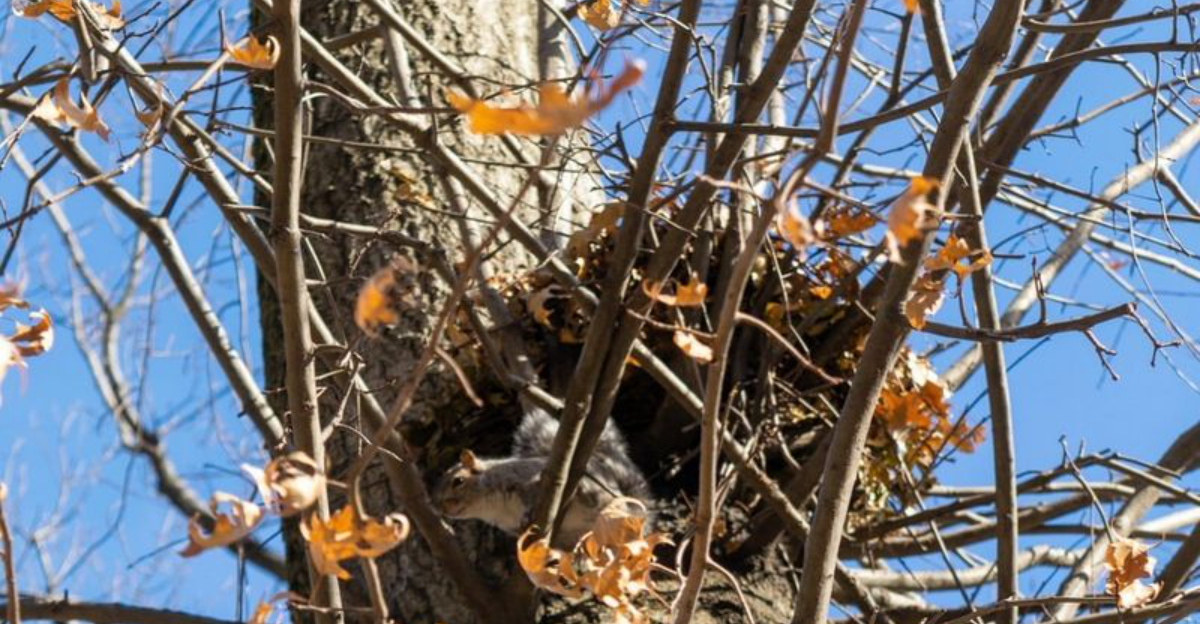
Spotting a dense ball of leaves tucked high in an Oregon tree often sparks concern.
At first glance, it looks like a classic nest—or a sign of disease—but the truth is usually something far more surprising.
These leafy clusters aren’t accidental, and they’re not abandoned debris. In many cases, they’re the result of natural growth patterns or wildlife behavior that plays an important ecological role.
Misidentifying them can lead to unnecessary worry—or misguided removal.
Understanding what these leaf balls really are helps Oregon homeowners appreciate what’s happening overhead.
Sometimes, what looks like a problem is actually nature quietly doing exactly what it’s supposed to do.
Squirrel Drey (Nest)
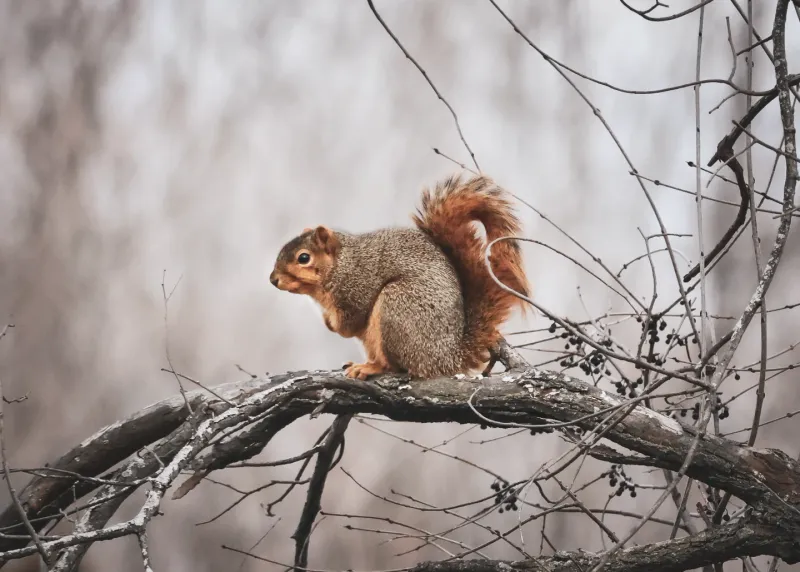
Squirrels are master architects when it comes to building their cozy homes, called dreys, high up in Oregon trees.
These clever rodents weave together leaves, twigs, moss, and bark to create waterproof shelters that look like tight balls from below.
The construction process takes several hours, with squirrels layering materials carefully to keep wind and rain out.
Most dreys measure about one to two feet in diameter and feature a hollow center where squirrels sleep and raise their young.
You’ll spot them most easily in winter when surrounding foliage drops away, leaving these leafy spheres exposed against bare branches.
Squirrels often build multiple dreys throughout their territory as backup shelters.
Oregon’s oak, maple, and fir trees provide perfect locations for these elevated homes.
The structures typically sit in branch forks or against tree trunks for extra stability during storms.
Unlike bird nests, dreys have no obvious entrance hole visible from below, making them appear as solid leaf masses.
Watch for squirrel activity around these structures during early morning or late afternoon feeding times.
If you see a squirrel disappearing into the leaf ball, you’ve confirmed your identification.
These resourceful creatures deserve credit for their impressive building skills that keep them warm through Oregon’s wet winters.
Witches’ Broom (Tree Growth Abnormality)

Nature sometimes creates its own peculiar artwork through a phenomenon called witches’ broom, which produces dense clusters of twigs that resemble old-fashioned broomsticks.
Fungal infections, microscopic mites, or genetic mutations trigger this abnormal growth pattern in trees.
The affected branch develops dozens or even hundreds of shoots growing from a single point, creating a tangled mass.
Oregon’s birch, cherry, and various conifer species commonly display these curious formations.
The growth responds to disrupted hormones within the tree, causing excessive branching in one concentrated area.
Some witches’ brooms persist for years, gradually expanding as new shoots emerge each growing season.
From a distance, these clusters might look like leaf balls, especially when needles or small leaves fill the dense twig network.
Closer inspection reveals the woody structure underneath, with branches radiating outward in chaotic patterns.
While they might appear concerning, most witches’ brooms don’t seriously harm the overall tree health.
Certain gardeners actually value these abnormalities for their unique appearance and collect them as ornamental features.
Dwarf conifer varieties sold in nurseries sometimes originate from witches’ broom cuttings.
Next time you spot one, appreciate the fascinating biology behind this natural tree transformation that confuses so many Oregon homeowners.
Bird Nest Made Of Leaves And Twigs
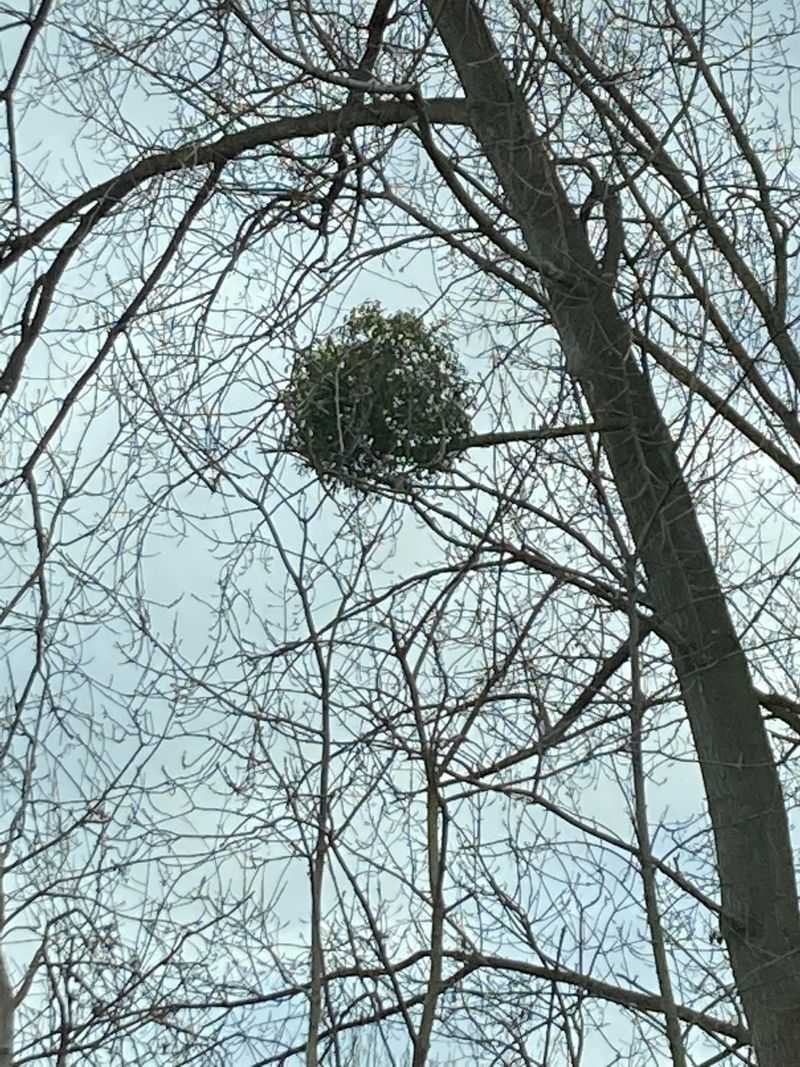
Birds construct their homes using whatever materials they find nearby, and some species build surprisingly large nests that easily get mistaken for other structures.
Crows, ravens, and magpies create substantial platforms from sticks, then line them with softer materials including dried leaves and grass.
After nesting season ends, these abandoned structures collect additional leaves blown in by wind.
The key difference between bird nests and squirrel dreys lies in their construction style and placement.
Bird nests typically feature a cup or platform shape with an open top, while squirrel homes appear more spherical and enclosed.
Oregon’s varied bird population means you might encounter nests ranging from robin-sized cups to hawk platforms spanning three feet across.
Weathering takes its toll on abandoned nests throughout fall and winter months.
Rain soaks the materials, wind adds debris, and the whole structure can collapse into a messy ball shape.
This transformation makes identification tricky without climbing up for a closer look.
Watch for returning birds in spring if you suspect a nest rather than a drey.
Many species reuse the same nesting sites year after year, rebuilding or refurbishing their previous homes.
Respecting these structures means giving them space, as disturbing active nests violates federal wildlife protection laws that safeguard our feathered neighbors.
Old Leaf Clumps Caught In Branch Forks
Sometimes the simplest explanation proves correct when it comes to mysterious leaf balls in trees.
Strong Oregon winds and autumn rainstorms send thousands of leaves tumbling through the air, and many get trapped in branch forks or dense twig clusters.
Gravity and natural tree architecture create perfect collection points where leaves accumulate into impressive clumps.
Branch crotches act like natural baskets, catching falling leaves and holding them in place through wet weather.
Rain compacts these collections, making them appear more solid and intentional than random accumulations.
You might notice these temporary formations appearing overnight after particularly windy autumn evenings.
Unlike constructed nests or living growths, these leaf piles lack structural integrity when examined closely.
A strong gust can scatter them just as quickly as they formed, or they might persist through winter if wedged tightly.
Maple, oak, and alder trees with spreading branch patterns collect leaves most readily.
Testing whether you’re looking at a simple leaf collection requires patience and observation over several days.
Watch for changes in size and shape after storms, which indicate loose material rather than a built structure.
These natural accumulations remind us that not every mystery in nature requires a complex explanation, and sometimes wind and gravity collaborate to create convincing illusions that puzzle even experienced tree watchers.
Mistletoe (On Certain Oregon Trees)
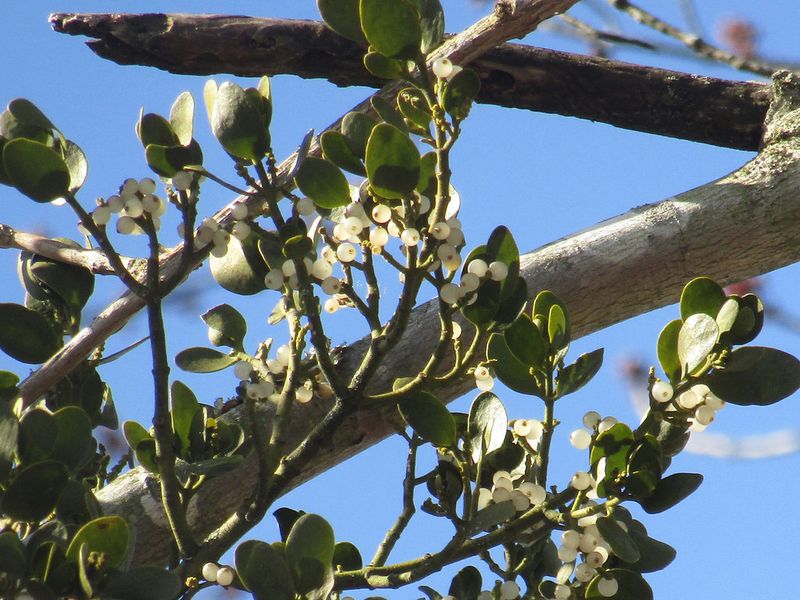
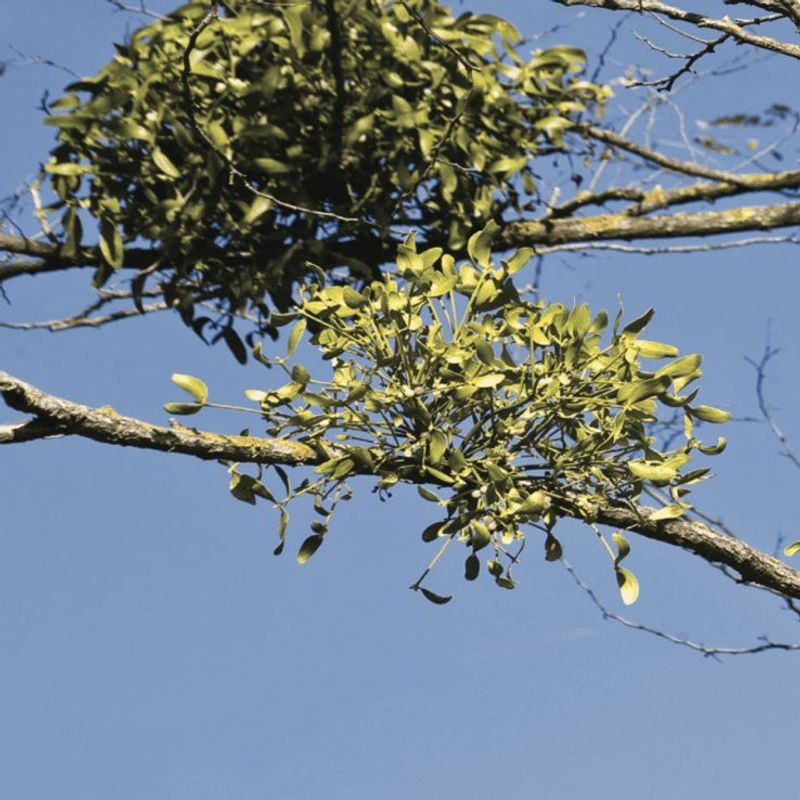
Mistletoe might conjure images of holiday decorations, but this parasitic plant grows naturally on many Oregon trees throughout the year.
Several mistletoe species thrive in the Pacific Northwest, forming rounded green clumps that stand out dramatically against bare winter branches.
The plant sends specialized roots into host tree branches, stealing water and nutrients while photosynthesizing its own sugars.
Oregon’s oak trees commonly host mistletoe, along with various fruit trees in orchards and urban landscapes.
The evergreen nature of mistletoe means it maintains its leafy appearance year-round, unlike deciduous leaves that fall.
These clumps start small but can expand to several feet in diameter over many years of growth.
From below, mistletoe clusters appear as dense green or yellowish-green balls, quite different from brown leaf accumulations.
Birds spread mistletoe seeds by eating the sticky berries and wiping their beaks on branches, inadvertently planting new colonies.
Heavy infestations can stress trees by diverting resources away from normal growth and development.
Identifying mistletoe becomes easier when you notice its distinctive green color persisting through winter months.
Property owners often remove mistletoe to protect valuable trees, though the process requires careful pruning of infected branches.
This ancient plant has fascinating biology worth studying, even as it creates those puzzling green spheres that mystify casual observers.
Tent Caterpillar Or Webworm Nest (Inactive Season)
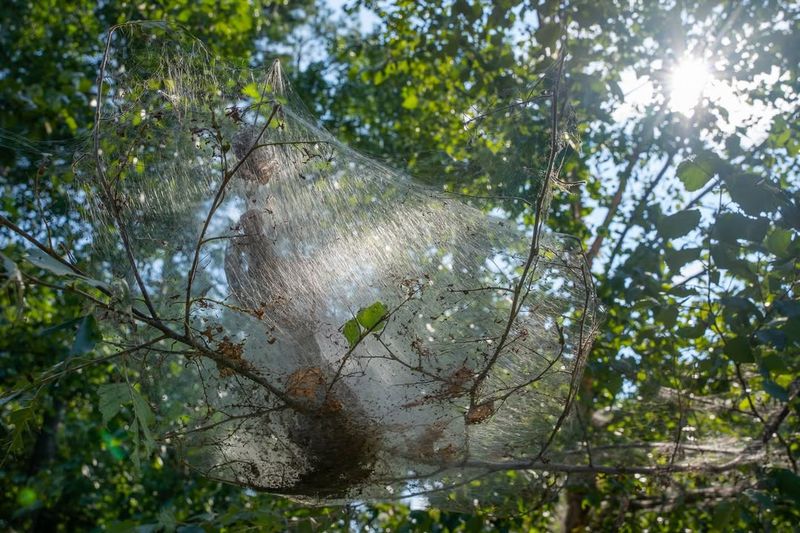
Spring and early summer bring tent caterpillars and fall webworms to Oregon trees, where they spin silky shelters among branches and leaves.
These communal insects create protective webs while they feed on foliage, and their abandoned structures persist long after the caterpillars have pupated and moved on.
By autumn and winter, these old nests collect falling leaves, transforming into mysterious balls that confuse homeowners.
The original silk webbing, though deteriorated, still traps leaves and debris blown by wind.
What began as a translucent tent becomes a dense-looking mass as organic material accumulates inside the framework.
Cherry, apple, and alder trees frequently host these insects in Oregon landscapes.
Distinguishing old insect nests from other structures requires looking for remnants of silk webbing clinging to branches.
The leaves inside appear randomly trapped rather than deliberately woven like in a squirrel drey.
Most people find these structures unattractive, but they pose no threat once the insects have completed their life cycle.
Removing old webs simply requires pulling them down with a rake or long pole.
The structures break apart easily since they lack the sturdy construction of animal nests.
Understanding the seasonal timing of caterpillar activity helps you recognize these transformed webs for what they truly are, rather than assuming something currently lives inside those leaf-filled remnants.
Storm-Damaged Branch Tangles
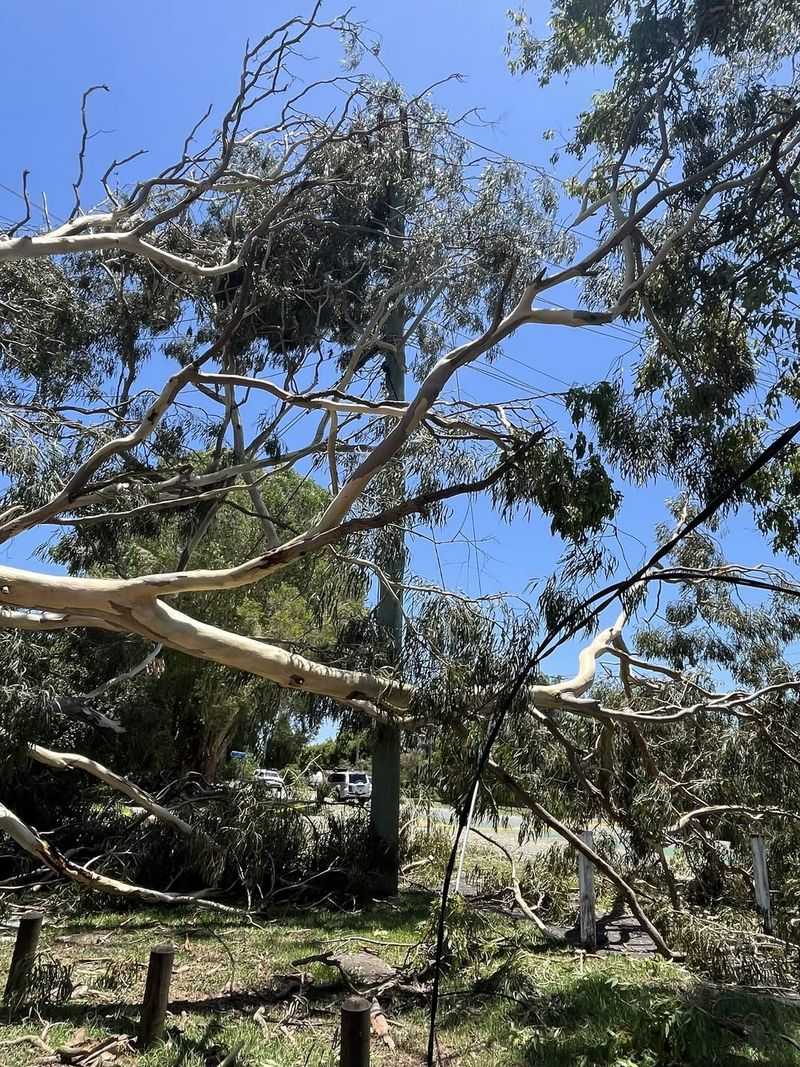
Oregon’s powerful winter windstorms regularly break branches and create tangled messes high in tree canopies.
When branches crack but don’t fall completely, they hang at odd angles, catching other falling twigs and leaves.
Over time, these damaged areas accumulate debris until they resemble intentionally constructed balls of vegetation.
The chaotic nature of storm damage means these tangles lack the organized structure of nests or dreys.
Broken branch ends poke out at random angles, and the whole mass might sway differently than surrounding healthy branches.
Douglas fir, hemlock, and pine trees often retain broken branches that create these misleading formations.
Identifying storm damage requires looking for signs of broken wood, hanging branches, or unusual growth angles.
Fresh breaks show lighter-colored wood underneath bark, while older damage develops gray weathering.
These tangles can persist for years if the damaged branches remain partially attached to the main tree.
Property owners concerned about falling branches should consult certified arborists about removal options.
Hanging branch tangles pose legitimate safety risks during subsequent storms when they might finally break free.
While these structures might look like something alive created them, they’re actually examples of nature’s chaos at work, showing how weather shapes our tree canopies in unexpected ways that continue puzzling observers long after storms pass.
Conifer Needle Clusters Or Abnormal Growth
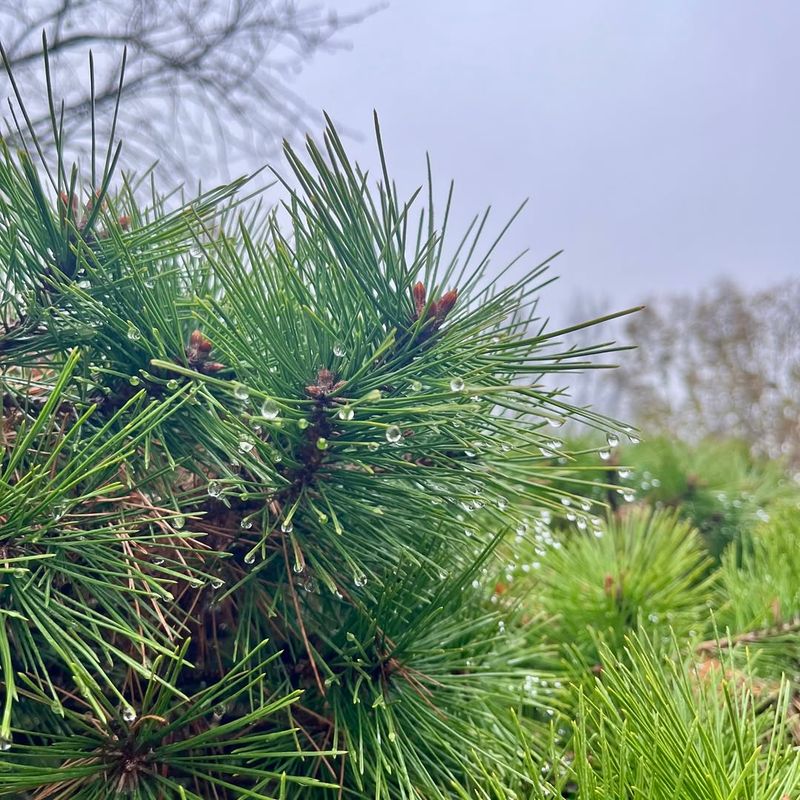
Conifer trees occasionally develop unusually dense needle clusters that mimic leaf balls when viewed from ground level.
Hormonal imbalances, insect damage, or environmental stress can trigger excessive needle production on individual branches.
These clusters maintain their green color year-round, making them particularly noticeable against typical conifer foliage patterns.
Oregon’s abundant pine, fir, and spruce forests showcase various natural growth variations that confuse observers.
Some conifers naturally produce tufted branch ends that appear fuller and rounder than surrounding growth.
Dwarf mistletoe on conifers also causes dense, bushy growth that resembles abnormal needle accumulation.
Looking closely reveals individual needles rather than broad leaves, distinguishing these formations from deciduous leaf collections.
The growth remains attached firmly to branches rather than appearing as loose material caught in forks.
Certain genetic variations in ornamental conifers intentionally produce these dense, rounded growth patterns that landscapers prize.
Forest health specialists monitor unusual conifer growth patterns as indicators of pest problems or environmental stress.
However, many dense needle clusters cause no harm and simply represent natural variation within tree populations.
Next time you spot a rounded mass in an evergreen tree, consider that you might be observing a fascinating example of conifer growth diversity rather than an animal nest or leaf collection requiring concern.
Multiple Structures Overlapping In One Spot
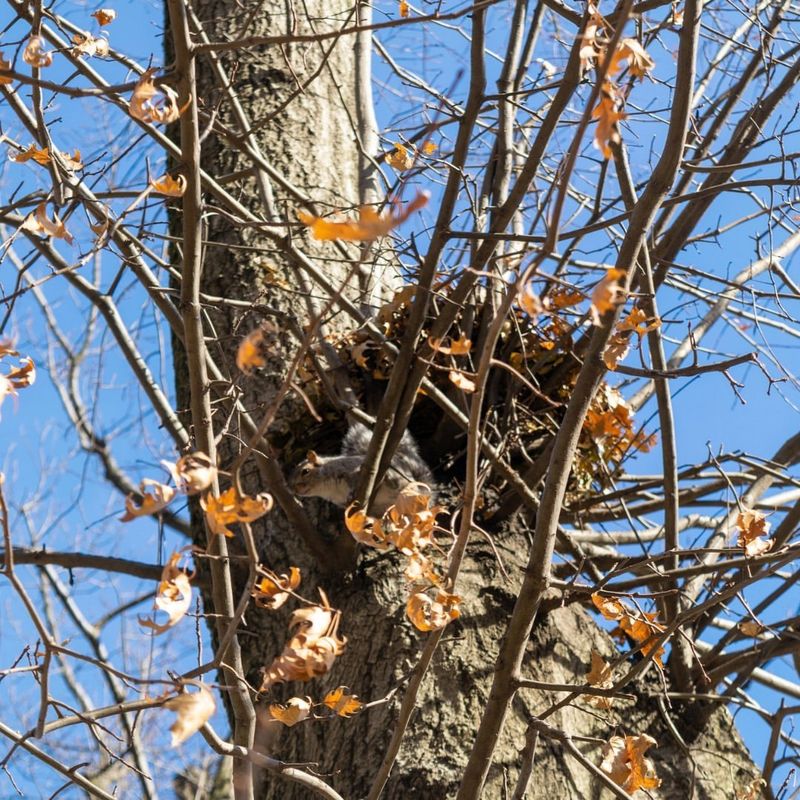
Nature rarely follows simple rules, and sometimes multiple phenomena combine in one location to create truly confusing tree structures.
A squirrel might build a drey next to a witches’ broom formation, then wind-blown leaves collect around both, creating a massive combined structure.
Old bird nests can serve as foundations for squirrel additions, or storm-damaged branches might trap leaves around existing growth abnormalities.
These complex situations frustrate even experienced naturalists trying to identify what they’re observing from ground level.
Each component contributes different visual elements, making the whole structure appear unlike any single type.
Oregon’s diverse ecosystems and active wildlife populations increase the chances of these overlapping situations developing.
Solving these mysteries often requires binoculars, multiple viewing angles, and observation across different seasons.
Watch for animal activity, note whether green growth persists through winter, and look for structural changes after storms.
Sometimes only climbing arborists or wildlife professionals can definitively identify complex structures.
The good news is that most overlapping structures pose no threat to tree health or property safety.
Appreciating the complexity teaches us that nature defies simple categorization and constantly surprises careful observers.
Your mysterious leaf ball might actually represent several different natural processes working together, creating something truly unique that defies easy explanation and keeps you wondering about the hidden world existing just overhead.