Why This Invasive Plant Is Taking Over California Yards And How To Stop It
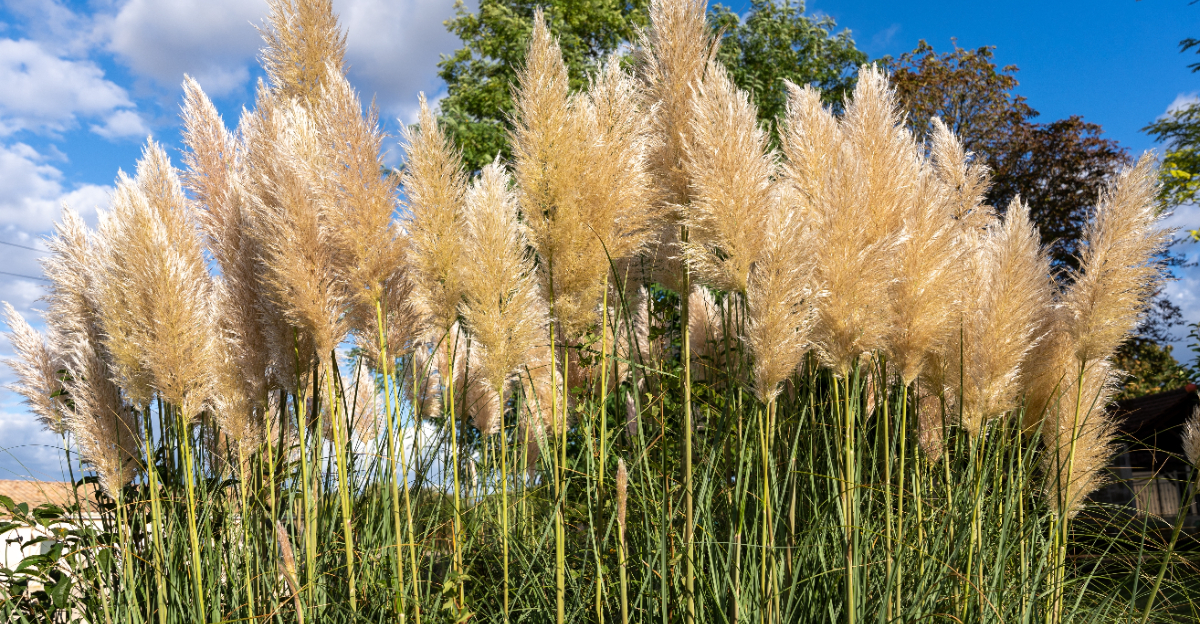
It looks fluffy, fancy, and straight out of a Pinterest dream yard, but pampas grass has a not-so-cute secret.
This towering plant is quietly taking over California landscapes, choking out native plants, increasing wildfire risk by adding highly flammable biomass, and spreading like it owns the place.
What starts as one dramatic clump can quickly turn into a full-blown backyard invasion, thanks to seeds that travel far and wide on the wind. The worst part?
Many homeowners plant it without realizing the long-term damage it causes. If you have ever wondered why this grass seems to pop up everywhere, or how to get rid of it without turning your yard into a war zone, you are in the right place.
We will break down why pampas grass is such a problem and share simple, effective ways to stop it before it takes over your lawn.
Why Pampas Grass Spreads So Aggressively In California

California’s Mediterranean climate creates perfect conditions for pampas grass to thrive and multiply beyond control.
Each mature female plant can produce hundreds of thousands of lightweight seeds that drift on coastal breezes and Santa Ana winds, landing in yards, vacant lots, and wildland areas miles away from the parent plant.
Once established, these seeds germinate quickly during our mild winters and rainy seasons.
The plant’s deep root system allows it to survive California’s dry summers with minimal supplemental water once established. While native grasses go dormant during drought, pampas grass keeps growing and outcompeting everything around it.
This drought tolerance made it popular with homeowners seeking low-maintenance landscaping, but that same toughness makes it nearly impossible to control once it escapes cultivation.
Female plants are the real troublemakers, producing those showy plumes that release seeds from late summer through fall. A single established plant can expand aggressively and dominate large areas of a yard within several years.
The dense clumps shade out native plants, change soil conditions, and create monocultures that offer little value to California wildlife.
Disturbed soil along roadsides, construction sites, and fire-cleared areas provides ideal colonization opportunities for windblown seeds.
It Damages Native Ecosystems
Native California ecosystems evolved over thousands of years to support specific birds, pollinators, and wildlife that depend on indigenous plants for food and shelter. Pampas grass provides almost none of these ecological benefits.
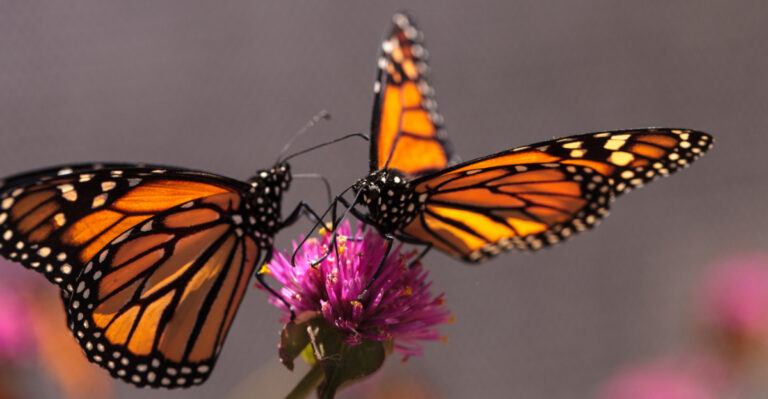
Its dense, razor-sharp leaves create impenetrable thickets that crowd out native bunch grasses, wildflowers, and shrubs that feed everything from monarch butterflies to California quail.
When pampas grass takes over coastal bluffs, hillsides, and riparian corridors, it eliminates the diverse plant communities that native insects need to complete their life cycles. Without those insects, birds lose critical food sources during nesting season.
The thick stands also prevent ground-nesting birds from accessing suitable habitat and block wildlife movement corridors that animals use to find food and water.
Pampas grass changes fire behavior in dangerous ways. The plant accumulates massive amounts of dry, flammable material that burns hotter and faster than native vegetation.
This creates ladder fuels that carry flames higher into trees and structures.
After fires, pampas grass resprouts quickly from its root crown while native plants struggle to recover, allowing the invader to dominate post-fire landscapes and prevent natural ecosystem recovery.
Many Cities Discourage Pampas
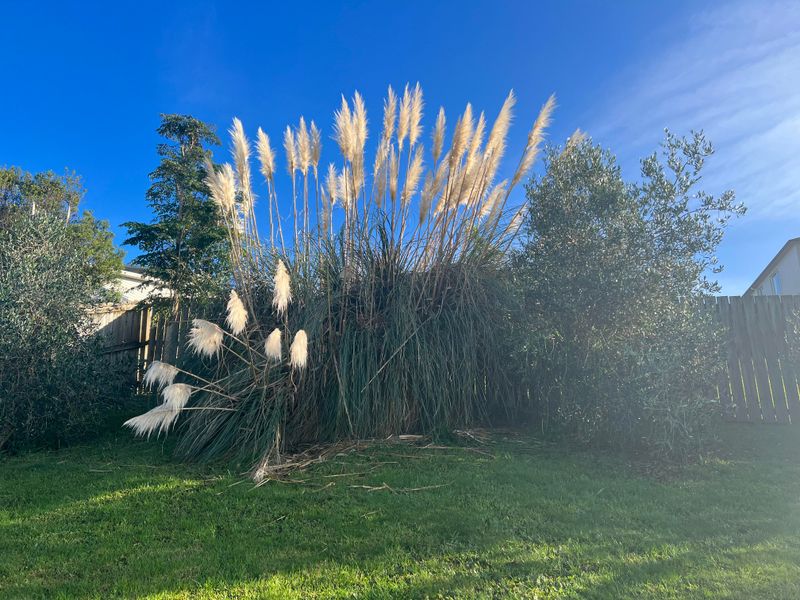
Coastal California cities have watched pampas grass escape from residential landscapes and colonize public lands, creating expensive management problems for parks departments and fire agencies.
Many municipalities now include pampas grass on discouraged plant lists or landscape ordinances that restrict new plantings.
Many coastal cities including parts of Santa Barbara County, Marin County, and the Bay Area discourage or restrict pampas grass in landscaping plans.
The fire risk alone has prompted action in foothill and wildland-urban interface communities. During wildfire season, dried pampas grass plumes can catch embers and ignite, threatening nearby homes and vegetation.
Some homeowners associations now prohibit pampas grass entirely, requiring removal within specific timeframes.
Code enforcement officers in fire-prone areas may issue citations for overgrown pampas grass that violates defensible space requirements.
Environmental regulations also play a role in restrictions. When pampas grass spreads into protected habitats, creek corridors, or areas designated for native species conservation, property owners may face mandatory removal orders.
The California Invasive Plant Council rates pampas grass as moderately invasive, meaning it has documented ecological impacts.
Local watershed groups and habitat restoration organizations actively work to eliminate pampas grass from sensitive natural areas throughout the state.
Identify Pampas Grass Before It Spreads
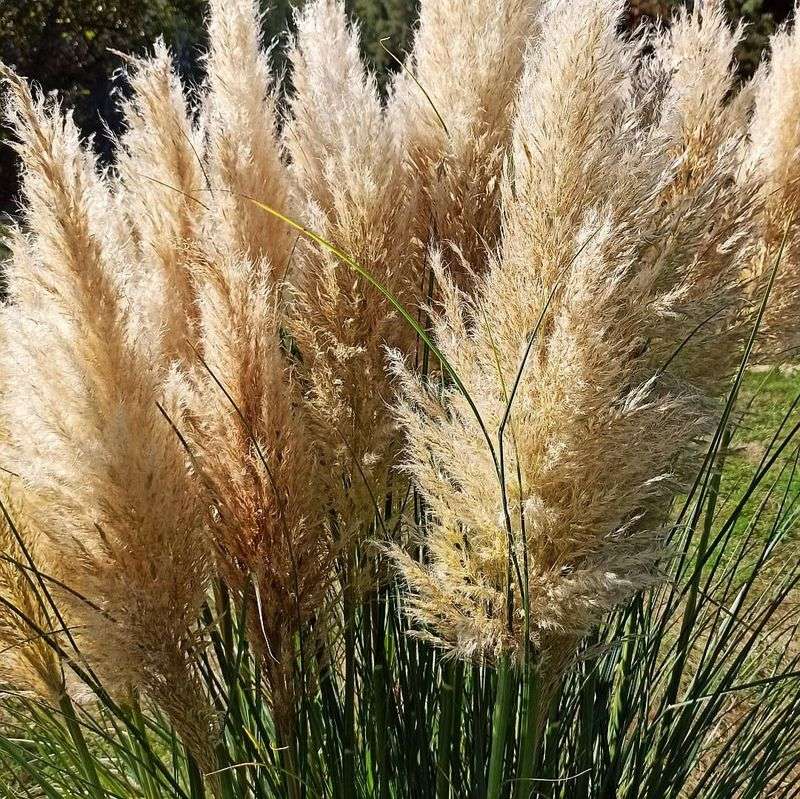
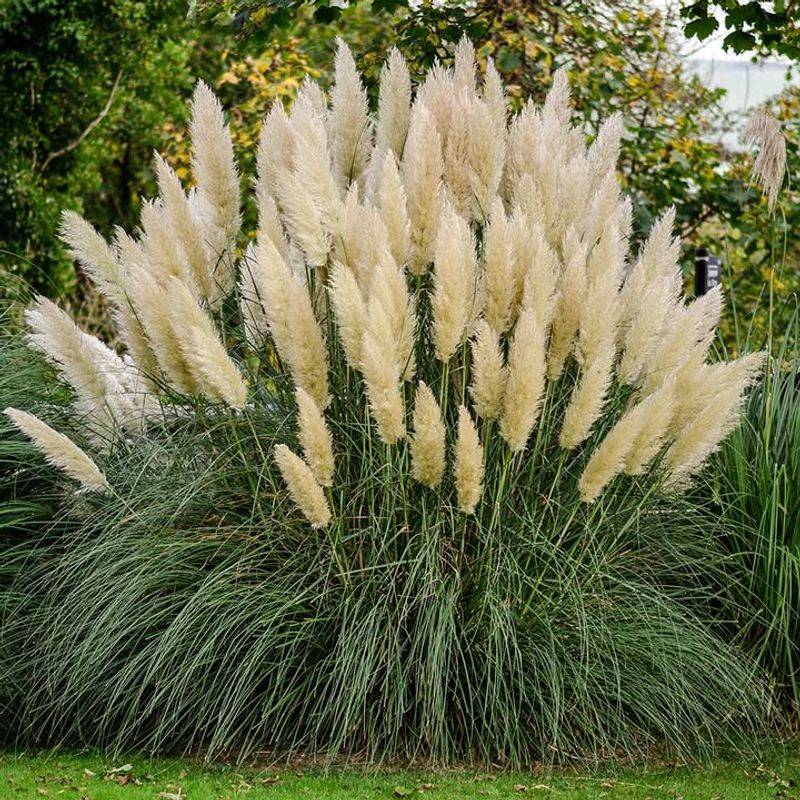
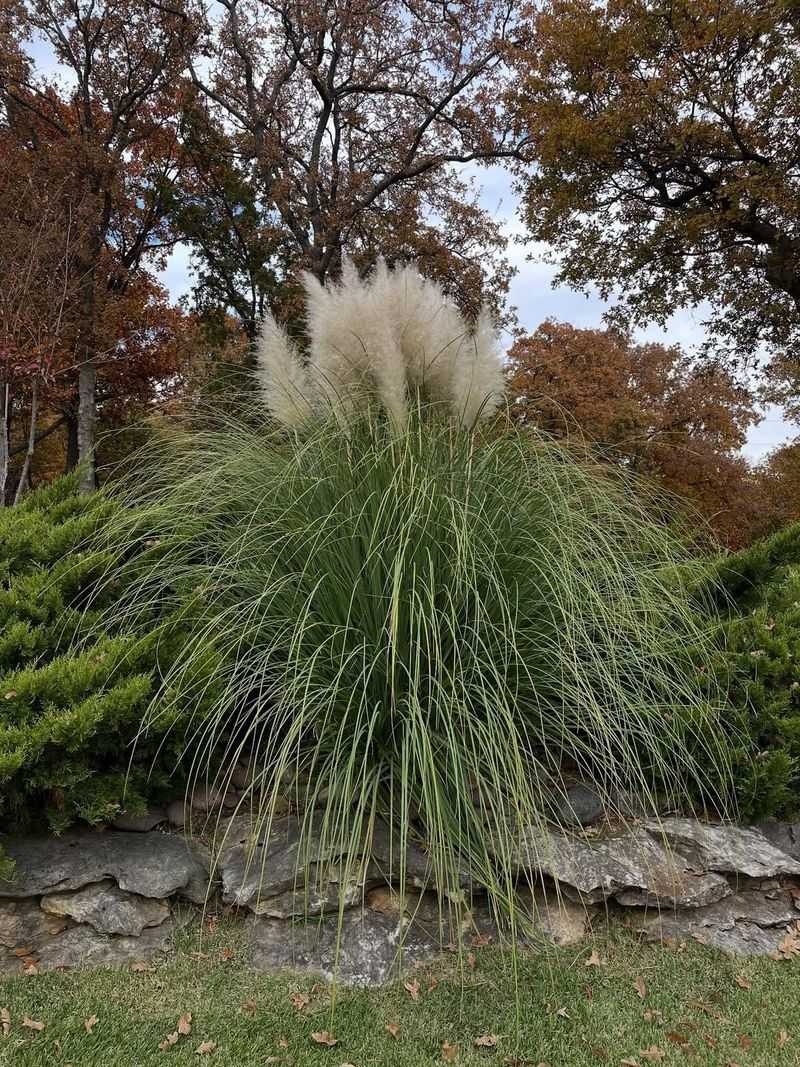
Pampas grass grows in distinctive clumps that can reach ten feet tall and equally wide at maturity.
The leaves are long, narrow, and blue-green or gray-green with extremely sharp, serrated edges that can cause painful cuts if you brush against them.
This razor-like quality is one of the easiest identification features, if you need gloves and long sleeves just to walk near a grass clump, it’s probably pampas grass.
The showy flower plumes appear in late summer on tall stalks that rise above the foliage mass. Female plants produce the large, fluffy white or pink plumes that people find attractive.
Male plants have narrower, less showy plumes. Young plants start as small grass clumps that look innocent enough, but they expand rapidly once the root system establishes.
Several similar-looking ornamental grasses grow in California yards, so accurate identification matters before removal. Pink muhly grass has finer, softer foliage and much smaller pink flower clouds.
Giant reed (another serious invasive) grows in jointed canes rather than clumps. Native deer grass forms clumps but has much softer leaves and delicate seed heads.
If you’re uncertain, take photos to your local UC Cooperative Extension office or native plant nursery for confirmation before starting removal work.
Remove Pampas Grass Safely
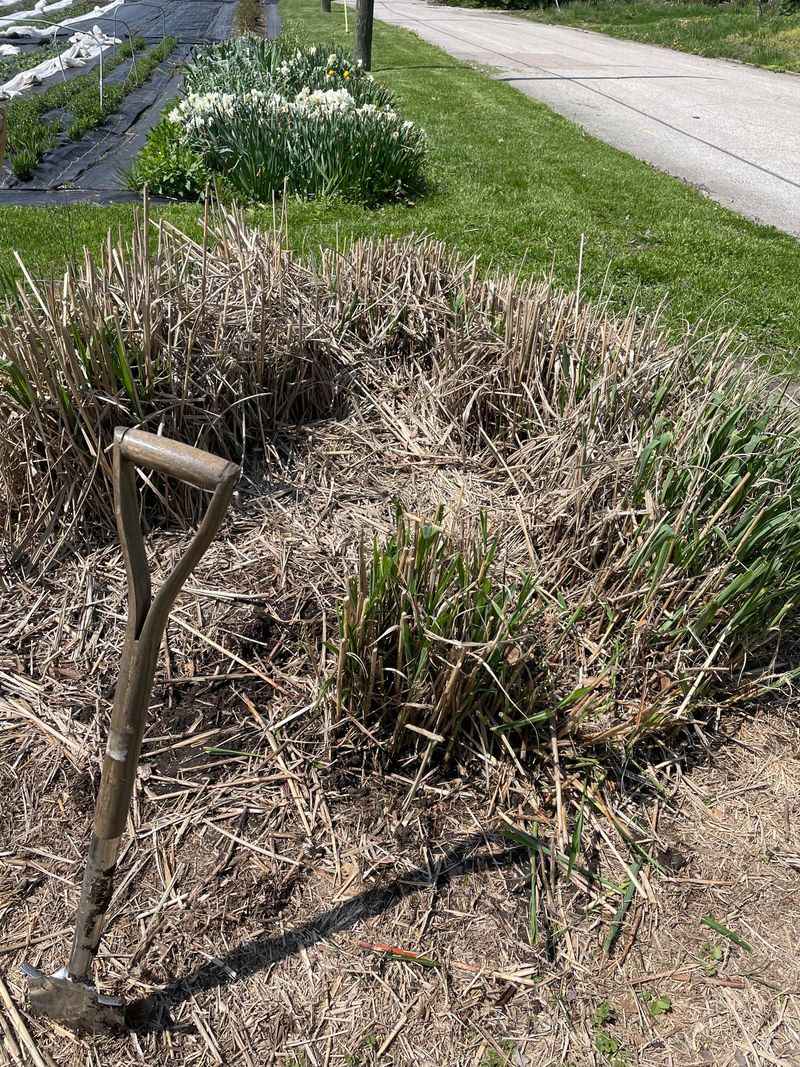
Removing pampas grass requires serious personal protection because those leaf edges can slice through regular gardening gloves. Wear heavy leather gloves, long sleeves, long pants, and safety glasses before approaching the plant.
The best removal time is late winter or early spring before new growth starts and after winter rains have softened the soil around roots.
For small plants under two feet tall, you can sometimes dig out the entire root mass with a sharp spade or mattock. Cut back the foliage first to reduce bulk, then dig a circle about eighteen inches from the plant’s center.
Work your way underneath the root crown, severing roots as you go. This method works best when you can extract the entire root ball in one piece.
Larger, established clumps require more aggressive tactics. Many homeowners hire professionals with specialized equipment because mature pampas grass roots are incredibly tough.
If tackling it yourself, cut the foliage down to about twelve inches, then use a chainsaw or reciprocating saw to cut through the crown in sections. Dig or pull out each section with its attached roots.
Simply cutting the plant at ground level won’t kill it, pampas grass resprouts vigorously from any remaining root tissue, so complete root removal is essential for permanent elimination.
What To Plant Instead
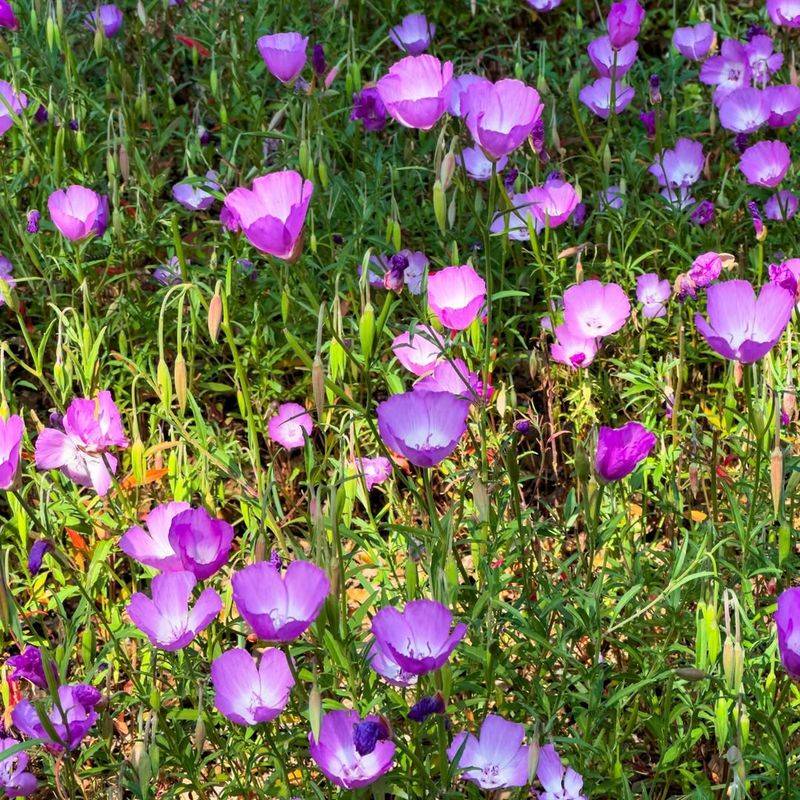
After removing pampas grass, you’ve created an opportunity to install plants that actually benefit California’s environment while still providing visual interest and low water requirements.
Native bunch grasses offer similar architectural form without invasive tendencies.
Deer grass forms elegant clumps with graceful seed heads that birds love. Purple needle grass provides fine-textured foliage and adapts to various soil conditions throughout the state.
For dramatic height and texture similar to pampas grass, consider native shrubs instead. Toyon produces white flower clusters and brilliant red berries that feed cedar waxwings and other birds.
California lilac varieties offer spectacular spring blooms in blue, purple, or white while supporting native pollinators. These woody plants create better wildlife habitat and fire-wise landscaping than any ornamental grass.
If you prefer a softer, more meadow-like aesthetic, combine native grasses with wildflowers. California poppies, lupines, clarkias, and tidy tips create seasonal color without ongoing maintenance.
Native plant nurseries throughout California can recommend specific species suited to your region’s rainfall, soil type, and sun exposure.
Many water districts offer rebates for replacing thirsty or invasive plants with California natives, making the transition more affordable while reducing your landscape’s environmental footprint.
Prevent Reinfestation In Your Yard
Pampas grass seeds can remain viable in soil for multiple growing seasons, so vigilance after removal is critical. Check the removal area every few weeks during the growing season for new seedlings.
These appear as small grass clumps with the characteristic sharp-edged leaves. Pull them immediately while roots are still shallow, waiting even a few months allows roots to establish deeply enough that removal becomes difficult again.
Bare soil invites pampas grass and other weeds to colonize, so fill the space quickly with desirable plants or thick mulch. A four-inch layer of wood chip mulch suppresses most weed seeds while conserving moisture for new plantings.
If you’re not ready to plant immediately, cover the area with landscape fabric or cardboard topped with mulch to block light and prevent seed germination.
Survey your neighborhood and nearby open spaces for pampas grass sources. If your neighbor’s plant is showering your yard with seeds every fall, your removal efforts will face constant reinfestation pressure.
Consider having a friendly conversation about the plant’s invasive nature and offering to help with removal. Some California communities organize volunteer pampas grass removal events in public spaces.
Participating helps reduce the overall seed source in your area while connecting you with neighbors who share concerns about invasive species and fire-safe landscaping practices.