Why This Painful Native Plant Is Rapidly Spreading Through North Carolina Woodlands
North Carolina hikers and homeowners are learning the hard way that not all native plants are friendly.
A painful species once kept in check by balanced ecosystems is now spreading aggressively through woodlands, trails, and forest edges—often catching people off guard.
This plant thrives in disturbed areas, taking advantage of warmer temperatures, soil disruption, and changing land use.
As forests are fragmented and weather patterns shift, it finds new opportunities to spread quickly and densely.
The result is more encounters, more irritation, and growing concern among land managers and outdoor enthusiasts.
What makes the situation complicated is its native status.
Because it belongs here, control efforts aren’t always straightforward, and many people hesitate to intervene.
But unchecked growth is altering understory plant communities and increasing negative human interactions.
Understanding why this plant is expanding is key to managing it responsibly.
Its spread is a reminder that even native species can become problematic when environmental conditions change—and that awareness is often the first line of defense.
It’s Devil’s Walking Stick (Aralia Spinosa) — A Native, Not An Invasive
Before you start worrying about another invasive species taking over, here’s some good news: Devil’s Walking Stick belongs here.
Aralia spinosa has been a part of North Carolina’s forest ecosystems for thousands of years, growing naturally in the understory of deciduous woodlands across the Southeast.
Unlike kudzu or English ivy, this spiny shrub isn’t an unwelcome guest—it’s a native member of the ecological community that has always played a role in local forest dynamics.
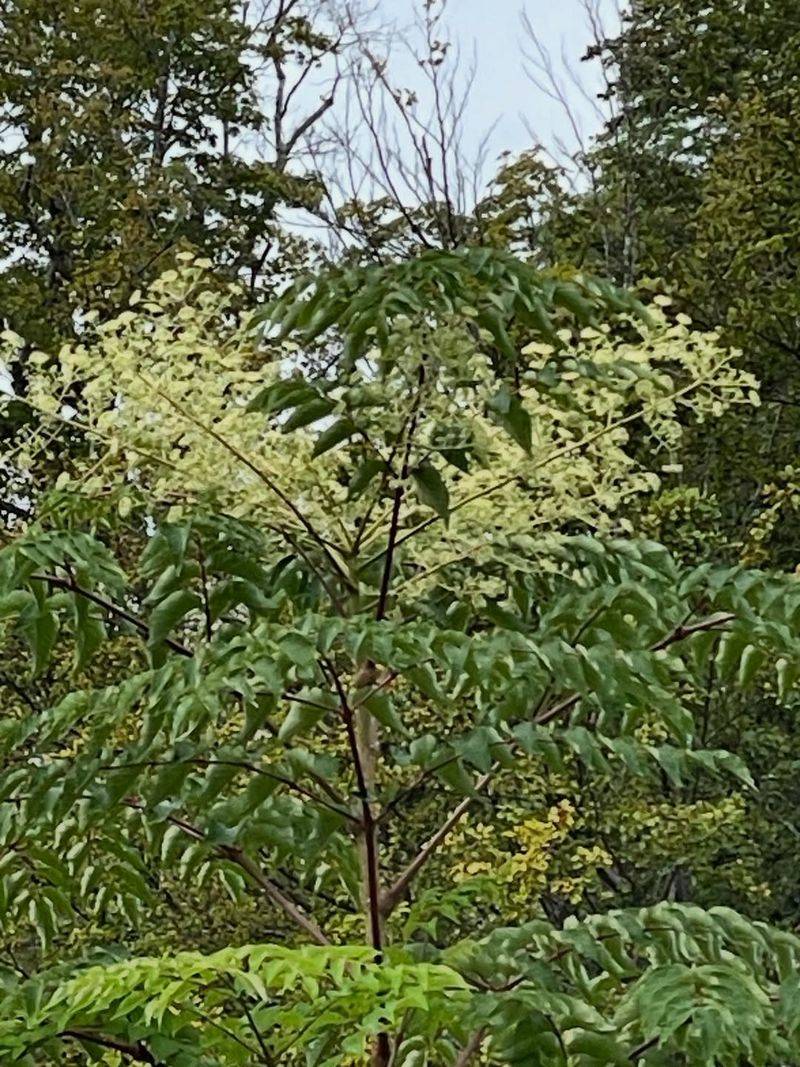
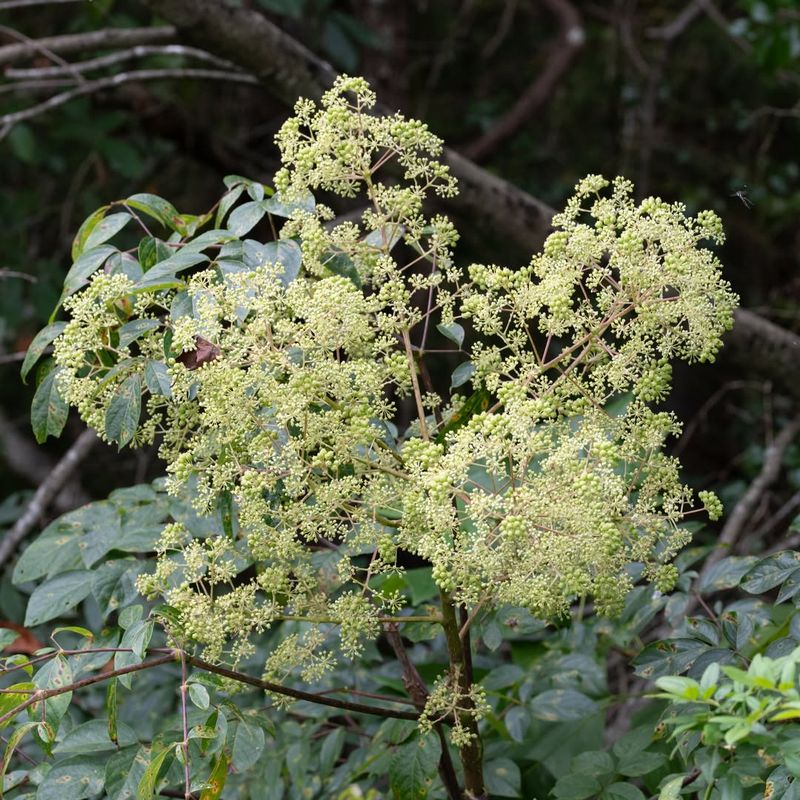
The plant typically grows as a large shrub or small tree, reaching heights of 10 to 20 feet, with enormous compound leaves that can stretch up to four feet long.
Its most distinctive feature is the armor of sharp spines covering the trunk, branches, and even leaf stems, which is how it earned its memorable common name.
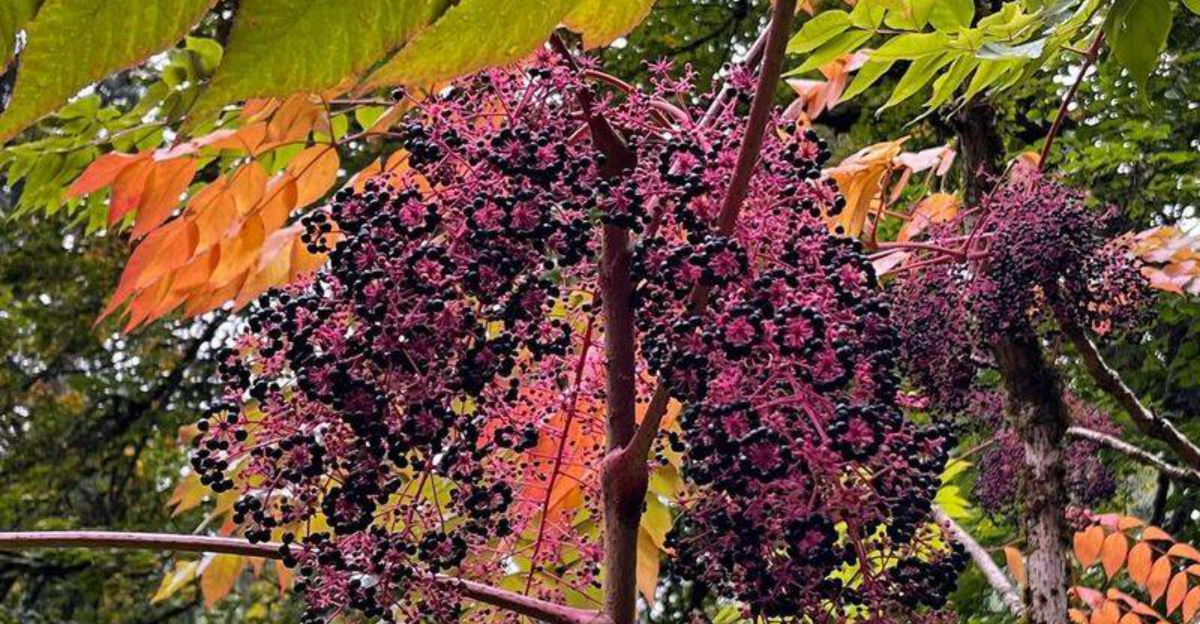
In late summer, Devil’s Walking Stick produces large clusters of small white flowers that attract numerous pollinators, followed by dark purple berries that wildlife eagerly consume.
What we’re witnessing isn’t an invasion—it’s an expansion of a native species responding to changing forest conditions.
Understanding this distinction matters because the management approach for natives differs significantly from how we handle true invasive species.
Rather than eradicating Devil’s Walking Stick, forest managers often work to understand what environmental changes are allowing it to thrive and spread beyond its historical range.
Loss Of Canopy Trees Creates Ideal Light Conditions
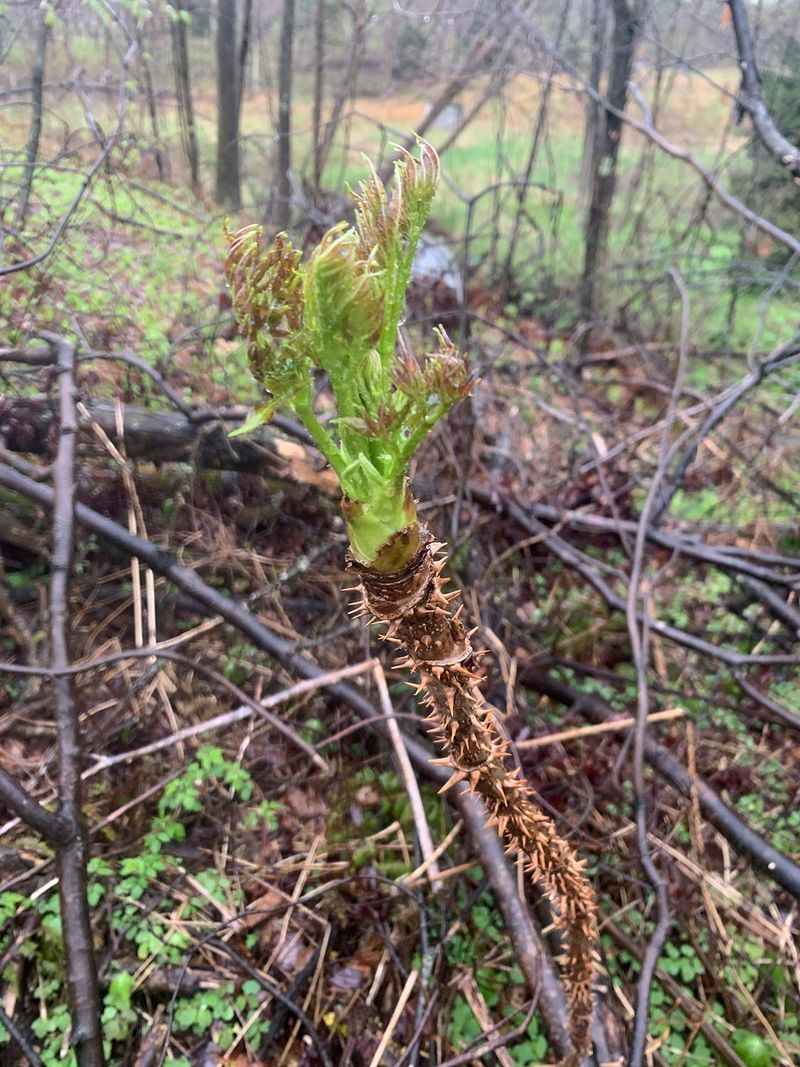
Sunlight is the secret ingredient that has unlocked Devil’s Walking Stick’s expansion across North Carolina woodlands.
Historically, this plant grew in the shaded understory, waiting patiently for opportunities when canopy gaps appeared.
Recent decades have brought dramatic changes to forest canopies through hurricanes, ice storms, tornados, and severe thunderstorms that snap or uproot mature trees.
Commercial logging operations and residential development have also removed significant portions of the forest canopy in many areas.
Additionally, diseases like sudden oak decline and pests such as the emerald ash borer have weakened or removed countless canopy trees.
When the leafy ceiling above the forest floor opens up, everything changes below.
Suddenly, sunlight that once barely penetrated the dense canopy floods down to the ground level, dramatically altering growing conditions for understory plants.
Devil’s Walking Stick is perfectly positioned to capitalize on these brighter conditions.
As a pioneer species, it grows rapidly when given adequate light, quickly shooting upward and outward to claim newly available space.
Its large compound leaves efficiently capture sunlight, allowing the plant to photosynthesize vigorously and produce energy for aggressive growth.
In forests where canopy disturbance has become more frequent, Devil’s Walking Stick no longer waits decades for its moment—opportunities arrive regularly, allowing populations to expand continuously rather than in isolated patches.
It Spreads Aggressively By Root Suckers
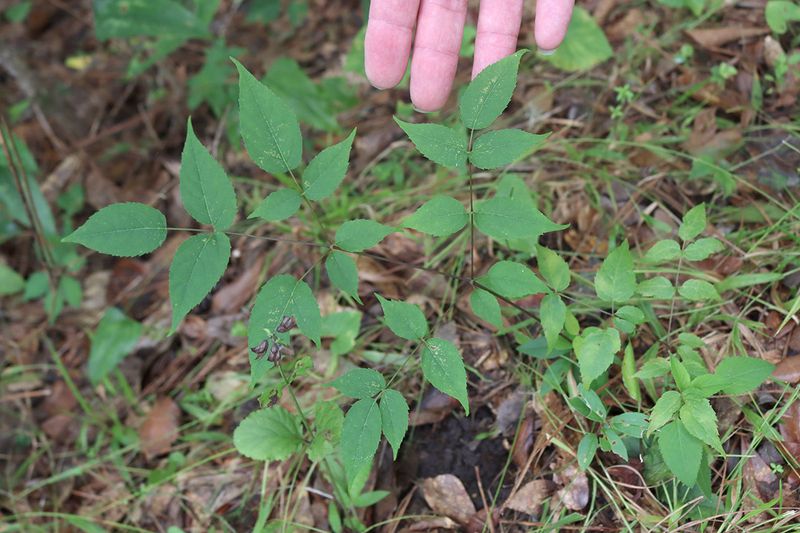
Forget about slow, seed-by-seed colonization—Devil’s Walking Stick has a much faster strategy for taking over territory.
Beneath the soil surface, this plant sends out horizontal roots that can travel several feet from the parent stem.
From these underground roots, new shoots called suckers emerge, popping up seemingly everywhere around the original plant.
This vegetative reproduction method, known as suckering, allows a single Devil’s Walking Stick to create an entire colony of genetically identical stems connected by a shared root system.
Once established in a location, the plant doesn’t need to wait for seeds to germinate and grow—it simply sends up ready-made stems that grow rapidly since they’re supported by an already-established root network.
In favorable conditions, these suckers can appear several feet away from the nearest visible stem, making the colony expand outward in all directions.
The result is dense thickets of spiny stems that effectively exclude other plants from the area.
This clonal growth pattern is incredibly efficient for territorial expansion, allowing Devil’s Walking Stick to claim ground much faster than species that rely primarily on seed dispersal.
Trying to control the plant by removing visible stems often backfires spectacularly—cutting or damaging stems frequently triggers the root system to produce even more suckers as a survival response.
This underground network is the real reason Devil’s Walking Stick can transform from a few scattered individuals into dominant patches within just a few growing seasons.
White-Tailed Deer Avoid It Completely
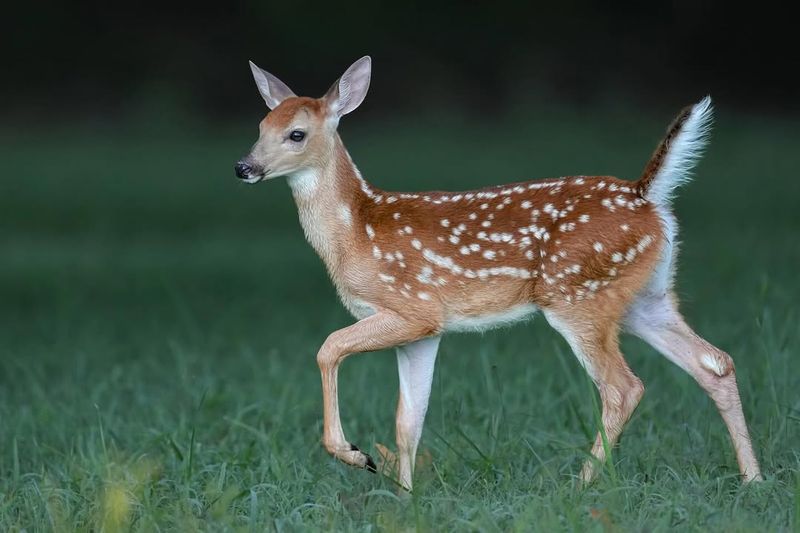
In forests where white-tailed deer populations have exploded, most palatable plants face constant browsing pressure that stunts their growth or eliminates them entirely.
Deer selectively eat their favorite plants—young tree seedlings, wildflowers, and tender shrubs—creating a browsing line where vegetation below a certain height simply disappears.
This intense herbivory has dramatically altered the composition of many North Carolina forests, favoring only those plants deer find unappetizing or inaccessible.
Enter Devil’s Walking Stick with its formidable armor of sharp spines.
Deer take one look at those thorny stems and decide to browse elsewhere, leaving the plant completely untouched even in areas where hungry deer have consumed nearly everything else.
This gives Devil’s Walking Stick an enormous competitive advantage in heavily browsed forests.
While oak seedlings, maple saplings, and native wildflowers struggle to survive constant deer pressure, Devil’s Walking Stick grows freely without any herbivore damage.
The plant’s spines protect not just the main trunk but also the branches and even the leaf stems, making every part unpalatable and painful for deer to attempt eating.
Over time, forests with high deer populations become dominated by deer-resistant species, and Devil’s Walking Stick fits this category perfectly.
As preferred food plants decline under browsing pressure, the spiny shrub faces less competition for space, nutrients, and light, allowing it to expand into areas that would have been occupied by other species in a more balanced ecosystem.
Native Wildlife Actively Disperses The Seeds
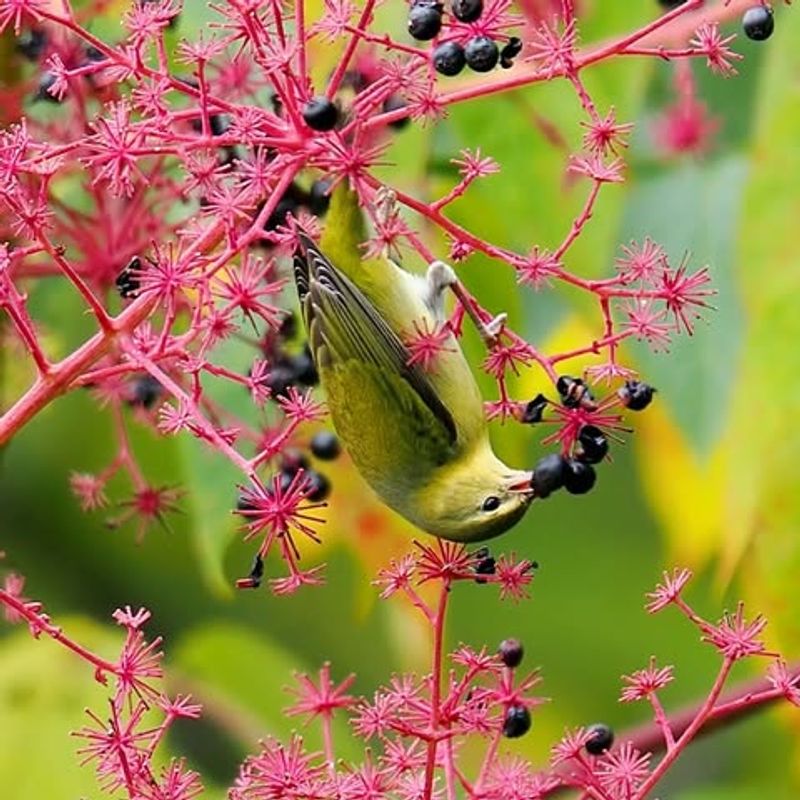
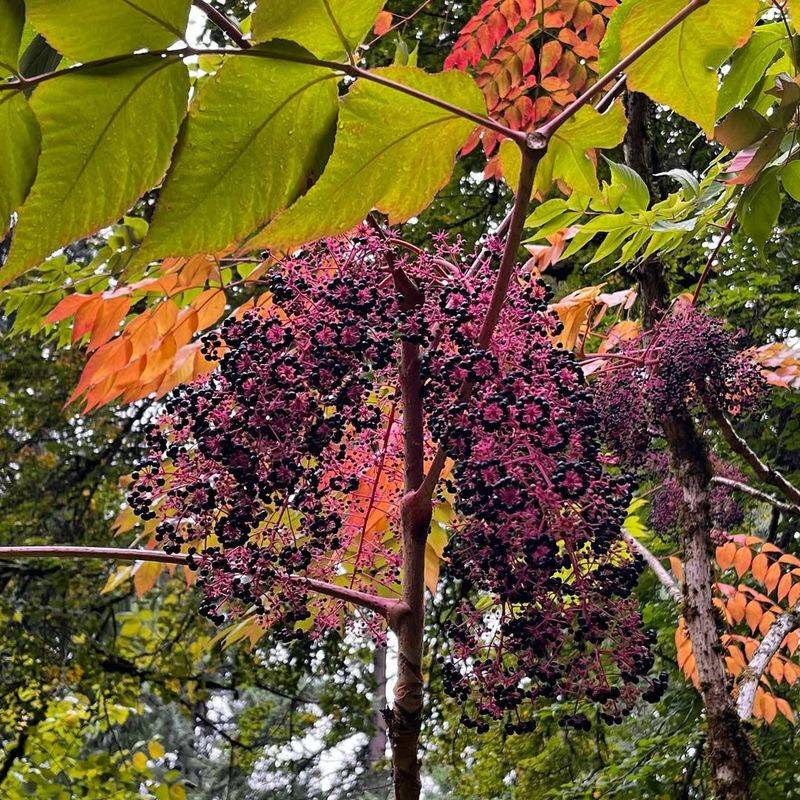
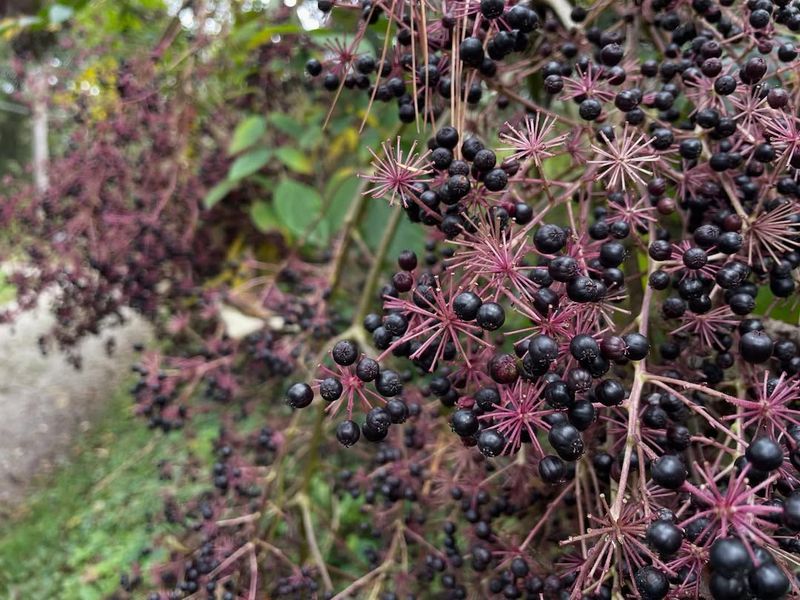
Every fall, Devil’s Walking Stick produces abundant clusters of small, dark purple berries that become a wildlife magnet.
These fruits ripen in late summer through autumn, providing important food when many other berry sources have already been consumed.
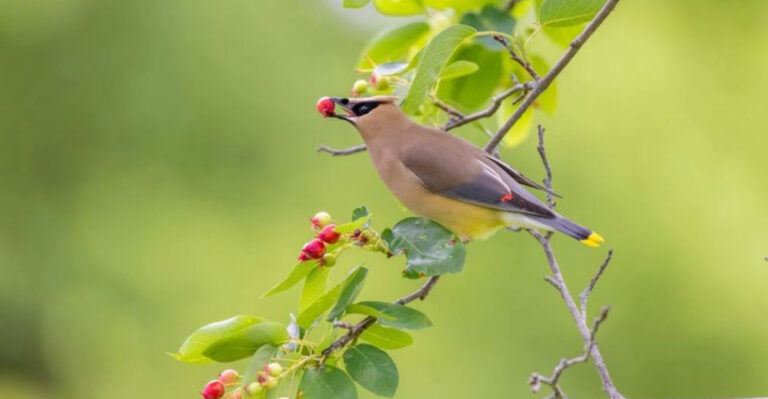
Dozens of bird species feast on these berries, including thrushes, catbirds, waxwings, and woodpeckers, along with mammals like raccoons, opossums, and black bears.
Here’s where the plant’s expansion strategy gets clever: those animals don’t just eat the berries—they become unwitting partners in seed dispersal.
After consuming the fruit, birds and mammals travel through the forest, eventually depositing the undigested seeds in their droppings far from the parent plant.
This natural seed distribution network is remarkably efficient, spreading Devil’s Walking Stick seeds across miles of woodland in a single season.
Birds are particularly effective dispersers because they can carry seeds across landscape features that might otherwise act as barriers, such as roads, streams, or cleared areas.
The seeds remain viable after passing through an animal’s digestive system—in fact, this process may actually improve germination rates by scarifying the seed coat.
As wildlife populations move through connected forest patches, they continuously introduce Devil’s Walking Stick seeds to new locations.
When those seeds land in suitable habitat—especially recently disturbed or canopy-gap areas—they germinate and establish new populations.
This wildlife-powered dispersal mechanism means the plant doesn’t rely solely on vegetative spread; it also colonizes distant locations, creating new population centers that then expand through root suckering.
It Thrives In Disturbed Soils
Most established forest plants prefer stable, undisturbed soil where they’ve spent years developing extensive root systems.
Devil’s Walking Stick takes the opposite approach—it actually thrives in areas where soil has been recently disturbed, turned, or exposed.
Construction projects that cut through woodlands, new trail development, erosion from heavy rainfall, and soil exposed by fallen trees all create perfect opportunities for this opportunistic species.
North Carolina’s growing population has brought increased development pressure to forested areas, with new roads, housing subdivisions, and utility corridors fragmenting previously intact woodlands.
Each of these disturbances creates edge habitat and exposed soil where Devil’s Walking Stick readily establishes.
The plant’s seeds germinate quickly in disturbed areas where competition from established vegetation is reduced.
Once a seedling takes root in disturbed soil, it grows rapidly, and its suckering habit allows it to quickly stabilize and claim the disturbed area.
Forest edges along roads and trails provide continuous corridors of disturbed habitat that Devil’s Walking Stick colonizes, then uses as launching points to spread deeper into adjacent woodlands.
Storm water runoff, which has increased with development and changing rainfall patterns, creates channels of erosion that expose soil and remove competing vegetation—perfect conditions for Devil’s Walking Stick colonization.
Even small-scale disturbances like fallen logs, animal digging, or foot traffic that exposes mineral soil can provide enough opportunity for establishment.
In our increasingly fragmented and disturbed forests, Devil’s Walking Stick finds abundant opportunities that simply weren’t as common historically.
Climate Shifts Favor Fast-Growing Native Species
North Carolina’s climate has been shifting in subtle but significant ways that benefit aggressive native plants like Devil’s Walking Stick.
Average temperatures have gradually increased over recent decades, and the frost-free growing season has extended by several weeks compared to historical norms.
Warmer winters mean fewer extreme cold snaps that might damage tender growth, allowing plants to retain more living tissue through the dormant season.
Longer growing seasons give fast-growing species more time to photosynthesize, produce biomass, and expand their territory each year.
Devil’s Walking Stick, as a vigorous grower, capitalizes on these extended favorable conditions more effectively than slower-growing forest species.
The plant leafs out relatively early in spring and maintains its foliage late into fall, maximizing its productive period.
Changing precipitation patterns, including more intense rainfall events followed by dry periods, also play a role.
These conditions stress some established forest plants while creating the soil disturbance and variable moisture that pioneer species like Devil’s Walking Stick tolerate well.
Additionally, milder winters may reduce winter mortality of seeds and young plants, allowing more individuals to survive to maturity.
Climate shifts also interact with other factors—warmer temperatures may stress canopy trees, leading to increased tree mortality and more canopy gaps that favor understory expansion.
While no single climate factor explains Devil’s Walking Stick’s spread, the combination of warmer temperatures, longer growing seasons, and altered precipitation patterns creates an environment where fast-growing, adaptable native species gain competitive advantages over their slower-growing neighbors.
Humans Accidentally Encourage Its Spread
Ironically, many human attempts to control Devil’s Walking Stick actually make the problem worse.
Property owners who discover the spiny shrub encroaching on trails or forest edges often reach for cutting tools, assuming that removing visible stems will eliminate the plant.
This approach backfires dramatically because cutting the stems triggers a survival response in the underground root system.
Rather than giving up, the plant responds to damage by sending up multiple new suckers, often producing three or four new stems for every one that was cut.
Mowing, bush-hogging, or trimming Devil’s Walking Stick creates the same counterproductive result—more stems, denser growth, and faster spread.
The plant has evolved to respond to damage (whether from storms, falling branches, or animal activity) by regenerating vigorously, and it can’t distinguish between natural damage and human cutting.
Similarly, soil disturbance from trails, off-road vehicles, or construction equipment creates perfect establishment sites while also potentially spreading root fragments that can generate new plants.
Even seemingly helpful forest management activities like prescribed burning or invasive species removal can inadvertently benefit Devil’s Walking Stick by reducing competition and opening the canopy.
Herbicide application, if not done carefully with the right products and techniques, may eliminate competing vegetation while leaving the deep-rooted Devil’s Walking Stick relatively unharmed, actually giving it more room to expand.
Education about the plant’s biology would help landowners understand that effective control requires persistent, strategic approaches rather than simple cutting, which only accelerates the very spread they’re trying to prevent.
Its Ecological Value Protects It From Removal
Despite its painful spines and aggressive spread, Devil’s Walking Stick provides significant ecological benefits that make many land managers hesitant to remove it.
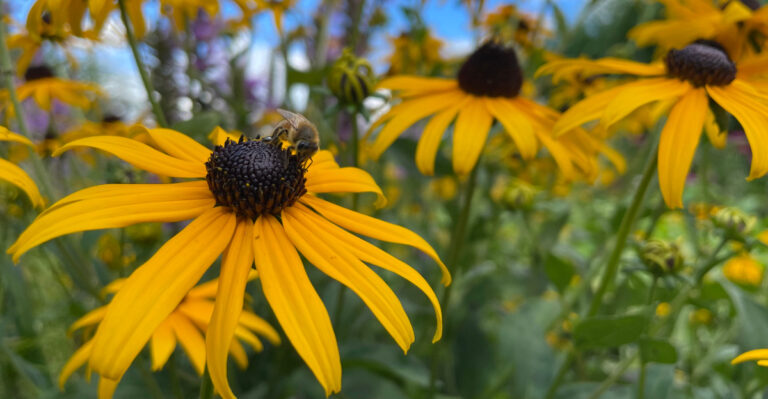
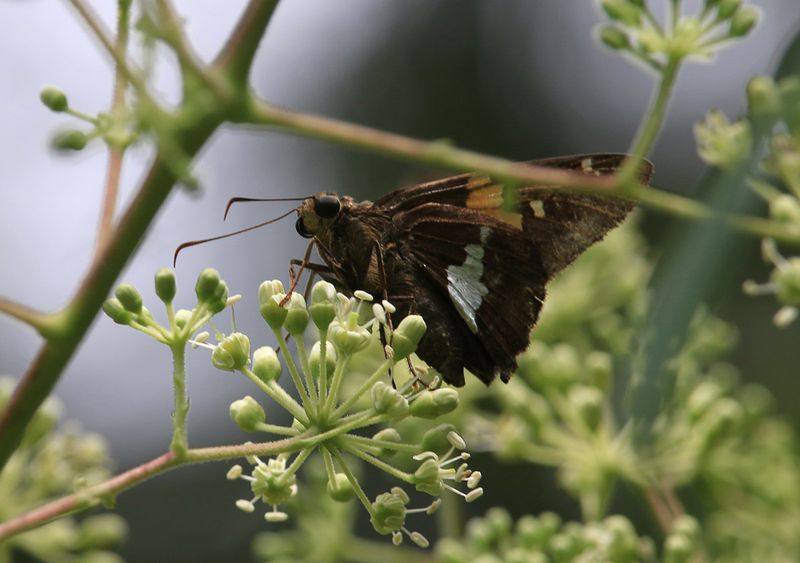
The plant’s large flower clusters, which bloom in late summer when many other nectar sources have finished, attract an impressive diversity of pollinators including native bees, honeybees, wasps, butterflies, and beetles.
These late-season flowers provide critical resources when pollinators are preparing for winter or building up energy reserves for migration.
Research has documented over 100 different insect species visiting Devil’s Walking Stick flowers, making it a biodiversity hotspot within the forest.
The subsequent berry crop feeds numerous bird species during fall migration, providing high-energy food exactly when birds need it most for their long journeys.
Small mammals also rely on these berries as an important autumn food source.
Beyond feeding wildlife, the dense thickets created by Devil’s Walking Stick colonies provide excellent cover and nesting habitat for birds and small mammals.
The spiny stems offer protection from predators, creating safe refuges within the forest.
Some native insects specialize on Devil’s Walking Stick, depending on it as a host plant for their larvae.
Forest managers and conservation-minded landowners increasingly recognize that native plants, even aggressive ones, play important roles in supporting wildlife and maintaining ecosystem function.
This ecological value means that Devil’s Walking Stick is often tolerated or even protected in natural areas, despite the challenges its spines present for human recreation.
Rather than removal, the management approach often focuses on preventing expansion into high-use areas while allowing the plant to persist where it provides wildlife benefits.