Why Twisted Maple Leaves Are Appearing In New York Yards
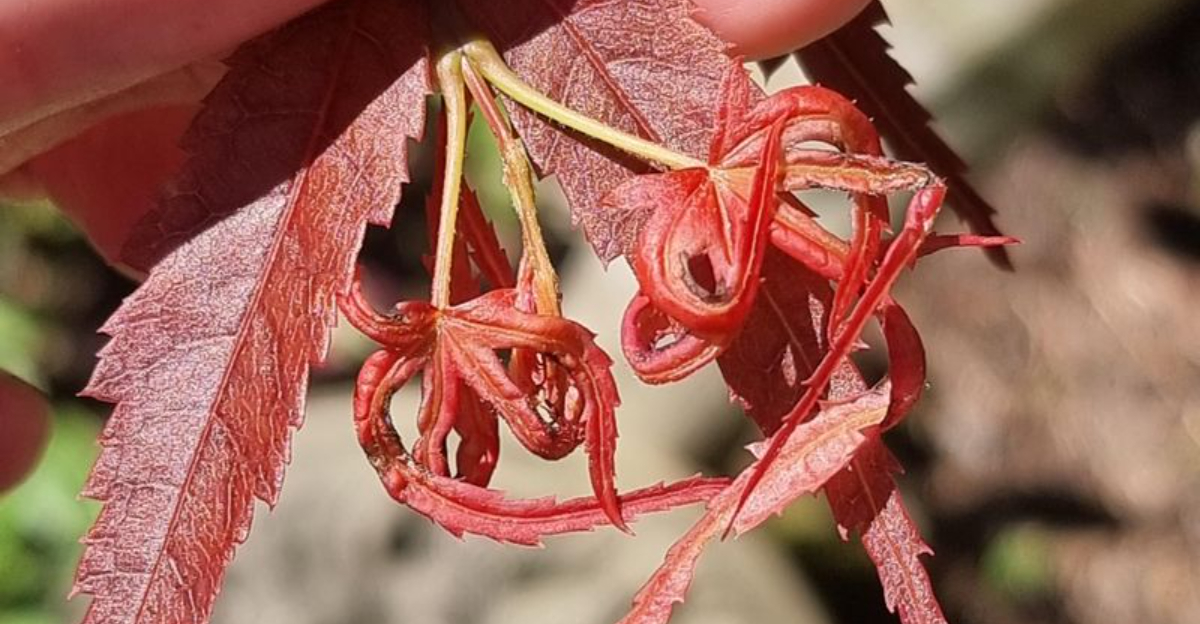
Homeowners across New York are noticing something unusual happening to their beloved maple trees—leaves that twist, curl, and appear strangely contorted.
These distorted leaves can be alarming, especially when a tree that once looked vibrant and healthy suddenly seems off.
In addition to looking odd, the changes can sometimes signal stress, pest activity, or environmental issues that affect the overall wellbeing of your maple.
Understanding the causes behind these leaf deformations is the first step toward helping your tree recover and thrive once more, ensuring it continues to provide beauty and shade for years to come.
Common Causes Of Leaf Curling And Distortion
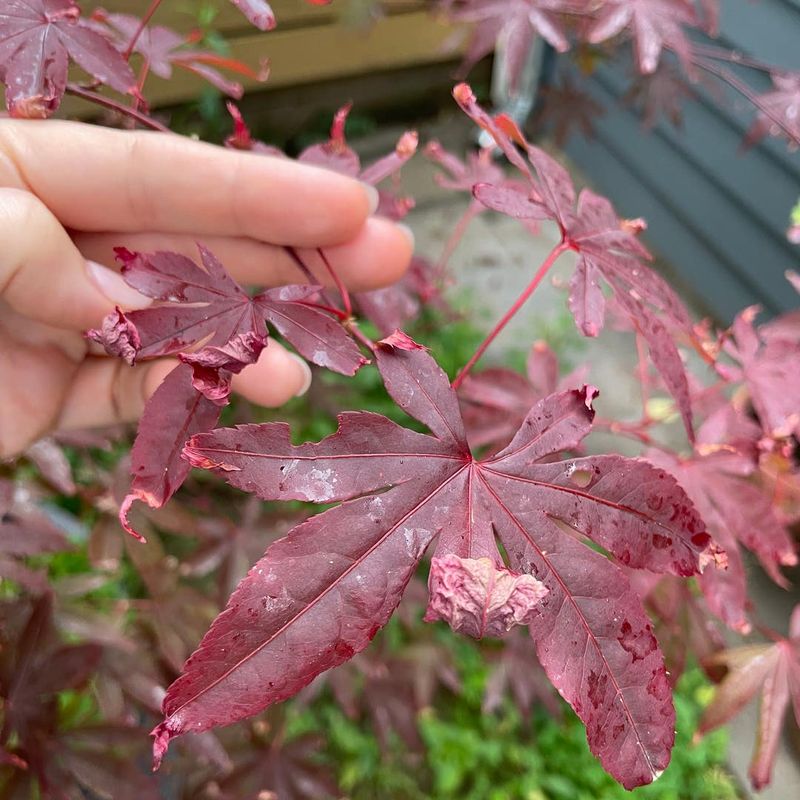
Maple trees can develop twisted, curled leaves for several reasons, and figuring out the culprit requires a bit of detective work.
Insects rank high on the list of suspects.
Tiny bugs that feed on leaf sap can cause dramatic changes in leaf shape and texture.
Diseases also play a major role.
Fungal infections often target maple foliage, leading to spots, blotches, and warped leaves that don’t unfold properly.
Environmental stress shouldn’t be overlooked either.
Drought, extreme heat, poor soil, and even road salt can trigger leaf-curl symptoms that mimic pest or disease damage.
Sometimes multiple factors combine to create the perfect storm.
A tree weakened by dry conditions becomes more vulnerable to insect attacks or fungal infections.
Recognizing the difference between these causes helps you choose the right treatment.
Insects leave telltale signs like sticky residue or visible bugs, while diseases often produce discolored spots.
Environmental issues tend to affect the entire tree more uniformly.
Look for patterns in where the damage appears—just one branch or the whole canopy.
Taking time to observe your maple closely will guide you toward the correct solution.
Knowing what’s causing the problem saves time, money, and your tree’s health.
Potato Leafhopper Damage On Maples
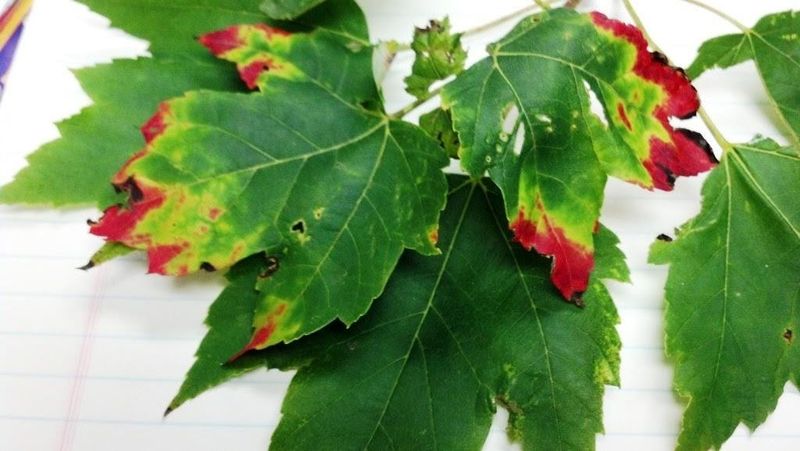
Few pests cause as much leaf distortion as the potato leafhopper, a tiny green insect that loves feeding on maple sap.
These leafhoppers measure only about an eighth of an inch long.
Despite their small size, they pack a powerful punch when it comes to damaging foliage.
When they feed, they inject toxins into the leaf tissue.
This causes a condition called hopperburn, where leaf edges curl upward and turn yellow or brown.
Look for wedge-shaped insects that hop or fly away quickly when you approach the tree.
They’re most active during warm, sunny days in late spring and summer.
The damage typically starts at leaf tips and margins.
As feeding continues, entire leaves may curl tightly and appear scorched around the edges.
Young trees suffer the most from leafhopper infestations.
Their smaller canopies can’t tolerate as much sap loss as mature trees can handle.
Checking the undersides of leaves reveals the best clues.
You might spot the leafhoppers themselves or their shed skins left behind after molting.
Early detection makes management easier.
Insecticidal soaps or horticultural oils can reduce populations when applied thoroughly to leaf undersides.
Fungal Infections That Deform Maple Foliage
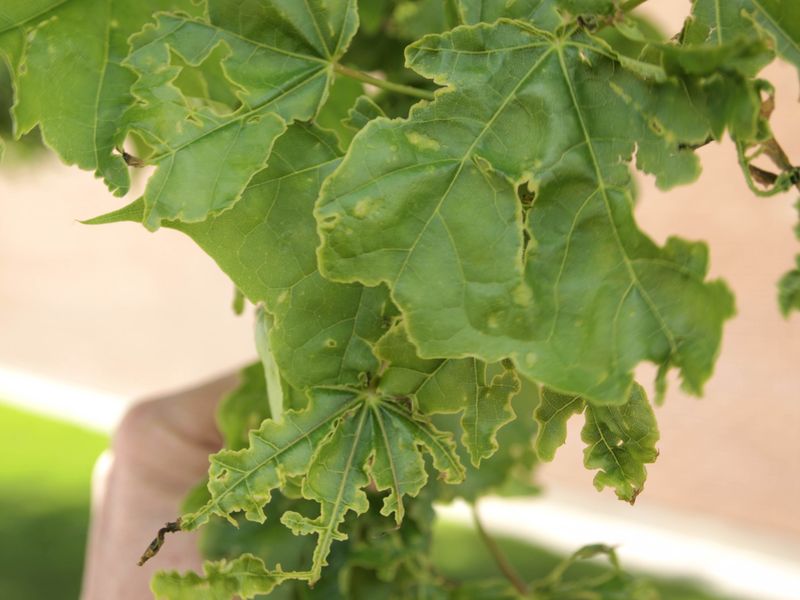
Anthracnose stands out as one of the most common fungal diseases affecting maples in New York, especially during wet spring weather.
This fungal infection causes irregular brown spots along leaf veins.
As the disease progresses, leaves may twist, pucker, and develop a distorted appearance.
Wet, cool conditions in spring create the perfect environment for anthracnose spores to spread.
Rain splashes spores from infected leaves onto healthy ones, continuing the cycle.
Tar spot is another fungal culprit that creates raised black spots on maple leaves.
While it doesn’t usually cause severe twisting, heavy infections can make leaves curl slightly.
Powdery mildew appears as a white, dusty coating on leaf surfaces.
Young leaves infected early may develop twisted or stunted as they try to grow normally.
Verticillium wilt affects the tree’s vascular system, sometimes causing leaves to curl and wilt on individual branches.
This disease is more serious and requires professional attention.
Proper identification matters because different fungi need different management approaches.
Some respond to improved air circulation, while others require fungicide applications.
Raking and removing fallen leaves helps reduce fungal spores that overwinter.
Keeping the area around your maple clean cuts down on next year’s infection potential.
Environmental Stress Factors Triggering Leaf Curl
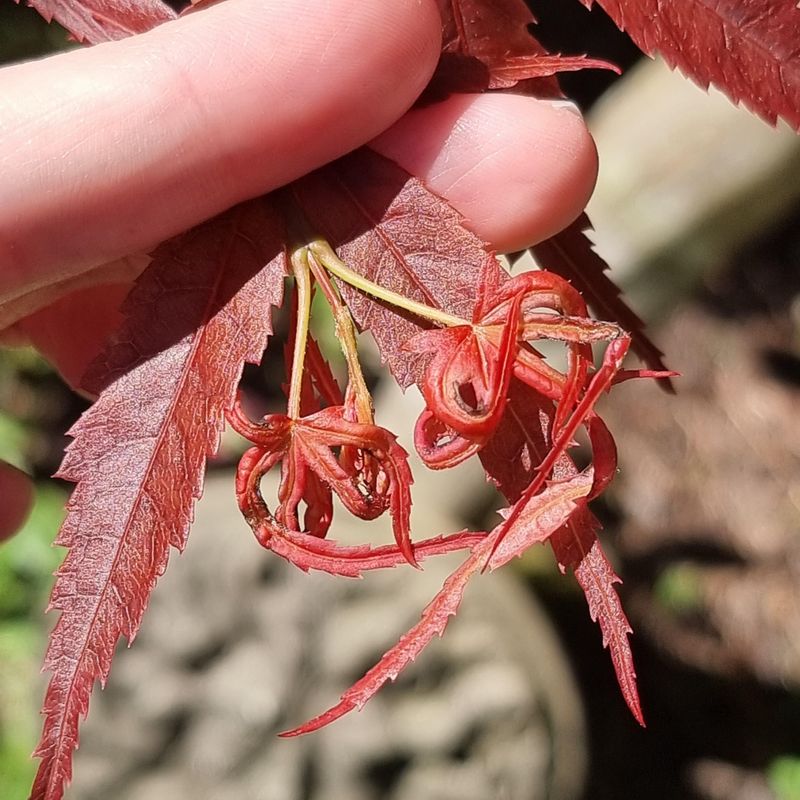
Drought ranks as one of the biggest environmental stressors for maples, especially during New York’s hot summer months.
When roots can’t access enough water, leaves respond by curling to reduce their surface area.
This survival mechanism helps minimize moisture loss through transpiration.
Heat stress often works hand-in-hand with drought.
Temperatures above 90 degrees can cause leaves to curl and droop, even when soil moisture seems adequate.
Road salt presents a sneaky problem for maples planted near streets or driveways.
Salt buildup in soil damages roots and causes leaf margins to curl and brown.
Compacted soil prevents roots from spreading properly and accessing oxygen.
Trees growing in compacted areas often show stunted growth and twisted leaves.
Poor drainage creates its own set of problems.
Waterlogged soil suffocates roots, leading to symptoms that look similar to drought stress, including leaf curl.
Wind exposure can cause physical damage to developing leaves.
Strong winds tear delicate tissue, resulting in distorted growth patterns as leaves mature.
Sudden temperature swings stress trees, especially when late frosts hit newly emerged leaves.
This can cause permanent distortion that persists throughout the growing season.
Nutrient Imbalances Causing Leaf Distortion
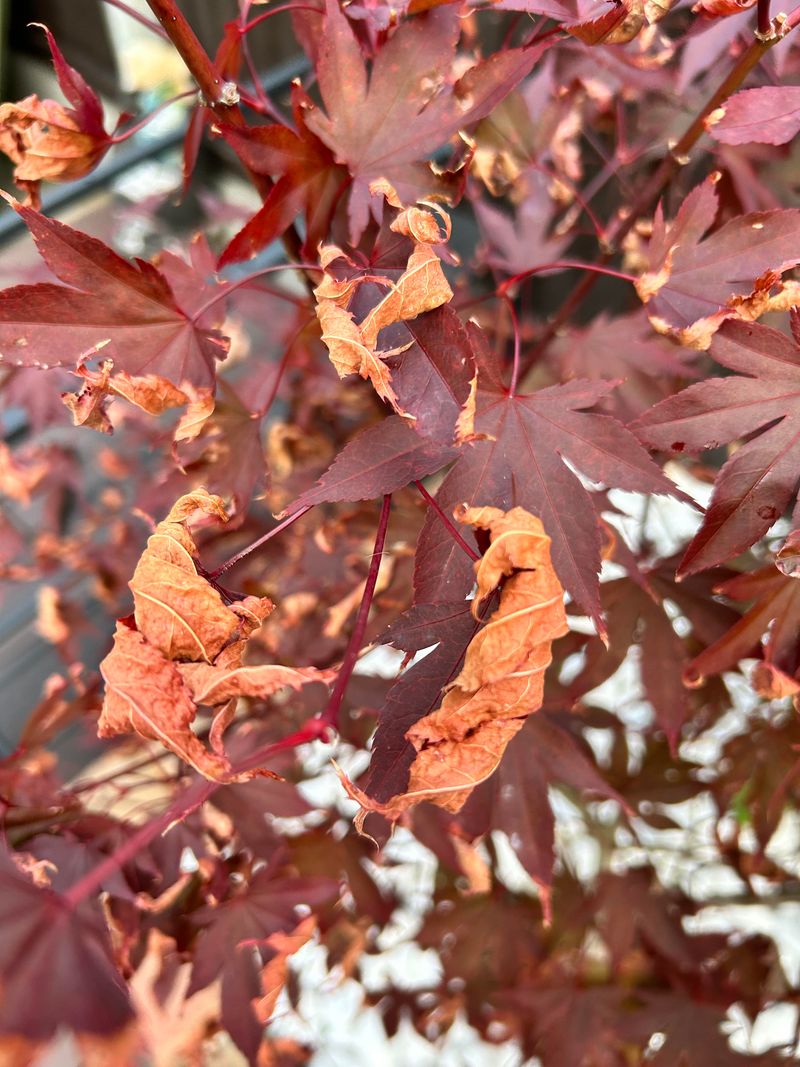
Potassium deficiency commonly causes leaf edges to curl and develop a scorched appearance on maples throughout New York.
This essential nutrient helps regulate water movement within the tree.
Without enough potassium, leaves can’t maintain proper turgor pressure, leading to curling and distortion.
Look for yellowing or browning that starts at leaf margins and works inward.
The leaf edges may curl upward or downward depending on the severity of the deficiency.
Magnesium deficiency creates a different pattern.
Older leaves show yellowing between veins while the veins themselves stay green, sometimes accompanied by slight curling.
Nitrogen imbalances don’t usually cause dramatic curling, but severe deficiencies can stunt leaf growth.
Undersized leaves may appear slightly twisted or malformed.
Soil pH affects nutrient availability more than people realize.
Maples prefer slightly acidic to neutral soil, and extreme pH levels lock up essential nutrients.
Testing your soil provides the most accurate picture of nutrient levels.
Home test kits work for basic information, but professional lab tests give detailed results.
Correcting nutrient problems takes time because trees absorb amendments slowly.
Foliar sprays offer quick fixes, while soil amendments provide long-term solutions.
Seasonal Patterns Of Twisted Leaf Appearance
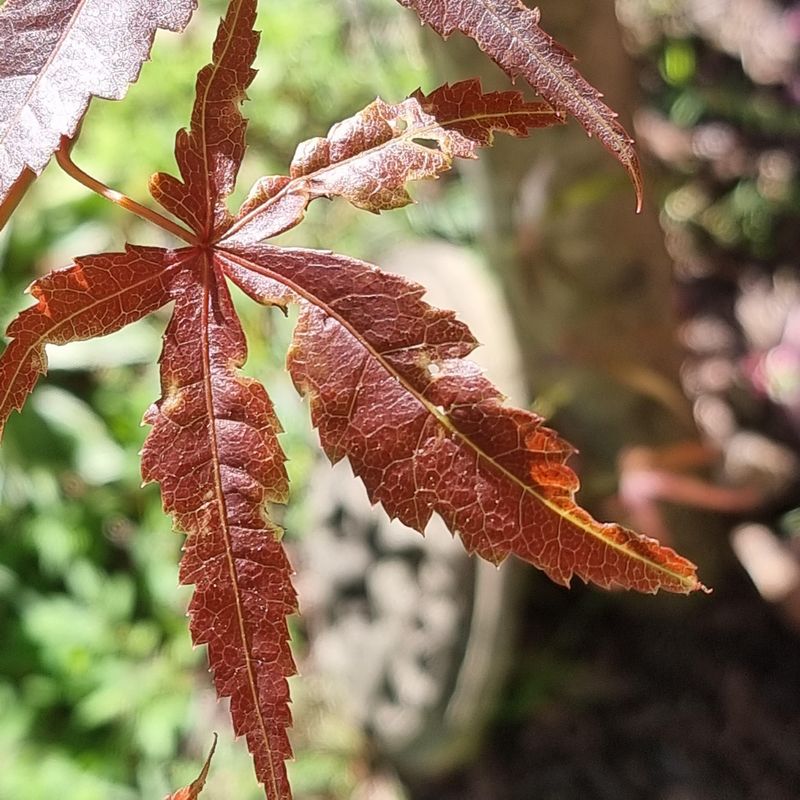
Late spring brings the most complaints about twisted maple leaves, right when new foliage emerges and begins to expand.
Cool, wet weather during leaf emergence creates ideal conditions for fungal infections.
Anthracnose and other diseases strike when leaves are most vulnerable.
Early summer marks peak activity for potato leafhoppers in New York.
These pests migrate north from southern states, arriving just as maples put on their main flush of growth.
Mid-summer stress from heat and drought often causes leaves to curl defensively.
Trees that looked fine in June may show significant leaf distortion by August.
Fall rarely brings new cases of leaf curling because trees are preparing for dormancy.
However, damage from earlier in the season remains visible until leaves drop.
Understanding these seasonal patterns helps you anticipate problems.
Monitoring your maple closely during vulnerable periods allows for early intervention.
Weather patterns influence when problems appear each year.
A particularly wet spring might trigger more fungal issues, while a dry summer increases environmental stress symptoms.
Keeping records of when symptoms appear helps identify patterns.
You might notice the same branch showing problems every June, pointing toward a localized issue.
Step-by-Step Inspection For Leaf Distortion
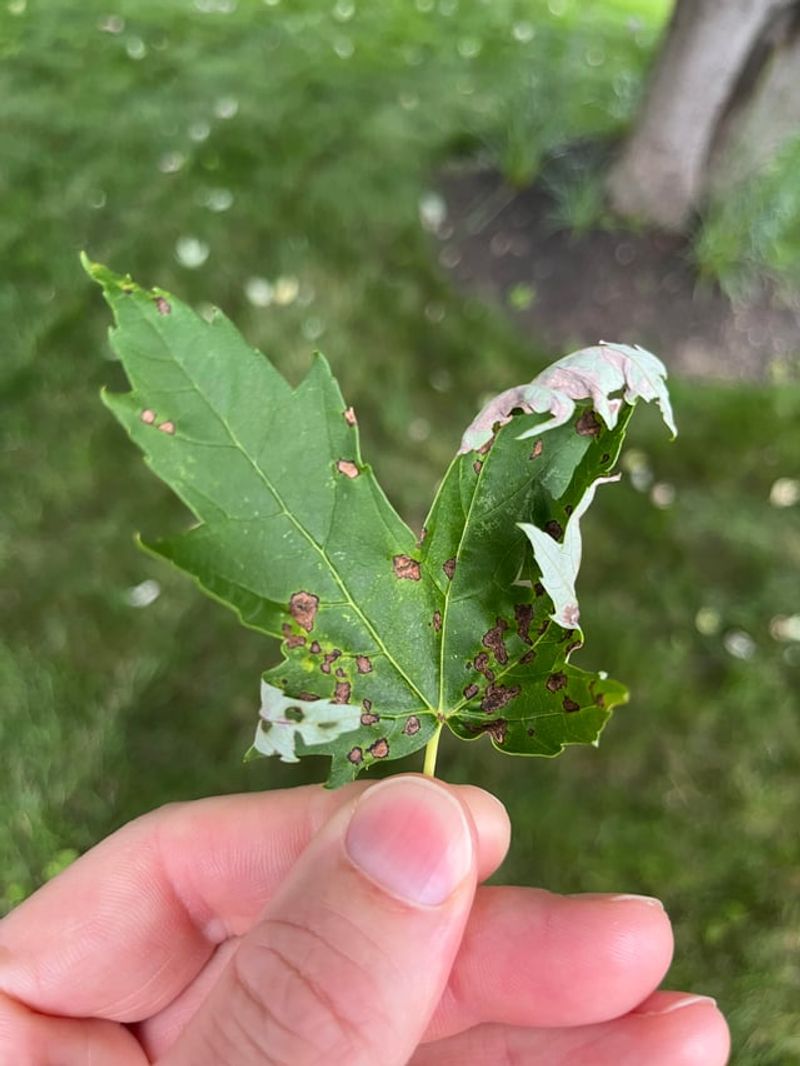
Start your inspection by stepping back and looking at the entire tree canopy from a distance to spot overall patterns.
Notice whether twisted leaves appear throughout the tree or concentrate in specific areas.
Widespread symptoms often point to environmental stress or systemic disease.
Localized damage on just one or two branches might indicate physical injury, insect activity, or a branch-specific problem.
This narrows down your list of suspects considerably.
Move closer and examine individual leaves carefully.
Look at both the upper and lower surfaces for signs of insects, eggs, or fungal growth.
Check for sticky residue, which indicates sap-feeding insects.
Run your finger along the leaf underside to feel for bumps or unusual textures.
Inspect the bark and branches for wounds, cracks, or discoloration.
Damage to the trunk or major limbs can affect leaf development throughout that section.
Dig down a few inches near the tree to check soil moisture.
Squeeze a handful—it should form a loose ball that crumbles easily when poked.
Document your findings with photos and notes.
This information proves invaluable if you need to consult with a tree care professional later on.
Simple Care Tips To Prevent Leaf Curl
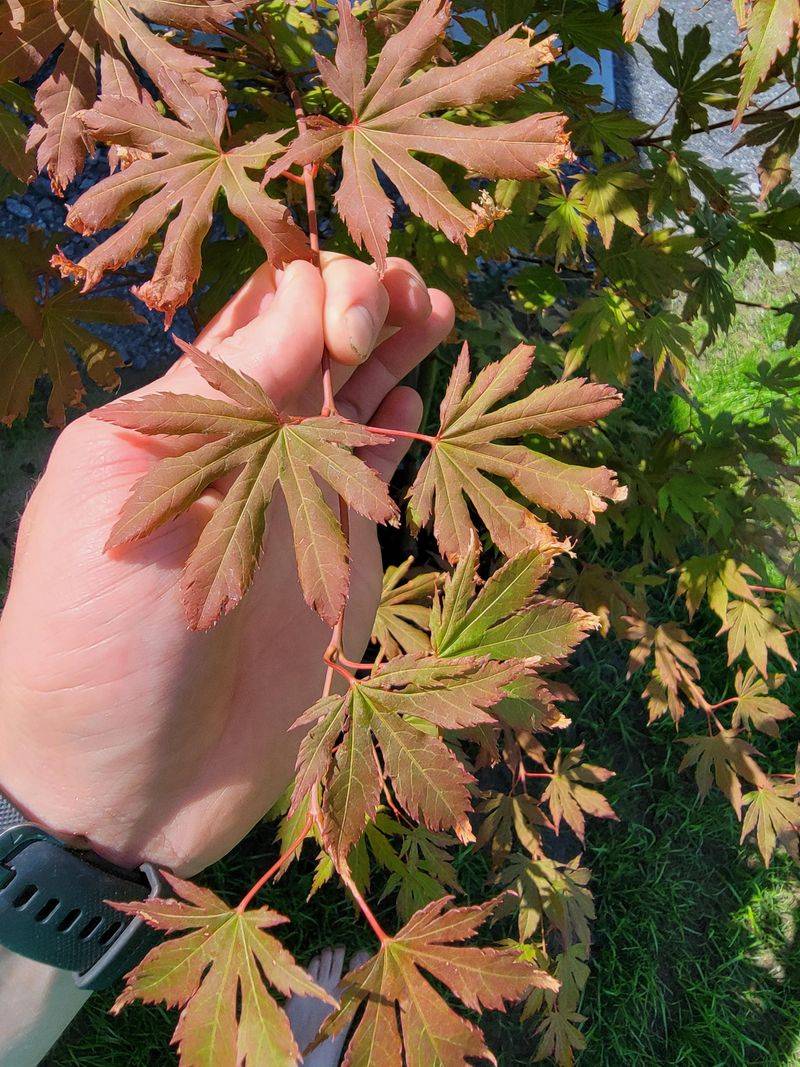
Watering correctly makes a huge difference in preventing stress-related leaf curl on maples during dry periods.
Apply water slowly and deeply rather than frequent shallow sprinkling.
Deep watering encourages roots to grow downward where moisture stays more consistent.
Aim for one to two inches of water per week during the growing season.
Use a rain gauge to track natural rainfall and supplement when needed.
Mulching around the tree base helps retain soil moisture and regulates temperature.
Spread a two-to-four-inch layer of organic mulch in a wide circle.
Keep mulch pulled back from the trunk to prevent rot.
The mulch ring should look like a donut, not a volcano piled against the bark.
Avoid fertilizing stressed trees until they recover.
Extra nutrients can actually harm a tree struggling with drought or disease.
Prune out branches with severe disease symptoms to improve air circulation.
Make clean cuts just outside the branch collar without leaving stubs.
Test your soil every few years to monitor pH and nutrient levels.
Adjusting soil conditions before problems appear keeps your maple healthier overall.
When Professional Arborist Help Is Needed

Rapid decline over just a few weeks signals a serious problem that needs professional attention right away.
Certified arborists have training and tools to diagnose complex tree problems accurately.
They can distinguish between look-alike symptoms that confuse homeowners.
Verticillium wilt and other vascular diseases require expert diagnosis.
These systemic infections can spread through the tree quickly if not managed properly.
Large trees need professional care because treating tall canopies safely requires specialized equipment.
Climbing or using lifts to reach upper branches isn’t a DIY project.
Extensive insect infestations may need prescription-strength treatments that aren’t available to homeowners.
Arborists have access to professional-grade products and application methods.
Structural problems like large cracks, leaning trunks, or major branch damage require expert assessment.
These safety hazards could threaten people or property.
Soil issues beyond simple pH adjustments benefit from professional testing and remediation.
Compaction, drainage problems, and contamination need specialized solutions.
Finding a certified arborist through the International Society of Arboriculture ensures you’re working with a qualified professional who follows industry best practices.
Long-Term Maple Care And Monitoring
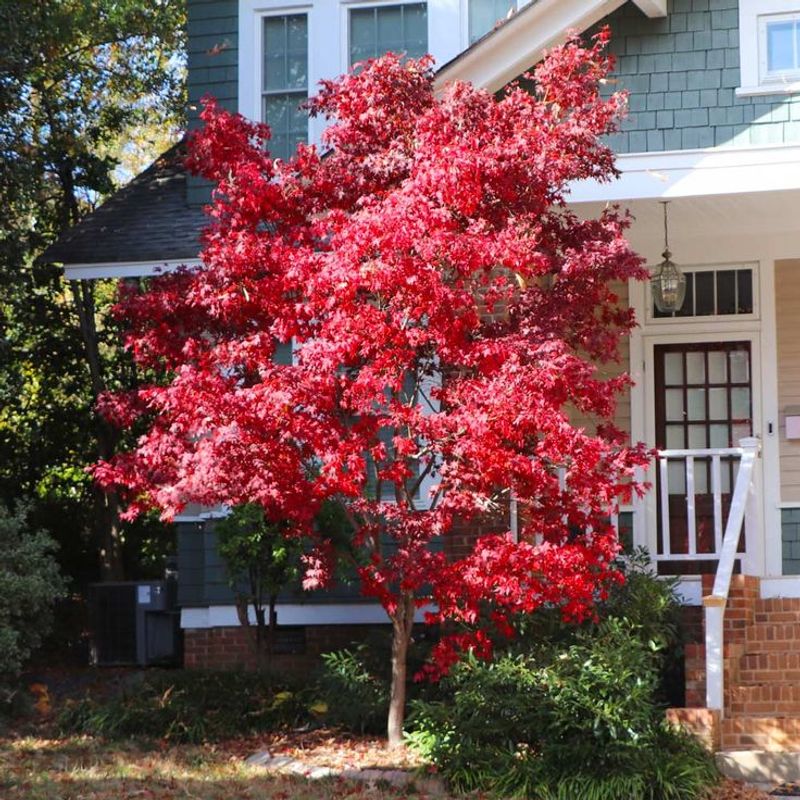
Regular monitoring catches problems early when they’re easiest to address and before they cause permanent damage.
Walk around your maple at least once a month during the growing season.
Look for changes in leaf color, shape, or overall tree vigor.
Keep a simple log noting when you water, fertilize, or observe symptoms.
These records help you spot patterns and track whether treatments are working.
Establish a consistent care routine that includes proper watering, annual mulch refreshment, and periodic soil testing.
Consistency prevents many common problems.
Protect your maple from mechanical damage by keeping lawn mowers and string trimmers away from the trunk.
Bark wounds invite disease and insect problems.
Prune during late winter or early spring when the tree is dormant.
This timing reduces stress and minimizes sap flow from pruning cuts.
Build a relationship with a local arborist who can provide annual checkups.
Professional eyes spot subtle warning signs that untrained observers miss.
Healthy maples resist problems better than stressed trees.
Investing in preventive care costs less than treating serious diseases or replacing a beloved tree later on.