Why Twisted Myrtle Stands Out Among Evergreens In Arizona Landscapes
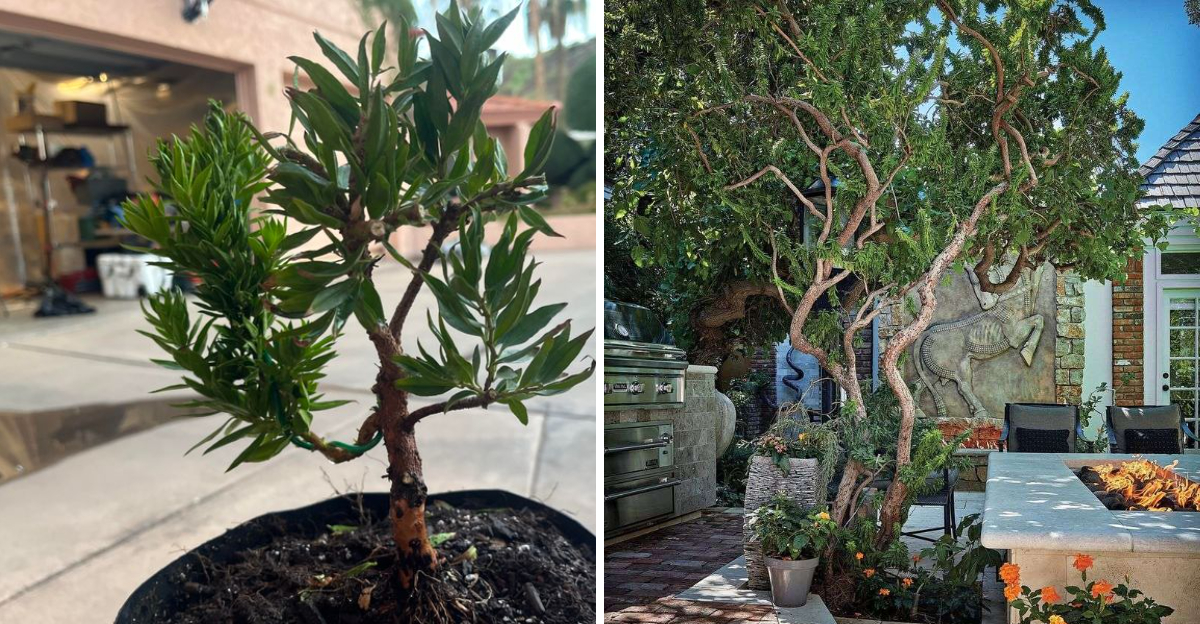
Twisted Myrtle is one of those plants that quietly steals attention in an Arizona landscape. At first glance it looks like a simple evergreen shrub, but the unusual curling branches give it a sculptural look that stands out even among bold desert plants.
While many shrubs focus on flowers for their appeal, Twisted Myrtle keeps interest year-round with its rich green foliage and naturally twisting growth.
That unique structure makes it especially useful in Arizona gardens where texture and form matter just as much as color. It works beautifully along pathways, near patios, or as a focal point where its branches can really be appreciated.
Even during the hottest months, the evergreen foliage helps keep the landscape looking alive and full.
For gardeners looking for something different from the usual desert shrubs, Twisted Myrtle offers character, structure, and year-round greenery that fits surprisingly well into Arizona landscapes.
1. Its Twisted Branches Create A Sculptural Look In The Landscape
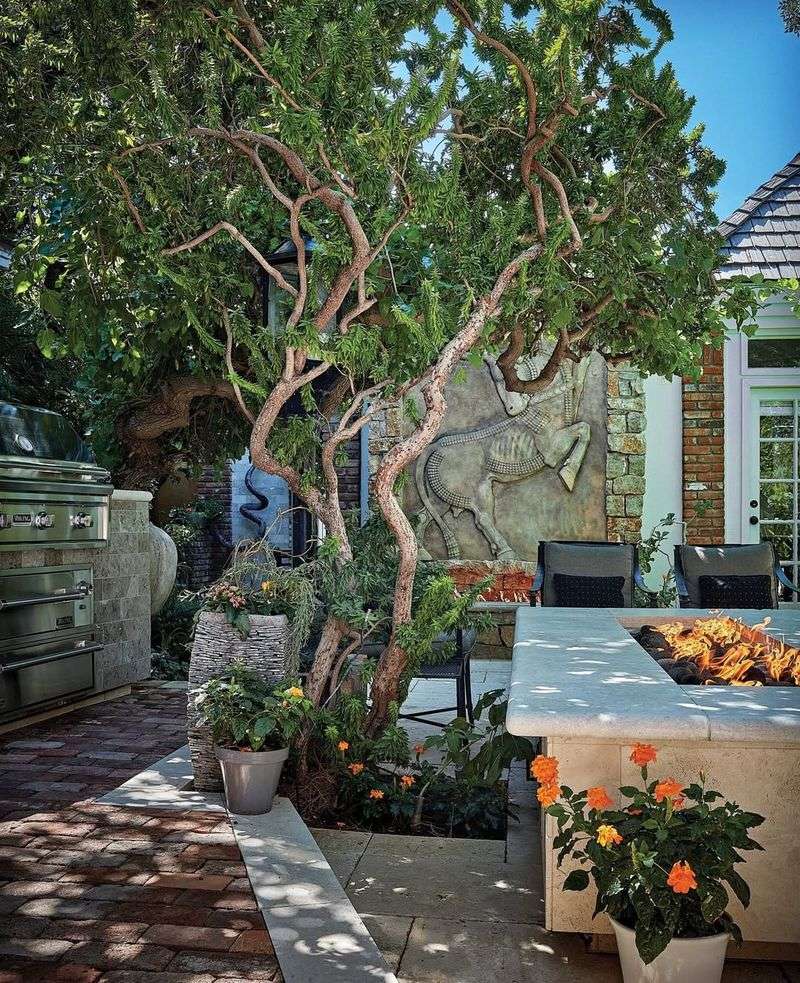
No other common evergreen in Arizona stops people in their tracks quite like Twisted Myrtle does. Those contorted, spiraling branches look less like a typical shrub and more like something a sculptor spent years shaping by hand.
Arizona gardeners who want real visual interest in their yards without going overboard often land on this plant for exactly that reason.
Twisted Myrtle, known botanically as Myrtus communis ‘Boetica,’ grows those signature branches naturally. No wiring, no bending, no training needed.
The form develops on its own, and over time the branching pattern becomes more dramatic and defined. In Phoenix or Scottsdale front yards where most plants blend together, this one reads as a true focal point.
Pair it with smooth river rock or angular concrete and the contrast is striking. The rough, twisted wood against clean hardscape gives any Arizona garden a layered, intentional look.
Even in winter when not much else is happening in the yard, the branch structure alone carries the visual weight of the space.
Smaller gardens benefit from this quality too. You do not need a large property to justify growing a plant with serious architectural presence.
A single Twisted Myrtle in a corner bed or near an entryway can anchor the entire design.
It brings the kind of permanent structure that annuals and seasonal plants simply cannot offer, and in Arizona where year-round curb appeal matters, that consistency is genuinely hard to beat.
2. Glossy Evergreen Leaves Keep Color Year Round
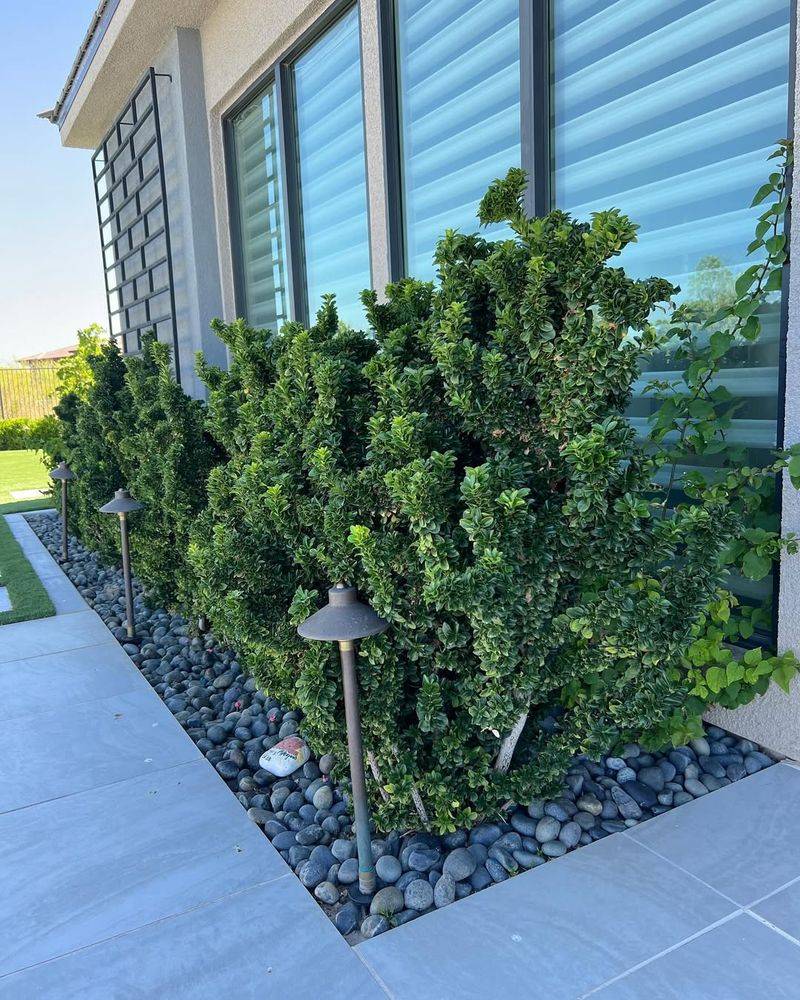
Walk past a Twisted Myrtle in January and it looks exactly the same as it does in July. That consistency is rarer than people think in Arizona landscapes, where many plants go dormant, drop leaves, or fade out during the cooler months.
Glossy, deep green foliage stays present through every season, giving the garden a reliable base of color no matter what time of year it is.
The leaves themselves are small, oval, and packed tightly along each branch. When sunlight hits them at the right angle, they almost seem to shimmer.
In full sun, which Arizona has in abundance, the reflective quality of the foliage is especially noticeable. It adds a brightness to the planting that heavier, matte-leafed shrubs just cannot replicate.
Rub a leaf between your fingers and you get a spicy, aromatic scent that is genuinely pleasant. That sensory detail makes Twisted Myrtle especially appealing near seating areas, walkways, or entry gates where people brush past the plant regularly.
Tucson and Phoenix homeowners who grow it near front doors often mention the fragrance as one of their favorite unexpected bonuses.
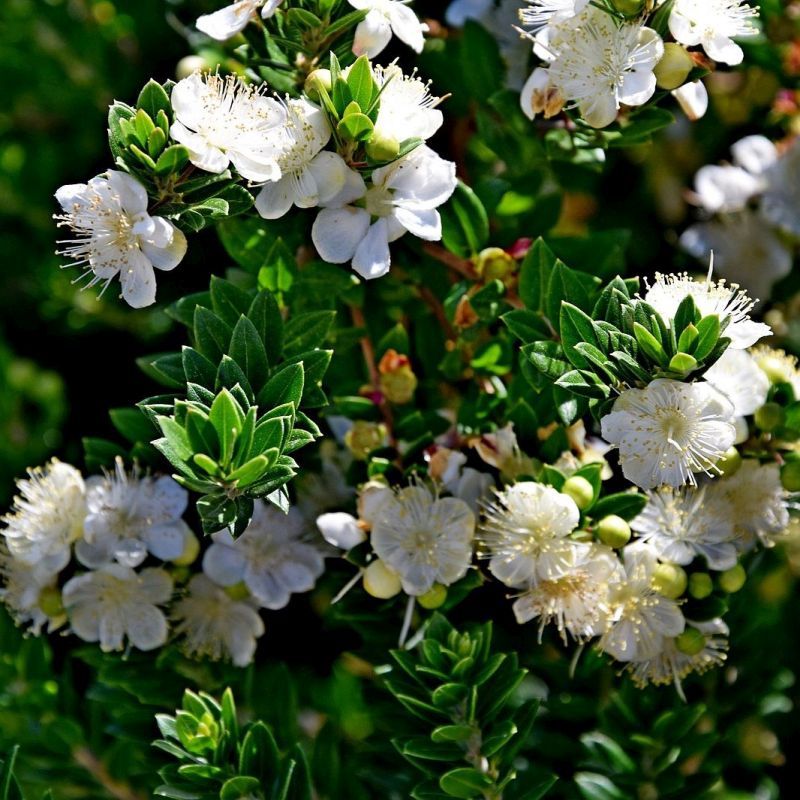
Spring and summer bring small white star-shaped flowers that add even more interest, followed by purplish-black berries in fall. So while the evergreen foliage is the year-round constant, there are seasonal layers stacked on top of it.
For Arizona gardens that need dependable structure plus seasonal variety, this plant covers both without requiring a lot of extra effort from the gardener.
3. Naturally Compact Growth Fits Easily Into Smaller Gardens
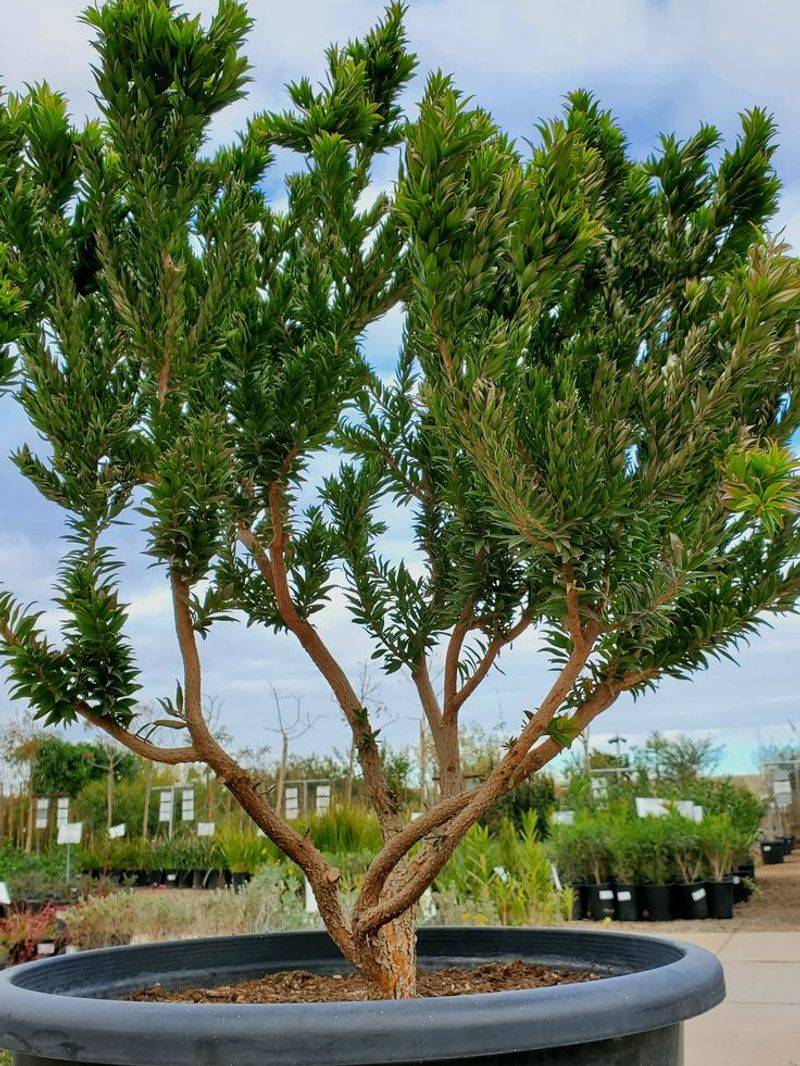
Compact plants are underrated in Arizona landscaping. When your outdoor space is limited, every square foot counts, and planting something that eventually outgrows its spot creates more work than it is worth.
Twisted Myrtle tends to stay in a manageable range, typically reaching around nine to twelve feet tall and wide at full maturity, but it gets there slowly and holds its shape well without aggressive spreading.
For smaller Phoenix or Tempe yards, that growth habit is genuinely useful. You can tuck it into a corner bed, use it as a divider between spaces, or grow it alongside a wall without worrying that it will take over the area in a season or two.
It fills in nicely over time without becoming a problem plant.
Compared to larger Arizona evergreens like oleander or privet that can quickly become overwhelming in tight spaces, Twisted Myrtle stays proportional. Its density is an asset too.
The tight branching creates a full, layered look even when the plant is still relatively young, so you are not staring at a sparse skeleton waiting for years before it looks good.
Gardeners in Chandler and Mesa who are working with townhouse yards or narrow side gardens often appreciate how neatly this plant fits into constrained planting areas.
It is the kind of shrub that respects its boundaries, which sounds like a small thing until you have dealt with plants that do not.
Choosing compact, well-behaved plants is one of the smarter moves you can make in a smaller Arizona landscape.
4. The Unique Shape Adds Character Even Without Flowers
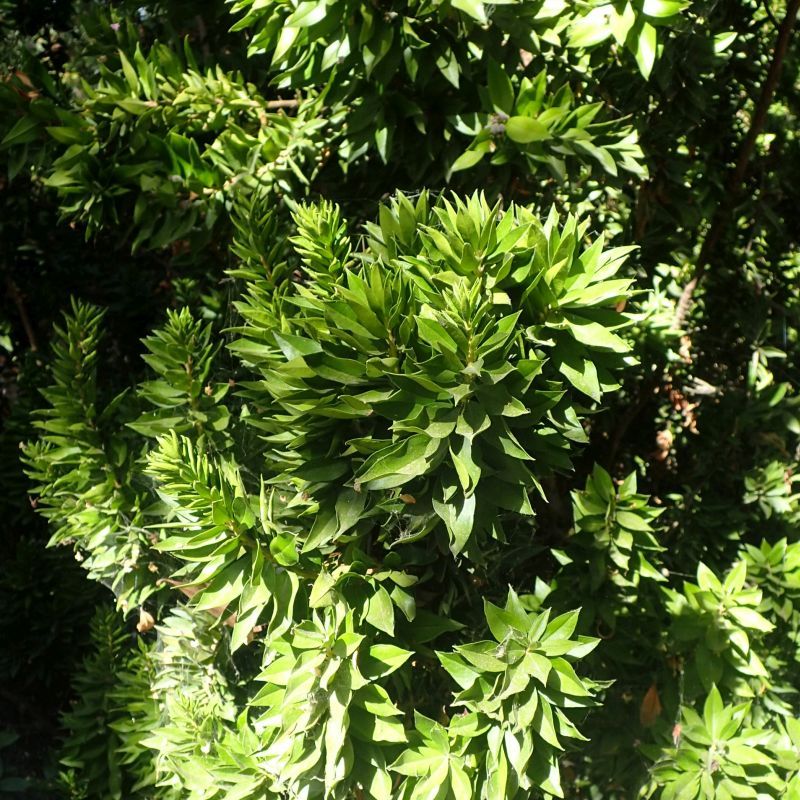
Most flowering shrubs have one job: look good when they bloom. Outside of that window, they tend to fade into the background or look a bit plain.
Twisted Myrtle does not have that problem because its visual appeal is baked into the structure of the plant itself, not just its flowers.
Even on a random Tuesday in February when nothing is blooming, a Twisted Myrtle in your Arizona garden still draws the eye. The branching pattern is genuinely unusual.
Branches curve, overlap, and spiral in ways that feel almost deliberate, as if someone designed the plant to look interesting from every angle. It reads as a piece of living sculpture rather than just filler greenery.
That quality matters a lot in desert landscapes where seasonal color can be limited. Many Arizona gardeners rely heavily on flowering plants for visual interest, but flowers are temporary.
When the blooms fade, what is left needs to carry the garden on its own. Twisted Myrtle handles that responsibility without any help.
Pair it with ornamental grasses or low-growing succulents and the contrast in texture and form becomes a design feature in itself.
The twisted woody structure against the soft movement of grasses or the geometric shapes of agave creates a composition that feels thoughtful and intentional.
You do not need a professional landscape designer to pull that off. Picking plants with strong individual character, the way Twisted Myrtle has, does most of the design work for you in Scottsdale and beyond.
5. Once Established It Handles Heat And Dry Conditions Well
Arizona summers are not gentle. Temperatures regularly push past 110 degrees in Phoenix, and the dry air pulls moisture out of plants fast.
Most of the evergreens you might find at a big-box garden center simply were not built for that kind of punishment. Twisted Myrtle, with its Mediterranean roots, actually comes from a climate that prepares it well for exactly these conditions.
Once the root system gets established in Arizona soil, this plant handles heat and dry spells with real toughness. During the hottest months, watering every seven to ten days is generally enough to keep it healthy.
If temperatures push above 100 degrees for extended stretches, bumping that up slightly helps, but you are not dealing with a plant that needs daily attention to survive a Phoenix summer.
Mediterranean plants like Twisted Myrtle evolved in places with hot, dry summers and mild, wetter winters. That pattern lines up reasonably well with what Arizona delivers.
The plant knows how to conserve moisture, push through heat stress, and recover without much intervention. For Arizona gardeners trying to reduce water use, that adaptability is a genuine advantage.
Getting through the first season is the most important part. New plants need consistent watering while their roots spread and anchor into the ground.
After that first establishment phase, the plant becomes notably more self-sufficient. Gardeners in Tucson and Gilbert who have grown it for a few years often describe it as one of the more reliable evergreens in their yard once it gets past that initial period.
6. Works Well As A Statement Plant In Containers Or Garden Beds
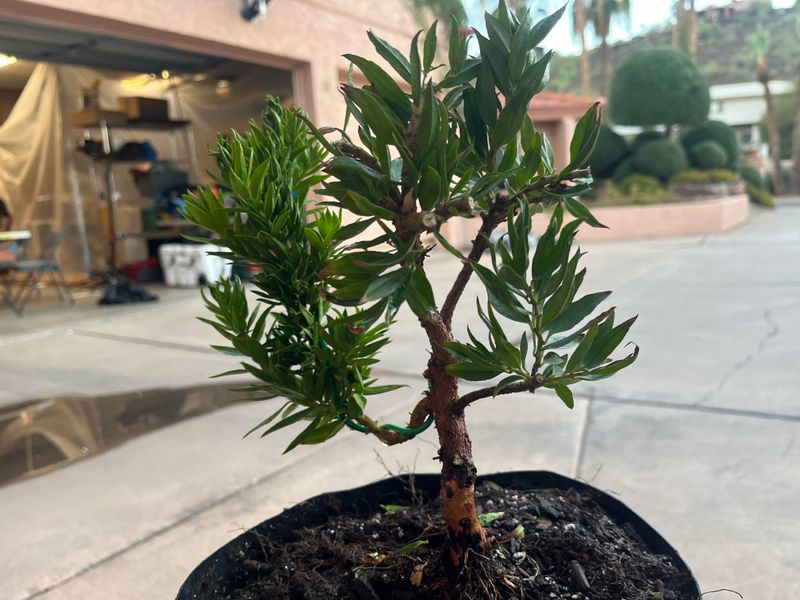
Not every great garden plant has to go straight into the ground. Twisted Myrtle handles container life surprisingly well, and for Arizona homeowners with patios, courtyards, or tiled entryways, that flexibility opens up a lot of creative options.
A large ceramic or concrete pot with a well-shaped Twisted Myrtle becomes an instant focal point without requiring any additional decoration around it.
Containers also give you control over soil quality, which matters in parts of Arizona where native soil can be alkaline or compacted. Mixing a quality well-draining potting blend gives the roots a better environment than some in-ground spots can offer.
Just make sure the container has drainage holes, because standing water is one of the few things this plant genuinely dislikes.
In garden beds, Twisted Myrtle earns its spot as a specimen plant rather than a background filler. Plant it where people naturally look, near a gate, at the end of a path, or in the center of a bed surrounded by lower-growing plants.
Its height and form give it a natural presence that commands attention without overwhelming the surrounding planting.
Scottsdale and Paradise Valley homeowners who lean toward a more structured, Mediterranean-style landscape often use Twisted Myrtle as an anchor plant.
It fits that aesthetic naturally, bridging the gap between formal and organic without looking forced.
Whether you are working with a sleek modern garden or a more relaxed desert-style yard, this plant adapts to the design around it while still maintaining its own distinct personality and visual weight.
7. Light Pruning Helps Maintain Its Distinctive Twisted Form
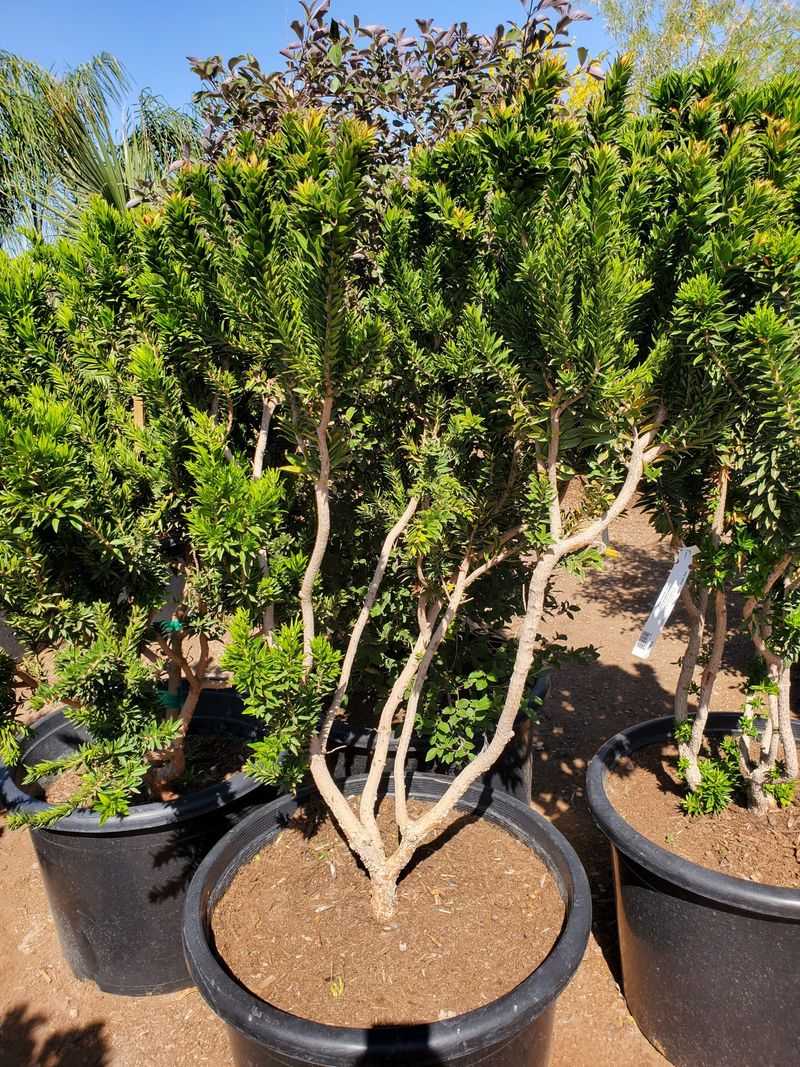
Pruning Twisted Myrtle is less about controlling the plant and more about revealing what is already there. Heavy shearing into a ball or box shape would actually work against the whole point of growing this plant.
What you want is to open up the interior a bit, remove any crossing or cluttered branches, and let the twisted structure breathe and show itself more clearly.
Light pruning works best in late winter or early spring before new growth kicks in. At that point in the Arizona growing season, the plant is preparing to push out fresh leaves and possibly flowers, so any shaping you do gets quickly softened by new growth.
It is a forgiving window to work in, and even gardeners who are cautious about pruning can feel confident making modest cuts without stressing the plant.
Using clean, sharp hand pruners rather than hedge trimmers gives you far more precision. Select individual branches to remove rather than shearing the surface.
Step back every few cuts and look at the overall form before continuing. The goal is to enhance the natural shape, not impose a new one on top of it.
Arizona gardeners who take a hands-off approach to pruning often find that Twisted Myrtle looks better for it. Some years you might only need to remove a few wayward branches or clear out older wood from the interior.
Other years the plant barely needs touching at all. Trusting the plant to do its own thing, with just occasional guidance, tends to produce the most satisfying results in Phoenix, Tucson, and everywhere in between.