Why Woodpeckers Keep Drilling Trees In Michigan Neighborhoods
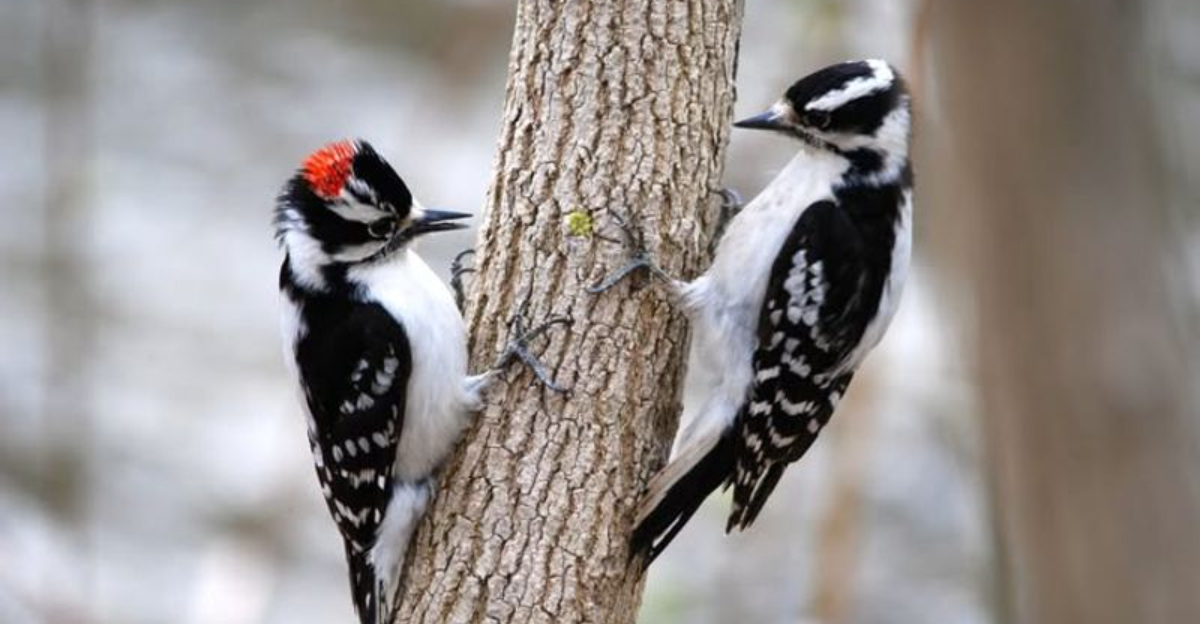
The steady tap tap tap echoing through a Michigan neighborhood can drive anyone up the wall.
One quiet morning, a woodpecker shows up and treats a tree like a drum set, and suddenly the whole block notices.
While it may seem like random chaos, this behavior follows a clear pattern in the natural world.
Woodpeckers drill trees for good reasons.
Beneath the bark, insects hide and thrive, offering an easy meal.
Trees also serve as message boards, helping woodpeckers mark territory and attract mates.
In Michigan, seasonal shifts, aging trees, and expanding neighborhoods create the perfect setup for this activity to pick up speed.
As weather cools or warms, food sources move, and woodpeckers adapt fast.
Neighborhood trees often offer shelter from predators and steady feeding spots.
What feels like a nuisance is often a sign of changes happening beneath the surface.
Understanding why woodpeckers keep drilling can ease frustration and prevent knee-jerk reactions.
When you see the bigger picture, that nonstop tapping becomes less of a mystery and more of a signal about tree health, wildlife behavior, and the shifting balance between nature and everyday suburban life.
1. Searching For Insects And Larvae Beneath The Bark
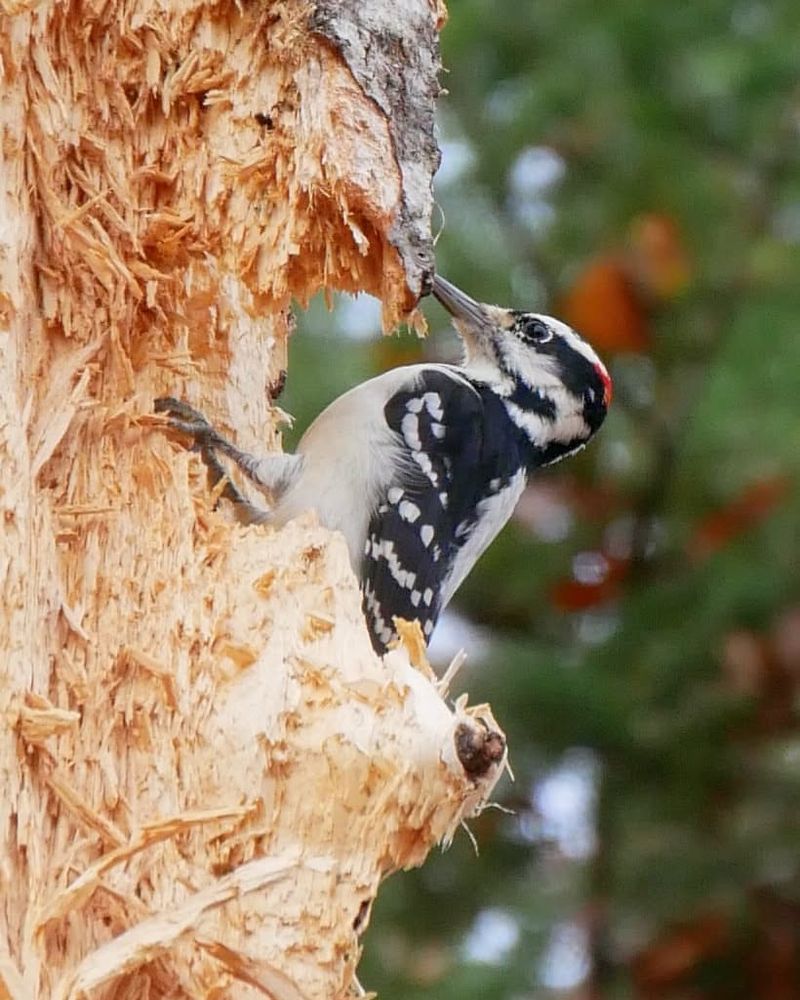
Hunger drives much of what woodpeckers do, and Michigan trees are like fully stocked pantries for these clever birds.
Beneath the bark of oak, maple, and pine trees live countless insects, beetle larvae, and wood-boring bugs that make perfect meals.
Woodpeckers have evolved to detect these hidden snacks using their incredible hearing and can sense the tiny vibrations insects make as they move through the wood.
Once a woodpecker locates a promising spot, it uses its strong, chisel-like beak to drill through the bark and reach the tasty treats inside.
Their long, sticky tongues can extend several inches beyond their beaks, allowing them to extract insects from deep crevices.
This feeding behavior is especially common during spring and summer when insect populations are thriving in Michigan neighborhoods.
Homeowners often worry that this drilling means their trees are unhealthy, but it’s usually the opposite.
Woodpeckers are actually helping by removing harmful pests that could damage the tree further.
Trees infested with emerald ash borers, carpenter ants, or beetle larvae often attract more woodpecker activity.
In Michigan, where forests and suburban areas blend together, woodpeckers have adapted well to finding food in residential trees.
They’re not picky eaters either, spiders, termites, and even tree sap can end up on their menu.
This natural pest control service makes woodpeckers valuable neighbors, even if their drilling sounds disruptive at times.
2. Creating Nesting Cavities For Raising Young Birds
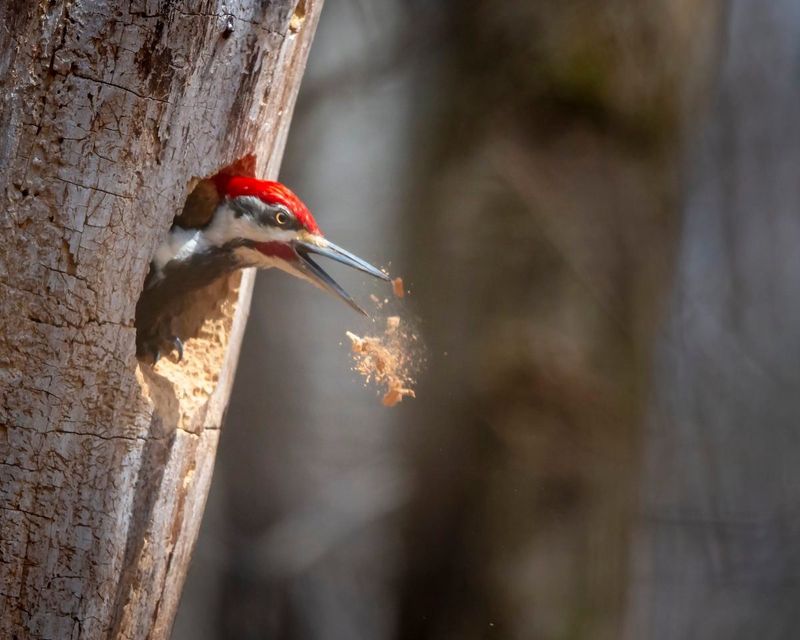
Every spring, woodpeckers across Michigan get busy with one of their most important tasks: building a home for their babies.
Unlike other birds that gather twigs and leaves, woodpeckers excavate their own nesting cavities directly into tree trunks.
This process requires weeks of persistent drilling and can create quite a racket in quiet neighborhoods.
Both male and female woodpeckers work together to carve out these cavities, typically choosing dry or decaying trees because the wood is softer and easier to penetrate.
The entrance hole is usually just big enough for the adult bird to squeeze through, which helps protect the nest from predators.
Inside, they create a cozy chamber where eggs will be laid and chicks will grow.
Michigan’s diverse tree species provide excellent nesting opportunities, especially older trees with heartwood that’s starting to soften.
Downy woodpeckers, hairy woodpeckers, and red-bellied woodpeckers are all common nesters in the state.
Once the nesting season ends, these cavities don’t go to waste, other birds, squirrels, and even small mammals often move in.
If you notice a woodpecker working on the same spot repeatedly during late winter or early spring, it’s likely preparing a nursery.
This behavior is completely natural and essential for the species’ survival.
The drilling might seem excessive, but it’s all part of raising the next generation of woodpeckers in your Michigan neighborhood.
3. Drumming To Establish Territory And Attract Mates
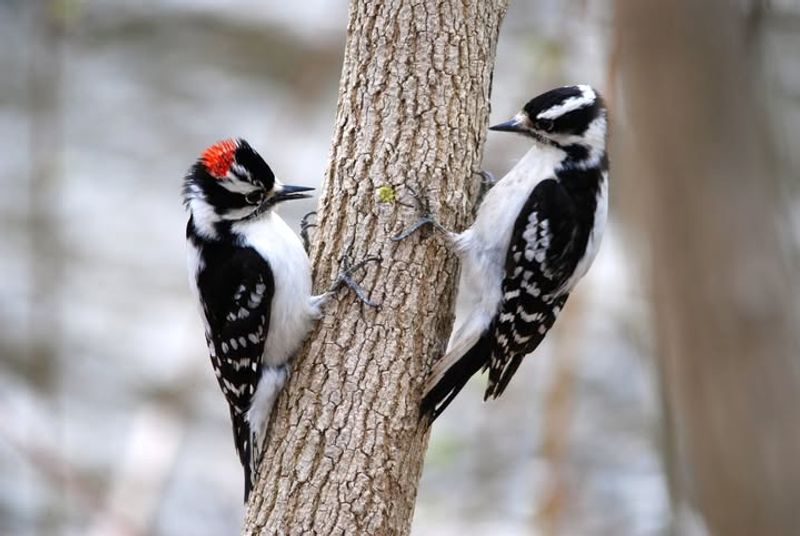
Not all woodpecker drilling is about food or shelter, sometimes it’s about sending a message.
Male woodpeckers engage in a behavior called drumming, which involves rapid pecking on resonant surfaces to create loud, rhythmic sounds.
This isn’t random noise; it’s actually a form of communication that serves two crucial purposes in Michigan’s bird communities.
First, drumming announces to other males that a particular territory is already claimed.
Woodpeckers are quite territorial, especially during breeding season, and they need to establish clear boundaries.
The louder and more frequent the drumming, the stronger the message to potential rivals.
Michigan neighborhoods provide plenty of resonant surfaces, metal gutters, chimney caps, and hollow trees, that amplify these territorial declarations.
Second, drumming helps attract female woodpeckers.
Just like songbirds use melodies to court mates, woodpeckers use percussion.
A male with a strong, consistent drumming pattern demonstrates his health and vigor, making him more attractive to potential partners.
This courtship drumming typically peaks in late winter and early spring across Michigan.
Homeowners sometimes mistake drumming for destructive behavior, but it rarely causes significant damage.
Woodpeckers choose their drumming spots based on acoustics, not nutrition.
If you hear repetitive, rapid pecking that sounds almost musical, you’re witnessing this fascinating communication ritual.
Understanding this behavior helps Michigan residents appreciate why these birds are so vocal during certain seasons.
4. Storing Food In Trees For Later Consumption
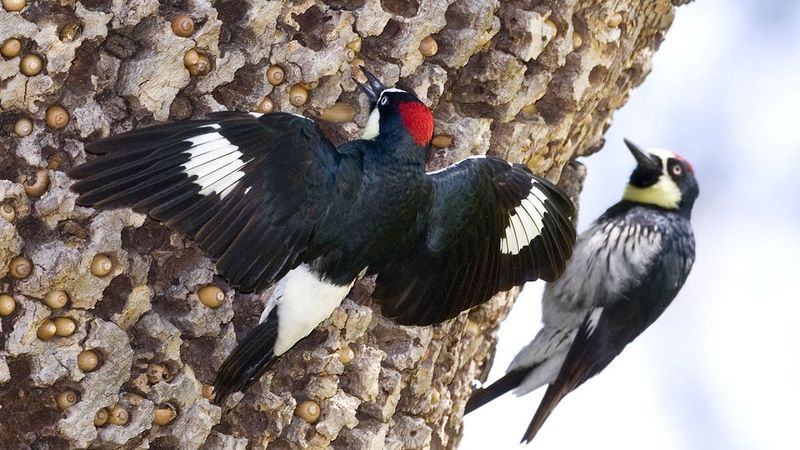
Some woodpecker species have developed an impressive survival strategy that involves turning trees into natural refrigerators.
Acorn woodpeckers and some other varieties drill small, precise holes into tree bark specifically for food storage.
While acorn woodpeckers are less common in Michigan than in western states, similar caching behavior occurs with local species storing insects, seeds, and nuts.
This behavior is called granary storage, and it’s absolutely fascinating to observe.
Woodpeckers will drill dozens or even hundreds of small holes in a single tree, then carefully wedge food items into each opening.
The tight fit prevents other animals from stealing the stored food and keeps it preserved for weeks or months.
Michigan’s cold winters make this strategy particularly valuable.
Red-headed woodpeckers, which are found throughout Michigan, are known for caching grasshoppers, beetles, and seeds in tree crevices and under bark.
They have excellent spatial memory and can remember exactly where they’ve hidden their food supplies.
This allows them to survive periods when fresh food is scarce, particularly during harsh Michigan winters.
If you notice a tree in your neighborhood with numerous small, neat holes filled with acorns or other items, you’re looking at a woodpecker’s pantry.
This drilling serves a completely different purpose than feeding or nesting, and it demonstrates the remarkable intelligence and planning ability of these birds.
It’s nature’s version of meal prep happening right in Michigan backyards.
5. Excavating Roosting Sites For Nighttime Shelter
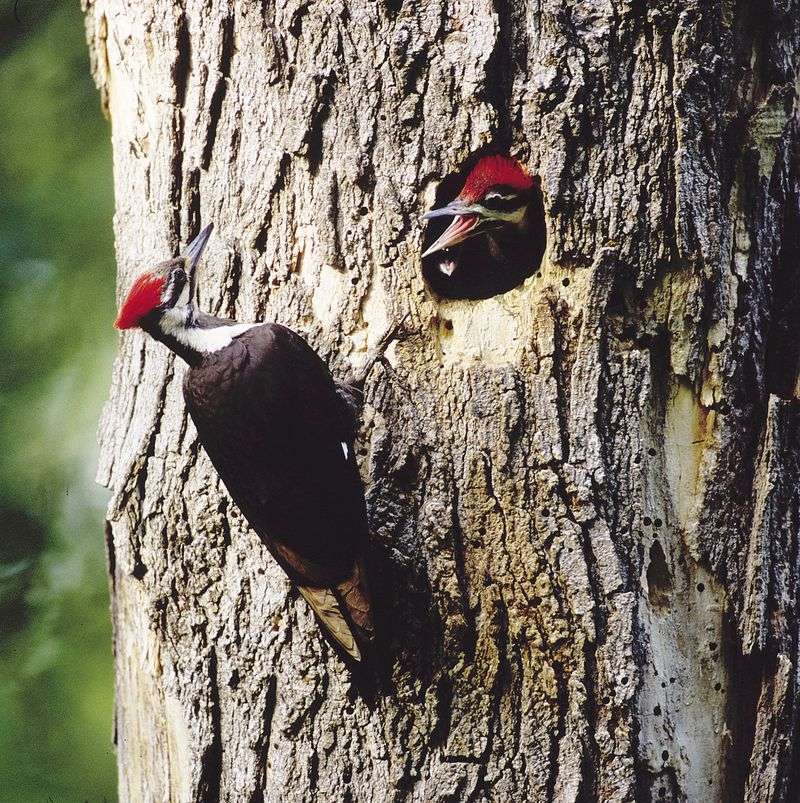
When the sun sets over Michigan neighborhoods, woodpeckers need safe places to sleep, and they create these havens themselves through careful excavation.
Roosting cavities differ from nesting cavities, they’re used year-round by individual birds seeking protection from predators, cold temperatures, and harsh weather.
Michigan’s freezing winters make these shelters absolutely essential for survival.
Woodpeckers typically excavate roosting holes in dry trees, though they’ll sometimes use existing cavities if available.
These chambers are usually smaller and less elaborate than nesting sites since they only need to accommodate one bird.
The entrance faces away from prevailing winds, and the interior provides insulation against Michigan’s bitter cold nights.
During particularly harsh winter weather, a well-constructed roosting cavity can mean the difference between survival and freezing.
Woodpeckers will return to the same roosting spot night after night, sometimes for years.
They may excavate multiple roosting sites throughout their territory, giving them options depending on weather conditions and food availability.
If you observe a woodpecker entering and exiting the same tree hole at dawn and dusk, you’re likely watching its nightly routine.
This behavior is most noticeable during fall when woodpeckers prepare their winter accommodations.
Michigan residents might hear drilling activity in the late afternoon as birds make last-minute adjustments to their sleeping quarters.
These roosting sites represent significant investments of time and energy, showing just how important proper shelter is to woodpecker survival.
6. Responding To Diseased Or Infested Trees In The Area
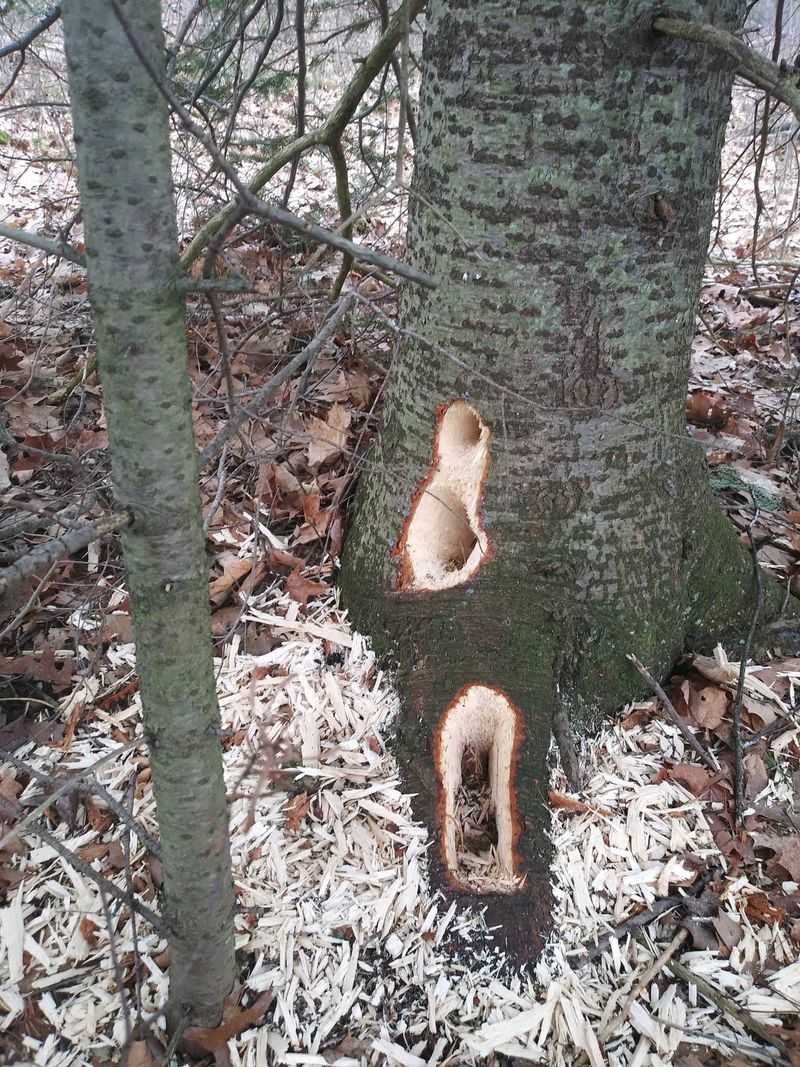
Woodpeckers possess an almost supernatural ability to detect troubled trees, and Michigan neighborhoods with aging or stressed trees often see increased woodpecker activity.
These birds act like nature’s tree doctors, identifying diseased, or insect-infested trees long before humans notice any problems.
Their drilling behavior often serves as an early warning system for homeowners.
Trees weakened by disease or infestation become softer and easier to penetrate, making them attractive targets for woodpeckers seeking food.
Emerald ash borers have devastated Michigan’s ash tree population, and woodpeckers have been observed heavily working these compromised trees.
The insects living inside diseased trees provide abundant food sources that draw woodpeckers from considerable distances.
When a tree’s immune system is compromised, it can’t produce the same defensive compounds that would normally deter wood-boring insects.
This creates a perfect storm, more insects attract more woodpeckers, leading to increased drilling activity.
Michigan homeowners sometimes blame woodpeckers for tree damage, but the birds are usually responding to problems that already existed.
Interestingly, woodpecker activity can actually help property owners identify which trees need attention.
If you notice concentrated drilling on a particular tree in your Michigan yard, it’s worth having an arborist examine it.
The tree might be harboring pests or disease that require treatment.
Rather than viewing woodpeckers as pests themselves, consider them helpful indicators of your landscape’s health and valuable partners in maintaining Michigan’s urban forests.
7. Accessing Tree Sap As A Nutritious Food Source
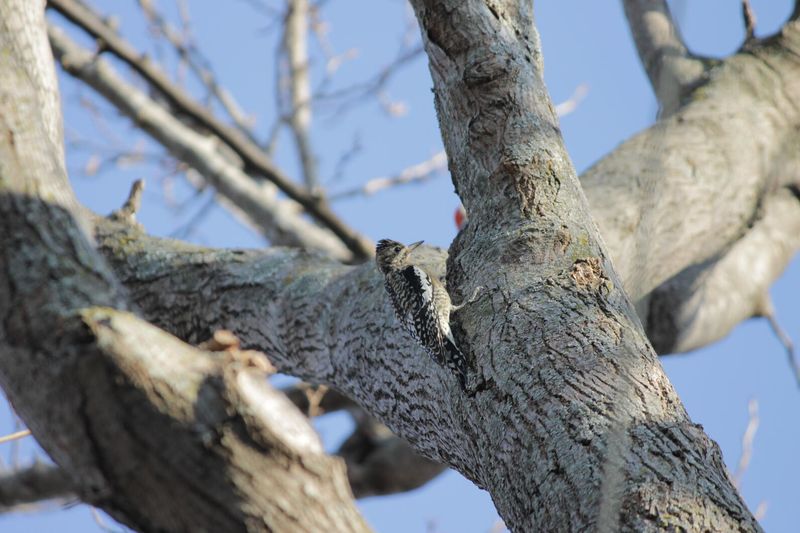
Yellow-bellied sapsuckers, true to their name, have developed a unique feeding strategy that involves drilling specialized holes to access tree sap.
These woodpeckers are common throughout Michigan, especially during migration seasons, and their drilling patterns are distinctly different from other species.
Instead of random pecking, sapsuckers create neat, horizontal rows of small holes called sap wells.
Tree sap provides essential sugars and nutrients, particularly during early spring when insects are still scarce in Michigan.
Sapsuckers drill through the bark just deep enough to reach the phloem layer where sugary sap flows.
They return to these wells repeatedly, licking up the sap that accumulates and any insects attracted to the sweet liquid.
It’s an efficient two-for-one feeding strategy.
The drilling pattern of sapsuckers is so distinctive that experienced observers can identify their work at a glance.
The neat rows of holes typically appear on birch, maple, and apple trees throughout Michigan neighborhoods.
While this activity rarely causes serious harm to healthy trees, heavily targeted trees may show some stress.
The wounds usually heal naturally once the sapsucker moves on.
Interestingly, other animals benefit from sapsucker wells too.
Hummingbirds, butterflies, and even squirrels visit these sap sources, making sapsuckers important contributors to Michigan’s ecosystem.
If you notice perfectly aligned holes in your trees during spring or fall, you’ve likely hosted a sapsucker.
This specialized drilling behavior showcases the remarkable diversity of woodpecker feeding strategies found right in Michigan backyards.
8. Exploring And Investigating Potential Food Sources
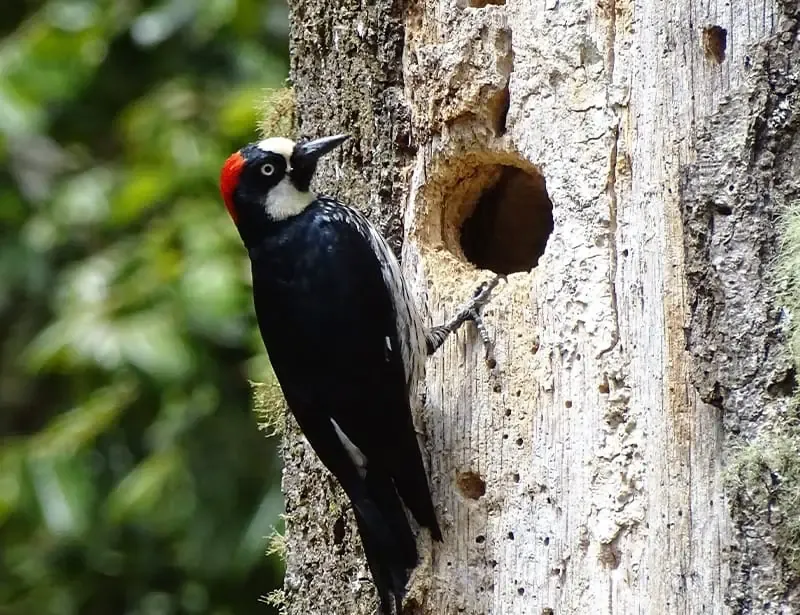
Curiosity drives much of woodpecker behavior, and these intelligent birds spend considerable time exploring and testing potential food sources throughout Michigan neighborhoods.
Not every drilling session results in a meal or nesting site, sometimes woodpeckers are simply investigating whether a particular tree or branch might be worth their effort.
This exploratory behavior explains why you might see scattered, shallow holes that seem random.
Woodpeckers use a combination of visual cues, sound, and even smell to evaluate trees.
They’ll tap lightly on bark to listen for hollow spaces that might indicate insect galleries or softer wood suitable for excavation.
Michigan’s diverse forest composition means woodpeckers encounter many different tree species, each with unique characteristics.
Learning which trees offer the best resources requires this kind of hands-on investigation.
Young woodpeckers, in particular, engage in exploratory drilling as they learn their craft.
They haven’t yet developed the expertise to identify ideal feeding or nesting sites on sight, so they experiment with different trees, bark types, and drilling techniques.
This trial-and-error learning process is essential for their development and survival in Michigan’s competitive environment.
Homeowners sometimes interpret this exploratory behavior as aggressive or destructive, but it’s actually quite normal and usually harmless.
The shallow test holes rarely damage healthy trees and often go unnoticed unless you’re specifically looking for them.
This investigation represents woodpeckers adapting to their Michigan habitat, constantly gathering information about available resources and adjusting their behavior accordingly throughout the changing seasons.