Why Your Ohio Lawn Looks Brown In March (And When To Worry)
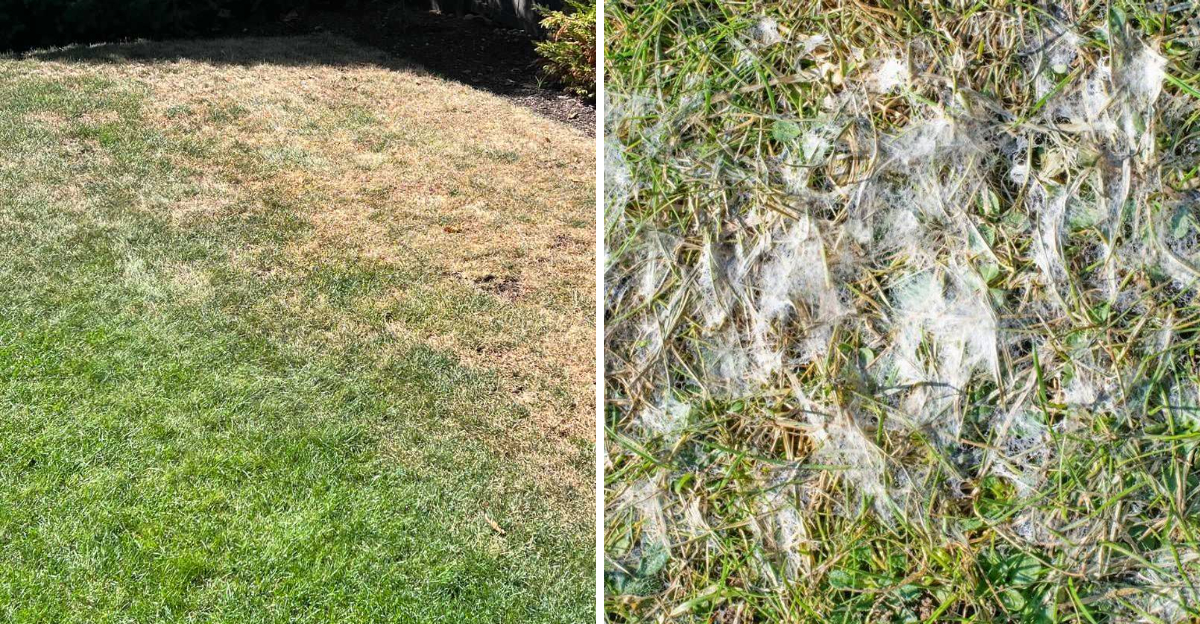
Ever look out at your Ohio lawn in March and wonder why it looks so brown? You’re not imagining things: this patchy, faded color is completely normal at this time of year.
But before you rush to fertilize, it helps to understand what’s happening beneath the surface.
Some browning is just your lawn resting and preparing for spring growth, while other signs could mean it needs a little extra care. Knowing the difference can save you time, money, and a lot of stress.
Stick around, and we’ll explain why your lawn looks like this now, and how to tell when it’s worth paying attention to.
1. Blame Dormant Cool Season Grass Not A Failing Lawn
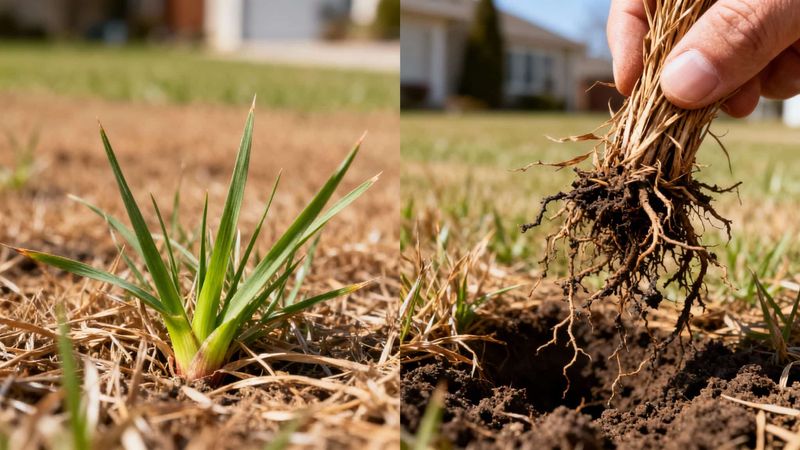
Kentucky bluegrass and tall fescue are the backbone of most Ohio lawns, and both are cool-season grasses with a built-in survival strategy: dormancy. When soil temperatures drop consistently below 40 degrees Fahrenheit in late fall and stay there through winter, these grasses slow down cellular activity and stop producing chlorophyll.
That is what turns your lawn brown.
According to Ohio State University Extension, this is a completely normal and healthy response. The grass crown, which is the growing point just at or below the soil surface, stays alive through dormancy even when the blades look completely gone.
Think of it like a bear hibernating. The body is still there, just resting.
In Ohio, soil temperatures in most regions stay below active growth thresholds well into March. Cleveland and Columbus lawns can stay dormant longer than lawns in southern Ohio near Cincinnati due to latitude and microclimates.
Browning that is uniform across the entire lawn, without irregular spots or unusual textures, is almost always dormancy. If your lawn looked healthy going into November, a uniformly brown March lawn is a good sign, not a bad one.
Patience is the right move here.
2. Trust March Browning As A Normal Cycle In Ohio
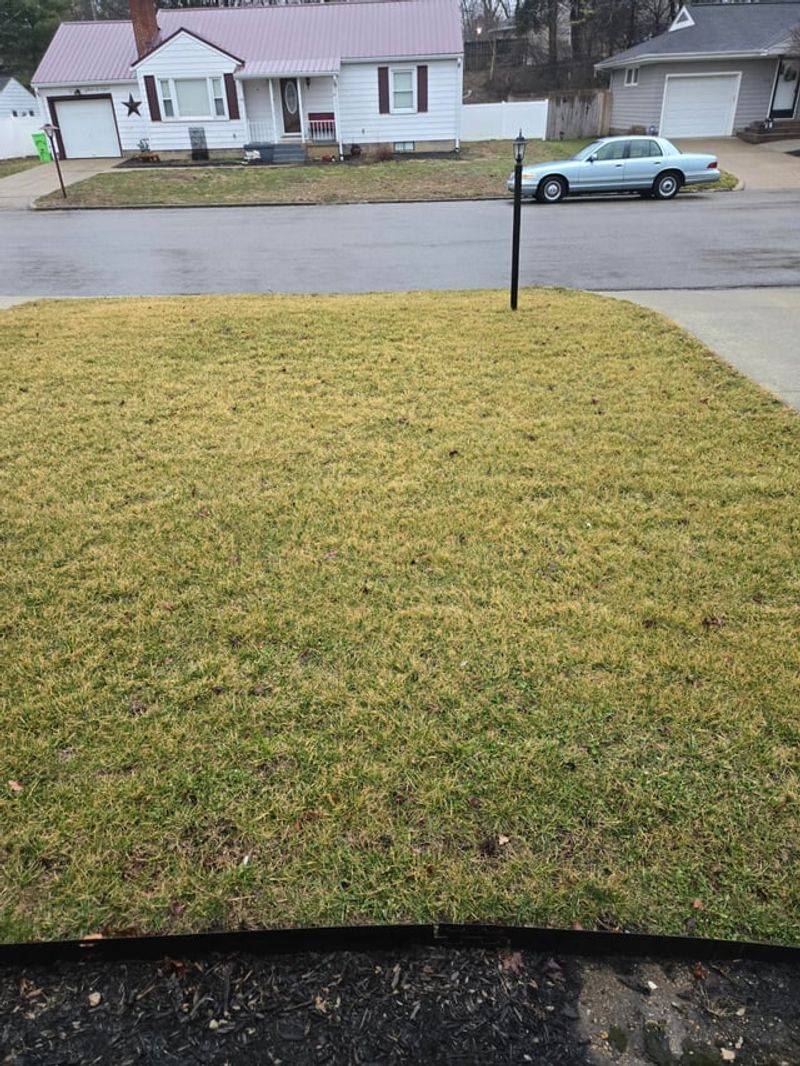
Seasonal color change in Ohio lawns follows a reliable pattern that repeats year after year. Cool-season grasses green up in fall, go dormant and brown through winter, and then slowly return to green as spring soil temperatures climb.
Most Ohio homeowners see meaningful green return somewhere between late March and mid-April, depending on the year and location.
Research from turfgrass science consistently shows that cool-season grass color in late winter is driven almost entirely by soil temperature, not air temperature. A warm week in early March can fool you into thinking spring has arrived, but if soil temps are still hovering in the mid-30s, the grass is not going to respond.
OSU turf specialists note that homeowners often overreact to March browning precisely because the air feels warmer before the soil catches up.
A good way to set realistic expectations is to keep a simple lawn journal. Note when your grass first showed meaningful green each spring over a few years.
Most Ohio lawns follow a consistent pattern tied to local conditions. That historical data is far more useful than comparing your lawn to a neighbor’s or to social media photos taken in warmer states.
Your lawn’s timeline is its own.
3. Hold Off On Watering Until Soil Temperatures Rise
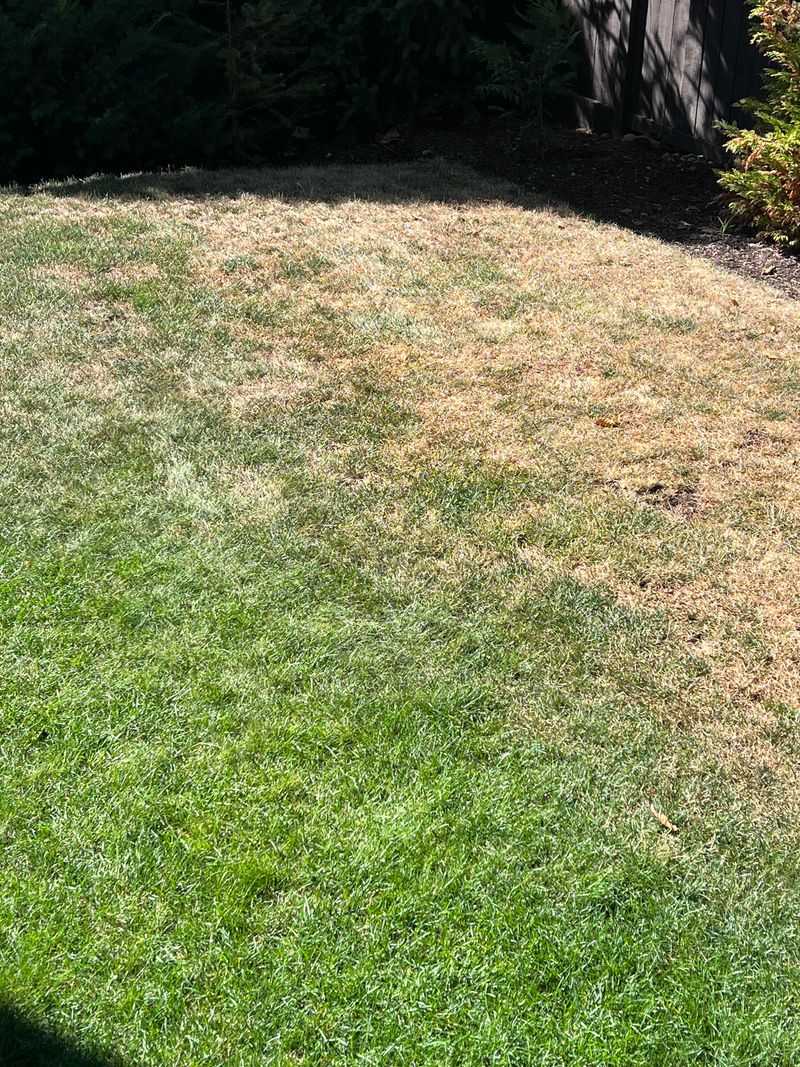
Grabbing the hose in March feels productive, but watering a dormant Ohio lawn before soil temperatures support active growth can create more problems than it solves. Dormant grass does not absorb water efficiently.
Instead, excess moisture sits in the soil profile, increases the risk of fungal activity, and can contribute to compaction in clay-heavy Ohio soils that are still partially frozen.
The general guideline from turfgrass science is to hold off on supplemental irrigation until soil temperatures at the two-inch depth consistently reach 50 degrees Fahrenheit. At that point, roots begin actively growing again and can use the water.
Before that threshold, watering is largely wasted and potentially harmful.
Ohio’s natural precipitation in March is typically adequate for dormant turf. Average March rainfall across the state ranges from about 2.5 to 3.5 inches, which is usually sufficient to keep dormant crowns hydrated without supplemental watering.
If you are seeing a dry stretch with no rain and temperatures are climbing, a light watering once per week is acceptable. But resist the urge to water on a summer schedule in early spring.
Your lawn will signal when it is ready for regular moisture by actively growing and responding with new green blade production.
4. Inspect For Snow Mold After Snow Melt
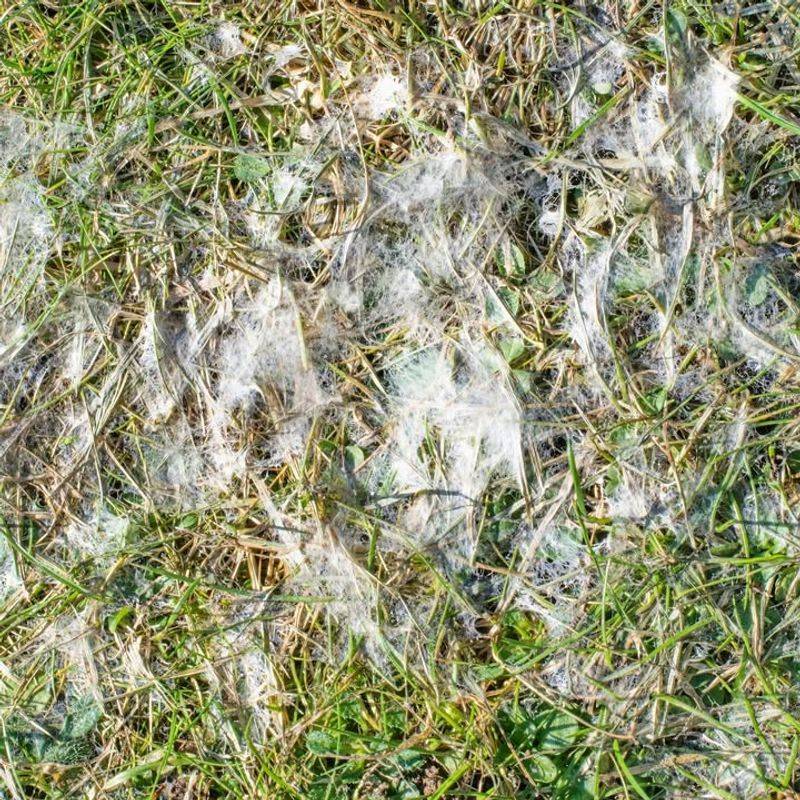
Once the snow pulls back from an Ohio lawn, most homeowners expect to see brown dormant grass. What they do not expect are circular, matted patches with a grayish or pinkish tinge that look almost fuzzy up close.
That is snow mold, and it is more common in Ohio than many people realize.
Gray snow mold, caused by the fungus Typhula spp., thrives under prolonged snow cover, especially when snow falls on unfrozen ground. Pink snow mold, caused by Microdochium nivale, can develop without snow cover during cool, wet periods.
Both leave behind matted circular patches ranging from a few inches to over a foot in diameter. The grass blades stick together and resist separating.
OSU Extension recommends light raking as the first response to snow mold. Gently lifting the matted turf with a leaf rake improves airflow around the crowns and helps the affected area dry out.
Most snow mold in Ohio resolves on its own as temperatures rise and the lawn dries. Fungicide applications in spring after the fact are generally not recommended by OSU specialists since the disease has already run its course.
The real concern is whether the crowns survived, which becomes clearer once soil temps climb above 50 degrees.
5. Rake Lightly To Lift Matted Turf
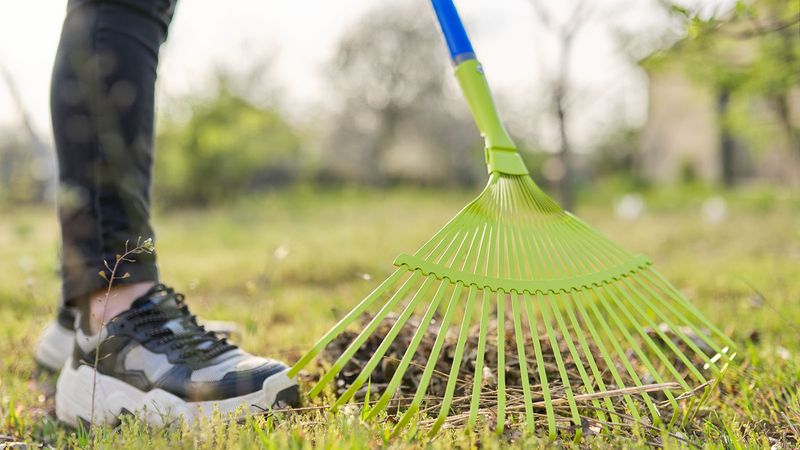
Light raking is one of the most underrated early spring lawn tasks in Ohio. Over a long winter, grass blades mat down under snow weight, foot traffic, and accumulated debris.
That matting blocks sunlight and traps moisture right at the crown level, which is exactly where you do not want standing moisture once temperatures start fluctuating.
The key word here is light. Aggressive raking or dethatching in early March, before the crowns have had a chance to firm up with active growth, can physically damage the growing points of cool-season grasses.
OSU turf guidance suggests waiting until the ground is no longer soft and saturated before raking, which in Ohio typically means late March to early April in most regions.
Use a standard leaf rake rather than a metal thatching rake for this early pass. Walk in one direction and use a gentle lifting motion rather than a hard scraping action.
The goal is to stand blades upright and allow air circulation, not to remove thatch. Thatch management is a separate task better suited for fall in Ohio.
A light spring rake also helps you spot problem areas like snow mold patches, low spots holding water, or areas where salt damage has created distinct brown stripes near driveways and sidewalks.
6. Wait For Steady Fifty Degree Soil Temps Before Judging
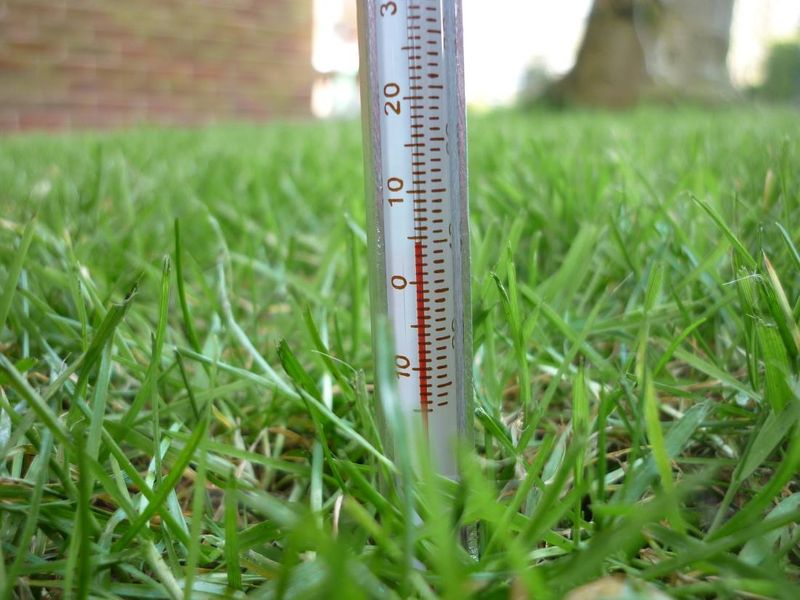
Soil temperature is the single most reliable indicator of where your Ohio lawn stands in the seasonal cycle. Air temperatures can swing 30 degrees in a single March week in Ohio, but soil temperatures change slowly and tell the real story.
Turfgrass science consistently points to 50 to 55 degrees Fahrenheit at the two-inch depth as the threshold for active cool-season grass growth.
Below 50 degrees, Kentucky bluegrass and fescue are essentially in a holding pattern. Root growth is minimal, nutrient uptake is limited, and blade production is slow to nonexistent.
Judging your lawn’s health before soil temps hit that benchmark is like judging whether a car works while the engine is still cold. You simply cannot get an accurate read.
Checking soil temperature is straightforward. An inexpensive soil thermometer from any garden center works well.
Push the probe two inches into the ground in the morning, which is when soil temps are most stable, and take readings from several spots across your lawn. OSU Extension and the National Weather Service also publish regional soil temperature data online, which is useful for Ohio homeowners who want a broader picture.
Once you see consistent readings above 50 degrees for several days in a row, your lawn is waking up and you can begin making real assessments about its condition.
7. Check Low Spots For Ice Damage
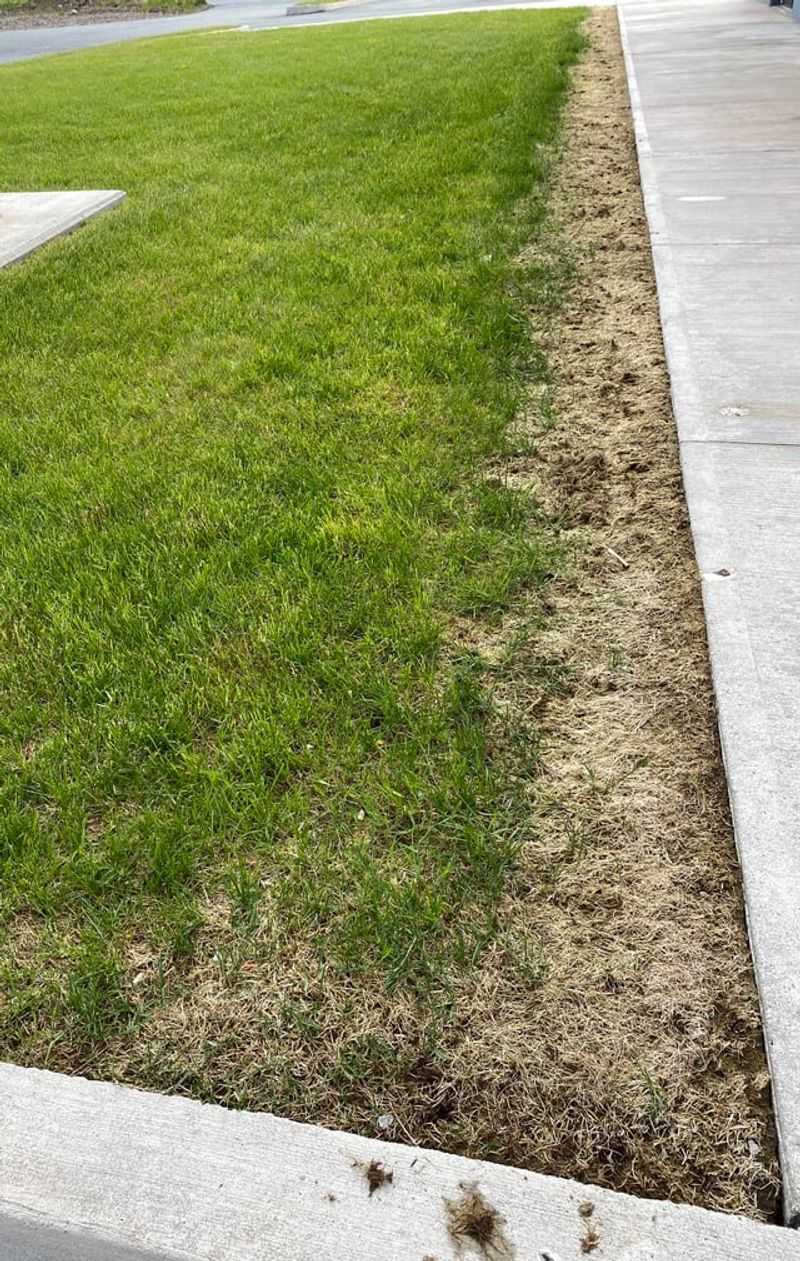
Not all brown patches in an Ohio March lawn are created equal. Low spots, areas near downspout outlets, and sections of lawn along north-facing slopes often hold ice and water far longer than the rest of the yard.
That extended ice contact creates a specific type of turf stress that looks different from normal dormancy.
Ohio’s freeze-thaw cycles are particularly hard on low areas. Water collects, freezes, thaws, and refreezes repeatedly through late winter.
This cycle compacts the soil surface, can physically heave turf crowns out of the ground through frost action, and in severe cases creates an ice sheet that suffocates the grass beneath it by cutting off gas exchange. OSU turf specialists note that extended ice cover lasting more than 45 to 60 days significantly increases the chance of turf loss in those areas.
After snow melt, walk your lawn and identify any spots that stay wet or icy long after the surrounding area has dried. Mark them for follow-up inspection in April.
If turf in those spots does not show recovery by mid-spring, core aeration to relieve compaction and overseeding with a shade-tolerant fescue blend are practical next steps. Improving drainage with a French drain or regrading low areas is a longer-term fix worth considering for persistent problem spots.
8. Step In Quickly When Bare Patches Start Spreading
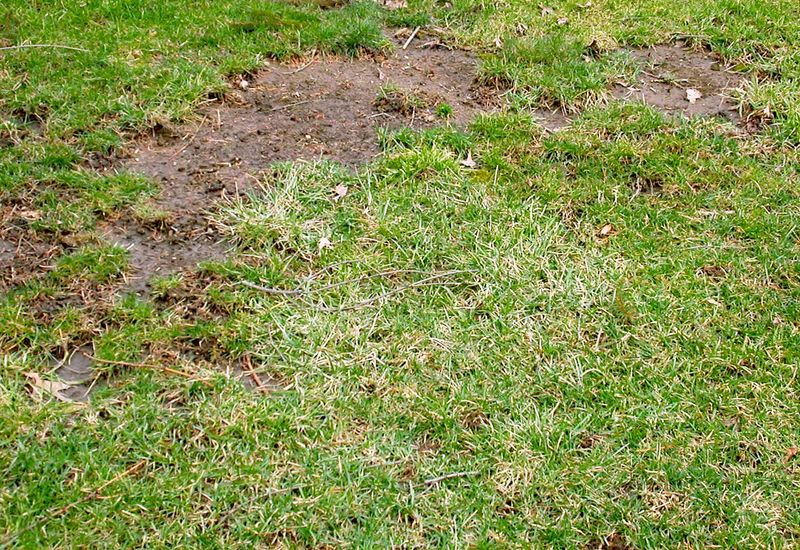
Most March browning in Ohio lawns is completely explainable and temporary. But spreading bare patches that grow larger week over week are a different story entirely.
When the brown is expanding rather than shrinking as spring progresses, that is the lawn telling you something is actually wrong.
A few culprits are worth investigating. Grub damage from Japanese beetle and masked chafer larvae is common in Ohio and often becomes visible in spring as the ground thaws and weakened turf pulls away from the soil like loose carpet.
Salt damage from winter deicing creates narrow brown stripes along driveways and sidewalks, and those areas typically do not recover without intervention. Soil compaction from heavy foot traffic or equipment creates patches that stay brown long after surrounding turf greens up.
Fungal diseases like necrotic ring spot can also begin showing up as soil temperatures warm.
OSU Extension county offices are an excellent first call when you cannot identify the cause of spreading damage. They can recommend soil testing, help identify pest activity, and connect you with local resources.
Many Ohio counties offer free or low-cost lawn consultations through their Master Gardener programs. Acting in April rather than waiting until June gives you the best window for overseeding with cool-season grasses, which establishes far better in Ohio’s spring soil conditions than in summer heat.