7 Winter Bird Bath Placement Mistakes You Should Avoid In Ohio This Season
Ohio winters put backyard bird baths to the test. Many homeowners set one out with good intentions, then wonder why it never seems to work the way they imagined.
The problem usually is not the weather itself, but small choices made during setup that quietly affect results all season long. Once freezing temperatures arrive, those details matter more than ever.
A few overlooked factors can determine how useful your bird bath actually becomes during the cold months. If you want stronger winter activity, better performance, and fewer headaches when temperatures drop, now is the time to rethink your approach.
Small adjustments can make a big difference in how your bird bath performs throughout the season.
1. Avoid Full Shade Spots That Freeze Faster
Placing your bird bath in a location that never sees sunlight during winter months creates unnecessary freezing problems. Full shade areas stay cold all day long, which means even heated bird baths have to work overtime to keep water liquid.
Ohio winters already challenge our feathered visitors enough without making their water source harder to maintain.
Sunlight provides natural warmth that helps prevent ice formation, especially during those brief sunny winter days we get between snowstorms. Even a few hours of direct sun can make a significant difference in water temperature.
Southern or southeastern exposures work best because they catch morning and midday sun when temperatures climb highest.
Many Ohio homeowners mistakenly think shade protects bird baths from harsh conditions. The opposite proves true in winter.
Shaded spots actually create colder microclimates where frost lingers longer and ice forms faster. Birds notice these differences and will choose sunnier water sources when given options.
Consider how shadows fall across your yard during December and January, not just summer months. Trees that provided perfect shade in July now stand bare but still block precious winter sunlight.
Move your bath at least six feet away from structures or evergreens that cast long shadows.
Your birds will appreciate the extra effort, and you’ll spend less time breaking ice or troubleshooting heater problems throughout the season.
2. Keep Bird Baths Away From Dense Bush Cover
Positioning your bird bath right next to thick bushes or dense evergreen hedges might seem protective, but it actually puts birds at serious risk. Predators like cats and hawks use heavy cover as hiding spots to ambush unsuspecting birds.
When birds visit water sources, they become vulnerable because wet feathers reduce their flying ability temporarily.
Ohio backyards often feature foundation plantings of yews, junipers, and other dense shrubs that stay thick year-round. These make perfect hiding places for neighborhood cats waiting to pounce.
Birds instinctively know this danger and will avoid water sources they perceive as risky, even when desperately thirsty during cold snaps.
The ideal placement keeps your bath at least ten to twelve feet away from dense vegetation. This distance gives birds enough space to spot approaching threats and escape safely.
They need clear sightlines in multiple directions to feel secure while drinking or bathing, even in freezing weather.
Some protective cover nearby is beneficial, but it should be open-branched trees or scattered shrubs rather than thick, impenetrable walls of greenery. Think about creating layers of safety rather than dense barriers.
Birds can retreat to nearby branches after visiting the bath, but they need that crucial buffer zone to prevent surprise attacks.
Rearranging your winter bird bath away from overgrown areas will increase visitor numbers dramatically while keeping your backyard birds safer throughout Ohio’s long winter season.
3. Do Not Expose Baths To Strong Winter Winds
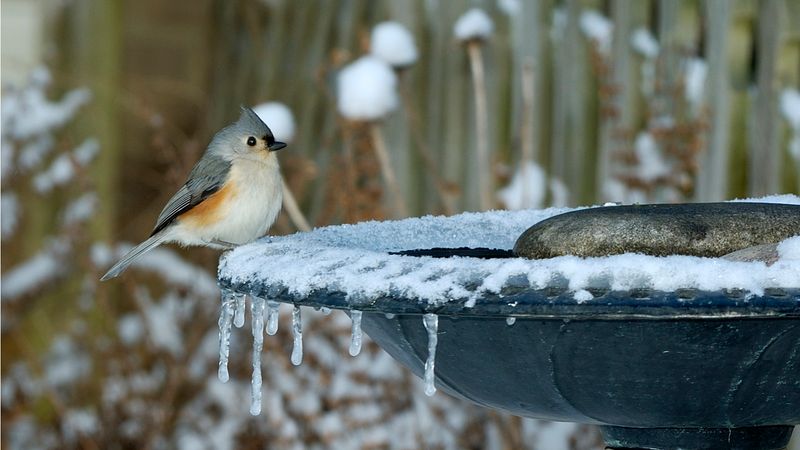
Wind chill affects birds just as much as it affects people, and an exposed bird bath in the middle of your yard creates an uncomfortable, even dangerous situation. Ohio’s winter winds sweep across open spaces, dropping temperatures well below what the thermometer reads.
Birds already struggle to maintain body heat in winter without adding wind exposure to their challenges.
Open lawn areas might seem convenient for bath placement, but they offer zero wind protection. Strong gusts not only make the area uncomfortable for visiting birds but also cause water to freeze faster through evaporative cooling.
Heated baths lose their effectiveness when constantly battled by cold winds that strip away warmth.
Smart placement means finding locations that offer natural windbreaks without creating the predator problems mentioned earlier. The east or southeast side of your house, garage, or shed provides excellent wind protection while still allowing sunlight access.
Solid fences also work well as barriers against prevailing winter winds that typically blow from the west or northwest across Ohio.
Pay attention to how wind moves through your property during winter storms. Snow drifts reveal wind patterns perfectly.
Areas where snow piles up are too exposed, while spots where snow barely accumulates often indicate good wind protection.
Relocating your bath to a sheltered spot means birds can drink comfortably without fighting harsh winds, and your heater won’t waste energy battling constant cold air movement.
4. Raise Baths Off Frozen Ground
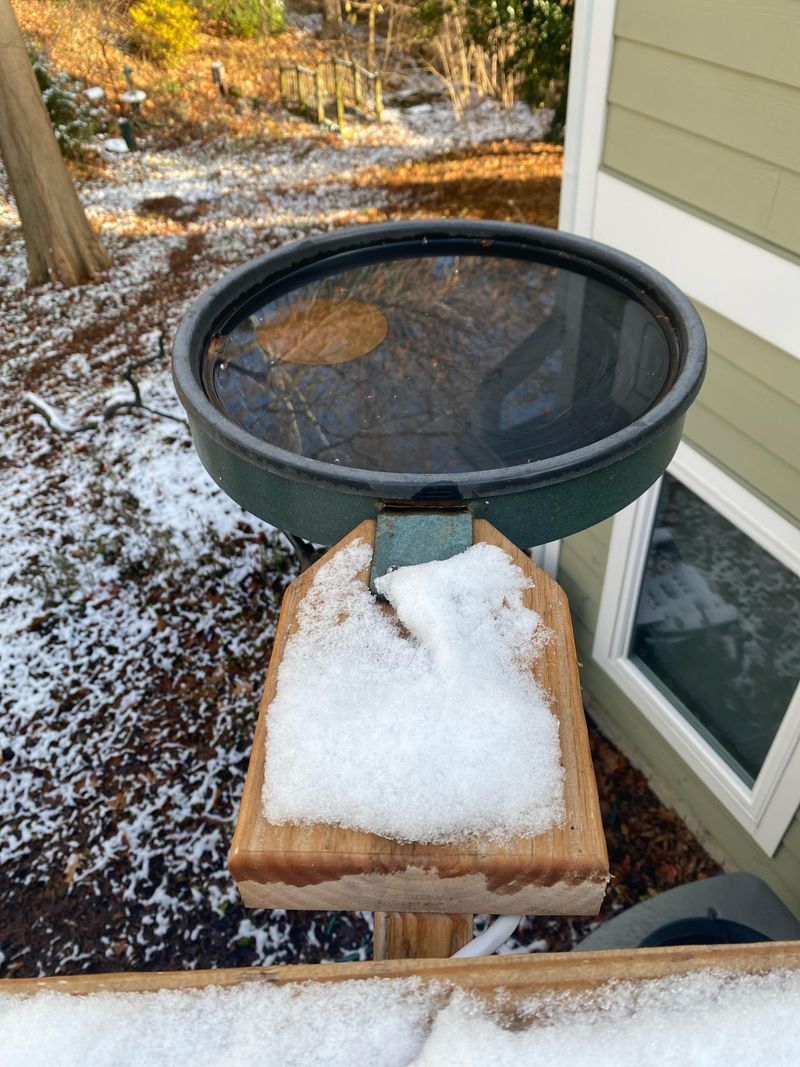
Ground-level bird baths suffer from contact freezing that works against your heating efforts. When bath bases sit directly on frozen soil or snow-covered grass, cold transfers upward through the materials, fighting your heater constantly.
This ground contact creates an energy drain that makes maintaining liquid water much harder during Ohio’s coldest weeks.
Elevation solves multiple problems simultaneously. Raising your bath on a pedestal, stand, or platform creates an air gap that provides insulation from frozen ground.
Even just twelve inches of height makes a measurable difference in how well heated baths maintain temperature. The air space underneath acts as a buffer zone against ground cold.
Height also improves visibility for birds scanning for safe water sources. Cardinals, blue jays, and other common Ohio winter birds spot elevated water more easily than ground-level options hidden by snow drifts.
Better visibility means more feathered visitors taking advantage of your thoughtful provision.
Pedestals or stands designed specifically for bird baths work best because they’re built to handle weight and weather. Avoid makeshift solutions like stacked bricks or concrete blocks that can topple during ice storms or high winds.
Stability matters tremendously when supporting water-filled basins through freeze-thaw cycles. A quality pedestal pays for itself through better heating efficiency and increased bird activity.
Your winter bird bath will perform significantly better when properly elevated above Ohio’s frozen winter ground throughout the entire season.
5. Avoid Areas That Ice Over After Snowmelt
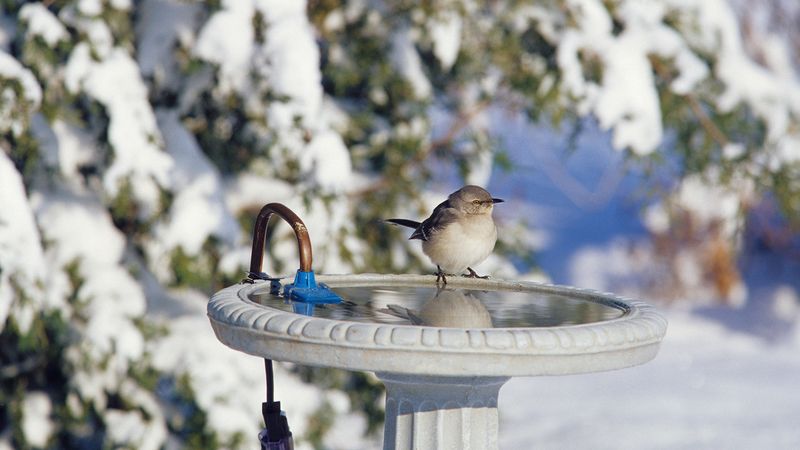
Low spots in your yard collect snowmelt and rain, creating icy patches that make bird bath areas treacherous. These depression zones seem fine during dry weather but transform into skating rinks after winter precipitation events common throughout Ohio.
Birds need stable footing around water sources, and slippery conditions discourage visits even when the bath itself remains ice-free.
Drainage patterns change dramatically in winter compared to summer months. Frozen ground prevents water absorption, so meltwater runs across the surface seeking low points.
Areas that drain perfectly in July become collection basins in January. Walk your property after a winter thaw to identify these problem zones before committing to bath placement.
Choosing slightly elevated or well-drained locations prevents the ice-skating-rink effect around your bird bath. Gentle slopes work better than flat areas or depressions.
Water naturally moves away from raised spots, keeping the immediate area around your bath accessible for ground-feeding birds that also need water.
Consider the approach paths birds use to reach your bath. Cardinals and juncos often hop along the ground before flying up to drink.
If surrounding areas turn into ice sheets after every snow event, these ground-loving species will avoid the location entirely. Testing your chosen spot through a complete winter cycle helps identify drainage issues.
Moving a bath after discovering ice-over problems saves frustration and helps more Ohio birds access fresh water when they need it most during harsh weather.
6. Place Baths Near Safe Protective Cover
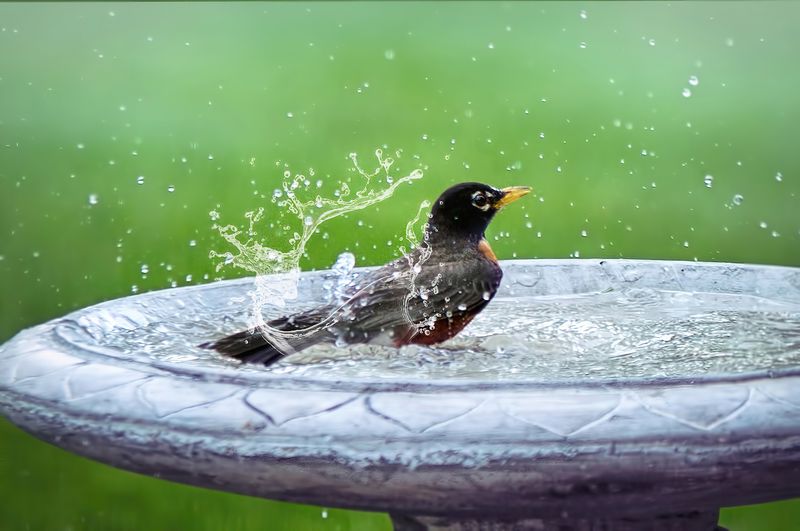
Finding the sweet spot between dangerous proximity to dense bushes and complete exposure requires understanding bird behavior. Birds need escape routes and resting spots near water sources, but not so close that predators can launch surprise attacks.
This balance becomes especially important during winter when birds spend more time at reliable water sources.
Deciduous trees with open branch structures make ideal protective cover near winter bird baths. Even without leaves, bare branches provide perching spots where birds can survey the area before approaching water.
Oak, maple, and ash trees common in Ohio yards offer perfect staging areas eight to fifteen feet from your bath. Birds can land on branches, check for danger, then make quick flights to drink.
Small ornamental trees or large shrubs with open growth habits also work well. Dogwoods, serviceberries, and viburnums provide enough structure for perching without creating dense hiding spots for predators.
Space these protective elements strategically so birds have multiple escape routes rather than single entry and exit points.
Think about creating a safety zone rather than a single feature. Birds feel most secure when they can approach from different directions and retreat to various protective spots.
Scattered cover beats concentrated plantings every time. Winter bird watching becomes more rewarding when your bath placement considers these behavioral needs.
Ohio’s winter birds will visit more frequently and stay longer when they feel safe, transforming your backyard into a bustling hub of feathered activity throughout the coldest months.
7. Choose Locations With Easy Winter Refilling Access
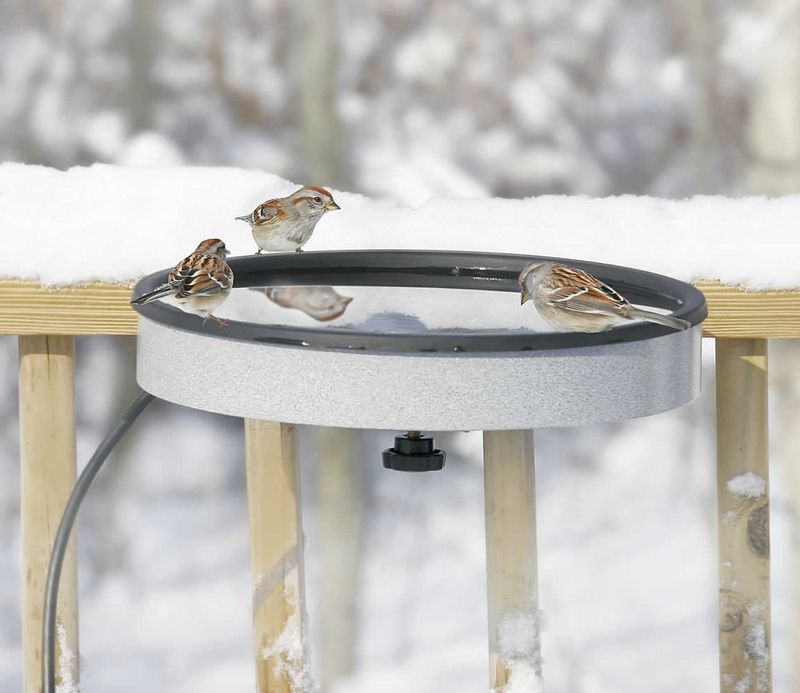
Enthusiasm for helping winter birds often fades when maintaining your bird bath requires trudging through knee-deep snow multiple times daily. Practical access matters enormously for long-term success with winter bird care.
Even heated baths need regular checking, cleaning, and occasional refilling, especially during extended cold snaps common across Ohio.
Placement near pathways, patios, or areas you keep cleared for other reasons makes maintenance realistic rather than burdensome. If reaching your bird bath requires hiking across your entire snow-covered yard, you’ll visit less frequently.
Birds suffer when their reliable water source goes neglected because access became too difficult for the human caretaker.
Consider your winter routine when choosing locations. Spots visible from kitchen windows and near doors you use regularly get more attention than remote corners of your property.
This visibility helps you monitor water levels and ice formation without special trips outside in bitter cold. Quick checks become part of your daily routine rather than separate chores.
Installing your bath near an outdoor water spigot simplifies refilling when temperatures climb above freezing. Some Ohio winters bring brief warm spells where you can easily top off water levels without carrying buckets long distances.
Proximity to electrical outlets also matters for heated baths, reducing extension cord needs and trip hazards buried under snow.
Thoughtful placement that considers your winter access creates sustainable bird care habits that last all season long, ensuring your feathered friends can count on fresh water throughout Ohio’s unpredictable winter weather patterns.