You’ll Still See These 11 Animals In Oregon Backyards During Winter
Winter in Oregon can feel quiet and sleepy, but step outside, and there’s still plenty of wildlife activity happening in backyards.
While many animals head south or hibernate, some tough residents stick around, making their presence known even in the coldest months.
Squirrels scamper along fences, jays squawk from bare branches, and deer occasionally wander in for a snack.
It’s fascinating to see how different animals adapt to winter conditions. Some rely on stored food, others brave the snow and frost, and a few just seem determined to keep busy no matter what the weather throws at them.
Backyard bird feeders, leftover garden seeds, and even a patch of unfrozen water can turn a yard into a winter hotspot for local wildlife.
Watching these animals can be a fun way to stay connected with nature without leaving the backyard. With a bit of patience, it’s possible to spot both the familiar residents and a few surprises that make winter wildlife watching extra enjoyable.
Here’s a look at animals that continue to make Oregon backyards their home during winter and how they manage to thrive when the rest of the world seems to slow down.
1. American Robin
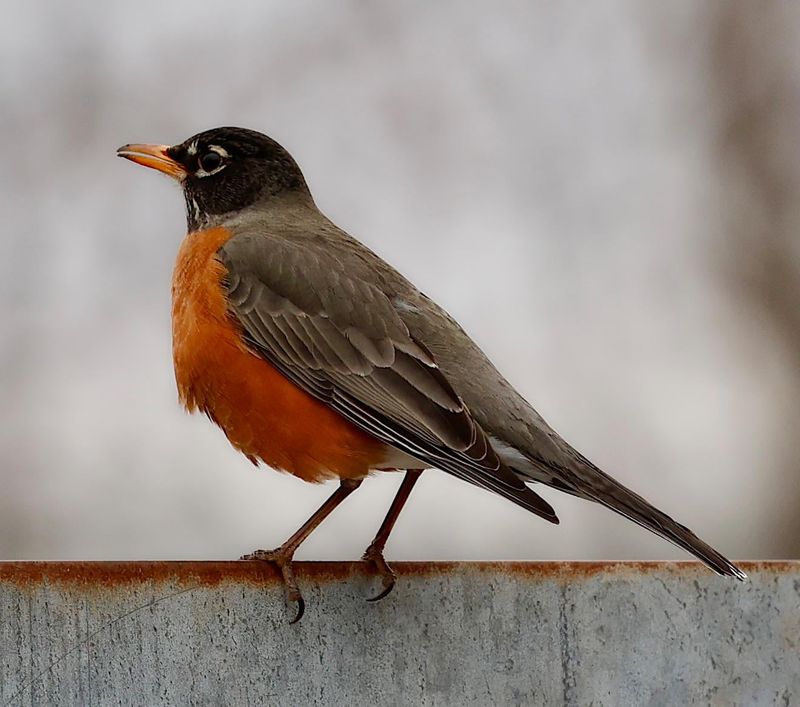
Most people think robins disappear when the cold weather arrives, but that is not always true. Many robins actually stay in Oregon throughout the winter, especially in areas with mild temperatures and plenty of food sources.
They switch their diet from worms and insects to berries and fruit, which makes them easier to spot near holly bushes, pyracantha, and other berry-producing plants.
During winter, robins also change their behavior. Instead of hopping alone across your lawn, they gather in flocks and roost together at night for warmth.
This social behavior helps them survive the coldest nights.
If you want to attract robins to your yard, consider planting native shrubs that produce winter berries. You can also set out a shallow dish of water, since clean drinking water becomes scarce when ponds and puddles freeze over.
Robins appreciate a reliable water source, especially during frosty mornings.
These birds are tough and resourceful. Even when snow covers the ground, they adapt quickly and find ways to thrive.
Watching a robin pull a frozen berry from a branch is a small reminder that nature always finds a way to keep going, no matter the season.
2. Black-capped Chickadee
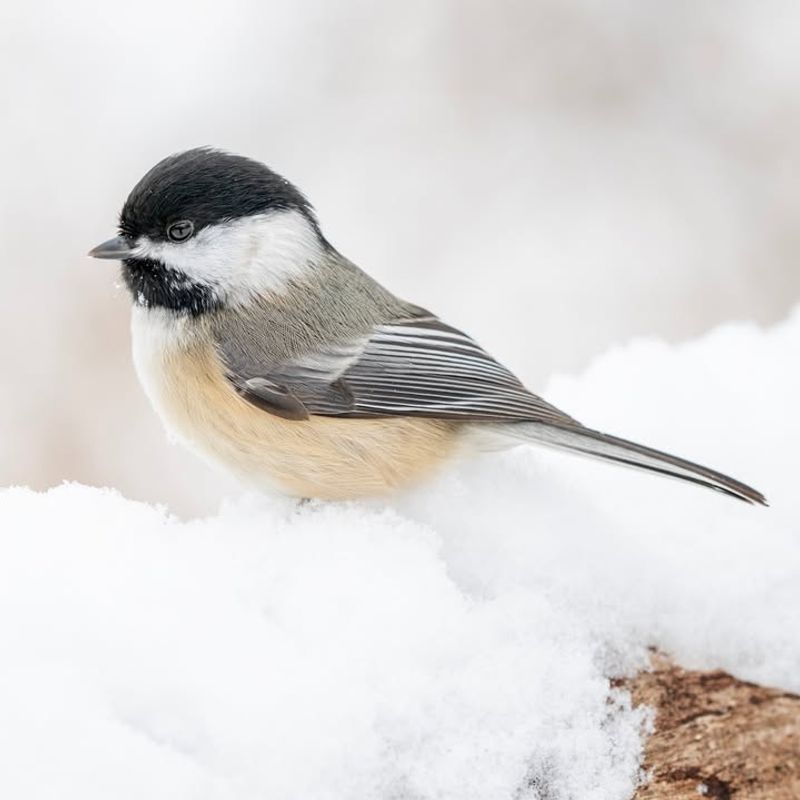
Few birds are as cheerful and fearless as the black-capped chickadee. These tiny birds stay active all winter long, flitting from branch to branch and calling out their signature chick-a-dee-dee-dee song.
They are curious, bold, and surprisingly friendly, often approaching humans if they sense food nearby.
Chickadees survive the cold by lowering their body temperature at night, a process called regulated hypothermia. This helps them conserve energy when food is hard to find.
During the day, they search for seeds, insects, and suet, storing extra food in hidden spots to eat later.
If you set up a bird feeder with sunflower seeds or suet cakes, chickadees will likely be your first visitors. They are also known for their acrobatic feeding style, often hanging upside down to reach seeds or insects tucked under bark.
Their energy and playfulness make them a joy to watch.
These little birds are incredibly tough. Even on the coldest days, they stay active and vocal, bringing life to your winter garden.
Their presence is a reminder that small creatures can be remarkably resilient, no matter how harsh the weather gets.
3. Douglas Squirrel
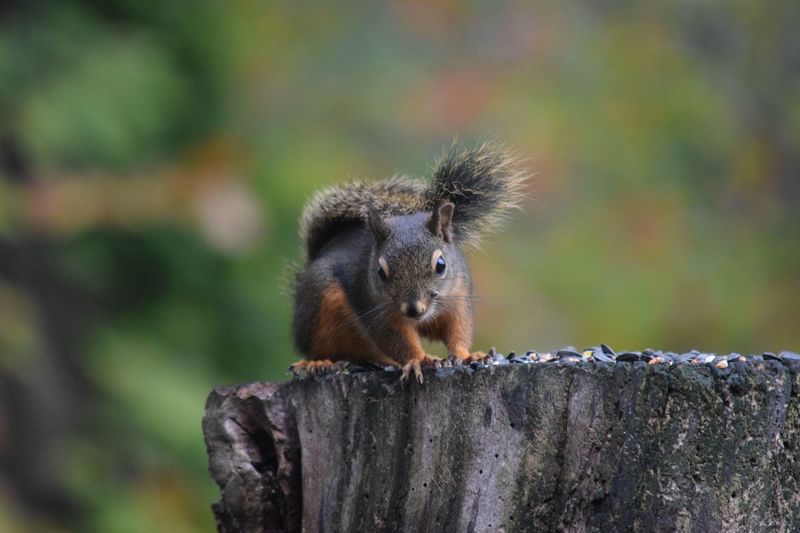
The Douglas squirrel is a common sight in Oregon backyards, especially in areas with plenty of trees. These small, reddish-brown squirrels are active year-round and do not hibernate.
Instead, they spend the fall gathering and storing food, creating hidden caches of seeds, nuts, and pinecones to eat during the winter months.
Unlike their larger gray squirrel cousins, Douglas squirrels are more vocal and territorial. You might hear them chattering loudly from the treetops, warning other animals to stay away from their food stash.
They are quick, agile, and surprisingly bold, often venturing close to homes in search of bird feeders or fallen seeds.
Watching a Douglas squirrel work is entertaining. They scurry up and down tree trunks, leap from branch to branch, and dig through snow to find buried food.
Their constant movement and energy make them one of the most entertaining backyard visitors during winter.
If you want to support these busy little creatures, avoid removing all the fallen pinecones or nuts from your yard. Leaving some natural food sources helps them get through the colder months without relying entirely on stored food or human handouts.
4. Anna’s Hummingbird

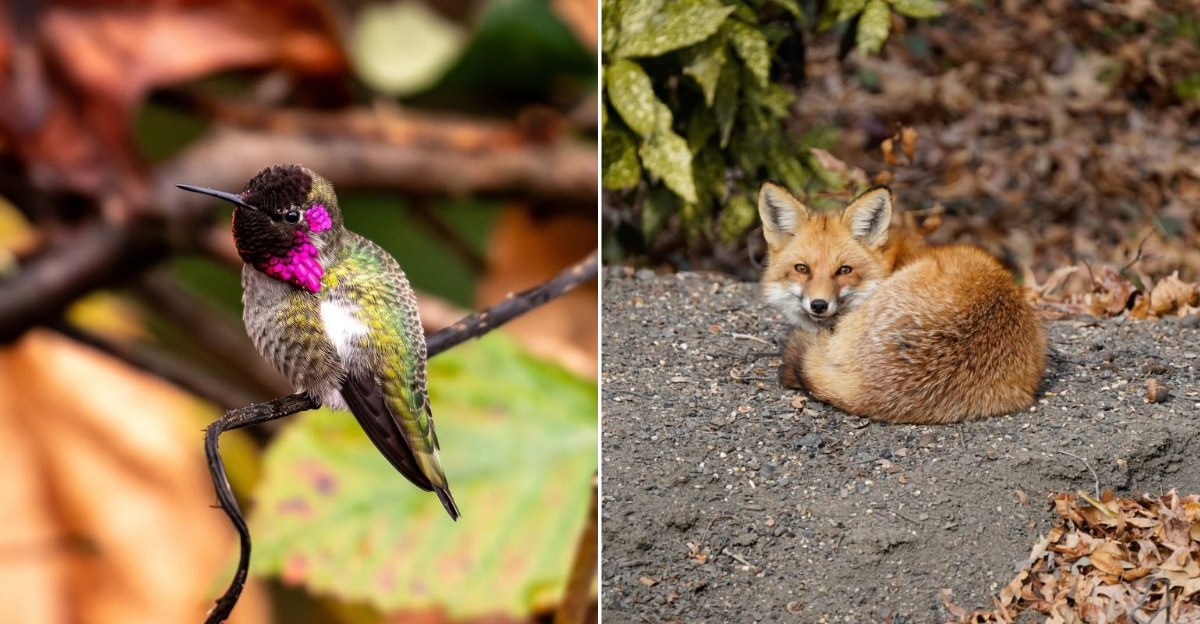
You might be shocked to see a hummingbird in January, but Anna’s hummingbird is one of the few species that stays in Oregon all year long.
These tiny birds are incredibly hardy and have adapted to survive cold temperatures by entering a state called torpor at night, which slows their metabolism and conserves energy.
During the day, Anna’s hummingbirds search for nectar from winter-blooming flowers and feeders. They also eat small insects and spiders for protein.
Males are especially striking, with bright pink throat feathers that shimmer in the winter sunlight.
If you keep a hummingbird feeder up during winter, make sure to bring it inside at night or use a feeder heater to prevent the nectar from freezing. Change the nectar every few days to keep it fresh.
Planting winter-blooming flowers like Oregon grape or witch hazel also provides a natural food source.
Seeing a hummingbird hover in the cold air is a magical experience. These little birds prove that size does not determine strength.
Their ability to survive and even thrive in winter conditions is nothing short of amazing.
5. Raccoon
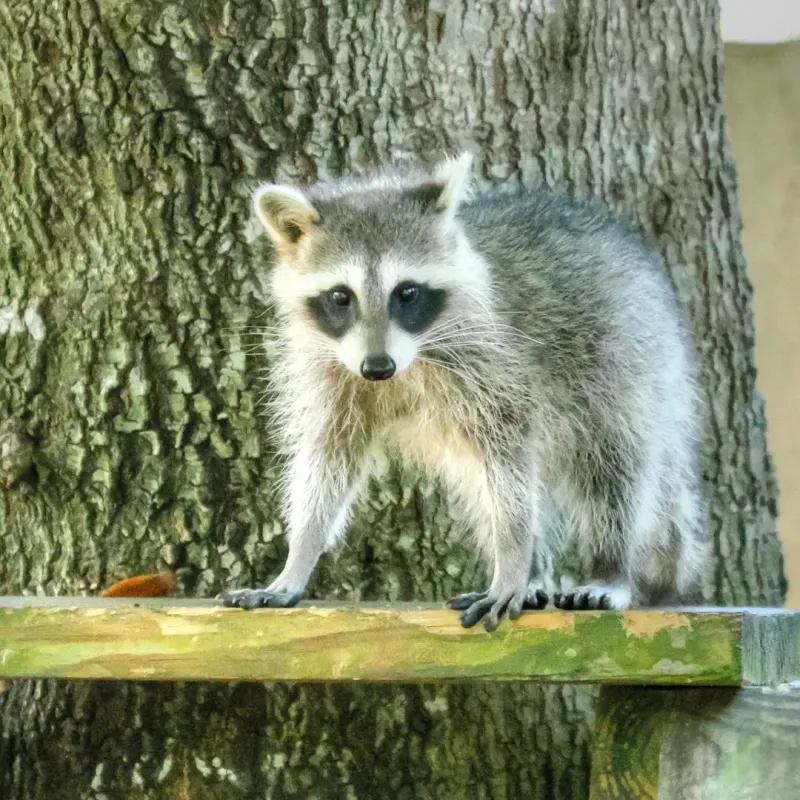
Raccoons are clever, adaptable, and always on the lookout for an easy meal. They do not hibernate, so they remain active throughout the winter, searching for food in backyards, garbage cans, and compost bins.
Their thick fur keeps them warm, and they are excellent problem solvers, able to open latches, lift lids, and climb fences with ease.
During winter, raccoons may visit your yard more often if food sources in the wild become scarce. They eat almost anything, from leftover pet food to birdseed to fallen fruit.
If you notice signs of raccoon activity, such as overturned trash cans or paw prints in the snow, it means they have found something worth coming back for.
While raccoons are fascinating to watch, it is important to keep a respectful distance. They can carry diseases and may become aggressive if they feel threatened or cornered.
Secure your garbage cans with tight-fitting lids and avoid leaving pet food outside overnight.
Despite their reputation as pests, raccoons play an important role in the ecosystem by controlling insect populations and dispersing seeds. Observing them from a safe distance can be a fun and educational experience, especially for kids.
6. Black-tailed Deer
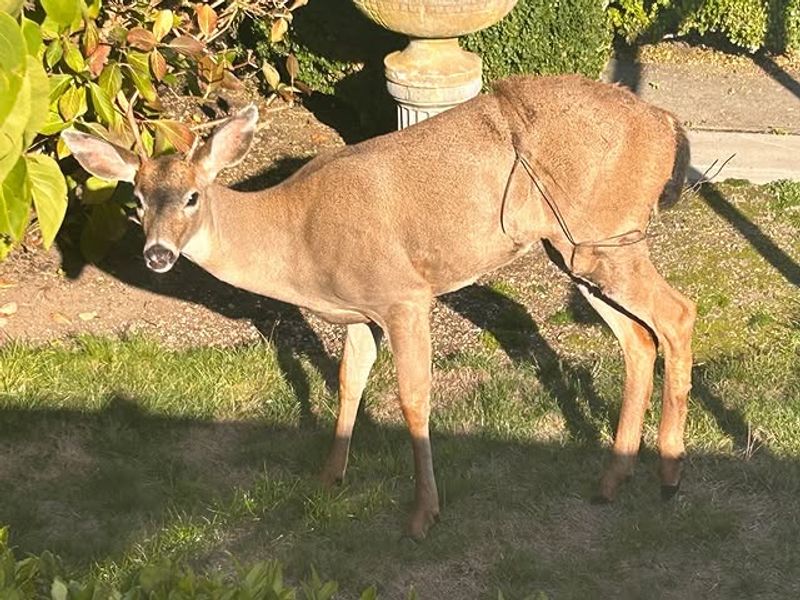
Black-tailed deer are a common sight in many Oregon backyards, especially in suburban areas near forests or open spaces. These graceful animals are most active during dawn and dusk, when they venture out to browse on shrubs, grasses, and garden plants.
In winter, they may visit your yard more frequently as natural food sources become harder to find.
Deer are well-adapted to cold weather, with thick winter coats that provide excellent insulation. They move quietly and cautiously, always alert for potential danger.
If you spot a deer in your yard, it will likely freeze and watch you carefully before deciding whether to flee or continue browsing.
While deer are beautiful to observe, they can also cause damage to gardens and landscaping. If you want to protect your plants, consider using deer-resistant varieties or installing a fence.
Motion-activated lights or sprinklers can also deter them from coming too close to your home.
Watching deer move through your yard on a frosty morning is a peaceful and memorable experience. They remind us that even in winter, wildlife continues to thrive and adapt, finding ways to survive and coexist with human neighbors.
7. Steller’s Jay
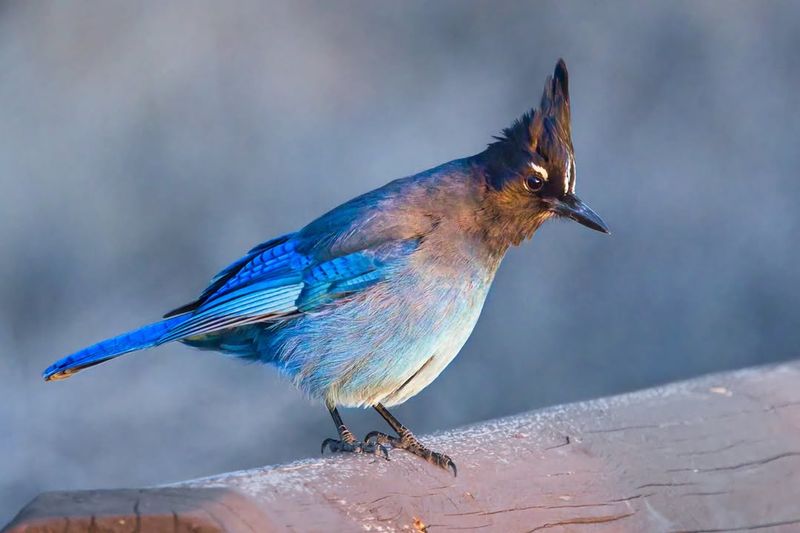
With its striking blue and black feathers and bold personality, the Steller’s jay is hard to miss. This large, noisy bird is a year-round resident in Oregon and thrives in both forested areas and suburban backyards.
Steller’s jays are intelligent and opportunistic, always on the lookout for food, whether it comes from a bird feeder, a picnic table, or a compost pile.
During winter, these jays become even more visible as they search for seeds, nuts, and berries. They are known for their loud calls, which they use to communicate with other jays or to warn of predators.
Some people find their noise annoying, but others appreciate their lively presence and striking appearance.
Steller’s jays are also known for their habit of storing food. They collect seeds and nuts and hide them in various locations, relying on their excellent memory to find them later.
This behavior helps them survive when food is scarce.
If you want to attract Steller’s jays to your yard, offer peanuts, sunflower seeds, or suet. They are bold and will often come quite close to humans, especially if they associate people with food.
Just be prepared for their loud, assertive behavior.
8. Opossum
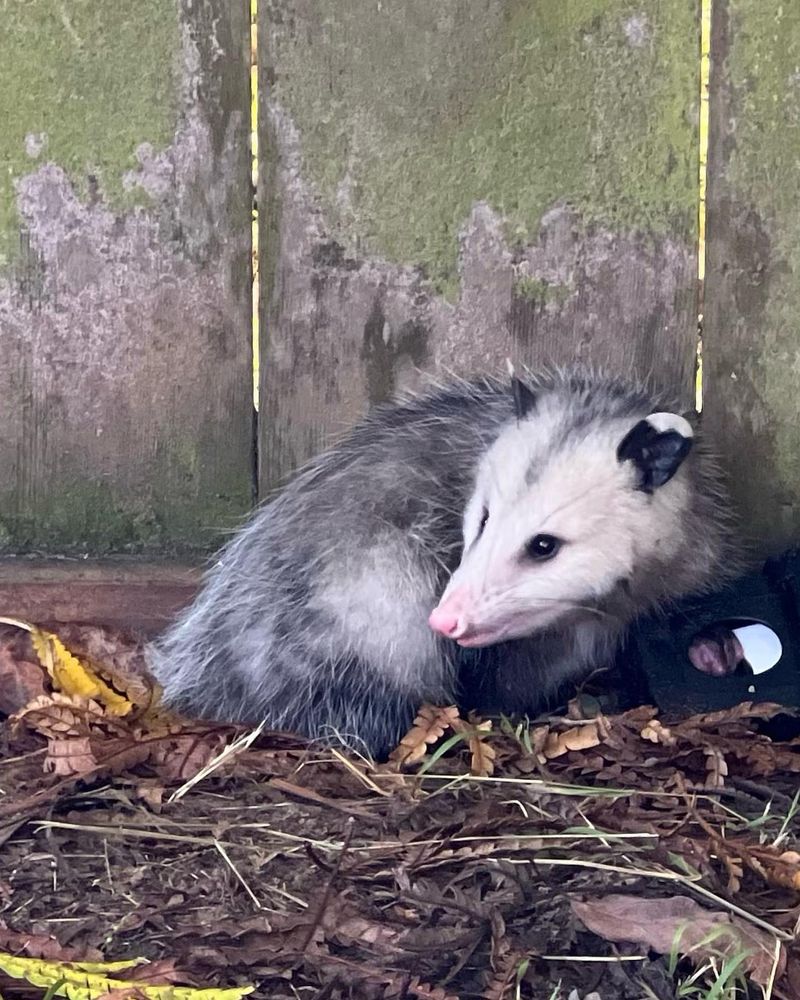
Opossums might not be the most glamorous backyard visitors, but they are fascinating creatures with unique survival skills. These nocturnal marsupials are the only marsupials native to North America, and they do not hibernate.
Instead, they remain active throughout the winter, searching for food at night.
Opossums have a slow metabolism and do not handle extreme cold well, so they often seek shelter in garages, sheds, or under porches. They are scavengers and will eat almost anything, from insects and snails to fallen fruit and pet food.
Their diet makes them helpful for controlling pests in your yard.
Despite their somewhat scruffy appearance, opossums are gentle and non-aggressive. If threatened, they may hiss or bare their teeth, but they are more likely to play dead than to attack.
This famous behavior, called playing possum, is an involuntary response to fear.
If you encounter an opossum in your yard, simply give it space and it will move on. These creatures are harmless and beneficial, eating ticks, rodents, and other pests.
Learning to appreciate them can change your perspective on these misunderstood animals.
9. Red Fox

Red foxes are becoming more common in Oregon backyards, especially in areas where urban development meets wild spaces. These beautiful animals are adaptable and intelligent, able to thrive in a variety of environments.
Their thick winter coats keep them warm, and their bushy tails help them balance and stay cozy during cold nights.
Foxes are mostly active at dawn and dusk, though they may also hunt during the day in winter when food is harder to find. They eat small mammals, birds, insects, and even berries or fallen fruit.
If you see a fox in your yard, it is likely passing through in search of prey or exploring new territory.
Watching a fox move through your yard is a rare and special experience. They are graceful, curious, and surprisingly quiet.
Their reddish fur and white-tipped tail make them easy to identify, even from a distance.
If you want to coexist peacefully with foxes, avoid leaving pet food outside and secure your trash cans. Keep small pets indoors or supervised, as foxes may see them as prey.
Respecting their space and observing from a distance allows you to enjoy their presence without conflict.
10. Dark-eyed Junco
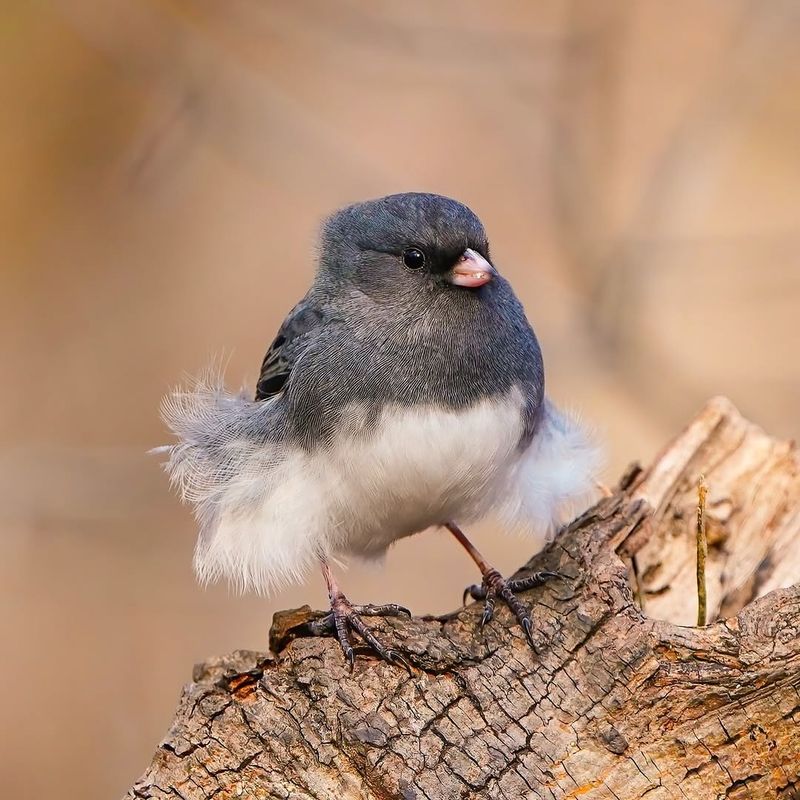
Often called snowbirds, dark-eyed juncos are small, charming birds that arrive in Oregon backyards during the fall and stay through the winter.
They have slate-gray feathers on top and white bellies, making them easy to identify.
Juncos are ground feeders, hopping around under bird feeders and picking up seeds that other birds have dropped.
These birds are social and often travel in flocks, which provides safety and warmth during the cold months. They are not aggressive and tend to avoid conflict with larger birds.
Their soft chirping calls add a gentle soundtrack to winter mornings.
Juncos prefer seeds like millet and sunflower, and they appreciate yards with plenty of low shrubs and ground cover where they can hide from predators. Providing a clean water source is also helpful, as they need to drink regularly even in winter.
Watching a flock of juncos forage together is a calming and delightful experience. Their quiet presence and understated beauty make them a favorite among birdwatchers.
They may not be as flashy as some other species, but their reliability and gentle nature make them a welcome winter guest.
11. Bald Eagle
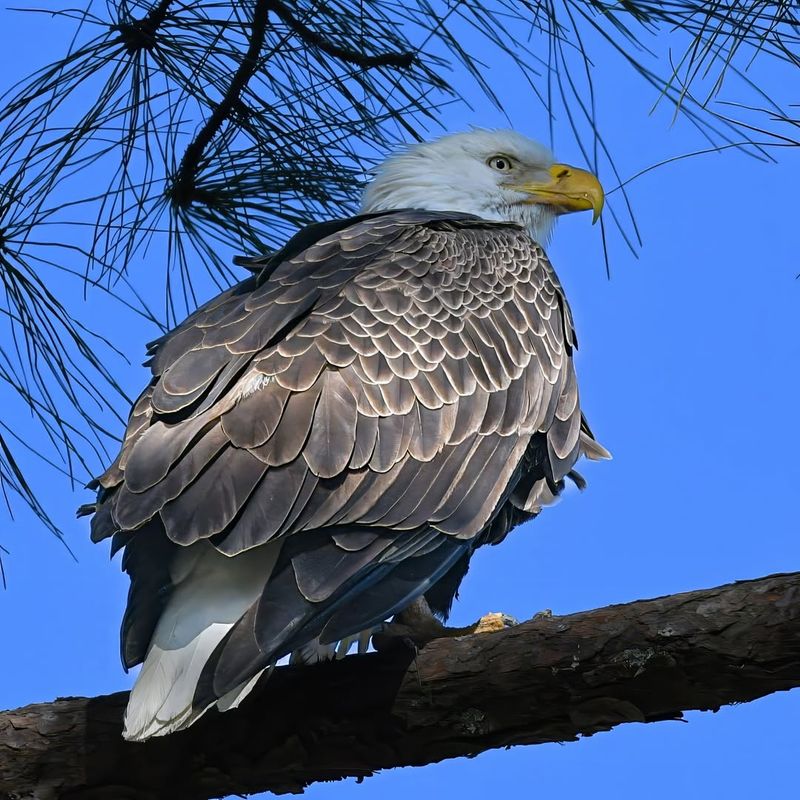
Seeing a bald eagle in your backyard is an unforgettable experience.
While not as common as smaller birds, bald eagles do visit Oregon backyards, especially those near rivers, lakes, or coastal areas.
Winter is actually one of the best times to spot them, as they gather near bodies of water to hunt for fish and waterfowl.
These massive birds are impressive in every way, from their wingspan of over six feet to their piercing yellow eyes and distinctive white head and tail feathers.
They are powerful hunters and scavengers, often seen perched high in tall trees, scanning the area for food.
If you live near water, you might notice eagles soaring overhead or perched on a branch near the shore. They are also drawn to areas with abundant fish populations, particularly during salmon runs.
Watching an eagle swoop down to catch a fish is a breathtaking sight.
Bald eagles are protected by law, so it is important to observe them from a distance and avoid disturbing their nests or roosting sites.
Their presence is a sign of a healthy ecosystem and a reminder of the incredible wildlife that calls Oregon home, even in the coldest months.