10 Fall Porch Decor Ideas Using Drought-Tolerant California Plants
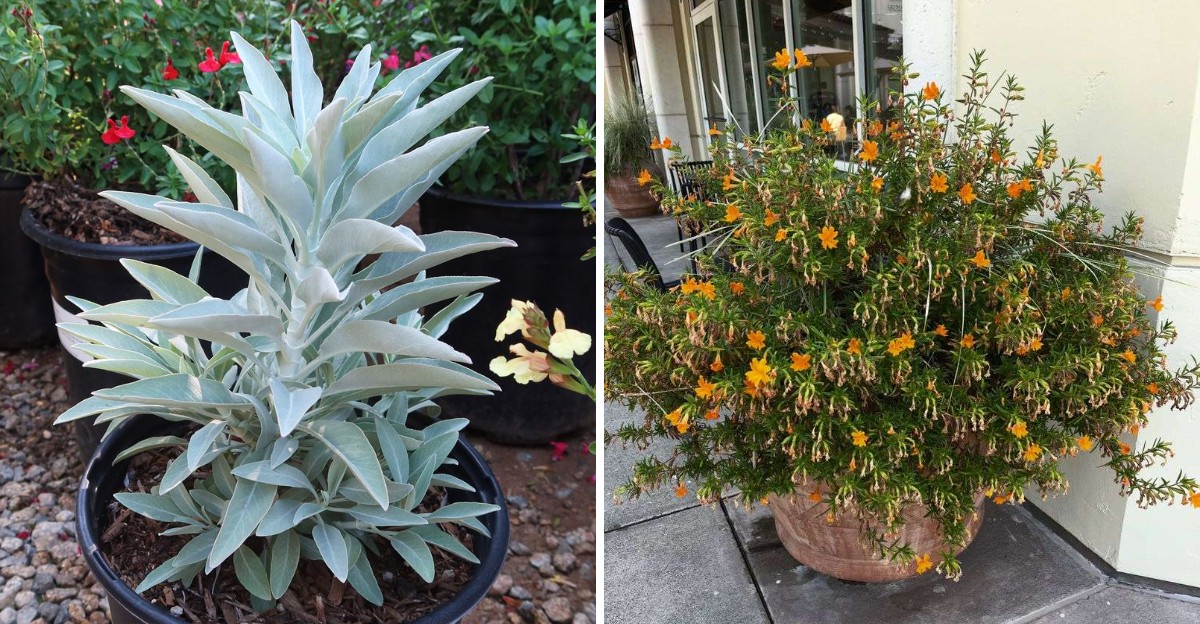
Anna’s hummingbirds stay in California all year, and many sip from scarlet native blooms that peak in early fall. Those same flowers grow happily in pots, and they ask for barely a drink once their roots settle in.
What I find interesting is how many dry-country natives save their best show for the cooler weeks of autumn. Silver leaves glow under low sun, while rusty seed heads rattle softly whenever an evening breeze drifts across the steps.
I can see why gardeners in California are trading thirsty mums for tough, sculptural plants that last past the holidays. You still get plenty of seasonal color, and the local bees and birds get a welcome snack too.
Some of my favorites smell like a hillside after rain, and one wears a coat of chalky powder. So which water-wise beauties deserve a cozy spot beside your front door before the first winter rain?
1. Giant Chalk Dudleya
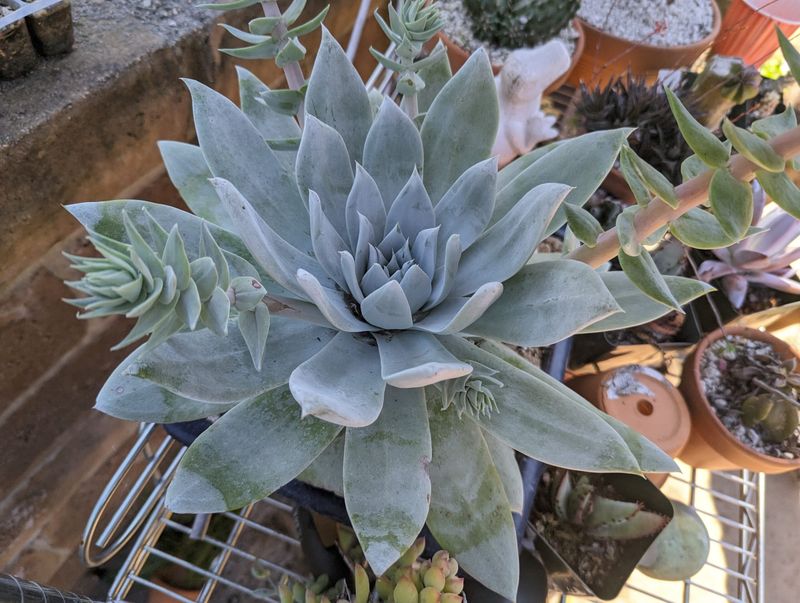
Touch a giant chalk dudleya once and you will leave fingerprints behind, because its white coating rubs off easily. That powdery wax acts like sunscreen, so I admire mine with my eyes and keep my hands in my pockets.
The rosettes can stretch about a foot and a half wide, looking like pale sculptures carved from moonlight. Set one in a shallow terracotta bowl, and it instantly becomes the calm center of your fall porch.
Here’s something worth knowing about its roots, since this species naturally grows along the coast of Baja California. It handles light frost poorly, so gardeners in colder inland valleys should move the pot under cover on chilly nights.
Use a gritty cactus mix with extra pumice, and pick a container with a wide drainage hole underneath. Tilting the rosette slightly lets rain roll away instead of pooling in the center and causing rot.
Summer is its resting season, so the plant looks a little tired and needs almost no water then. Autumn rain wakes it up, and the leaves plump back into shape within a few short weeks.
For a seasonal touch, I tuck a few white pumpkins around the bowl and let the colors echo each other. Smooth gray river stones on the soil surface keep the base cool and make the whole display look finished.
Water lightly every few weeks during the cooler months, letting the mix dry fully between each drink. Treat it gently, and this pale beauty will reward you with tall, reddish stalks of pale yellow flowers next spring.
2. California Fuchsia
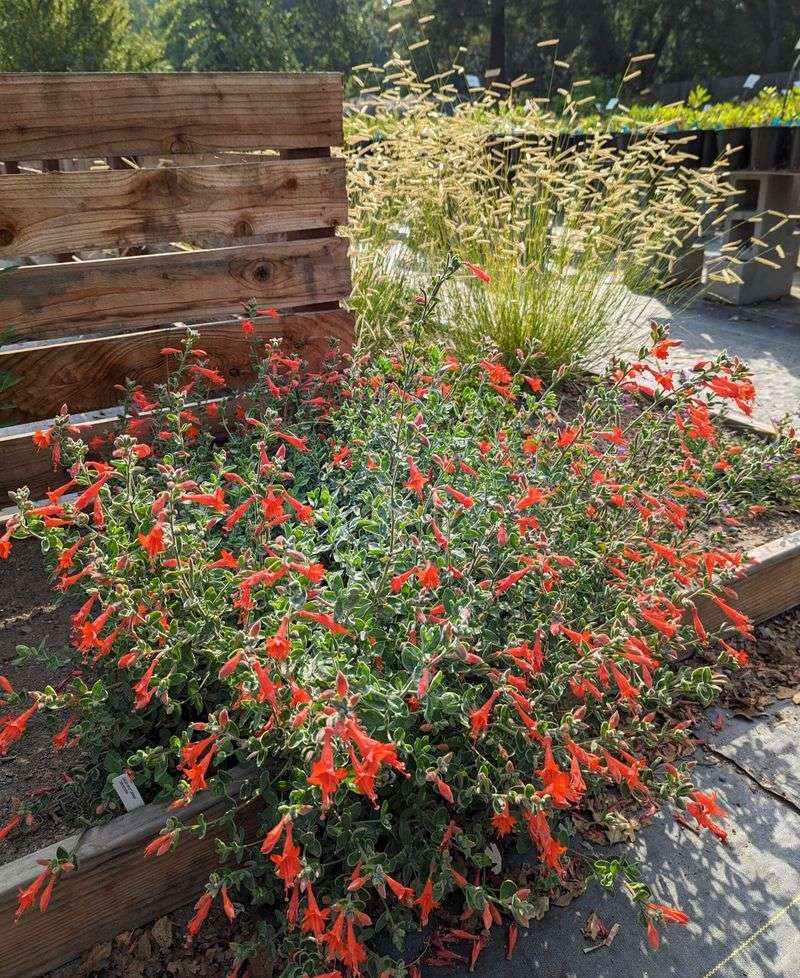
Hummingbirds seem to have a calendar alert for this plant, arriving the very week its scarlet trumpets open. I have watched them squabble over a single pot by my steps like toddlers fighting over one red crayon.
Known to botanists as Epilobium canum, it blooms from late summer into fall when many gardens look tired. That timing makes it a natural star for autumn porch pots, glowing bright orange against gray foliage.
For containers, I lean toward low cultivars like Everett’s Choice, which spills gracefully over the rim of a pot. Taller types can reach a couple of feet and may flop, so give them a wider, sturdier container.
Full sun keeps the stems compact and the flowers plentiful, especially on a south or west-facing porch. A fast-draining mix matters more than rich soil, since soggy roots cause far more trouble than hunger.
Container plants appreciate a deep soak every week or two during hot spells, then much less once rains return. Skip fertilizer, because extra feeding mostly produces lush, floppy stems and far fewer of those flaming blossoms.
Pair it with a rustic copper bucket or a weathered wooden crate for a warm harvest look. Those orange tubes look wonderful beside small gourds and a scattering of dried oak leaves on the steps.
Once blooming slows in late fall or early winter, cut the stems back hard to a few inches. The plant may look bare for a while, but fresh shoots return in spring ready for another show.
3. Cleveland Sage
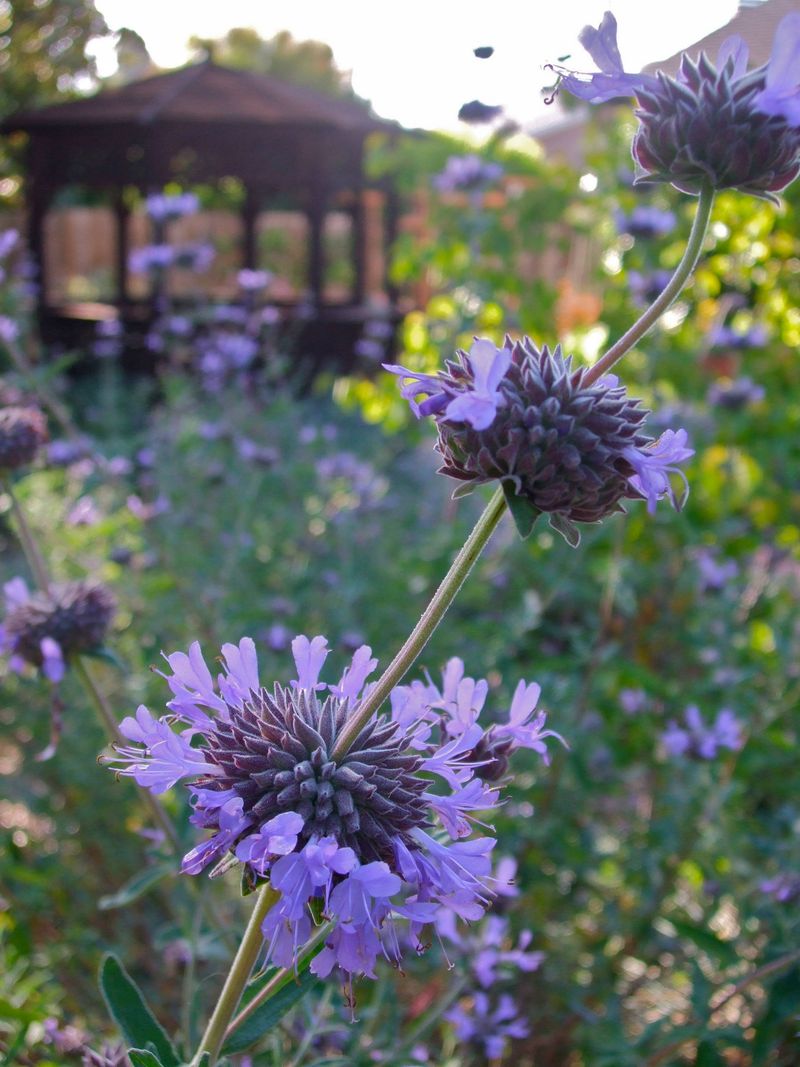
Brush past a Cleveland sage on your way inside, and the whole porch suddenly smells like a sunny hillside. Many gardeners call it the most fragrant native sage, and I would have a hard time arguing otherwise.
Salvia clevelandii grows wild in the dry chaparral of San Diego County and northern Baja California. Its home turf gets very little summer rain, which explains why it shrugs off long dry stretches so well.
The violet-blue flowers appear in stacked round whorls from late spring into summer, drawing bees and hummingbirds. By fall, those dried whorls still cling to the stems like tiny bronze pom-poms, so I leave a few.
The gray-green leaves stay on all year, giving your containers a soft, silvery backdrop for pumpkins and lanterns. Since the shrub can reach four or five feet, pick a large, heavy pot that will not tip.
Mix regular potting soil with plenty of perlite or pumice so water drains away quickly after each soak. Full sun keeps it dense, while too much shade makes the branches stretch and lean toward the light.
Overwatering is the most common mistake, especially in summer when wet warm soil invites root rot. Water deeply but rarely, and let the top few inches dry before you reach for the hose again.
A light trim in early fall tidies the shape and removes spent flower stalks without cutting into bare wood. Save those clippings, because a small bundle tied with twine makes a fragrant accent for your front door.
4. White Sage
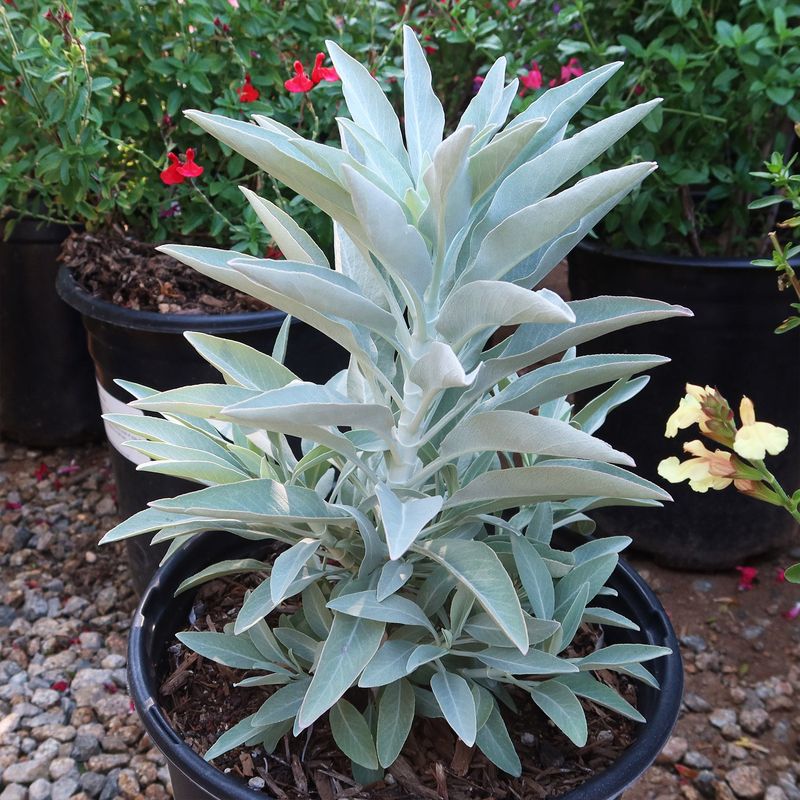
Few porch plants shimmer quite like white sage, whose fuzzy leaves look almost frosted even on a warm afternoon. I find it fascinating that tiny hairs create that pale glow, reflecting harsh sunlight and saving precious moisture.
Salvia apiana grows naturally on dry slopes across Southern California and into Baja, often among coastal sage scrub. Wild populations have suffered from heavy harvesting, so please buy nursery-grown plants rather than collecting leaves from hillsides.
Growing your own is a respectful way to enjoy this plant, and the bees will thank you next spring. Its tall flower spikes, sometimes several feet high, attract bumblebees and carpenter bees in large numbers.
Give it the sunniest corner you have, because shade leaves the foliage greener and the stems weak. The shrub can grow three to five feet wide, so a half-barrel works better than a dainty pot.
Fast-draining soil is a must, and I like adding coarse sand or small gravel to a cactus mix. Water only when the top few inches feel dry, and cut back sharply during cool, damp winter weeks.
You might notice the plant looking a bit thin by early fall after a long, dry summer. That is normal behavior, and a good autumn soaking or the first real rain usually perks it back up.
For decorating, its silver mounds look striking next to deep orange pumpkins and dark bronze planters. That cool and warm contrast feels modern, yet it still says harvest season the moment guests walk up.
5. Sticky Monkeyflower
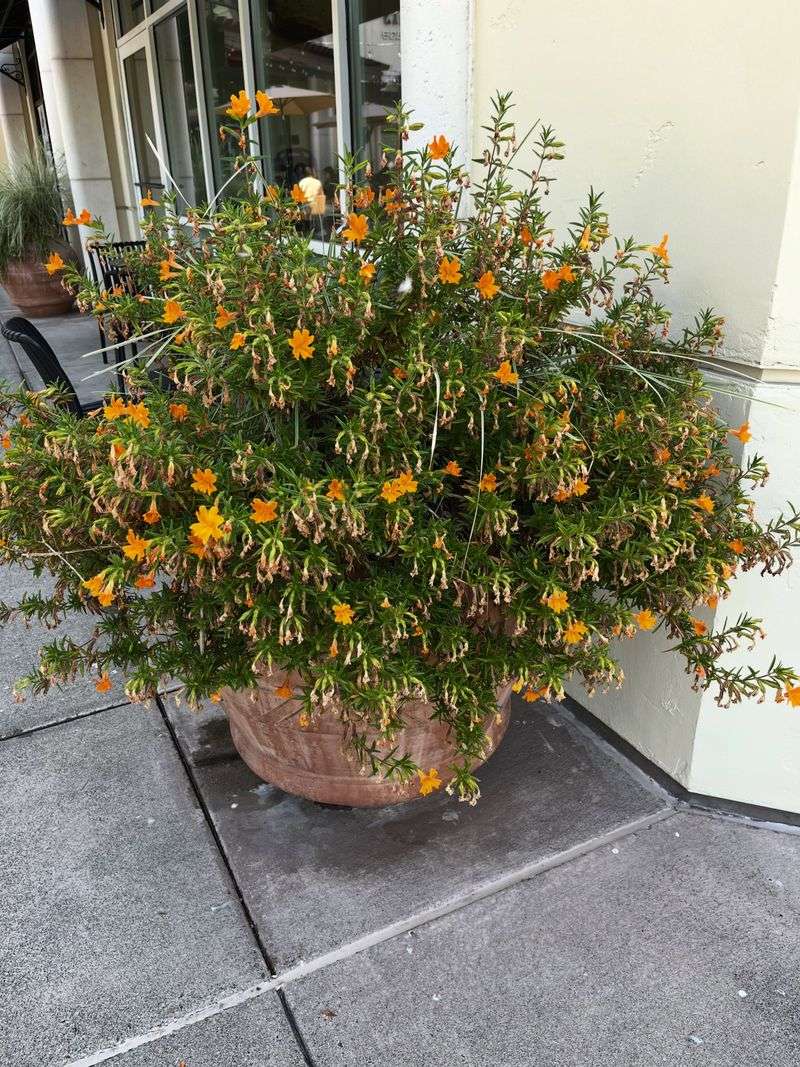
Run your fingers along a sticky monkeyflower leaf, and you will instantly understand how this shrub earned its name. That glossy, resinous coating helps the leaves hold moisture, and it also discourages some hungry insects from nibbling.
Botanists now call it Diplacus aurantiacus, though many nurseries still sell it under the older name Mimulus. Either label leads to the same cheerful shrub with apricot-orange flowers shaped like little open trumpets.
Its main bloom runs from spring into summer, and a few flowers sometimes linger into early fall near the coast. I love those late surprises, but the real fall appeal is the dark, shiny foliage that stays mostly evergreen.
Inland gardeners should give it morning sun with some afternoon shade, since scorching heat can curl the leaves. Along the cooler coast, full sun usually works well and keeps the branches compact and bushy.
Plant it in a gritty, fast-draining mix, then let the top two inches dry before watering again. Too much summer water can shorten its life, which surprises gardeners who treat every pot the same way.
Fall is the right moment for a light shaping, trimming stems back by about a third to encourage fullness. That small effort pays off with a denser plant and many more blooms when warm weather returns.
Its orange tones pair beautifully with a woven basket planter and a few speckled heirloom pumpkins nearby. You might find hummingbirds checking the pot too, just in case one last blossom is still hiding there.
6. Island Alum Root
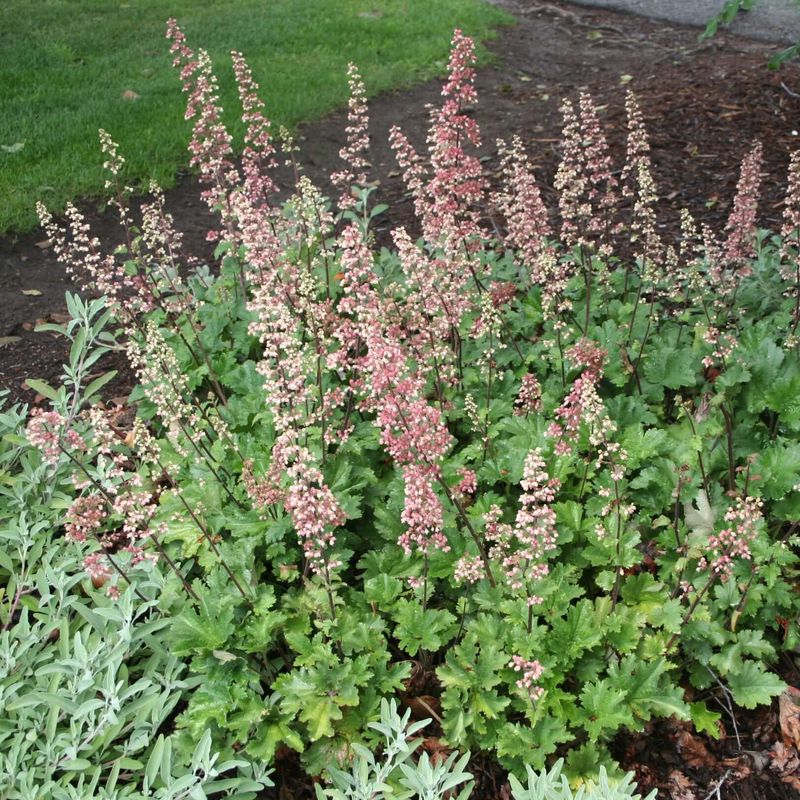
Shady porches rarely get the spotlight, yet island alum root turns a dim corner into a lush green retreat. Its big, scalloped leaves can reach several inches across, and they look wonderfully soft spilling from a ceramic pot.
Heuchera maxima grows wild only on the Channel Islands, where it clings to shady canyon walls and cliffs. I love knowing that a plant from those foggy islands can feel right at home beside my front door.
It is a close cousin of the colorful coral bells sold everywhere, though this species keeps its leaves green. Tall wands of tiny white or pale pink flowers rise from late winter into spring, attracting hummingbirds and bees.
Partial shade suits it best, and inland gardeners should protect it from strong afternoon sun during heat waves. A north or east-facing porch often provides that gentle filtered light without much extra effort on your part.
In the ground it handles dry summers well, but potted plants need water a bit more often. Check the soil weekly, and water when the top inch feels dry rather than keeping things soggy.
Its mounded shape makes it a handy filler, softening the edges of taller grasses or upright shrubs. I like pairing it with a mossy log and a few pinecones for a woodland feel.
Pull off tattered older leaves in fall to keep the clump looking fresh through the holidays. Every few years, divide crowded plants in autumn and share the extras with a neighbor who loves shade.
7. Howard McMinn Manzanita
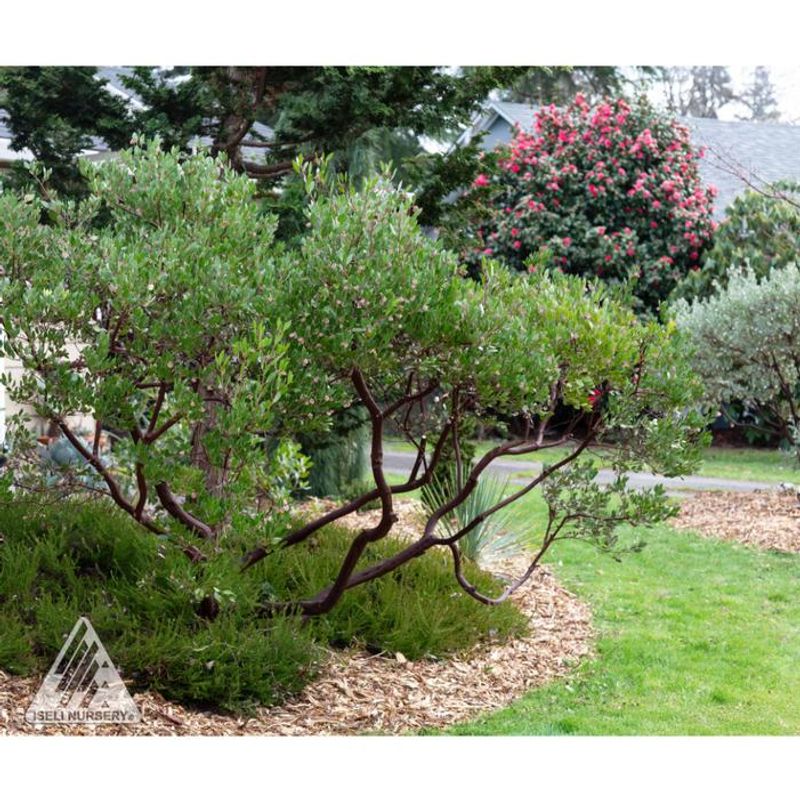
Smooth, mahogany bark that feels almost polished is reason enough to give this manzanita a place by your door. I catch myself running a thumb along the branches every time I water, and I doubt I am alone.
Howard McMinn is a selection of Vine Hill manzanita, Arctostaphylos densiflora, named for a respected native plant expert. It earned a reputation as one of the most forgiving manzanitas for regular gardens, which is high praise indeed.
In the ground it can reach five or six feet, but a large container keeps it noticeably smaller. Choose a wide pot of at least twenty gallons, since cramped roots tend to struggle in summer heat.
Full sun along the coast or light afternoon shade inland will keep the small glossy leaves dense and healthy. Use a well-draining mix with bark fines, and skip heavy compost that holds too much moisture.
Container plants need more water than garden plants, but let the top few inches dry between soakings. Frequent shallow sips in hot weather invite root disease, so think deep and occasional instead of light and often.
Its pale pink blossoms open in late winter, so fall is mostly about that rich bark and tidy shape. Wrap a strand of warm string lights around the pot, and the red stems glow beautifully at dusk.
Prune lightly in late spring or summer after flowering, removing only crossing branches or awkward shoots. Heavy cuts into old wood rarely regrow, so a gentle hand keeps this shrub looking its best for years.
8. California Buckwheat
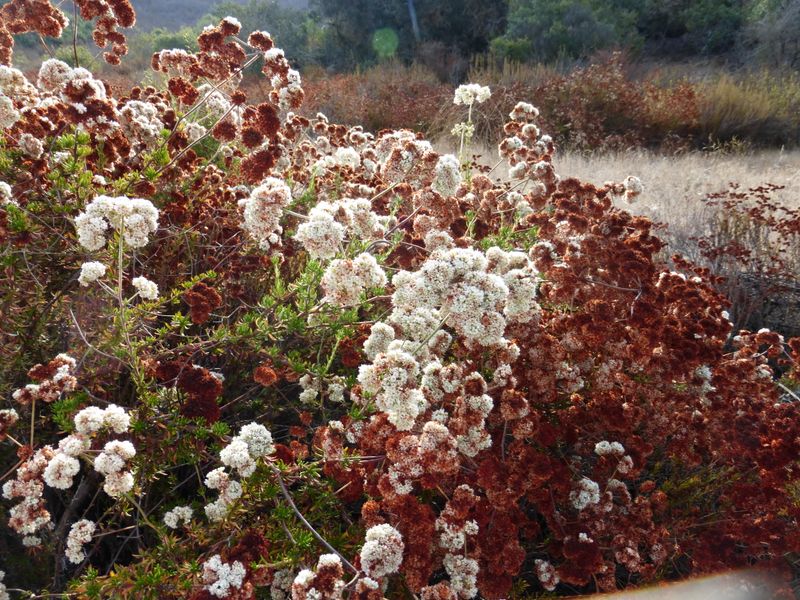
Some plants look their best in spring, but California buckwheat saves a cozy rust-colored encore for autumn. Its flower clusters fade from creamy white and pink to a deep cinnamon brown that matches pumpkins perfectly.
Eriogonum fasciculatum is one of the most important native plants for butterflies and bees across its range. Several small blue butterflies and hairstreaks rely on buckwheats, so a single pot supports more life than you might expect.
The needle-like leaves are tiny and dark green on top, which helps the shrub lose less water. It grows wild on dry slopes from the coast to the deserts, so it handles heat with ease.
Give it the hottest, sunniest spot on your porch and a lean mix that drains in seconds. Rich soil and frequent watering often shorten its life, so resist the urge to pamper it.
During summer the plant may slow down and look a little scruffy, which is a natural rest period. Cooler fall weather and an occasional deep drink usually bring the foliage back to a fresher green.
I like leaving the rusty seed heads on the plant through fall because they add wonderful texture to arrangements. You can also snip a few stems for indoor bouquets, since they hold their color for weeks.
Birds such as sparrows and finches pick at the seeds too, so leaving some flowers benefits wildlife as well. Trim the old stems back lightly in late winter, just before fresh growth begins to appear.
9. Deer Grass
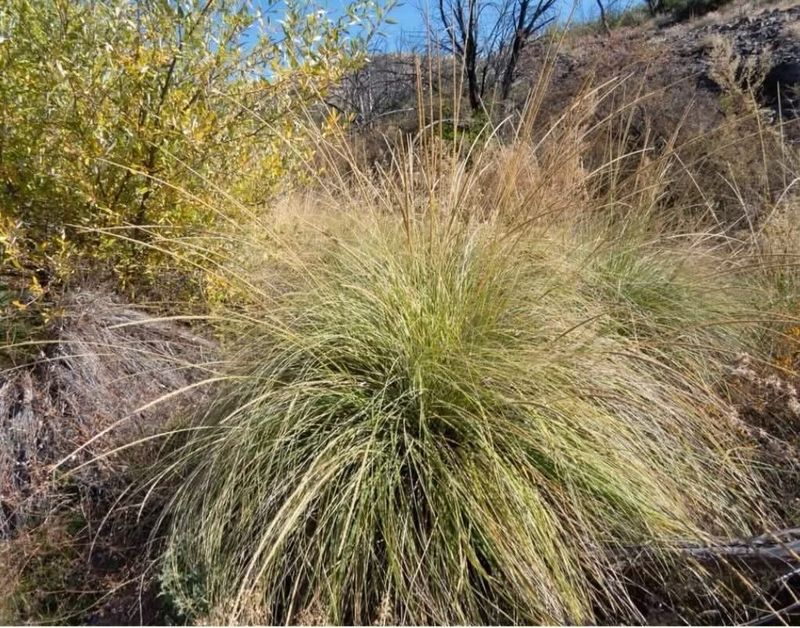
Native basket weavers have gathered deer grass flower stalks for generations, prizing them as the sturdy core of coiled baskets. Knowing that history makes every swaying plume on my porch feel a little more meaningful each autumn.
Muhlenbergia rigens forms a tidy fountain of fine, gray-green leaves about three to four feet tall. In late summer, slender flower spikes shoot upward, and by fall they fade to a soft golden tan.
Those spikes hold their shape well into winter, catching low sunlight and moving with every passing breeze. Container designers love it as a tall centerpiece, surrounded by trailing or mounding plants at the rim.
Full sun brings out the best form, though it tolerates a little afternoon shade in very hot areas. Pick a large, heavy pot, because a mature clump can spread several feet and catch wind like a sail.
Well-drained soil keeps the crown healthy, and a basic potting mix with some added grit works fine. Potted plants need more frequent watering than garden clumps, yet the soil should dry slightly between drinks.
Deer grass is also quite deer resistant, which feels like a small joke tucked inside its name. Gardeners near wild areas appreciate that, especially when other potted plants become midnight snacks for curious visitors.
Every few years, cut old foliage back to a few inches in late winter to refresh the clump. For now, simply enjoy those golden plumes framing your door like a natural autumn wreath all season long.
10. Creeping Barberry
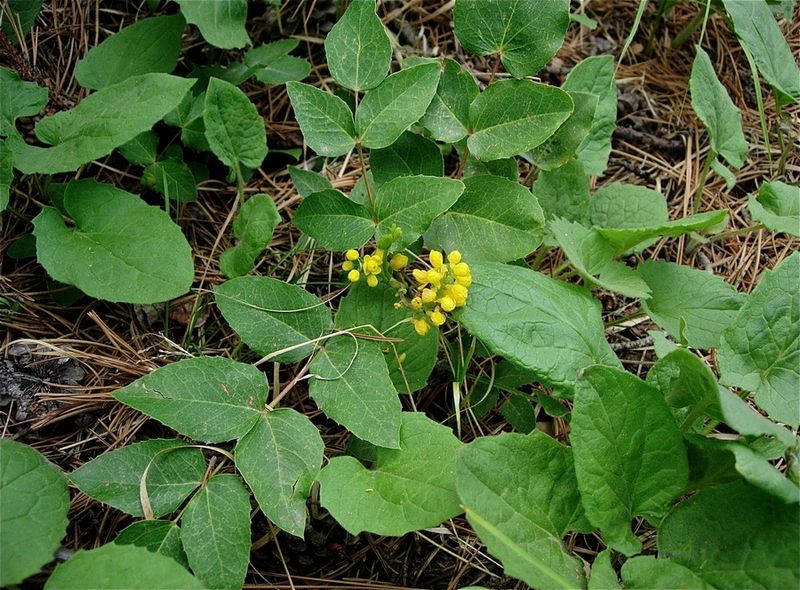
Cold nights paint creeping barberry in shades of burgundy and plum, almost like the plant is dressing up for fall. Its spiny, holly-like leaves look so festive that I sometimes forget it is a tough native shrub.
Botanists call it Berberis aquifolium var. repens, and you may also see it sold as creeping Oregon grape. It spreads slowly by underground stems, usually staying around a foot tall, which suits low porch planters nicely.
Bright yellow flower clusters appear in spring, followed by dusty blue berries that ripen during summer. Songbirds such as robins and cedar waxwings eat the fruit, so berries rarely last long on my plant.
Partial shade suits it best in hotter regions, while coastal gardeners can often give it more sun. Its tolerance for dry shade makes it handy for covered porches where many flowering plants sulk.
Use a well-drained potting mix, and water whenever the top couple of inches feel dry to the touch. It also handles cold surprisingly well, so it suits mountain and foothill porches where frost arrives early.
Those sharp leaf edges mean you should place it away from busy walkways where kids or pets might brush past. Wear gloves when tidying, and snip any leggy stems back to keep the plant low and full.
For a warm display, I set it in a dark ceramic pot next to a stack of mini pumpkins. Those reddish leaves stay handsome well into winter, so your porch keeps its seasonal glow long after Thanksgiving.