Why Coyote Brush Looks Fluffy And White In A California Garden This Time Of Year
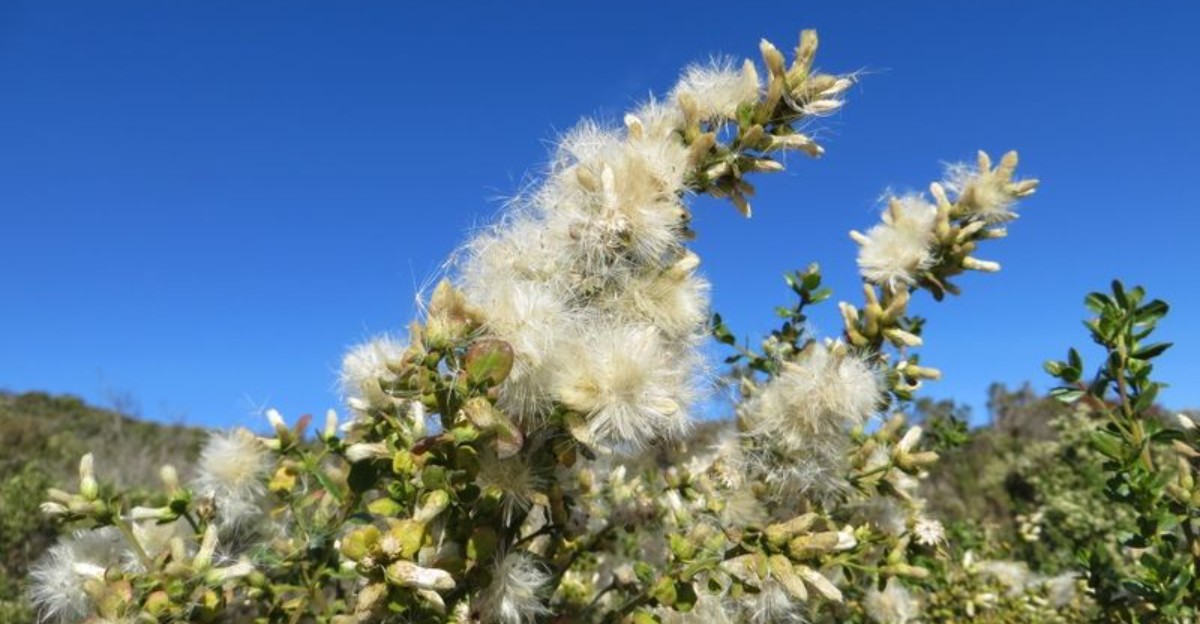
A single shrub on a California hillside can release seeds by the hundreds of thousands, each one riding its own tiny silk parachute. On a sunny day, the whole bush can look like it caught a freak snow flurry.
Truth is, I used to think it was some kind of bug fuzz or mildew. I even reached for a hose once to wash it off. Don’t laugh, but that soft white coating turned out to be the plant doing exactly what it was built to do.
Here’s what gets me most. Two shrubs can grow side by side, look nearly identical all summer, and then only one turns snowy in late fall.
Why, then, does one bush glow white while its neighbor stays plain green? The answer says a lot about how this tough native plant has spread across our coast for ages.
That Snowy Coating On Your Native Shrub Has A Hidden Job
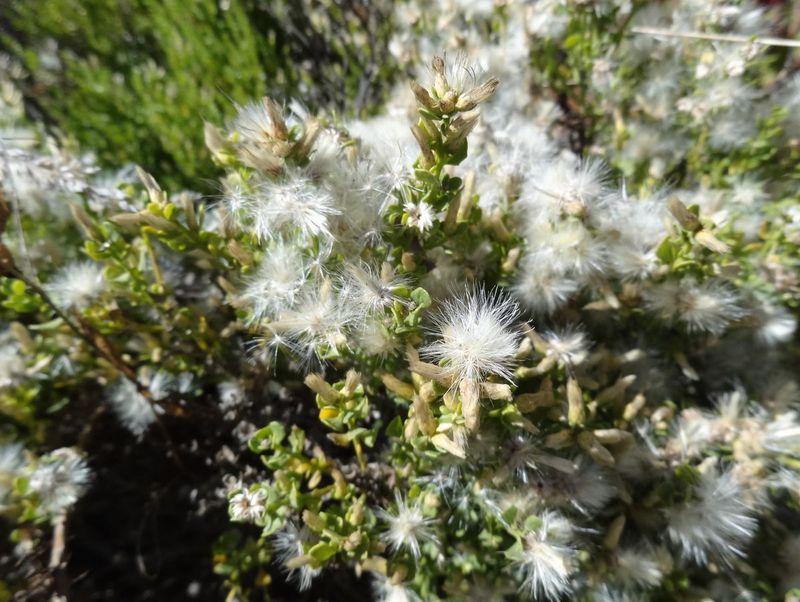
Walk past a coyote brush in late fall and you might do a double take. The shrub looks frosted, even when the thermometer reads 70 degrees.
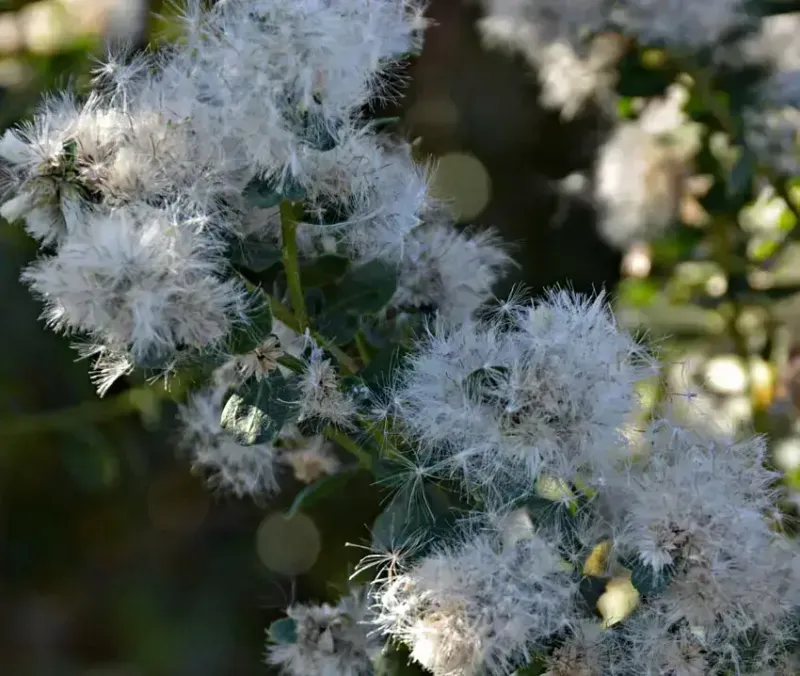
That white fluff is not frost, mold, or insect webbing. It is a crop of seeds, and each seed comes with its own fuzzy tuft. Coyote brush, known to botanists as Baccharis pilularis, is a member of the sunflower family, the same big group that gives us dandelions and thistles.
Like a dandelion, it packs its seeds into small flower heads. Once those heads ripen, the tufts open up and puff outward. Thousands of them across one shrub create that soft, cottony glow.
The timing makes sense for a coastal native. Most coyote brush flowers from late summer into winter, while many other plants are winding down. Fall and early winter breezes then carry the seeds off to new ground.
So the snowy look is a sign of a healthy, mature plant reaching the end of its yearly cycle. Nothing is wrong with it. In fact, a fluffy coyote brush is one of the clearest seasonal signals you can find in a native garden, right up there with toyon berries turning red.
Only The Female Coyote Brush Plants Turn Fluffy
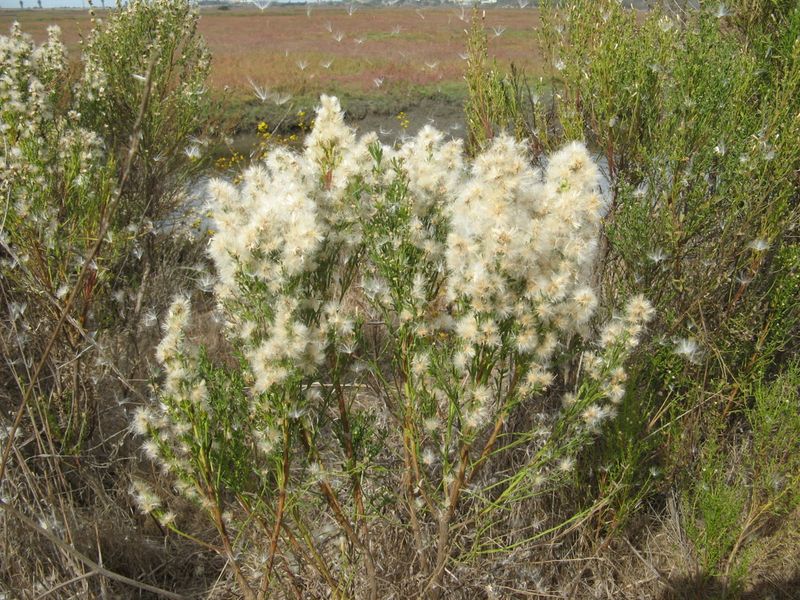
Plant biology gets surprisingly personal here. Coyote brush is dioecious, which means each shrub is either male or female.
Only the females make seeds, so only the females turn white and fluffy. Males stay greener in fall, dotted with small pale yellow or cream flower heads full of pollen. After blooming, those male flowers fade to a tan or brown color and simply drop.
I learned this one by accident. Two shrubs in my yard came from the same nursery flat, and for years I thought one was just healthier. Turns out one was a boy and one was a girl.
Pollen travels from male flowers to female flowers mostly by insects, with some help from wind. Once a female flower is pollinated, it grows a single seed topped with a white tuft. A shrub with plenty of male neighbors usually puts on the biggest snowy show.
Holly, kiwi, and pistachio work the same way, which is why gardeners sometimes need both sexes to get fruit. With coyote brush, you get to choose. Plant a female for the seasonal fluff, or pick a male if you want a tidier look. Both are equally tough and equally native.
Tiny Pappus Parachutes Ride The Fall Breeze
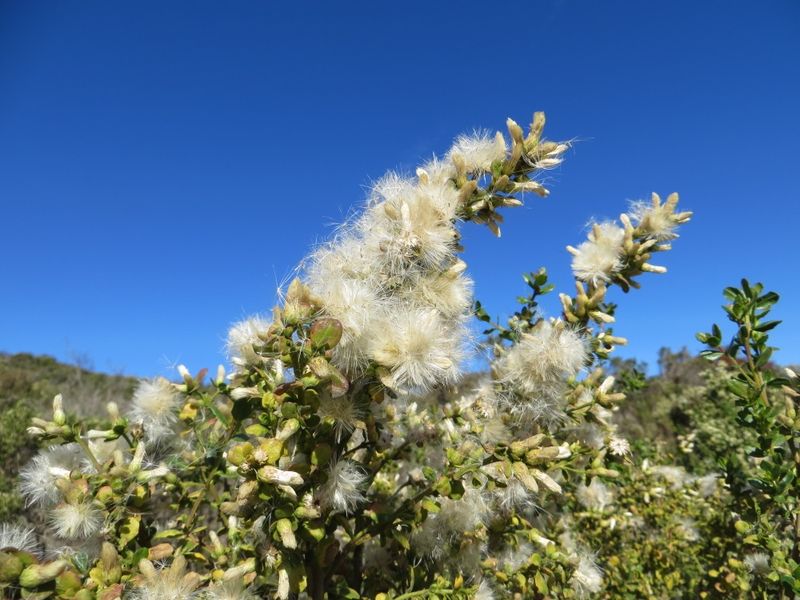
Grab a magnifying glass the next time you visit a fluffy shrub. Each white strand belongs to a structure called a pappus, a ring of fine, silky bristles attached to the top of a seed.
The pappus works like a parachute. It slows the seed’s fall and lets even a gentle breeze lift it away from the parent plant. The seed itself is tiny, so it does not take much wind to carry it surprising distances.
Watch on a breezy afternoon and you may see a slow drift of white specks floating across the yard. Backlit by low winter sun, they sparkle a bit like falling snow.
Fun fact: the word pappus comes from a Greek term for grandfather, likely a nod to white whiskers. Dandelion seeds and goldenrod seeds carry the same feature.
This wind travel is a big reason coyote brush shows up so quickly on bare slopes, old pastures, and burned areas along the coast. A few gusts can scatter seeds well beyond the garden fence. If you live near open land, that spreading habit is a natural part of how native scrub fills in after disturbance.
Late Season Coyote Brush Blooms Feed Bees And Butterflies
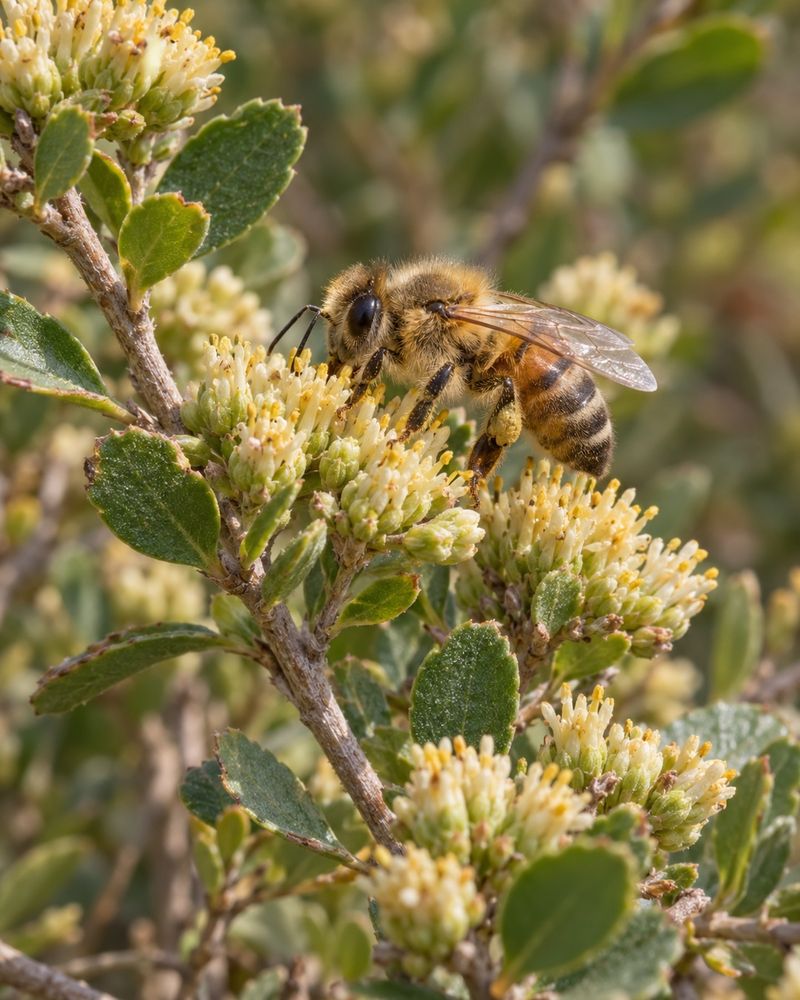
Bees still need groceries in November. Coyote brush happens to run one of the few open shops in town.
Its small flowers appear from roughly August into December, a stretch when many California natives have gone quiet after the long dry summer. That makes it a valuable nectar and pollen source late in the year. Native bees, flower flies, small wasps, beetles, and little butterflies all visit.
Many of those visitors earn their keep in the garden. Predatory wasps and hover fly larvae help control aphids and caterpillars. Birds then feed on the insects drawn to the shrub.
The dense branches also give cover to wrens, sparrows, lizards, and other small wildlife. Brush rabbits and quail often tuck themselves underneath for shelter.
I’m a sucker for a plant that pulls double duty. Coyote brush looks plain for most of the year, then quietly turns into a buzzing snack bar right when the rest of the yard takes a break. If you want more insect life in fall, planting a mix of male and female shrubs keeps both pollen and nectar on the menu.
Spot Male And Female Coyote Brush Before You Buy
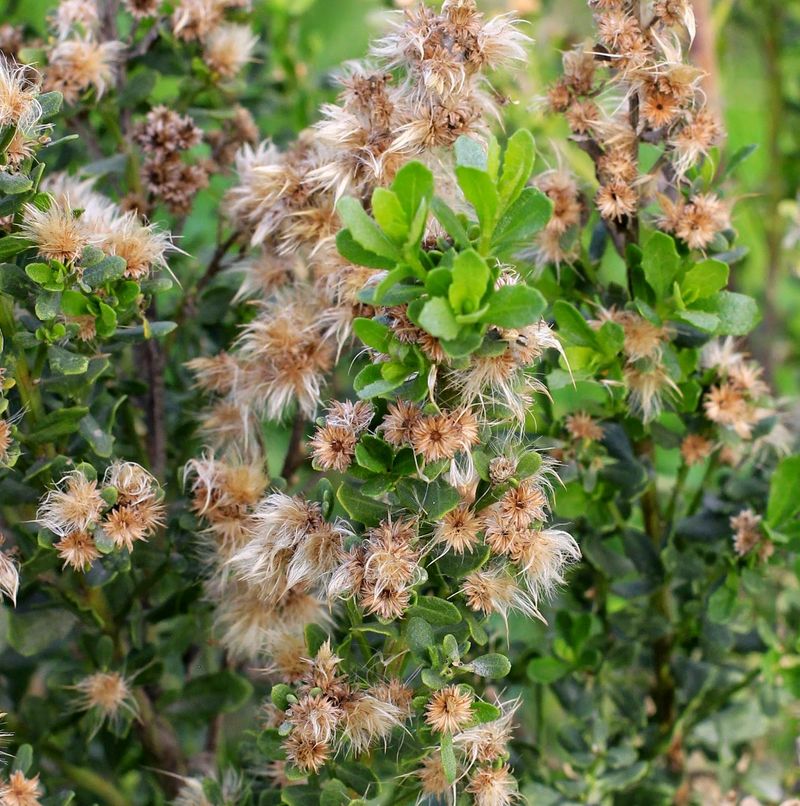
Shopping for coyote brush in spring can feel like buying a mystery box. Young plants look almost identical until they bloom.
Your best bet is to check the label. Many named cultivars are male and sold specifically for a seed-free look. Popular choices include ‘Pigeon Point’ and ‘Twin Peaks’, both low, spreading forms often used as ground covers.
If you are sizing up mature shrubs in fall, the clues get easier. Male flower heads look small, yellowish, and a bit dusty with pollen, then fade to brown. Female heads start greenish white and soon swell into soft white tufts as seeds ripen.
Fair warning, wild-grown shrubs and seedlings can be either sex, so a free volunteer in your yard is a coin toss. Watch it for a season before deciding where it fits.
Leaves offer no help. Both sexes have the same small, toothed, glossy green leaves that smell faintly resinous when crushed. Flowering time is your window, so jot a note on the calendar for October and take a look then.
Growing Coyote Brush In A Dry Sunny California Yard
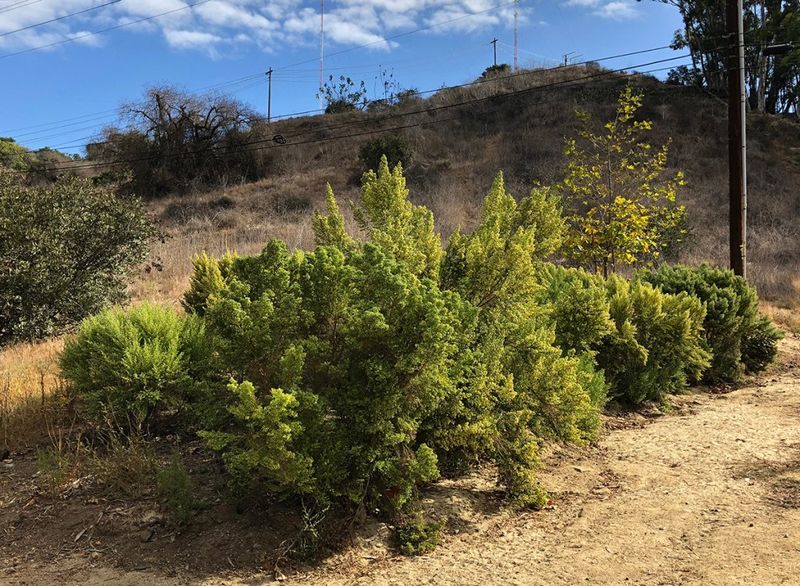
Few shrubs shrug off neglect quite like this one. Coyote brush is native to California, southern Oregon, and Baja California, and it handles sun, wind, salt air, and poor soils with ease.
Plant it in full sun with good drainage. Fall is the best planting season in California, since winter rains help roots settle in before summer heat. Water regularly the first year, then cut back to an occasional deep soak in summer, or none at all on the coast.
Upright forms can reach six to ten feet tall. Prostrate forms stay under two feet and spread several feet wide, making them handy for slopes and erosion control.
Prune in late winter to keep shapes tidy. Older upright shrubs can get leggy, and many gardeners cut them back hard every few years to refresh growth.
One caution comes from fire safety. Coyote brush holds resinous foliage and can build up dry twigs inside, so keep it well pruned and away from structures in fire-prone areas. Check your local defensible space rules before planting close to the house. Spaced properly, it brings evergreen texture with very little fuss.
Let That Fluffy Coyote Brush Be Part Of Your Fall Garden Story
Some years I find white tufts stuck to my sweater after weeding. I’ve stopped minding.
The fluffy phase is short and harmless. Seeds mostly blow away by midwinter, and the shrub returns to its plain green coat. If seedlings pop up in beds, pull them while small, since young roots come out easily.
Gardeners who prefer a cleaner look have two simple options. Choose a male cultivar from the start, or lightly shear a female plant after bloom to reduce seed spread. Shearing too early, while flowers are still open, does cost pollinators some late food, so weigh that trade.
For everyone else, the white fluff is worth celebrating. It marks the turn of the season along the coast and in the foothills. It also shows your yard is plugged into a native food web that has fed bees and birds since long before anyone planted lawns.
Try this simple next step. Pick a sunny morning with a light breeze this fall or winter and sit near a female shrub with a cup of something warm. Watch the seeds lift and drift. Few shows in a California garden cost so little and give so much.