15 Drought-Tolerant Perennials That Fill A California Bed In One Year
Plants tucked in during fall let winter rain handle much of the early watering while roots spread. In many California gardens, a bed set out this month can look surprisingly full by next summer.
The speed honestly impresses me. Many tough, low-water growers creep outward on underground runners or root wherever a stem touches soil.
A few reseed so freely that bare gaps vanish without any replanting. Once established, plenty need only a deep soak every couple of weeks in summer.
After one hot afternoon with the sprinklers off, I learned exactly who the real survivors were. A few thirsty plants fainted like stage divas. The tough ones barely noticed, and they’ve had prime real estate in my yard ever since.
Long, rainless California summers rarely forgive a needy garden. Which bare, sunny patch in your yard is ready for a makeover before the heat returns?
1. Yarrow
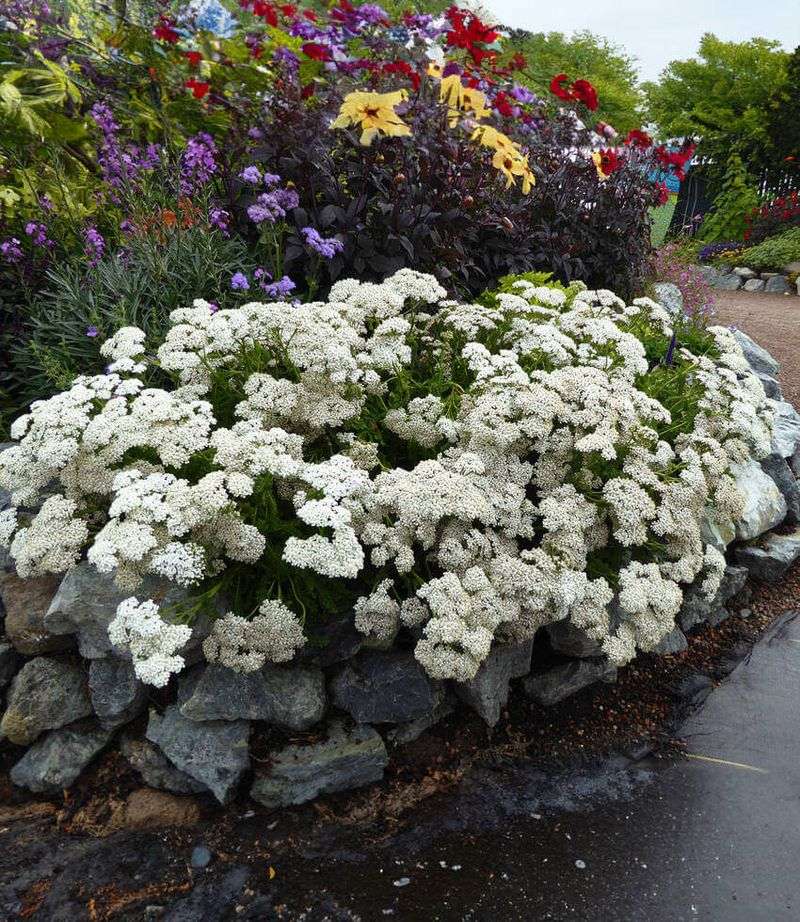
Brush your hand across yarrow leaves and you get a sharp, herbal scent that lingers on your fingers for minutes. Ancient Greek legend links its scientific name, Achillea, to the hero Achilles and his battlefield wounds.
I have to admit that this native was the first plant that made me feel like a real gardener. Its feathery foliage looks delicate, yet it shrugs off heat, wind, and poor soil like a seasoned hiker.
Common yarrow, Achillea millefolium, grows wild across much of the West, including coastal bluffs and mountain meadows. It handles USDA zones 3 through 9, so nearly every corner of the state can grow it happily.
Underground rhizomes help it creep outward, and seedlings pop up nearby, so a few plants can knit together fast. Space starts about eighteen inches apart in fall or early spring, and expect a soft green carpet by summer.
Flat flower clusters in white or pink open from late spring into summer and attract a crowd of tiny pollinators. Snip faded stems back to the leaves, and you will often coax another flush of blooms before autumn.
Plant it in full sun with soil that drains well, because soggy ground leads to floppy stems and rot. Once roots settle, deep watering every two or three weeks during summer usually keeps it looking fresh.
Deer mostly leave the bitter foliage alone, though a curious one might nibble a flower or two. You can also mow established patches occasionally, which turns yarrow into a tough, flowering lawn alternative.
2. Hummingbird Sage
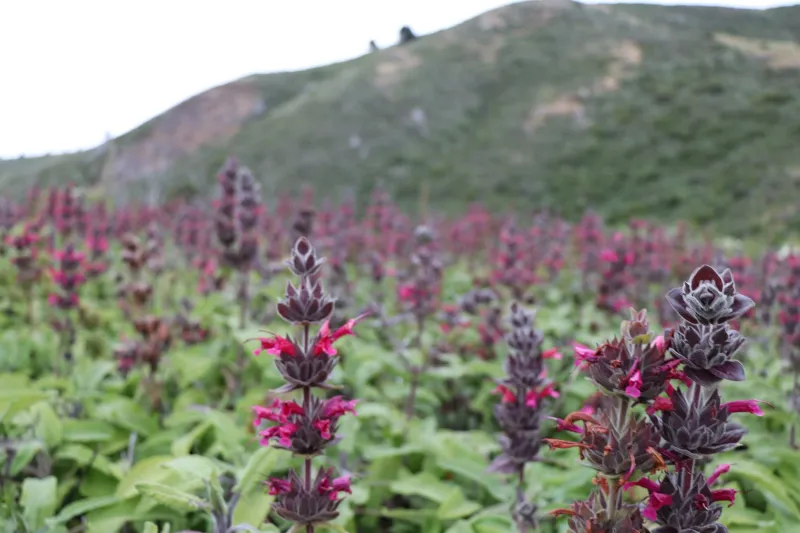
Dry shade under an oak tree stumps most gardeners, yet hummingbird sage treats that tricky spot like a cozy living room. Its big crinkled leaves smell fruity and sweet, a little like a ripe bowl of mixed berries.
Salvia spathacea is a true native that grows naturally in coastal woodlands and chaparral edges. Personally, I think its fragrance alone makes it worth planting near a path where you brush past it often.
Gentle underground rhizomes push the plant outward, forming a lush mat that slowly fills gaps between shrubs. Expect plants to reach one to three feet tall and spread three feet or more in good conditions.
Tall spikes of rose-pink to magenta flowers rise from late winter into spring, and hummingbirds zoom in quickly. You might notice them guarding the patch fiercely, chasing away rivals with loud chirps and dramatic dives.
Plant it in partial shade with well-drained soil, especially under native oaks that dislike summer irrigation. Full sun along the coast works fine, while hotter inland gardens should offer it afternoon shade for best results.
After establishment, this sage needs little summer water and may go semi-dormant during the hottest weeks. Cut back tired flower stalks in early summer, and fresh leaves usually return once the cooler weather arrives.
Deer tend to skip the sticky, aromatic foliage, which makes it handy for rural yards. Pair it with ferns or coral bells, and that gloomy corner suddenly feels like a peaceful woodland retreat.
3. California Fuchsia
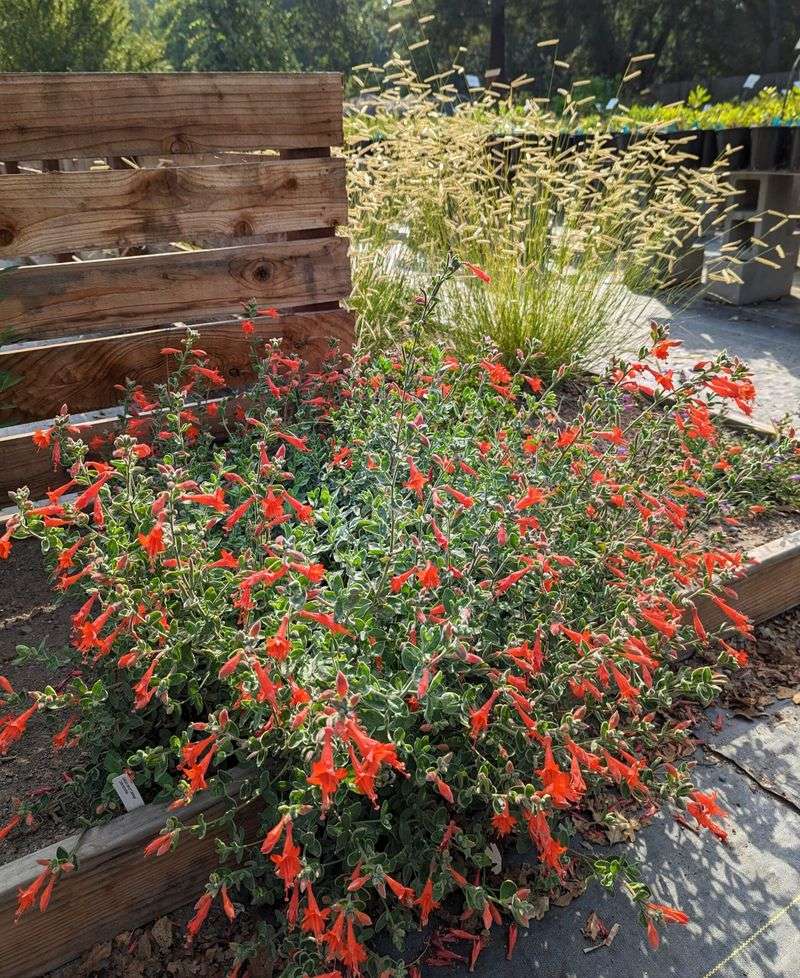
Late summer gardens often look tired and crispy, and then this plant lights up like a string of tiny red lanterns. Its scarlet trumpets appear just as many other natives slip into their dry season rest.
Botanists now call it Epilobium canum, though many nurseries still sell it under the older name Zauschneria. I love how that tongue-twisting label sounds almost as wild as the fiery flowers themselves.
Narrow gray-green leaves feel soft and slightly fuzzy, which helps the plant hold moisture during scorching afternoons. Most forms grow one to two feet tall and spread several feet wide by sending out underground runners.
Plant it in full sun with lean, fast-draining soil, because rich soil and frequent water make it floppy. Rocky slopes and gravel beds suit it beautifully, and it often looks happiest tucked against warm boulders.
Blooms usually run from late summer into fall, giving migrating hummingbirds a reliable source of nectar. You might spot them visiting every flower in a single pass, then circling back for seconds minutes later.
Since the plant spreads eagerly, give it room or edge the bed so it stays where you want. Cut stems nearly to the ground in winter, and fresh growth returns quickly once spring warmth arrives.
Deer generally avoid it, and established plants survive on occasional deep summer soaks. Try pairing it with silver sages or native grasses for a bold autumn display that rarely needs fussing.
4. Seaside Daisy
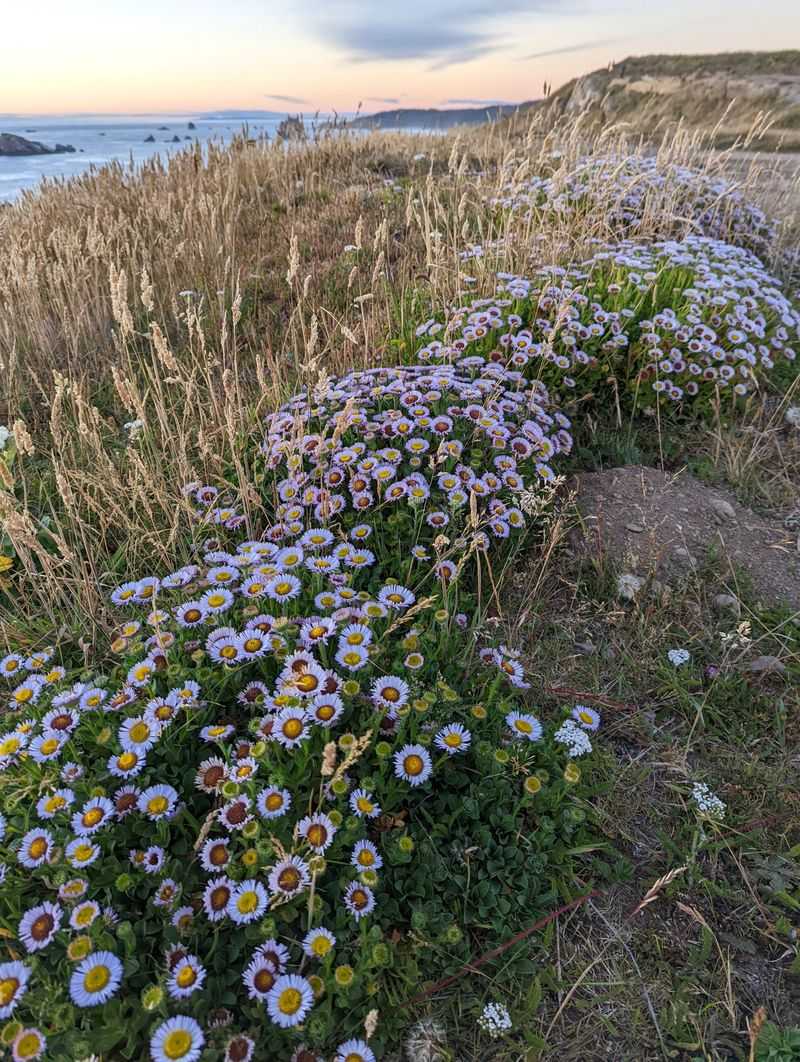
Coastal cliffs battered by salty wind seem like a rough place to live, yet seaside daisy thrives there. Its cheerful lavender petals circle bright yellow centers that practically glow on foggy mornings.
Erigeron glaucus grows naturally along the Pacific shoreline from Oregon south to the Santa Barbara area. I believe it is one of the friendliest natives for beginners, since it forgives small mistakes with a smile.
Plants form low mounds about a foot tall, spreading one to two feet wide within their first season. Set several in a row along a path, and they soon blend into one soft, flowering ribbon.
Flowers open heavily in spring and summer, and coastal gardens may see scattered blooms through much of the year. Butterflies and small native bees visit often, landing on those flat faces like tiny helicopter pads.
Give it full sun near the coast, while hotter inland yards should provide a little afternoon shade. Well-drained soil keeps the roots healthy, and sandy ground near the beach suits it especially well.
Once established, occasional summer watering keeps the foliage plump and the flowers coming. Trim spent flower stems now and then, and the plant usually rewards you with a tidy shape and fresh buds.
Look for cultivars such as Wayne Roderick, which blooms generously and stays compact. You can also tuck it into containers on a breezy patio, where its toughness really shines.
5. Angelina Stonecrop
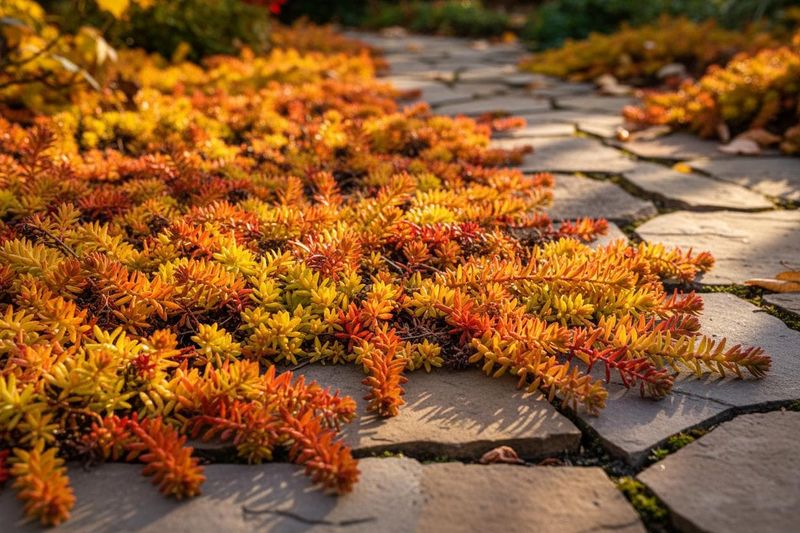
Golden needles that glow like neon in summer turn coppery orange when winter nights grow chilly. Angelina stonecrop feels like two different plants depending on the month you happen to visit.
Botanists list it as Sedum rupestre Angelina, a low succulent native to rocky areas of Europe. Personally, I use it whenever a bed needs a pop of bright color without extra flowers or water.
Each little stem roots wherever it touches soil, so a single plant can easily double its width in a year. Mature mats stay only a few inches tall while spreading a foot or more across.
Small yellow star-shaped flowers appear in summer, drawing in bees that hover over the bright carpet. The blooms are pleasant, but the chunky foliage remains the main attraction for most of the year.
Plant it in full sun with gritty, lean soil, since heavy clay and frequent watering cause rot quickly. Rock gardens, wall crevices, and container edges suit it nicely, and it spills beautifully over pot rims.
You can multiply your plants for free by breaking off pieces and pressing them into moist soil. Within a few weeks, those cuttings usually form fresh roots and start creeping outward on their own.
Established patches need water only during long hot spells, especially in inland valleys. Pair it with blue fescue or dark purple succulents, and the color contrast looks downright electric.
6. Creeping Rosemary
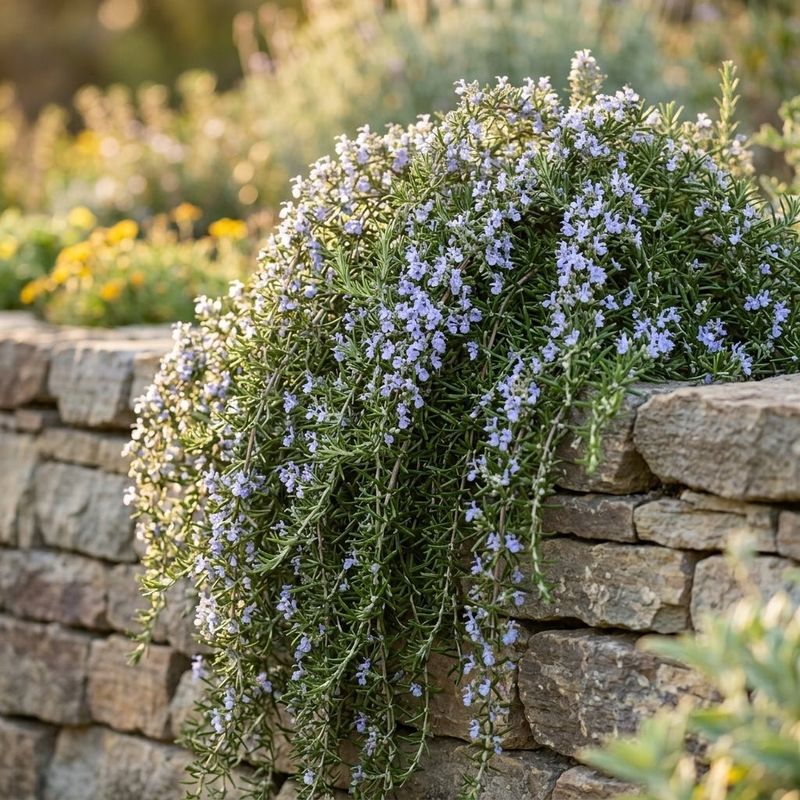
A trailing branch of rosemary spilling over a stone wall smells amazing every time the afternoon sun warms it. You can snip a sprig for dinner while walking past, which feels like a sneaky kitchen bonus.
Scientists recently moved rosemary into the sage family genus, so its proper name is now Salvia rosmarinus. The prostrate forms hug the ground instead of growing upright, making them excellent for covering slopes quickly.
Most creeping types grow less than a foot tall while stretching four to eight feet wide over time. I like how a few plants spaced generously can blanket a hot bank in just one growing season.
Small pale blue flowers appear mostly from late winter into spring, offering early food for hungry bees. You might hear the buzzing before you see the blooms on mild, sunny mornings.
Plant it in full sun with sharp drainage, because soggy roots are the main way gardeners lose rosemary. Poor, rocky soil is fine, and too much fertilizer often makes the stems weak and leggy.
Water regularly during the first summer, then cut back to occasional deep soaks once growth looks steady. Light trimming after flowering keeps the plant dense, but avoid cutting into old woody stems without leaves.
Deer rarely bother the strongly scented foliage, which helps in foothill neighborhoods. Let it cascade over retaining walls or raised beds, and you get a living waterfall of fragrant green.
7. Catmint
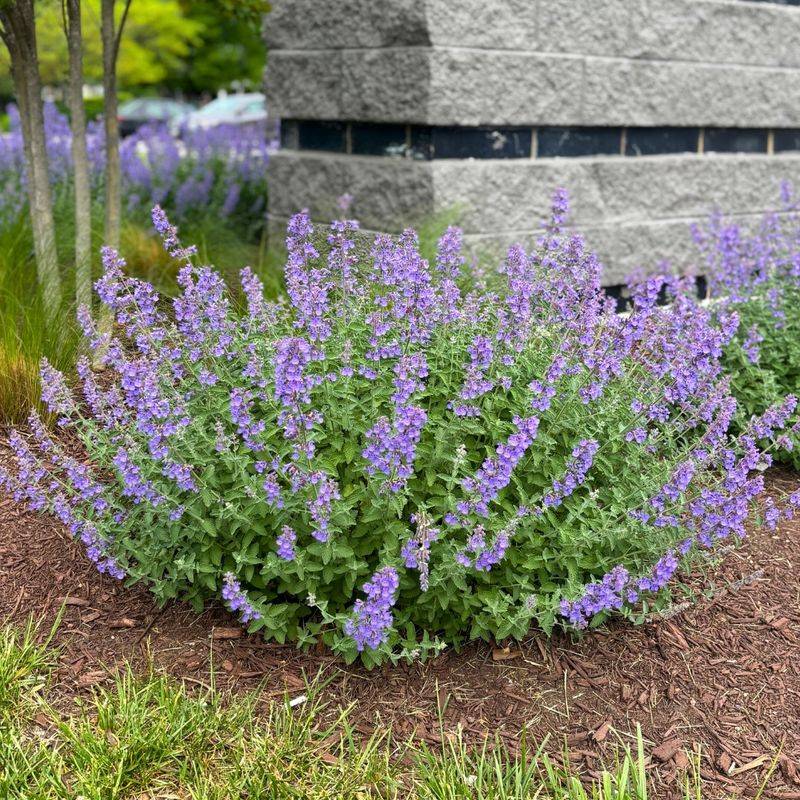
Neighborhood cats sometimes roll around in catmint like they just discovered the best party in town. Not every cat reacts, but the ones that do look hilariously blissed out in the foliage.
Walker’s Low is a popular hybrid often listed as Nepeta x faassenii, and it grows fast. A small nursery plant can reach its full size within a single year, which feels almost like garden magic.
Soft gray-green leaves form loose mounds about two feet tall and two to three feet wide. I have to admit that its billowy shape hides awkward bare spots better than almost anything else I grow.
Lavender-blue flower spikes open in late spring and continue into summer, bringing in bees from all directions. Shear the plant back by about a third after the first flush, and a second wave usually follows.
Give it full sun and well-drained soil, since rich or soggy ground makes the stems sprawl and flop. Afternoon shade helps in very hot desert areas, though coastal and valley gardens rarely need it.
Established clumps handle dry spells nicely with a deep drink every week or two during peak heat. Deer and rabbits usually avoid the fragrant leaves, which makes it a smart choice for exposed front yards.
Use it to edge a path or soften the base of roses and lavender. Brushing past it releases a minty scent that makes weeding chores feel a little more pleasant.
8. Bee’s Bliss Sage
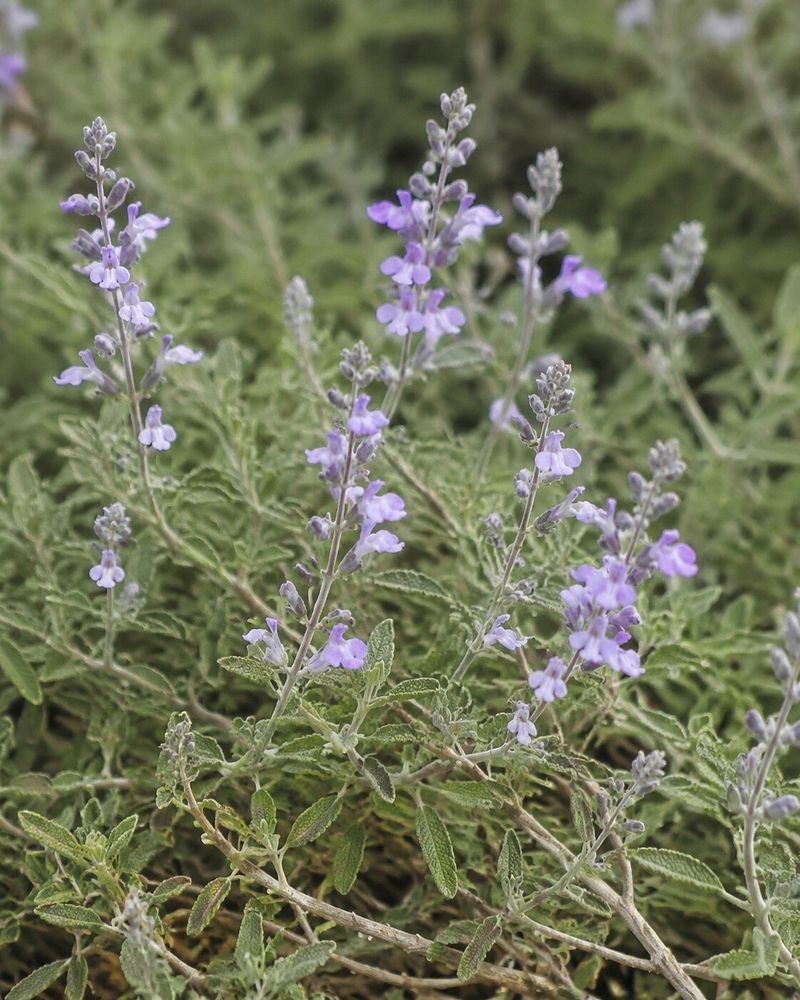
My own Bee’s Bliss sage swallowed a whole corner of mulch before I finished my first summer of weeding. Its silvery leaves shimmer in the breeze, and the smell reminds me of hiking dusty chaparral trails.
Bee’s Bliss is a hybrid of native sages, thought to involve Salvia sonomensis and Salvia leucophylla. Rather than growing upright, it spreads low, reaching one to two feet tall and up to eight feet wide.
Whorls of pale lavender flowers open in spring, and the name suddenly makes perfect sense. You can stand beside a blooming patch and count dozens of busy bees working each flower stem.
Plant it in full sun with well-drained soil, and give it plenty of elbow room. Spacing plants about five feet apart still produces solid coverage surprisingly fast in many gardens.
After the first year, it often needs little or no summer irrigation in coastal and mild inland regions. Too much water during hot weather can trigger root problems, so err on the dry side.
Light pruning after bloom keeps the mat tidy, and the plant regrows quickly from healthy green stems. Avoid cutting hard into bare wood, because older branches may not sprout new leaves reliably.
Deer usually leave it untouched, thanks to the strongly aromatic foliage. Try it on a sunny slope where grass struggles, and watch that bare ground turn silver almost overnight.
9. Autumn Sage
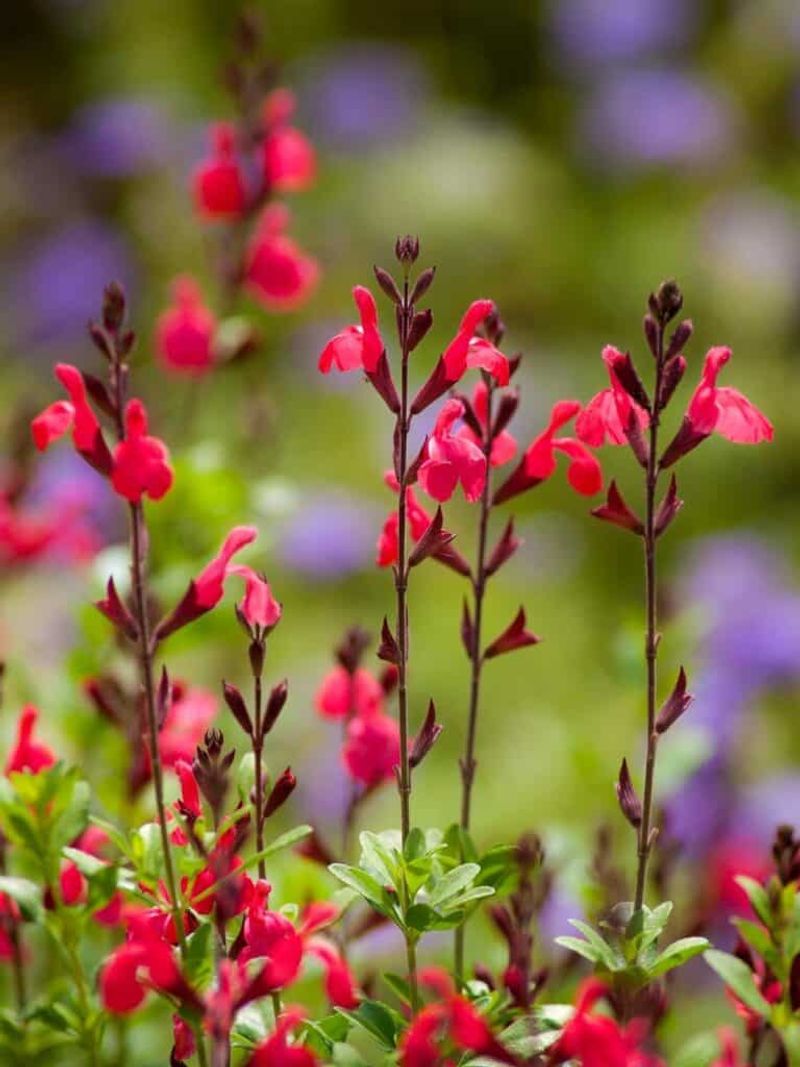
Hummingbirds treat autumn sage like a roadside snack stand that stays open for months on end. Its small, bright flowers come in red, pink, coral, purple, and soft white depending on the variety.
Salvia greggii is native to Texas and northern Mexico, where it handles rocky soil and blazing sun. That tough background makes it a natural fit for dry Mediterranean gardens with long, rainless summers.
Plants form bushy mounds two to three feet tall and wide, often reaching that size in their first season. Personally, I love how quickly a few gallon pots turn a bare strip into a colorful hedge.
Despite the name, blooms often begin in spring and continue through summer into fall with brief pauses. A quick trim after each heavy flush encourages fresh buds and keeps the shape compact.
Plant it in full sun with well-drained soil, avoiding spots where water pools after winter storms. Heavy clay can work if you plant slightly high on a small mound for better drainage.
Once settled, deep watering every couple of weeks in summer usually keeps the leaves looking healthy. Cut it back by about half in late winter, and new growth fills in quickly with spring warmth.
Deer generally ignore the minty-scented leaves, which adds to its appeal in many neighborhoods. Mix several colors together, and your bed becomes a cheerful patchwork that hummingbirds visit all day.
10. California Poppy
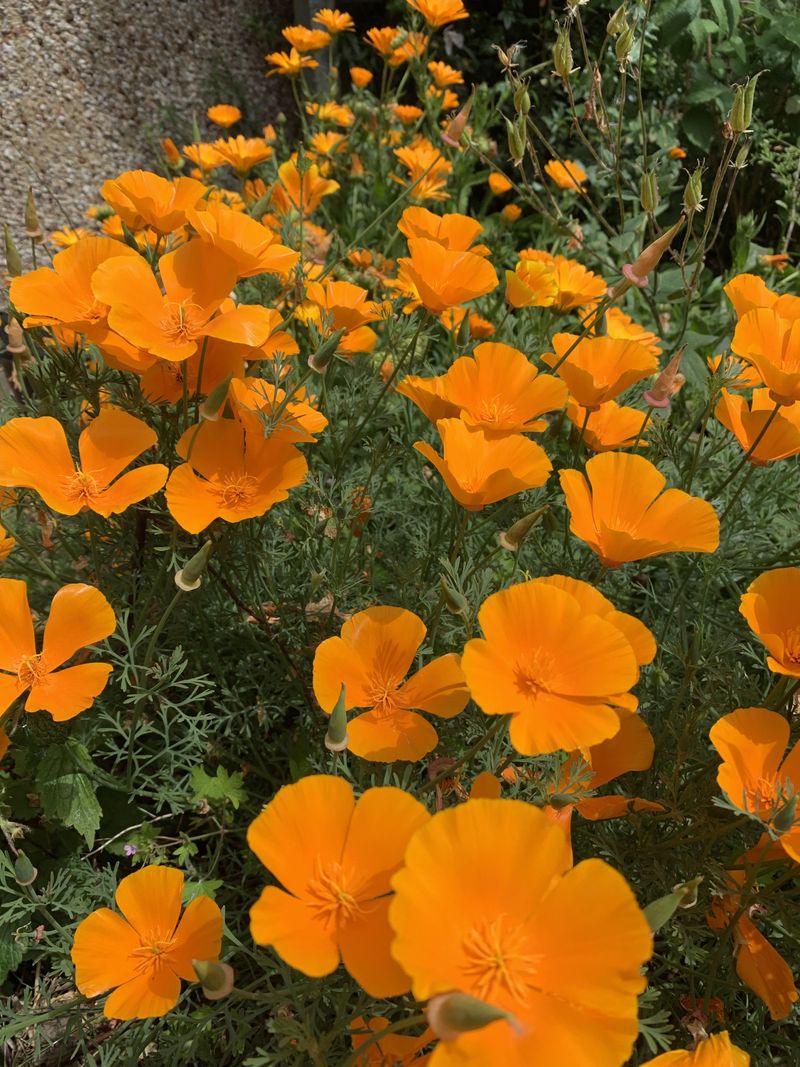
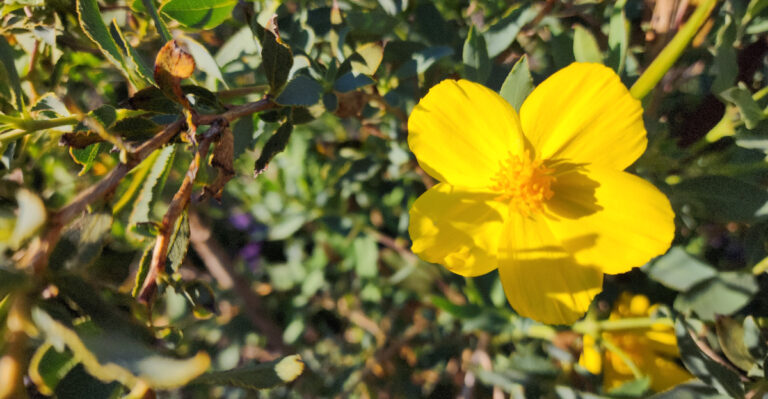
Poppy petals close up tightly at night and on cloudy days, then unfold again when the sun returns. Watching a bed of them wake up on a bright morning feels like a slow, golden sunrise.
Eschscholzia californica became the official state flower in 1903, and it grows wild across grasslands and hillsides. In mild regions it acts as a short-lived perennial, while colder or hotter spots treat it more like an annual.
Either way, the plant reseeds so freely that a patch usually returns year after year without replanting. I love how scattered seeds in fall often become a carpet of orange by the following spring.
Feathery blue-green leaves form low clumps, and flowers can appear within a couple of months after sowing. Most bloom heavily from late winter through spring, with some flowers lingering into summer.
Sow seeds directly in fall before winter rains, since poppies dislike being moved once their taproots form. Full sun and well-drained, even poor, soil give the best results with very little fuss.
Skip the fertilizer, because rich soil produces leafy plants with fewer flowers. When blooms fade in summer heat, let some seed pods ripen and pop open for next year’s show.
Picking wild poppies on public land is discouraged, so grow your own for bouquets instead. Pair them with purple lupines, and you get a classic springtime color combo right at home.
11. Hardy Ice Plant
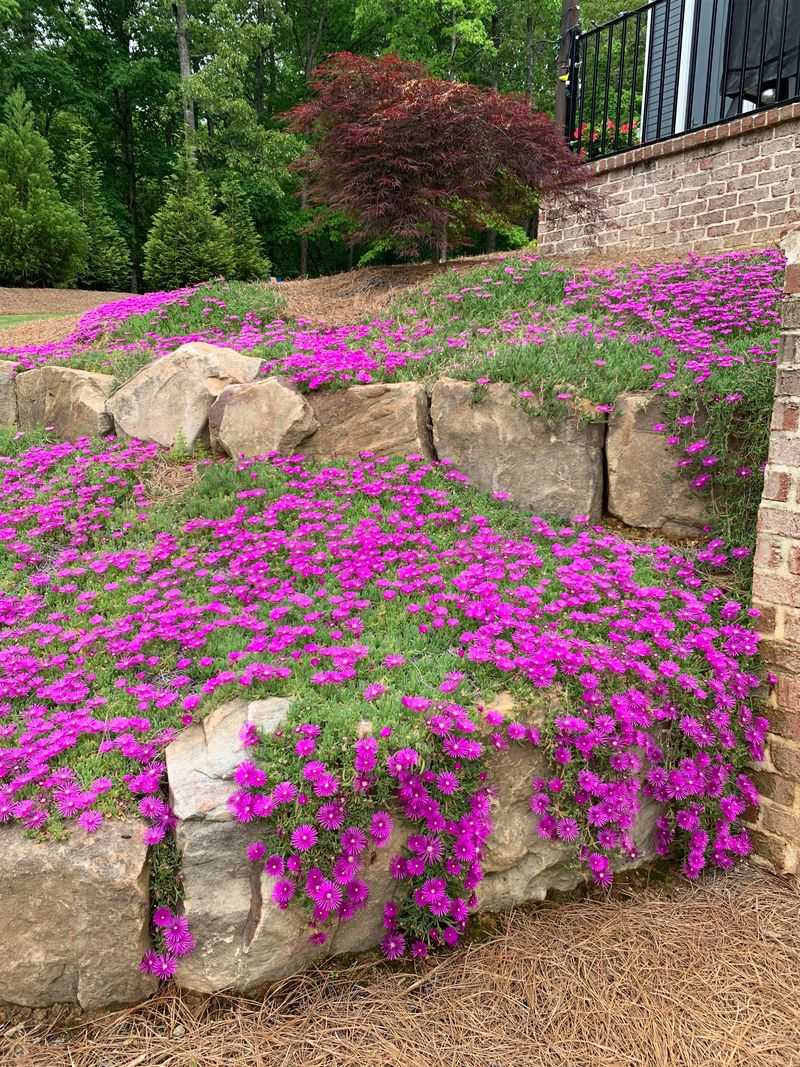
Hardy ice plant flowers have a glossy shimmer that makes them sparkle in bright sunlight. Tiny crystal-like cells on the leaves catch light too, which explains the frosty name.
Delosperma cooperi comes from South Africa and differs from the aggressive coastal ice plant that invades native dunes. That beach plant belongs to Carpobrotus, so check labels carefully before buying anything called ice plant.
This tidy succulent forms a low mat two to six inches tall, spreading one to four feet across. A single plant can roughly double in size during its first year, filling gaps between stepping stones nicely.
Vivid magenta-purple daisy flowers bloom from late spring through summer, often hiding the foliage underneath. I believe few groundcovers deliver that much color while asking for so little in return.
Plant it in full sun with sharply draining soil, such as sandy beds or gravel-mulched slopes. Wet winter soil is its biggest enemy, so avoid low areas where rainwater collects.
Water every week or so during the first summer, then reduce to occasional soaks during hot spells. Fleshy leaves store moisture, so wrinkled or soft foliage is your signal that a drink is needed.
Bees visit the bright flowers eagerly on warm afternoons. Light foot traffic is okay along path edges, but plant it where people rarely step for the best long-term coverage.
12. Creeping Thyme
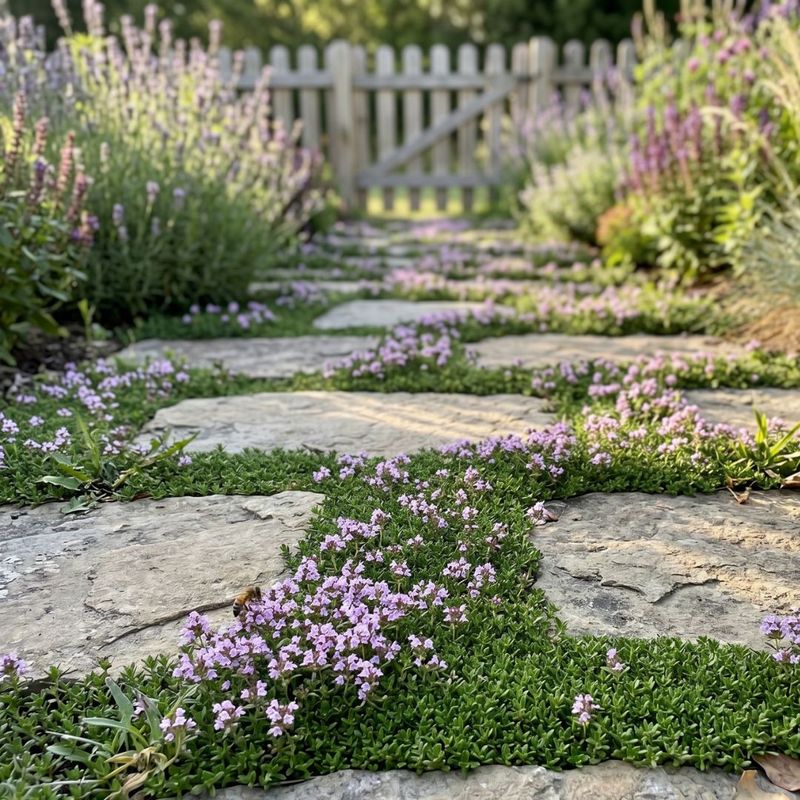
Stepping on creeping thyme releases a warm, savory scent that drifts up around your ankles. It turns a simple walk to the mailbox into a tiny aromatherapy session.
Thymus serpyllum is a low Mediterranean-type herb often called mother of thyme in older garden books. Mats usually stay one to four inches tall while spreading a foot or more across each season.
Plant starts about twelve inches apart, and they can join into one carpet within a single growing season. I like tucking it between flagstones, where it softens hard edges and crowds out sneaky weeds.
Clusters of tiny pink, purple, or white flowers open from late spring into summer. You might notice the whole patch humming with bees, so wear shoes if you walk across it barefoot.
Full sun and lean, well-drained soil keep the plants dense and healthy. Heavy clay or frequent sprinklers can lead to patchy rot, especially during warm, humid stretches.
Once established, it handles dry periods well with deep watering every couple of weeks in summer. Shear lightly after blooming to remove old flower stems and encourage fresh leafy growth.
Deer tend to pass it by because of the strong herbal oils. Most ornamental creeping types are edible, though upright culinary thyme usually tastes stronger and works better in the kitchen.
13. Margarita BOP Penstemon
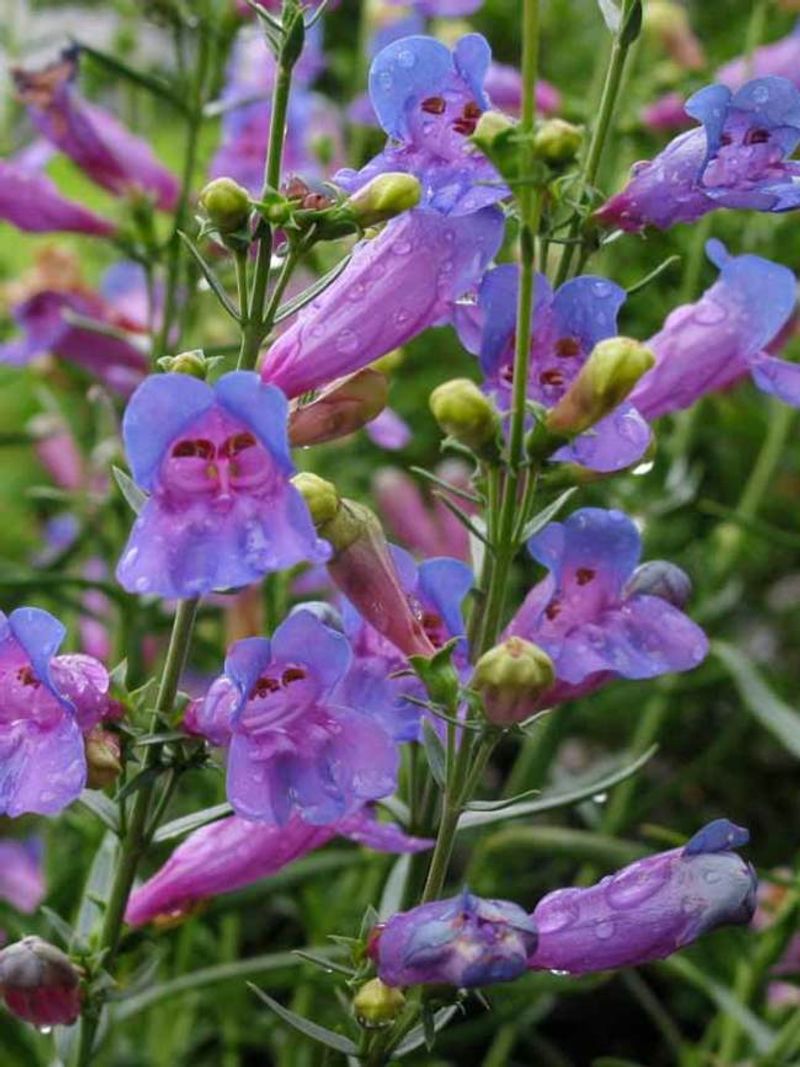
Blue flowers are surprisingly rare in gardens, so Margarita BOP penstemon feels like finding a little treasure. Each tubular bloom blends sky blue with hints of violet and pink near the throat.
This selection comes from foothill penstemon, Penstemon heterophyllus, a native that grows on dry slopes. The odd name honors the Margarita Ranch area, and BOP stands for best of planting.
Plants form bushy mounds roughly one to two feet tall and wide, filling in quickly the first year. Personally, I find it one of the easiest native penstemons for beginners to keep happy.
Flower spikes appear in spring and early summer, attracting hummingbirds and native bees. Trim spent stems right after bloom, and the plant often sends up a smaller round of flowers.
Plant it in full sun or light afternoon shade with well-drained soil. Gardens with clay should use a raised bed or mound, because standing water around the crown causes decline.
Water regularly until new growth appears, then switch to occasional summer soaks once established. Many native gardeners report it tolerates a bit more garden water than other penstemons, which helps mixed beds.
Plants may grow woody after a few years, so take cuttings to refresh the bed. Pair it with California poppies for a bright blue and orange combination that looks wonderful in spring.
14. Frog Fruit
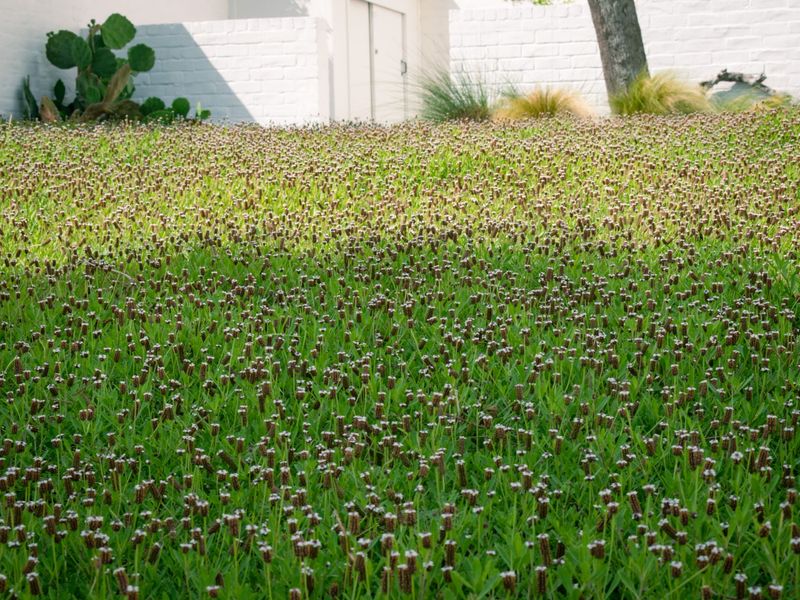
Frog fruit has nothing to do with frogs or fruit, which makes its silly name easy to remember. Its tiny flower heads look like little lollipops, ringed with white and lavender blooms.
Phyla nodiflora grows naturally in the warm south of the state and across the southern United States. Some gardeners also call it lippia or turkey tangle, and it works well as a lawn alternative.
Mats stay only a few inches tall while spreading several feet across through rooting stems. When spaced about two feet apart, plants can cover an area within one growing season in warm climates.
Flowers appear from spring through fall, attracting butterflies like buckeyes and tiny native bees. I love watching small butterflies flutter just above the ground, hopping from bloom to bloom.
Full sun keeps growth dense, though light shade is fine in hot inland regions. It tolerates clay, sand, and even slightly salty soil, which makes it useful near the coast.
Water deeply during establishment, then reduce to every week or two during peak summer heat. Plants may go partly dormant and brown during cold winters, then green up again with spring warmth.
Mow occasionally if you want a lawn look, or let it grow naturally for more flowers. Keep it away from veggie beds, because the vigorous runners can wander farther than expected.
15. Yankee Point Ceanothus
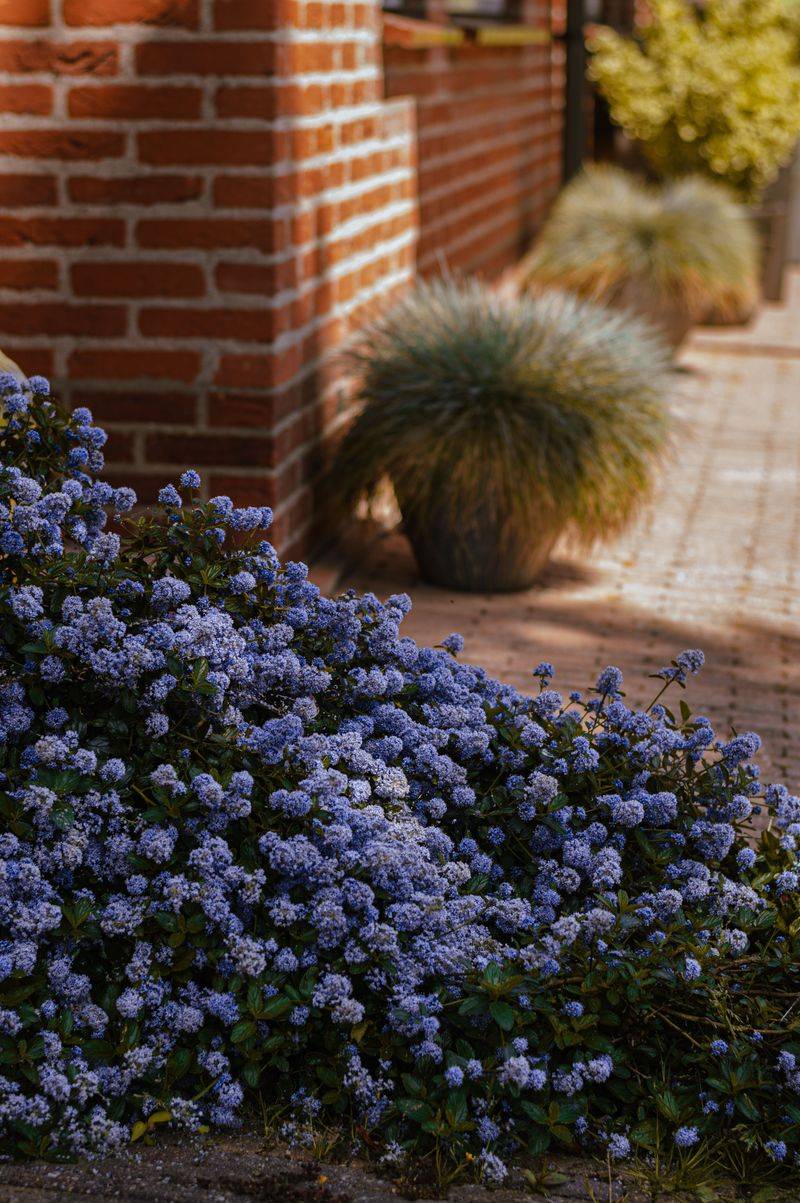
Clouds of blue flowers cover Yankee Point ceanothus in late winter, turning slopes into rippling waves of color. Bees arrive so early that the whole shrub seems to buzz on sunny February afternoons.
This native groundcover shrub, Ceanothus griseus var. horizontalis Yankee Point, was named after a spot near Carmel on the Monterey coast. Gardeners often call ceanothus wild lilac, though it is not related to true lilacs.
Plants grow two to three feet tall and can spread eight to twelve feet wide over time. I have to admit that one shrub covered more ground than three plants of anything else I tried.
Glossy dark green leaves stay attractive all year, giving the bed structure when flowers fade. Fragrant blue clusters typically bloom from late winter into spring, feeding butterflies and other pollinators.
Plant it in full sun along the coast, while inland gardens benefit from some afternoon shade. Well-drained soil matters a lot, because heavy summer watering in warm soil shortens its lifespan.
Fall planting lets winter rain help roots spread before the first dry season arrives. After establishment, give only occasional summer water, especially in hot valleys where root rot is a concern.
Deer browse it sometimes, so young plants may need protection at first. Use it to hold soil on slopes, and enjoy that blue blanket every year with surprisingly little effort.