Your Bittersweet Holiday Wreath Could Be Spreading An Invasive Vine Across Ohio
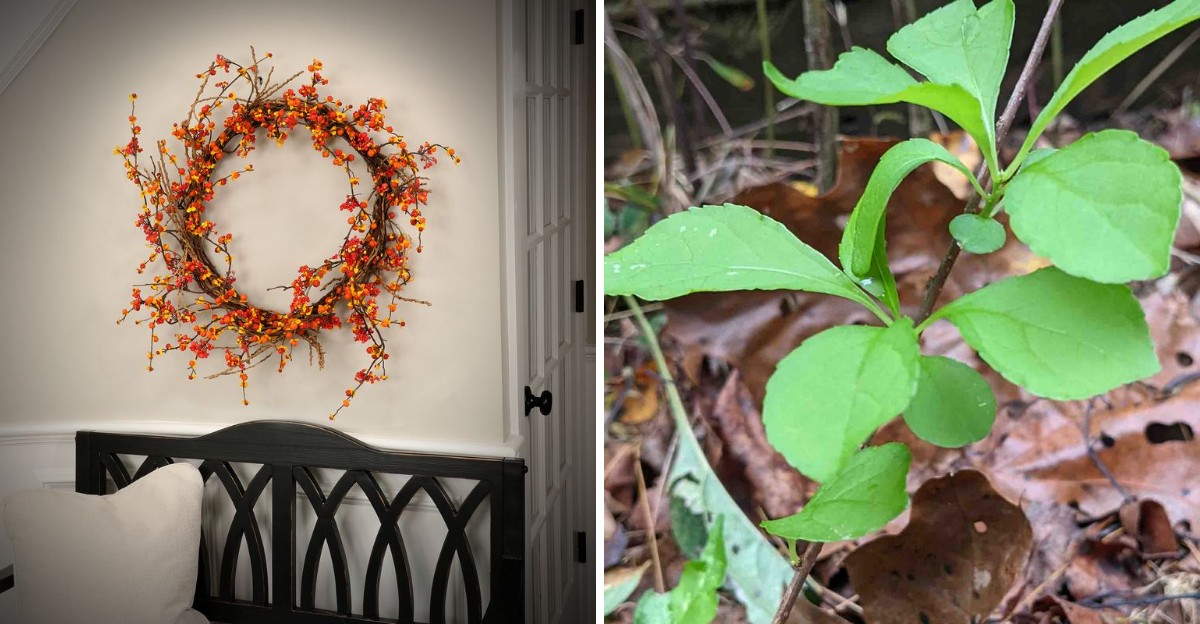
Some of the prettiest wreaths sold at fall markets are made from a vine nicknamed the kudzu of the north.
Those cheerful orange and red berries are packed with seeds. Birds love them, and so do crafters.
The vine arrived in the United States around the 1860s as a garden ornament, and it has been climbing ever since.
I love a rustic door wreath as much as anyone. I used to toss old ones into the brush pile without a second thought.
Here in Ohio, that simple habit can plant trouble in your own backyard woods.
You deserve to know what you’re hanging by the front door. One small berry can turn into a tree-smothering tangle within a few seasons.
Knowing what to look for and how to handle an old wreath can help keep this invasive vine from spreading beyond your front door.
1. Those Bright Orange Wreath Berries Have A Secret Past
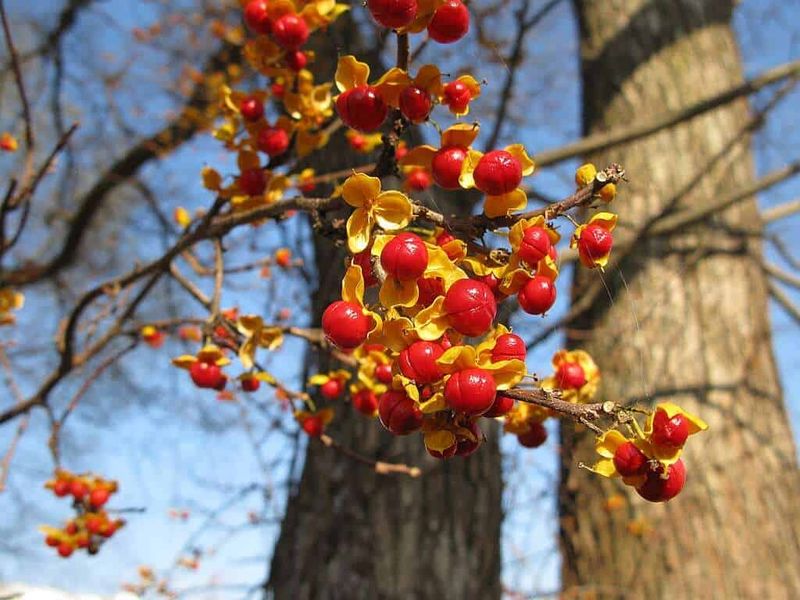
A plant can look cozy and festive while carrying a complicated backstory. The vine in many store-bought and homemade wreaths is Oriental bittersweet, known to scientists as Celastrus orbiculatus.
It comes from eastern Asia, including China, Korea, and Japan. Gardeners in the 1800s planted it for its showy fall fruit, and nobody worried much about where those seeds might travel.
Fast forward to today, and the vine has spread through woodlands, roadsides, and fencerows across much of the eastern United States.
Ohio officials list it as a prohibited invasive plant. The Ohio Department of Agriculture added it to the state’s invasive plant rule, which means it should not be sold or distributed here.
That rule covers the plant, and craft materials containing viable seeds raise the same concern.
So that charming wreath at the farm stand may be a sneaky problem in disguise. I find it a little funny that something so pretty earned the nickname kudzu of the north.
Once you learn its habits, though, the name makes perfect sense.
The good part is that knowledge gives you power. Learning to spot this vine helps you decorate wisely and protect the woods you love walking through each season.
2. How Wreath Seeds Sneak From Your Front Door Into The Woods
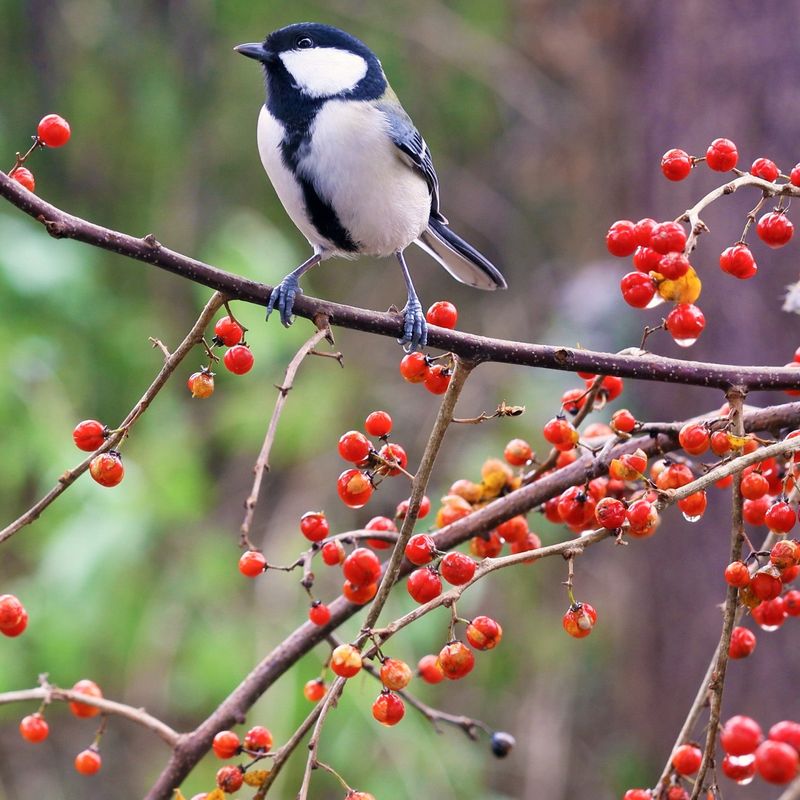
Every little berry on that wreath holds seeds that can still sprout. The fruit starts as a yellow capsule that splits open in fall, showing a bright red-orange seed coat inside.
Those seeds often stay viable long after the vine is cut and dried.
Trouble usually starts after the holidays. Plenty of folks toss old wreaths into a wooded lot, a ditch, or the back corner of the yard.
Seeds drop into the soil, wait for spring, and start growing.
Birds help too. Robins, starlings, and other fruit eaters snack on berries hanging by your porch, then fly off and drop seeds far away.
A single wreath can quietly start new patches in spots you may not visit for years.
Even loose berries falling on the porch can get swept into flower beds. Young seedlings handle shade well, so they can hide under shrubs and trees until they’re ready to climb.
You don’t need to panic over a wreath already on your door. Just keep an eye on falling berries, sweep them up, and plan a safe way to get rid of it later.
Small habits like that make a real difference.
3. Check Where The Berries Grow On The Bittersweet Stem
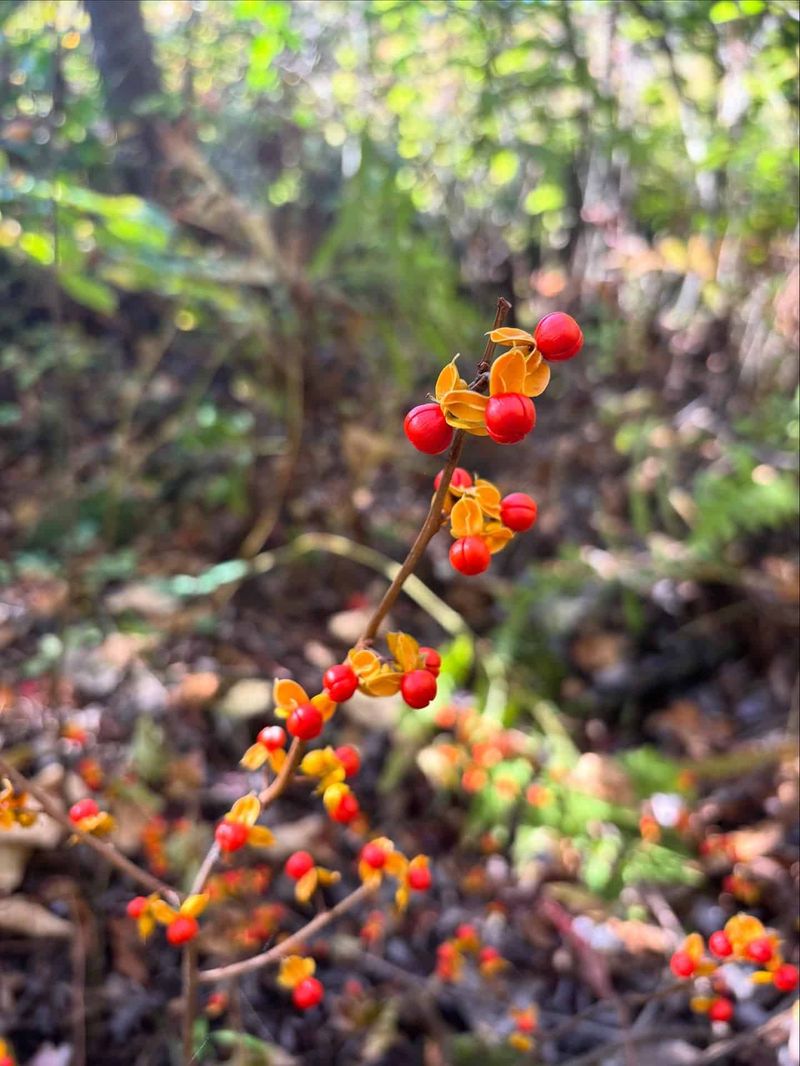
Grab a magnifying glass, or just your sharp eyes, because this is the best trick for telling two look-alikes apart. Ohio has a native vine called American bittersweet, Celastrus scandens, and it looks a lot like the invasive one.
The secret is where the fruit sits. Oriental bittersweet carries small clusters of berries all along the stem, tucked where each leaf meets the branch.
American bittersweet keeps its fruit in one larger bunch at the tip of the branch.
Capsule color can offer a hint too. Oriental bittersweet capsules are usually yellow, while the native vine often has orange capsules.
Leaves differ a bit as well, with the invasive type having rounder leaves and the native type having longer, more oval ones.
Hybrids between the two species do exist, which can muddy the picture. If you’re unsure, contact your county Ohio State University Extension office or snap a photo for an expert.
Honestly, most bittersweet in craft shops and along roadsides today is the Oriental kind. The native vine has become much less common in many areas.
That makes careful identification a fun little skill worth practicing on your next nature walk.
4. Twisting Bittersweet Vines Can Strangle Ohio Trees
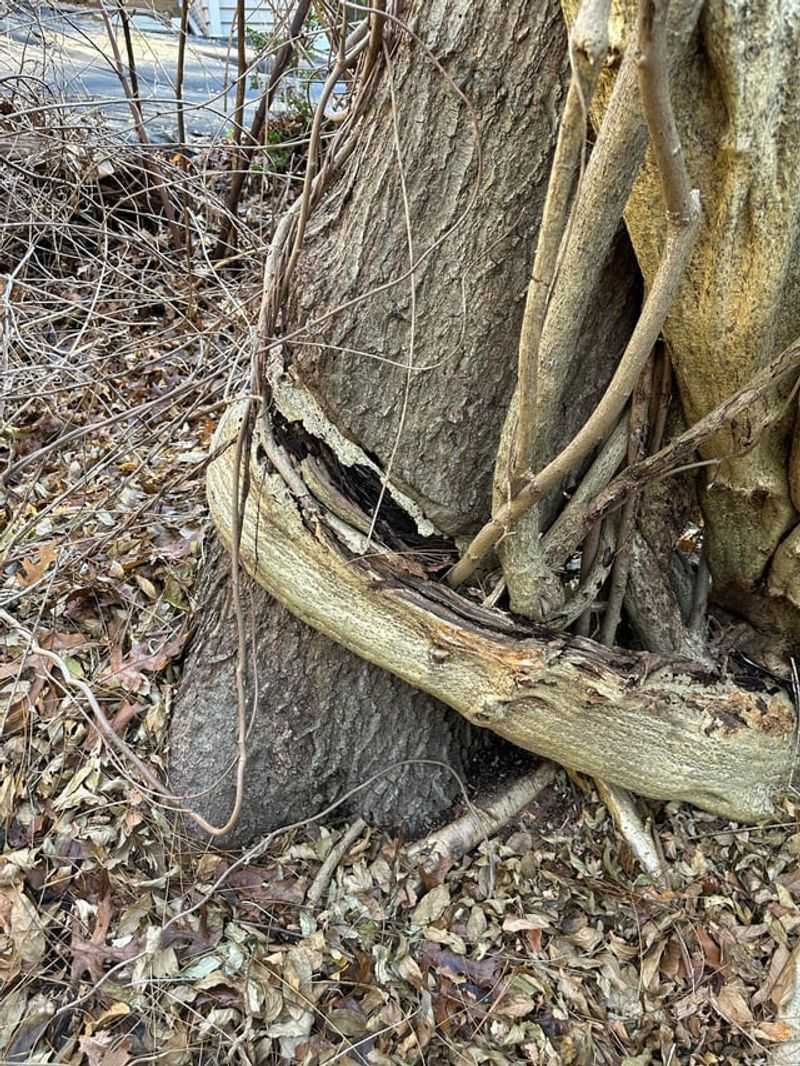
Walk through a patch of mature bittersweet and you’ll see trunks wrapped like candy canes. The vine twists tightly around trees and shrubs as it grows.
Over time, that grip squeezes the bark and limits the flow of water and nutrients.
Height is part of the problem. The vine can climb 60 feet or more into the treetops.
Up there, its thick leaves shade the tree’s own crown and steal the sunlight the tree needs.
Weight adds another danger. Heavy mats of vines catch snow and ice in winter, so branches snap and whole trees can topple in storms.
Fallen trees then open more sunny space, which the vine happily fills.
On the ground, bittersweet crowds out wildflowers and young native plants. Its roots spread and send up new shoots, forming dense thickets.
That leaves less variety for the insects, birds, and mammals that depend on native plants.
It can also cross with American bittersweet, which worries researchers about the native vine’s future. When you add it all up, a few wreaths might seem minor.
Still, every patch started by a stray seed feeds this bigger problem in our woodlands.
5. Bag That Old Bittersweet Wreath Instead Of Composting It

January cleanup is where you can be a quiet hero. When your bittersweet wreath has finished its job, put it in a sturdy plastic bag, tie it shut, and send it out with the trash.
Skip the compost bin. Most backyard piles don’t get hot enough to reliably ruin the seeds.
Spreading that compost in spring could plant a fresh crop of vines right in your garden beds.
Brush piles, ravines, and woodlots are also poor choices. Those are exactly the spots where bittersweet loves to settle in.
Yard waste collection may not be safe either, since some programs turn it into mulch.
While your wreath is still hanging, a few habits help. Set a tray or mat underneath to catch dropped berries.
Sweep the porch now and then, and toss the berries in the garbage too.
Planning to buy a new wreath next year? Ask the seller what vine it uses.
If it’s Oriental bittersweet, politely pass and mention the state rule. I’ve found most vendors appreciate learning about it, and many have switched to safer materials once someone kindly explains the concern.
6. Window Cuts Help Free Trees From Climbing Bittersweet
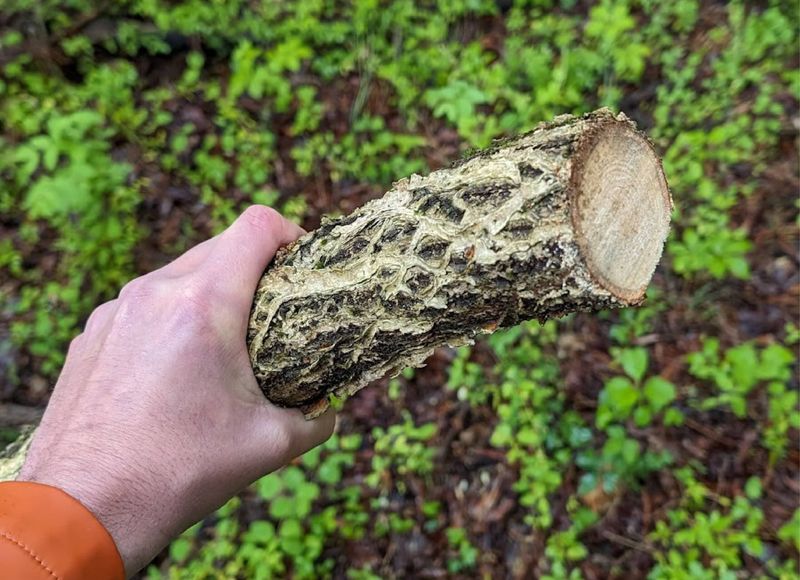
Late fall and winter make a great time to tackle vines, since bare branches let you see what you’re dealing with. Woodland managers often use a technique called a window cut on vines that have climbed into trees.
Here’s how it works. Cut the vine near the ground, then make another cut around chest height.
Remove the short section between them, and leave the upper vine to wither in the tree.
Pulling heavy vines down can tear branches and hurt you, so leaving them in place is safer. The cut stem at the bottom is likely to resprout, though.
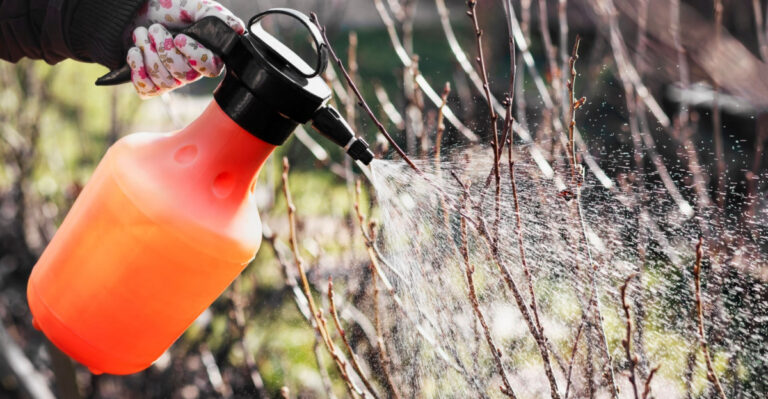
Many experts suggest treating that fresh stump right away with an herbicide labeled for woody vines, following label directions closely.
For small seedlings, hand-pulling works well, especially in moist soil. Try to get the bright orange root, because leftover pieces can grow back.
Mowing alone rarely solves anything and can make the plant bushier.
Expect to return for a few seasons. Seeds in the soil keep sprouting, so patience pays off.
Check out OSU Extension guides for detailed, local control tips before you start.
7. Spotting Young Bittersweet In Your Yard Before It Climbs
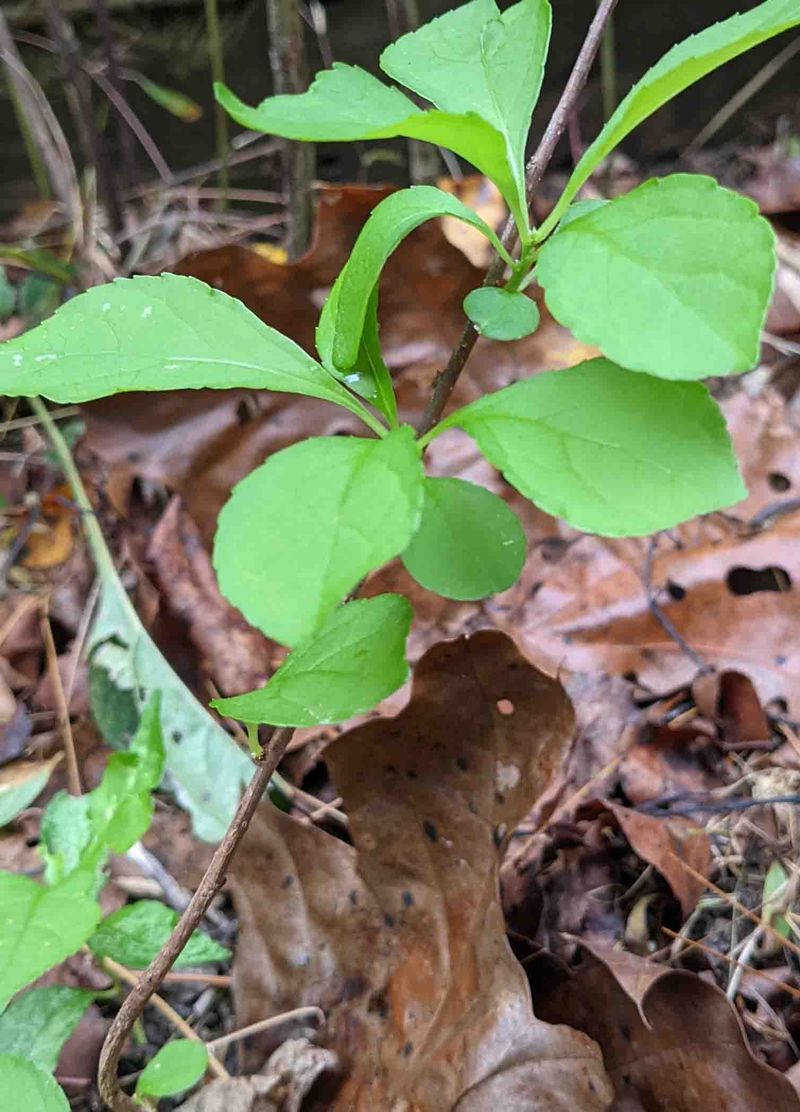
Your yard gives you clues long before a vine reaches the treetops. Seedlings and young shoots are easy to miss, but catching them early saves loads of work.
Look for round, glossy leaves with finely toothed edges, often arranged alternately along a thin green stem. Young plants may sprawl along the ground or wrap around fences, shrubs, and garden trellises.
Pull up a small one and you’ll often see a telltale orange-tinted root.
Check spots near your porch, under bird perches, and along fence lines. Those places catch seeds from birds and old decorations.
Wooded edges behind homes are another favorite hiding spot.
Spring and early summer are fine times to search, since new leaves pop out early. Fall works too, because the yellow leaves and berries stand out against other plants.
I like to walk my yard with a bucket after a good rain, when soil is soft and roots slide out easily. It turns into a small treasure hunt, honestly.
Remove what you find before it flowers, and you’ll stop a whole new round of seeds from forming next autumn.
8. Winterberry Holly And Evergreen Boughs Make Gorgeous Swaps

Decorating responsibly doesn’t mean giving up color. Ohio’s native winterberry holly, Ilex verticillata, produces brilliant red berries on bare branches in winter.
A few stems tucked into a wreath look stunning against a dark door.
Evergreens offer plenty of texture. Eastern redcedar, white pine, and native hemlock bring rich greens and lovely scents.
Add pinecones, dried seed heads, or a red ribbon, and you’ve got a classic look.
Want berries in the yard too? Plant winterberry in moist, sunny spots, and include at least one male plant nearby so the females fruit.
Birds will thank you, since the berries feed them through cold months.
Remember that American bittersweet is native, yet it’s become scarce in many places. Harvesting it from the wild isn’t a great idea, and look-alike hybrids add confusion.
My favorite takeaway is simple. Choose native materials, bag old bittersweet for the trash, and share what you’ve learned with friends who craft.
Small choices at the front door can protect the woods down the road, and your wreath will look just as welcoming.