2026’s Best New Garden Shrubs That Are Perfect For Texas Landscapes
Step into a Texas garden in midsummer, and you’ll quickly realize most plants are just trying to survive – but yours could be thriving.
While the scorching sun and clay-heavy soils often leave landscapes looking tired by July, the right selection of shrubs changes the entire game.
In 2026, a new wave of resilient, low-maintenance varieties is helping Texas gardeners create yards that stay vibrant without the constant battle of watering.
These standout shrubs are built to handle our unique climate – from Houston’s humidity to the rocky soils of Austin and San Antonio.
Whether you want bright berries for birds or heat-loving blooms for hummingbirds, these nine options combine rugged toughness with high-end beauty.
It has never been easier to trade the gardening grind for a lush, hassle-free oasis that looks spectacular under the toughest Texas skies.
1. American Beautyberry Brings Purple Berries And Wildlife
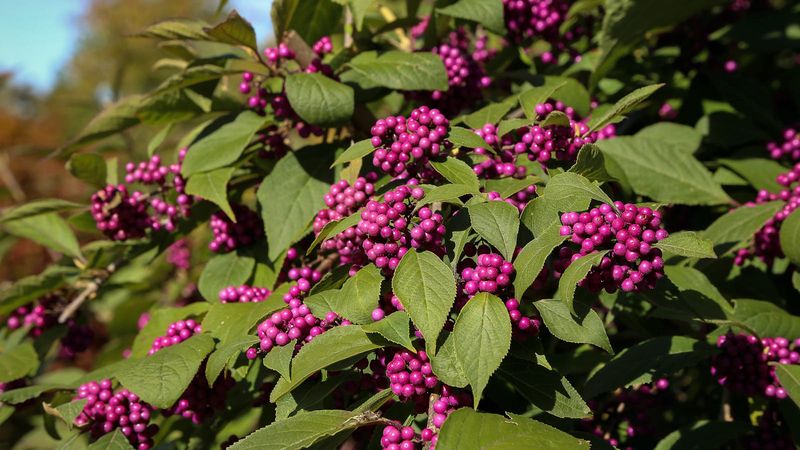
Few native shrubs stop visitors in their tracks quite like American Beautyberry does when its clusters of electric purple berries emerge in late summer and fall.
Native to the southeastern United States, this shrub has been growing wild across Texas woodlands for centuries, and it earns its place in modern landscapes just as easily as it does in nature.
The berries appear in tight, jewel-like bunches that wrap directly around the stems, creating a look that feels almost too vivid to be real.
American Beautyberry handles Texas heat well, especially when planted in a spot with morning sun and afternoon shade. It tolerates both clay and sandy soils, which makes it flexible across different Texas regions.
Water it regularly during its first growing season, then ease back – established plants handle drought with little complaint.
Beyond its looks, this shrub is a wildlife magnet. Birds including mockingbirds, robins, and cedar waxwings flock to the berries in fall and winter.
Pollinators visit the small pink summer flowers well before the berries develop.
One common mistake is cutting it back too aggressively in fall – wait until late winter to prune, since the berries feed wildlife through the colder months.
Plan for a spread of six to eight feet, giving it room to arch naturally without crowding neighboring plants.
2. Texas Sage Thrives In Heat And Blooms Purple
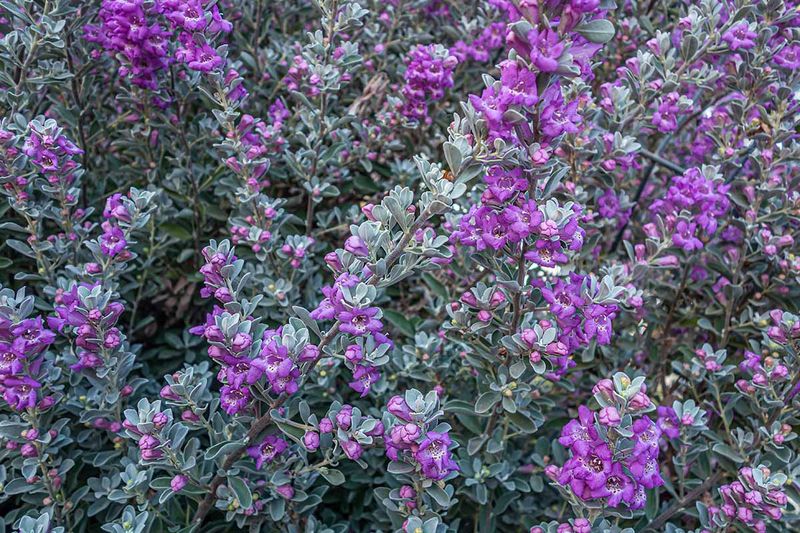
Walk through almost any established Texas neighborhood and you’ll likely spot Texas Sage standing near a front door or lining a sunny driveway, looking completely unbothered by the heat.
Sometimes called barometer bush, this shrub earns that nickname because it bursts into purple bloom right after rainfall – almost like a weather signal built into the plant itself.
The silver-gray foliage stays attractive even between bloom cycles, giving the landscape a soft, muted contrast against darker greens.
Texas Sage is one of the most drought-tolerant shrubs available for Texas gardeners. Once established, it can go weeks without supplemental water and still look sharp.
It thrives in full sun and actually performs worse in shade or with too much irrigation, which leads to leggy, weak growth.
Plant it in well-drained soil and resist the urge to overwater – this is one shrub that genuinely prefers neglect over pampering.
For landscaping purposes, it works beautifully as a low-maintenance hedge, a foundation plant, or a mass planting along fences. It typically grows four to eight feet tall and wide, though compact varieties stay smaller.
Light pruning in early spring keeps it tidy without sacrificing blooms.
One mistake to avoid is planting it in heavy clay with poor drainage – standing water around the roots is the one condition this tough shrub really struggles with.
3. Autumn Sage Adds Color From Spring To Fall
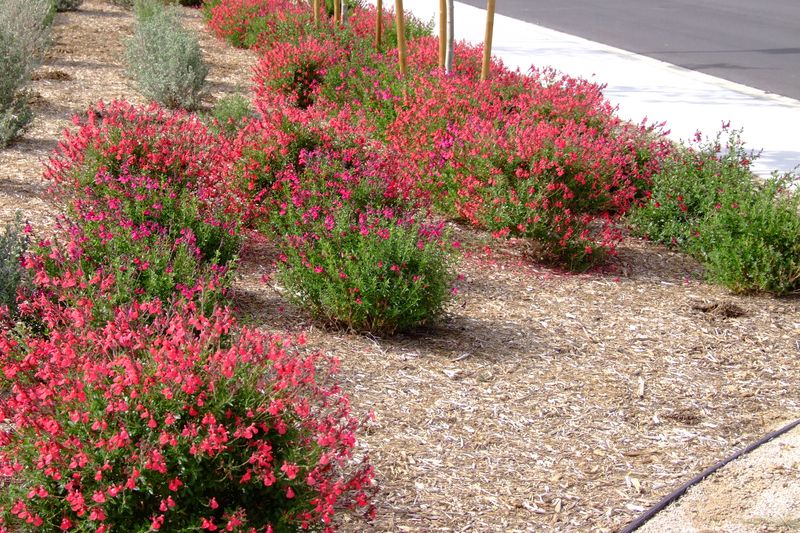
Gardeners who want nonstop color without constant replanting should get acquainted with Autumn Sage, a workhorse shrub that blooms from early spring all the way through the first frost.
Unlike many flowering shrubs that give you one big show and disappear, Autumn Sage keeps cycling through bloom after bloom across the long Texas growing season.
Colors range from classic red and coral to pink, white, and salmon, so there’s a variety to match nearly any landscape palette.
Originally from the Chihuahuan Desert region of Texas and northern Mexico, Autumn Sage is naturally adapted to heat, rocky soils, and low rainfall.
It grows two to three feet tall and wide, making it a great fit for borders, rock gardens, and xeriscapes.
Full sun brings out the best bloom production, though it handles light afternoon shade in the hottest parts of Texas without much complaint.
Hummingbirds are especially drawn to the tubular red flowers, and butterflies visit regularly as well. Light pruning after each bloom flush encourages the next round of flowers and keeps the plant from getting woody at the base.
One misstep many Texas gardeners make is planting Autumn Sage in heavy, poorly drained soil – it absolutely needs good drainage to stay healthy through wet winters.
Pair it with ornamental grasses or yucca for a low-water border that looks intentional and polished all season long.
4. Turk’s Cap Produces Red Blooms In Sun Or Shade
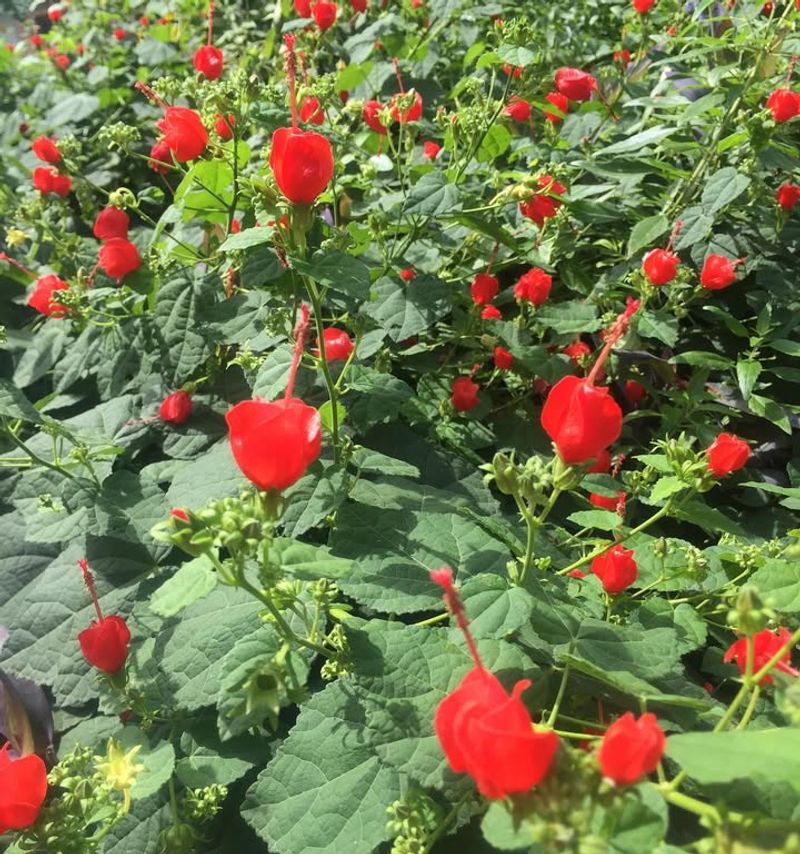
Shady spots in Texas yards can feel impossible to fill with anything colorful, but Turk’s Cap handles low light better than almost any other flowering shrub available to Texas gardeners.
The twisted, never-fully-opening red blooms look like tiny turbans perched along the branches, which is exactly how the plant earned its quirky common name.
Native to Texas and the Gulf Coast region, it has a proven track record of thriving where other plants give up entirely.
Turk’s Cap grows three to nine feet tall depending on light and moisture conditions, and it spreads generously over time. In full shade it stays on the smaller side; in part sun it tends to grow larger and bloom more heavily.
It handles clay soil, seasonal flooding, and summer drought without much drama once it’s established – a genuinely rare combination for a flowering shrub.
Hummingbirds absolutely love the red blooms, and butterflies, bees, and orioles visit regularly throughout the growing season.
The small red fruit that follows the flowers is edible and attracts additional wildlife into fall.
Cut plants back hard in late winter – they re-sprout vigorously from the base each spring. Avoid planting in full, blazing afternoon sun without supplemental water, as this is the one condition that causes stress.
Turk’s Cap works beautifully along shaded fences, under large oak trees, and in naturalistic garden designs across most of Texas.
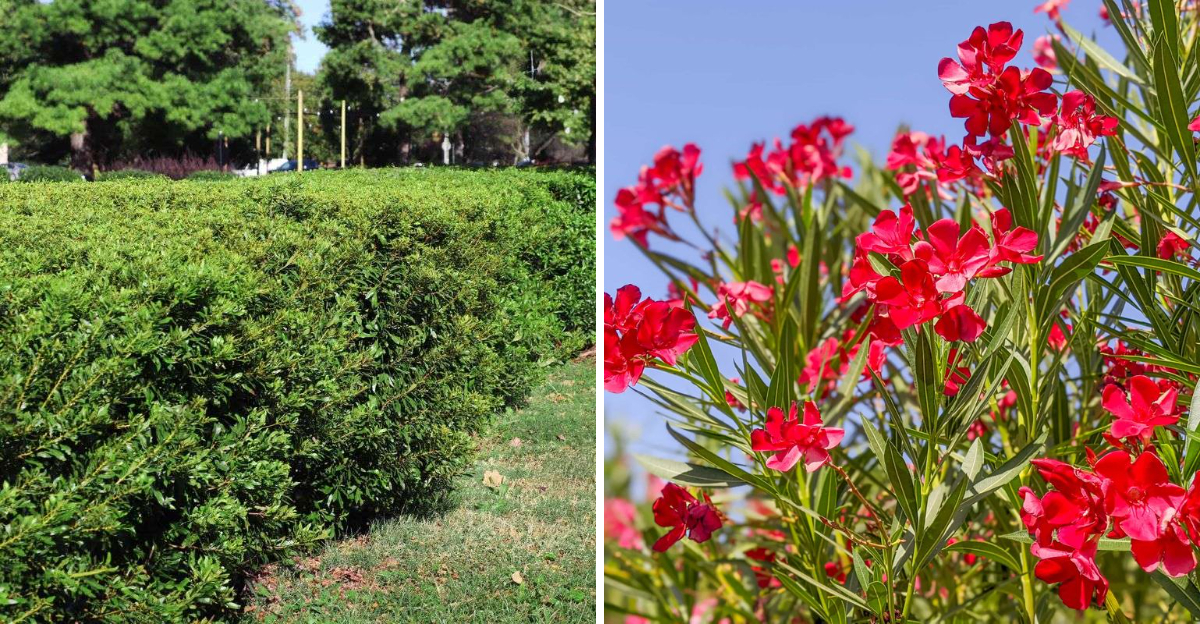
5. Dwarf Yaupon Holly Gives Evergreen Structure And Ease
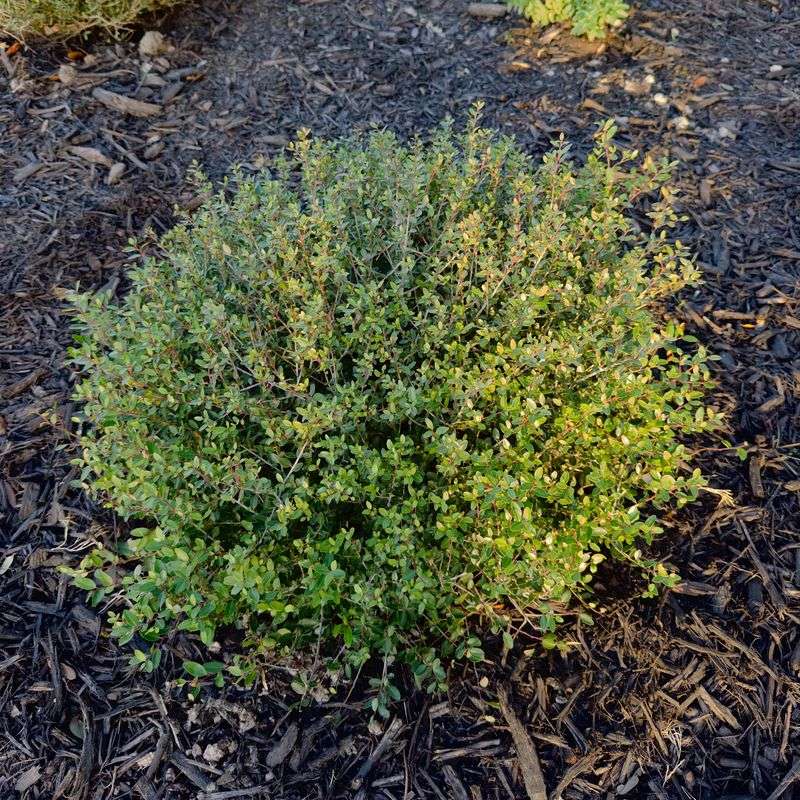
Reliability is an underrated quality in landscape plants, and Dwarf Yaupon Holly delivers it in abundance. This compact evergreen holds its dense, rounded shape through Texas summers, cold snaps, drought, and heavy clay soil without skipping a beat.
It’s one of the few shrubs that HOA-friendly neighborhoods and professional landscape designers both reach for repeatedly, and for good reason – it simply looks neat and full year-round with very little effort from the homeowner.
Dwarf Yaupon Holly is a native Texas plant, which gives it a natural advantage in local soils and climate. It typically grows two to three feet tall and three to four feet wide, making it ideal for foundation plantings, low borders, and formal hedges.
It tolerates full sun, part shade, wet soils, and drought – a flexibility that few other shrubs can match across Texas’s wildly varied landscapes.
Pruning is optional rather than required, since the plant naturally maintains a tidy mounded shape. When shaping is desired, a light trim in late winter keeps it looking sharp without stressing the plant.
One common mistake is planting it too close to walkways or walls – give it at least two feet of clearance on each side to avoid constant trimming.
Pair Dwarf Yaupon Holly with ornamental grasses or flowering perennials to add texture and seasonal color alongside its steady evergreen structure.
6. Wax Myrtle Offers Year-Round Green And Privacy
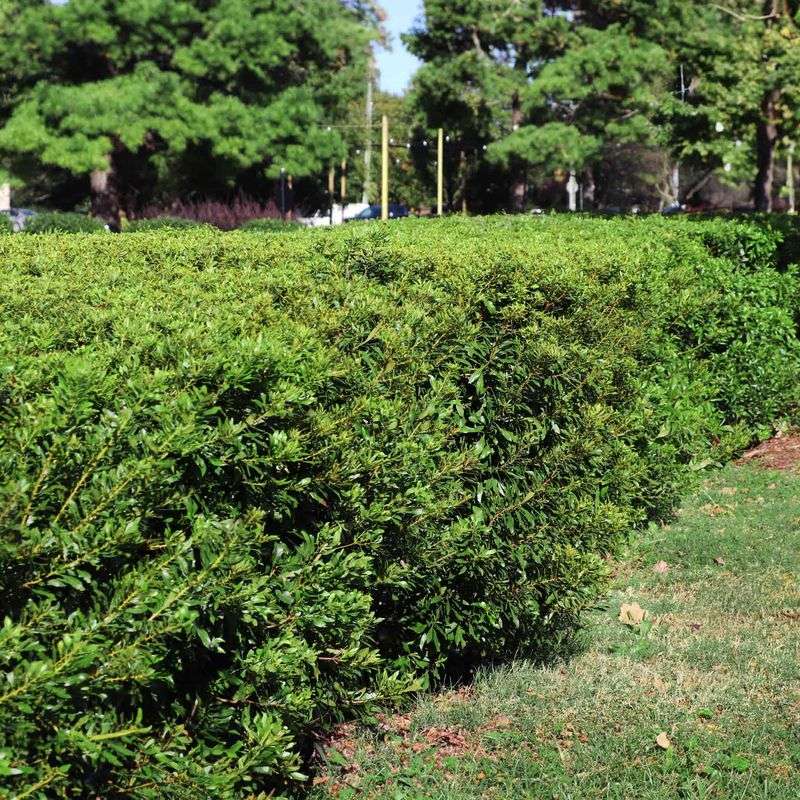
Privacy screens made from Wax Myrtle are a common sight across Texas, and once you understand how fast and tough this shrub grows, it’s easy to see why.
Wax Myrtle can reach six to twelve feet tall in just a few years, forming a thick, aromatic green wall that blocks sightlines, buffers wind, and creates a sense of enclosure in open Texas yards.
The narrow, glossy leaves have a pleasant spicy fragrance when brushed or crushed, which adds a sensory bonus most privacy plants can’t offer.
Native to the Gulf Coast and eastern Texas, Wax Myrtle handles wet soils, seasonal flooding, and drought once established – a combination that suits the unpredictable Texas climate well.
It grows in full sun to part shade and adapts to both sandy and clay soils.
Birds are particularly fond of the small, waxy blue-gray berries that develop on female plants in fall and winter, making it a productive wildlife plant as well as a screening option.
One thing to plan for is its growth rate – Wax Myrtle grows quickly and may need annual trimming to stay at a manageable size.
Avoid planting it directly against structures, since the roots spread and the canopy fills in fast.
For a softer, more naturalistic hedge, allow it to grow with minimal pruning. Pair it with lower-growing shrubs like Dwarf Yaupon Holly at the base for a layered privacy planting that looks finished from the street.
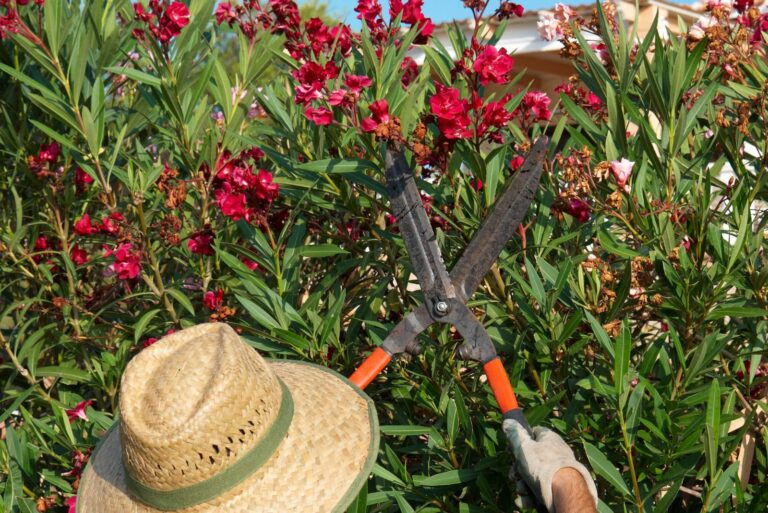
7. Oleander Delivers Bold Flowers And Heat Tolerance
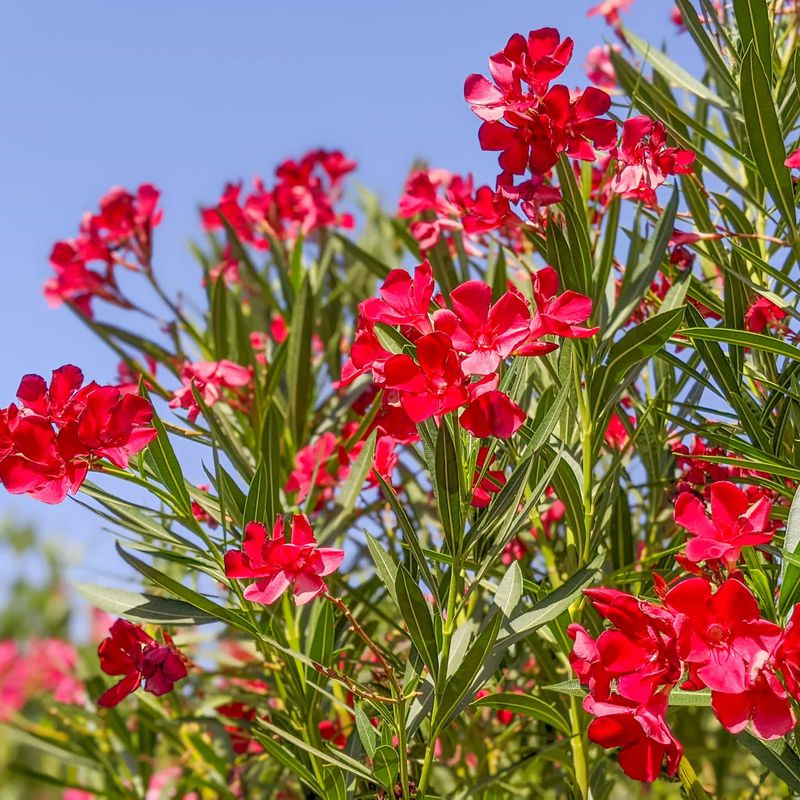
Driving along Texas highways in summer, the long stretches of pink, red, and white blooms lining the medians are almost always Oleander – a shrub so well adapted to Texas heat that it has become a defining part of the state’s summer landscape.
Oleander blooms heavily from late spring through fall, producing dense clusters of flowers in shades ranging from soft white to deep crimson, often with a light fragrance that carries on warm breezes.
Few flowering shrubs match Oleander’s tolerance for blazing heat, reflected light, and sandy or alkaline soils. It thrives in coastal Texas and the southern parts of the state, where temperatures rarely drop below 20 degrees Fahrenheit.
In colder northern Texas regions, it can be grown in containers and moved indoors during hard freezes.
Established plants are remarkably drought-tolerant, though they bloom more reliably with occasional deep watering during extended dry spells.
Oleander works well as a tall screen, a specimen plant, or a mass planting along fences and property lines. It grows six to twelve feet tall depending on the variety, so choose a compact cultivar if space is limited.
All parts of the plant are toxic if consumed, so keep this in mind when planting near areas where young children or pets spend time.
Avoid overhead irrigation, since wet foliage can encourage fungal issues – water at the base whenever possible for best long-term health.
8. Yucca Adds Striking Form And Drought Resilience
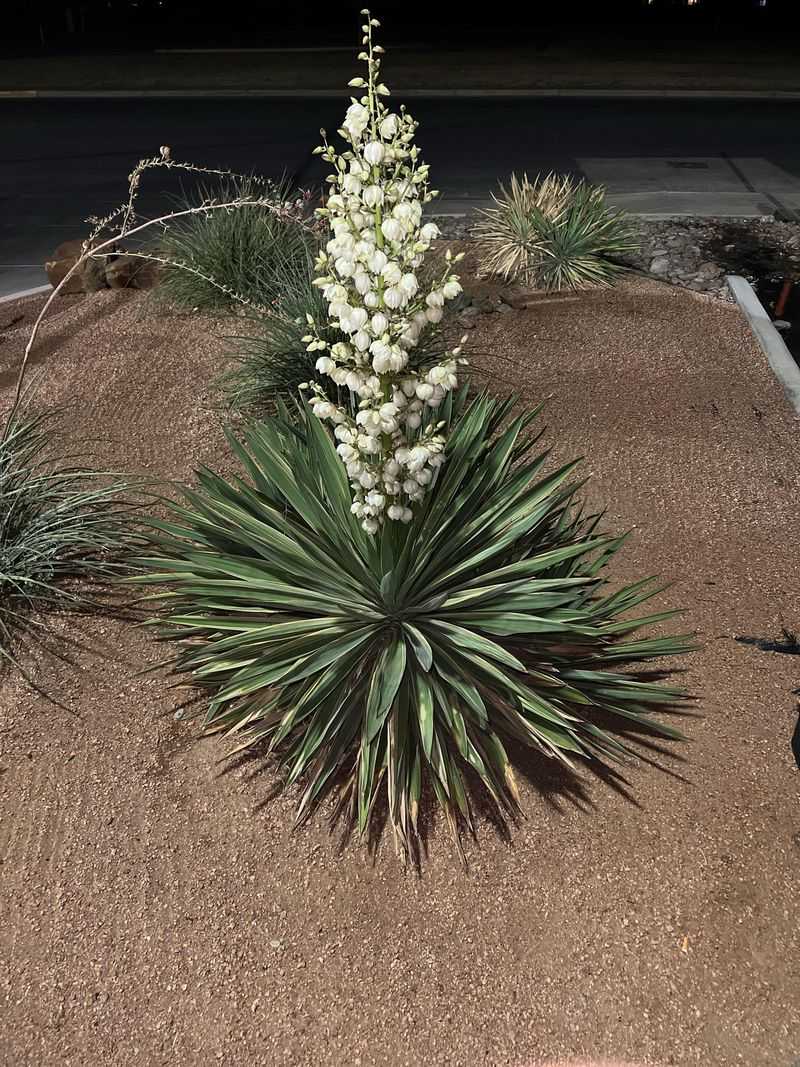
There’s something genuinely architectural about a well-placed Yucca in a Texas landscape – it commands attention in a way that soft, mounding shrubs simply can’t replicate.
The stiff, sword-shaped leaves radiate outward in a bold rosette form, and once a year, a dramatic flower spike shoots up four to eight feet, covered in creamy white bell-shaped blooms.
Few plants make as strong a visual statement with so little water or maintenance required.
Yucca is native to Texas and the broader Southwest, so it’s perfectly calibrated for the state’s heat, alkaline soils, and long dry spells.
Established plants rarely need supplemental irrigation, making them one of the most water-efficient shrubs available for Texas xeriscapes.
They thrive in full sun and well-drained soil – poor drainage is the one condition that causes real problems, so avoid planting in low spots that collect water after rain.
Beyond its striking looks, Yucca has a fascinating relationship with the Yucca moth, which is its primary pollinator – a partnership that has evolved over thousands of years in the American Southwest.
For landscaping purposes, it pairs beautifully with ornamental grasses, agave, and low-growing ground covers in dry, modern garden designs.
Give each plant plenty of space, as the leaf tips are sharp and can scratch anyone walking too close. Wear thick gloves when trimming away spent flower stalks or lower leaves to avoid injury.
9. Lantana Brings Bright Flowers And Attracts Pollinators
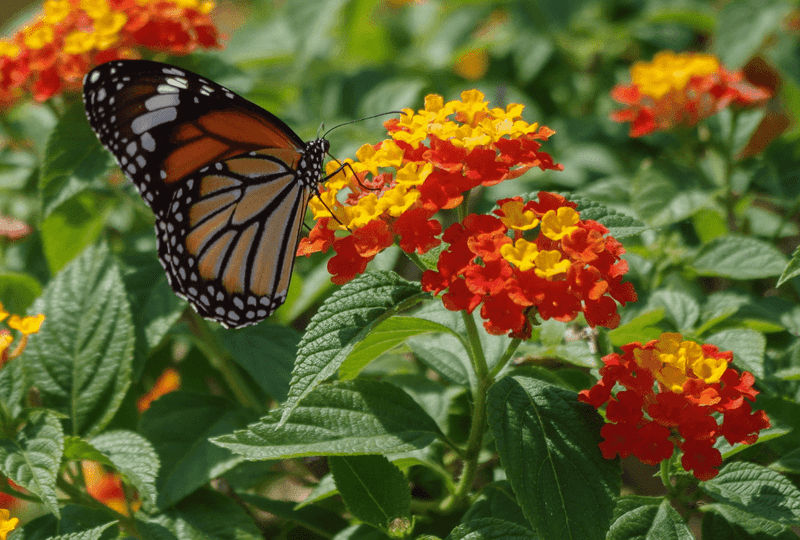
If there’s one shrub that butterflies in Texas seem to agree on universally, it’s Lantana – a heat-loving, nearly unstoppable bloomer that keeps producing flowers from late spring straight through the first fall frost.
The flower clusters shift color as individual florets age, creating a multicolored effect in shades of yellow, orange, pink, red, and white all at once on a single plant.
It’s one of the most visually dynamic flowering shrubs available for Texas gardens, and it thrives on conditions that slow other plants down.
Lantana is extremely drought-tolerant once established and actually blooms more intensely under heat and stress than it does with excess water and fertilizer. It grows in full sun and handles poor, rocky, or sandy soils without complaint.
In South and Central Texas, established Lantana often returns from the roots after mild winters, behaving more like a perennial shrub than an annual.
In colder northern Texas areas, it may need replanting each spring.
Monarchs, swallowtails, skippers, and dozens of other butterfly species visit Lantana flowers regularly, making it a top choice for pollinator gardens across the state.
Hummingbirds also stop by the tubular florets for nectar.
One thing to keep in mind is that the berries are toxic if eaten, so plant thoughtfully in family yards. Deadheading is not required, but cutting plants back by one-third in midsummer encourages a fresh flush of blooms heading into fall.