7 Native North Carolina Shrubs That Hold A Crisp Border Without The Shearing Boxwood Demands

You walk out to the mailbox on a warm North Carolina evening, and there it is again. Your boxwood hedge has thrown up ragged shoots since the last time you sheared it, and now it looks shaggy instead of sharp. Boxwoods promise that clean, tailored border, but they ask for constant trimming, and they sulk in our muggy summers and surprise cold snaps. The good news is that native shrubs can hold a neat edge with a fraction of the fuss, feeding pollinators and shrugging off pests while they do it.
Here are seven that keep a crisp line without begging for your hedge trimmers every few weeks.
1. Inkberry Holly
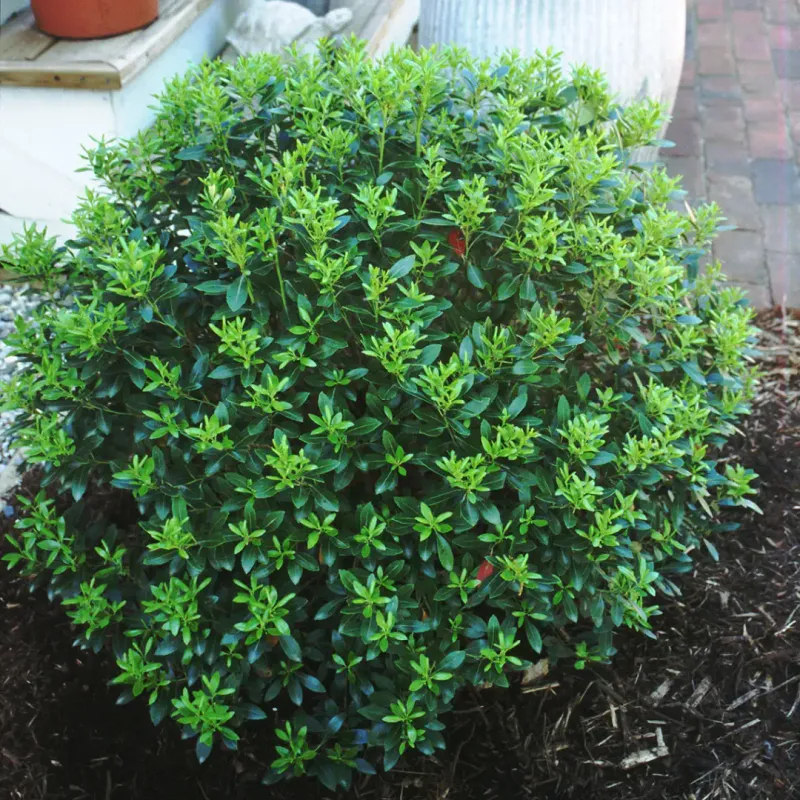
Picture a boxwood that does not brown out in a wet Piedmont summer, and you have inkberry holly (Ilex glabra). Its small, rounded evergreen leaves read almost identical to boxwood from across the yard, so nobody at the cookout will guess you swapped.
Here is where it gets tricky. Older inkberry can go leggy and bare at the ankles, which is why cultivars like Shamrock and Gem Box were bred to stay dense and low. Pick one of those and the leggy problem mostly solves itself.
Space plants about 3 feet apart for a solid run, and trim once in late spring after new growth hardens off. That single shaping is genuinely most of the work for the whole year. It holds a tidy 2 to 3 foot line in zones 6a through 8b, so it works from the mountains down to the coast.
Inkberry is a native holly, and its tiny spring flowers feed bees while female plants carry small black fruit birds pick at through winter. NC State Extension notes it prefers moist, slightly acidic soil, which is a good match for a lot of our yards. Plant it, shear it once, and get your Saturdays back.
2. Dwarf Yaupon Holly
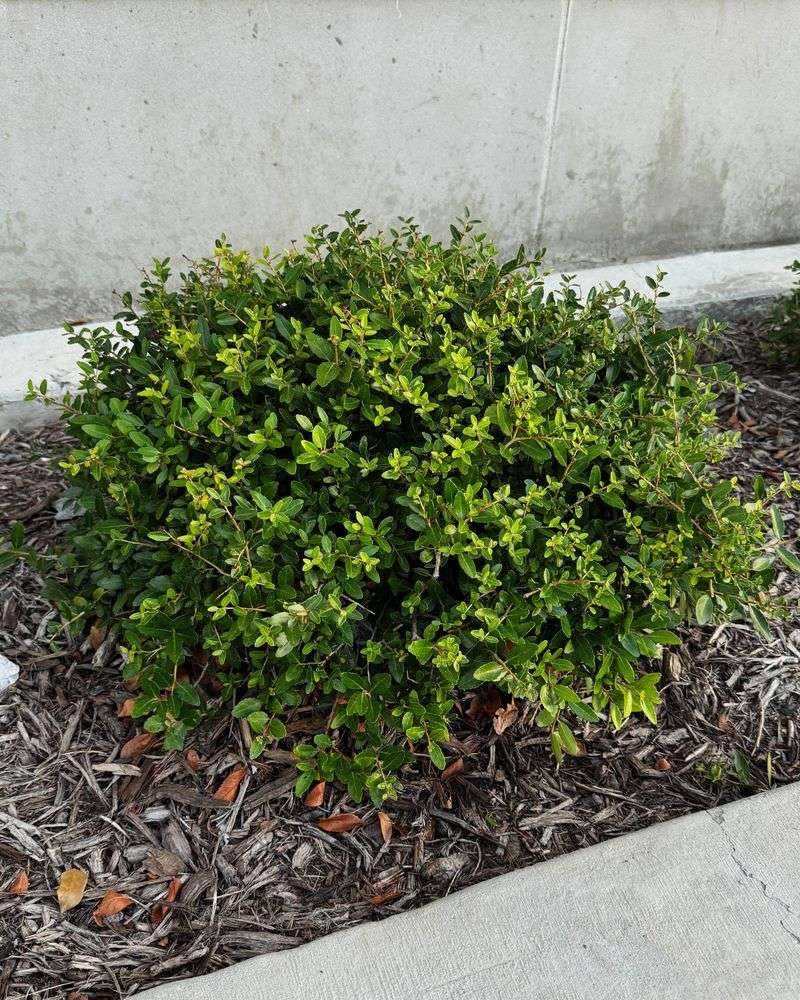
Many Coastal Plain gardeners already have this one growing wild at the wood line and never realized it could anchor a formal border. Dwarf yaupon holly (Ilex vomitoria ‘Nana’) keeps a naturally mounded, tight shape with tiny gray-green leaves that take a clip beautifully.
The surprise is how little it asks. Once established, it laughs off drought, salt spray, sandy soil, and the kind of August heat that wilts everything else on the block. That toughness is why you see it in parking lot islands baking all summer without a drop of extra water.
For a low edging, set plants 2 to 3 feet apart and let them knit into a continuous cushion. One shearing in early summer keeps the line crisp, and you can honestly skip a year if life gets busy.
Yaupon is the only native North American plant that produces caffeine, and Indigenous peoples brewed its leaves for centuries. It thrives across zones 7a to 9, handles our surprise winter cold snaps down into the teens, and shrugs off hurricane-season wind better than brittle boxwood. A hero that hides in plain sight along half our back roads.
Your North Carolina Garden Changes Every Week. Your Plan Should Too.
Gardening in North Carolina changes quickly throughout the season. Every Friday you’ll receive a simple weekly plan showing exactly what to plant, prune, fertilize, harvest, and protect so you never miss the right timing.
3. Dwarf Wax Myrtle

Crush a leaf between your fingers and you get a clean, resiny scent that some folks say keeps a few bugs at bay. Dwarf wax myrtle (Morella cerifera ‘Don’s Dwarf’) brings that aromatic, feathery evergreen texture to a border that boxwood simply cannot match.
What catches people off guard is the speed. Where boxwood creeps along, wax myrtle fills in fast, giving you a dense screen or a shaped hedge in a couple of seasons instead of a decade.
Keep it in bounds with a light trim in late winter, around February, before the new flush pushes out. Set plants 3 to 4 feet apart for a low border, and it will happily hold a 3 to 4 foot height with minimal effort.
Wax myrtle roots fix nitrogen, so it actually feeds itself in poor soil, which is a gift in sandy Coastal Plain ground and thin spots alike. Its waxy berries fed early settlers, who boiled them for bayberry candles. Birds love those same berries, and the plant tolerates wet feet, salt, and drought across zones 7 through 9. Tough, fragrant, and forgiving.
4. Virginia Sweetspire
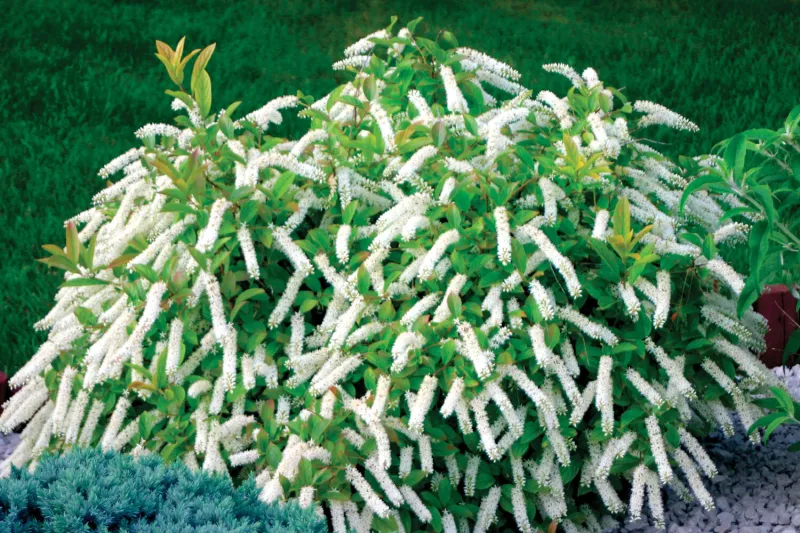
Blunt truth. If you want a border that does more than sit there being green, sweetspire hands you fragrant white flower spikes in late spring and fiery red-purple leaves that hang on into fall. Virginia sweetspire (Itea virginica), especially the compact ‘Little Henry’, gives you that show while still holding a tidy shape.
People assume a flowering shrub means a messy shrub, but Little Henry stays a rounded 2 to 3 feet with almost no coaxing. The turn here is timing. It blooms on old wood, meaning last year’s stems, so you prune right after the flowers fade in early summer, never in fall.
Space plants about 3 feet apart along a walkway or bed edge. It handles the wet clay that drowns boxwood, tolerating soggy Piedmont spots and rain-garden edges with ease.
Those dangling white blooms are a magnet for native bees and butterflies during late spring, right when your porch evenings start. Hardy across zones 5 to 9, it survives our mild winters and the odd hard freeze without blinking. A border that earns its keep three seasons out of four.
5. Dwarf Fothergilla
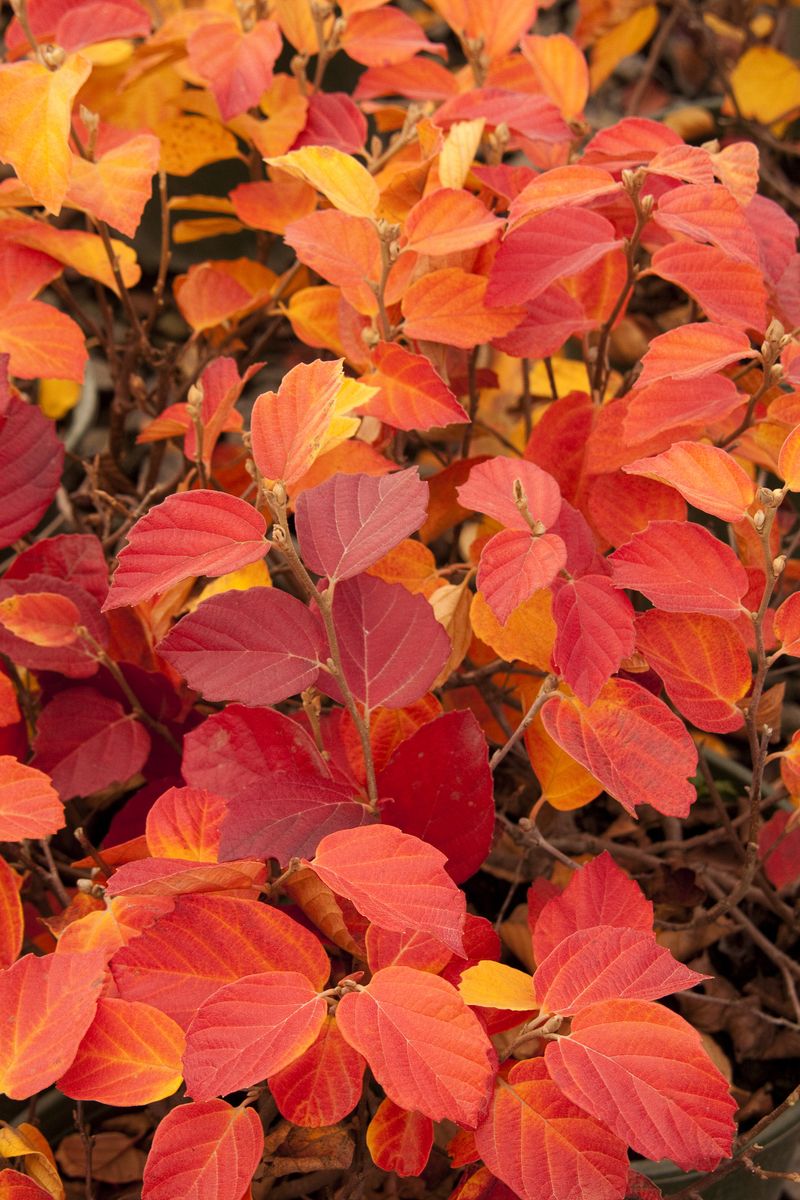
Fall is when this one steals the whole show. Dwarf fothergilla (Fothergilla gardenii) lights up in a blend of orange, red, and yellow on the same branch, a color range that makes a plain green boxwood row look downright boring by comparison.
Spring is no slouch either. Before the leaves unfurl, it puts out fuzzy white bottlebrush blooms that smell faintly of honey and pull in early bees when little else is flowering.
Here is the part gardeners love. It is naturally slow and compact, holding a rounded 2 to 3 feet without any shearing at all. You basically never have to shape it, just clip a stray branch now and then. Give plants 3 feet of room and moist, acidic, well-drained soil, which suits our Piedmont and mountain yards.
A North Carolina native of the Coastal Plain, fothergilla is comfortable in zones 5 through 8 and takes our humid summers in stride. It does want a little afternoon shade in the hottest spots to keep those leaves crisp. Set it and forget it, then take the credit every October.
6. Dwarf Anise
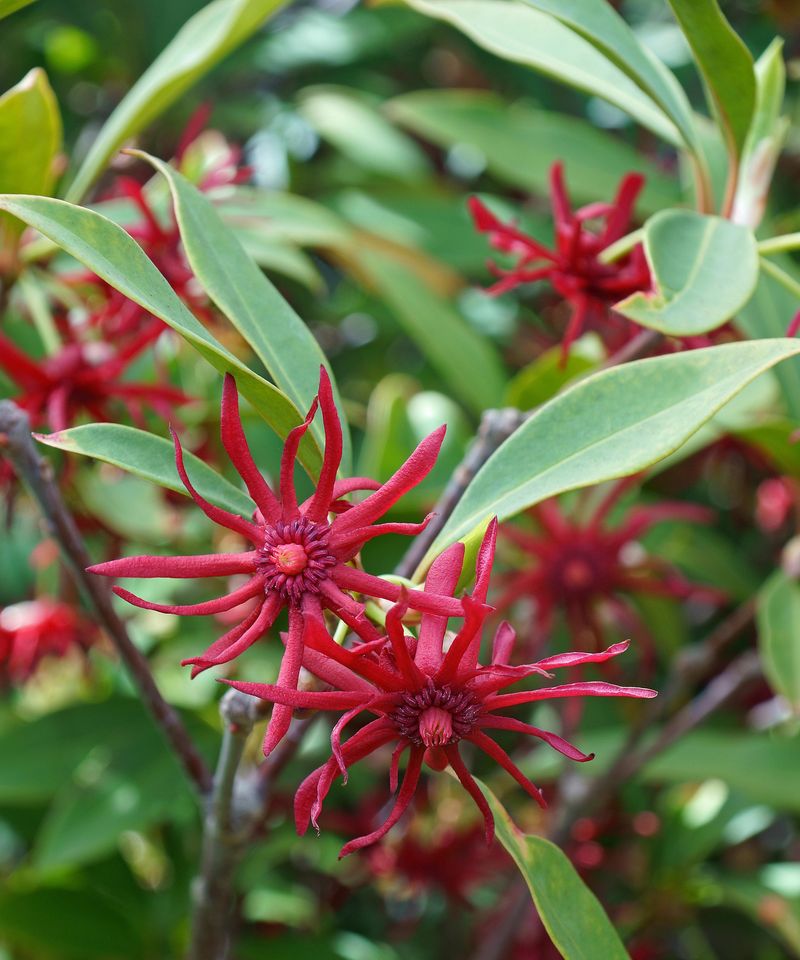
Deer walk right past it, and gardeners in the mountains and Piedmont have noticed. Dwarf Florida anise (Illicium floridanum, in compact forms) carries glossy evergreen leaves that give off a licorice scent when brushed, which is exactly why hungry deer and rabbits leave it alone.
The catch most folks miss is light. Boxwood wants sun, but anise genuinely prefers part to full shade, making it a rare crisp-border option for that gloomy north side of the house where nothing else looks sharp.
It holds a dense, lustrous mound around 3 to 4 feet with only light shaping in spring. Space plants 3 to 4 feet apart in moist, rich soil, and keep it out of blazing afternoon sun so the leaves stay deep green.
Curious maroon, star-shaped flowers appear in spring, a quiet oddity your neighbors will ask about. Native to the Southeast and hardy in zones 7 to 9, it handles our humidity and shrugs off most pests. For a shady stretch that has defeated you before, this is the quiet answer.
7. Dwarf Sweet Pepperbush
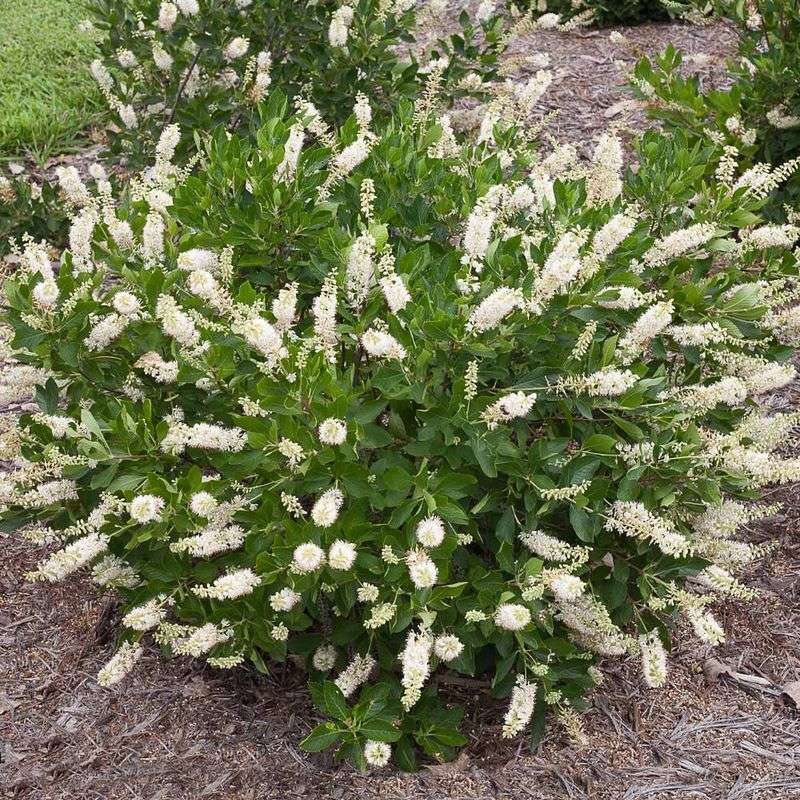
Late summer can leave a border looking tired, and that is precisely when sweet pepperbush wakes up. Dwarf sweet pepperbush (Clethra alnifolia ‘Hummingbird’) sends out spikes of white, honey-scented flowers in July and August, filling the muggy air with a smell people stop and comment on.
Butterflies, bees, and hummingbirds swarm those blooms during the exact stretch when most shrubs have quit. So while your neighbor’s boxwood just sits there, yours turns into a pollinator diner right through the dog days.
Hummingbird stays low and mounded at 2 to 3 feet, spreading gently to fill a bed. Prune in late winter since it flowers on new growth, and set plants about 3 feet apart. It genuinely thrives in the wet, heavy clay and soggy spots that kill fussier shrubs, so those problem low corners become an asset.
A true Eastern native comfortable in zones 4 to 9, it handles North Carolina humidity, mild winters, and the occasional flooding rain from a passing tropical storm. Fragrant, tough, and buzzing with life when the rest of the yard is coasting toward fall.