8 Arizona Native Vines That Create Shade Without Guzzling Water
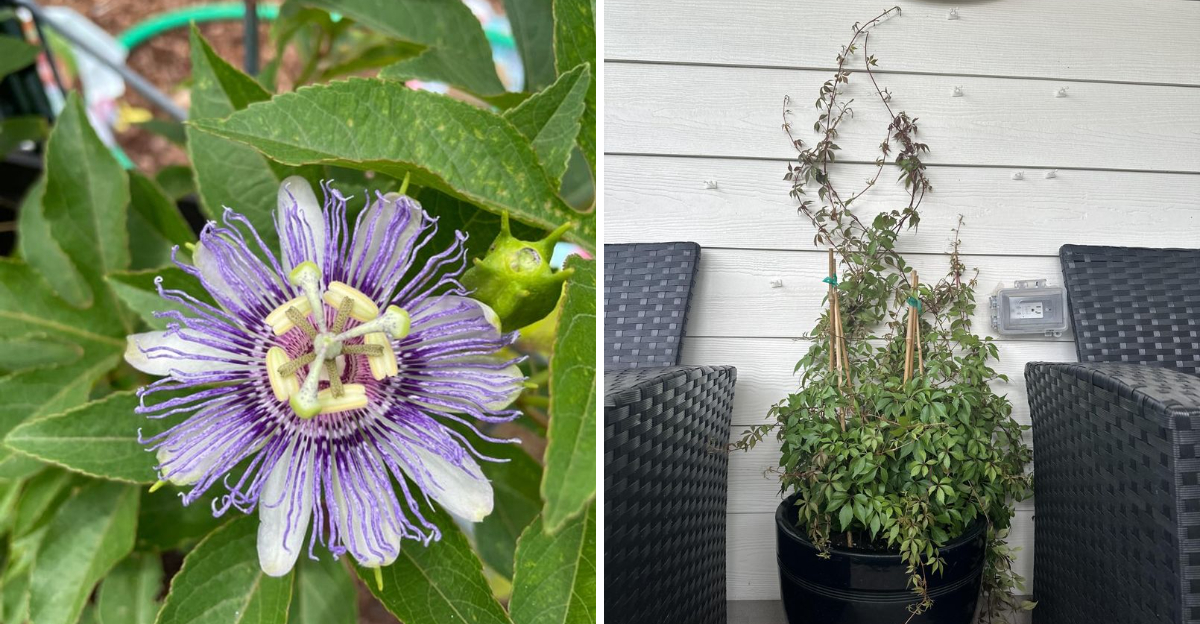
Standing on a sun-baked Arizona patio in July feels like opening an oven door.
Shade is not just comfort here. It is survival.
The good news is that several native vines can drape over your pergola, soften a scorching block wall, or cool a trellis without demanding a daily drink from the hose.
These plants evolved right here in the Sonoran and Chihuahuan desert regions, so they already know how to handle brutal heat, rocky soil, and stretches of bone-dry weather.
Choosing a native vine over a thirsty imported climber means less work for you and a healthier yard overall.
You get dappled shade, seasonal flowers, and sometimes a parade of butterflies and hummingbirds without paying a steep water bill.
Whether you have a small courtyard trellis or a sprawling ramada that needs coverage, there is an Arizona native vine ready to climb up and get to work.
Eight solid options, covering how each one grows, how much water it actually needs, and where it fits best in a desert landscape.
1. Arizona Grape Builds Broad Shade
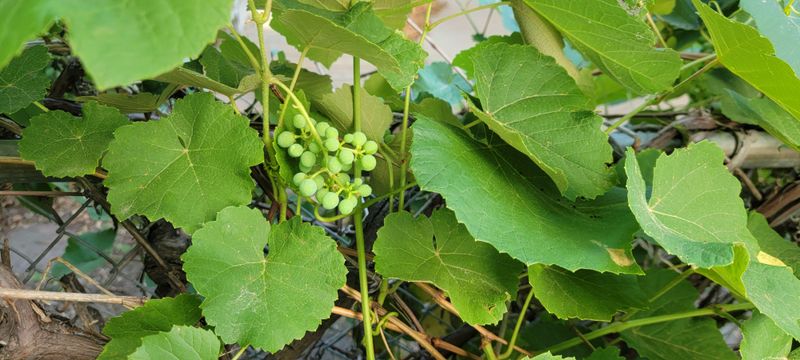
A hot pergola in July can feel like sitting under a magnifying glass, but Arizona Grape changes that fast.
Vitis arizonica is a true Arizona native found growing along canyon streams and rocky slopes across the state.
Its broad, lobed leaves overlap densely once the vine gets established, creating a thick green canopy that blocks direct sun without needing a shade cloth underneath.
The University of Arizona Extension recognizes this grape as one of the most practical native vines for trellises and arbors in the low and mid desert.
It grows vigorously during warm months, sometimes pushing several feet of new growth in a single season. That speed is a real advantage when you want shade coverage without waiting years for results.
Water-wise gardeners will appreciate that established Arizona Grape survives on deep, infrequent irrigation.
Once roots are set, twice-a-month watering during summer is often enough. Avoid overhead watering and let the soil dry between sessions to keep roots healthy and growth balanced.
Train young stems onto a sturdy trellis or wire system early, since mature canes become woody and thick.
Small clusters of tart grapes appear in late summer and attract birds, javelinas, and other wildlife.
Leaves turn golden and amber in fall before dropping, giving the vine a lovely seasonal rhythm that feels surprisingly lush for the desert.
2. Snapdragon Vine Covers Small Trellises
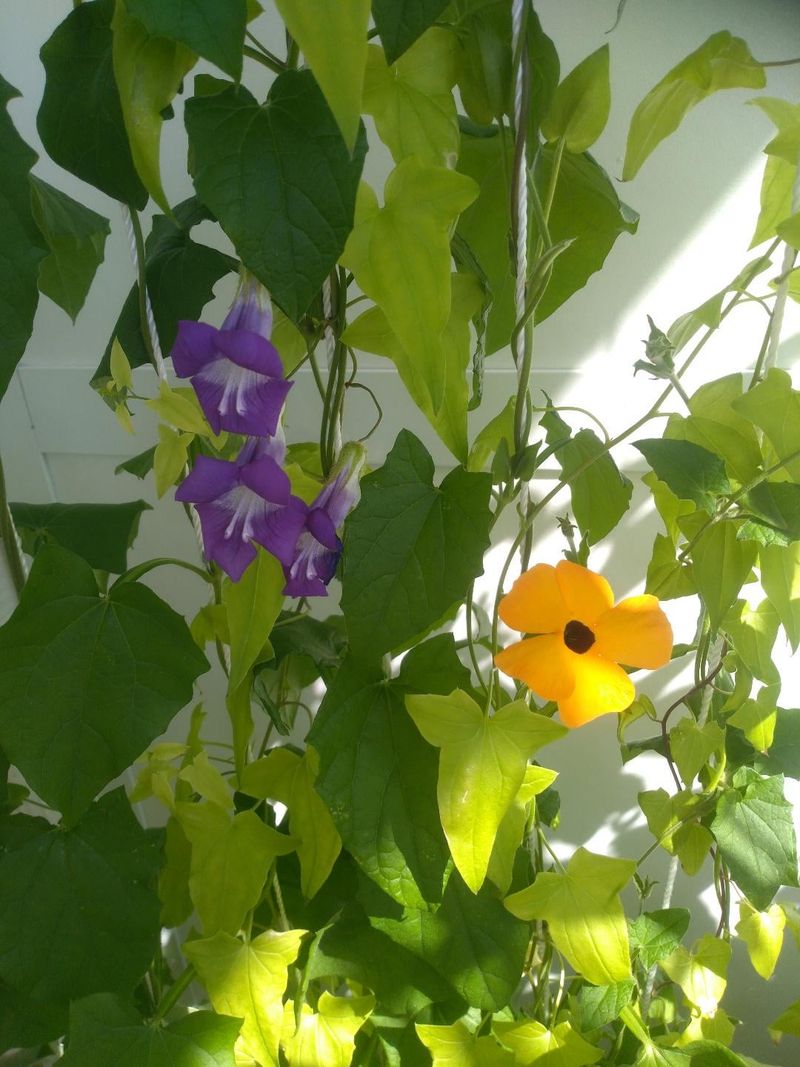
Tiny flowers on a slender vine can pack a surprising punch of color against a plain stucco wall.
Maurandya antirrhiniflora, commonly called Snapdragon Vine or Roving Sailor, is a wispy native climber that weaves through fence wire, small trellises, and shrub branches with almost no help from the gardener.
Its flowers look like miniature snapdragons in shades of pink, lavender, and deep purple.
This vine is a lighter shade maker than the big grapes or creepers, but it earns its place by softening hard surfaces with texture and color.
It works beautifully on a mailbox post, a courtyard gate, or a small balcony railing where a bulky vine would feel overwhelming. The delicate stems rarely need pruning or redirecting once pointed in the right direction.
Your Arizona Garden Changes Every Week. Your Plan Should Too.
Gardening in Arizona changes quickly throughout the season. Every Friday you’ll receive a simple weekly plan showing exactly what to plant, prune, fertilize, harvest, and protect so you never miss the right timing.
Water needs are genuinely low.
The Arizona Native Plant Society notes that this vine handles dry spells well once established and does best with occasional deep watering rather than frequent shallow sprinkles.
It often reseeds itself in garden beds nearby, popping up as a pleasant surprise the following spring.
Hummingbirds visit the tubular flowers regularly, making this vine a living feeder that requires zero refilling.
Plant it where afternoon shade from a wall or larger shrub can protect it during the most brutal summer hours.
With a little support, Snapdragon Vine turns a bare trellis into a soft, colorful curtain from spring through fall.
3. Virgin’s Bower Softens Hot Fences
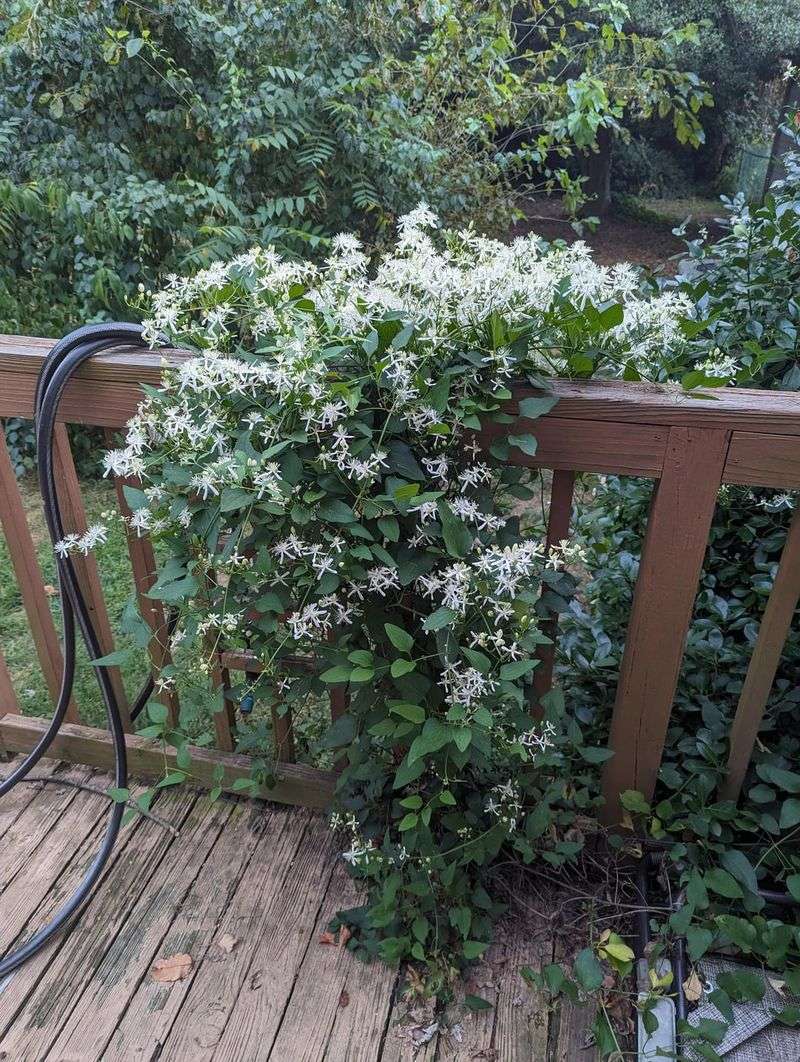
A chain-link fence baking in full sun is one of the least welcoming features in an Arizona yard.
Virgin’s Bower, known botanically as Clematis drummondii, has a talent for turning that eyesore into something worth looking at.
This native clematis scrambles across fences, walls, and low shrubs using twisting leaf stalks that grip surfaces without damaging them.
Flowers appear from late spring through summer as small, creamy white clusters with a faint sweet scent.
After blooming, the real show begins.
Seed heads develop into silky, silver plumes that catch the light and give the vine an almost ethereal look in late summer and fall. Many Arizona gardeners grow it specifically for that feathery seed display, which holds on the plant for weeks.
Virgin’s Bower is documented by the University of Arizona Extension as a drought-tolerant native that performs well in disturbed soils and along desert washes.
Established plants survive on rainfall alone in many parts of the state, though a monthly deep soak during dry summer stretches helps maintain vigorous growth and better flowering.
Plant it along a south- or west-facing fence where heat radiates hardest.
The vine will fill in gaps, reduce reflected heat from metal or chain-link surfaces, and provide nesting cover for small birds.
Prune it back hard in late winter to encourage fresh, full growth each spring.
4. Arizona Passionflower Adds Night Blooms
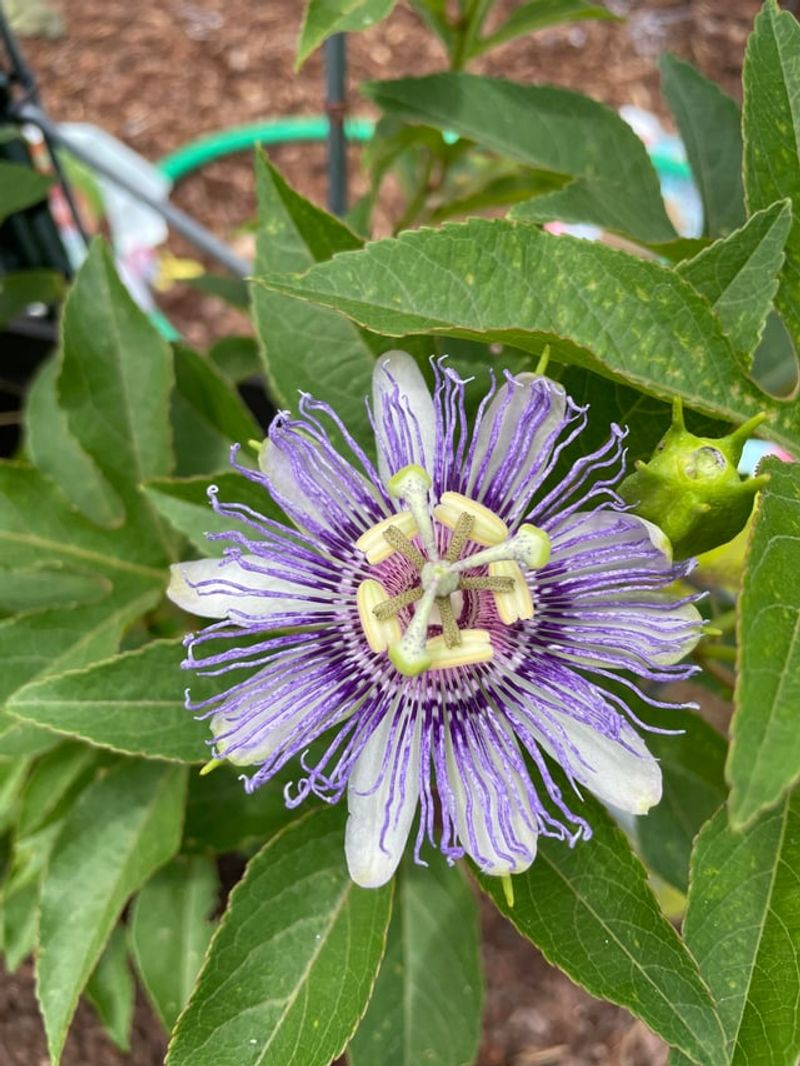
Few plants stop visitors mid-stride the way a passionflower in full bloom does.
Passiflora arizonica produces some of the most intricate, otherworldly flowers found on any Arizona native plant.
Blooms open in late afternoon and stay open into the night, making them a perfect feature for a patio where evenings are spent outdoors escaping the day’s heat.
The flowers are not just beautiful. They serve as a host plant for the Gulf Fritillary butterfly, whose caterpillars feed on the foliage.
Planting Arizona Passionflower invites a full butterfly life cycle into the yard, from egg to brilliant orange adult.
Hummingbirds and native bees also visit the blooms regularly, so the vine functions as a wildlife hub rather than just a shade plant.
Growth is moderate and manageable.
The vine climbs by tendrils and needs a wire fence, trellis, or sturdy mesh to grip. It works well on a courtyard wall or along a patio railing where its coverage softens hard lines and adds layered texture.
Water requirements are low to moderate.
Deep irrigation every two to three weeks during the growing season keeps the plant healthy and flowering.
The Arizona Native Plant Society lists this species as appropriate for Sonoran Desert gardens.
Give it a spot with morning sun and afternoon shade for the best balance of flower production and heat protection through the summer months.
5. Pipevine Supports Desert Wildlife
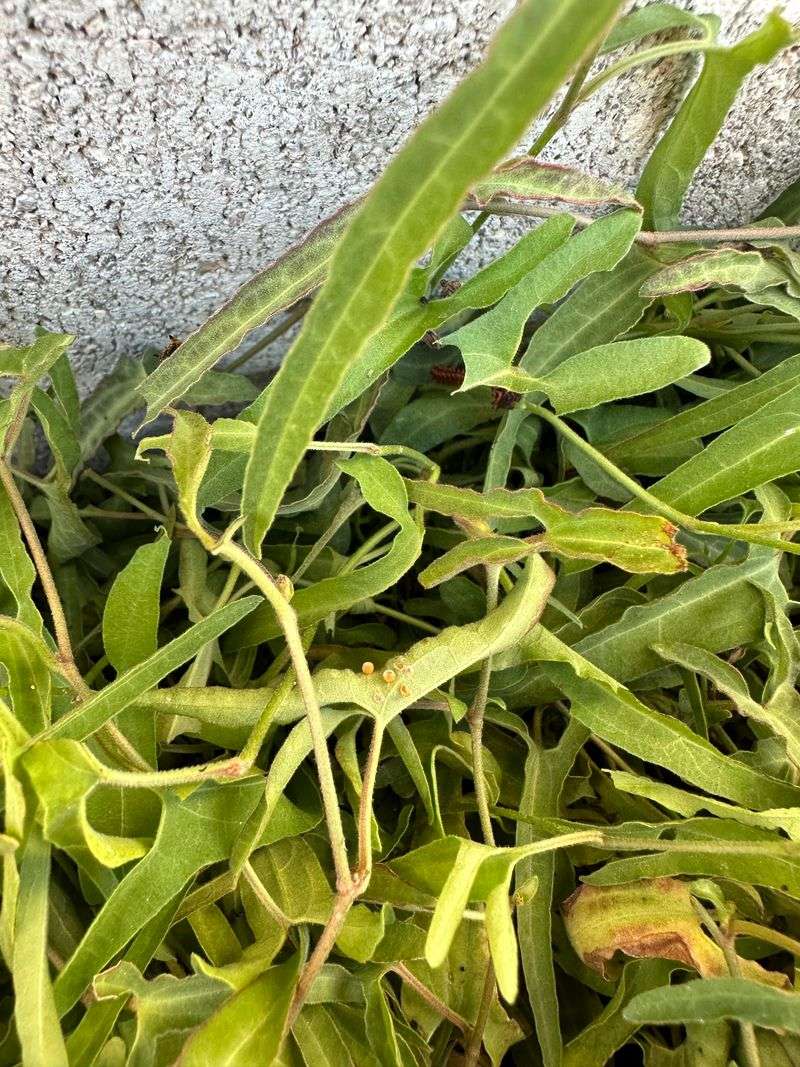
Spotting a Pipevine Swallowtail butterfly gliding through an Arizona garden is one of those moments that feels like a small gift.
What most people do not realize is that the entire life cycle of that butterfly depends on one plant: Aristolochia watsonii, the native Pipevine.
Without this host plant, the Pipevine Swallowtail cannot reproduce, making it one of the most ecologically important vines on this list.
The flowers themselves are genuinely strange in the best possible way.
They are curved, pipe-shaped tubes in dark maroon and brownish purple that look like something from a tropical rainforest, not the Sonoran Desert.
They appear in spring and sometimes again after monsoon rains, adding a curiosity factor that makes this vine a conversation starter for any garden visitor.
Pipevine stays relatively compact compared to the grapes and creepers on this list.
It grows well along a low fence, a raised bed edge, or at the base of a taller shrub where it can weave through branches.
It is not the vine for covering a full pergola, but it earns a spot in any wildlife-focused desert garden without question.
Water needs are genuinely minimal.
This plant is found naturally in rocky desert slopes and canyon edges with little supplemental water. A monthly deep soak during summer is usually sufficient.
Place it thoughtfully since the foliage contains compounds that are toxic to some animals, so keep it away from areas where pets graze or browse regularly.
6. Hacienda Creeper Handles Tough Walls
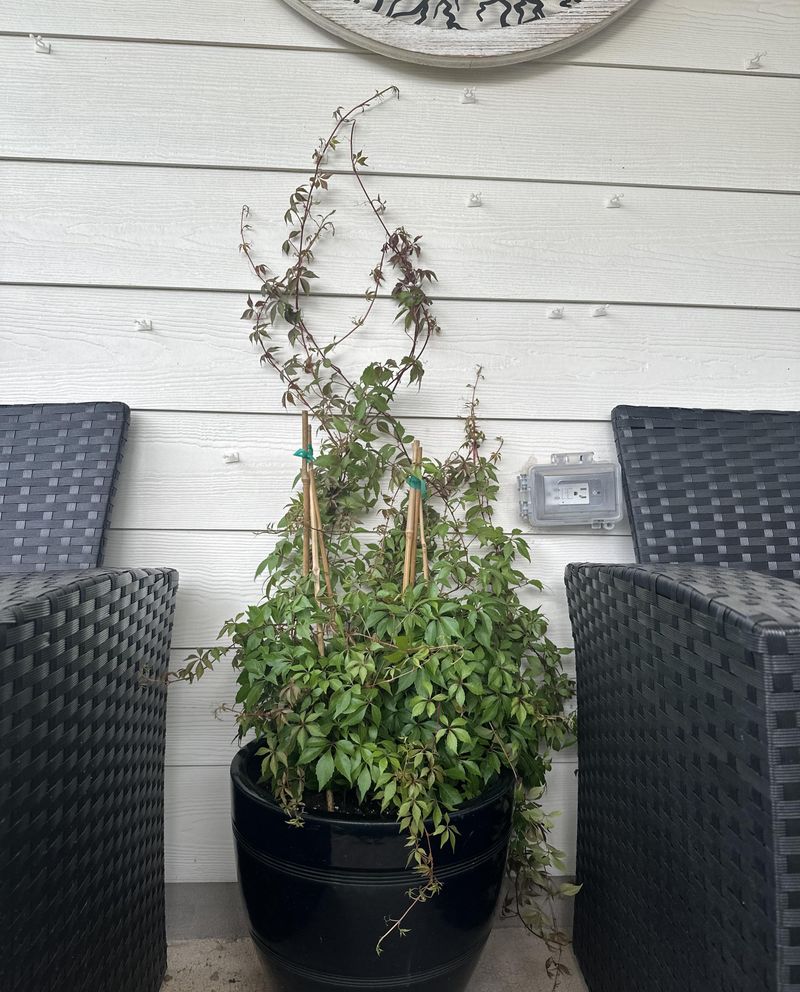
Block walls in Arizona neighborhoods absorb heat all day and radiate it back at night like a slow-release furnace.
Hacienda Creeper, Parthenocissus vitacea, is one of the toughest vines for taming that kind of radiant heat.
It clings to rough masonry, stucco, and concrete surfaces using adhesive tendrils, spreading a dense layer of green across surfaces that would otherwise bake everything nearby.
The coverage this vine provides is impressive.
A single established plant can blanket a large wall section within a few growing seasons, reducing surface temperatures significantly.
Research from desert horticulture programs shows that vine-covered walls can be measurably cooler than bare masonry, which translates directly into a cooler patio or interior room on the other side.
Fall color is a bonus that surprises many Arizona gardeners.
Leaves turn brilliant shades of red, orange, and burgundy before dropping in winter. The bare stems cling to the wall through cold months and leaf out again reliably each spring, giving the wall a clean look in winter without the vine completely disappearing.
Hacienda Creeper is drought tolerant once established, but it benefits from regular deep watering during its first two summers to build a strong root system.
After that, monthly irrigation during the hottest months is usually enough.
Avoid planting it directly against painted wood surfaces since the adhesive tendrils can leave marks when the vine is eventually removed. Masonry and stucco are its ideal surfaces for long-term coverage and low-maintenance performance.
7. Yucca Vine Brings Yellow Flowers
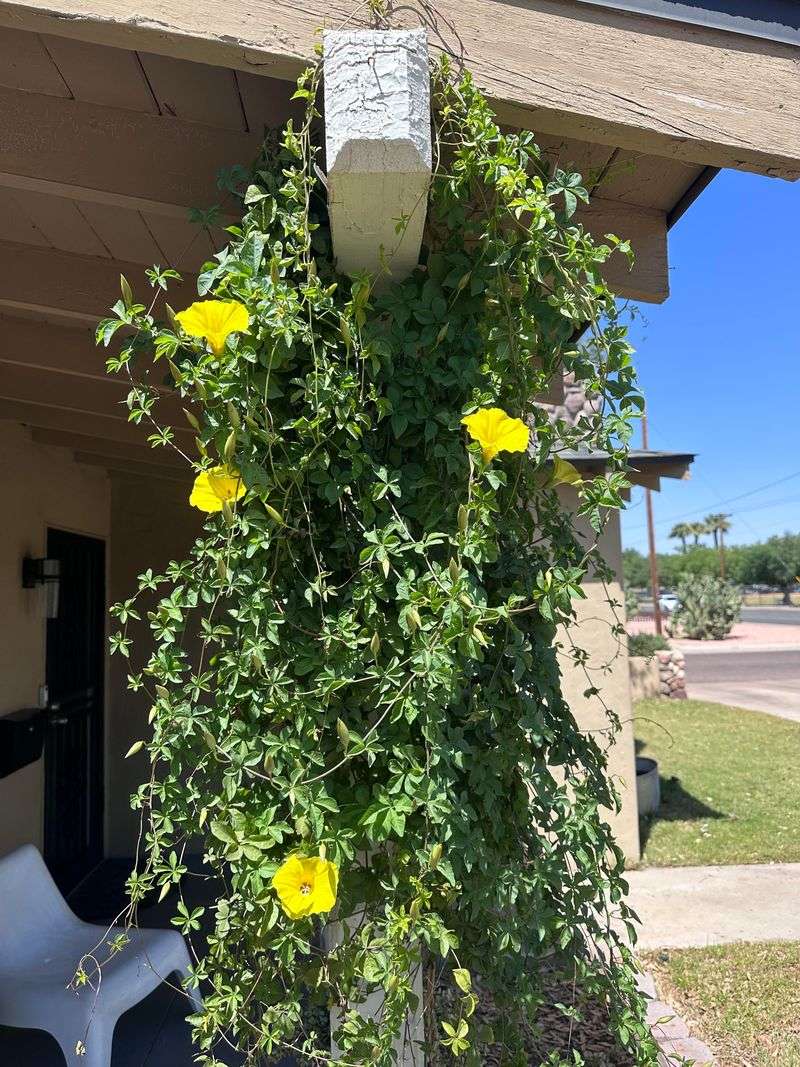
Bright yellow flowers on a climbing vine in the middle of an Arizona summer feel almost defiant against the heat.
Merremia aurea, called Yucca Vine or Yellow Morning Glory Vine, pulls off exactly that trick.
Its large, sunny blooms open in the morning and glow against green foliage, giving a trellis or fence a cheerful burst of color during the months when most plants look like they are just enduring the weather.
The vine is native to the Sonoran Desert region and has been documented by Arizona native plant resources as appropriate for low desert gardens.
It climbs by twining around support structures and grows quickly during warm months, making it useful for filling in gaps on a trellis or covering a bare fence section before summer reaches its peak intensity.
Foliage is lush and broad enough to create real shade on smaller structures.
A wire fence or lattice panel covered by an established Yucca Vine provides meaningful shade to the area behind it, reducing heat transfer through open structures.
The combination of shade value and flower display makes this vine pull double duty in a desert garden design.
Water needs are moderate during establishment and drop off significantly once roots are deep and settled.
Water deeply every ten to fourteen days during the growing season and cut back to monthly deep soaks once the vine is mature.
Give it full sun and well-drained soil for the strongest growth and the most generous flower production from late spring through the monsoon season.
8. Canyon Grape Shades Arbors Fast
An arbor without shade coverage is just a fancy frame standing in the sun.
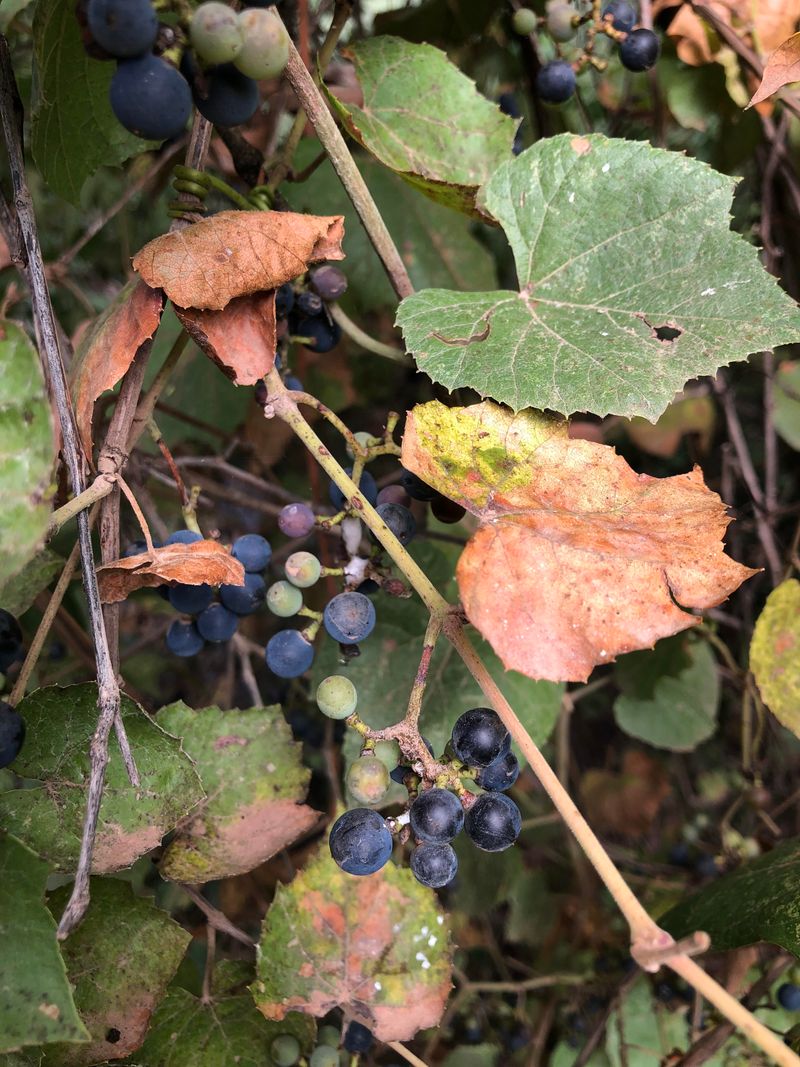
Canyon Grape, another form of Vitis arizonica found specifically along Arizona canyon corridors and riparian edges, is built for exactly this job.
It grows fast, spreads wide, and produces enough leaf coverage to turn an open arbor into a genuinely shaded retreat within a couple of growing seasons.
What sets Canyon Grape apart from other shade vines is its combination of speed and toughness.
It tolerates the alkaline soils common across Arizona, handles reflected heat from nearby walls and pavement, and bounces back strongly after a hard pruning.
Gardeners who need fast results without importing a thirsty exotic vine often find Canyon Grape to be the most practical answer available.
The arbor-shading ability comes from the vine’s habit of producing large, overlapping leaves that form a nearly solid canopy when trained horizontally across a frame.
Temperatures under a Canyon Grape-covered arbor can drop noticeably compared to standing in open sun nearby. Small grape clusters attract birds, making the arbor a lively spot during late summer mornings.
Plan for room to spread since Canyon Grape is a vigorous grower that can easily reach twenty feet or more across a large structure.
Prune in late winter before new growth starts to keep it shaped and manageable.
Water deeply every two weeks during the first summer, then taper to monthly deep soaks once established.
The vine rewards patience with shade that feels genuinely earned and a yard that feels unmistakably, beautifully Arizona.