8 Low-Water Shrubs That Hide an Ugly Arizona Block Wall by Next Summer
That tan block wall around your yard soaks up the sun all day and throws heat right back at your patio. The good news is that a few tough desert shrubs can cover it fast, using very little water.
Plant them this fall, and many can turn bare block into a living green screen by the time summer heat returns. Some even bring in hummingbirds, bees, and birds that help keep your yard lively and balanced.
1. Hopseed Bush
Need speed above all else? Hopseed bush is the sprinter of desert shrubs.
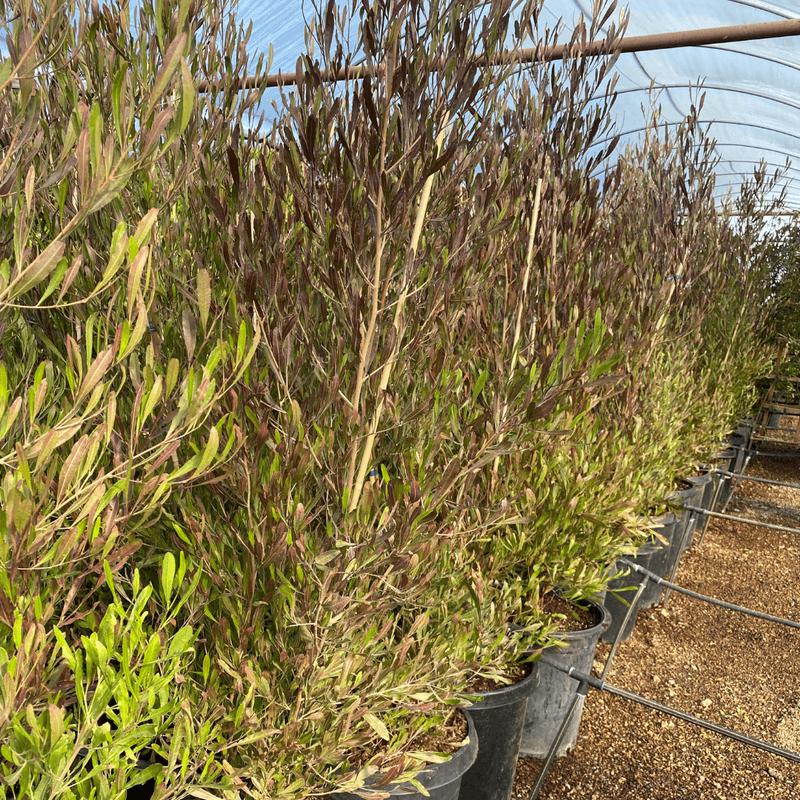
In Phoenix it can add two to three feet a year, so a 5-gallon plant set out in October may stand six to eight feet tall by next summer.
The leaves are narrow, glossy, and packed tightly on upright stems. Some forms show a purple blush in cooler months, which adds a little drama against plain block.
Because it stays evergreen, you get coverage in January as well as July, with no bare winter gaps.
Reflected heat from a west-facing wall barely fazes it. Plant about five to six feet apart for a solid screen, and give it well-draining soil.
If you hit caliche, break through it so water can drain away from the roots.
Water deeply every week or so during the first summer, then taper off. Once settled, it gets by on very little.
Small birds often tuck into the thick branches for cover and nesting, which turns a boring wall into a quiet bit of habitat.
Fun fact: the papery seed capsules look like hops used in brewing, which is where the name comes from. They rattle softly in a monsoon breeze.
2. Arizona Rosewood
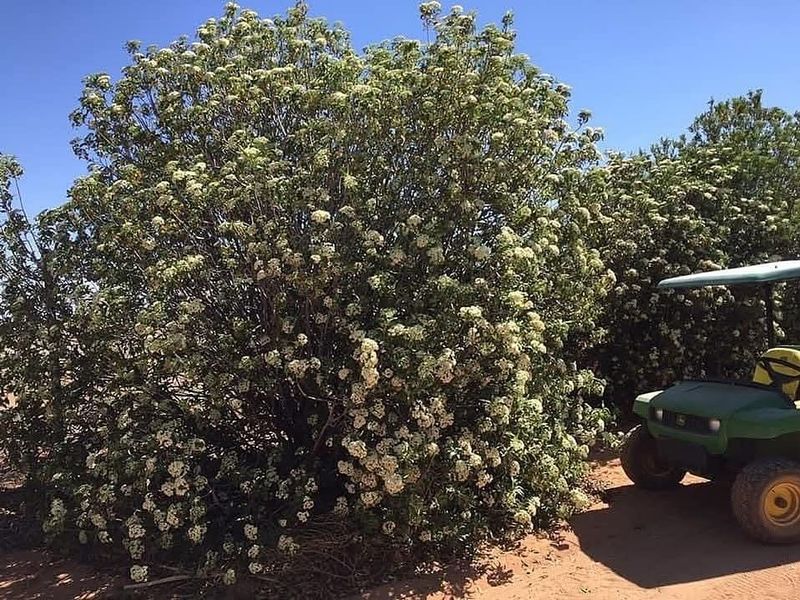
Picture an oleander without the worry. Arizona rosewood gives you that same tall, thick screen, but it is a native and not poisonous, which matters to families with kids and pets.
Leaves are dark green, narrow, and leathery, holding their color through the hottest stretch of August. Over time it can reach 10 to 20 feet, easily topping a standard six-foot wall.
Growth is moderate at first, so buy the largest container you can afford if next summer is your goal.
Here is a helpful trick. Regular deep watering during the first year speeds it up noticeably.
After that, many established plants need a drink only about once a month.
Late spring brings flat clusters of tiny white flowers that hum with native bees. Rosewood is also a larval host for the two-tailed swallowtail, Arizona’s state butterfly, so you may spot caterpillars munching a few leaves.
Let them be.
Plant in rocky, fast-draining soil with full sun, about eight feet apart. You can leave it bushy or lift the lower branches later to shape a small tree.
Either way, birds appreciate the dense cover, and you get a wall that finally looks like it belongs.
3. Desert Cassia
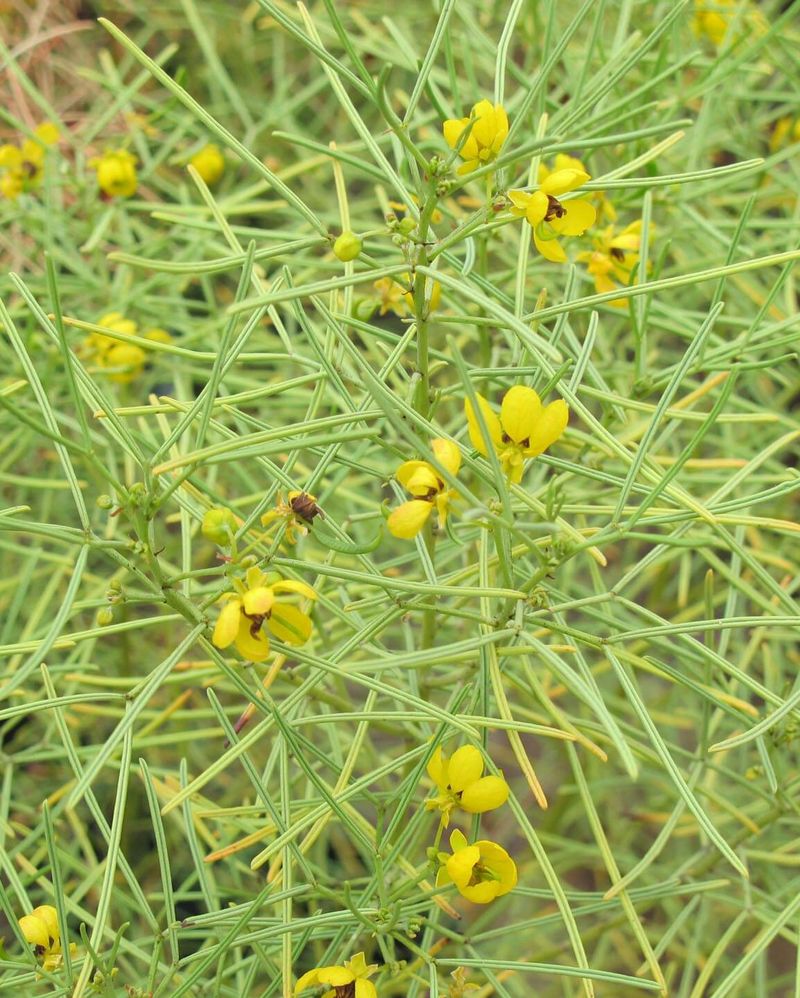
February in the desert can look a little dull, until desert cassia lights up like a row of lemons. Sprays of bright yellow flowers cover the plant from late winter into spring.
Your Arizona Garden Changes Every Week. Your Plan Should Too.
Gardening in Arizona changes quickly throughout the season. Every Friday you’ll receive a simple weekly plan showing exactly what to plant, prune, fertilize, harvest, and protect so you never miss the right timing.
Size is the key detail here. Cassia tops out around five to six feet tall and wide, so it fits shorter garden walls or works as a front layer in front of taller shrubs.
It grows fast and fills gaps quickly, which is exactly what you want for a quick fix.
The needle-like leaves are silvery green and hold up to reflected heat from concrete and block. Cold snaps rarely bother it either, since it handles temperatures well below freezing.
Bees, butterflies, and small birds visit the blooms, giving you an early-season pollinator stop before summer arrives. Soil is not a big deal, as it tolerates sand, rocks, or clay as long as water drains.
Care is refreshingly simple. Water deeply about every two weeks once established, less in winter.
After bloom, a light trim of the seed pods keeps it tidy, though leaving some is fine.
Space plants four to five feet apart, and they will knit together into a soft golden hedge by next spring.
4. Mexican Bird of Paradise
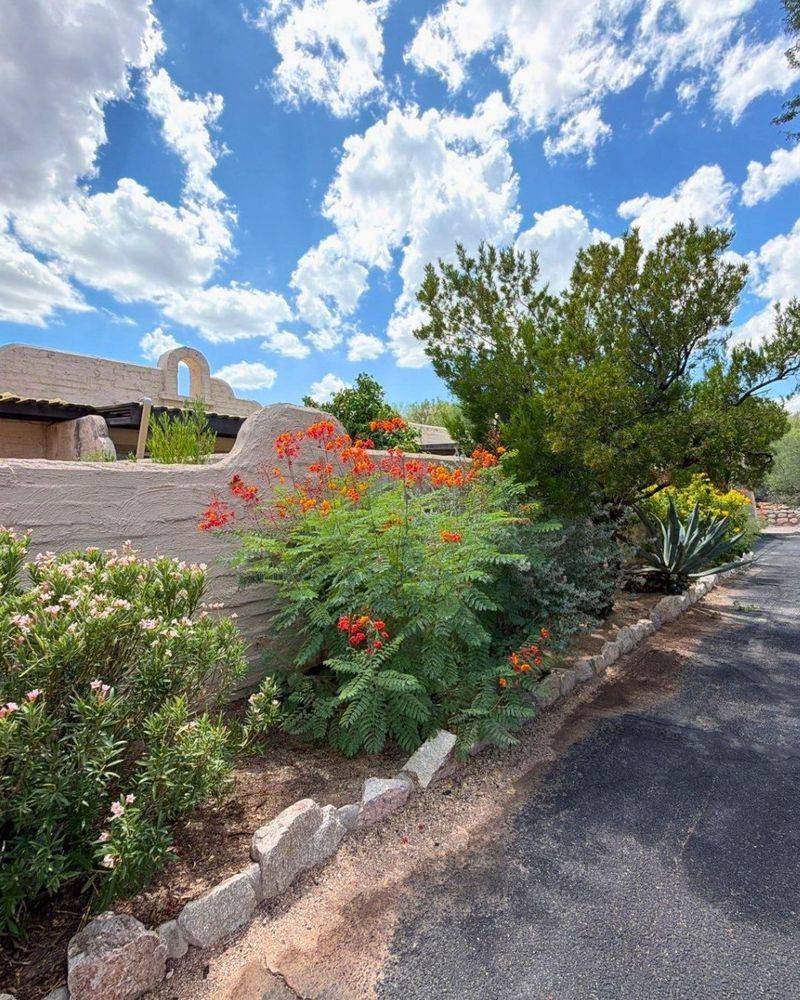
Hummingbirds treat this shrub like a drive-through. The fiery orange and red blooms, edged in yellow, keep coming right through the peak of summer when most plants quit.
Mexican bird of paradise is a true heat lover. It shrugs off 110 degree days and pavement glare without complaint.
In Phoenix it can grow two to four feet a year, so plants set out in spring after frost danger often reach eye level by July.
One thing to know: it may drop leaves in a cold winter. Many gardeners cut it back to about a foot tall in late winter, and it bursts back quickly when warm weather returns.
That makes it best for walls you mostly look at from April to November.
Plant it three to four feet apart along a sunny wall, ideally mixed with an evergreen like jojoba for year-round cover. Rocky native soil and caliche are fine if drainage is decent.
Water deeply every week or two in summer once established. Bees and butterflies join the hummingbirds, so expect a lot of motion.
Keep in mind that the seeds should not be eaten, so plant it where small children are not snacking in the garden.
5. Texas Sage
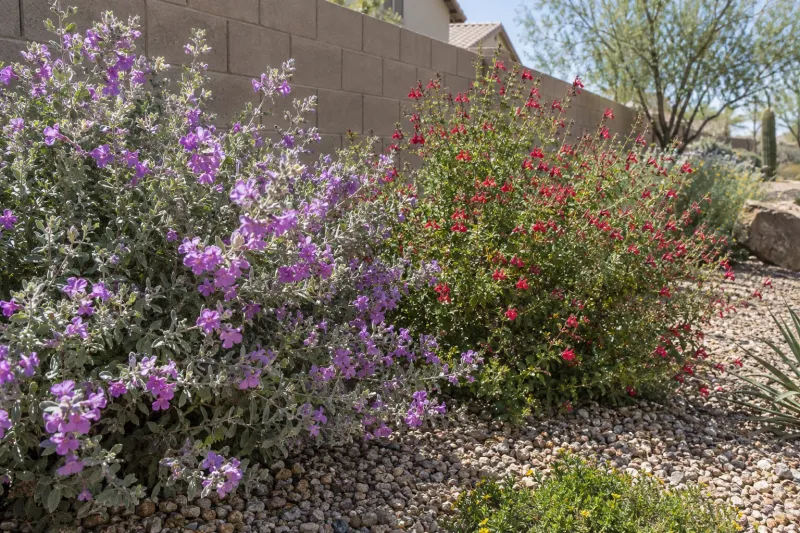
Old-timers in Arizona call it the barometer bush, and for good reason. Texas sage often bursts into purple, pink, or white bloom right after a monsoon storm, almost like it can sense humidity.
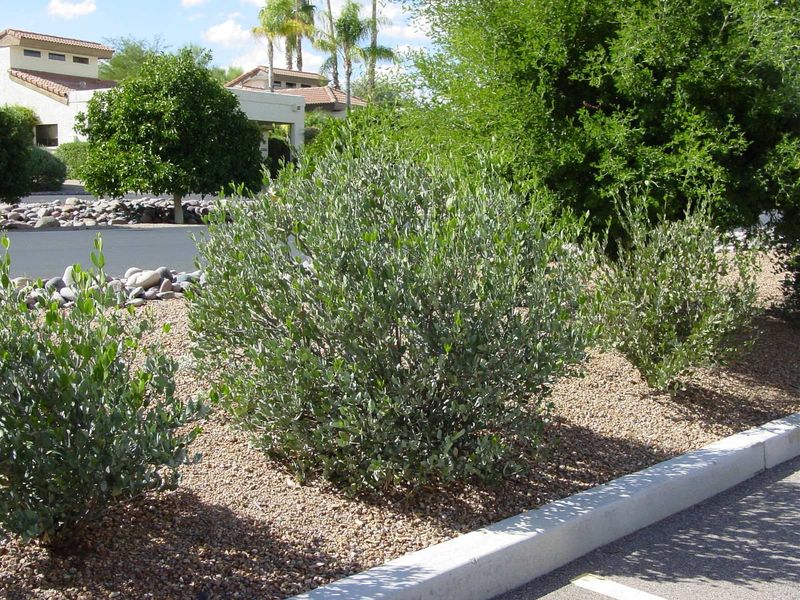
Silvery leaves are the star the rest of the year. They bounce light and look cool even on a 112 degree afternoon, which softens the heavy look of a block wall.
Reflected heat from that wall is no problem for this tough shrub.
Choose the right variety for your space. Compact types stay around four feet, while larger screening forms reach six to eight feet.
Most add one to three feet a year once rooted, so a fall planting can make real progress by summer.
The biggest mistake people make? Too much water and too much shearing.
Overwatering causes weak, floppy growth, and boxy pruning removes the flowers. Water deeply once or twice a month after the first year and let the plant keep its natural shape.
Bees and butterflies flock to the monsoon blooms. The dense, twiggy branches also give lizards and small birds a shady hiding spot, and lizards may help keep insect numbers in check around the wall.
6. Jojoba
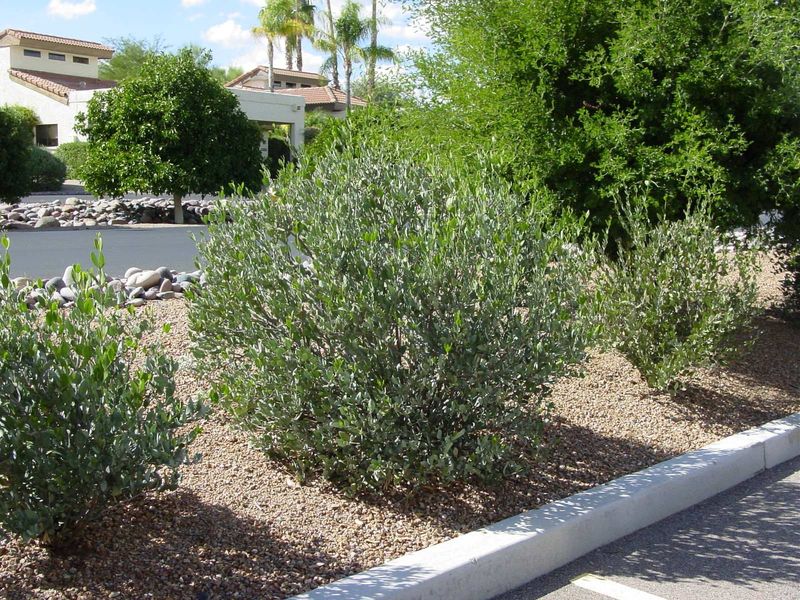
Ever seen jojoba oil in a shampoo bottle? It comes from this humble Sonoran Desert native, and the shrub itself is just as useful in the yard.
Let us be honest about speed. Jojoba grows slowly, around six to twelve inches a year.
So why is it here? Its thick, rounded shape gives you instant presence, and nursery plants in 15-gallon pots already block a good chunk of wall on day one.
Leaves are silvery green and point upward, which helps the plant dodge the harshest midday sun. That clever trick lets it thrive against a sizzling wall where tender plants would fry.
Once settled, usually after a year or two, it can often survive on rainfall alone.
Want faster growth? Water a bit more regularly during its first two summers.
You will see a clear difference.
The nuts feed quail, ground squirrels, and other wildlife, so this shrub doubles as a small desert pantry. Quail often roam open ground looking for food, and some homeowners enjoy watching them patrol along the base of the wall.
Plant four to six feet apart in sandy, rocky, or caliche soil with good drainage. It is about as close to plant-and-forget as Arizona gets.
7. Sugar Bush
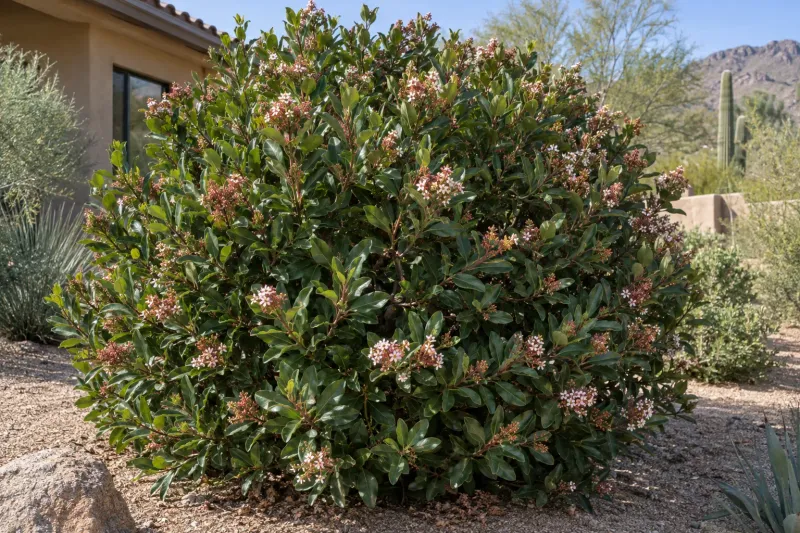
Sticky red berries with a sweet-tart coating gave sugar bush its name. Birds and small mammals know the flavor well, and they will visit once your plants start fruiting.
Glossy, dark green leaves set this shrub apart from the silver-leaved crowd on this list. If you want a richer, deeper green against tan block, this is your pick.
It stays evergreen and fills out into a dense, rounded wall of foliage.
Expect about one to two feet of growth a year in Phoenix, picking up speed once roots settle. A 5-gallon plant can reach around ten feet in roughly three years.
With a fall planting and a larger starter pot, you can get solid coverage by next summer.
Spring brings clusters of white to pale pink flowers that draw bees and butterflies. Then come the berries, which feed wildlife into summer.
Drainage matters more than anything. Sugar bush dislikes soggy roots, so skip planting it near lawn sprinklers.
Water deeply every few weeks after establishment, and much less in winter.
It tolerates full sun to a bit of afternoon shade, making it handy for walls that get partial shade from a neighbor’s tree. Space plants about eight feet apart.
8. Chuparosa
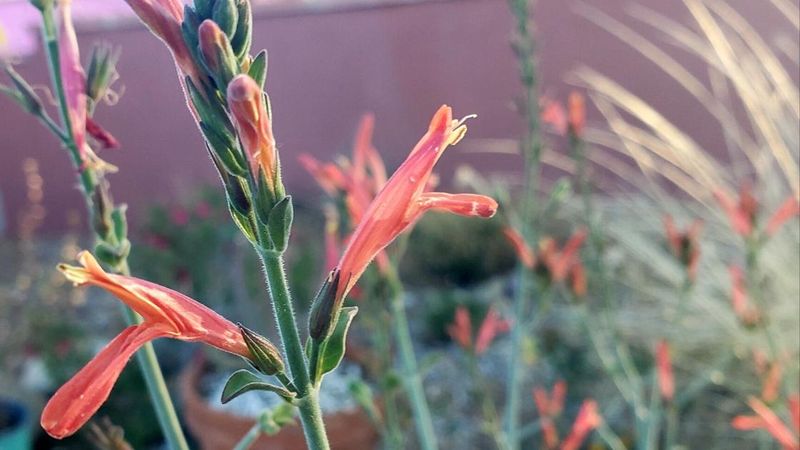
Chuparosa means hummingbird in Spanish, and the plant earns that title every winter. When most gardens are quiet, its red tubular flowers feed hungry hummingbirds from fall through spring.
Think of it as the low skirt for your wall screen. Chuparosa grows about three to five feet tall and spreads a bit wider, so it shines along shorter walls or tucked in front of taller shrubs like hopseed or rosewood.
Layering like that hides the block from top to bottom.
Leaves may drop during dry spells, yet the stems stay green, so it never looks bare. A little extra water brings the foliage right back.
Growth is moderate to fast, and a fall planting usually fills in nicely by the next warm season.
Few plants handle blazing reflected heat better. Rocky ground, poor soil, and caliche are all fine, as long as water drains away.
Native bees and butterflies also visit, making this a strong choice for a pollinator corner. Water every two to three weeks once established.
Quick tip: avoid heavy shearing. Lightly trim old stems in late spring so you keep plenty of buds for the next round of winter hummingbird visits.