8 Signs A California Tree Needs A Safety Check Before Winter Storms
For twenty years, the big oak in the backyard shaded summer barbecues without causing a bit of trouble.
Then one fall afternoon, a neighbor noticed a long crack running down the spot where its two trunks met.
That crack had been growing quietly for years, waiting for a strong winter storm to push it further.
Many California trees look perfectly healthy from a distance, even while hidden weaknesses build up inside the trunk, roots, or canopy.
A few warning signs are easy to spot from the ground. Learning them before the rain and wind arrive helps protect homes, cars, and the people who spend time beneath those branches.
1. Co-Dominant Stems Split Under Pressure
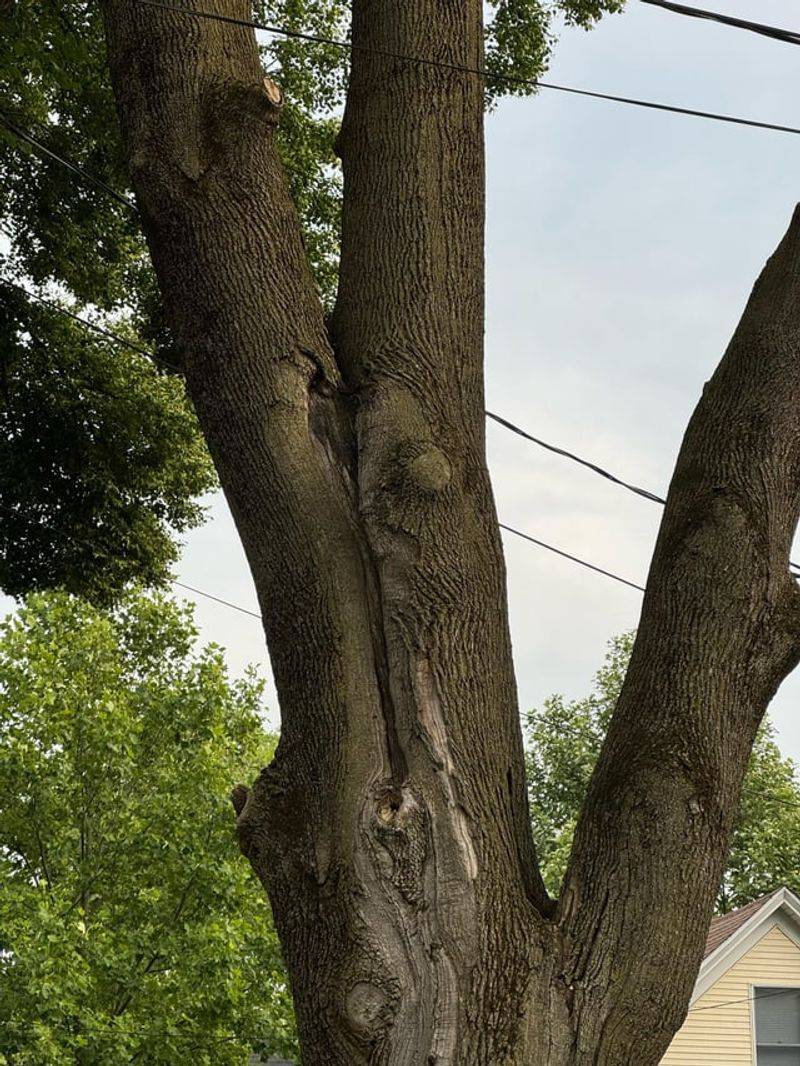
Some trees grow two main trunks of nearly equal size from a single spot. Arborists call these co-dominant stems, and the V shape they form behaves a bit like a giant wooden slingshot slowly pulling itself apart.
The real problem hides inside the joint. As both trunks thicken, they press together and trap bark between them, which experts call included bark.
That trapped bark keeps the wood from knitting into a strong bond. The connection stays weaker than a normal branch attachment, even on a tree that looks vigorous.
Winter storms add serious pressure. Wind pushes each trunk in a slightly different direction, while rain makes leaves and limbs heavier, and all that force gathers at the narrow crotch.
A crack at that point can bring half the tree down at once. UC ANR guidance on tree risk lists co-dominant stems with included bark as a common defect in trees that fail.
Eucalyptus, Chinese elm, and some oaks often grow this way, though any species can. A tight V shape is usually more concerning than a wide, rounded U.
From the ground, the spot where the trunks separate deserves a close look. Bark folding inward, a seam or crack running down from the joint, or dark, oozing sap are all warning clues.
A certified arborist can suggest options like cabling, bracing, or reducing one stem. Young trees can often be pruned early so one trunk becomes the clear leader.
2. A New Lean Signals Root Trouble
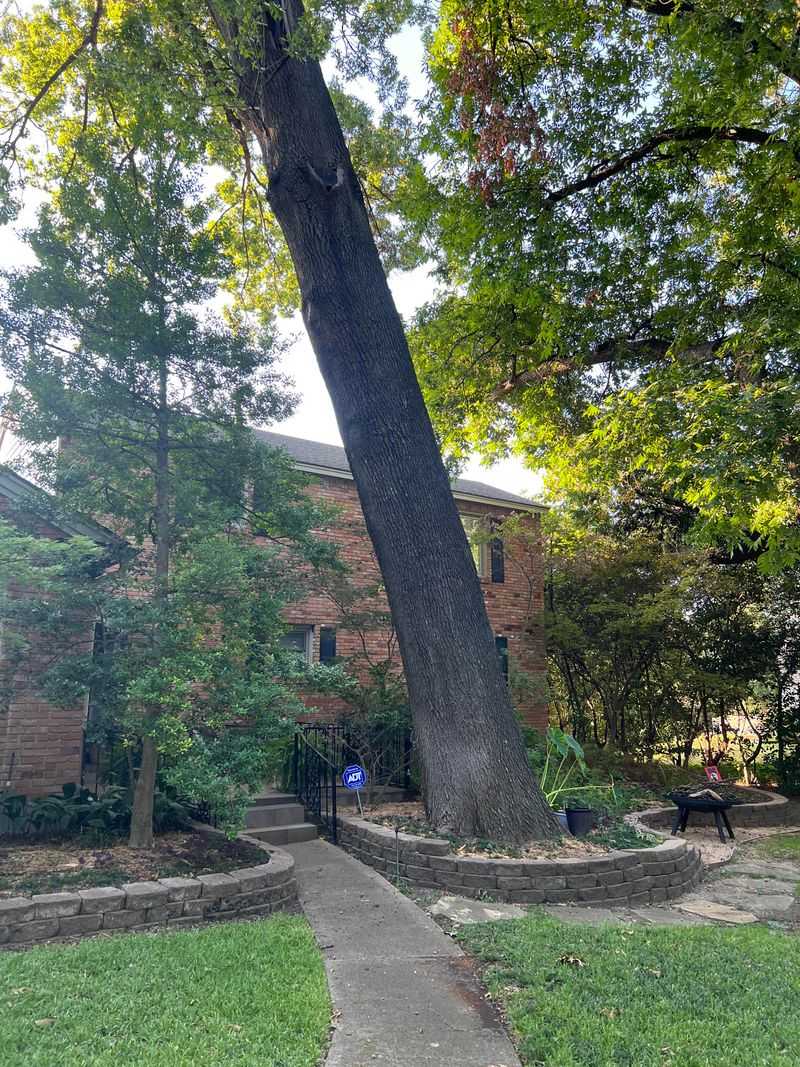
Plenty of trees lean, and many stand that way for a hundred years without trouble. A tree that grew slowly toward the sun usually corrects itself by curving upward near the top.
The lean worth worrying about is the one that’s new or getting worse. A sudden tilt often means the root plate has started to shift.
That root plate is the wide mat of roots and soil holding the tree in place. Once that anchor loosens, the whole tree is only as stable as the wet ground beneath it.
California winters make this worse. Heavy rain soaks the soil, turning firm dirt into something closer to soft mud, and roots lose their grip.
A gust that a tree handled easily in July can tip it over in January. UC ANR tree risk materials point to a few clues that a lean is fresh.
Your California Garden Changes Every Week. Your Plan Should Too.
Gardening in California changes quickly throughout the season. Every Friday you’ll receive a simple weekly plan showing exactly what to plant, prune, fertilize, harvest, and protect so you never miss the right timing.
Soil that’s cracked, mounded, or lifted on the side away from the lean is one sign. Exposed or snapped roots, gaps around the trunk base, or a tree that suddenly looks closer to the roof are others.
A simple trick helps track changes. A photo taken from the same spot every few weeks, or a string tied from a branch to a stake, shows movement over time.
A growing lean or heaving soil calls for a certified arborist quickly. This kind of failure can happen without much warning.
3. Brittle Wood Becomes A Falling Hazard Fast
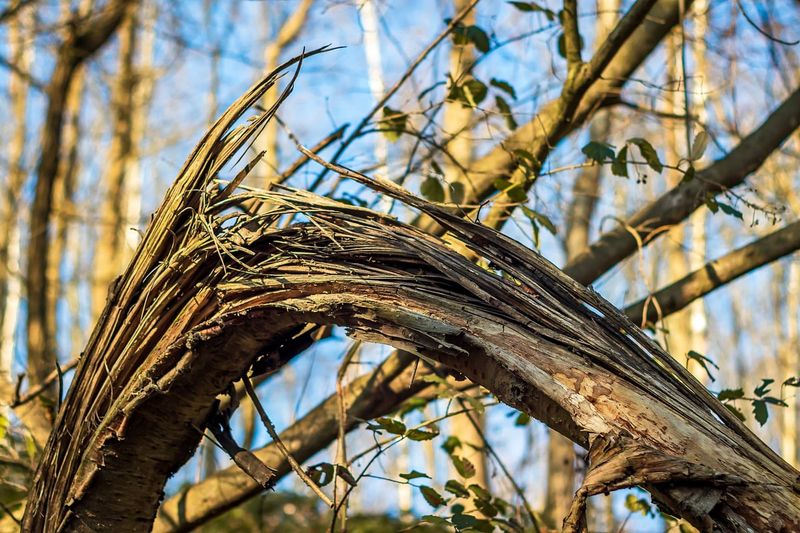
Tree workers treat dried-out branches high in a canopy with a lot of respect, and for good reason. A single brittle limb can weigh hundreds of pounds and drop with very little warning.
Living wood bends in the wind like a fishing pole. Old, weak wood does the opposite, drying out, turning brittle, and losing the flexible fibers that help a branch sway.
When a storm hits, those limbs snap instead of bending. Height makes the danger worse, since a branch dropping from forty feet up picks up serious speed.
That’s why broken windshields, damaged roofs, and injuries are so common after windy nights. Even a branch the size of an arm can cause harm.
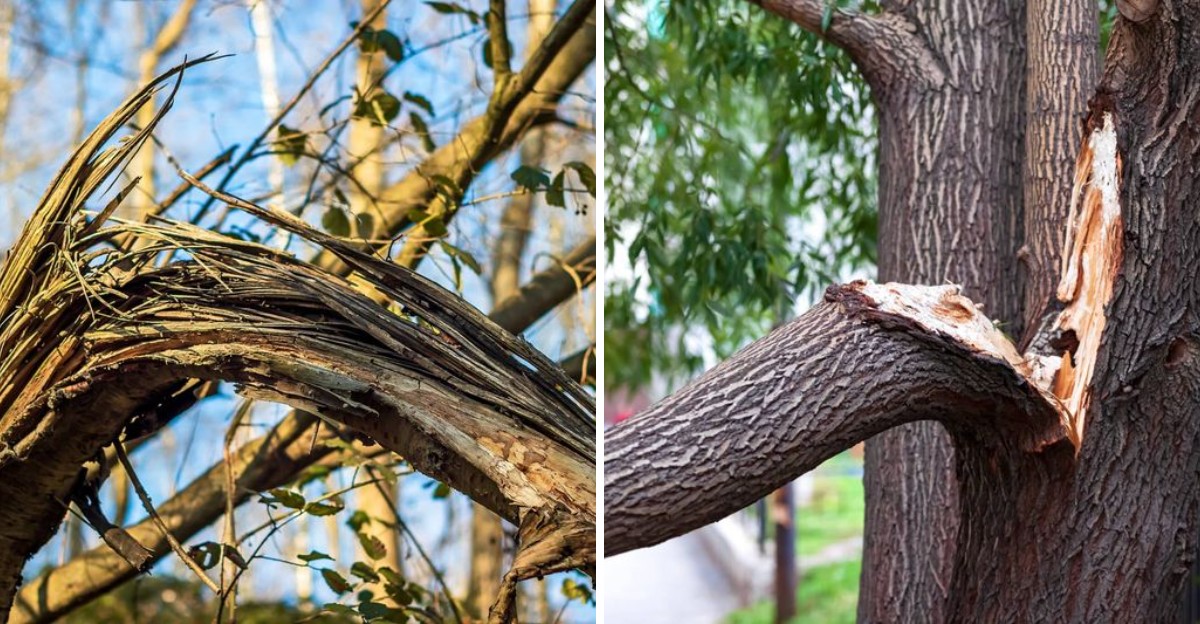
UC ANR guidance treats these branches as one of the easiest risk signs to spot and one of the most important to fix. Limbs with no leaves during the growing season, peeling or missing bark, or gray, cracked wood all stand out.
Branches already partly broken and dangling, often called hangers, need attention right away. Wind can bring them down at any moment.
A slow walk around the tree on a sunny day, with binoculars in hand, makes scanning the canopy much easier. Limbs over sidewalks, cars, play areas, and the house deserve extra attention.
Small, low branches may be safe to prune at home. Anything high or heavy belongs to a trained arborist with the right gear.
4. Mushrooms At The Base Suggest Root Rot
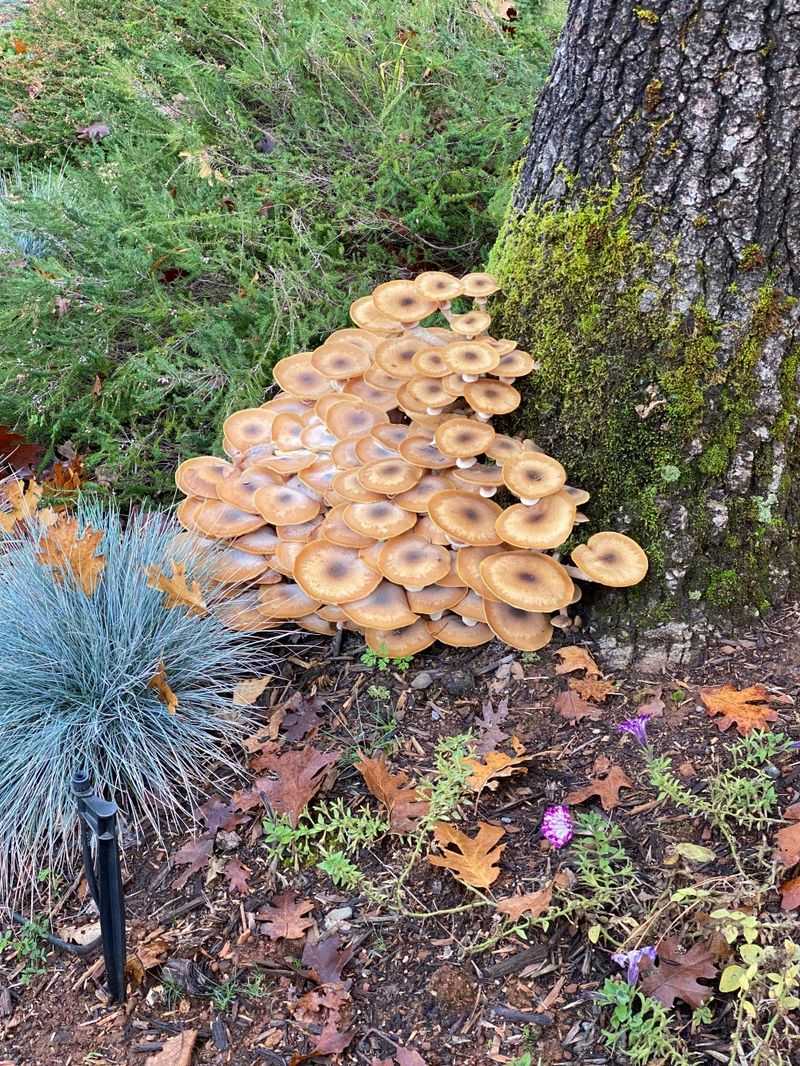
Little mushrooms popping up after a rainy week can look like something from a fairy tale. Clustered right against a trunk or along its roots, though, they may tell a less charming story.
Mushrooms are the fruit of fungi, and many tree-rotting fungi live mostly out of sight. What shows above ground is only a small piece of a much larger organism.
The main body may be spreading through roots and the lower trunk, slowly breaking down the wood that holds the tree upright. A tree can keep a full, green canopy while its anchor weakens below.
UC ANR publications describe several root and butt rot fungi found in California. These include Armillaria, often called oak root fungus, and Ganoderma, which forms shelf-like conks.
Overwatering near oak trunks is a known trigger for these problems. Native oaks adapted to dry summers are especially sensitive to irrigation close to their base.
Not every mushroom near a tree signals trouble, since some simply feed on buried wood chips or old roots. That’s exactly why guessing is risky.
Fungi growing directly on the trunk or root flare deserve attention. Hard shelf-shaped conks, white fan-like growth under loose bark, or soft, crumbly wood at the base are also concerning.
A clear photo shared with a certified arborist helps with identification. With rot, early detection opens up more choices, from adjusting irrigation to planned removal before a tree comes down on its own.
5. Weak Branch Unions Fail First
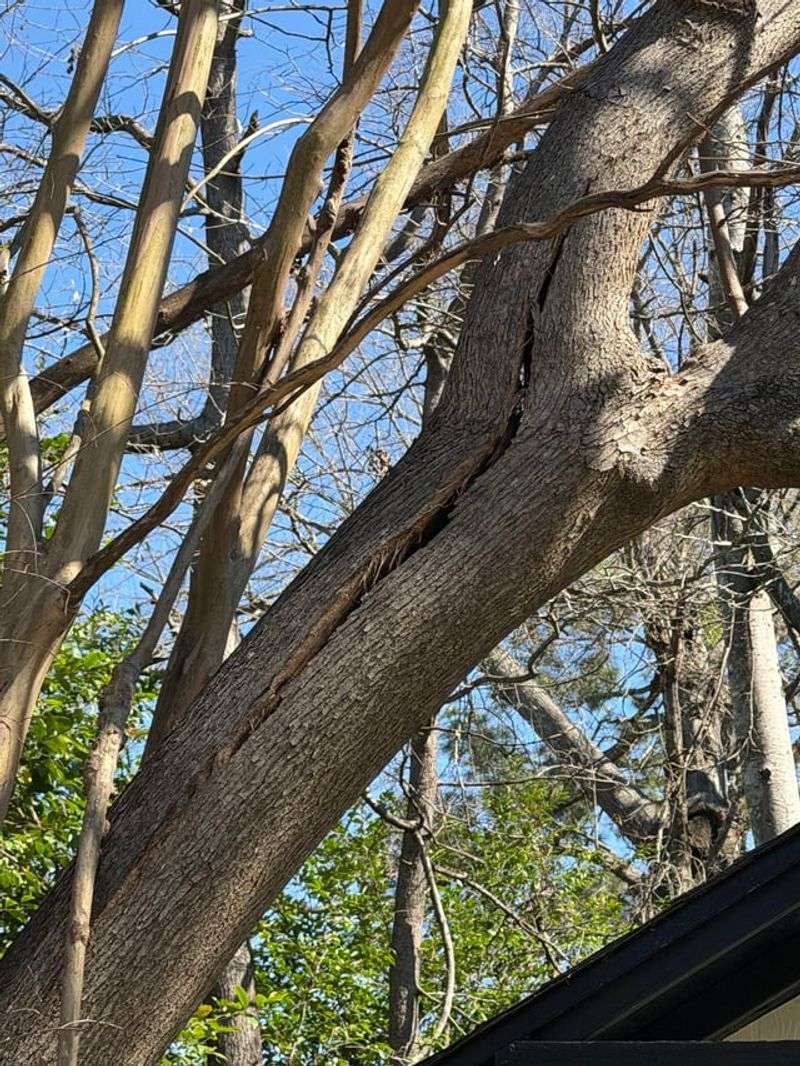
Ask an arborist where a tree usually breaks first in a storm, and many will point to the same place. It’s rarely the middle of a branch or the trunk, but the joint where a branch connects, called the branch union.
A healthy union looks a bit like a shoulder. A raised ridge of bark usually sits on top, with a slightly swollen collar underneath.
Those features show that trunk wood wraps around the branch like a firm handshake. Weak unions skip that handshake and barely hold on.
Several things cause poor attachments. Narrow angles can trap bark inside the joint, much like co-dominant stems do.
Old topping cuts create another problem. They often trigger fast, crowded sprouts attached only to the outer layers of wood, which makes them easy to rip away.
UC ANR guidance warns that branches regrowing after topping are especially prone to failure. Big gusts lever those limbs back and forth, and stress concentrates at the weakest connection, so a crack tends to grow with each storm.
Binoculars make it easier to check the spots where large limbs meet the trunk. Cracks, pinched or folded bark, sap stains, or clusters of skinny sprouts around old pruning cuts are all signs worth noting.
Heavy limbs with weak unions over a roof or driveway deserve a professional opinion. Corrective pruning done before winter costs far less than storm cleanup afterward.
6. Old Storm Damage Rarely Resolves Alone
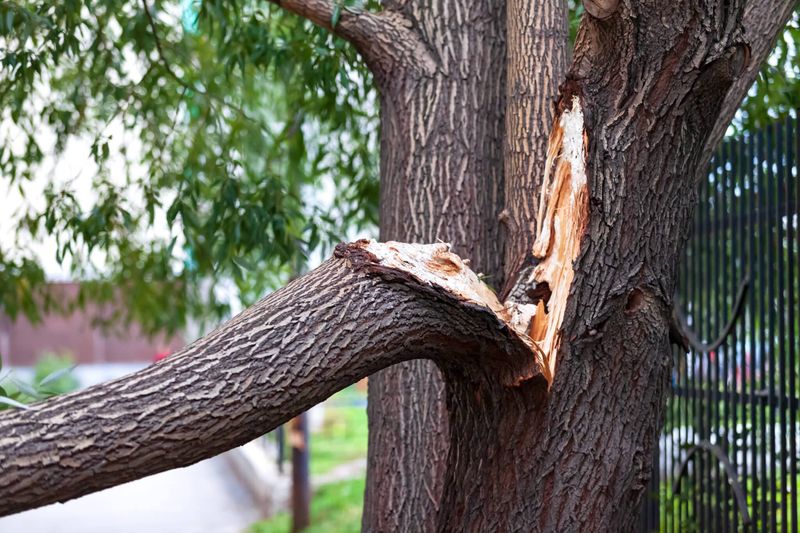
A windy night last year may have left a big limb cracked but still hanging on. Many people prune off the broken piece, sweep up the mess, and move on.
The tree doesn’t move on quite so easily. Trees don’t heal wounds the way skin does, and instead seal them off with walls of tissue around the injury.
Scientists call this process compartmentalization. The damaged wood stays inside, and decay that sneaks in before the seal forms can spread for years.
That leftover weakness explains why old damage matters so much. A cracked trunk, torn branch, or ragged stub gives fungi and insects an open doorway.
Each new storm then pushes against wood that’s weaker than it looks. Small problems from one season can quietly grow into bigger ones by the next.
UC ANR tree care guidance recommends cleaning up storm damage with proper pruning cuts just outside the branch collar, rather than leaving jagged stubs.
Pruning paint and wound dressings are generally not recommended, since they don’t stop decay and may trap moisture.
Any tree that took a hit in a past storm deserves a slow walk-around. Open cracks, hollow spots, lifting bark, oozing liquid, or fungi near old wounds are all warning signs.
Torn limbs still hanging in the canopy need immediate attention. Damage covering a large part of the trunk or crown calls for a certified arborist, who can judge whether the tree is still sound enough to keep.
7. Dense Canopies Catch More Wind Than Expected
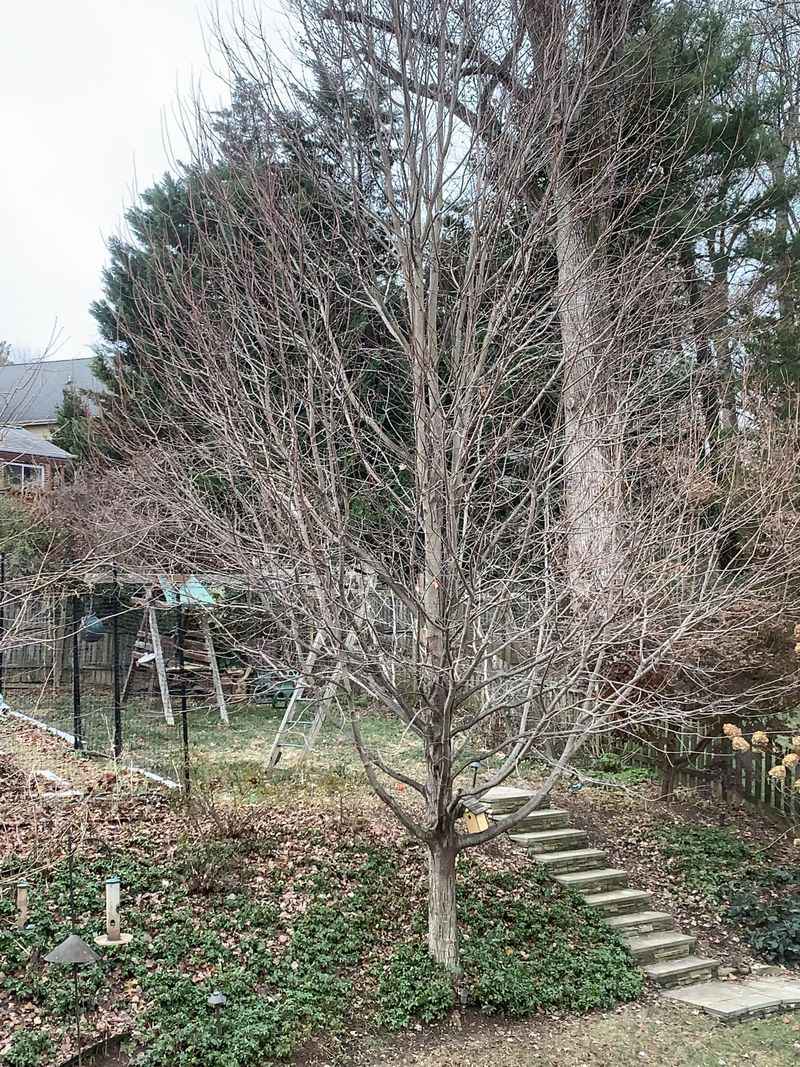
An open umbrella on a windy day pulls hard against the hand holding it. A thick, overgrown tree canopy works the same way, only on a much bigger scale.
Wind normally slips through gaps between branches and leaves. When a crown fills with crossing limbs, suckers, and tangled growth, those gaps close up.
The tree then behaves more like a sail. All that force travels down to the trunk and roots, where it has to be absorbed.
Winter rain adds another layer of trouble. Wet leaves and needles weigh more, so a dense crown carries extra load right when gusts are strongest, and soggy soil makes things worse.
UC ANR pruning guidance supports thinning, which removes select branches back to their point of origin. This reduces weight and improves structure without stripping the tree.
The key word is select. Removing too much, or topping a tree, often backfires by triggering weak, crowded regrowth.
A common rule of thumb is to remove no more than about a quarter of the live canopy in one year. Lighter, well-planned cuts usually give better long-term results.
A bright day offers a good chance to look up into the crown. Very little sky showing through, or a lopsided crown heavy on one side, suggests structural pruning may help.
Late summer through fall is a smart window to schedule that work before storm season.
8. A Professional Check Beats Guessing From The Ground
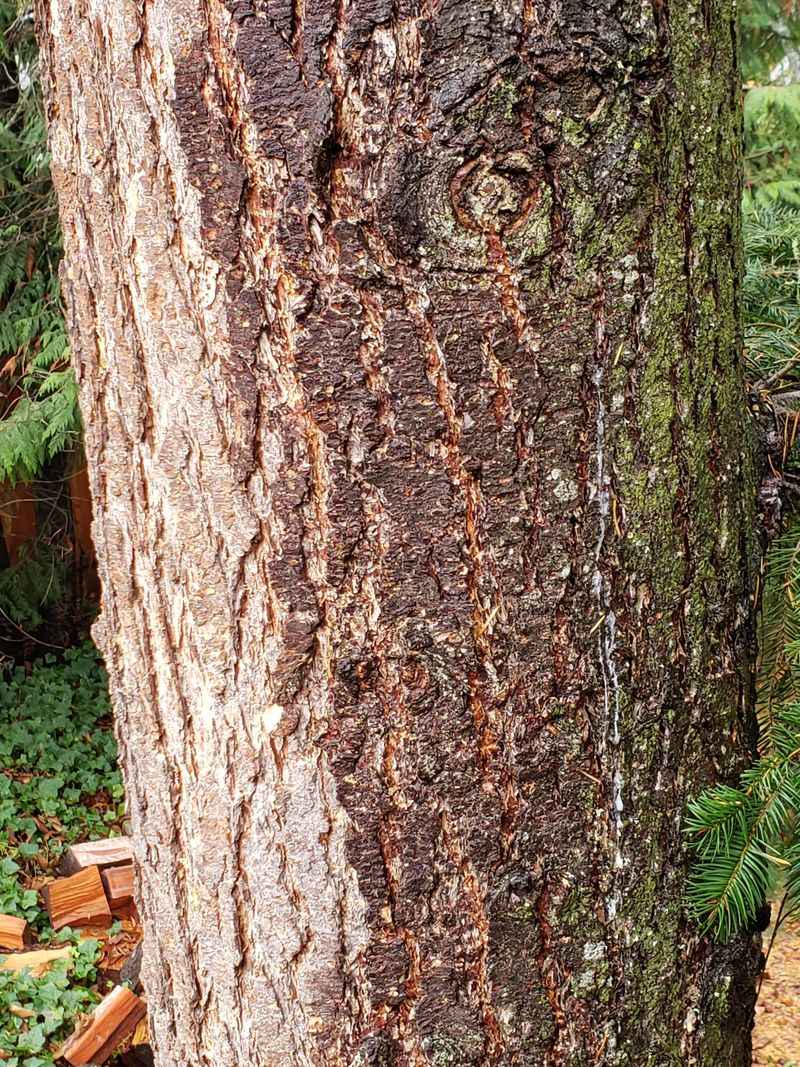
One warning sign is worth watching. Two or three on the same tree create a different situation entirely, because risk factors tend to stack.
A leaning tree with mushrooms at the base, or a heavy canopy sitting on a cracked union, is far more likely to fail than a tree with a single minor issue.
A view from the lawn only reveals so much. Decay can hide inside a trunk, cracks can sit high in the crown, and roots stay completely buried.
Certified arborists use tools like sounding mallets, probes, and sometimes resistance drills to see what eyes alone can’t. UC ANR recommends hiring an arborist certified by the International Society of Arboriculture.
Many experts also suggest looking for the extra Tree Risk Assessment Qualification. A good arborist explains what they find, rates the risk, and suggests options ranging from pruning or cabling to removal.
A few habits make hiring easier. Proof of certification and insurance, plus a written estimate, are reasonable requests from any tree service.
Door-to-door crews pushing for topping right after a storm deserve caution. California licensing rules also apply to many tree service jobs, so a quick look at the state contractor board is a smart step.
Late summer or early fall, before the first big rain, is the ideal time for a check. A little planning now can protect a roof, a car, and everyone who gathers under those branches later.