8 Thanksgiving Centerpieces You Can Make From Your Pennsylvania Garden
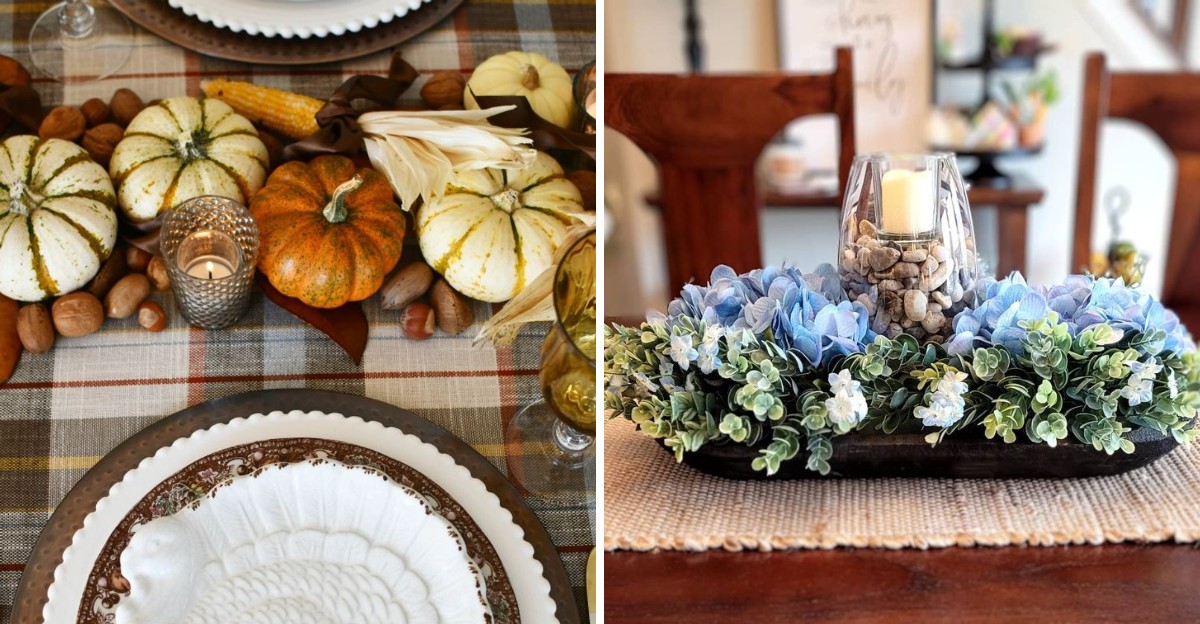
Long before anyone called them decorations, hard-shelled gourds served as bowls and water dippers for early American households. I love that our holiday tables still borrow ideas from the garden, even if we rarely carve ladles anymore.
Your backyard is probably hiding more centerpiece material right now than any craft store aisle in October. Frosty mornings bring out bold berry colors, while faded flower stalks quietly turn into handsome dried treasures.
I have to admit my best arrangements cost almost nothing, because I made them with pruners and a basket. You might notice that guests linger longer at a table that smells faintly of fresh stems and autumn air.
Pennsylvania gardens shift fast between early October and late November, so timing your harvest matters more than you think.
Which forgotten corner of your yard could end up as the star of this year’s feast?
1. Mini Pumpkins And Winter Squash Table Runner
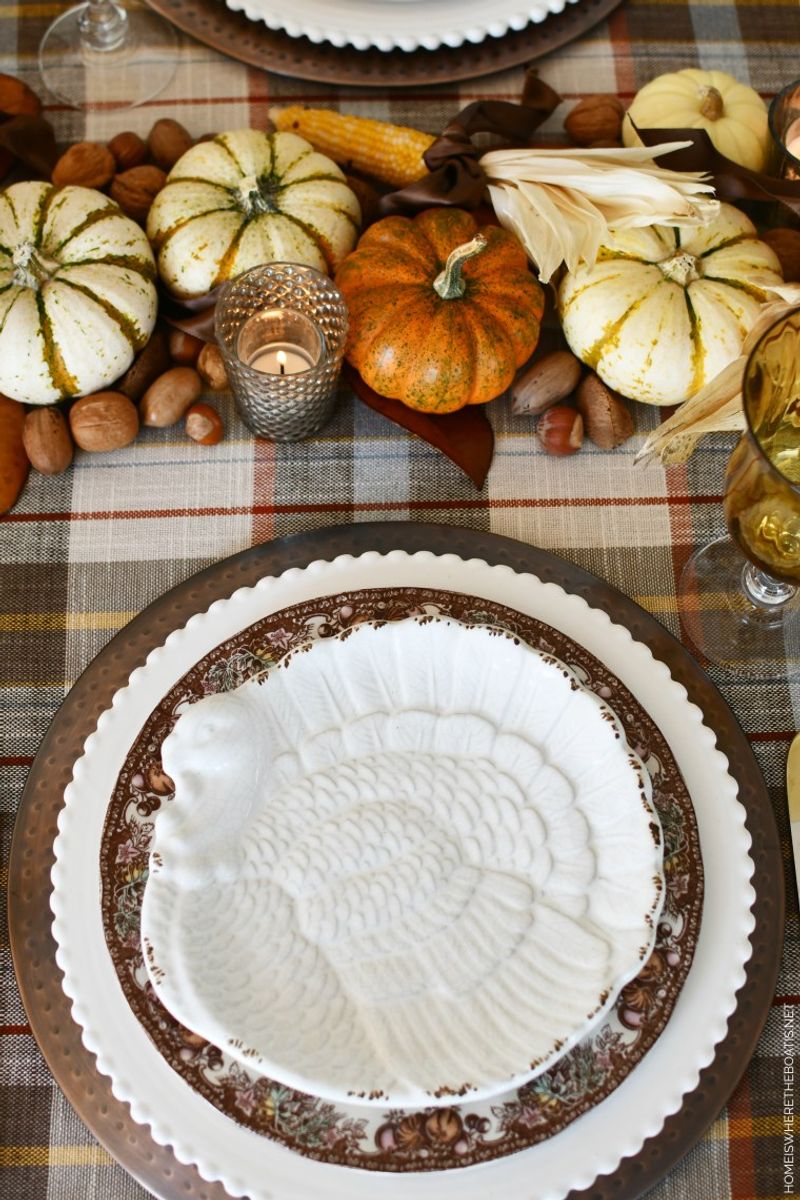
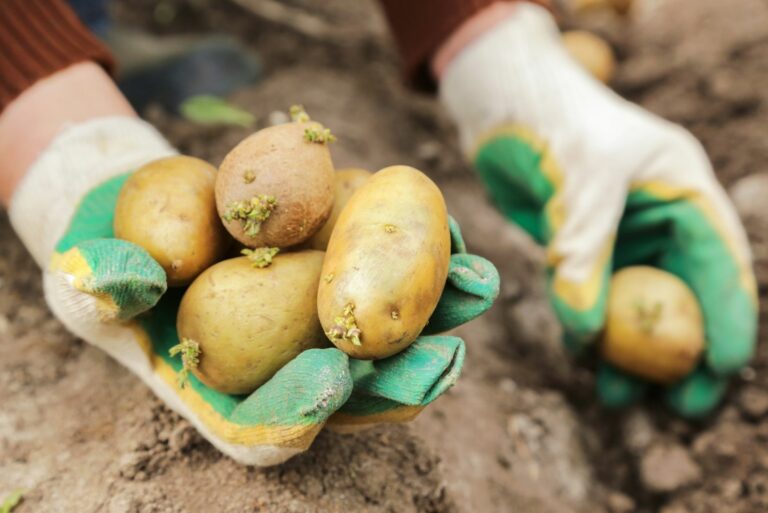
Pumpkins are technically berries, which makes a row of them down your table the chunkiest fruit display imaginable. I love how mini pumpkins and squash sit there looking cheerful while needing zero water or fuss.
Most gardeners harvest these when the rinds feel hard and resist a fingernail pressed gently into the skin. You need to cut them with a few inches of stem, because stemless fruit tends to rot much faster.
Many extension experts suggest curing most winter squash in a warm, airy spot for roughly ten days. Acorn squash is the exception, since curing can actually lower its quality and shorten its shelf life.
Once your little harvest is cured, wipe each one with a damp cloth to remove soil and stray debris. Then line them down a burlap strip, mixing tall shapes with squat ones for a playful rhythm.
Personally, I tuck fallen oak leaves and a few pinecones between the pumpkins to fill awkward gaps. Varieties like Jack Be Little and Baby Boo stay small enough to fit beside plates without crowding anyone.
Keep the arrangement away from candles and heat vents, since warmth speeds up softening and mushy spots. After the holiday, the squash can head straight to your kitchen for soup, so nothing goes to waste.
Pick your fruit before a hard frost hits, because freezing temperatures damage the rind and shorten storage. In much of Pennsylvania, that means gathering your crop by mid October to stay safely ahead of the cold.
2. Winterberry Branches In A Tall Vase
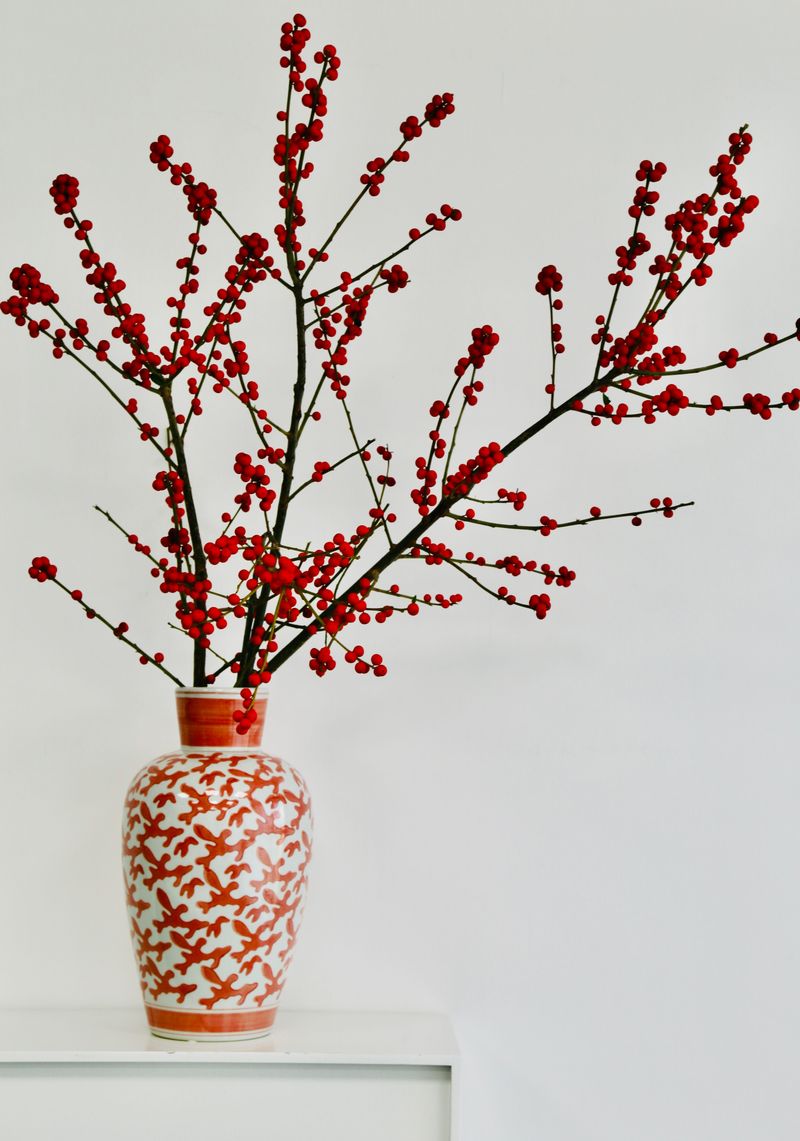
Few sights stop me in my tracks like a winterberry shrub dropping its leaves to reveal glowing red fruit. Those bare stems covered in scarlet berries look like nature already decorated them for your holiday table.
Winterberry, or Ilex verticillata, is a native deciduous holly that grows well across zones three through nine. It handles wet, acidic soil better than many shrubs, so soggy corners of the yard suit it nicely.
You need at least one male plant nearby, since only pollinated female shrubs produce those famous berries. Nurseries often sell matching pairs, like Red Sprite with Jim Dandy, so bloom times line up properly.
For a centerpiece, cut branches in late fall once leaves begin falling and berries show their brightest color. Snipping them works like light pruning, and the shrub usually bounces back with fresh growth next spring.
I like setting the stems in a tall stoneware crock without water, where they hold up for weeks. A few sprigs of evergreen at the base soften the look and hide any bare stem ends.
Keep in mind that the berries are mildly toxic to people and pets if swallowed in large amounts. Place the vase where curious toddlers and nosy dogs cannot reach, and sweep up any fallen fruit.
Leave plenty of branches on the shrub too, because robins and bluebirds rely on that fruit through winter. October is also a smart month to plant a new pair, giving roots time to settle before freezing weather.
3. Dried Hydrangea Blooms In A Rustic Bowl
Some of my favorite centerpieces came from flowers I almost ignored after summer, sitting quietly on the shrub turning papery. Hydrangea blooms fade into soft antique shades of green and rose that look wonderfully vintage on a table.
The native smooth hydrangea, Hydrangea arborescens, grows wild in Pennsylvania woodlands and handles shade surprisingly well. Oakleaf types also dry nicely, and their flowers often blush pink as the nights grow cooler.
Timing matters most here, because blooms picked too early tend to wilt and droop instead of drying. Wait until the petals feel slightly papery, like thin parchment, before you reach for your pruners.
Cut stems about twelve inches long, then stand them in a vase holding just a few inches of water. Let the water evaporate slowly over a week or two, and the blooms will dry while keeping their shape.
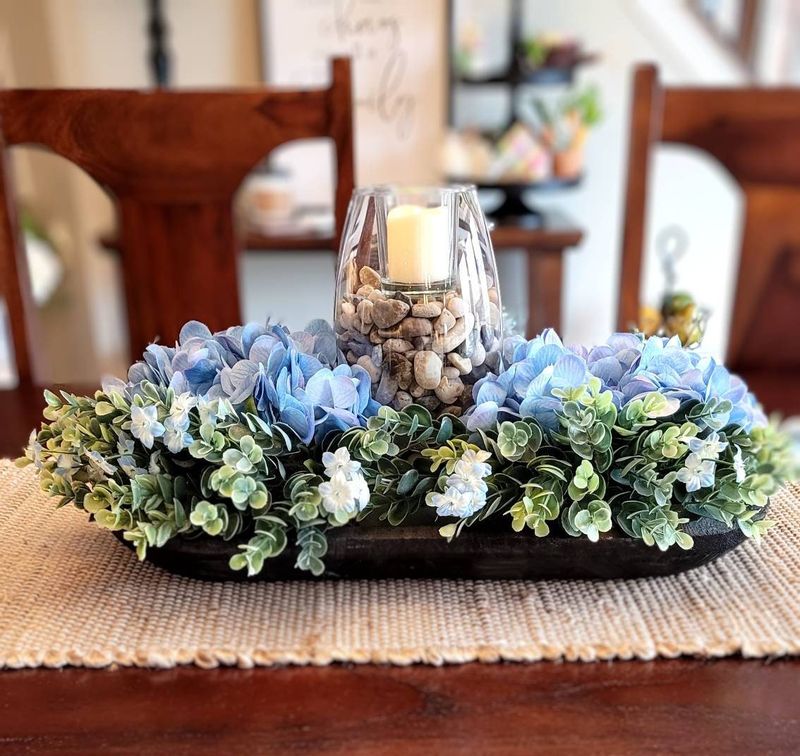
I can’t imagine a simpler trick, and it beats hanging bundles upside down in a cluttered garage. Once dry, nestle the heads into a wooden dough bowl so they form one big puffy cloud.
Tuck a few small pumpkins or acorns between blooms for contrast, keeping the arrangement low enough for conversation. Dried hydrangeas are lightweight, so a single bowl can hold a dozen heads without any foam or wire.
Pruning smooth hydrangeas in fall rarely hurts them, since they bloom on new wood each summer. Be gentler with bigleaf types, because cutting their stems now can remove next year’s flower buds.
4. Purple Aster Bouquet In A Mason Jar
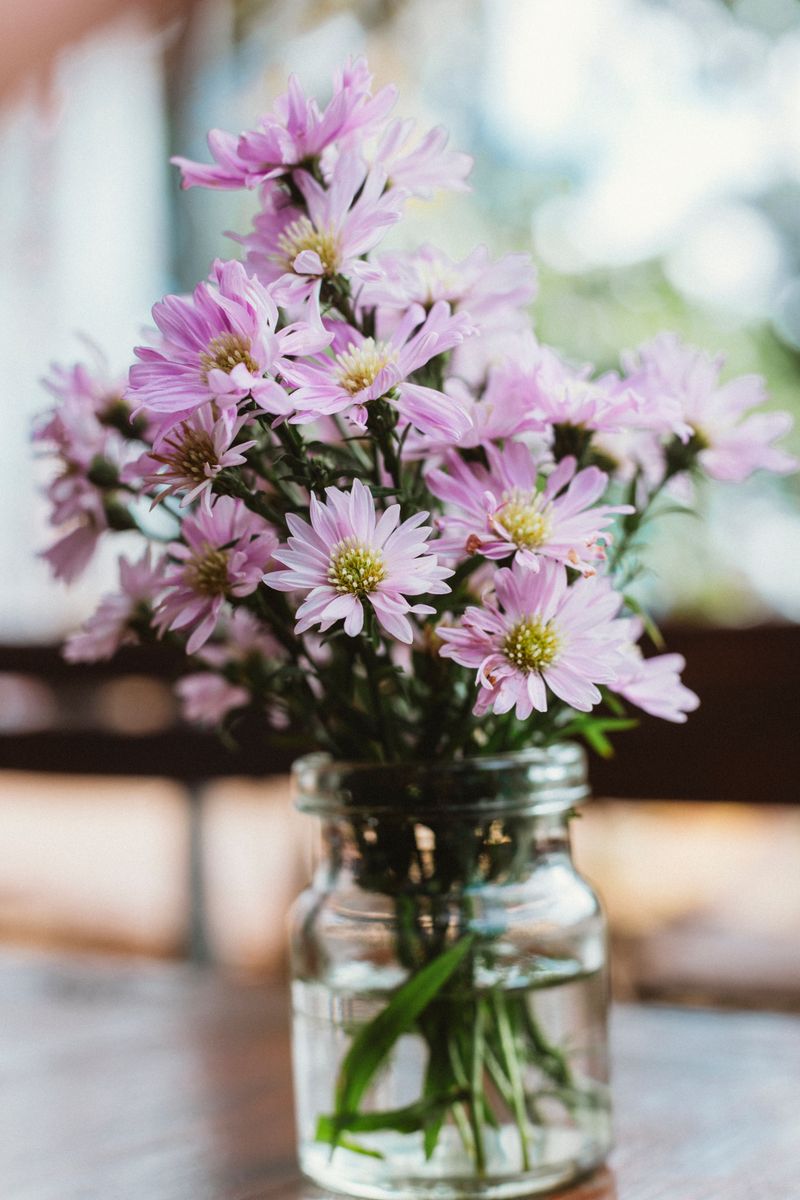
Bees are still buzzing on my New England asters in October, acting like nobody told them summer ended. Those fuzzy purple daisies with sunny yellow centers might be the most cheerful flowers left in the garden.
New England aster now goes by the scientific name Symphyotrichum novae-angliae, which is quite a mouthful. It is native across most of the state and can reach three to six feet tall in sunny spots.
Asters feed monarchs heading south and many native bees stocking up before cold weather finally arrives for the season. Because of that, I only cut about a third of the stems and leave the rest for pollinators.
Harvest in the cool morning when flowers are fully open, then plunge the stems into water right away. Strip any leaves that would sit below the waterline, since soggy foliage clouds the water quickly.
A plain mason jar suits these flowers perfectly, because their loose, airy shape needs very little arranging. Personally, I wrap twine around the jar’s neck and set three jars down the table in a row.
Add a few stems of goldenrod if you have it, since purple and gold make a striking autumn pair. Goldenrod rarely causes hay fever, because its heavy pollen travels by insects rather than drifting on wind.
Asters often fade by mid November, so this jar works best for an early celebration or a fall party. Change the water every couple of days, and your bouquet should stay fresh for about a week.
5. Coneflower Seed Heads In A Wooden Crate
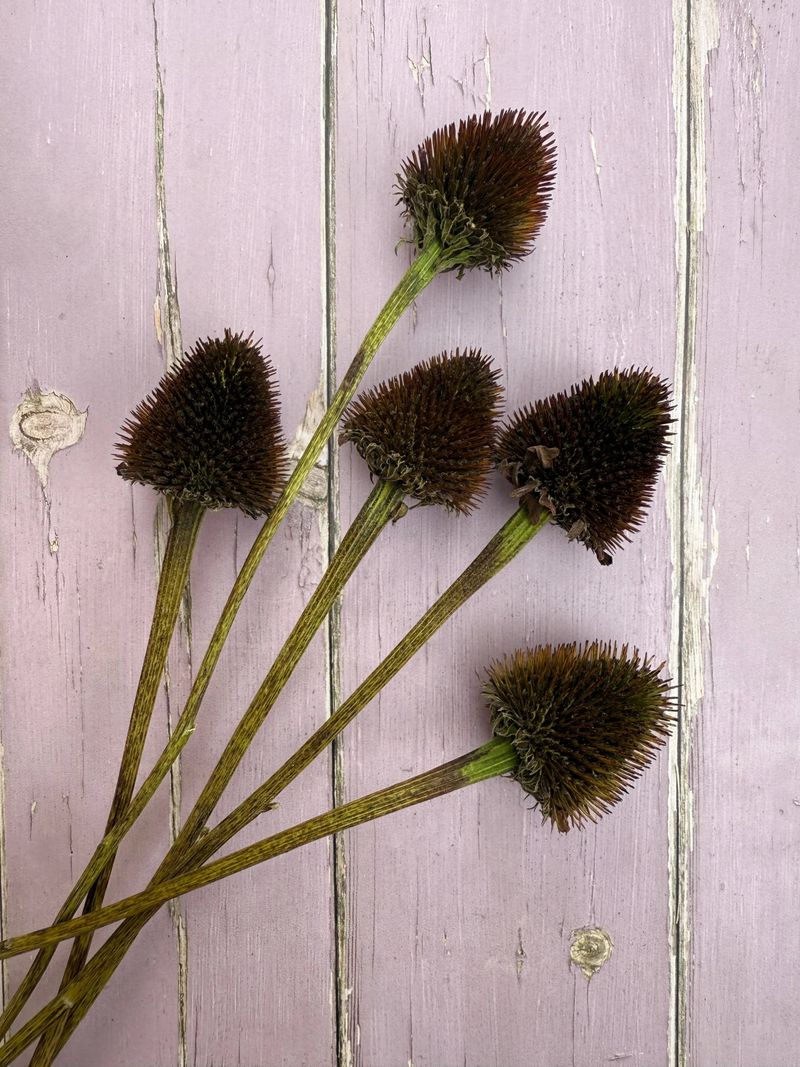
Echinacea comes from the Greek word for hedgehog, and one touch of a dried cone explains the name instantly. Those prickly brown domes look plain in the garden, yet they become pure texture on a holiday table.
Purple coneflower, Echinacea purpurea, is a tough prairie perennial that shrugs off heat and dry summer spells. It grows happily in zones three through eight, so every corner of Pennsylvania can host a patch.
By October, most seed heads have turned dark and firm, which makes them easy to cut and handle. I snip stems at different lengths, because a little height variety keeps the arrangement from looking stiff.
Goldfinches adore these seeds, so leave a good share standing for them through the colder months. Watching those little birds cling to swaying stems is honestly one of my favorite fall shows in the yard.
For the centerpiece, line a shallow wooden crate with a crumpled ball of chicken wire hidden under moss. Poke the stems in snugly, grouping them in clusters rather than spacing each one out evenly.
Dried cones pair nicely with wheat stalks or ornamental grasses, adding a warm, harvest field mood. Tap each head gently over a bag first, since loose seeds can scatter across your clean tablecloth.
Scatter those shaken seeds over bare soil this fall, since coneflowers sprout better after a cold winter. Your centerpiece could quietly turn into next summer’s flower bed, which feels like a clever bonus.
6. Little Bluestem Grass Bundles With Lanterns
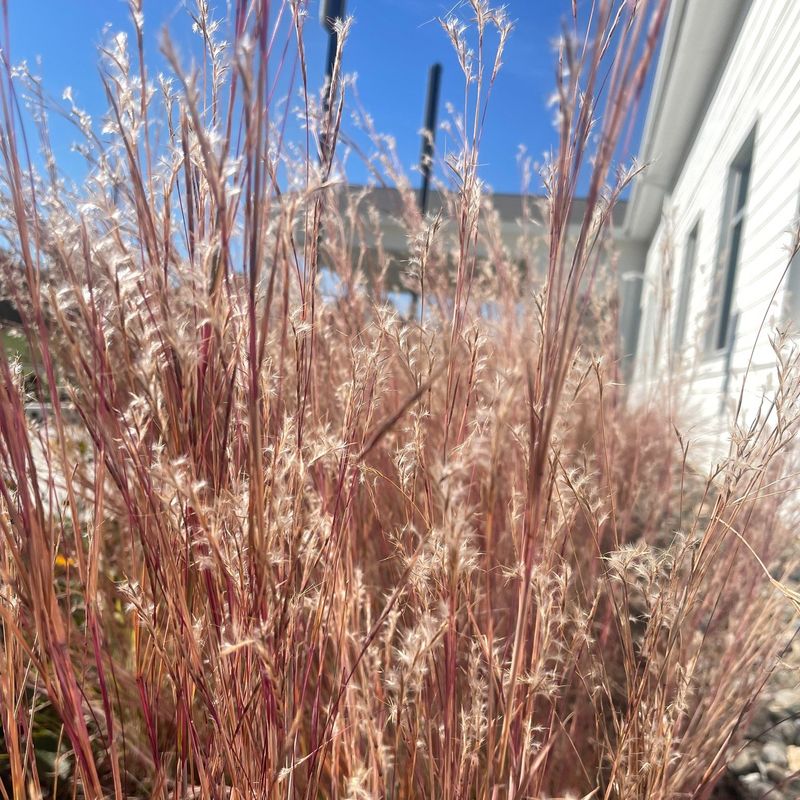
Despite its name, little bluestem puts on its best show in fall, glowing coppery red like embers. I love how backlit stems seem to catch fire when the late afternoon sun slides low across the yard.
Schizachyrium scoparium is a native prairie grass that once covered huge stretches of the Great Plains. It also grows naturally in Pennsylvania meadows, where it thrives in poor, dry soil many plants dislike.
Clumps usually reach two to three feet tall, with fluffy silver seed tufts sparkling along each stem. You need full sun for the richest color, since shady spots often produce floppy, washed out foliage.
To make a centerpiece, cut small handfuls of stems and tie each bundle tightly with jute twine. Stand the bundles upright around glass hurricane lanterns, so the candle flames sit safely away from the grass.
Dry grass catches fire easily, so I prefer battery candles when kids or pets share the table. The warm flicker still makes those copper stems shimmer, and nobody worries about a stray spark.
Cutting a few stems now leaves plenty standing, and that matters for the critters wintering in your garden. Many small insects shelter inside the dense clumps, and songbirds snack on the seeds through winter.
Wait until late winter to trim the rest of the clump down to a few inches tall. Fresh blue green shoots will push up in spring, ready to start the whole colorful cycle again.
7. Sedum Autumn Joy Succulent Tray
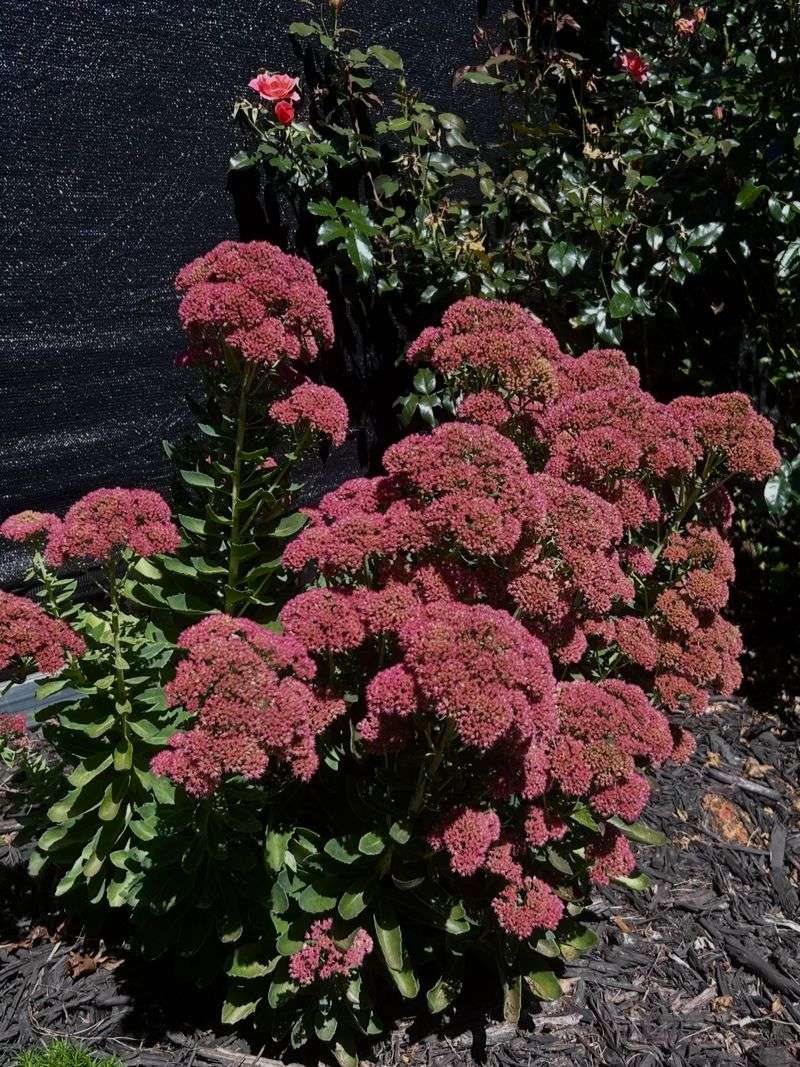
Sedum Autumn Joy changes color like a slow mood ring, shifting from pale pink to deep rusty red. I have to admit I check on mine almost daily in October just to see the newest shade.
Botanists recently moved this plant into the genus Hylotelephium, though most garden centers still label it sedum. Its official cultivar name is Herbstfreude, which simply means autumn joy in German, a fitting choice.
This tough succulent loves full sun and sharp drainage, and it rarely needs extra water once established. Rich soil actually makes stems flop open, so a lean, gravelly bed keeps clumps upright and tidy.
For a living centerpiece, cut flower heads with a few inches of stem and arrange them in a low tray of water. Their thick, fleshy leaves hold moisture well, so they stay perky longer than most cut flowers.
You’re in for a surprise after the holiday, because sedum stems often root right in their water. Those rooted pieces can be potted up indoors and planted outside next spring for a bigger patch.
Pair the rusty blooms with small gourds or a scattering of acorns for a warm, earthy palette. If frost has already browned the flowers, dry them instead, since the chocolate heads still look handsome.
Leave some flower heads standing in the garden, because they catch snow beautifully and add winter structure. Late season bees visit the blooms on warm October afternoons, so share the bounty with them too.
8. Sage And Thyme Herb Wreath Candle Ring
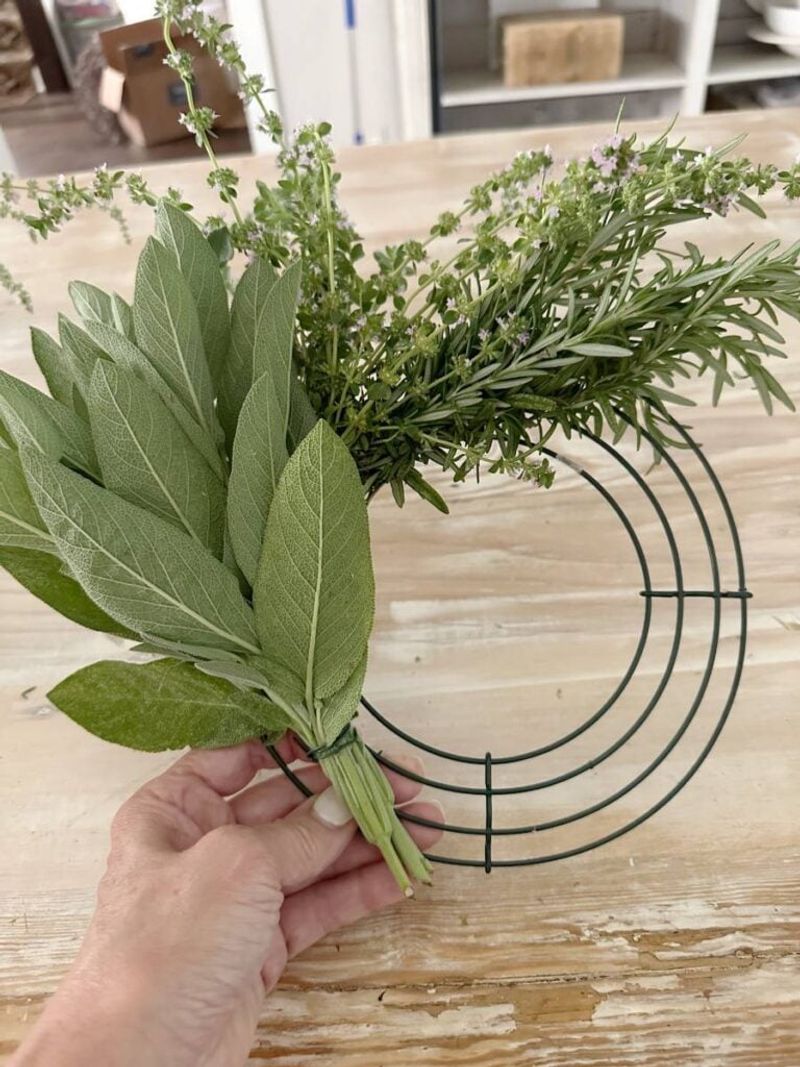
Sage has flavored Thanksgiving stuffing for generations, so it feels right letting it decorate the table too. Rub one fuzzy leaf between your fingers, and that savory scent instantly smells like holiday dinner.
Common sage, Salvia officinalis, is a hardy perennial in zones five through eight across most of the state. Garden thyme, or Thymus vulgaris, handles chilly fall weather well and keeps its tiny leaves into early winter.
Both herbs bounce back from a light trim, so harvesting a few handfuls in October rarely sets them back. Avoid cutting into old woody stems, though, since those bare sections often struggle to sprout new growth.
For the wreath, start with a small grapevine ring or a simple wire frame from the craft drawer. Wrap short sage and thyme bundles around it with green floral wire, overlapping each bundle to hide stems.
Lay the finished ring flat around a chunky pillar candle sitting in a glass holder for safety. Personally, I think the silvery sage against tiny green thyme leaves looks charming without trying too hard.
Herbs dry nicely right on the wreath, so you can make it a week ahead without stress. Mist it lightly each morning if you want the leaves to stay soft and green a bit longer.
Guests love pinching off a sage leaf to smell, and some might even sneak it onto their plate. Once the holiday ends, crumble the dried leaves into a jar for winter soups and roasted vegetables.