8 Tree Problems Georgia Homeowners Can Spot More Easily Once The Leaves Fall
Some trees quietly hide years of interior rot behind a single woody shelf no bigger than your hand. Summer leaves cover clues like that so well that most of us walk past them for months.
Once Georgia maples and dogwoods go bare, the whole skeleton of each tree suddenly comes into view. Cracks and crusty bumps that hid all summer become easy to spot from the comfort of your porch.
I have to admit that winter is my favorite time to stroll the yard with a mug of coffee. You might notice more in twenty minutes of slow looking than you did during the whole growing season.
Catching trouble early can save a beloved shade tree and maybe your roof too.
Those bare branches may be revealing warning signs you’ve overlooked for months, and knowing what to look for can make all the difference.
1. Shelf Fungi Growing On An Oak Trunk
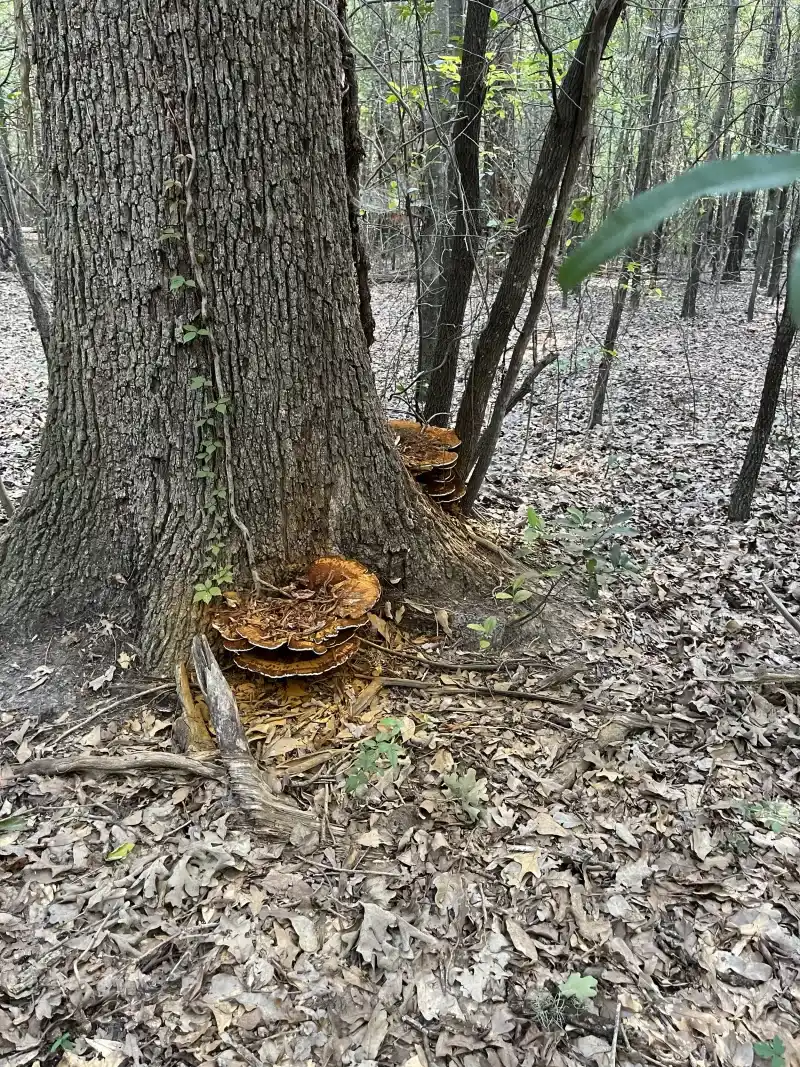
Those hard brackets poking out of an oak trunk look almost charming, like tiny shelves built for woodland fairies. Sadly, they are fruiting bodies of fungi that have been quietly eating the wood inside for years.
Extension experts note that decay fungi often need several seasons before pushing out conks you can actually see.
By then, the heartwood behind that shelf may already be soft and crumbly in spots.
Thick summer foliage hides these growths surprisingly well, especially high on large limbs near the upper canopy. Bare winter branches give you a clear view, so grab binoculars and scan slowly from the base upward.
Watch for hoof-shaped or flat brackets on the trunk, along with clusters of mushrooms around the root flare. Mushrooms popping up at the base after autumn rains can point toward root or butt rot underground.
Oaks and many other hardwoods are common targets, and big old trees seem especially good at collecting these fungi.
Personally, I snap a photo each winter so I can tell whether a conk is getting bigger.
Heart rot weakens the trunk from the inside, which makes breakage more likely during strong winds or ice storms. A tree can look leafy and healthy all summer while hiding a hollowed core behind its bark.
Please do not knock the conks off and assume the problem is solved, because the decay stays inside. Call a certified arborist for a safety check, especially if the tree leans toward your house or driveway.
2. Sunken Cankers Scarring Hardwood Bark
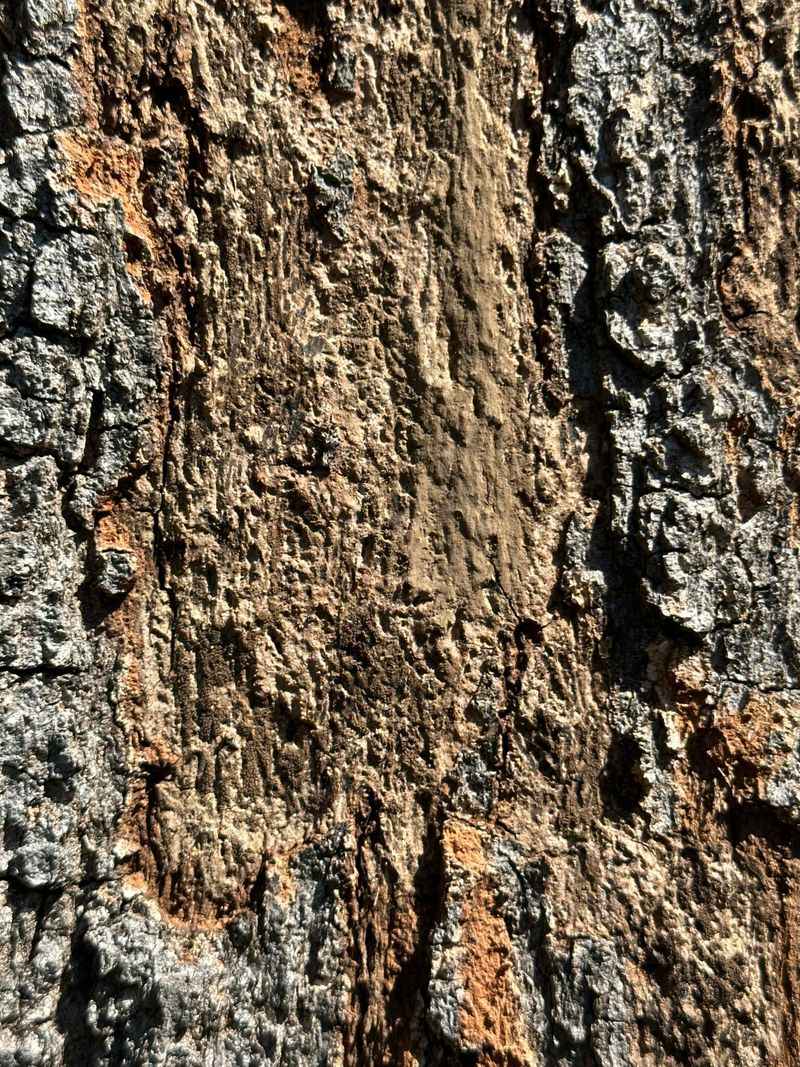
Bark usually tells a pretty honest story, and cankers are the chapters where something clearly went wrong.
These sunken, discolored patches form when fungi or bacteria invade living tissue just beneath the surface.
I love running my eyes along a bare branch in winter because those dark dents suddenly look so obvious. Some cankers ooze a sticky amber resin that catches the low sunlight and practically waves at you.
Hypoxylon canker is one worth knowing, since it often shows up on oaks that are already stressed. Once the bark sloughs away, you may find silvery-gray to brown crusty fungal layers coating the exposed wood.
Nectria canker has a different look, with tiny red or orange fruiting bodies sometimes clustered near its edges. Those bright specks are easier to notice in fall and winter when no leaves distract your eye.
Cankers matter because they block the flow of water and nutrients, sometimes girdling a branch or even a trunk.
Spotting Hypoxylon in particular often signals that a tree is in serious decline and needs expert attention.
For smaller infected branches, prune during dry weather and cut several inches below the visible damage into healthy wood. Clean your pruners between cuts with a household disinfectant according to the product instructions to avoid spreading spores.
Leave large trunk cankers alone rather than carving them out, since the tree builds natural walls around infections. Keeping trees watered during droughts and avoiding mower nicks gives them a much better chance of resisting trouble.
3. Vertical Trunk Cracks And Weak Branch Forks
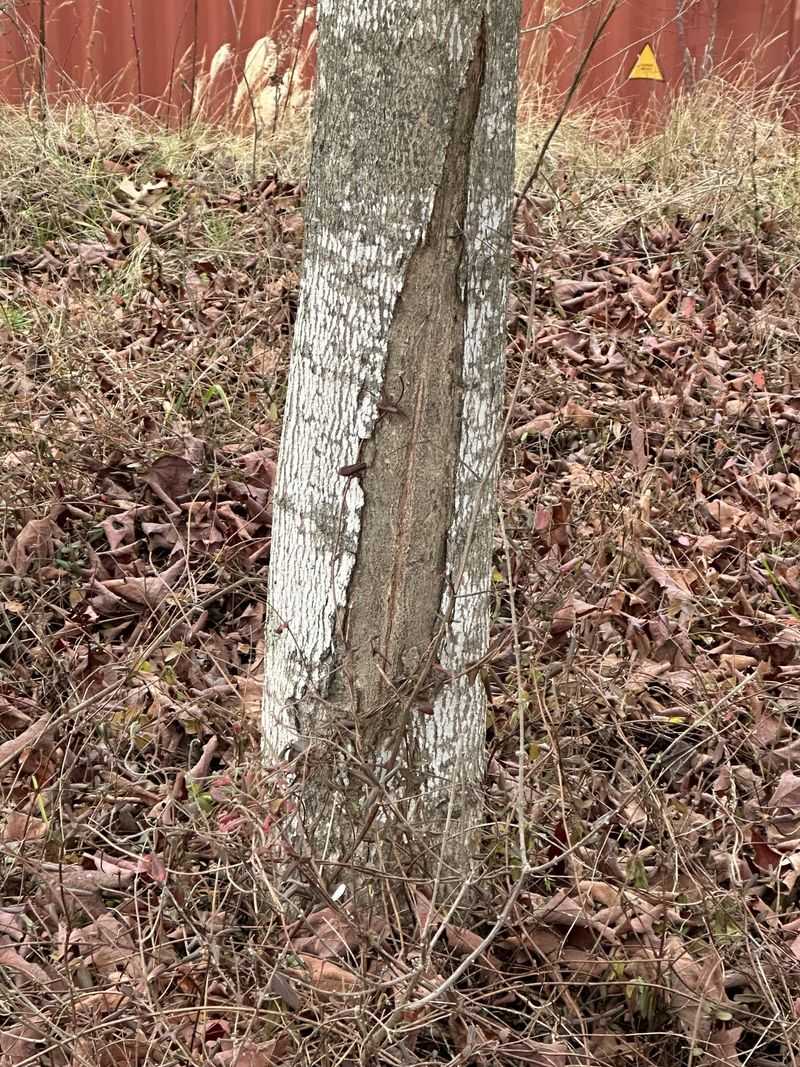
Ever noticed a long vertical split running down a young maple and wondered how it got there? Many of those cracks form on the south or southwest side, where winter sun warms the bark unevenly.
Sunscald happens when sunny afternoons heat thin bark, then a sharp nighttime freeze shocks the tissue underneath.
Freeze and thaw swings during a Southern winter can widen those cracks a little more each season.
Thin-barked trees like dogwood, cherry, and peach are especially prone to this kind of injury in home landscapes. Personally, I check my young fruit trees first because their smooth bark seems to invite trouble.
Bare trees also reveal weak branch unions that summer leaves cleverly disguise from the ground below.
Look for tight V-shaped forks where bark gets pinched inside the joint instead of forming a raised ridge.
That pinched bark, called included bark, keeps the branches from bonding firmly, so storms can split them apart. Large trunk cracks also open doors for insects and decay organisms looking for an easy way inside.
For young, thin-barked trees, a light-colored tree wrap in early winter can help reflect harsh afternoon sun. Remove it by early spring so moisture and pests do not build up beneath the wrapping.
Avoid heavy fall pruning on mature trees, since suddenly exposed bark can sunscald more easily afterward. Any deep split in a big trunk deserves a visit from a certified arborist before the next storm.
4. Girdling Roots Wrapped Around The Trunk Base
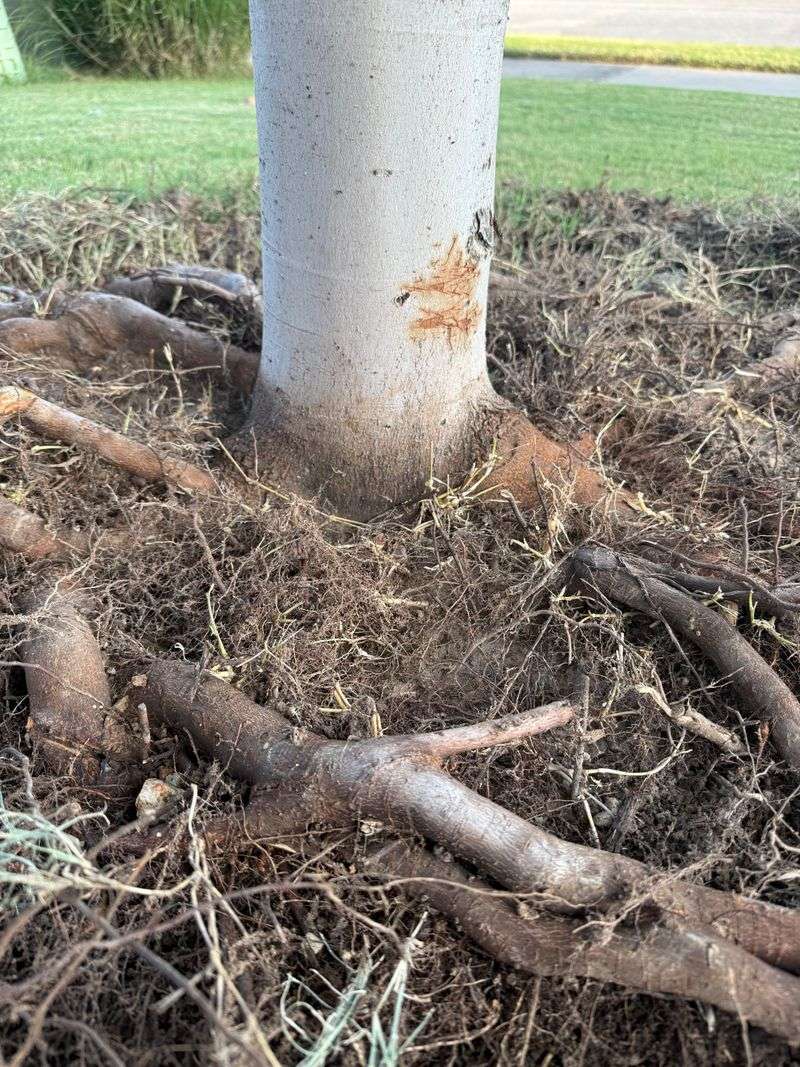
A healthy tree should flare out at the bottom rather than rise straight from the ground like a telephone pole.
When that flare is missing, a sneaky root may be wrapping around the trunk underground.
Girdling roots circle the trunk or other major roots, slowly squeezing the tissue that carries water and food. The problem often starts with nursery pots, deep planting, or compacted soil that sends roots spinning sideways.
Winter makes the trunk base easier to study because fallen leaves can be raked away and low branches are bare. You need to kneel down and look closely, since flattened or dented spots on the trunk hint at pressure.
Gently pull back any mulch volcano piled against the bark, because buried trunks invite roots to grow in odd directions.
I can’t imagine a simpler winter chore that reveals so much about a tree’s long-term health.
Above-ground clues usually appear during the growing season as thin canopies, small leaves, or early fall color. Those symptoms are easy to blame on drought, so the root flare check helps narrow down the real cause.
Over time, a strangled trunk can stunt growth and leave the whole tree less stable in strong winds. Suburban yards with tight soil and hurried planting jobs tend to see this problem more often than forests.
Resist grabbing a saw, because cutting the wrong root can wound or destabilize the tree you are trying to help. A qualified arborist can expose the base properly and decide whether a careful root removal makes sense.
5. Crusty Scale Insects On Crape Myrtle Branches
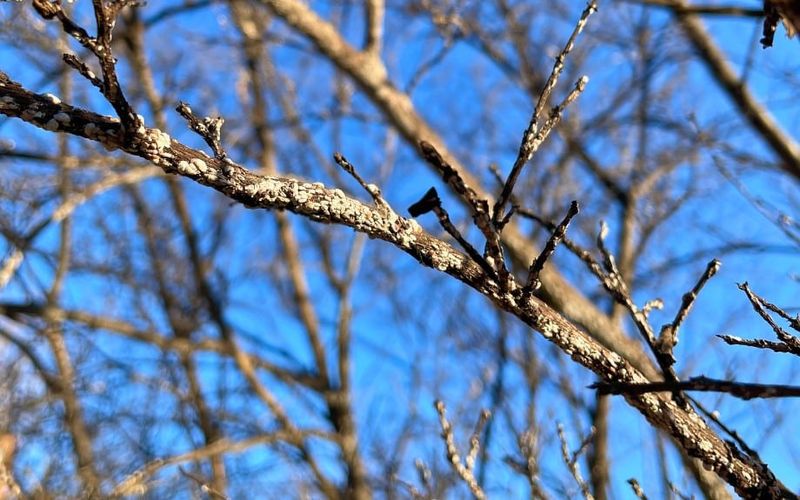
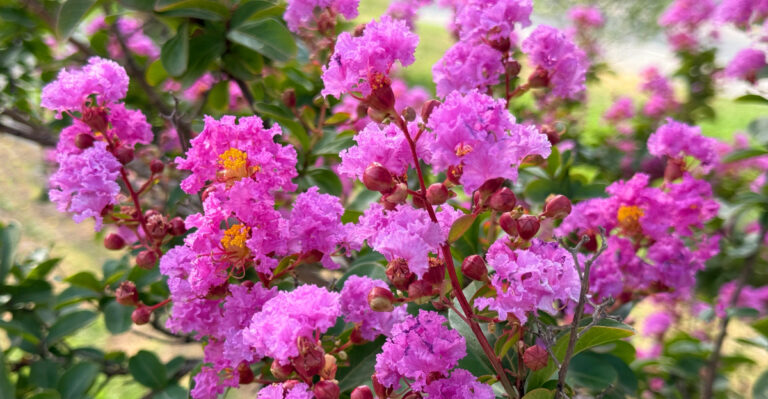
Those tiny bumps on your crape myrtle are not part of the bark, even though they blend in remarkably well. Scale insects glue themselves to twigs and hide beneath waxy shells that look like crusty little freckles.
What surprises me most is how many people prune right past them for years without noticing anything strange.
Bare winter branches finally give these pests nowhere to hide, so the crust stands out against smooth bark.
Crape myrtle bark scale shows up as white or gray felty patches that ooze pink when you crush one. Gloomy scale prefers red maples and appears as dark, flattened bumps that make branches look rough and dull.
Scale insects sip plant sap, gradually weakening the tree and leaving behind sticky honeydew during the growing season. That honeydew often grows black sooty mold, which coats bark and makes crape myrtle trunks look sooty and grimy.
Late winter is a smart window for horticultural dormant oil, which smothers many overwintering scales on contact. Follow the label carefully and spray on a mild day when temperatures will stay above freezing afterward.
A soft brush and soapy water can scrub light infestations off reachable crape myrtle trunks before spring growth begins. I find this oddly satisfying, and the smooth bark looks so much brighter once the crust is gone.
Healthy trees handle small populations better, so water during dry spells and skip heavy nitrogen fertilizer.
Severe or widespread infestations on big trees are worth a call to an arborist or your county extension office.
6. Popcorn Pitch Tubes On Loblolly Pine Bark
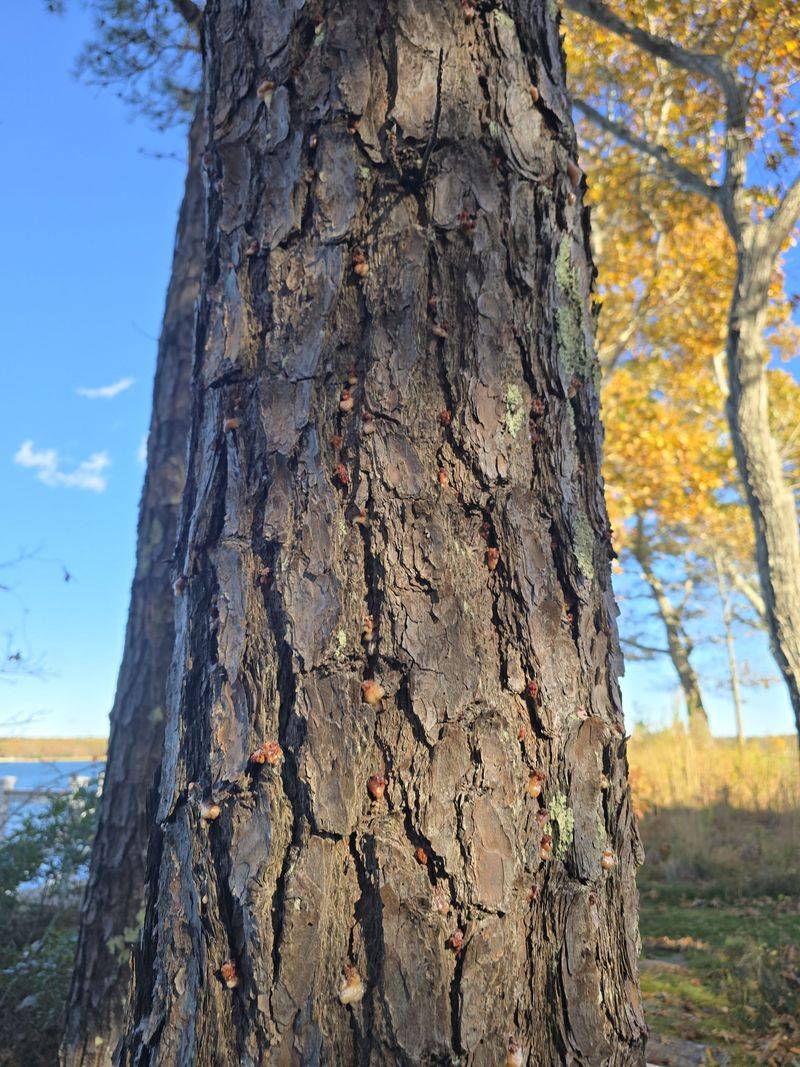
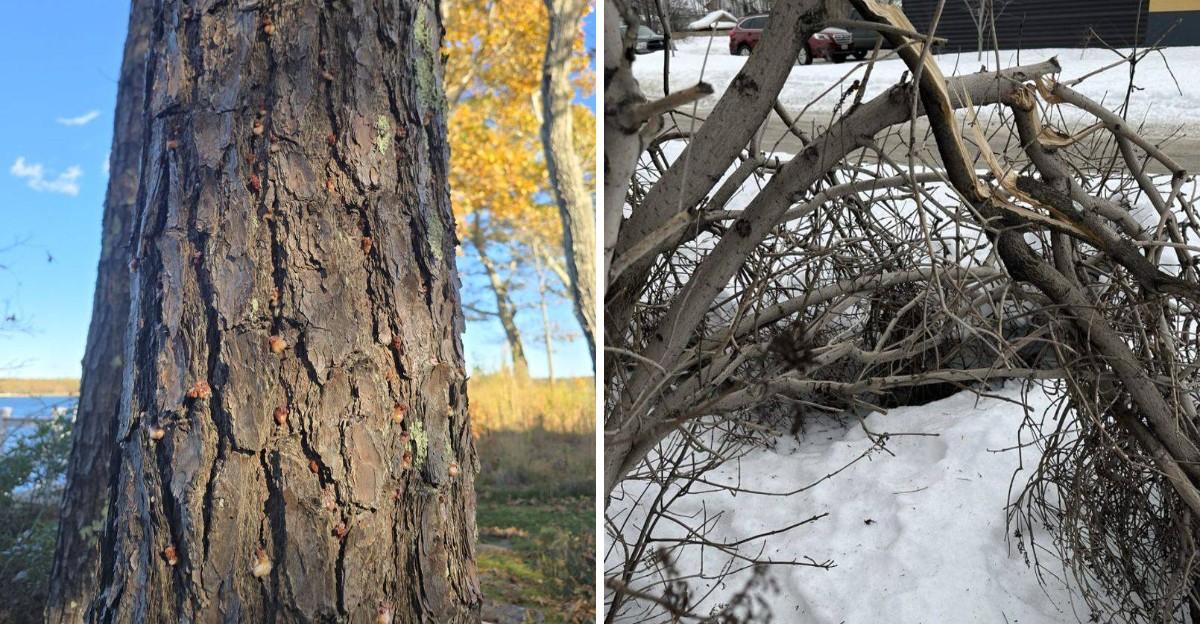
Little blobs of hardened resin on pine bark look a lot like popcorn stuck to the trunk.
Those pitch tubes mark spots where a pine tried to push out boring beetles with a flood of sticky sap.
Pines keep their needles through winter, so this sign is less about leaf drop and more about surrounding clutter. Once nearby hardwoods go bare, your view of pine trunks across the yard opens up considerably.
Southern pine beetles and Ips engraver beetles are the usual suspects attacking loblolly and shortleaf pines in Georgia. Look for fine reddish boring dust gathered in bark crevices and around the base of the trunk.
Peeling back a loose piece of bark may reveal winding S-shaped tunnels the beetles carved through the inner bark. Many of these insects also carry blue-stain fungi, which further block water moving through the tree.
Browning or fading needles usually show up later, often after the tree has already lost the battle against the beetles. That is why I like checking trunks closely, since resin and dust can appear before the canopy changes color.
Prevention starts with keeping pines watered during long dry spells and protecting their roots from heavy equipment. Avoid wounding trunks with mowers or trimmers, because stressed and injured pines attract beetles more easily.
Once an attack becomes heavy, prompt removal of infested pines often protects the healthy neighbors standing nearby.
A forester or arborist can confirm which beetle is involved and recommend the right timing for removal.
7. Brittle Bare Branches Hanging In The Canopy
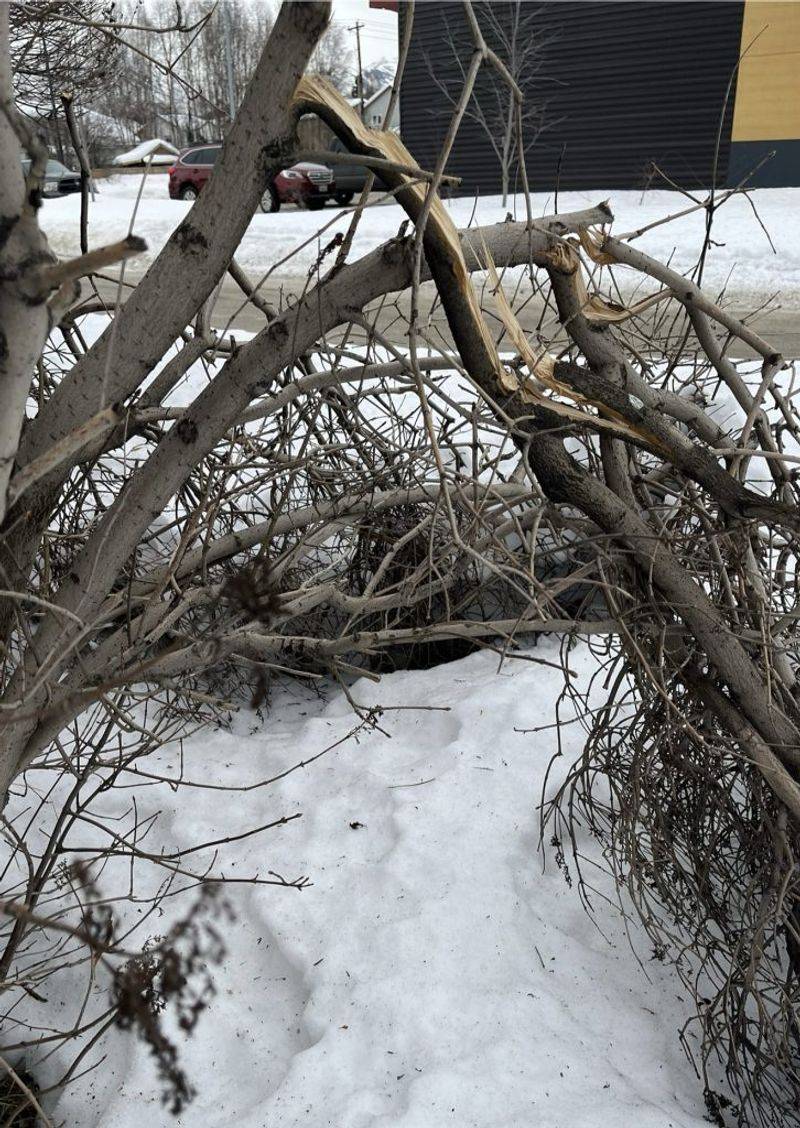
Some branches hang in the canopy like unwelcome guests who forgot to leave after the party ended. Called hangers by arborists, these broken limbs can rest on other branches for months before suddenly dropping.
Summer leaves make lifeless wood almost invisible, since green growth fills every gap around the brittle sections.
You’re in for a big surprise when winter arrives and those gray, barkless limbs pop out against the sky.
Healthy twigs usually have plump buds and slightly flexible bark, even during the cold months. Lifeless ones snap easily, show no buds, and often look darker or peeling compared with the branches beside them.
Stress from drought, root injury, disease, or insects can all cause branches to decline and lose their vitality. Watching which side of the tree has the most trouble sometimes hints at root damage below that area.
Brittle limbs are more than an eyesore, because they can fall onto cars, roofs, and anyone walking underneath.
Broken stubs also give decay fungi and boring insects an open invitation into otherwise sound wood.
Late winter is a great time to prune smaller problem branches you can reach safely from the ground. Cut just outside the branch collar, that slightly swollen ring, so the tree can seal the wound naturally.
Skip ladders and chainsaws for anything high, heavy, or hanging over a structure, since those jobs carry real risk. I believe a certified arborist with proper gear is money well spent for big overhead branches.
8. Honey Mushrooms Clustered At The Tree Base
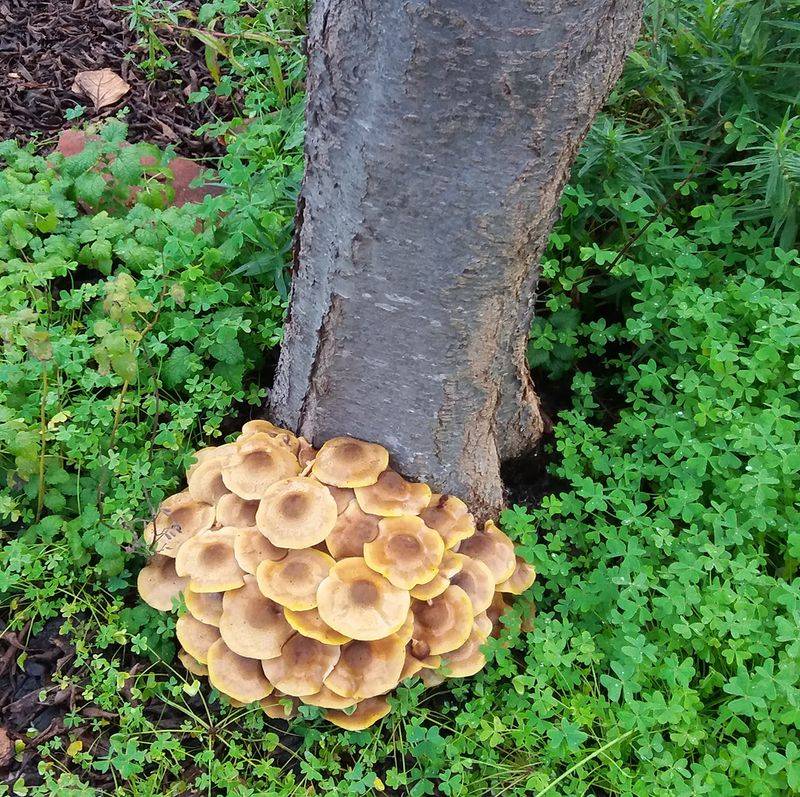
A golden bouquet of mushrooms circling an oak trunk after autumn rain can look downright cheerful.
Those honey-colored caps often belong to Armillaria, a fungus that attacks roots far below your feet.
Armillaria root rot is a known concern for oaks and other hardwood landscape trees across Georgia. Its mushrooms typically appear in fall, so the window for spotting them overlaps nicely with leaf drop.
Peel back loose bark near the soil line, and you might find creamy white fungal mats fanned across the wood. Some infected trees also develop discolored or oozing bark right at the root flare.
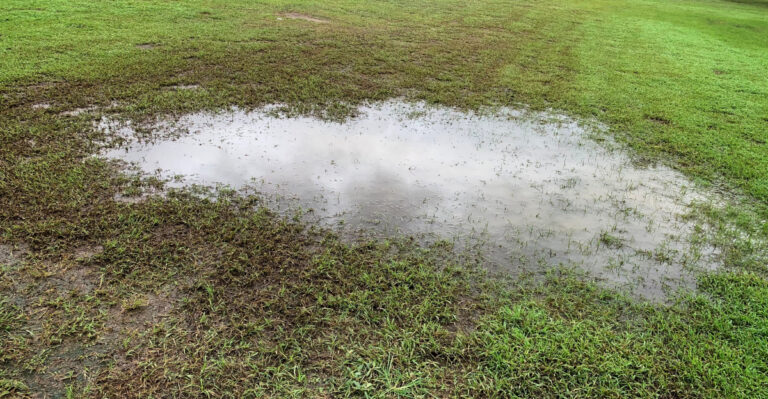
Water molds such as Phytophthora cause a different kind of root rot, especially in soggy, poorly drained soil. Soft, waterlogged ground around a struggling tree is a strong hint that drainage needs attention.
Root rot quietly weakens the anchor that holds a tree upright, so instability can follow with little warning.
Damaged roots also absorb less water and fewer nutrients, which shows up later as thinning leaves and slow growth.
Pull mulch and soil away from the trunk so the root flare can breathe and stay dry. I like keeping mulch a few inches from the bark and spreading it wide rather than piling it deep.
Redirect downspouts and avoid overwatering lawns right around valuable trees, especially during rainy winters.
Since mushrooms alone cannot confirm the cause, ask a professional arborist for an accurate diagnosis and plan.