These Invasive Trees Can Lead To Penalties If You Ignore Official Removal Orders In North Carolina
What looks like a harmless tree in your yard could quietly be causing bigger problems than you realize.
In North Carolina, certain tree species are restricted or discouraged because they spread aggressively, damage property, and disrupt local ecosystems that support native plants and wildlife.
Some grow rapidly and invade nearby landscapes, while others weaken soil stability or crowd out beneficial vegetation that keeps habitats balanced.
Homeowners who unknowingly keep these problematic trees may eventually face fines or be required to remove them to protect surrounding neighborhoods and natural areas.
Understanding which species raise concern is an important step toward responsible landscaping and long term property care.
With the right knowledge, you can prevent future issues while supporting healthier outdoor spaces.
Learning about restricted trees helps North Carolina residents make informed choices, avoid costly surprises, and maintain yards that work in harmony with the environment rather than against it.
1. Tree of Heaven
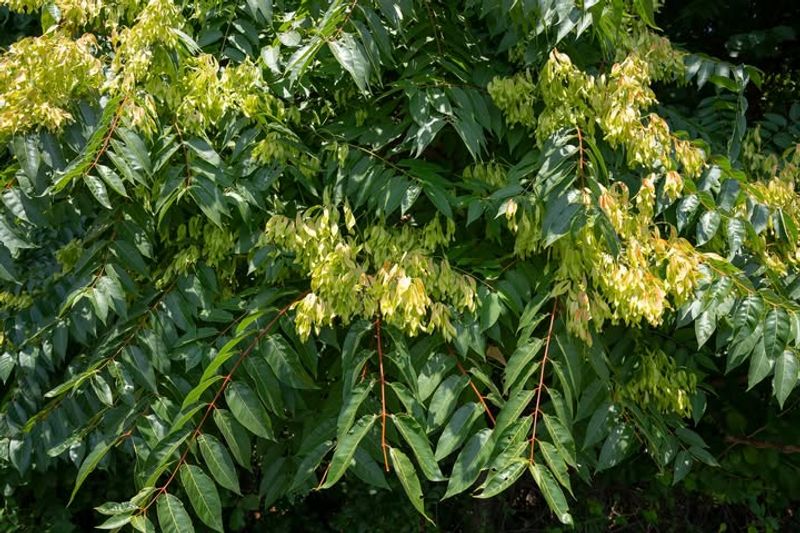
Fast growing and highly adaptable, Tree of Heaven (Ailanthus altissima) is widely recognized as an invasive species in North Carolina.
Originally introduced from Asia, it tolerates poor soils, urban pollution, and disturbed ground, allowing it to spread quickly along roadsides, vacant lots, and forest edges.
The tree produces chemicals that can inhibit nearby plant growth, giving it a competitive advantage over native vegetation.
It also spreads aggressively through both root sprouts and large quantities of wind-dispersed seeds, making control difficult once established.
North Carolina does not have a statewide law that automatically fines homeowners for possessing this tree.
However, removal or control may be required in specific situations, such as regulated pest-management zones, conservation properties, or when the tree creates a public safety or nuisance issue.
Tree of Heaven is closely monitored because it serves as a preferred host for the invasive spotted lanternfly, an agricultural pest of concern in the United States.
State agencies and conservation groups strongly encourage voluntary removal, particularly near natural habitats and agricultural areas.
When left unmanaged, the species can dominate disturbed landscapes, reduce plant diversity, and complicate restoration efforts.
Responsible management helps protect native ecosystems and limits the spread of this highly invasive tree.
2. Princess Tree
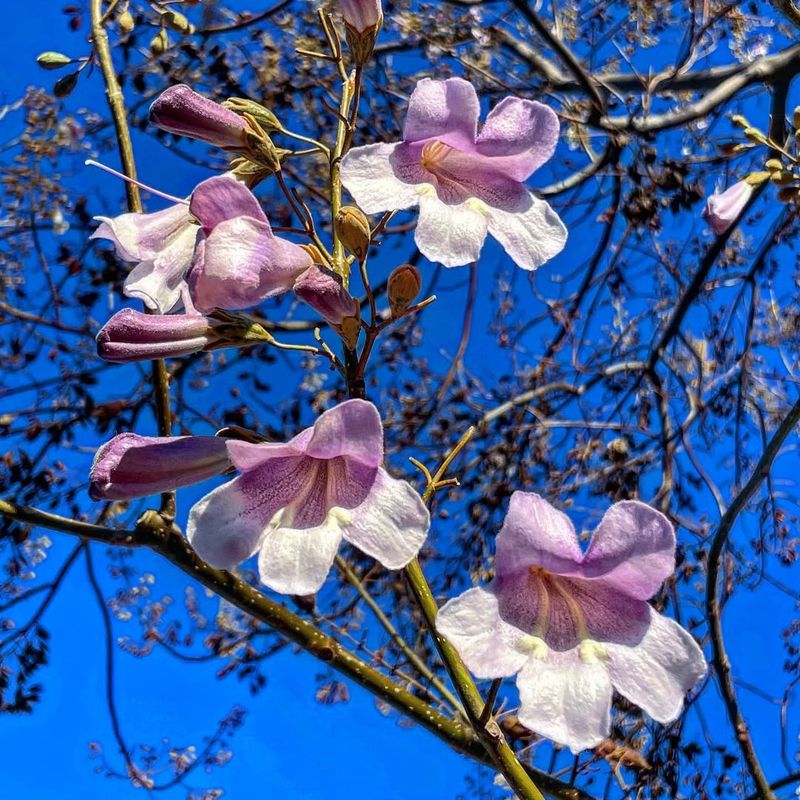
The Princess Tree, also known as Empress Tree (Paulownia tomentosa), is considered an invasive species in North Carolina due to its rapid growth and ability to spread widely from seed.
A single mature tree can release thousands of lightweight seeds that travel long distances by wind, allowing it to colonize open ground, roadsides, and disturbed soils.
It grows quickly in sunny environments and often establishes before native species can recover, particularly after land clearing or natural disturbance.
Even when cut, stumps may resprout, requiring repeated management for full removal.
While the tree is officially listed as invasive, North Carolina generally does not fine homeowners simply for having one on private property.
Mandatory removal is uncommon and usually limited to specific conservation programs, protected lands, or regulated restoration areas.
Most guidance focuses on voluntary control to prevent further spread into forests and natural habitats.
Over time, unmanaged Princess Tree populations can alter plant communities and reduce native biodiversity.
Your North Carolina Garden Changes Every Week. Your Plan Should Too.
Gardening in North Carolina changes quickly throughout the season. Every Friday you’ll receive a simple weekly plan showing exactly what to plant, prune, fertilize, harvest, and protect so you never miss the right timing.
Forestry and conservation organizations encourage removal where practical, especially near natural areas, to support long-term ecosystem health.
Choosing native tree species instead helps maintain balanced forest structure and improves habitat quality for wildlife across North Carolina landscapes.
3. Bradford Pear
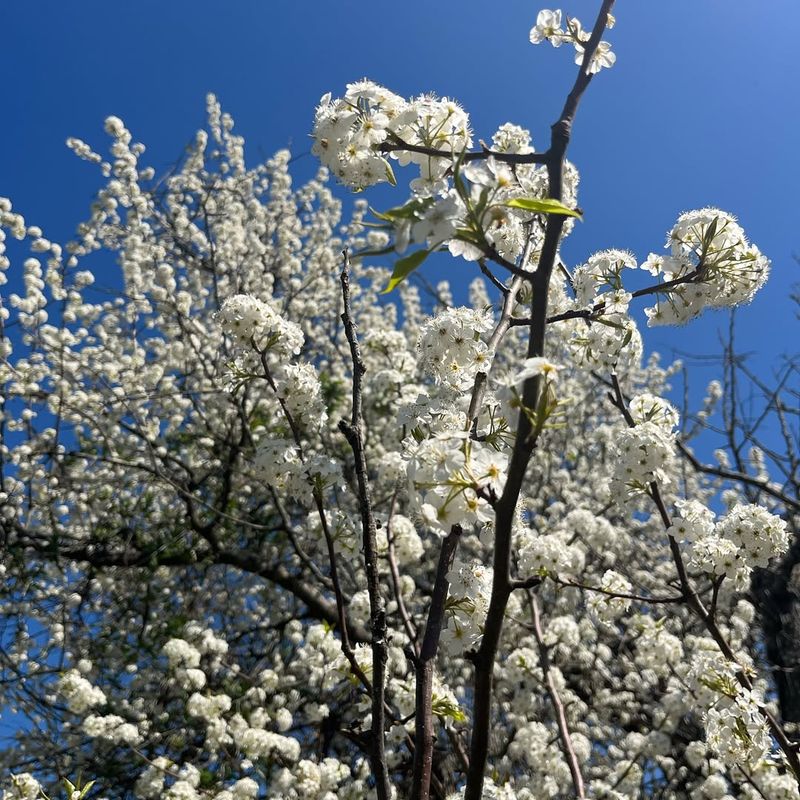
Bradford Pear (Pyrus calleryana) was once widely planted for its uniform shape and early spring blossoms, but it is now recognized as invasive in many parts of the southeastern United States, including North Carolina.
Although the original cultivar was marketed as sterile, cross-pollination between related pear varieties allows it to produce fertile seeds that spread into fields, roadsides, and forest margins.
Over time, escaped populations can form dense thorny thickets that compete with native vegetation.
Another concern is structural weakness.
Mature trees commonly split during storms due to narrow branch angles, creating property hazards and increasing maintenance costs.
Because of these issues, many cities and landscaping programs discourage planting new Bradford Pear trees.
Some communities promote voluntary replacement with native species, and certain developments restrict their use in new landscaping plans.
There is no statewide requirement forcing homeowners to remove existing Bradford Pear trees, and fines are not typical solely for possessing one.
Most management efforts are educational and voluntary.
Replacing Bradford Pear with native alternatives can improve storm resilience, support pollinators, and contribute to healthier local ecosystems throughout North Carolina.
4. Chinese Privet
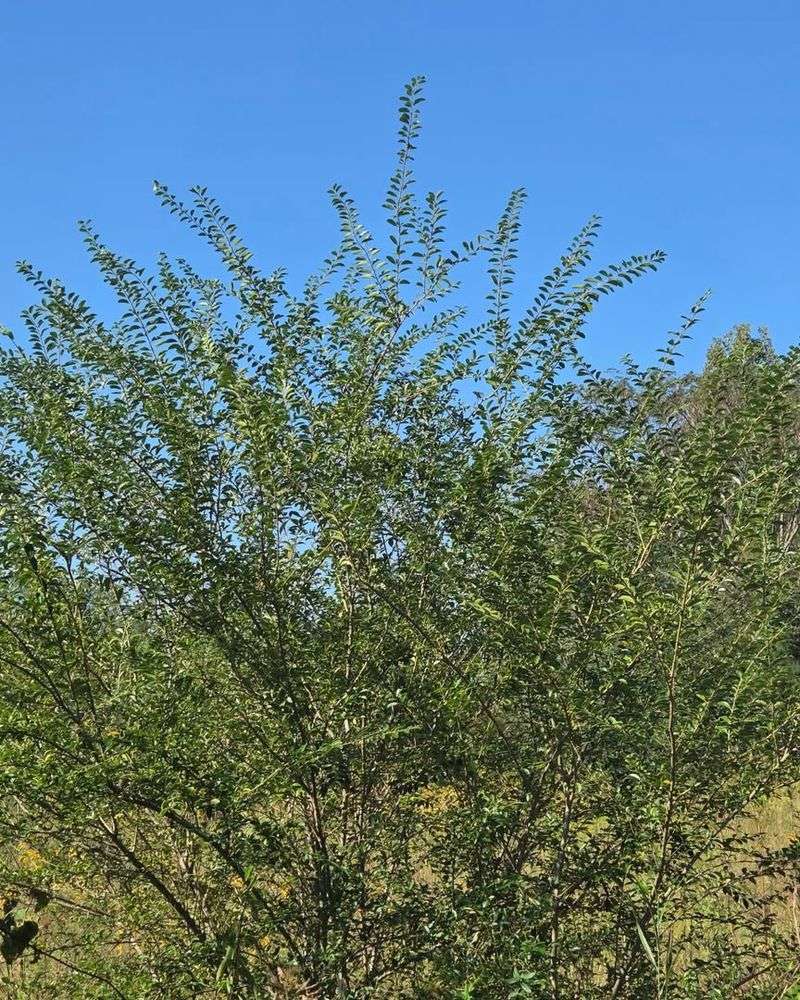
Chinese Privet (Ligustrum sinense) is one of the most widespread invasive plants in North Carolina, commonly forming dense thickets in forests, floodplains, and disturbed areas.
Growing as a shrub or small tree, it creates heavy shade that prevents native plants from regenerating, gradually reducing biodiversity.
Birds eat its small berries and disperse seeds across long distances, allowing the plant to spread rapidly into new habitats.
Although Chinese Privet is considered invasive and harmful to natural ecosystems, private homeowners are rarely fined simply for having it on their property.
Control requirements usually apply only in specific restoration projects, conservation lands, or managed natural areas.
Most state guidance encourages voluntary removal to prevent further ecological damage.
Once established, Chinese Privet can be difficult to eliminate due to persistent roots and rapid regrowth after cutting.
Landowners are encouraged to manage it where feasible, especially near streams and woodlands, to improve native plant recovery and habitat quality.
Reducing privet populations supports broader conservation goals and helps maintain healthier forest ecosystems across North Carolina.
5. Norway Maple
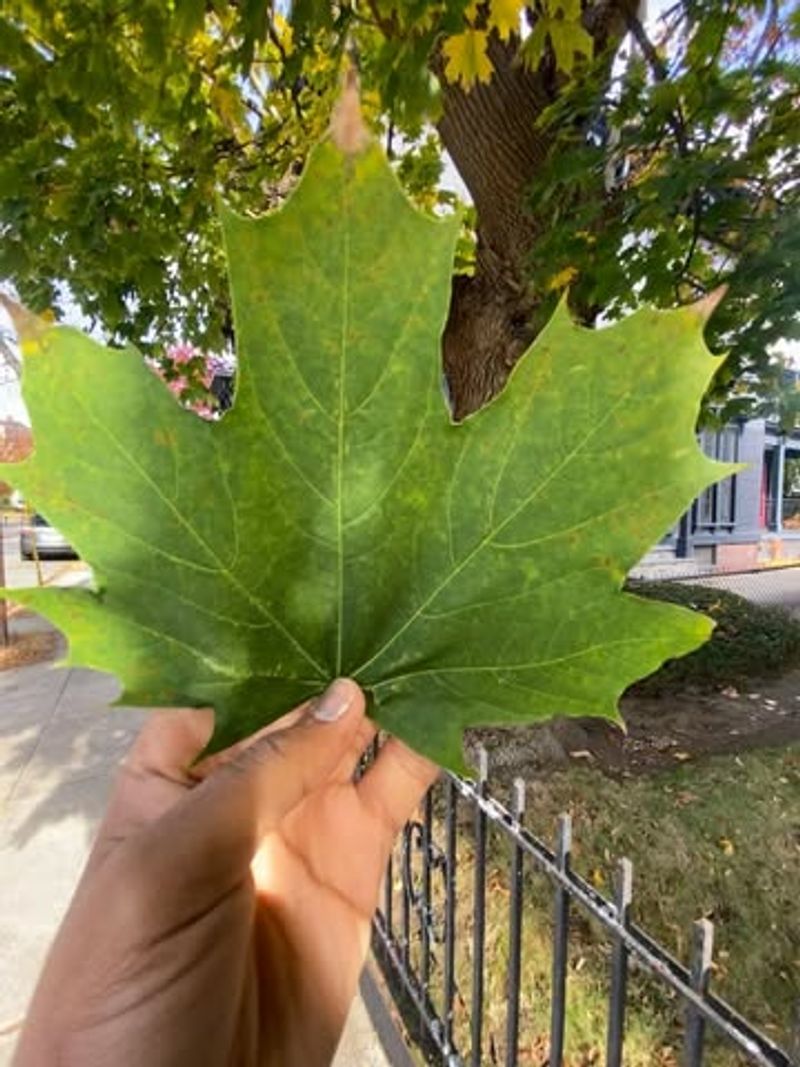
Norway Maple (Acer platanoides) is a non-native tree sometimes considered invasive in parts of the eastern United States, though its impact in North Carolina is generally less severe than in northern states.
It produces dense shade that can suppress grass and understory vegetation, and its shallow roots may interfere with nearby pavement or landscaping.
Because it tolerates urban conditions well, it has been widely planted in cities and residential areas.
Some environmental groups discourage planting Norway Maple in favor of native species that better support local wildlife.
However, North Carolina does not have statewide regulations requiring homeowners to remove existing Norway Maple trees, and fines related to this species are uncommon.
Any permit requirements typically relate to local tree-protection ordinances, not invasive-species enforcement.
Where replacement is considered, native maples such as red maple or sugar maple often provide better ecological value.
While Norway Maple can compete with native vegetation in some situations, its management in North Carolina is usually voluntary and focused on long-term landscape improvement rather than enforcement.
6. Chinaberry Tree
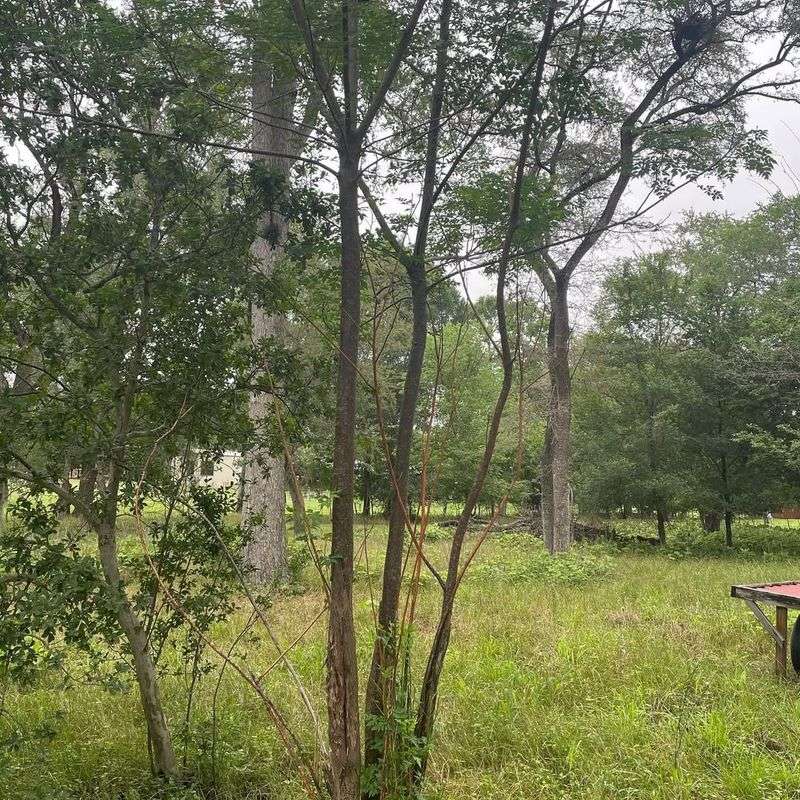
Chinaberry (Melia azedarach) is a fast-growing non-native tree that has naturalized in parts of the southeastern United States, including North Carolina.
It produces clusters of yellow berries that contain compounds considered toxic if consumed in large quantities, particularly for livestock and pets.
Birds readily eat the fruit and disperse seeds widely, contributing to its spread into disturbed land and forest edges.
The species is often listed as invasive or undesirable in ecological management programs, but there is no general statewide rule requiring homeowners to remove Chinaberry trees, nor are fines typical solely for possessing one.
Removal mandates, where they exist, are usually limited to restoration areas, specific nuisance situations, or public-safety concerns.
Unmanaged Chinaberry populations can compete with native vegetation in certain environments.
Forestry and conservation groups recommend voluntary removal, especially near natural habitats, to reduce spread and support native plant communities.
Planting native trees instead can improve biodiversity and long-term ecosystem stability across North Carolina landscapes.
7. Russian Olive
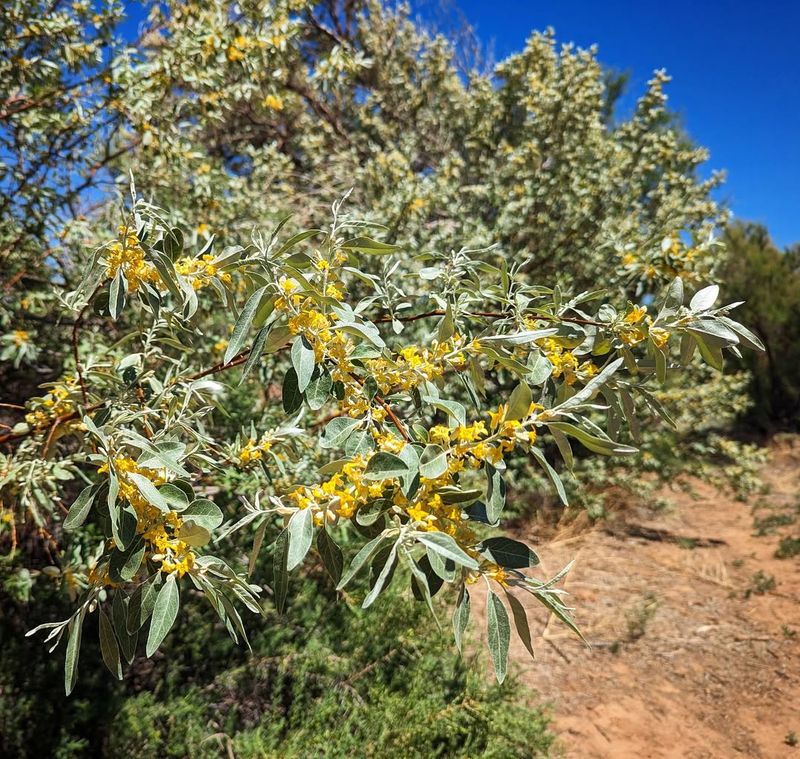
Russian Olive (Elaeagnus angustifolia) is invasive in several western U.S. states but is not widely established or heavily regulated in North Carolina.
It can alter soil conditions through nitrogen fixation and spread through wildlife-dispersed seeds, but its ecological impact in the state is relatively limited compared with other invasive shrubs.
North Carolina does not typically require homeowners to remove Russian Olive, and fines related to this species are rare.
Most invasive-species management in the state focuses on more aggressive and widespread plants.
Where present, land managers may encourage voluntary control, especially near waterways or restoration sites, to prevent localized spread.
As with many non-native species, replacing Russian Olive with native plants can improve habitat value and support biodiversity.
However, regulatory enforcement for this tree is uncommon, and management is generally guided by ecological recommendations rather than legal penalties.
8. Autumn Olive
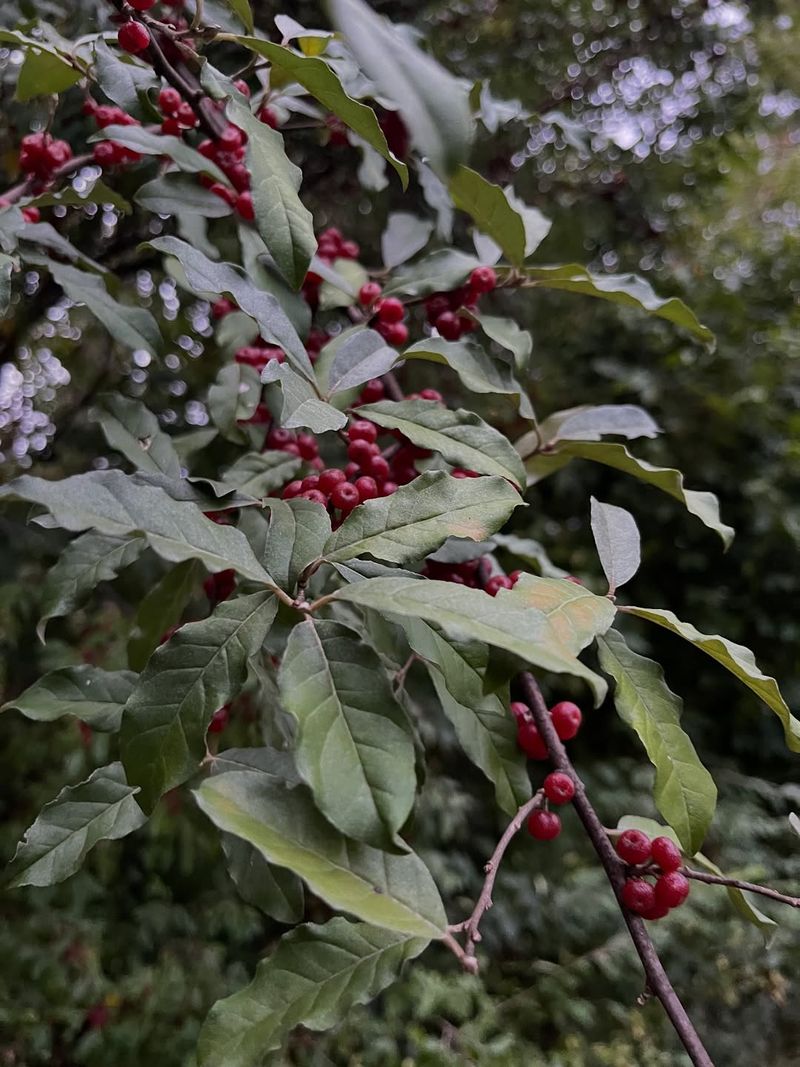
Autumn Olive (Elaeagnus umbellata) is a recognized invasive shrub in North Carolina that can grow into a small tree and spread rapidly through seed-bearing berries eaten by wildlife.
Its nitrogen-fixing ability allows it to thrive in poor soils and outcompete native plants, particularly in open fields and forest edges.
Over time, dense growth can reduce habitat diversity and alter natural plant communities.
Despite its invasive classification, homeowners are generally not fined simply for having Autumn Olive on private property.
Mandatory control usually applies only within specific conservation or restoration programs.
Most state guidance emphasizes voluntary removal to prevent further spread.
Removing Autumn Olive where practical helps native vegetation recover and improves ecological balance.
Many conservation groups promote replacement with native shrubs that better support pollinators and wildlife.
Managing this species contributes to long-term landscape health but is typically encouraged rather than enforced for residential landowners.
9. Sawtooth Oak
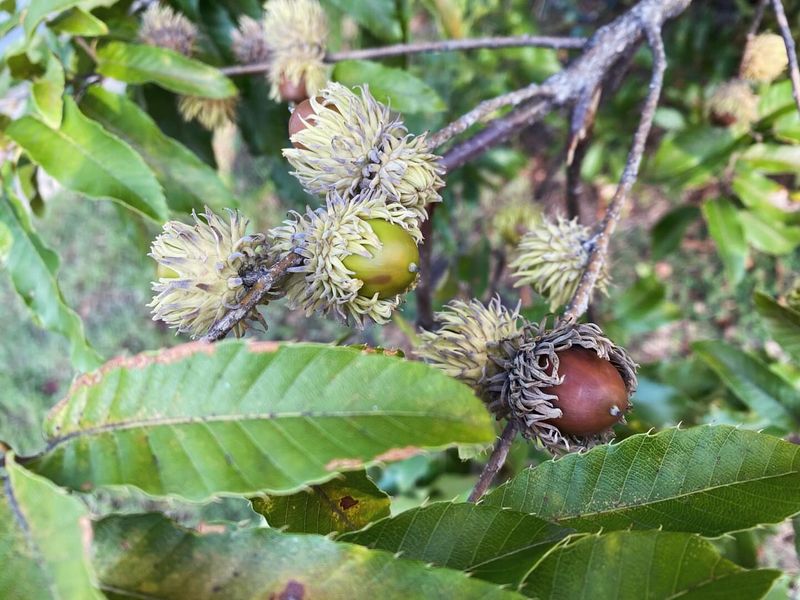
Sawtooth Oak (Quercus acutissima) is a non-native oak sometimes planted for wildlife food and fast growth.
It produces abundant acorns that can spread into nearby areas, and in some situations it may compete with native oaks.
However, its ecological impact in North Carolina is still debated, and it is not broadly classified as a regulated invasive species statewide.
Certain conservation projects and natural areas discourage planting non-native oaks, including Sawtooth Oak, to preserve native forest composition.
However, there is no general statewide requirement forcing homeowners to remove existing trees, and fines related to this species are uncommon.
Management decisions are usually voluntary and based on ecological preference rather than legal enforcement.
Where replacement is considered, native oaks provide stronger long-term habitat value for wildlife and better support regional biodiversity.
Preserving native tree diversity remains a conservation priority, but most residential Sawtooth Oaks are not subject to mandatory removal.