11 Texas Garden Flowers That Seem Like They’re Out Of This World
Texas gardens are known for bold color and big personality, yet some flowers take things to a whole new level.
These unusual blooms look like they dropped straight out of a science fiction scene, with shapes, textures, and colors that seem almost unreal.
A single plant can make visitors stop in their tracks, lean in closer, and wonder how nature dreamed it up.
In a state where everything feels larger than life, these flowers fit right in by breaking every expectation.
Some twist and curl like living sculptures, while others flash colors that feel borrowed from another planet.
They thrive in Texas heat, stand up to tough conditions, and still manage to look strange in the best possible way.
These plants bring drama without trying too hard, turning ordinary beds into conversation starters.
A garden filled with otherworldly flowers feels playful and bold.
It invites curiosity and sparks imagination, making each walk through the yard feel like a small adventure.
Texas landscapes already know how to stand out, and these flowers push that idea even further.
They prove that beauty does not always follow the rules and that sometimes the most unforgettable plants are the ones that dare to look a little strange.
1. Passion Flower
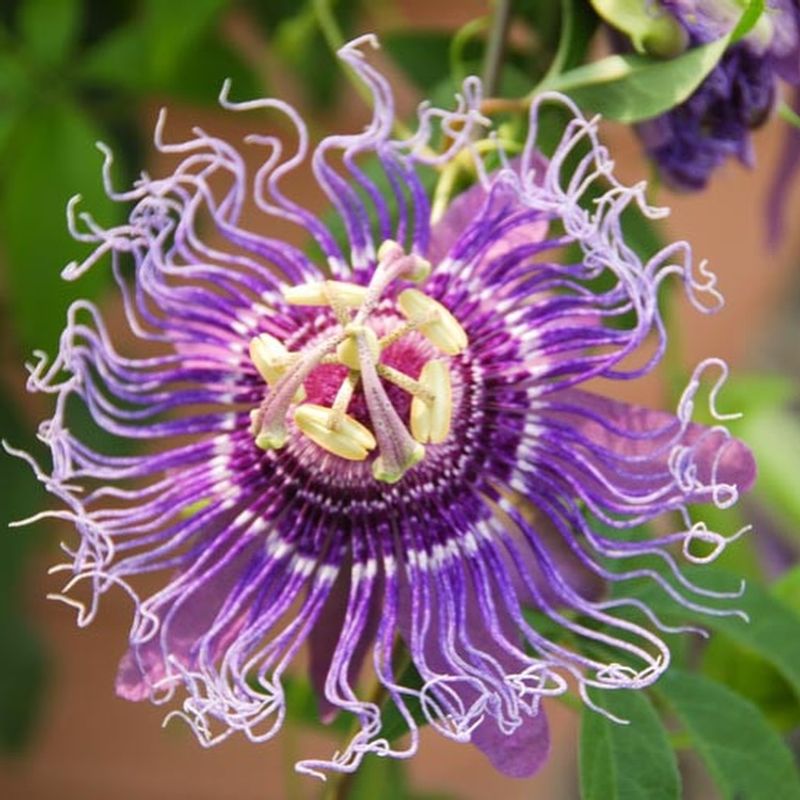
Passion flowers look like something a spacecraft might have dropped off during a visit to Earth.
The blooms feature layers of petals surrounding a crown of purple and white filaments that radiate outward like tiny antennae.
At the center sits a structure that resembles a miniature spaceship control panel, complete with five stamens that look almost mechanical in their precision.
These vines grow enthusiastically in Texas, climbing fences and trellises with curling tendrils that grab onto anything nearby.
They handle the heat surprisingly well and actually prefer full sun, making them perfect for Texas summers.
The flowers open in the morning and often close by evening, giving you a daily show throughout the growing season.
Beyond their alien appearance, passion flowers attract butterflies and hummingbirds to your garden.
Some varieties even produce edible fruit called maypops, adding another layer of interest to these already fascinating plants.
Plant them near a sturdy support structure because they can grow quite tall and wide.
In Texas, passion flowers typically bloom from late spring through fall, providing months of otherworldly beauty.
They’re surprisingly low-maintenance once established, requiring minimal watering and no special fertilizers.
These remarkable flowers prove that sometimes the most exotic-looking plants are actually among the easiest to grow in your backyard.
2. Black Bat Flower
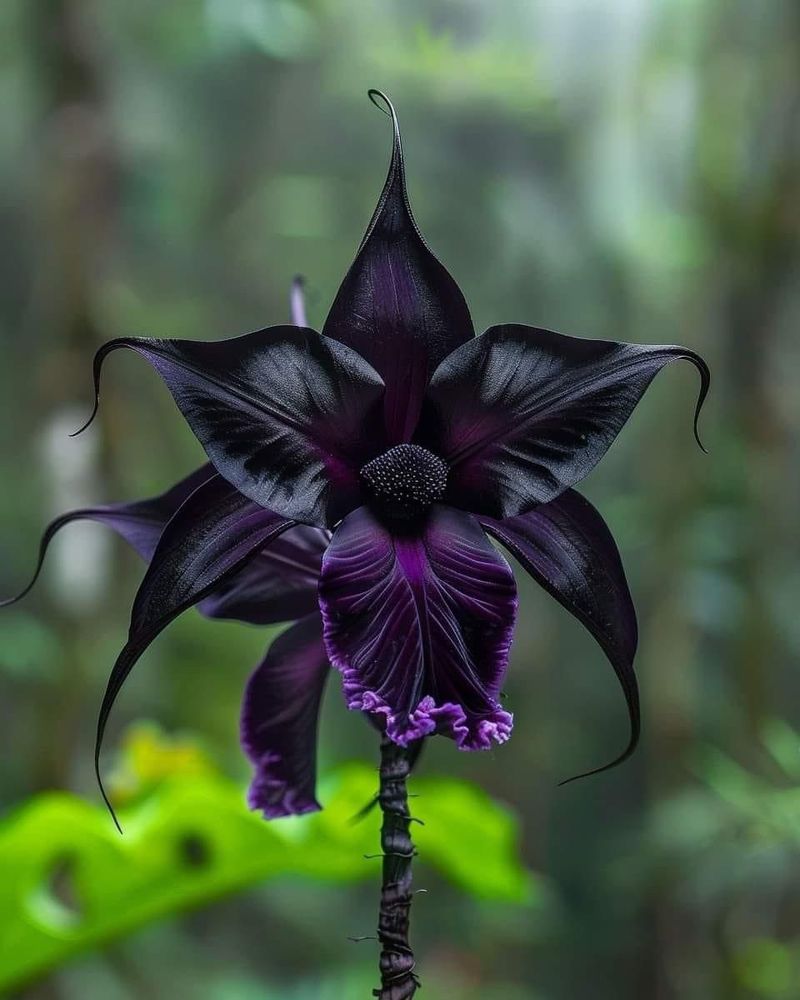
Imagine a flower that looks like it flew straight out of a Gothic fantasy novel and decided to take up residence in your garden.
Black bat flowers feature deep purple-black petals shaped like bat wings, complete with long, thread-like bracts that can stretch up to a foot long.
These whiskers dangle below the flower like the legs of some mysterious creature, creating an effect that’s both beautiful and slightly spooky.
Growing these dramatic blooms in Texas requires some special attention to their preferences.
Your Texas Garden Changes Every Week. Your Plan Should Too.
Gardening in Texas changes quickly throughout the season. Every Friday you’ll receive a simple weekly plan showing exactly what to plant, prune, fertilize, harvest, and protect so you never miss the right timing.
They need shade and humidity, which can be challenging in the drier parts of the state.
Consider planting them in containers where you can control moisture levels more easily, or place them in the shadiest, most protected corner of your garden.
The flowers emerge from glossy green foliage that stays attractive even when the plant isn’t blooming.
Each bloom can last several weeks, making the effort to grow them worthwhile.
They’re conversation starters that will have visitors asking questions and taking photos.
In Texas gardens, black bat flowers work best in East Texas where humidity levels stay higher naturally.
Misting the plants regularly and keeping the soil consistently moist helps them thrive.
These unusual flowers reward patient gardeners with blooms that truly look like they belong in another dimension, making them worth the extra care they require.
3. Stapelia Gigantea
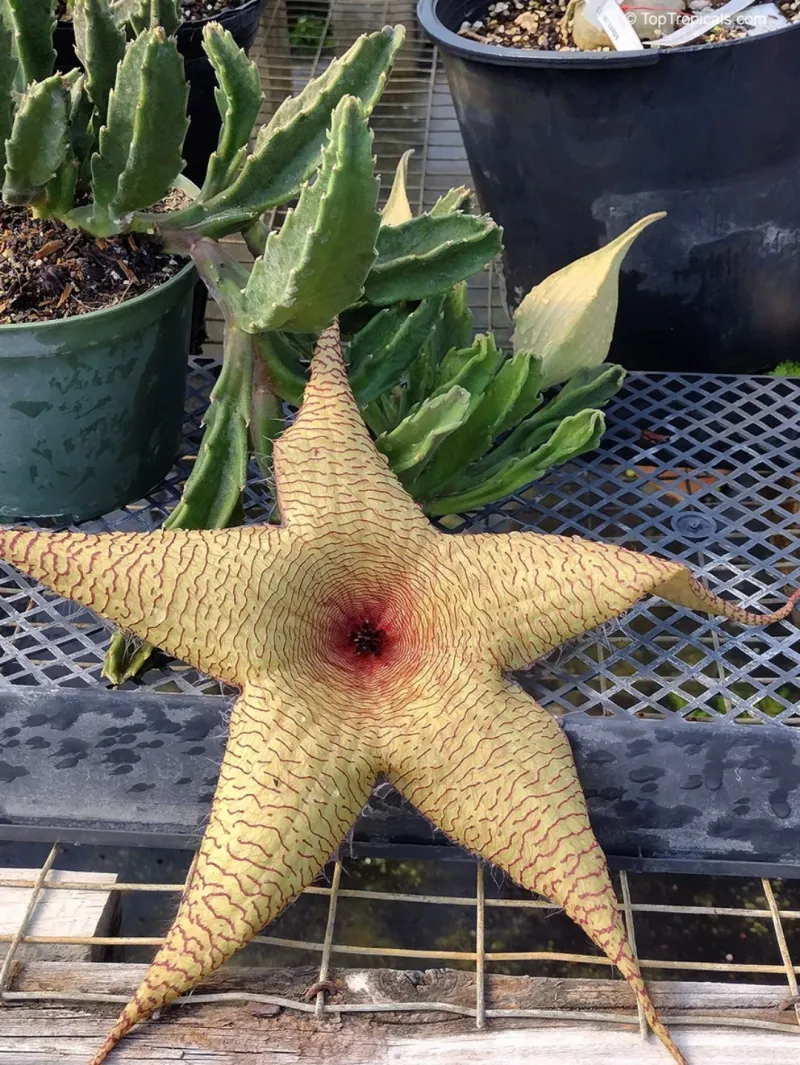
Picture a giant starfish that somehow transformed into a flower and you’ll have a good idea of what stapelia gigantea looks like.
These massive blooms can reach ten inches across, covered in fine hairs that give them a fuzzy, almost velvety texture.
Yellow petals with burgundy stripes create a pattern that looks hand-painted, and the star shape is so perfect it seems almost artificial.
Texas gardeners love these succulents because they handle heat and drought like champions.
They’re actually related to milkweed and thrive in the same conditions that make many other plants struggle.
The stems look like cactus arms, staying green and plump even during dry spells.
One quirky fact about stapelia: the flowers smell like rotting meat to attract flies for pollination.
Don’t let that scare you away, though.
The scent is only noticeable up close, and the visual impact is so stunning that most gardeners consider it a fair trade.
Plus, the smell only lasts while the flower is actively blooming.
These alien-looking plants work perfectly in rock gardens or succulent collections throughout Texas.
They need excellent drainage and lots of sun, making them ideal for areas where other flowers might struggle.
The blooms appear in summer, adding exotic flair to your garden when you need it most.
4. Protea
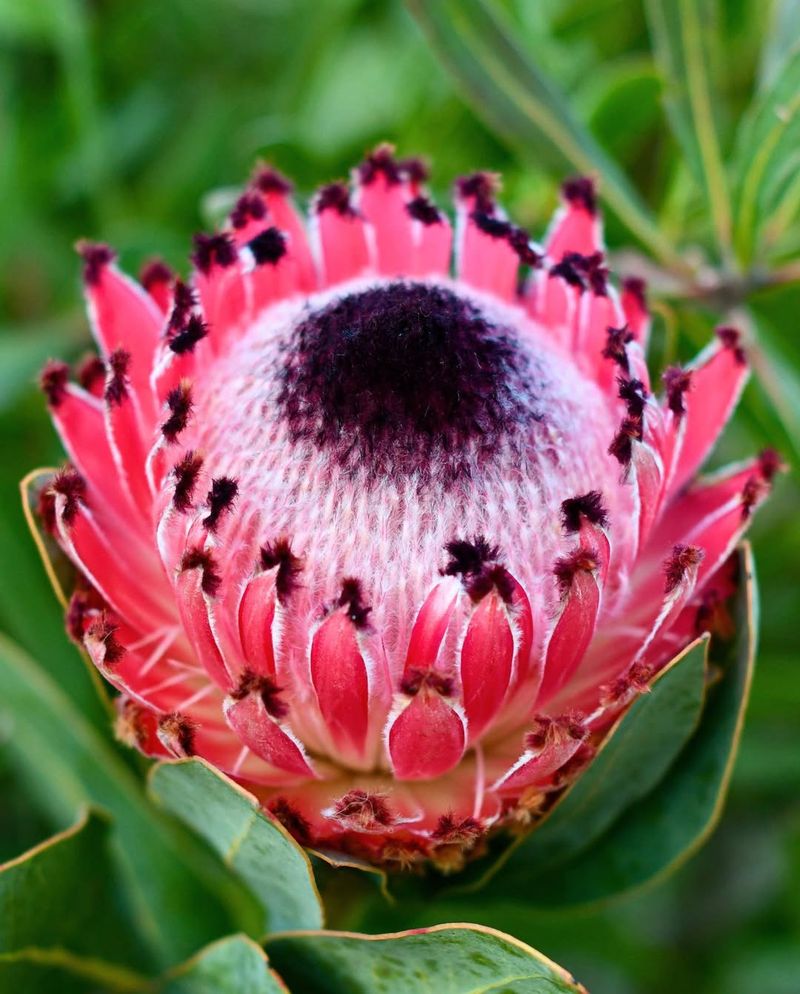
Proteas look like someone took a regular flower and decided to give it a punk rock makeover with spiky hair.
The blooms feature layers of stiff, pointed bracts surrounding a fuzzy center that can be pink, white, orange, or red depending on the variety.
King protea, the largest type, can grow bigger than a human hand, creating an impressive focal point in any garden.
These South African natives adapt surprisingly well to parts of Texas, especially in areas with good drainage and mild winters.
They dislike humidity and prefer drier conditions, making them suitable for West Texas and parts of Central Texas.
The key to success is avoiding overwatering, which these plants absolutely hate.
Protea flowers last for weeks on the plant and make excellent cut flowers that dry beautifully.
Their architectural shape and bold colors create dramatic arrangements that look modern and artistic.
Many florists charge premium prices for protea stems, but you can grow your own with the right conditions.
In Texas gardens, proteas need full sun and soil that drains quickly after rain.
Adding sand or gravel to your planting area helps create the conditions they prefer.
These remarkable flowers bring a touch of exotic elegance to your landscape while proving that sometimes the most unusual-looking plants are perfectly suited to Texas growing conditions.
5. Hooker’s Lips
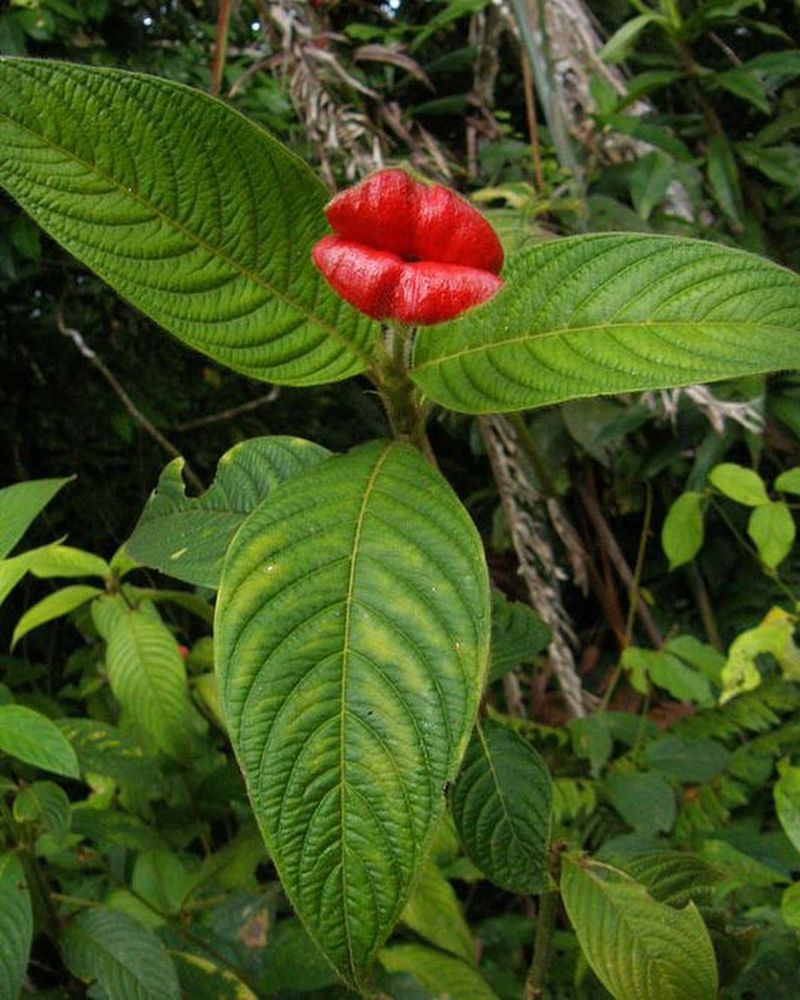
Nature has a sense of humor, and hooker’s lips prove it beyond any doubt.
This plant produces bright red bracts shaped exactly like a pair of puckered lips ready for a kiss.
The resemblance is so striking that people often think photos of these flowers have been digitally altered.
Before the actual flowers emerge, these glossy red lips sit perfectly formed on the plant, looking like something from a surrealist painting.
Growing this tropical beauty in Texas presents some challenges because it craves humidity and warmth year-round.
Greenhouse growing or indoor cultivation works best for most Texas gardeners.
If you live in the humid regions of East Texas, you might successfully grow it outdoors in a protected, shaded location during warmer months.
The actual flowers are small and white, emerging from between the red lips after they’ve been on display for a while.
The plant attracts hummingbirds and butterflies, adding movement and life to your growing space.
Its unusual appearance makes it a fantastic conversation piece that guests will remember long after they leave.
Container growing gives you the flexibility to bring this sensitive plant indoors when Texas weather turns unpredictable.
Keep the soil moist and provide bright, indirect light for best results.
These quirky flowers remind us that nature creates designs more creative than anything we could imagine.
6. Beehive Ginger
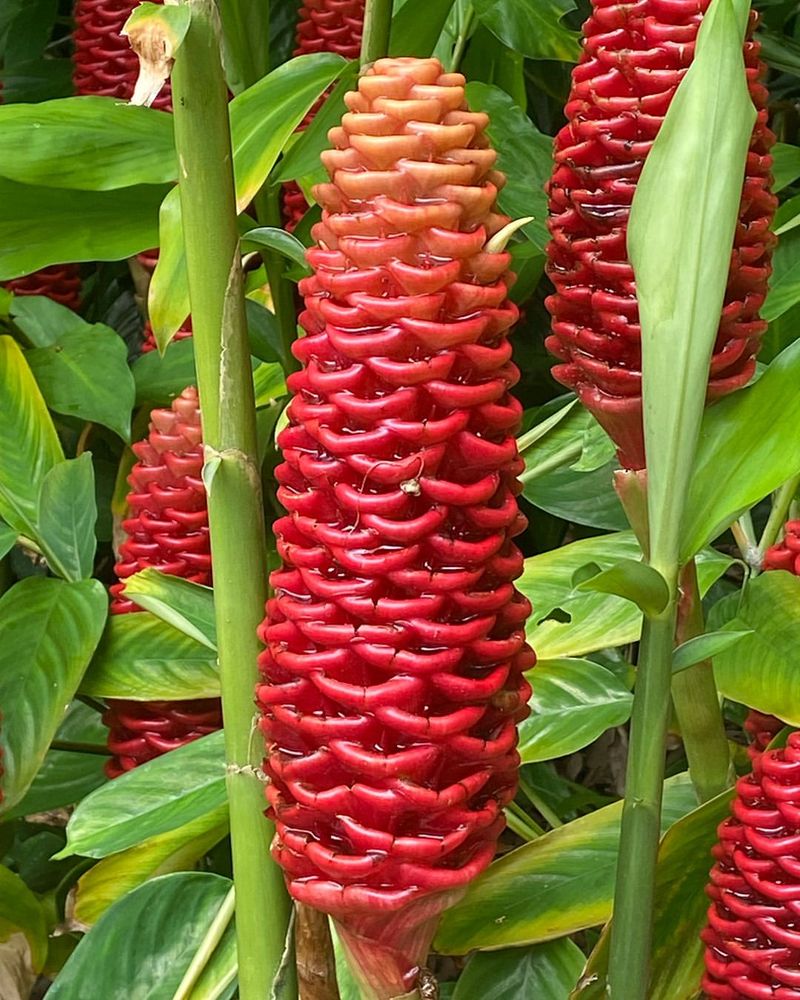
Beehive ginger earned its name honestly, producing cone-shaped flower clusters that look remarkably like old-fashioned straw beehives.
Bright yellow or orange bracts overlap each other in perfect spirals, creating a geometric pattern that seems too precise to be natural.
Small white flowers peek out from between the bracts, but the main attraction is definitely the sculptural form of the entire structure.
Texas gardeners in humid areas can grow beehive ginger successfully, especially in Houston, Beaumont, and other southeastern regions.
These plants love heat and moisture, making them perfect for those challenging spots where humidity stays high.
They grow from rhizomes, similar to culinary ginger, and spread to form attractive clumps over time.
The foliage stays lush and tropical-looking even when the plant isn’t blooming, providing greenery that enhances any garden bed.
Flowers appear in late summer and fall, lasting for several weeks and providing color when many other plants are winding down.
The blooms also make long-lasting cut flowers that look stunning in arrangements.
Plant beehive ginger in partial shade with rich, well-amended soil that holds moisture without becoming waterlogged.
Mulching heavily helps maintain the consistent moisture these plants prefer.
In Texas, they may go dormant during cooler winter months, but they’ll return enthusiastically when warm weather arrives again, bringing their alien-looking blooms back to your garden.
7. Chocolate Cosmos
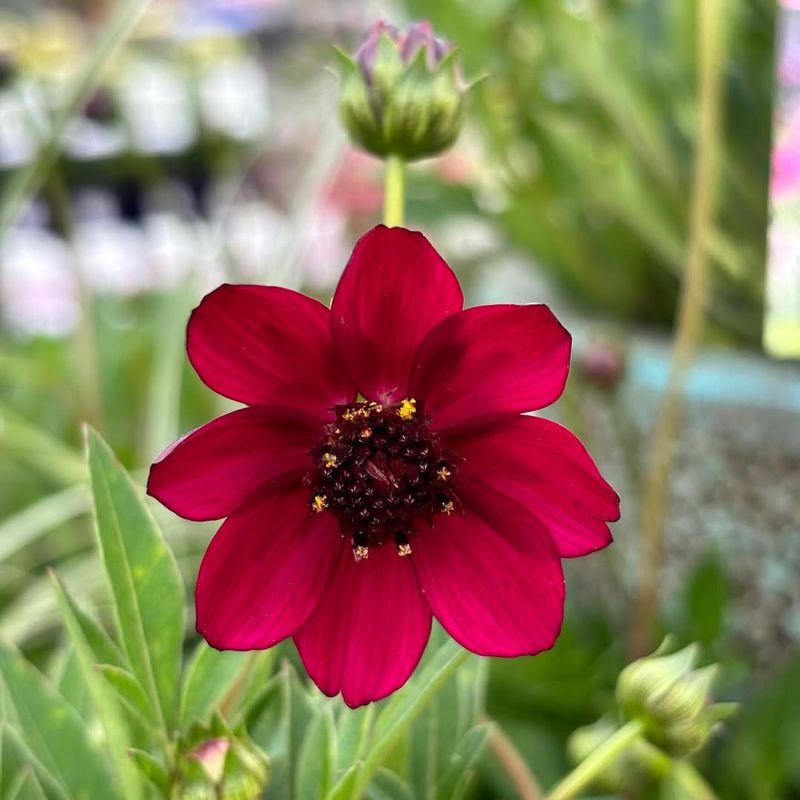
Flowers that smell like chocolate sound like something from a fairy tale, but chocolate cosmos make it reality.
These deep burgundy blooms are so dark they appear almost black in certain light, with velvety petals that beg to be touched.
The chocolate scent isn’t overwhelming but definitely noticeable on warm days, adding an unexpected sensory element to your garden experience.
Texas heat suits chocolate cosmos well, though they appreciate some afternoon shade in the hottest regions.
They grow from tubers similar to dahlias and produce flowers throughout the summer months.
The blooms sit atop slender stems that sway gracefully in the breeze, creating movement and elegance in garden beds.
Originally from Mexico, these flowers have adapted well to Texas growing conditions.
They prefer well-drained soil and regular watering during active growth.
The dark color absorbs heat, so ensuring adequate moisture helps keep the plants happy and blooming prolifically.
In Texas gardens, chocolate cosmos work beautifully in containers or mixed borders where their unusual color can be appreciated up close.
The tubers need to be dug up and stored in colder parts of Texas, but in milder regions, they can stay in the ground year-round with mulch protection.
These sophisticated flowers prove that sometimes the most alien-looking blooms come with the sweetest surprises, literally bringing chocolate to your garden.
8. Lithops
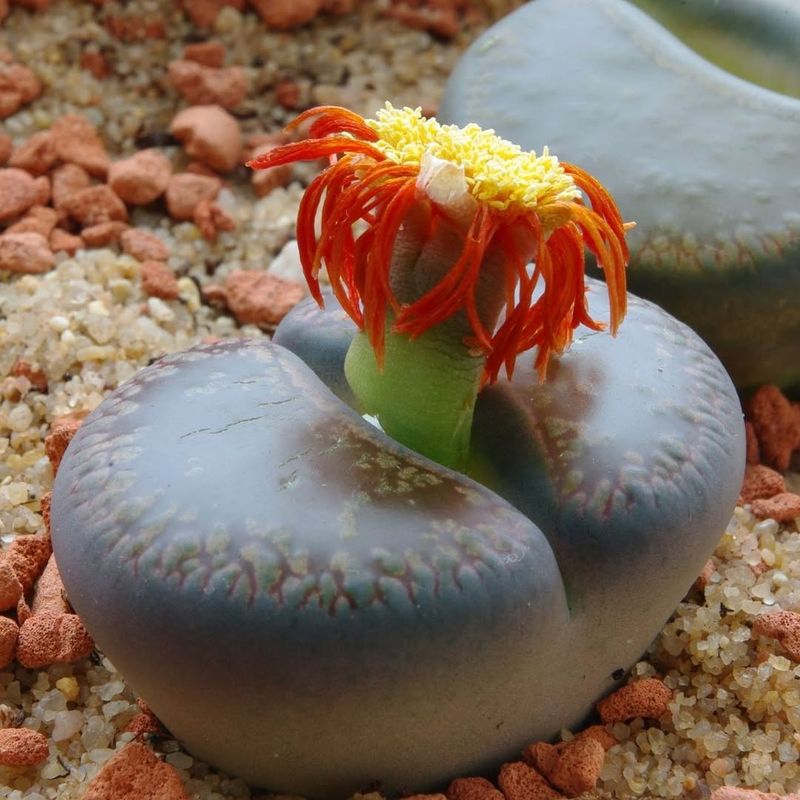
Living stones deserve their nickname because these plants look exactly like small pebbles scattered on the ground.
Lithops have evolved to mimic rocks as a survival strategy, and they do it so convincingly that you might walk right past them without noticing.
When they flower, though, the disguise falls away as cheerful daisy-like blooms emerge from the split between their two thick leaves.
Texas gardeners find lithops incredibly easy to grow because they thrive on neglect.
These succulents need very little water and lots of sun, making them perfect for rock gardens or windowsill collections.
Overwatering is the main way to harm them, so letting the soil dry completely between waterings keeps them healthy.
The flowers appear in fall, typically white or yellow, and look enormous compared to the tiny plant bodies.
Watching these stone-like plants suddenly burst into bloom feels like witnessing a magic trick.
Each lithops only produces one or two flowers per year, making the event special when it happens.
In Texas, lithops work perfectly in containers filled with cactus mix or very gritty soil.
They handle heat brilliantly and need protection only from excessive moisture.
These bizarre little plants prove that sometimes the most otherworldly garden additions come in the smallest packages, challenging our expectations of what flowers should look like.
9. Dutchman’s Pipe
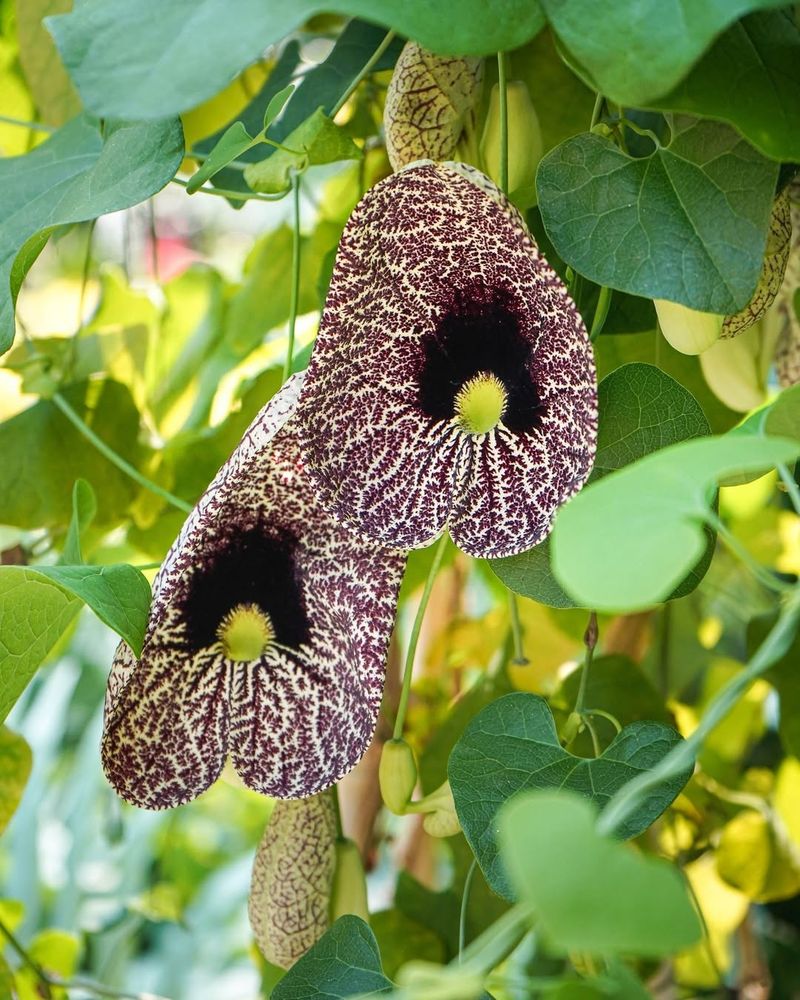
Dutchman’s pipe flowers look like someone crossed a saxophone with a tropical pitcher plant and painted it purple.
The tubular blooms curve in an S-shape, flaring out at the end into a flat face marked with intricate patterns.
Yellow and maroon coloring creates designs that look almost like tribal tattoos, and the whole effect is simultaneously beautiful and slightly creepy.
These vigorous vines grow enthusiastically in Texas, climbing fences and arbors with heart-shaped leaves that create dense shade.
The flowers hide under the foliage, so you have to look for them, which makes discovering them feel like finding hidden treasure.
They bloom in late spring and early summer, providing interest during the transition between spring and summer flowers.
Dutchman’s pipe serves as the host plant for pipevine swallowtail butterflies, making it valuable for Texas wildlife gardens.
The caterpillars feed on the leaves, and adult butterflies visit for nectar.
Growing this vine helps support local butterfly populations while adding unusual beauty to your landscape.
In Texas gardens, Dutchman’s pipe handles full sun to partial shade and isn’t picky about soil.
Once established, it tolerates drought reasonably well, though regular watering produces lusher growth and more flowers.
The vines can grow quite large, so give them plenty of space or be prepared to prune regularly to keep them in bounds.
10. Torch Ginger
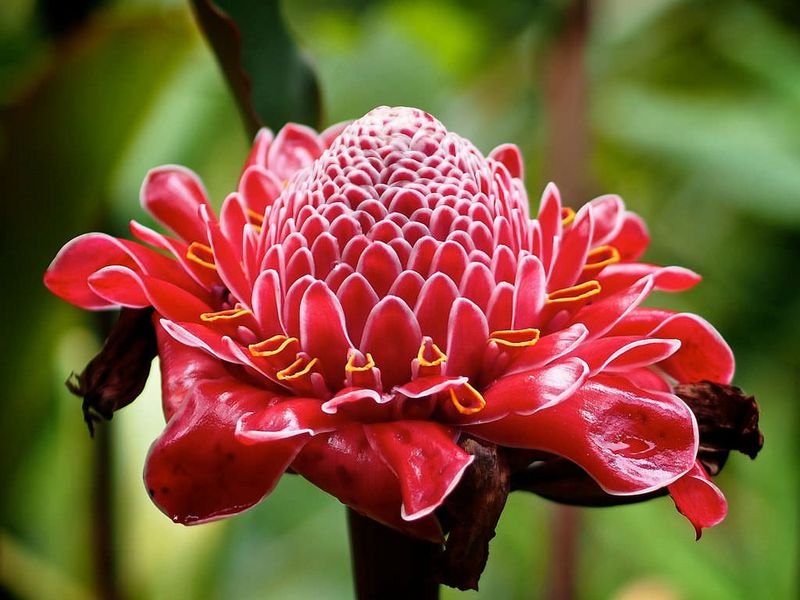
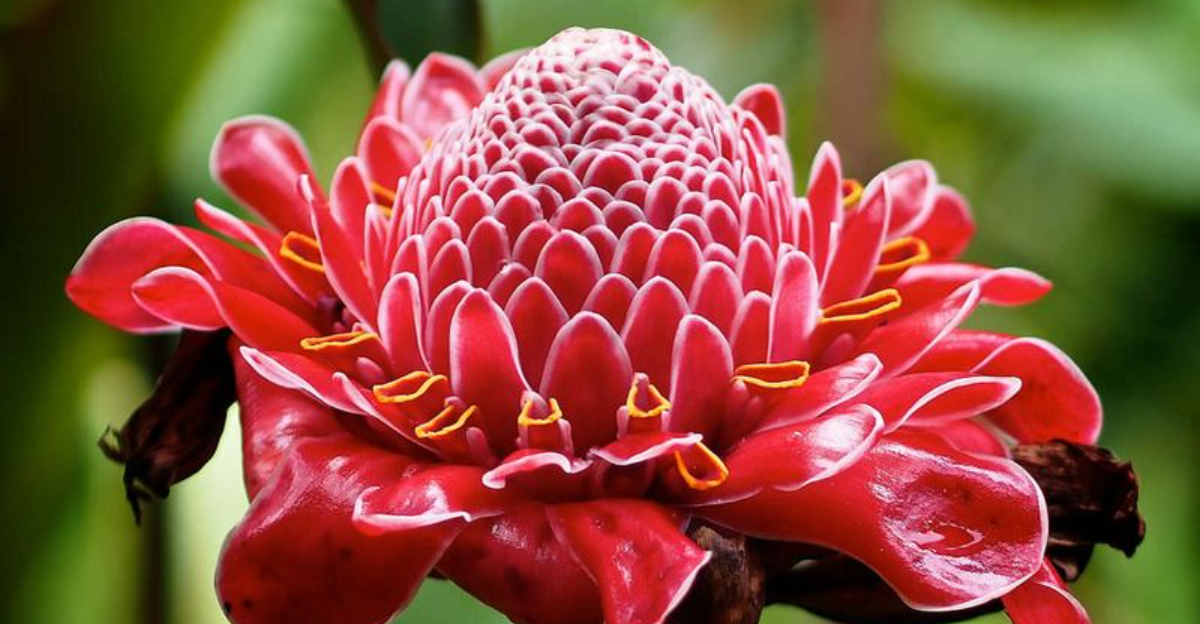
Torch ginger flowers rise on tall stalks like flames frozen in time, with bright red or pink waxy bracts layered in perfect spirals.
The cone-shaped blooms can reach the size of softballs, standing several feet tall on stems that emerge directly from the ground.
Their glossy texture catches light beautifully, making them seem to glow even in shaded locations.
Growing torch ginger in Texas works best in the southeastern regions where humidity stays high.
These tropical plants need consistent moisture and protection from harsh afternoon sun.
They grow quite large, with foliage reaching six feet or more, so they need substantial space in the garden.
The flowers are actually edible and commonly used in Southeast Asian cooking, adding a ginger-like flavor to dishes.
Even if you never harvest them for the kitchen, knowing they’re edible adds another dimension of interest.
The blooms also attract hummingbirds and make dramatic cut flowers that last over a week in arrangements.
In Texas, torch ginger performs best when planted in rich, amended soil that retains moisture.
Mulching heavily helps maintain the damp conditions these plants prefer.
They may go dormant in winter in all but the warmest parts of the state, but they’ll return when temperatures rise.
These spectacular flowers bring tropical drama to Texas gardens, proving that with the right conditions, you can grow plants that look like they belong in a rainforest.
11. Monkey Face Orchid
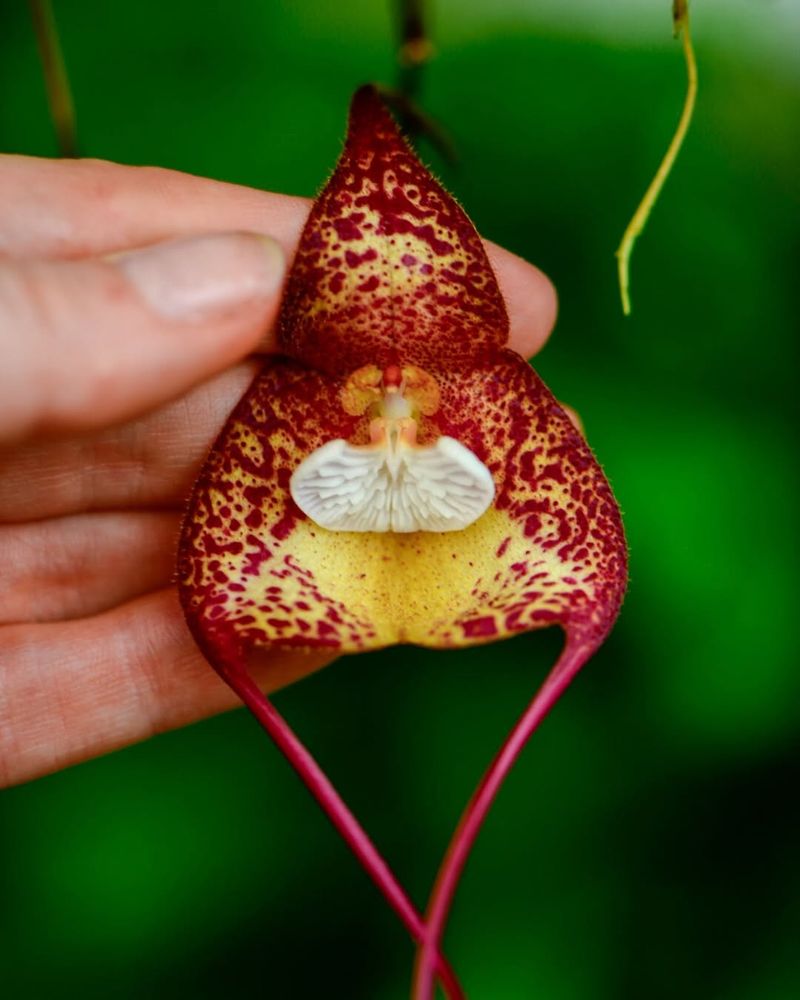
Monkey face orchids feature flowers that look startlingly like tiny primate faces peering out at you.
The petals and sepals arrange themselves to create what appears to be eyes, a nose, and even a little mouth, complete with an expression that seems almost thoughtful.
The resemblance is so strong that seeing photos for the first time makes many people think they’re looking at digital manipulation rather than a real flower.
These unusual orchids need cool temperatures and high humidity, making them challenging for most Texas outdoor gardens.
Growing them indoors or in climate-controlled greenhouses gives you the best chance of success.
They’re native to cloud forests in South America, so replicating those conditions is key to keeping them happy.
The flowers bloom on stems that can produce multiple monkey faces at once, creating a display that’s both charming and slightly eerie.
They prefer indirect light and consistent moisture, with excellent air circulation to prevent fungal problems.
The blooms can appear at any time of year, often smelling faintly like ripe oranges.
For Texas gardeners determined to grow these quirky orchids, creating a dedicated growing space with controlled conditions is essential.
They’re not beginner orchids, but experienced growers find them rewarding.
These remarkable flowers remind us that nature creates designs more creative and surprising than any artist could imagine, literally putting faces on flowers.