Garden Flowers In Florida That Look Like They Came From Another World
Florida’s warm climate allows gardeners to grow flowers that look nothing like traditional blooms.
Thanks to heat, humidity, and long growing seasons, Florida gardens can support exotic flowers with unusual shapes, bold colors, and dramatic structures that truly look otherworldly.
Many of these plants evolved in tropical or subtropical regions and feel right at home in Florida landscapes.
Instead of soft petals and familiar forms, they feature claw-like bracts, glossy spathes, alien-looking filaments, or colors so intense they appear unreal.
These flowers don’t just bloom—they stop people in their tracks.
What makes them even more impressive is that many are surprisingly easy to grow when placed in the right conditions.
With proper sun, moisture, and spacing, Florida gardeners can enjoy flowers that resemble living sculptures rather than garden staples.
Whether used as focal points or conversation pieces, these blooms bring a sense of wonder and drama that few other plants can match.
Florida’s climate makes the extraordinary possible, turning everyday gardens into something that feels almost out of this world.
Passionflower (Passiflora Incarnata And Passiflora Caerulea)
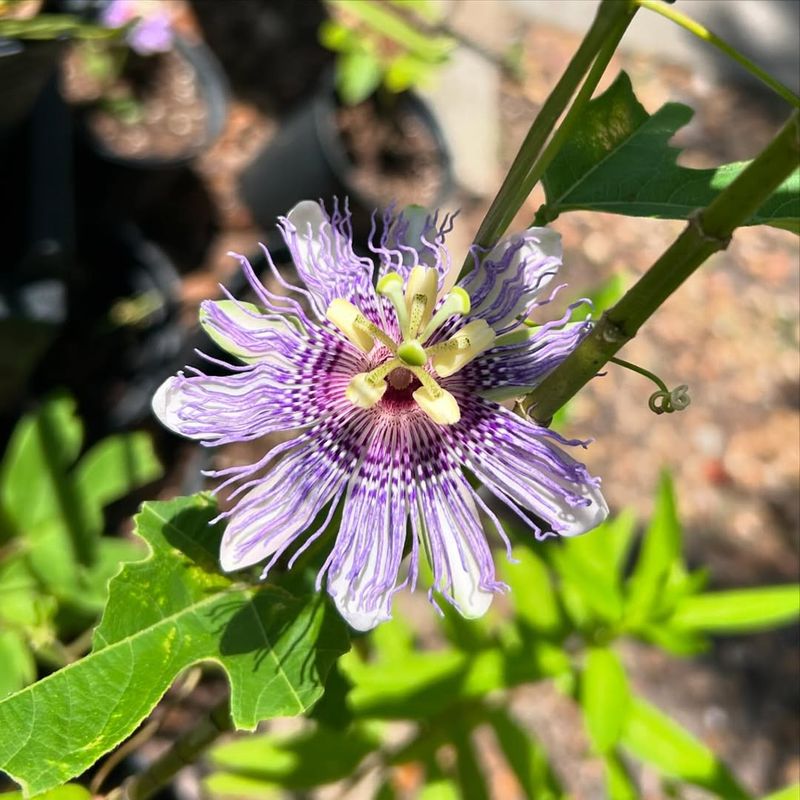
Walking past a passionflower might make you stop and stare because its design seems too complex to be real.
The bloom features layers of petals, wavy filaments that radiate like tiny alien tentacles, and a crown-like structure in the center.
Early Christian missionaries named it after the Passion of Christ because they saw religious symbolism in every part of the flower.
The five stamens represented wounds, the three stigmas stood for nails, and the corona symbolized the crown of thorns.
Whether you believe the symbolism or not, there is no denying this flower looks like it was designed by someone with a wild imagination.
Passionflowers grow as vigorous vines that can climb fences, trellises, or anything they can wrap their tendrils around.
They thrive in Florida’s warm climate and actually prefer full sun to partial shade.
The blooms only last a day, but the plant produces so many that you will see fresh flowers throughout the growing season.
Butterflies love passionflowers, especially Gulf Fritillaries, which lay their eggs on the leaves.
Watching caterpillars munch on the foliage and later transform into butterflies adds another layer of magic to your garden.
Bird Of Paradise (Strelitzia Reginae)
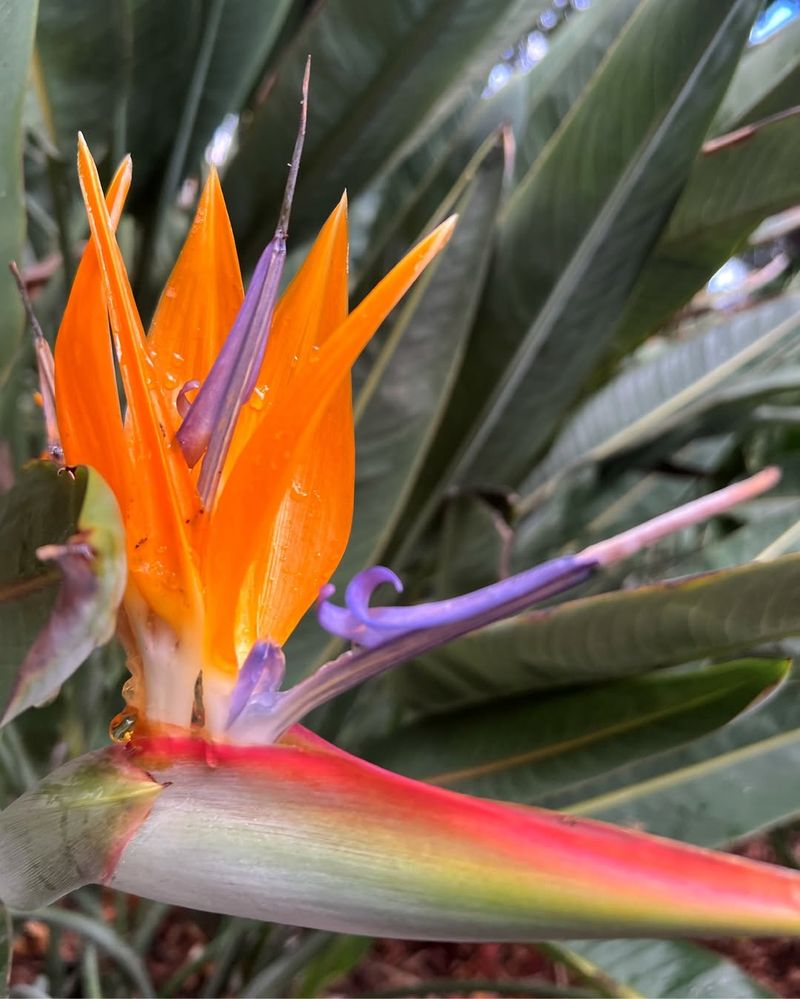
Imagine a tropical bird frozen mid-flight and turned into a flower—that is exactly what the Bird of Paradise looks like.
Its sharp orange petals shoot out like feathers, while a blue tongue-like structure emerges from the center.
The whole arrangement sits on a sturdy green bract that resembles a bird’s beak.
This flower is native to South Africa but has found a second home in Florida where the climate suits it perfectly.
Gardeners love it because it brings a dramatic tropical vibe without requiring constant attention.
Bird of Paradise plants grow into large clumps with thick, banana-like leaves that add texture even when the plant is not blooming.
They prefer full sun and well-drained soil, and once established, they can handle dry spells pretty well.
Your Florida Garden Changes Every Week. Your Plan Should Too.
Gardening in Florida changes quickly throughout the season. Every Friday you’ll receive a simple weekly plan showing exactly what to plant, prune, fertilize, harvest, and protect so you never miss the right timing.
Each flower lasts several weeks, and a single plant can produce multiple blooms throughout the year.
If you want to attract attention in your garden, this is the plant to do it.
People passing by will stop and ask what that crazy-looking flower is.
It also makes a stunning cut flower for arrangements, though the blooms are so striking that one stem is often enough.
Orchid (Phalaenopsis And Dendrobium Varieties)
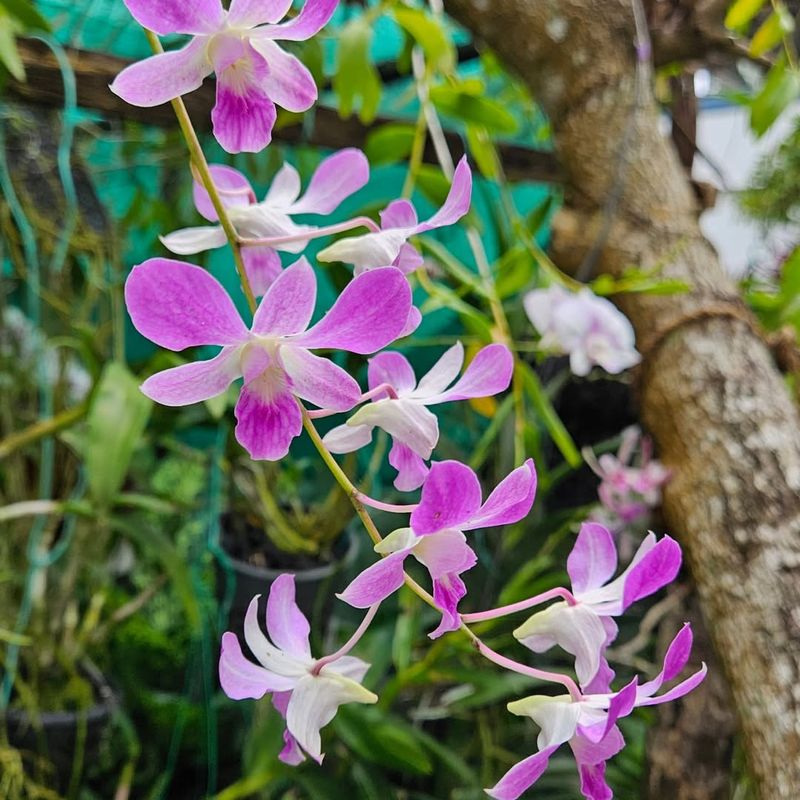
Orchids look like they were carved from wax or molded from porcelain rather than grown from soil and water.
Their perfectly symmetrical petals and intricate patterns seem too precise to be natural.
Some orchids have spots, others have stripes, and a few even have faces that look like tiny insects or animals.
Florida’s humidity makes it an ideal place for growing orchids, especially varieties like Phalaenopsis and Dendrobium.
These plants are epiphytes, meaning they naturally grow on trees rather than in the ground.
In your garden, you can mount them on tree bark, grow them in special orchid pots with chunky bark mix, or even hang them from tree branches.
They do not need much soil, but they do need good air circulation around their roots.
Orchids bloom for weeks or even months, making them a long-lasting display of alien beauty.
Many people think orchids are difficult to grow, but once you understand their basic needs, they are surprisingly low-maintenance.
They prefer bright indirect light, regular misting, and occasional feeding with diluted fertilizer.
Watching an orchid spike develop and finally burst into bloom feels like witnessing a small miracle in your own backyard.
Bleeding Heart Vine (Clerodendrum Thomsoniae)
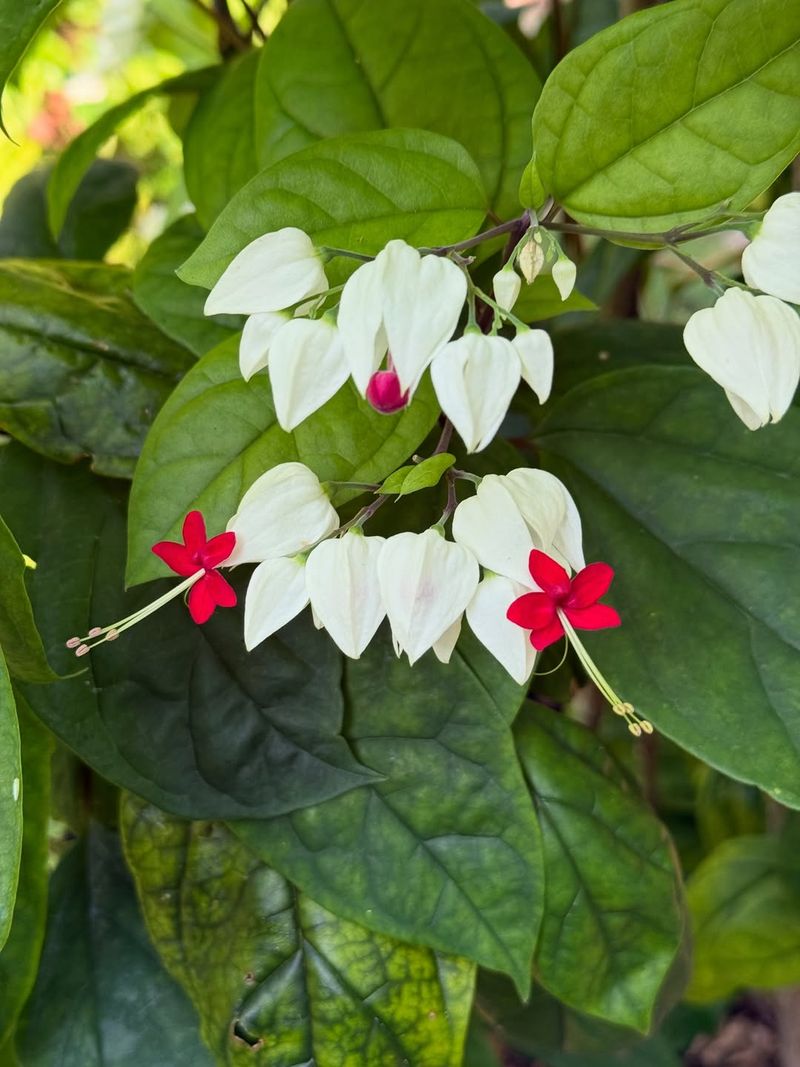
At first glance, Bleeding Heart Vine flowers look like they are floating in mid-air or about to burst open like tiny fireworks.
Each bloom consists of a white papery bract that puffs out like a little lantern, and from its center, a bright red flower emerges.
The contrast between the pure white and deep red creates a stunning visual effect that seems almost unnatural.
This vine is a climber, so it needs support like a trellis, fence, or arbor to show off its unusual blooms.
It grows quickly in Florida’s warm climate and can cover a large area in just one season.
The plant prefers partial shade, which makes it perfect for those tricky spots in your garden where other flowering plants struggle.
Blooms appear in clusters, creating a cascading display that looks like a waterfall of red and white.
Hummingbirds and butterflies are drawn to the tubular red flowers, adding movement and life to your garden.
The vine also produces glossy green leaves that provide a lush backdrop for the flowers.
After the red petals drop, the white bracts often turn pink or purple, extending the color show for weeks.
This is one of those plants that makes visitors ask for cuttings because they simply must have one for themselves.
Bat Flower (Tacca Chantrieri)
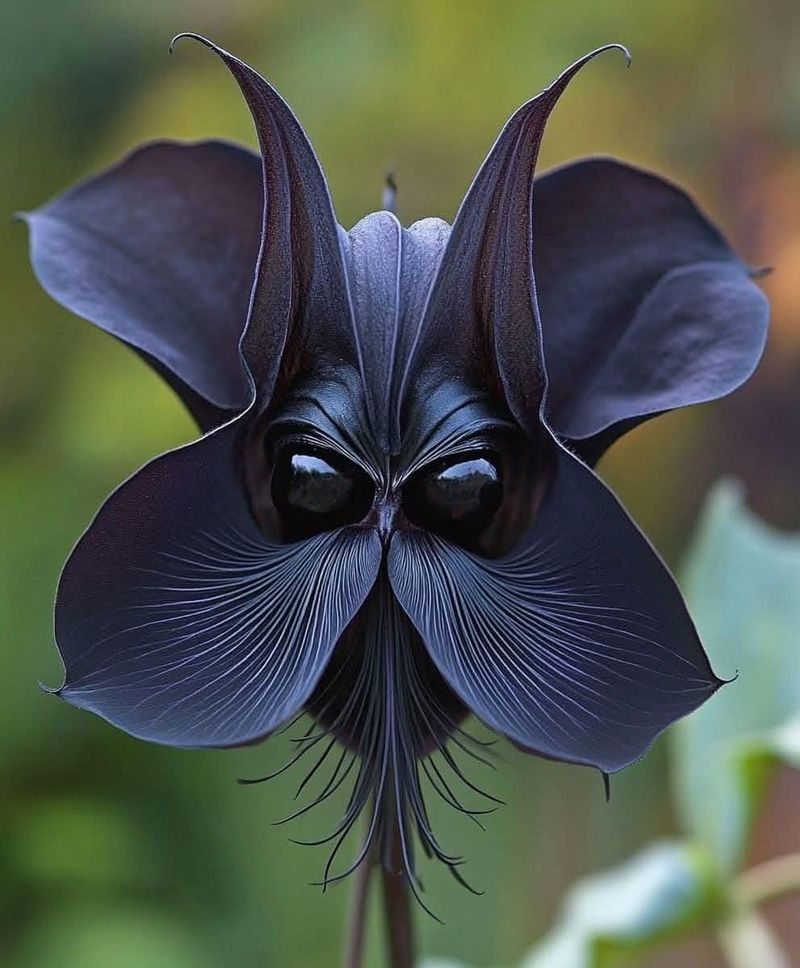
If you want a flower that truly looks like it came from another planet, the Bat Flower is your answer.
Its dark purple-black petals spread out like bat wings, and long thread-like filaments dangle below like whiskers or tentacles.
The entire bloom can measure up to a foot across, making it impossible to ignore.
This flower is native to tropical rainforests in Southeast Asia, but it adapts surprisingly well to Florida’s humid climate.
It prefers deep shade and rich, moist soil, so plant it under trees or in a sheltered corner of your garden.
The Bat Flower is not a plant for beginners because it has specific needs and can be a bit finicky.
However, if you can provide the right conditions, the reward is a bloom that will blow everyone’s mind.
The flowers emerge on tall stalks that rise above the large, glossy leaves.
Each bloom lasts several weeks, and the plant can produce multiple flowers throughout the growing season.
Because of its dark color and strange shape, it is often used in Halloween-themed gardens or Gothic-style landscapes.
Even when not in bloom, the large tropical leaves add a dramatic touch to shady garden areas.
Torch Ginger (Etlingera Elatior)
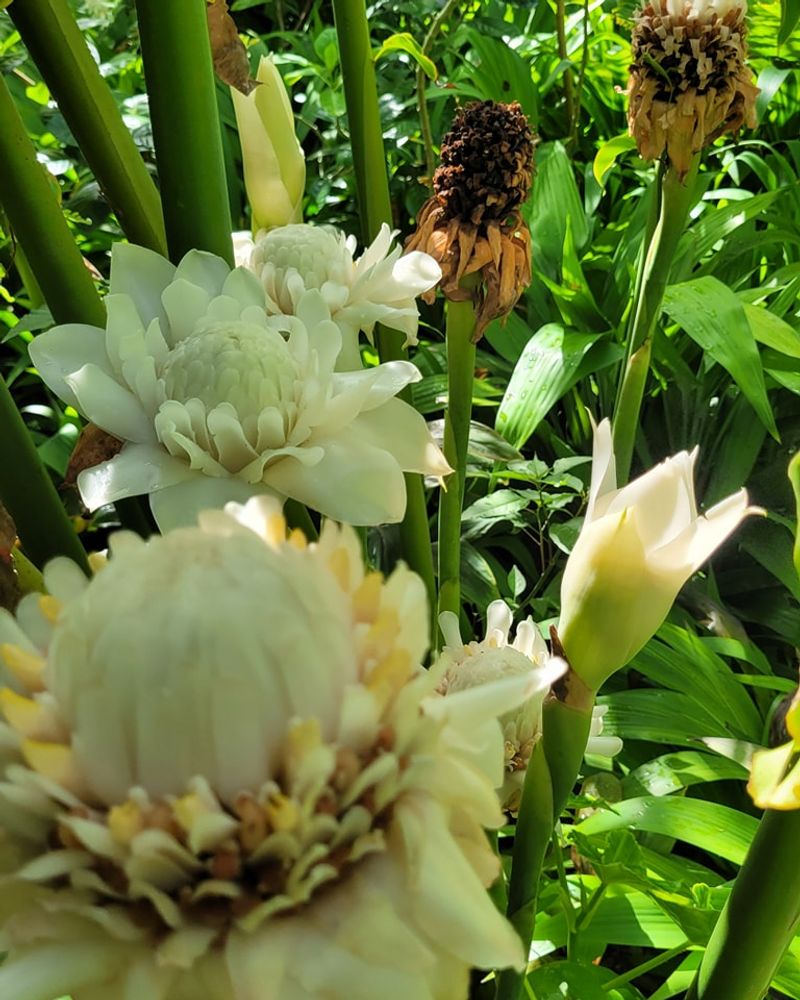
Torch Ginger looks like a glowing alien cone rising from the jungle floor, and it is one of the most dramatic flowers you can grow in Florida.
The massive bloom consists of waxy, overlapping bracts that form a cone shape, and it can reach the size of a softball or larger.
Colors range from bright red to pink, orange, or even white, depending on the variety.
The flower sits atop a tall stalk that emerges directly from the ground, separate from the leafy stems.
This plant is native to Southeast Asia and thrives in Florida’s warm, humid conditions.
It prefers partial shade and rich, moist soil with plenty of organic matter.
Torch Ginger can grow quite tall, sometimes reaching ten feet or more, so make sure you have enough space.
The flowers are not just beautiful—they are also edible and used in Southeast Asian cooking, especially in soups and salads.
Blooms appear throughout the warm months, and each flower lasts for several weeks.
The plant spreads through underground rhizomes, so it can form large clumps over time.
If you want a tropical look that feels truly exotic, Torch Ginger delivers in a big way.
Blue Pea Flower (Clitoria Ternatea)
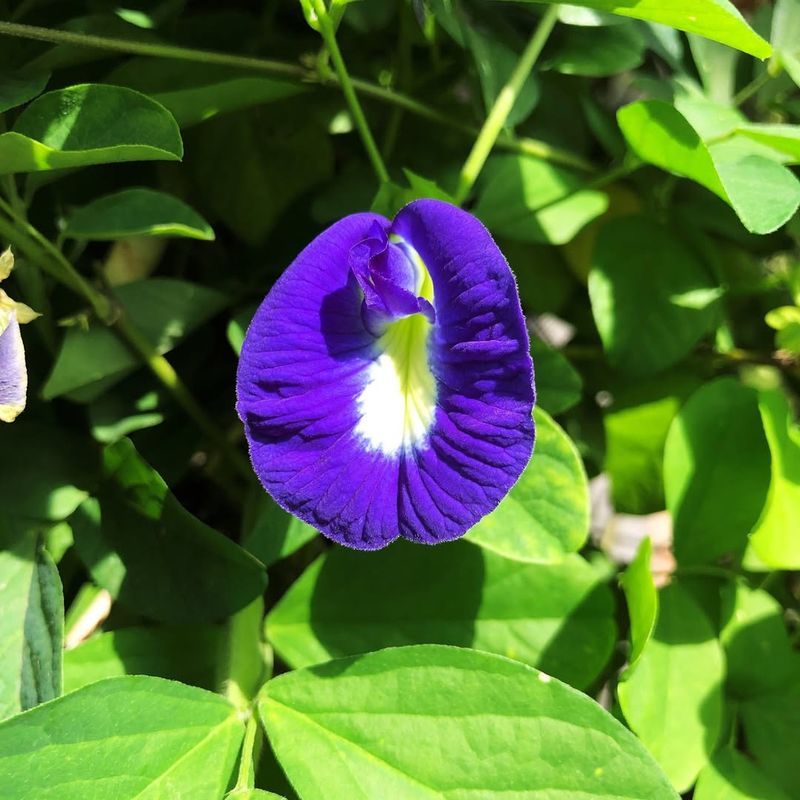
Blue Pea Flower produces blooms in a shade of blue so intense that it almost does not look real.
This electric blue color is rare in the plant world, making the flower stand out in any garden setting.
Each bloom is shaped like a classic pea flower with delicate petals that seem to glow in the sunlight.
The plant is a fast-growing vine that can cover fences, trellises, or arbors in a short time.
It thrives in full sun and well-drained soil, and it is surprisingly drought-tolerant once established.
Beyond its beauty, Blue Pea Flower has been used for centuries in traditional medicine and as a natural food coloring.
The flowers can be steeped in hot water to make a bright blue tea that changes color when you add lemon juice.
Butterflies and bees love the blooms, so planting this vine helps support local pollinators.
The plant blooms almost year-round in Florida, providing continuous color and interest.
It also produces seed pods that look like tiny green beans, which you can collect and plant to grow more vines.
If you want a pop of unusual color in your garden, this flower delivers in a way that few others can match.
Crown Of Thorns (Euphorbia Milii)
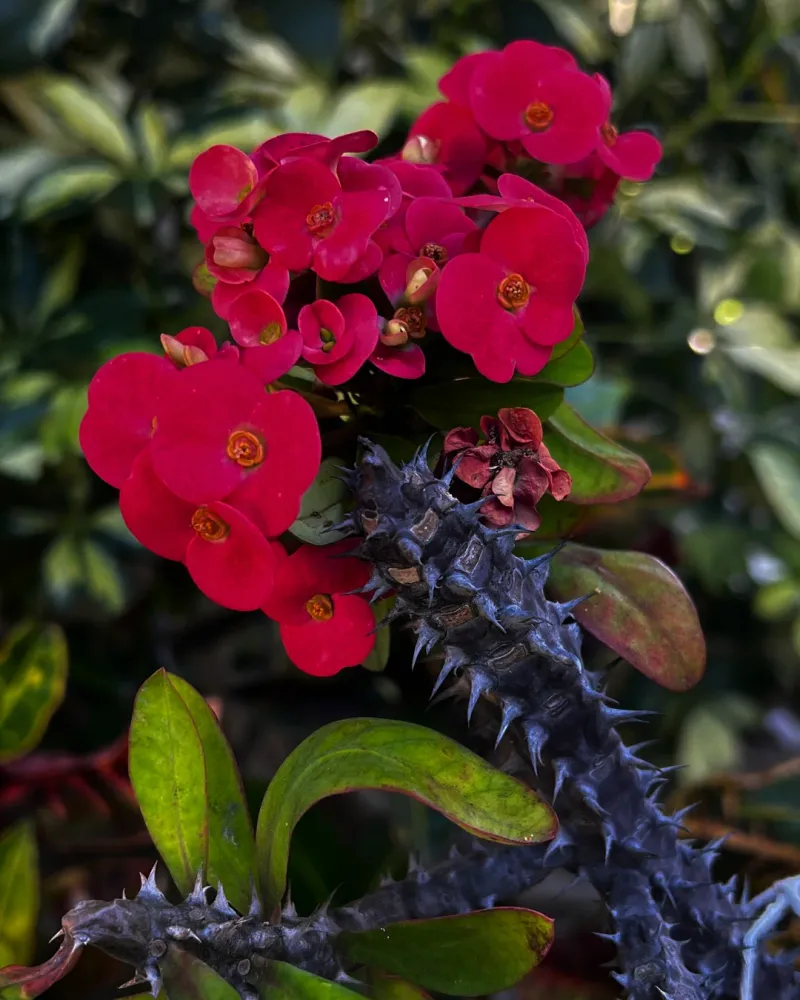
Crown of Thorns is a plant that perfectly balances beauty and danger, creating a strange and fascinating combination.
The stems are covered in sharp thorns that make handling the plant a challenge, yet the blooms are bright and cheerful.
Flowers come in shades of red, pink, yellow, white, and orange, and they cluster at the tips of the branches.
What looks like petals are actually colorful bracts that surround tiny, inconspicuous flowers.
This plant is native to Madagascar but has adapted beautifully to Florida’s climate.
It loves full sun and thrives in hot, dry conditions, making it perfect for low-maintenance gardens.
Crown of Thorns is incredibly drought-tolerant and can survive on very little water once established.
The plant blooms almost continuously throughout the year, providing reliable color even during the hottest months.
Because of its thorns, it is often used as a barrier plant or in areas where you want to discourage foot traffic.
The sap is toxic and can irritate skin, so always wear gloves when pruning or handling the plant.
Despite these precautions, Crown of Thorns is a rewarding plant that adds a unique touch to any garden with its contrasting elements of danger and beauty.
Anthurium
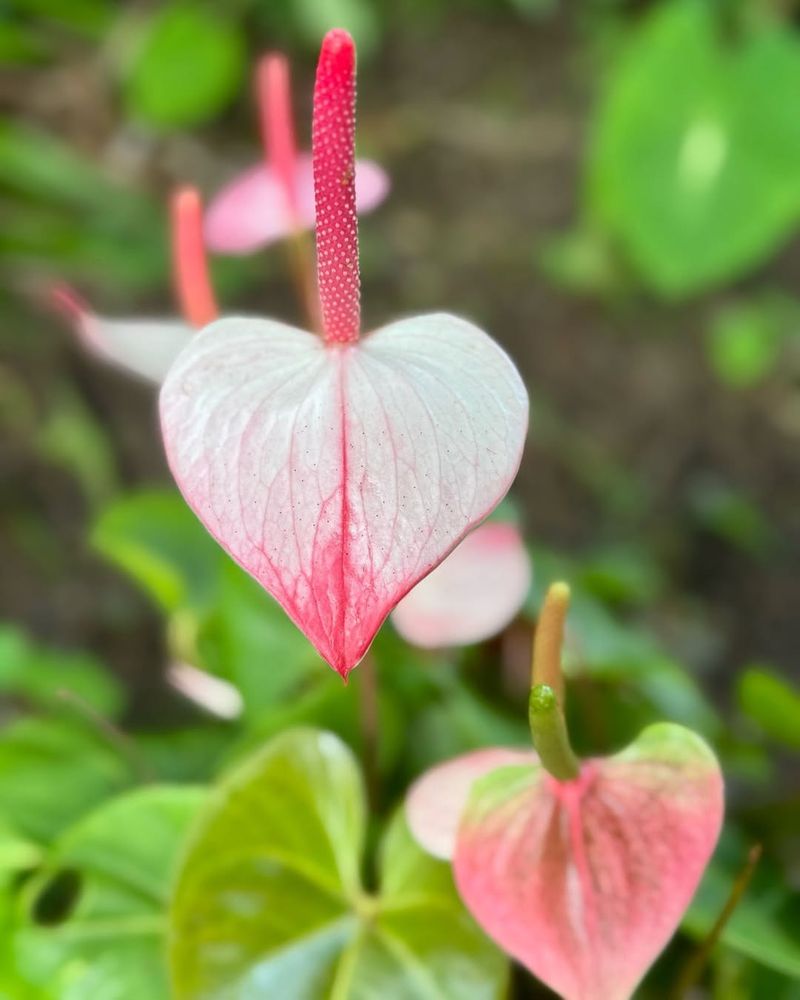
Anthurium flowers look so shiny and perfect that people often reach out to touch them, convinced they must be made of plastic or wax.
The glossy, heart-shaped spathe comes in red, pink, white, orange, or even purple, and it surrounds a central spike called a spadix.
This structure is not actually the flower—the tiny true flowers grow along the spadix, but the colorful spathe steals the show.
Anthuriums are native to tropical rainforests in Central and South America, and they thrive in Florida’s humid environment.
They prefer bright indirect light and rich, well-draining soil that stays consistently moist but never soggy.
These plants are often grown as houseplants, but they also do well in shaded outdoor gardens or under tree canopies.
Each bloom can last for several weeks, and the plant produces new flowers throughout the year.
The leaves are also attractive, with a glossy finish and deep green color that adds to the plant’s overall appeal.
Anthuriums are popular in floral arrangements because the blooms last a long time even after cutting.
They also make excellent gifts because their exotic appearance feels special and luxurious.
If you want a plant that looks too good to be true, Anthurium is the perfect choice for your Florida garden.
Spider Lily (Hymenocallis Latifolia)
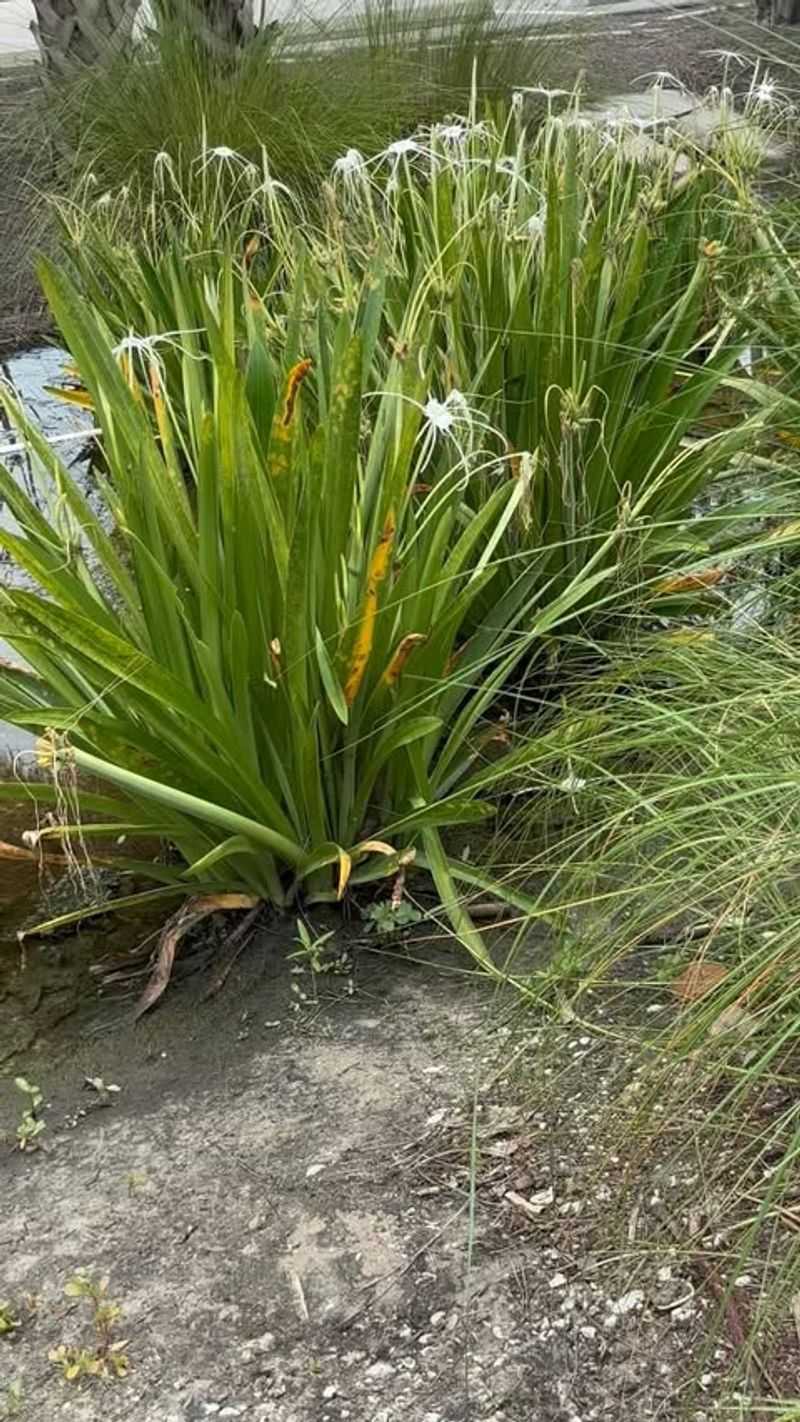
Spider Lily looks like a glowing white sea creature that somehow ended up blooming in your garden.
The long, curling petals radiate out from the center like tentacles, creating a delicate and ethereal appearance.
Each bloom sits atop a tall, sturdy stalk that rises above strap-like green leaves.
The flowers are most fragrant in the evening, releasing a sweet scent that attracts moths and other nighttime pollinators.
Spider Lilies are native to wetlands and marshy areas, so they thrive in Florida’s humid climate and tolerate wet soil conditions.
They are perfect for planting near ponds, streams, or in low-lying areas where other plants might struggle.
The bulbs naturalize easily, forming large clumps over time and producing more blooms each year.
Blooms typically appear in late spring or summer, and each flower lasts about a week.
The plant prefers full sun to partial shade and does not require much maintenance once established.
Spider Lilies also look stunning when planted in groups, creating a dramatic display of white flowers that seem to float above the foliage.
Their unusual shape and glowing white color make them a favorite for moon gardens or evening landscapes where their beauty can be appreciated after dark.
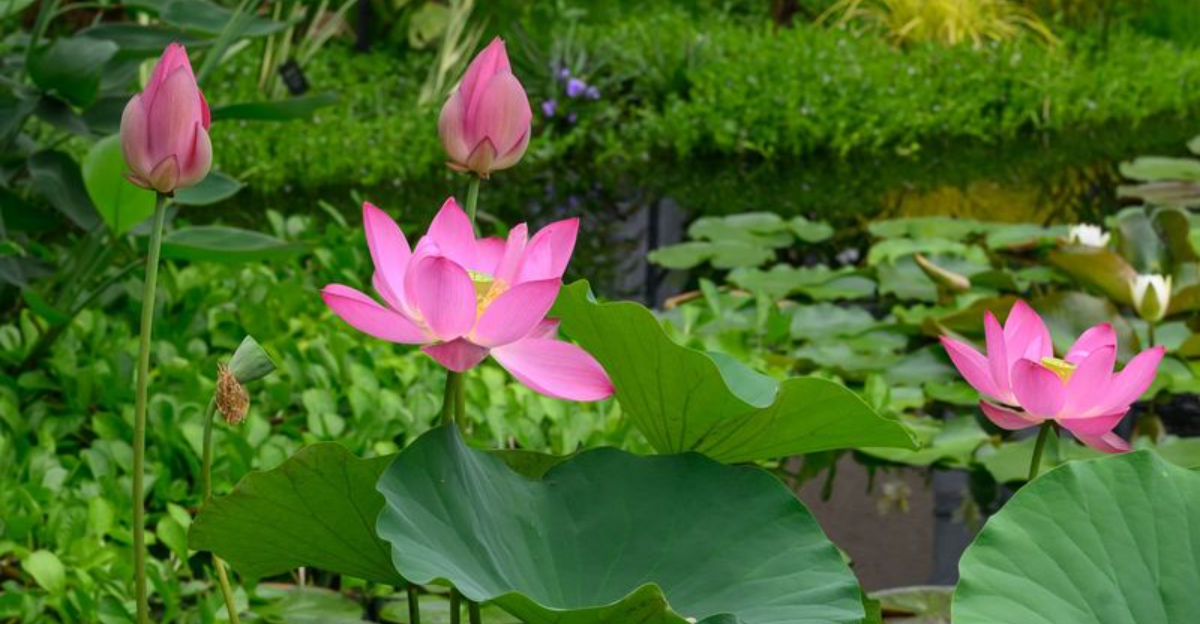
Lotus (Nelumbo Nucifera)
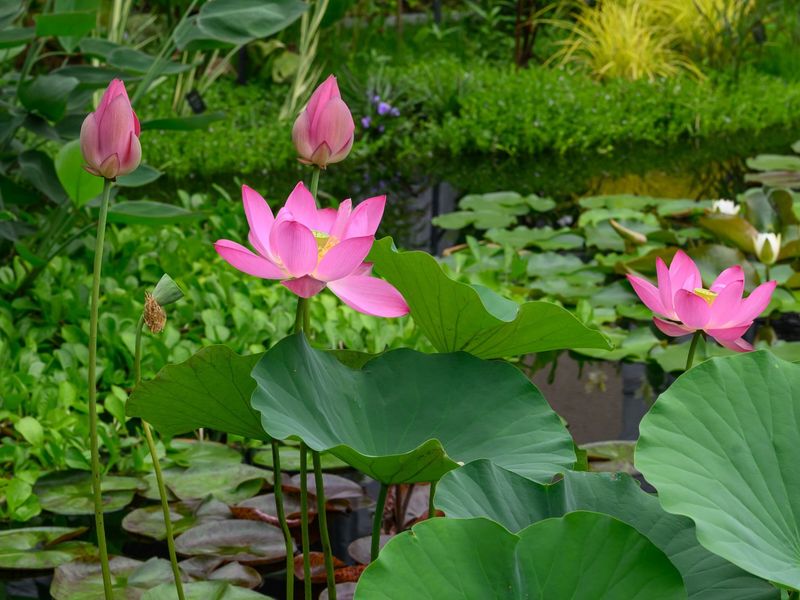
Lotus flowers have been symbols of purity and enlightenment for thousands of years, and their otherworldly appearance explains why.
The large blooms rise above the water on tall stalks, and their many layers of petals unfold in perfect symmetry.
Colors range from pure white to pink, yellow, or even deep rose, and each flower can measure up to a foot across.
After the petals drop, the seed pod remains, looking like a strange alien showerhead dotted with holes.
Lotus plants grow from rhizomes planted in mud at the bottom of ponds or water gardens.
They thrive in Florida’s warm climate and need full sun to produce their spectacular blooms.
The large, round leaves, called pads, float on the water surface or rise above it, creating a lush tropical look.
Lotus leaves have a special coating that makes water bead up and roll off, carrying dirt with it—a phenomenon called the lotus effect.
Blooms appear in summer and last only a few days, but the plant produces multiple flowers throughout the season.
Every part of the lotus is edible and has been used in Asian cuisine and traditional medicine for centuries.
Growing lotus in your garden brings a sense of ancient wisdom and natural beauty that few other plants can match.
Heliconia

Heliconia bracts look more like the claws of a tropical creature than any flower you have ever seen.
These bright, waxy structures come in combinations of red, yellow, orange, pink, and green, arranged in zigzag patterns along upright or hanging stems.
The true flowers are small and hidden inside the bracts, but the colorful bracts do all the work of attracting pollinators.
Hummingbirds are especially fond of Heliconias and can often be seen darting around the blooms.
These plants are native to Central and South America and thrive in Florida’s tropical and subtropical regions.
They prefer partial shade and rich, moist soil with plenty of organic matter.
Heliconias grow from underground rhizomes and can spread to form large clumps that produce multiple flower stalks.
The plants have large, banana-like leaves that add a bold tropical texture even when not in bloom.
Blooms can last several weeks and make excellent cut flowers for dramatic arrangements.
There are hundreds of Heliconia species and varieties, each with its own unique color combination and shape.
Whether you choose upright or hanging varieties, these plants bring a wild, jungle-like energy to any Florida garden.
Their bizarre appearance and vibrant colors make them a must-have for anyone who wants a garden that feels truly exotic.