Why Ocotillo Is Blooming Early In West Texas This Year
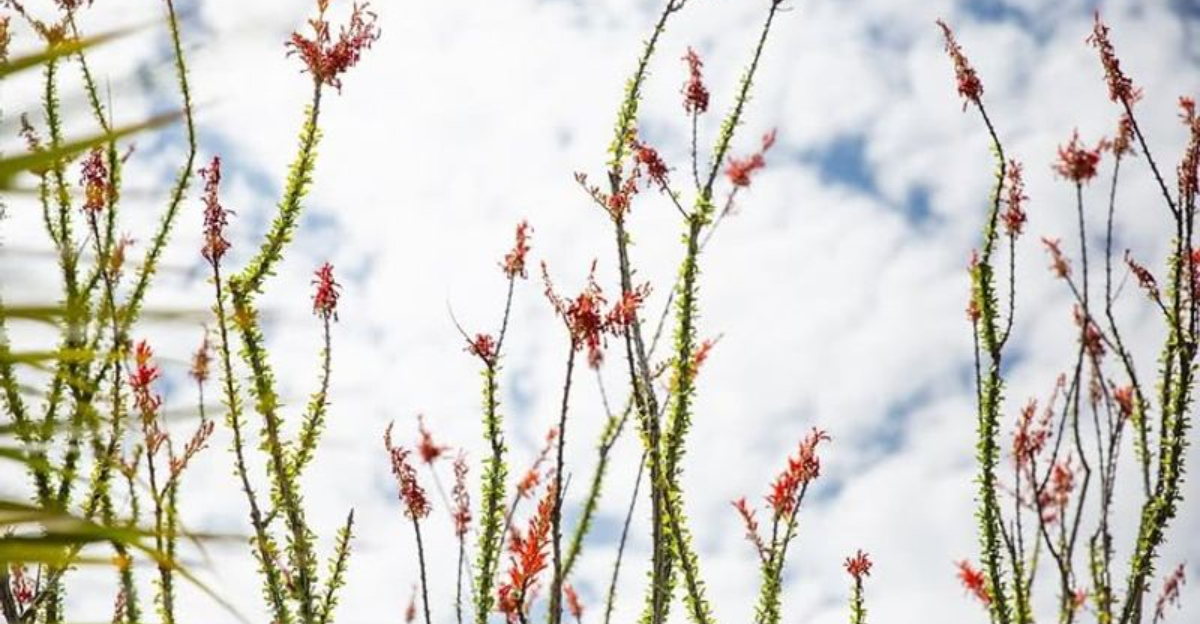
In West Texas, when ocotillo blooms, people take notice.
This year, it’s blooming early—and that has locals and experts alike raising an eyebrow.
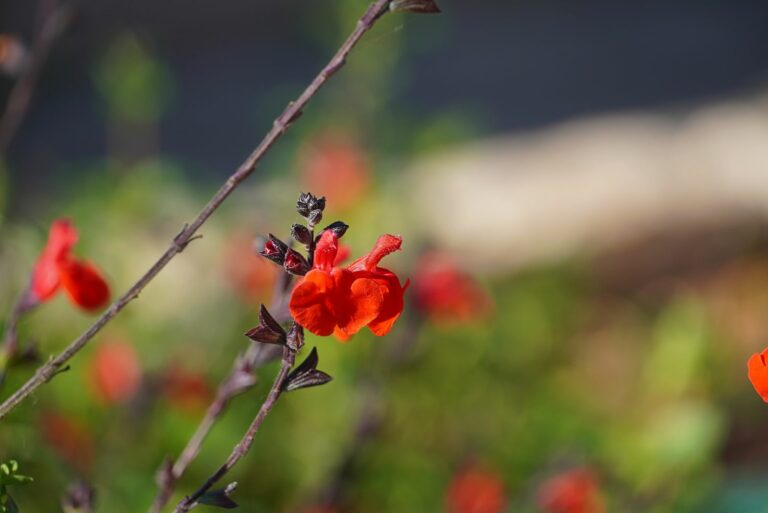
Known for its fiery red flowers and dramatic silhouette, ocotillo usually waits for specific cues.
So why the rush? Shifts in rainfall patterns and temperature are likely playing a role, nudging the plant into action ahead of schedule.
Ocotillo is nothing if not responsive, greening up and blooming when conditions say “go,” even if the calendar disagrees.
For West Texans, the early blooms are both beautiful and bittersweet.
They’re a reminder of nature’s resilience, but also of how sensitive desert ecosystems are to change.
As ocotillo lights up the landscape sooner than expected, it offers a striking lesson: the land is paying attention—and adapting—whether we are ready or not.
Warmer-Than-Normal Winter Temperatures
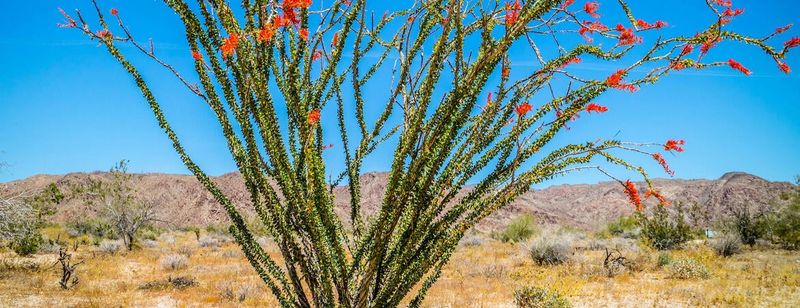
Above-average winter temperatures have been reshaping how desert plants respond to seasonal cues across West Texas.
Ocotillo plants rely on cold dormancy signals to regulate their growth cycles, but when winters stay unusually mild, these signals get disrupted.
The warmer conditions trick the plants into thinking spring has arrived earlier than usual.
Without extended cold periods, ocotillo stems begin producing leaves and flower buds much sooner than their traditional timeline.
This year, meteorological data from the region shows temperatures consistently running five to ten degrees above historical averages throughout December and January.
Such warmth allows the plants to break dormancy prematurely and channel energy into reproduction.
Desert gardeners have noticed this pattern intensifying over recent years as climate patterns shift.
The early leafing that follows warm winters creates perfect conditions for bloom development.
When ocotillo plants sense favorable temperatures, their internal clocks accelerate, leading to those stunning red flower clusters appearing weeks ahead of the typical March-April window.
Understanding this temperature relationship helps explain why your neighborhood ocotillo might be blooming while you’re still expecting winter weather.
Early And Repeated Rainfall Events
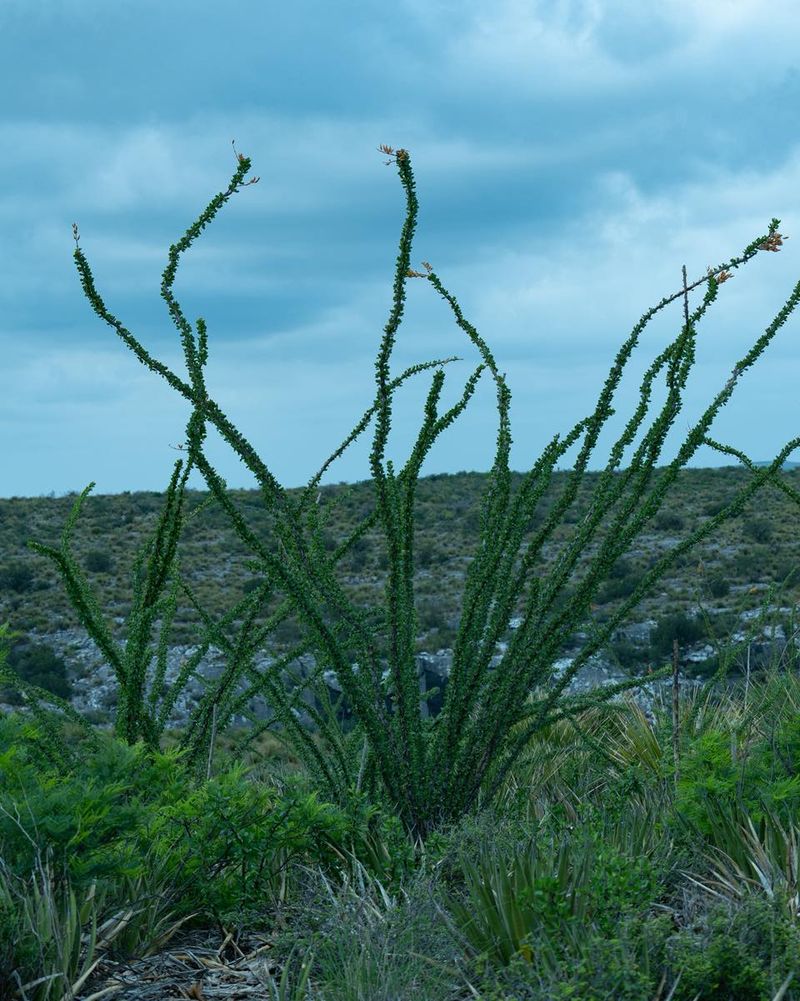
Ocotillo plants are famous for their rapid response to moisture, earning them a reputation as rain-activated wonders of the desert.
Within just 24 to 48 hours after a good soaking, bare ocotillo stems can sprout thousands of tiny green leaves.
This year, West Texas experienced several unexpected rainfall events during late winter, providing the moisture trigger these plants need.
Each rain episode sends a powerful signal to the ocotillo’s root system that conditions are favorable for growth and reproduction.
When multiple rain events occur close together, the plants maintain their leafy state longer and invest energy into flower production.
The combination of early moisture and warm temperatures creates an ideal scenario for premature blooming cycles.
Rainfall timing matters tremendously for desert plant phenology, and this season’s precipitation arrived earlier than normal.
Gardeners who track rainfall patterns have noticed how quickly their ocotillo responded to February storms.
The repeated moisture kept soil conditions favorable, allowing plants to sustain the energy demands of both foliage and flower development.
This moisture availability, arriving weeks ahead of typical spring rains, explains much of the early blooming phenomenon across the region.
Your Texas Garden Changes Every Week. Your Plan Should Too.
Gardening in Texas changes quickly throughout the season. Every Friday you’ll receive a simple weekly plan showing exactly what to plant, prune, fertilize, harvest, and protect so you never miss the right timing.
Extended Fall Moisture Carryover
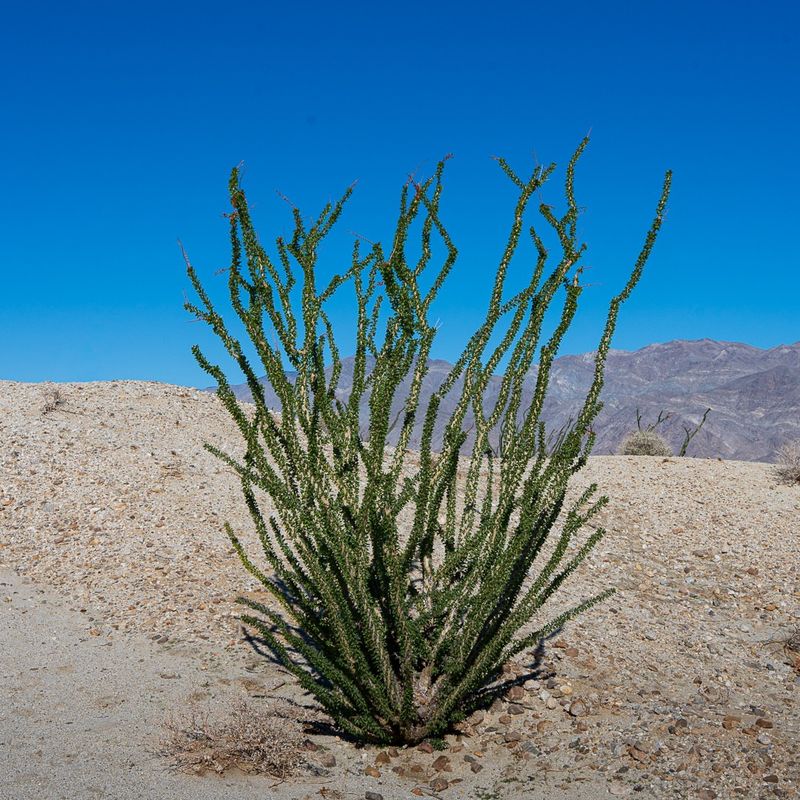
Last fall brought unusually generous rainfall across much of West Texas, soaking deep into the desert soil.
This moisture didn’t just evaporate or run off—it penetrated down to where ocotillo root systems could store it for months.
Desert plants have evolved remarkable strategies for banking water resources during favorable periods.
When fall rains are abundant, ocotillo roots absorb and retain moisture that continues supporting plant functions well into winter and early spring.
This carryover effect means plants enter the new year already hydrated and primed for growth.
Instead of waiting for spring moisture to initiate bloom development, well-hydrated ocotillo can begin the process much earlier.
Soil moisture sensors in the region have confirmed that subsurface water levels remained higher than average throughout the winter months.
For ocotillo, this represents a significant head start on the growing season.
The stored moisture provides the necessary resources for producing flower buds before typical spring conditions arrive.
Gardeners benefit from understanding this carryover principle because it explains why some years produce earlier and more abundant blooms than others, even when spring weather seems similar.
Climate Variability And Weather Swings
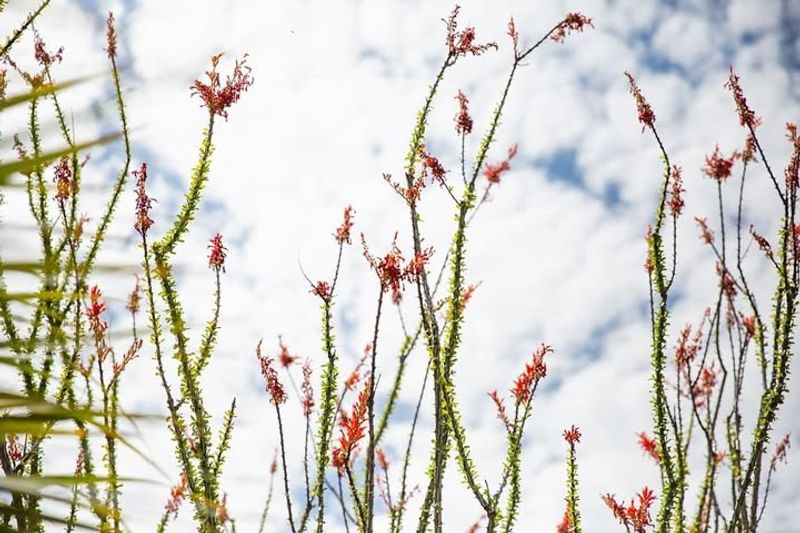
Desert ecosystems are experiencing increasingly unpredictable weather patterns, with rapid swings between warm and cool periods becoming more common.
These fluctuations confuse the internal timing mechanisms that desert plants use to schedule their life cycles.
Ocotillo plants read environmental cues like temperature and day length to determine optimal blooming times.
When weather oscillates dramatically—warm spells followed by brief cool periods, then warming again—plants receive mixed signals about seasonal progression.
This variability can actually accelerate flowering as plants attempt to take advantage of favorable windows whenever they occur.
West Texas has experienced particularly volatile weather this season, with temperature swings of twenty to thirty degrees within single weeks.
Such instability pushes ocotillo toward opportunistic blooming strategies rather than waiting for stable spring conditions.
From an evolutionary perspective, blooming during brief favorable periods makes sense when future conditions are uncertain.
The plants essentially gamble that current conditions are good enough for successful reproduction.
For observers, this means more variable bloom timing across different locations and individual plants, with some flowering much earlier than their neighbors depending on microclimate conditions and specific weather exposure.
Stress-Induced Flowering Response
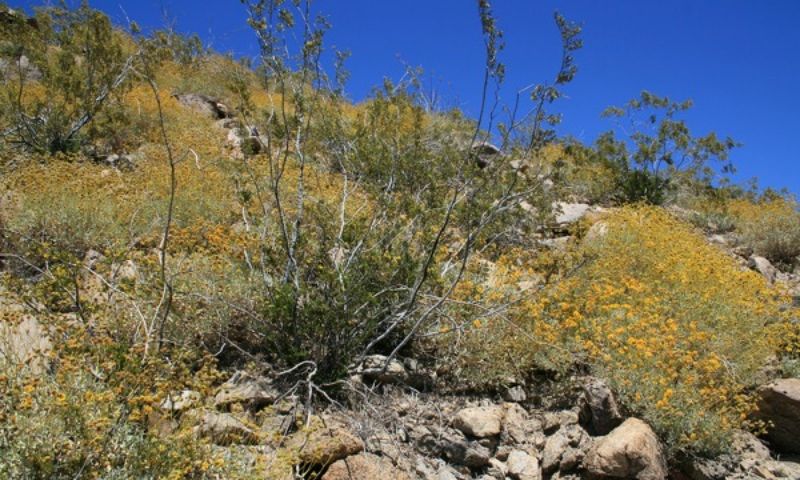
Plants don’t always bloom because conditions are perfect—sometimes they flower precisely because conditions are challenging.
Ocotillo can trigger early blooming as a stress response when environmental signals suggest that survival might become difficult.
This reproductive urgency represents a survival strategy honed over thousands of years in harsh desert environments.
When plants sense unpredictable conditions, they may prioritize reproduction over continued vegetative growth.
The logic is simple: produce seeds now while conditions briefly allow, rather than risk waiting for ideal circumstances that might never arrive.
This year’s weather unpredictability—warm periods mixed with dry spells and variable moisture—creates exactly the kind of stress that can trigger this response.
Botanists have documented this phenomenon across many desert species, where environmental uncertainty accelerates reproductive timing.
For ocotillo specifically, stress-induced flowering often produces blooms with fewer accompanying leaves, as the plant channels limited resources directly into reproduction.
Gardeners might notice that early-blooming ocotillo this year show spectacular flowers but relatively sparse foliage compared to typical spring displays.
This stress response isn’t harmful to the plants—it’s actually a sophisticated adaptation that helps ensure species survival through unpredictable desert conditions.
Mature Plant Age And Energy Reserves
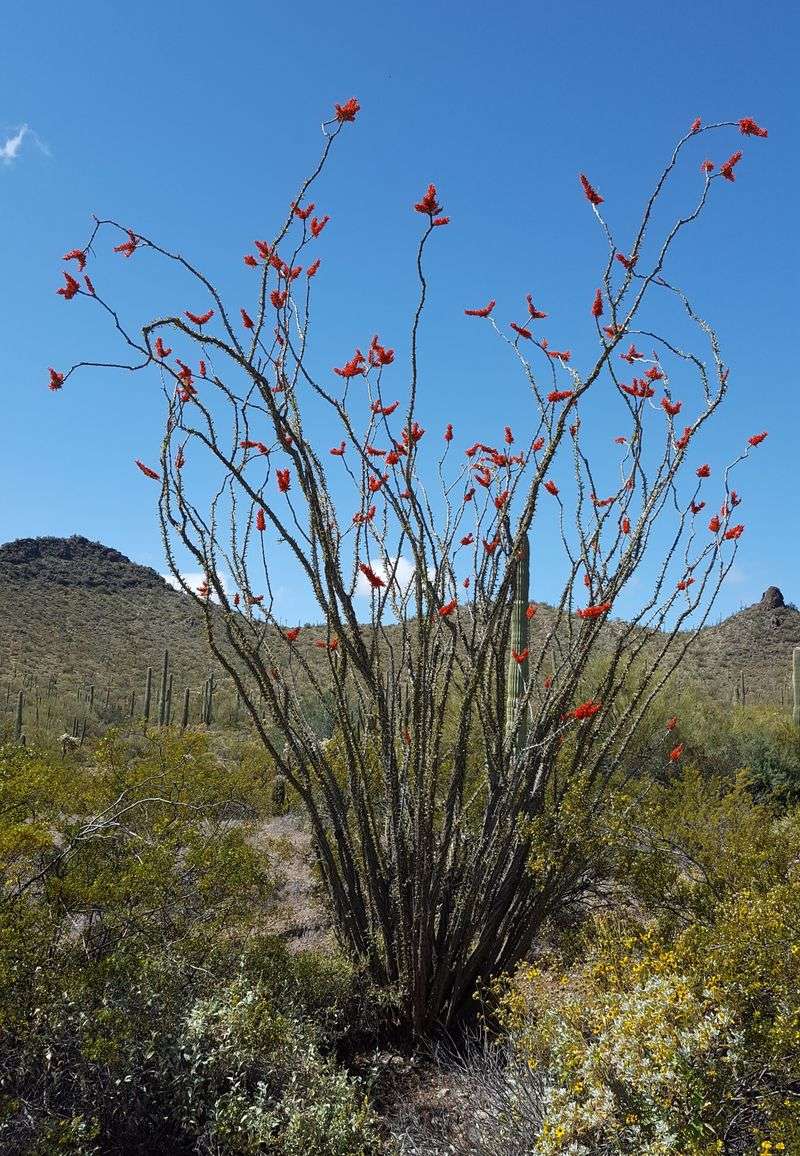
Older ocotillo plants possess advantages that younger specimens simply can’t match when it comes to early blooming potential.
Mature plants have developed extensive root systems that spread widely through the desert soil, accessing moisture and nutrients across a much larger area.
These established root networks can store significant energy reserves in the form of carbohydrates and stored water.
When favorable conditions arrive, mature ocotillo can tap into these reserves immediately, responding faster than younger plants still building their infrastructure.
A well-established ocotillo might have roots extending ten to fifteen feet from its base, creating a substantial resource-gathering network.
This capacity means mature specimens can afford to bloom earlier because they’re not gambling with limited resources.
They have the stored energy to support both flowering and continued growth if conditions remain favorable.
Gardeners often notice that the largest, oldest ocotillo in their area bloom first and most abundantly during early seasons.
These plants have weathered many years of desert conditions and developed the resilience to respond opportunistically to favorable windows.
Their size and age represent accumulated survival wisdom, allowing them to take calculated risks that younger plants must avoid.
Reduced Frost Damage Risk In Certain Microclimates
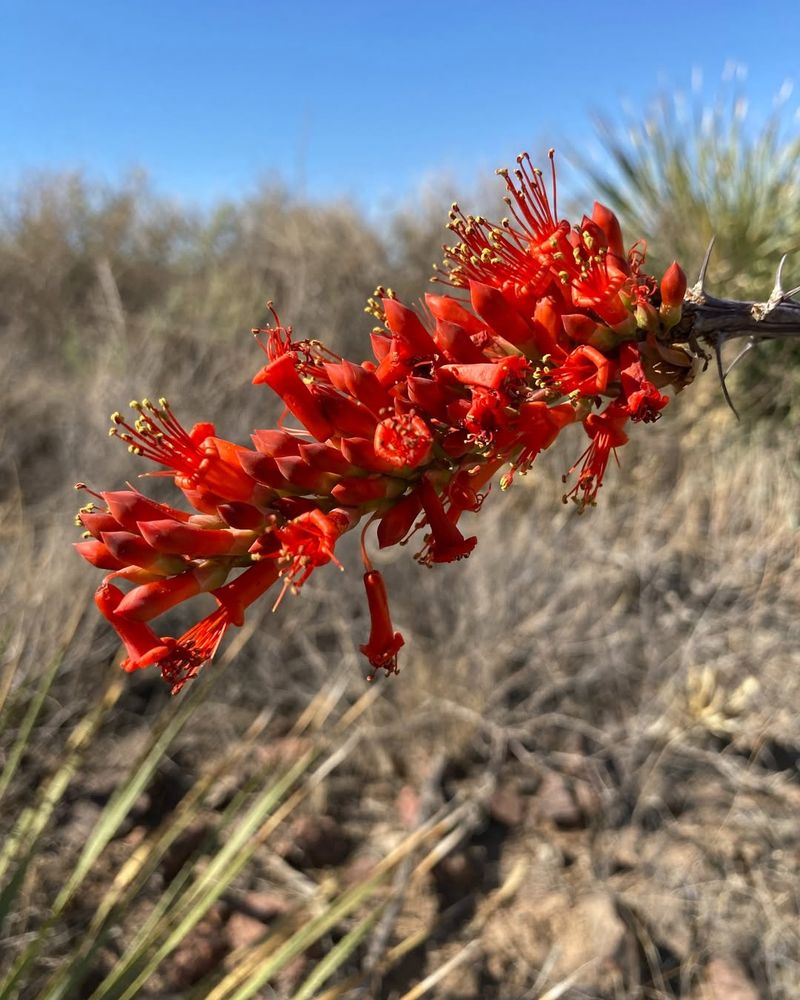
Not all desert locations experience weather the same way, even within the same general region of West Texas.
Microclimates—small-scale variations in temperature, moisture, and sun exposure—create pockets where conditions differ significantly from surrounding areas.
South-facing slopes receive more direct sunlight and stay warmer throughout winter, reducing frost risk considerably.
Rocky soils drain quickly but also absorb and radiate heat during the day, moderating nighttime temperature drops.
Sheltered sites protected by hills, rock formations, or vegetation experience less wind and temperature extremes.
Ocotillo growing in these favorable microclimates face much lower risk of frost damage to emerging buds and flowers.
This protection allows them to bloom earlier without the danger that plants in exposed locations must contend with.
Gardeners familiar with their property’s microclimates can predict which ocotillo will bloom first based on their specific locations.
The warmest, most protected specimens often flower weeks ahead of those in exposed, north-facing, or low-lying frost-prone areas.
Understanding these microclimate effects helps explain why early blooming isn’t uniform across the landscape, with some plants showing color while nearby specimens remain dormant.
Increased Pollinator Activity Earlier In The Season
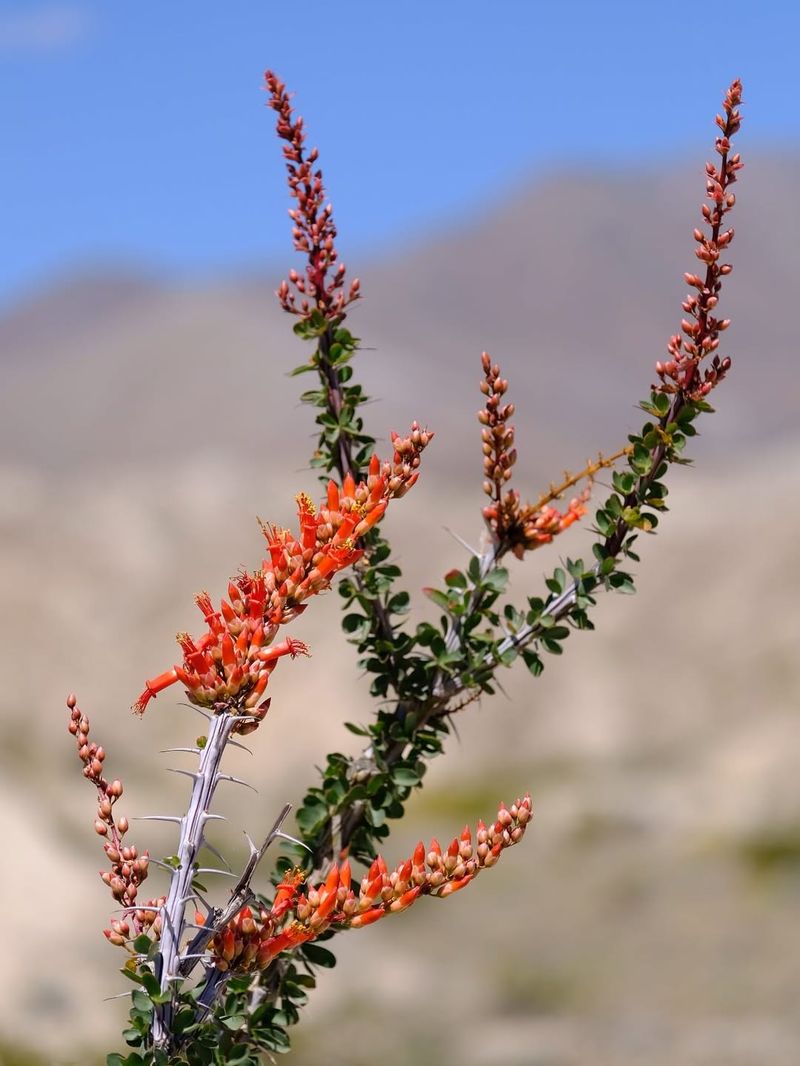
Flowering plants and their pollinators share an intricate relationship built on timing and mutual benefit.
This year, warmer temperatures haven’t just affected ocotillo—they’ve also brought hummingbirds and pollinating insects to West Texas earlier than usual.
When pollinators arrive early and begin seeking nectar sources, plants that bloom ahead of schedule gain a significant reproductive advantage.
Early-blooming ocotillo face less competition for pollinator attention because fewer other plants are flowering yet.
Hummingbirds, in particular, rely heavily on ocotillo’s nectar-rich red flowers during migration periods.
When these birds arrive early and find blooming ocotillo, they provide excellent pollination services, which reinforces the success of early flowering.
This creates a feedback loop where early blooming gets rewarded with effective pollination, potentially influencing timing in subsequent years.
Gardeners who observe pollinator activity can gauge bloom timing by watching for early hummingbird arrivals.
The alignment between early pollinator activity and early ocotillo blooms isn’t coincidental—both respond to similar environmental cues like temperature and moisture.
This synchronization ensures that when ocotillo take the risk of blooming early, pollinators are available to make that reproductive effort worthwhile.