Toxic Trees Florida Homeowners Should Avoid Planting In Their Yards
In Florida, lush landscapes grow fast and fierce—but not every tree that thrives in the Sunshine State is a good idea for your yard.
Some popular or fast-growing trees come with a hidden downside: toxic sap, poisonous fruit, or debris that can be dangerous to people, pets, and wildlife alike.
These trees often look innocent enough, blending seamlessly into tropical gardens and suburban neighborhoods.
But beneath the shade they offer can lurk serious health risks, from skin irritation to toxic exposure if leaves or fruit are ingested.
In a state where outdoor living is year-round, that’s a risk many homeowners don’t realize they’re taking.
Choosing the wrong tree can turn a dream yard into a liability.
Florida homeowners who know what to avoid save themselves from costly removals, medical scares, and constant cleanup.
When it comes to planting trees, beauty isn’t the whole story—safety matters just as much.
And in Florida’s climate, one bad choice can grow into a very big problem.
Manchineel Tree (Hippomane Mancinella)
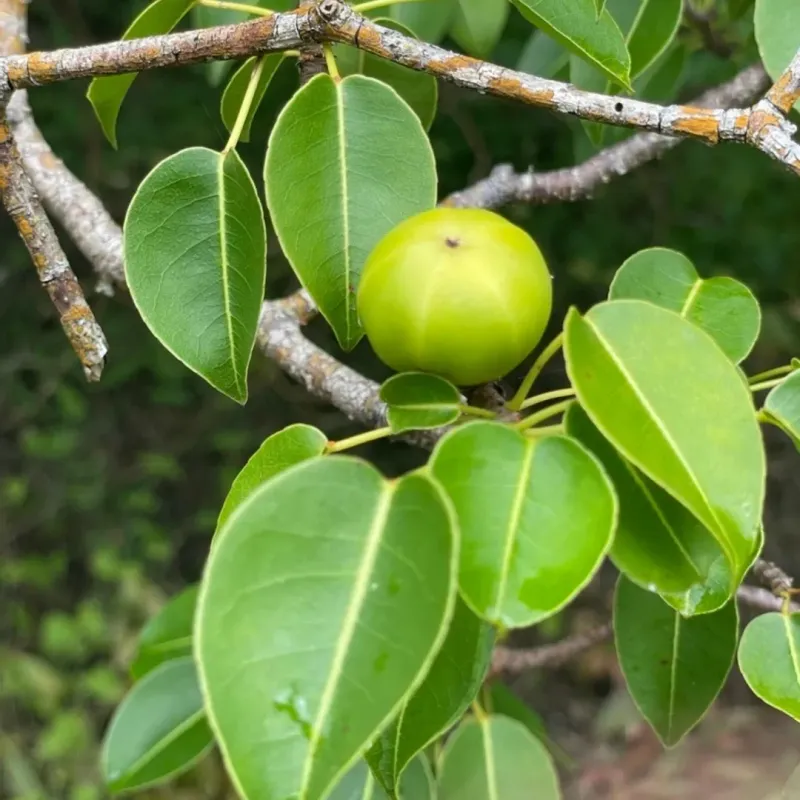
Standing beneath a manchineel during a rainstorm could land you in the emergency room with severe chemical burns.
This notorious species holds the Guinness World Record as the most dangerous tree on Earth, and it grows naturally along South Florida’s coastal areas.
Every single part contains potent toxins that cause blistering skin reactions on contact.
The small green fruits resemble miniature apples and smell sweet, tempting curious children and unsuspecting visitors.
Eating even a tiny bite causes intense burning, severe swelling, and digestive distress that requires immediate medical attention.
The milky sap oozes from any broken branch or leaf, causing painful skin burns and temporary blindness if it reaches the eyes.
Rainwater dripping from the leaves carries enough toxin to blister skin underneath.
Burning manchineel wood releases toxic smoke that irritates eyes and lungs, making disposal extremely hazardous.
Wildlife generally avoids this tree, but domestic animals who encounter it often suffer serious harm.
Coastal communities sometimes mark these trees with warning signs or red paint bands.
Never attempt to remove one yourself—professional handling with full protective equipment is absolutely necessary.
Homeowners should familiarize themselves with this species and keep family members far away from any manchineel encountered in nature.
Oleander (Nerium Oleander)
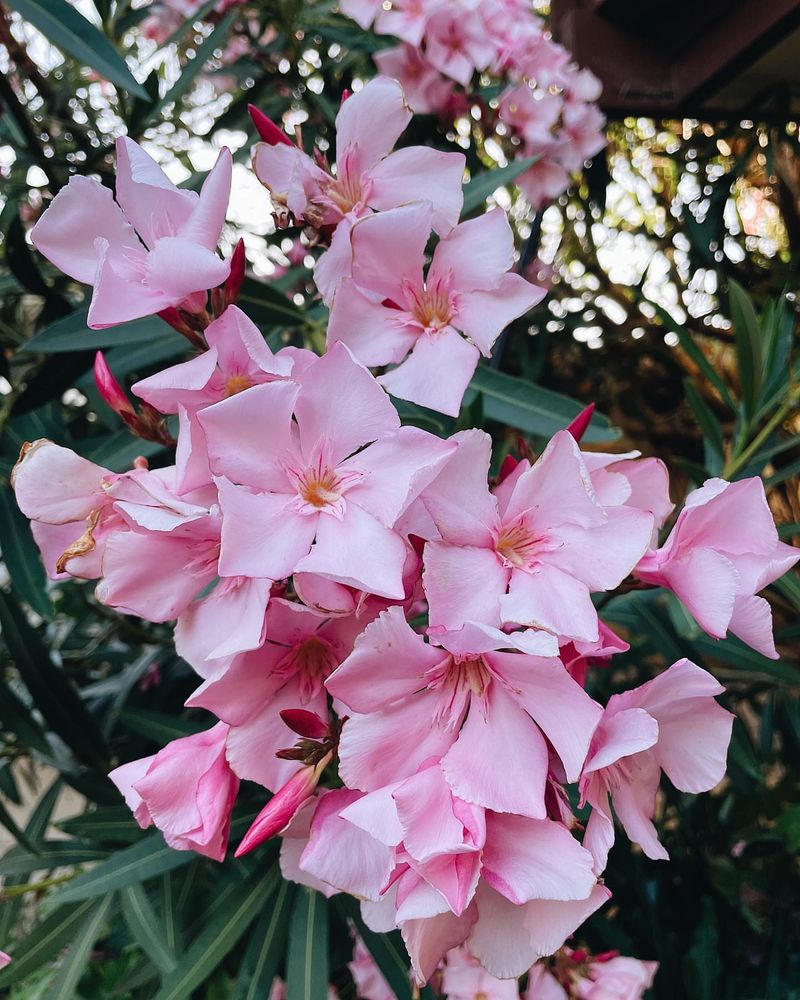
Bright blooms in pink, white, red, and yellow make oleander a landscaping favorite across Florida, yet this beauty conceals extreme danger.
All parts—flowers, leaves, stems, seeds, and roots—contain cardiac glycosides that disrupt heart function in humans and animals.
Just a single leaf contains enough toxin to cause serious harm to a child or small pet.
Oleander poisoning affects the heart rhythm, causing irregular beats, nausea, tremors, and confusion.
Even smoke from burning oleander branches carries toxins that irritate airways and cause systemic reactions.
Some people have experienced reactions from using oleander sticks as skewers for roasting food over campfires.
Despite widespread knowledge of its dangers, oleander remains common along Florida highways and in commercial landscapes.
Its drought tolerance and colorful flowers make it appealing to landscapers who prioritize low maintenance over safety.
Your Florida Garden Changes Every Week. Your Plan Should Too.
Gardening in Florida changes quickly throughout the season. Every Friday you’ll receive a simple weekly plan showing exactly what to plant, prune, fertilize, harvest, and protect so you never miss the right timing.
Homeowners with young children or pets should absolutely avoid planting this species anywhere on their property.
If you inherit a yard with established oleanders, consider removal by professionals who understand proper handling.
Wear gloves when trimming, never burn the clippings, and wash thoroughly after any contact.
Teaching children to never touch or taste any part of this plant is essential if removal isn’t immediately possible.
Better alternatives exist that provide similar color without the risk.
Poisonwood Tree (Metopium Toxiferum)
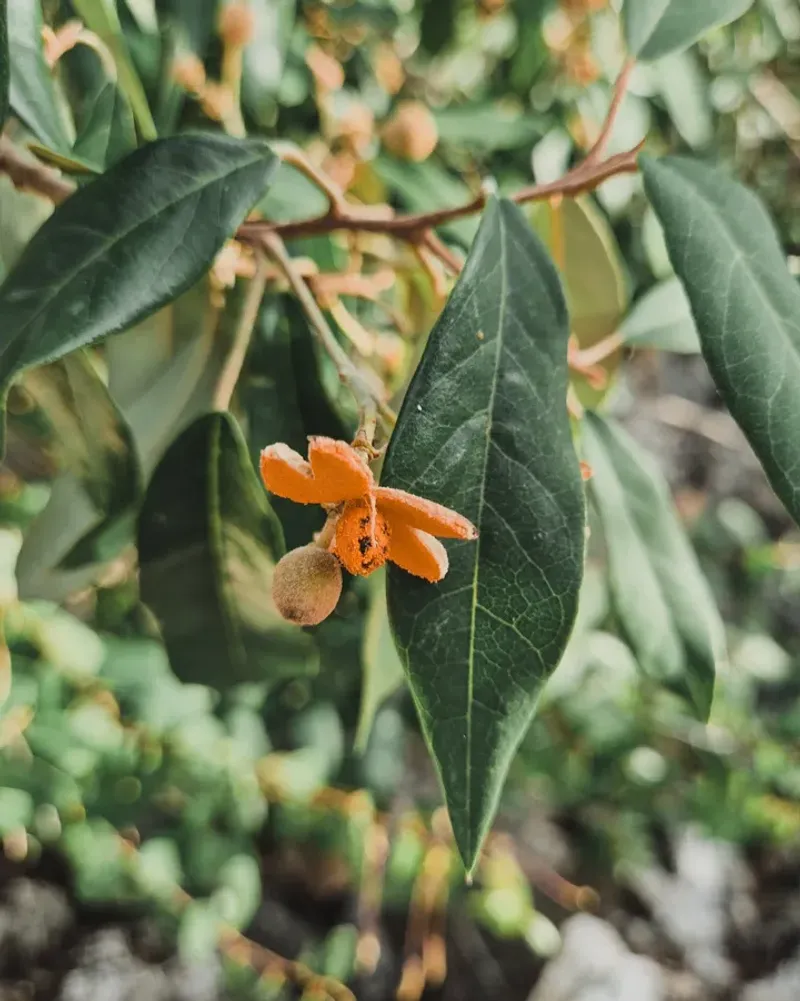
Brushing against poisonwood triggers allergic reactions similar to poison ivy, but often more severe and longer-lasting.
The tree’s sap contains urushiol, the same irritating compound found in poison ivy, causing itchy, painful rashes and blisters.
Native to South Florida’s coastal hammocks and hardwood forests, poisonwood sometimes appears in natural areas adjacent to residential properties.
The tree’s attractive glossy leaves and colorful bark might tempt homeowners seeking native landscaping options.
However, intentionally planting poisonwood near living spaces creates unnecessary risk for family members, visitors, and service workers.
Even slight contact with leaves, bark, or roots can trigger reactions in sensitive individuals.
Smoke from burning poisonwood is particularly hazardous, carrying urushiol particles that irritate lungs and airways.
People who clear brush containing this species without proper identification often suffer extensive skin reactions.
Pets can transfer the sap to their fur, then spread it to family members who pet or handle them.
Identifying poisonwood is crucial for Florida homeowners, especially those with wooded lots.
The bark features distinctive orange and black patches that help distinguish it from similar species.
If you discover poisonwood growing on your property, hire professionals experienced in safe removal.
Never attempt to cut or burn it yourself, and teach children to recognize and avoid this common Florida native.
Yew (Taxus Species)

Yew trees look elegant with their dark green needles and bright red berries, but appearances deceive.
Nearly every part contains taxine alkaloids, potent compounds that affect heart function and can cause sudden collapse.
The fleshy red berry coating is the only non-toxic part, while the seed inside remains highly dangerous.
Children attracted to the colorful berries face serious risk if they bite through to the toxic seed.
Pets who nibble on yew branches or needles can experience rapid onset of symptoms including tremors, difficulty breathing, and cardiac issues.
Even small amounts can overwhelm the body’s systems, making yew one of the most hazardous ornamental plants.
Some Florida gardeners plant yews as foundation plants or hedges, unaware of the serious risks they introduce.
The trees tolerate pruning well and maintain attractive shapes, making them popular in formal landscapes.
However, the danger far outweighs any aesthetic benefit, especially in yards where children or animals play.
Yews don’t naturally thrive in most of Florida’s climate, preferring cooler regions, but some varieties tolerate northern Florida conditions.
Homeowners who inherit properties with established yews should seriously consider removal.
If removal isn’t immediately feasible, fence off the area and educate everyone about the danger.
Numerous safer alternatives provide similar evergreen structure without putting loved ones at risk.
Black Cherry (Prunus Serotina)
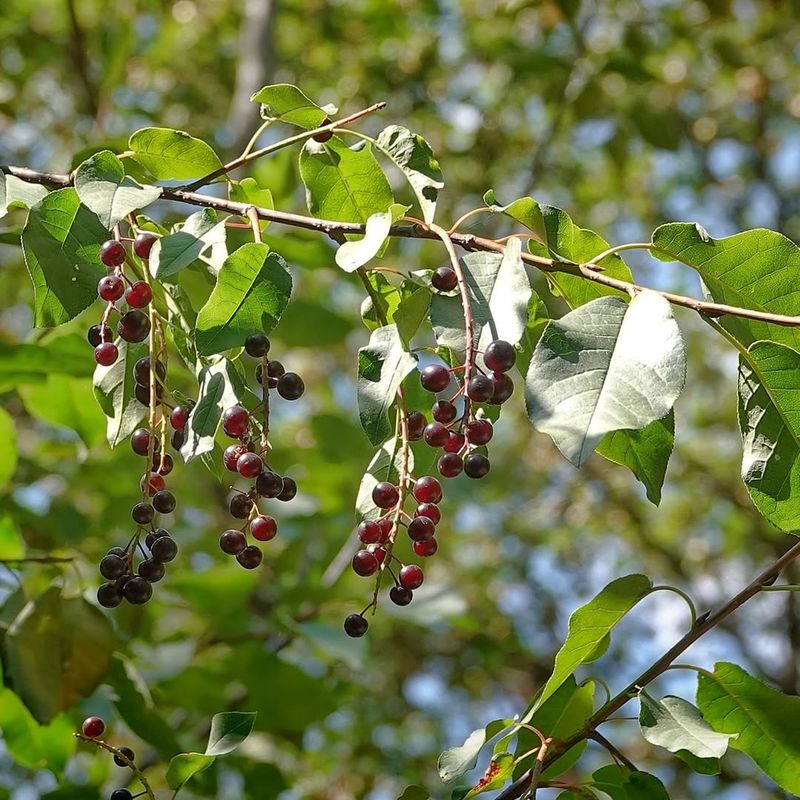
Black cherry trees produce delicious fruit that wildlife loves, but the wilted leaves contain cyanogenic compounds that release toxic cyanide.
Fresh leaves pose minimal risk, but once they wilt from drought, damage, or fall to the ground, they become dangerous.
Livestock and pets who consume wilted cherry leaves can experience rapid poisoning that affects oxygen transport in the blood.
The danger increases after storms when broken branches scatter wilted foliage across yards.
Curious dogs who chew on fallen branches or piles of leaves face serious risk from cyanide poisoning.
Symptoms develop quickly, including excessive drooling, difficulty breathing, bright red gums, and collapse.
Black cherry trees grow naturally in Florida’s northern regions and sometimes appear as volunteers in residential areas.
The trees can reach impressive heights and provide shade, making them seem like attractive landscape additions.
However, the risk to pets and the constant need to monitor for wilted leaves makes them unsuitable for home landscapes.
The bark and seeds also contain cyanogenic compounds, though in lower concentrations than wilted foliage.
Homeowners with existing black cherry trees should rake up fallen leaves promptly and dispose of storm-damaged branches immediately.
Consider removing these trees if you have pets who spend significant time outdoors.
Many safer native trees provide similar benefits without the toxic risk that comes with wilted foliage.
Chinaberry Tree (Melia Azedarach)
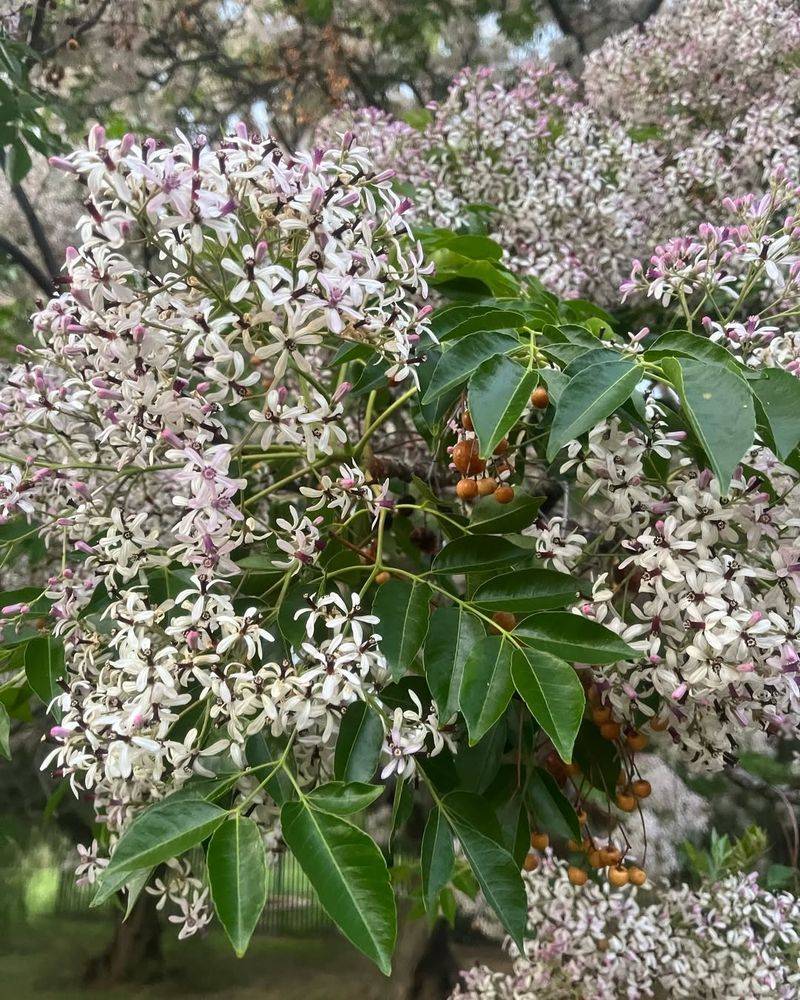
Chinaberry trees spread aggressively through Florida landscapes, producing abundant round yellow berries that contain toxic compounds.
This invasive species crowds out native plants while creating hazards for children and animals attracted to the marble-sized fruits.
The berries contain tetranortriterpenes that affect the nervous system and digestive tract.
Children sometimes collect the hard berries for crafts or play, risking accidental ingestion.
Even a small handful of berries can cause serious symptoms including vomiting, confusion, and seizures.
Birds may eat the berries with apparent immunity, spreading seeds throughout neighborhoods and natural areas.
The tree’s rapid growth and dense shade might appeal to homeowners seeking quick privacy screening.
However, chinaberry’s invasive nature means constant work removing unwanted seedlings that sprout throughout the yard.
Florida’s environmental agencies actively discourage planting this species due to its negative impact on native ecosystems.
All parts of the tree contain some level of toxicity, including leaves, bark, and flowers.
Pets who chew on fallen branches or consume berries face digestive upset and neurological symptoms.
Homeowners should remove existing chinaberry trees and replace them with native species that support local wildlife safely.
Numerous Florida-friendly alternatives provide shade and beauty without invasive tendencies or toxic berries.
Consider native options like live oak or mahogany that enhance property value while protecting family members and the environment.
Castor Bean Tree (Ricinus Communis)
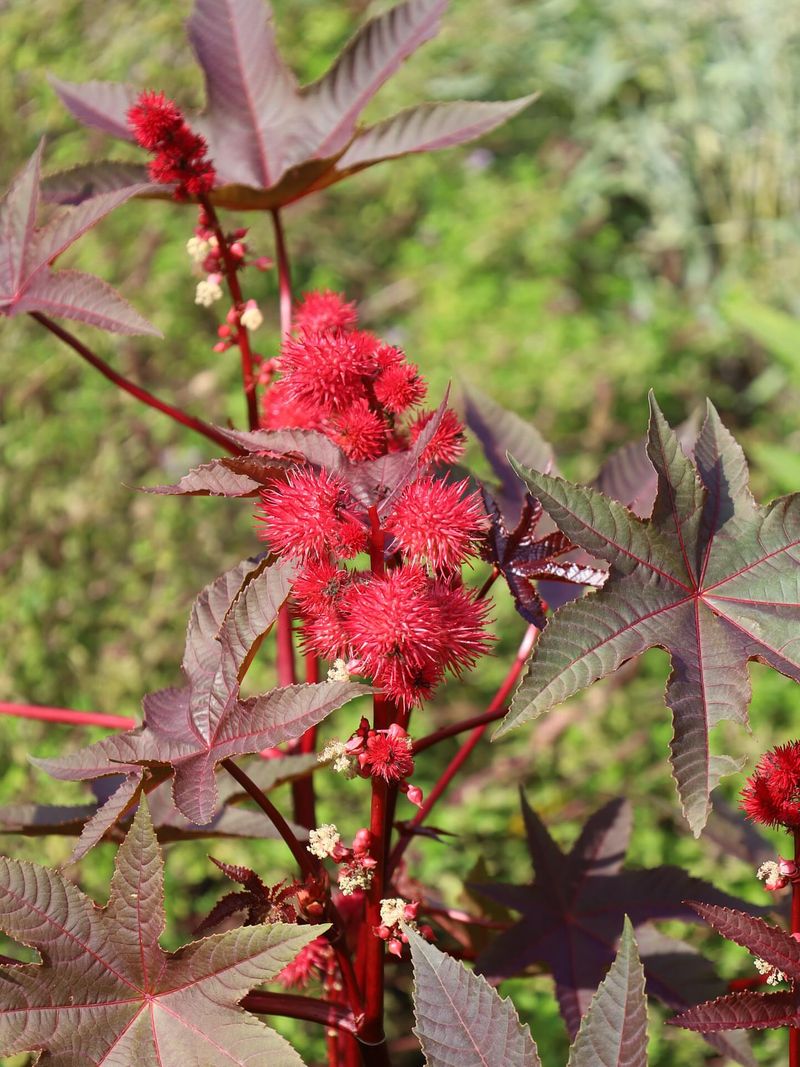
Few plants contain anything as toxic as ricin, the deadly protein concentrated in castor bean seeds.
Just one or two seeds can cause life-threatening poisoning in children, while adults face serious risk from slightly larger amounts.
The plant grows vigorously in Florida’s climate, quickly reaching tree-like proportions with dramatic foliage.
Gardeners sometimes plant castor beans for their large tropical leaves and fast growth as ornamental specimens.
The spiky seed pods look intriguing, and the mottled seeds inside resemble decorative beans.
However, the extreme toxicity makes castor bean completely inappropriate for any residential landscape.
Ricin disrupts protein synthesis at the cellular level, causing severe damage to internal organs.
Symptoms begin with burning sensations in the mouth and throat, followed by intense digestive distress.
No antidote exists for ricin poisoning, making prevention absolutely critical.
Children attracted to the unusual seeds face the greatest risk if they break open pods out of curiosity.
Even handling the seeds can cause skin irritation in sensitive individuals.
Pets rarely consume the seeds due to their bitter taste, but accidental ingestion still occurs.
The plant’s ability to self-seed means one specimen can spread throughout a property.
Homeowners should never plant castor beans intentionally and should remove any volunteers immediately.
Wear gloves during removal and dispose of all plant material carefully to prevent spreading seeds.
Countless safer alternatives provide tropical foliage without harboring one of nature’s most potent toxins.
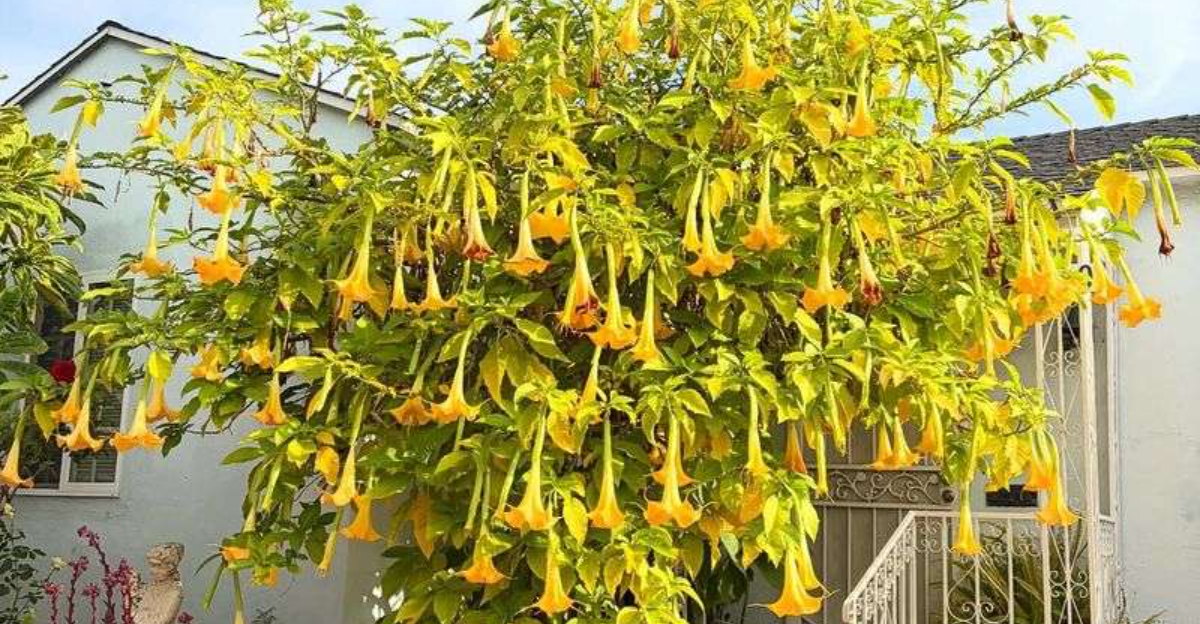
Angel’s Trumpet (Brugmansia Species)
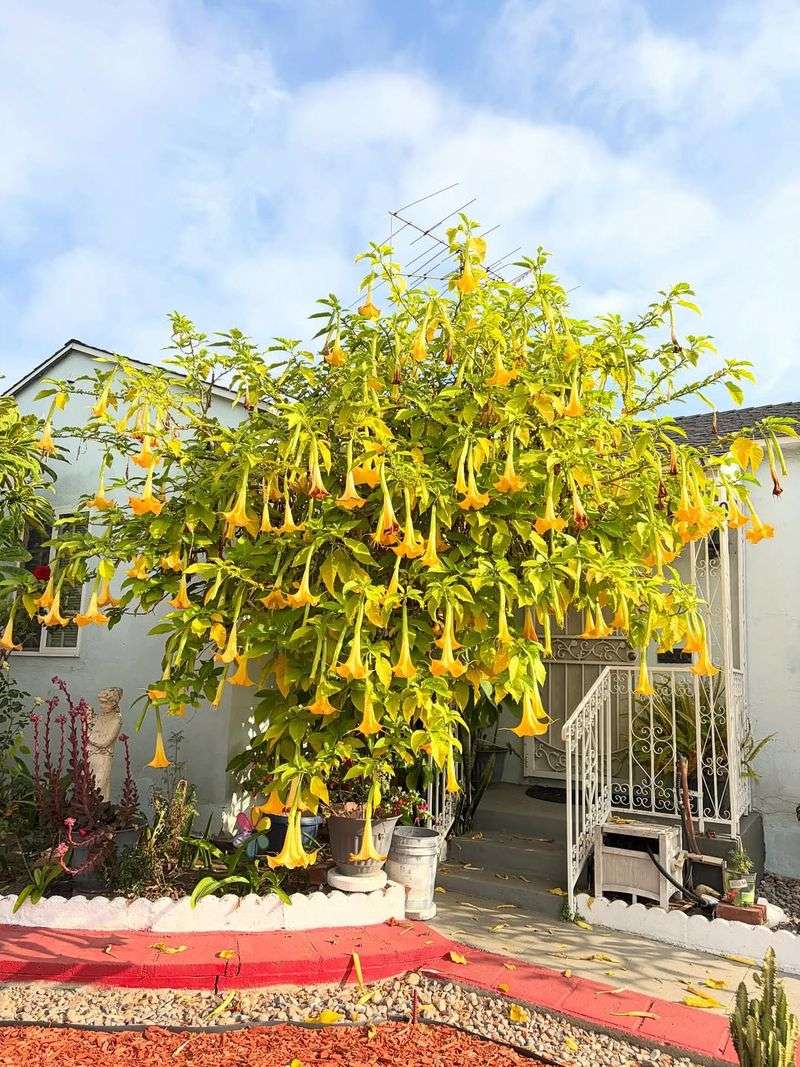
Enormous fragrant flowers dangling like elegant bells make Angel’s Trumpet a showstopper in tropical gardens.
These stunning blooms hide potent alkaloids including scopolamine, hyoscyamine, and atropine that affect the nervous system.
All parts of the plant contain these dangerous compounds, with seeds and leaves holding the highest concentrations.
The flowers’ sweet fragrance intensifies at night, attracting moths while tempting curious children to touch or smell them closely.
Even handling the flowers can cause skin absorption of toxins in sensitive individuals.
Ingesting any part causes hallucinations, confusion, rapid heartbeat, and potentially life-threatening complications.
Some people deliberately misuse Angel’s Trumpet for its hallucinogenic properties, often with tragic consequences.
The line between intoxicating and toxic doses is dangerously narrow, making recreational use extremely hazardous.
Homeowners with teenagers should be especially cautious about growing these plants.
Despite the risks, Angel’s Trumpet remains popular in Florida landscapes for its dramatic tropical appearance.
The tree-like plants bloom prolifically and tolerate various growing conditions.
However, the combination of extreme toxicity and attractive flowers creates an unacceptable risk in family yards.
Pets occasionally chew on the large leaves or fallen flowers, leading to emergency situations.
Symptoms develop rapidly and require immediate veterinary care.
Numerous safer flowering trees and shrubs provide tropical beauty without exposing loved ones to dangerous alkaloids.
Consider alternatives like hibiscus or plumeria that offer similar visual impact safely.
Sago Palm (Cycas Revoluta)

Sago palms rank among the most common landscaping plants in Florida, yet they’re also one of the most dangerous to pets.
Despite the name, these ancient plants are cycads, not true palms, and every part contains cycasin toxins.
The seeds hold the highest toxin concentration, but leaves, roots, and stems all pose serious risks.
Dogs seem particularly attracted to sago palms, often digging up roots or chewing on the fronds.
Even tiny amounts can cause severe liver damage, with many cases resulting in permanent harm or requiring extensive emergency treatment.
Cats occasionally nibble on the plants as well, though less frequently than dogs.
The seeds develop in cone-like structures on female plants, looking somewhat like large nuts.
Curious pets may pick up fallen seeds, and the toxic effects begin within hours.
Early symptoms include drooling, vomiting, and lethargy, progressing rapidly to more serious complications.
Many Florida homeowners remain unaware of sago palm toxicity until a tragic incident occurs.
The plants’ popularity means they appear in countless yards, parks, and commercial landscapes.
Families with pets should remove these plants entirely and choose safer alternatives.
If you must keep an existing sago palm, remove seed cones immediately and monitor pets constantly.
However, even with precautions, the risk remains high because all parts contain toxins.
Numerous pet-safe palms and tropical plants provide similar aesthetic appeal without the danger.
Consider true palms like areca or pygmy date palm that offer comparable beauty safely.
Golden Chain Tree (Laburnum Species)
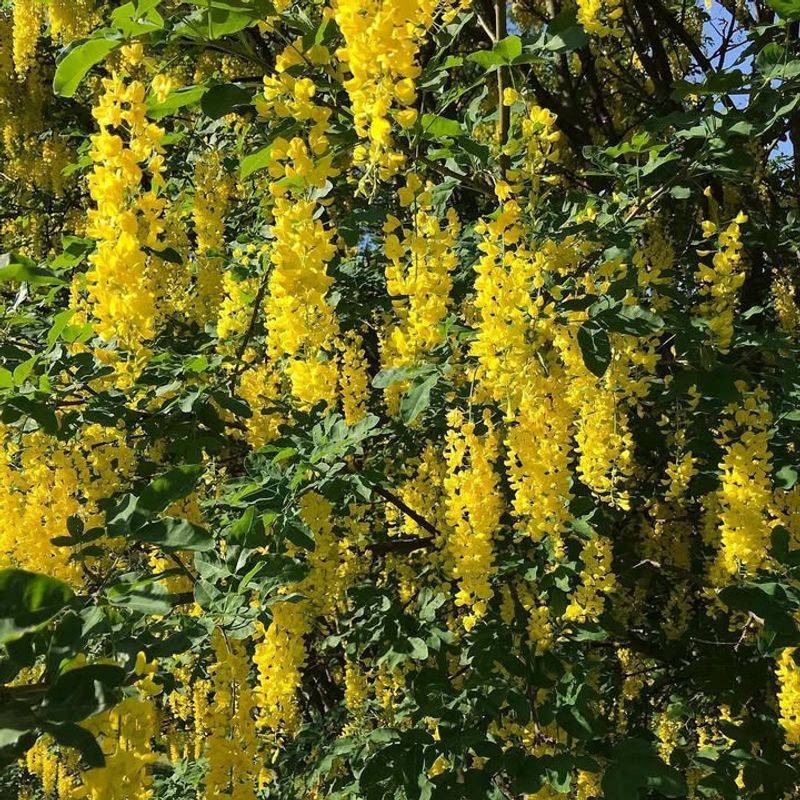
Cascading chains of golden yellow flowers create a spectacular spring display, but golden chain trees harbor serious toxicity.
All parts contain cytisine, an alkaloid that affects the nervous system similarly to nicotine but with more severe consequences.
The seeds and pods pose the greatest danger, with just a small amount causing significant symptoms.
Children attracted to the hanging flower clusters or pea-like pods face risk of accidental ingestion.
The seeds inside the pods look somewhat like small beans, tempting kids who might play with or taste them.
Symptoms begin with burning sensations, nausea, and confusion, potentially progressing to convulsions and respiratory issues.
Golden chain trees prefer cooler climates and don’t naturally thrive in most of Florida.
However, gardeners in northern Florida’s cooler zones sometimes attempt growing them for their spectacular blooms.
The combination of attractive but toxic seeds makes these trees especially hazardous in family-friendly landscapes.
Pets who chew on fallen pods or flowers can experience similar toxic effects as humans.
The bitter taste may deter some animals, but curious puppies or bored pets sometimes consume enough to cause problems.
Livestock face even greater risk if branches fall into pastures or paddocks.
Homeowners seeking dramatic flowering trees should explore safer alternatives native to Florida.
Tabebuia trees produce similar cascades of colorful blooms without toxic seeds.
If you inherit a property with golden chain trees, consider removal before children or pets face unnecessary risk.
The brief period of beautiful blooms doesn’t justify keeping such a hazardous species in active family spaces.