9 Sculptural Plants Landscape Designers Love For Florida’s Warm-Climate Gardens
Florida gardens burst with color and life, but adding structure to all that tropical lushness takes more than just pretty flowers.
Landscape designers rely on sculptural plants—those with bold shapes, strong lines, and dramatic forms—to create gardens that look intentional and polished year-round.
These architectural beauties anchor your landscape, add visual interest even when nothing is blooming, and make your outdoor space feel professionally designed.
From spiky agaves to elegant palms, these nine sculptural plants thrive in Florida’s warm climate and transform ordinary gardens into stunning outdoor rooms.
1. Agave For Bold Architectural Structure
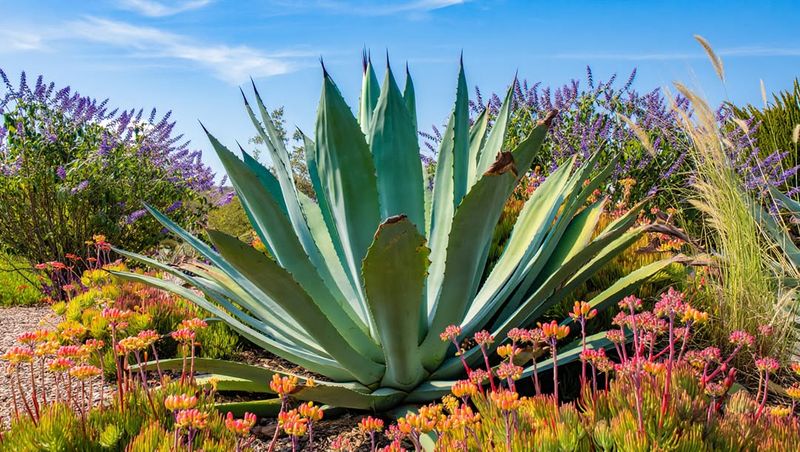
Picture a plant so bold and geometric it could double as modern sculpture—that’s agave in your Florida garden.
These magnificent succulents form perfect rosettes of thick, fleshy leaves that radiate outward like frozen fireworks.
Their architectural presence commands attention whether planted solo as a statement piece or grouped for dramatic impact.
Landscape designers adore agaves because they deliver year-round visual punch without demanding constant attention.
Florida’s heat and occasional drought don’t faze these tough beauties one bit.
Varieties like Agave attenuata (foxtail agave) offer softer, spineless leaves perfect for areas near walkways, while Agave americana brings serious drama with its sharp-tipped, blue-gray foliage.
Place them where their silhouette can shine—beside modern architecture, anchoring rock gardens, or punctuating minimalist landscapes.
Their low water needs make them ideal for xeriscaping, and their strong forms create stunning contrasts when paired with softer, flowing plants.
Most agaves prefer full sun and well-draining soil, thriving in South and Central Florida’s warmth.
Space them generously since mature specimens spread several feet wide.
Designers often position agaves at garden corners or entryways where their bold geometry makes an unforgettable first impression.
2. Croton For Colorful, Upright Impact
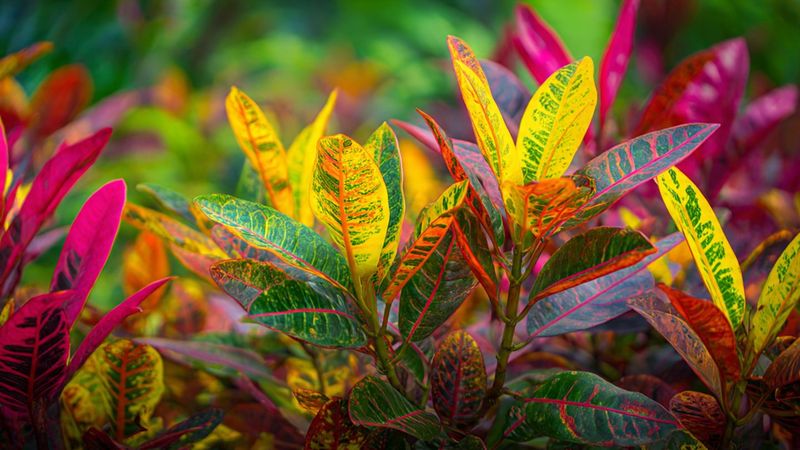
Few plants pack as much color into a sculptural form as crotons do in Florida’s sun-drenched gardens.
These tropical showstoppers flaunt leaves splashed with electric yellows, fiery oranges, deep purples, and bold reds all on the same plant.
Their upright growth habit creates living columns of color that landscape designers use to add height and visual excitement.
Crotons absolutely love Florida’s heat and humidity, thriving where other plants might struggle.
The more sun they receive, the more intense their color becomes, making them perfect for those blazing hot spots in your yard.
Designers frequently use crotons as focal points in foundation plantings or to create colorful hedges that define garden spaces.
Their sculptural quality comes not just from their shape but from the bold patterning on each leaf—some varieties feature veining, others display spots or ribbons of contrasting hues.
Popular varieties like ‘Petra’ and ‘Mammy’ offer particularly striking architectural forms with twisted or curled leaves.
Plant them where you want to draw the eye and create a sense of tropical abundance.
They work beautifully in containers flanking doorways or massed together for maximum color impact.
With their heat tolerance and stunning structure, crotons bring both form and function to warm-climate landscapes.
3. Bird Of Paradise For Tropical Statement Pieces
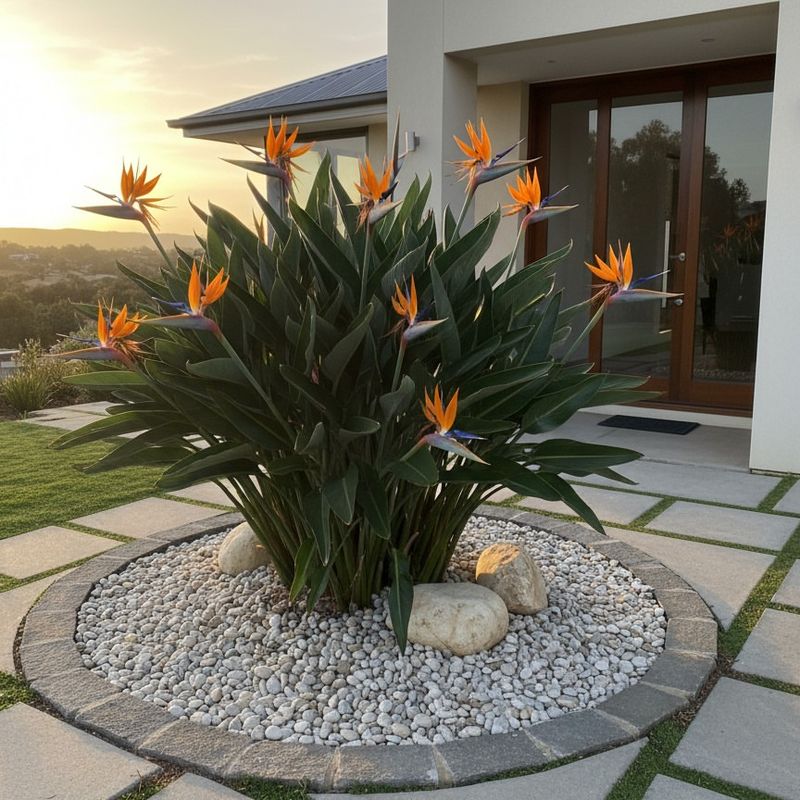
When landscape designers want to add instant tropical drama, they reach for bird of paradise every time.
Your Florida Garden Changes Every Week. Your Plan Should Too.
Gardening in Florida changes quickly throughout the season. Every Friday you’ll receive a simple weekly plan showing exactly what to plant, prune, fertilize, harvest, and protect so you never miss the right timing.
This stunning plant grows into a bold clump of paddle-shaped leaves that fan outward like a natural sculpture.
The foliage alone provides incredible architectural value, even before those famous orange and blue crane-like flowers appear.
Bird of paradise creates vertical interest and fills space with a lush, jungle-like presence that screams Florida living.
Designers love how it softens modern architecture while maintaining a clean, structured appearance.
The plant typically reaches four to six feet tall, making it perfect for adding mid-level height to garden beds or creating privacy screens.
In Florida’s warm climate, bird of paradise thrives in full sun to partial shade, though flowering is most abundant with plenty of sunlight.
Space plants about three to five feet apart to allow for their natural spreading habit without overcrowding.
They work wonderfully as corner plantings, poolside accents, or backdrop plants in mixed borders.
Their bold leaves provide excellent contrast against finer-textured plants and groundcovers.
Established plants tolerate brief dry periods, but regular watering keeps foliage looking fresh and vibrant.
Landscape professionals often position bird of paradise where its silhouette can be appreciated from multiple angles, creating a three-dimensional focal point in the garden.
4. Foxtail Palm For Soft, Sculpted Symmetry
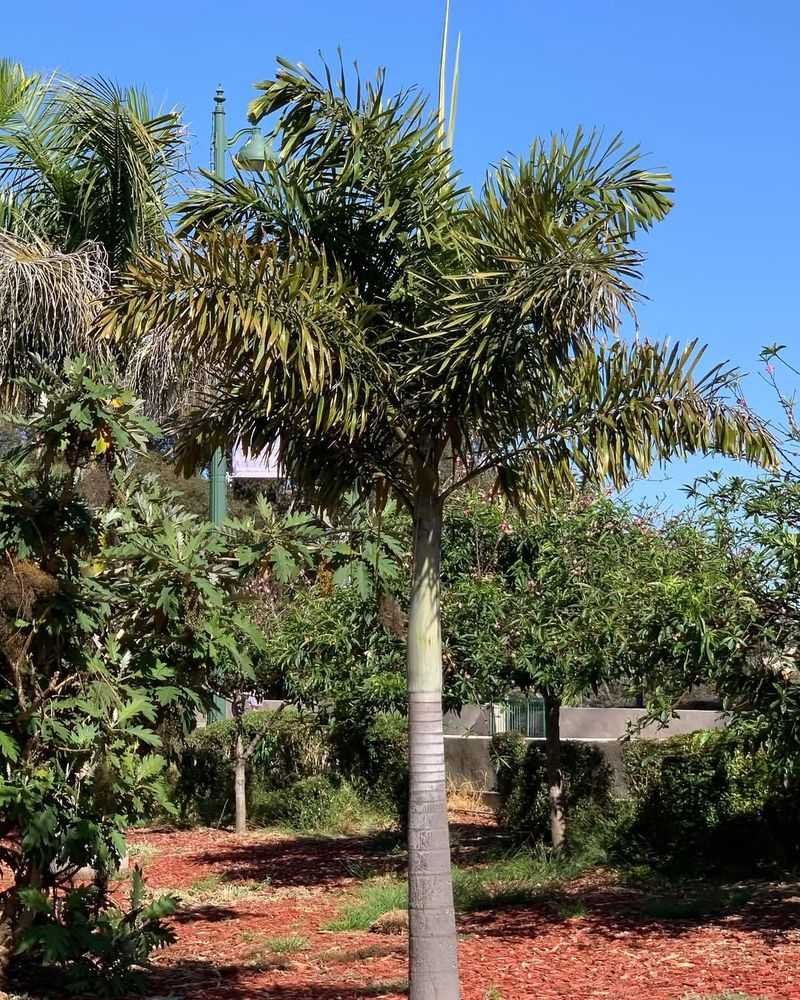
Imagine a palm so perfectly proportioned it looks like nature hired an architect—that’s the foxtail palm.
Unlike shaggy or informal palms, foxtails display an almost mathematical precision with their bottle-shaped trunks and symmetrical crowns of plume-like fronds.
Each frond arches gracefully, creating a soft, rounded canopy that landscape designers adore for its refined elegance.
These palms bring sculptural sophistication to contemporary and traditional Florida landscapes alike.
Their self-cleaning nature means spent fronds drop cleanly, maintaining that tidy, manicured appearance without constant maintenance.
Foxtail palms typically grow fifteen to twenty-five feet tall, making them ideal for framing entryways, lining driveways, or anchoring courtyard gardens.
Designers frequently plant them in pairs to create symmetrical focal points that emphasize architectural features.
They thrive in full sun throughout South and Central Florida, tolerating a range of soil types as long as drainage is adequate.
The lush, feathery texture of their fronds provides wonderful contrast against buildings with clean lines and modern materials.
Their moderate growth rate means they won’t quickly outgrow their intended space, a quality landscape professionals appreciate for long-term design stability.
Position foxtail palms where their graceful form can be appreciated up close and their silhouette admired from a distance for maximum visual impact.
5. Coontie For Clean Lines And Native Appeal

Florida’s native coontie might be modest in size, but its sculptural impact punches way above its weight class.
This ancient cycad forms tidy clumps of stiff, feather-like fronds that radiate from a central point with architectural precision.
Landscape designers treasure coontie for its clean, symmetrical form and its role as a Florida native that supports local ecosystems, particularly as the host plant for the rare Atala butterfly.
Unlike fussy exotic plants, coontie evolved right here and knows exactly how to handle Florida’s climate quirks.
Its compact size—typically staying under three feet tall—makes it perfect for edging pathways, filling foundation beds, or creating textural groundcover in shaded areas.
The dark green fronds maintain their structure year-round, providing consistent visual interest regardless of season.
Designers appreciate how coontie’s formal appearance works equally well in contemporary minimalist landscapes and traditional Florida cottage gardens.
Plant them in groups of three or five for maximum impact, spacing them about two feet apart.
They tolerate full sun to deep shade, though they develop the most compact, sculptural form in bright, filtered light.
Once established, coontie requires almost no maintenance—no fertilizing, minimal watering, and no pruning except removing the occasional old frond.
This combination of striking form, native credentials, and easy care makes coontie a landscape designer’s dream plant for Florida gardens.
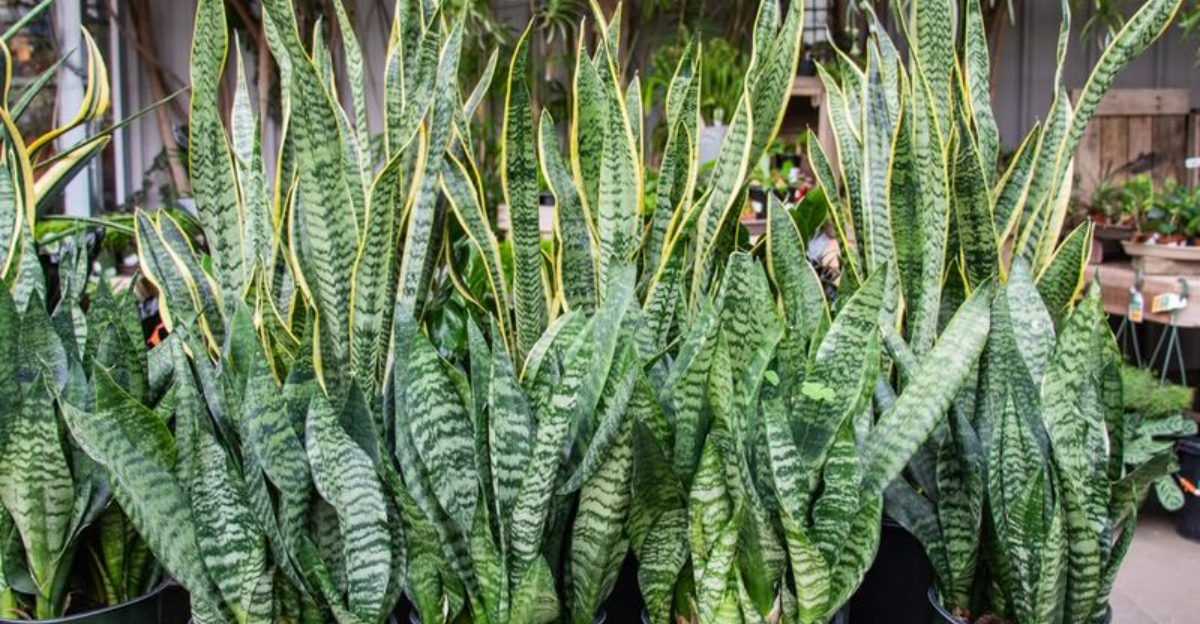
6. Snake Plant For Modern Outdoor Containers

Who says snake plants belong only indoors? In Florida’s frost-free zones, these architectural superstars shine in outdoor container designs.
Their stiff, upright leaves thrust skyward like green swords, creating bold vertical lines that landscape designers use to add height and drama to patios, pool decks, and entryways.
The variegated patterns on snake plant leaves—stripes, bands, and margins in shades of green, yellow, and silver—add visual texture without requiring any flowers.
Designers love pairing snake plants with modern containers in materials like concrete, metal, or sleek fiberglass to emphasize their contemporary aesthetic.
They work brilliantly as minimalist focal points, flanking doorways or punctuating outdoor seating areas with sculptural simplicity.
In South Florida’s warmest areas, snake plants can even be planted directly in the ground, forming striking clumps of vertical interest.
Their extreme drought tolerance makes them perfect for busy homeowners or second homes where regular watering isn’t always possible.
They handle full sun to shade, though indirect bright light brings out the best leaf coloring.
Container designs work beautifully when snake plants are underplanted with low, spreading succulents or left alone for stark, dramatic effect.
Landscape professionals particularly appreciate varieties like ‘Cylindrica’ with its round, tubular leaves for added sculptural dimension.
For modern Florida gardens seeking clean lines and architectural punch, snake plants deliver effortless style with virtually zero maintenance.
7. Yucca For Strong Vertical Drama
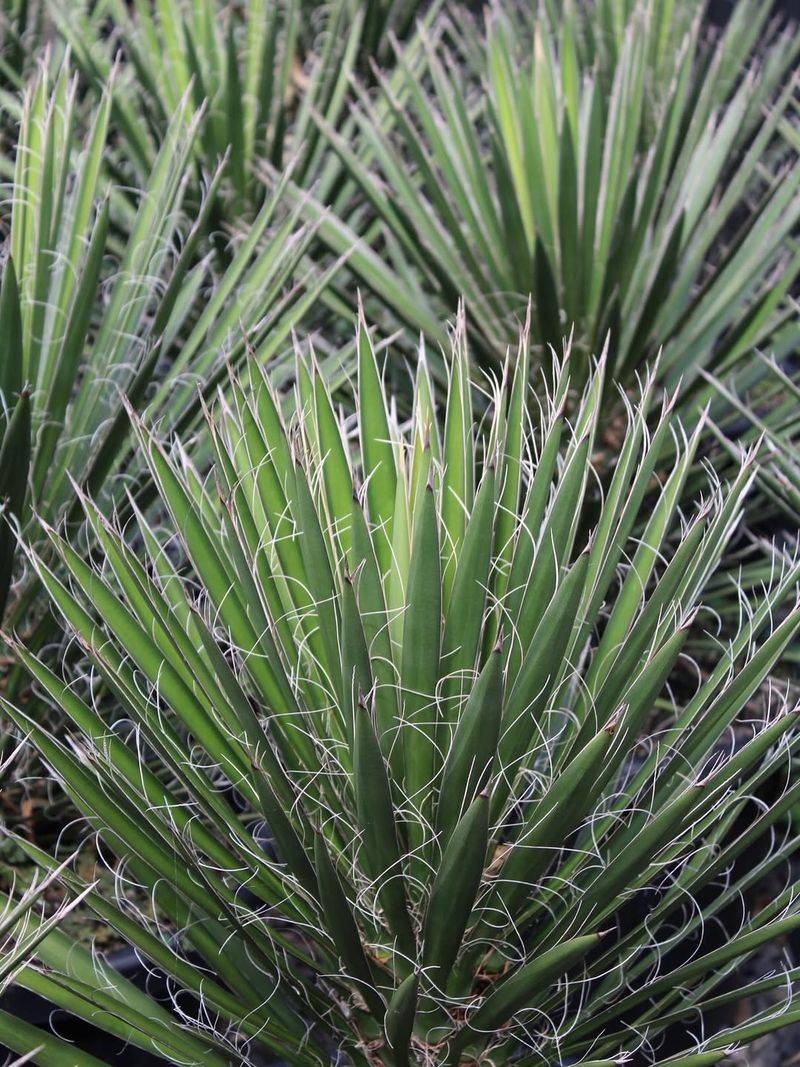
Nothing says “don’t mess with me” quite like a yucca’s spiky silhouette commanding attention in a Florida garden.
These tough-as-nails plants form explosive rosettes of sword-shaped leaves that thrust outward and upward with fierce architectural energy.
Landscape designers deploy yuccas when they need serious structural impact combined with bulletproof drought tolerance.
The strong vertical and radiating lines of yucca foliage create dynamic focal points that anchor xeriscapes, rock gardens, and contemporary landscapes.
When yuccas send up tall flower spikes covered in creamy white blooms, they add an extra dimension of drama that can reach six feet or more.
Popular varieties for Florida include Yucca aloifolia (Spanish bayonet) with its dense, upright form, and Yucca filamentosa with curly threads along leaf margins.
Designers often position yuccas at property corners, beside driveways, or as sentinel plants marking transitions between garden spaces.
They thrive in full sun and sandy, well-draining soil—basically the conditions that stress out less adapted plants.
Their sculptural quality intensifies when planted against simple backgrounds like stucco walls or natural stone.
Pair yuccas with rounded, softer plants to emphasize their spiky drama through contrast.
With virtually no pest problems and minimal water needs once established, yuccas deliver maximum architectural impact with minimum fuss—exactly what landscape professionals want for Florida’s challenging climate.
8. Zamia Palm For Compact, Textural Structure
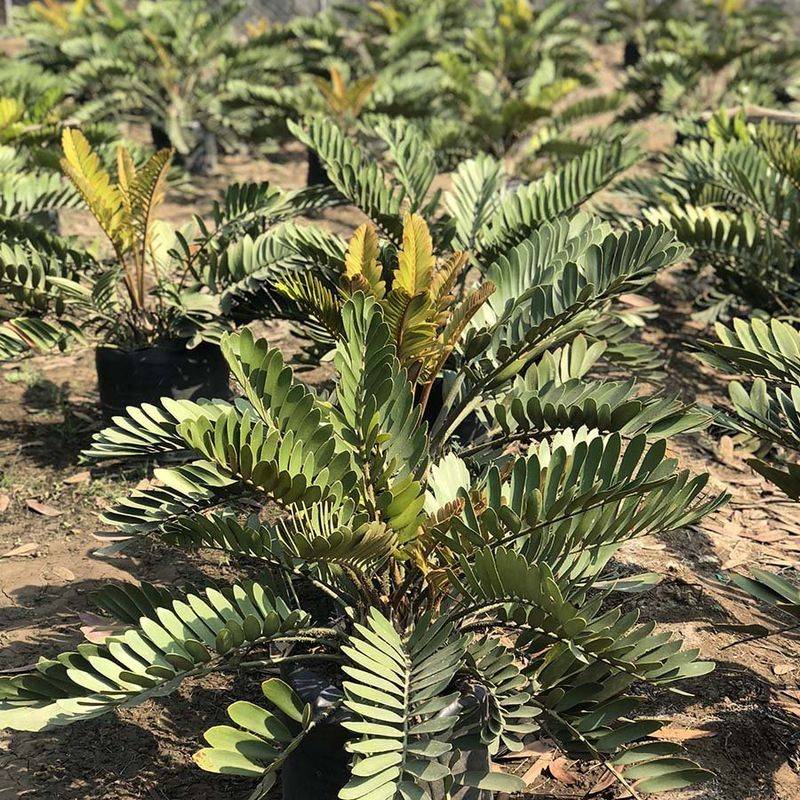
Don’t let its compact size fool you—zamia palm packs serious sculptural punch into a small, shade-loving package.
This Florida native cycad forms neat rosettes of glossy, compound leaves that emerge from a central trunk, creating layers of architectural interest at ground level.
Landscape designers reach for zamia when they need structured form in those tricky shaded spots where many sculptural plants refuse to perform.
The symmetrical arrangement of leaflets along each frond gives zamia a refined, almost formal appearance that works beautifully in both traditional and contemporary designs.
Its slow growth habit means the carefully planned proportions of your garden design won’t be disrupted by sudden size changes.
Zamia typically stays under three feet tall, making it ideal for layering in the foreground of mixed plantings or edging shaded pathways.
Designers appreciate how its dark green, leathery foliage provides textural contrast against softer plants like ferns or hostas.
The plant thrives in partial to full shade throughout Florida, tolerating the dry shade under trees where many plants struggle.
Its native status means natural resistance to pests and diseases, plus the bonus of supporting local wildlife.
Position zamia palms in groups of three or more for cohesive impact, spacing them about two feet apart.
They work wonderfully beneath larger palms or trees, creating structured layers that give gardens professional depth and dimension.
9. How Landscape Designers Combine Sculptural Plants In Florida Gardens
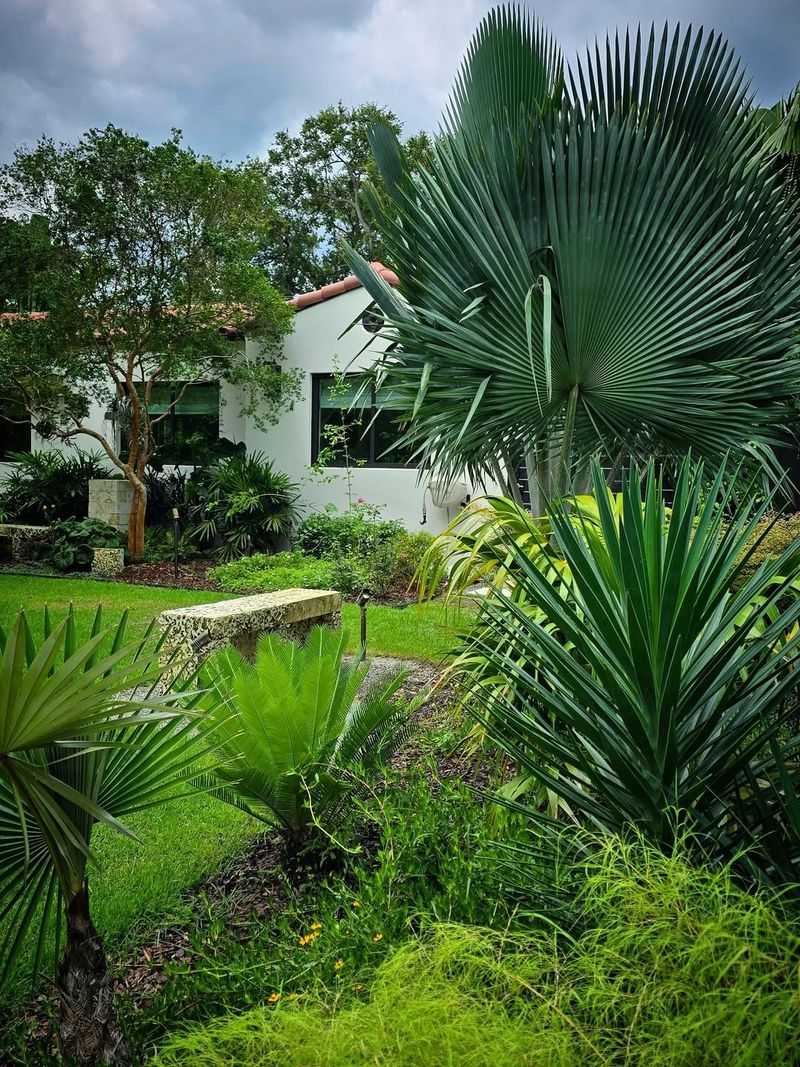
Creating a stunning Florida garden isn’t about cramming every sculptural plant into one space—it’s about thoughtful composition and balance.
Professional landscape designers treat sculptural plants like anchor points, positioning them strategically to create visual structure while surrounding them with softer, flowing plants that prevent the landscape from feeling too rigid or harsh.
The magic happens when bold forms like agaves or yuccas are balanced with airy grasses, billowing groundcovers, or flowering perennials that soften the overall composition.
Designers also pay careful attention to scale, using taller sculptural elements like foxtail palms or bird of paradise to define vertical space while lower forms like coontie and zamia create layers at ground level.
This layering technique adds depth and makes gardens feel intentionally designed rather than randomly planted.
Repetition plays a key role too—repeating the same sculptural plant at intervals throughout the landscape creates rhythm and unity.
Professionals also consider year-round structure, selecting plants that maintain their architectural presence through all seasons rather than looking great for only part of the year.
Texture contrast amplifies impact: pairing fine-textured plants against bold, architectural forms makes both look more dramatic.
Finally, designers think about sightlines, positioning sculptural plants where they’ll be appreciated from indoors, from the street, and while moving through the garden.
This holistic approach transforms individual plants into a cohesive, professionally designed Florida landscape that impresses year-round.