9 Agave Growing Tips Texas Gardeners Swear By
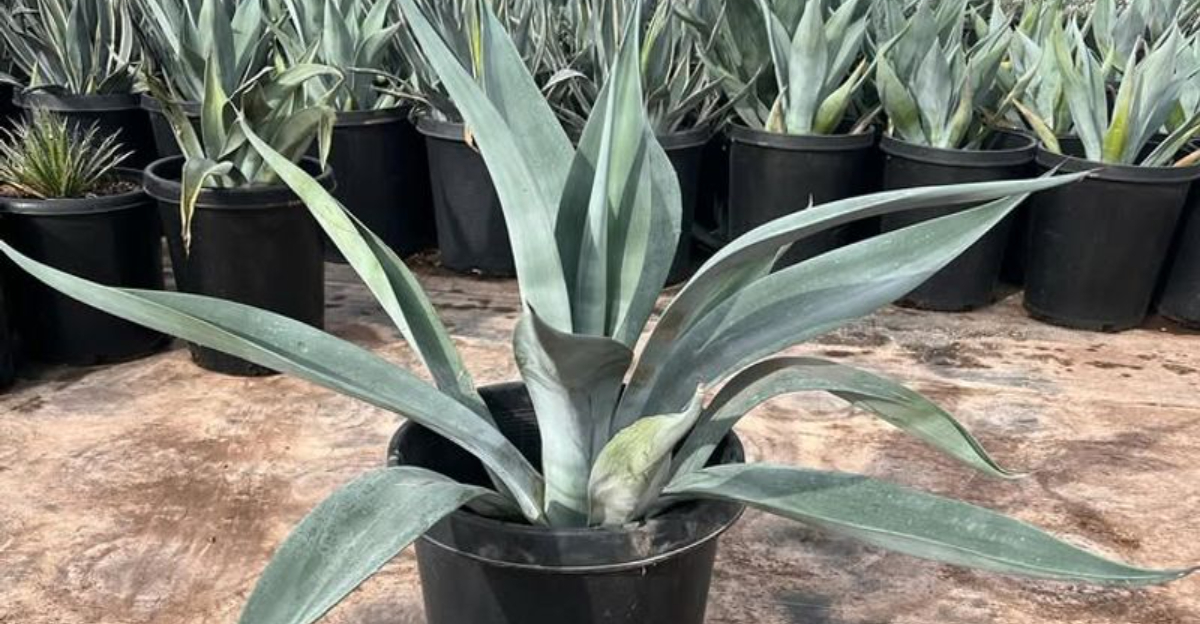
Agaves are desert showstoppers—dramatic, hardy, and perfectly suited to Texas heat—but even these resilient succulents thrive best with a little know-how.
While they’re low-maintenance compared to many plants, ignoring key care steps can lead to slow growth, sunburn, or root problems. These spiky beauties are tough—but Texas gardeners know a few tricks make them unstoppable!
From choosing the right soil and container to ensuring proper drainage, sun exposure, and occasional pruning, these nine tips cover everything you need to keep agaves healthy.
They also include strategies for protecting your plants from pests, winter frost, and overwatering, ensuring long-lasting, strong growth. Follow these tips, and your agaves will be the stars of your yard year after year.
For Texas gardeners, mastering agave care isn’t just about aesthetics—it’s about maximizing their resilience, beauty, and architectural impact in landscapes.
With these trusted practices, your agave collection will thrive in the desert sun and become a low-maintenance focal point of your garden. Strong roots, striking leaves, and long-lasting beauty—these agaves know how to shine.
1. Plant Agave In Full Sun With Excellent Airflow

Agave plants absolutely love the intense Texas sunshine, and they actually perform at their best when bathed in direct light for most of the day.
Unlike many garden plants that wilt under the relentless summer rays, agaves have evolved in harsh desert environments where shade is scarce and temperatures soar.
Their thick, waxy leaves are perfectly designed to handle the heat, making them ideal candidates for those sunny spots in your yard where other plants struggle. Beyond the sunlight requirement, airflow is equally crucial for agave health.
Good air circulation around the plant prevents moisture from lingering on leaves and in the crown, which is one of the primary causes of fungal issues and rot in Texas gardens.
When agaves sit in stagnant, humid air—especially during our muggy summer nights—they become vulnerable to diseases that can quickly compromise the entire plant.
Positioning your agave in an open area away from walls, fences, or dense plantings ensures that breezes can move freely around every part of the rosette.
Many experienced Texas gardeners place their agaves on slight mounds or berms to further enhance drainage and airflow.
This simple practice mimics the natural rocky hillsides where agaves thrive in the wild, creating an environment where your plant can truly excel with minimal intervention from you.
2. Use Extremely Fast-Draining Soil
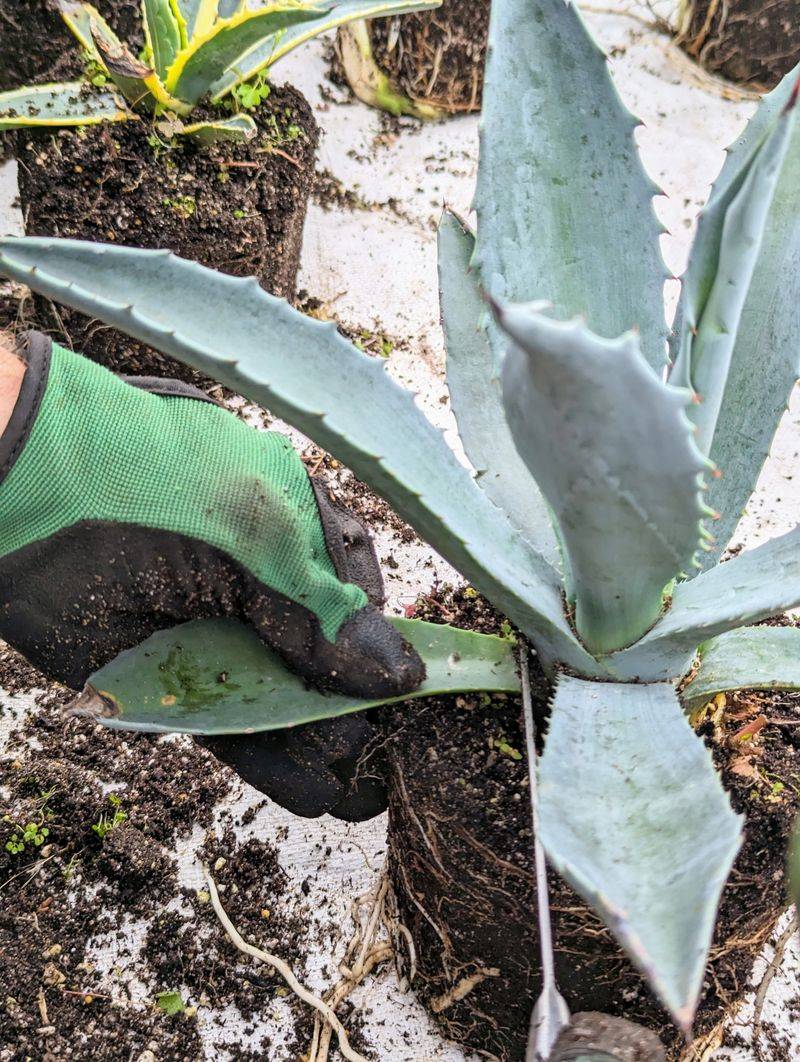
Heavy clay soil is the nemesis of agave plants across Texas, and unfortunately, clay is exactly what many Texas gardeners are dealing with in their yards.
Clay holds moisture for extended periods, creating a waterlogged environment around agave roots that leads to rot and eventual plant failure.
Agaves evolved in rocky, sandy soils that drain almost instantly after rain, so replicating those conditions is absolutely essential for success.
Amending your planting area with coarse materials transforms inhospitable clay into agave-friendly ground.
Mix in generous amounts of decomposed granite, pea gravel, sand, or pumice to break up the clay structure and create air pockets that allow water to flow through quickly.
Your Texas Garden Changes Every Week. Your Plan Should Too.
Gardening in Texas changes quickly throughout the season. Every Friday you’ll receive a simple weekly plan showing exactly what to plant, prune, fertilize, harvest, and protect so you never miss the right timing.
A ratio of at least fifty percent amendment to native soil is a good starting point, though some Texas gardeners go even higher in areas with particularly dense clay.
For container-grown agaves, use a specialized cactus and succulent mix or create your own blend with equal parts potting soil, coarse sand, and perlite or pumice.
The soil should feel gritty rather than smooth, and water should drain through within seconds rather than pooling on the surface.
Testing your soil mix before planting is smart—simply water it thoroughly and observe how quickly it drains to ensure your agave will have the fast-draining conditions it absolutely requires to thrive in the Texas climate.
3. Water Deeply But Infrequently
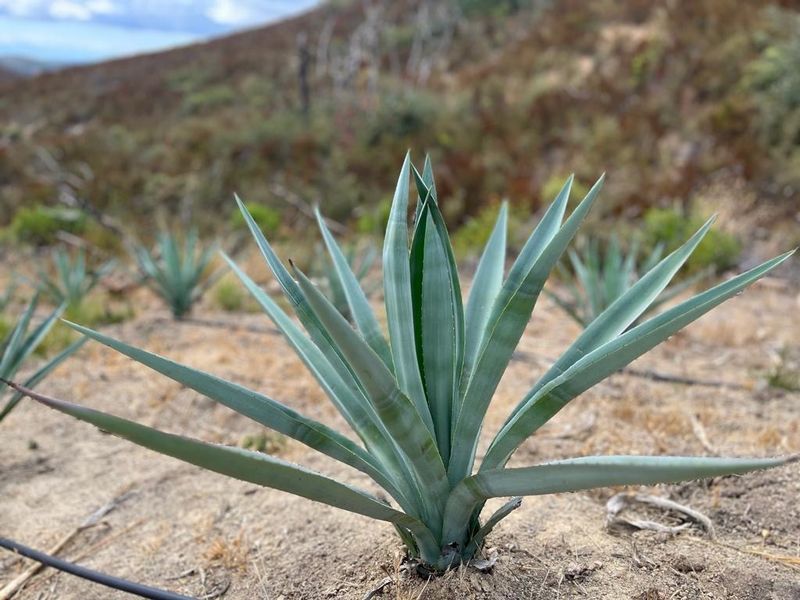
Agave plants are masters of water storage, tucking away moisture in their thick, fleshy leaves to sustain themselves through long dry spells.
This remarkable adaptation is what allows them to survive in desert environments where rain might not fall for weeks or even months at a time.
Understanding this natural water-storing ability is the key to proper watering in your Texas garden, because it completely changes how you should approach irrigation compared to most other landscape plants.
Overwatering is hands down the most common mistake Texas gardeners make with agaves, often with heartbreaking results.
When agaves receive too much water too frequently, their roots sit in damp soil that encourages rot, and the plant’s natural defenses against moisture-related problems are overwhelmed.
Instead of daily or even weekly watering, agaves thrive on a schedule that mimics natural rainfall patterns—deep, thorough soaking followed by an extended dry period.
During the growing season from spring through early fall, water your agave deeply every two to three weeks, allowing the soil to dry out completely between waterings.
In winter, when the plant is dormant, you can reduce watering to once a month or even less, depending on rainfall.
The goal is to encourage deep root growth by making water available at depth, then allowing the soil to dry thoroughly so roots remain healthy and vigorous rather than sitting in constant moisture.
4. Keep Mulch And Soil Away From The Crown
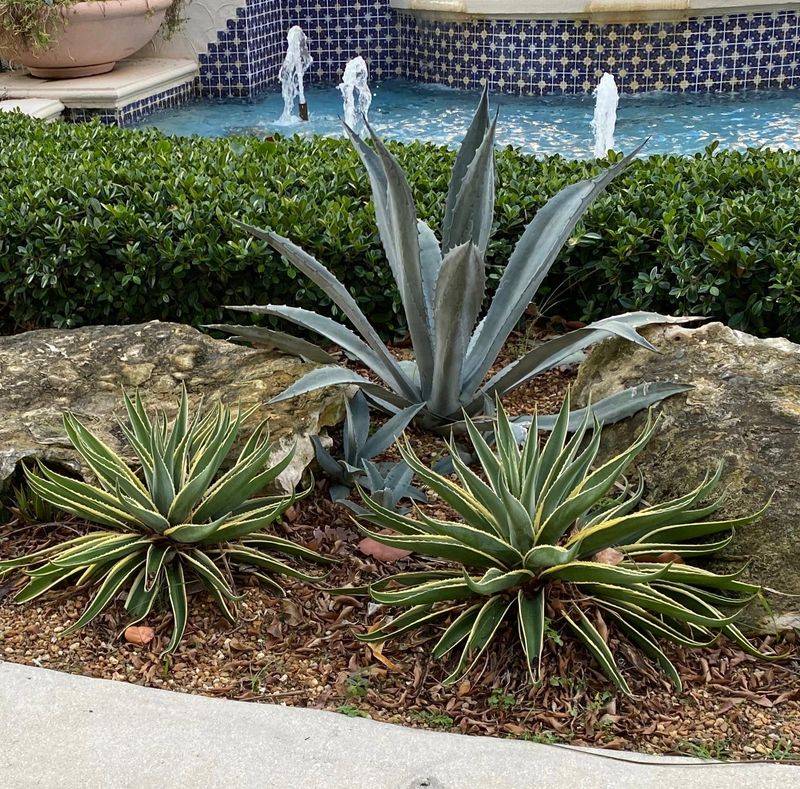
The crown of an agave plant—where the leaves emerge from the base—is its most vulnerable point when it comes to moisture-related problems.
When organic mulch, soil, or debris accumulates against the crown, it creates a persistently damp environment that invites rot to take hold.
This is especially problematic in Texas, where summer humidity combined with afternoon thunderstorms can keep that trapped moisture lingering for hours or even days, giving fungal pathogens the perfect conditions to establish themselves.
Smart Texas gardeners have learned to keep a clear zone around the agave crown, ensuring that nothing touches the base of the plant where leaves meet the ground.
Rather than piling traditional wood chip or bark mulch right up against the plant, they leave several inches of bare ground or use inorganic materials that dry quickly and promote airflow.
This simple practice dramatically reduces the risk of crown rot, which is one of the most frustrating problems agave growers face.
Decomposed granite and pea gravel are the materials of choice for many experienced Texas agave gardeners because they provide the benefits of mulch—temperature moderation and weed suppression—without retaining moisture against the plant.
Spread a two to three inch layer of these materials around your agave, keeping them pulled back from the crown itself.
The result is an attractive, natural-looking planting that stays drier, drains faster, and creates the desert-like conditions where agaves truly excel in our Texas landscapes.
5. Choose Agave Species Suited To Your Texas Region
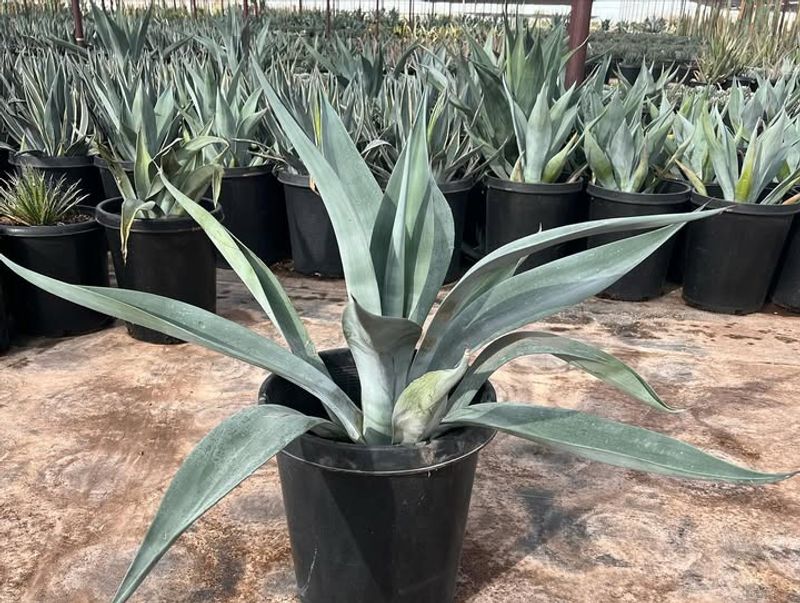
Texas is enormous, and the climate varies dramatically from the humid Gulf Coast to the high desert of West Texas, which means not every agave species will thrive in every part of the state.
North Texas gardeners contend with occasional hard freezes and temperature swings that can stress tender agave varieties, while South Texas gardeners enjoy nearly frost-free winters but face intense summer heat and humidity.
Understanding these regional differences is crucial for selecting agave species that will not just survive but truly flourish in your specific location.
In North Texas, cold-hardy species like Agave parryi, Agave havardiana, and Agave neomexicana are excellent choices because they can tolerate temperatures well below freezing without sustaining damage.
Central Texas gardeners have more flexibility and can grow a wider range of species including Agave americana, Agave weberi, and various Agave victoriae-reginae cultivars.
South Texas and Coastal regions are perfect for heat-loving varieties such as Agave tequilana, Agave angustifolia, and Agave attenuata, though some of these may need protection during rare cold snaps.
Before purchasing an agave, research its native habitat and cold hardiness zone to ensure it matches your area’s conditions.
Local nurseries that specialize in native and adapted plants are invaluable resources, as their staff can recommend varieties that have proven themselves in your specific Texas region.
Choosing the right species from the start saves you frustration and ensures your agave will be a stunning, long-lived feature in your landscape for many years to come.
6. Protect Young Agaves From Extreme Summer Heat
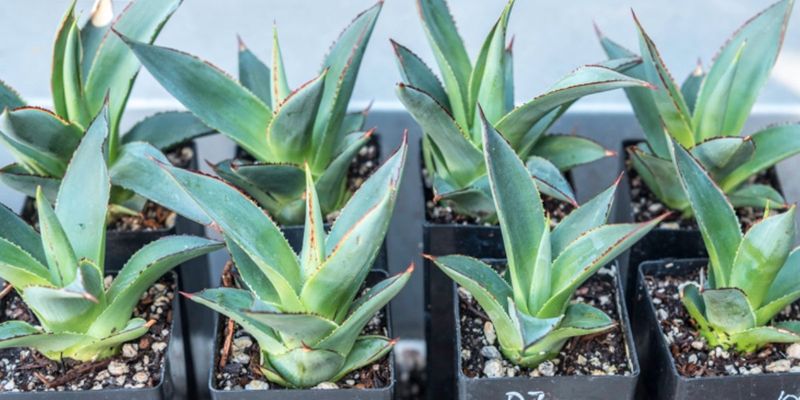
While mature agaves are tough enough to laugh off the most brutal Texas summer days, young plants are still developing their resilience and can struggle when first planted during peak heat.
Newly transplanted agaves haven’t yet established extensive root systems, which means they can’t access deep soil moisture or regulate their temperature as effectively as older plants.
Those first few weeks after planting are critical, and providing some temporary protection can make the difference between a thriving plant and one that struggles all season.
Afternoon shade is particularly beneficial for young agaves during their first Texas summer, especially when temperatures climb above one hundred degrees for days on end.
Position shade cloth on the west or southwest side of the plant to filter the most intense afternoon rays while still allowing morning sun to reach the leaves.
Alternatively, plant young agaves on the east side of larger plants or structures where they’ll receive gentler morning light and natural afternoon shade until they toughen up.
This protection doesn’t need to be permanent—most agaves will be ready to handle full sun exposure by their second growing season once their roots have grown deep and their leaves have thickened.
Think of it as giving your plant a gentle introduction to Texas conditions rather than throwing it into the deep end immediately.
Many experienced gardeners time their agave planting for fall rather than late spring, which allows plants to establish during cooler months before facing their first full Texas summer with a mature root system already in place.
7. Watch For Pups And Manage Them Early
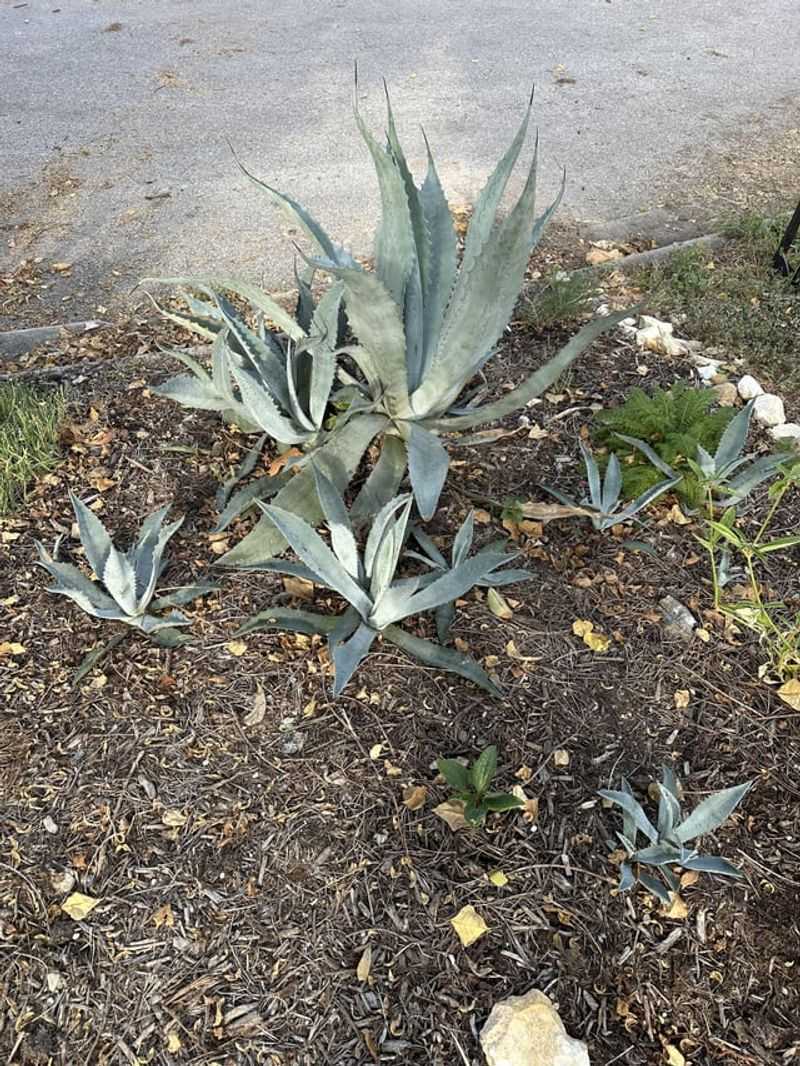
Agave plants reproduce by producing offshoots called pups that emerge from the base of the mother plant or from underground rhizomes spreading outward from the main rosette.
These baby plants are genetically identical clones, and while they’re charming at first, they can quickly crowd the parent plant and create a congested clump that lacks the dramatic visual impact of a well-spaced specimen.
Left unmanaged, pups will compete for nutrients, water, and space, potentially compromising the health and appearance of your entire agave planting.
Checking your agave regularly for emerging pups allows you to make decisions about which ones to keep and which to remove or transplant.
Many Texas gardeners prefer to maintain a single, statuesque specimen and remove pups when they’re still small, using a sharp spade to sever the connection between pup and parent.
These removed pups can be potted up or planted elsewhere in the garden, making agaves wonderfully generous plants that keep giving you new specimens to share with friends or expand your own collection.
If you prefer a clustered look, thin the pups periodically to prevent overcrowding while allowing a few to mature around the parent.
The best time to remove or transplant pups is during the growing season when both parent and offspring can heal quickly and establish themselves.
Wear thick gloves and long sleeves when working with agaves, as their spines and leaf margins can be quite sharp and cause painful scratches that take a while to heal.
8. Prepare For Unexpected Winter Cold Snaps
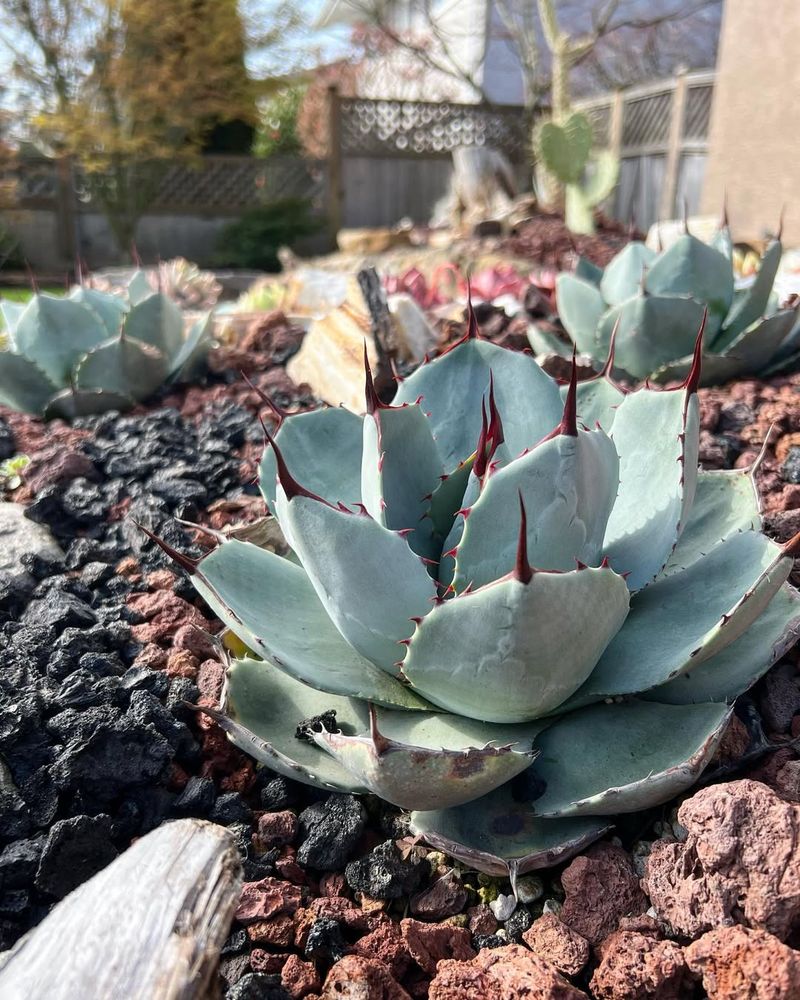
Texas weather is famously unpredictable, and even in typically mild regions, surprise cold fronts can bring temperatures plummeting to levels that stress or harm tender agave species.
While many agaves are remarkably cold-tolerant, sudden temperature drops—especially when combined with moisture—can cause leaf damage, crown rot, or even loss of the entire plant.
The key is knowing which of your agaves are vulnerable and having a protection plan ready to implement when weather forecasts turn ominous.
Covering agaves with frost cloth, old blankets, or even large cardboard boxes can provide several degrees of protection during brief cold events.
The covering traps heat radiating from the soil and creates a buffer against freezing winds, often making the difference between minor leaf tip damage and serious harm.
For particularly valuable or tender specimens, some Texas gardeners add a string of outdoor Christmas lights under the covering to provide a bit of supplemental warmth, though this requires careful monitoring to prevent overheating or fire hazards.
Container-grown agaves have the advantage of mobility and can be moved into garages, covered patios, or other protected areas when extreme cold threatens.
In-ground plants benefit from good drainage more than ever during winter, as wet soil combined with freezing temperatures is far more damaging than dry cold.
After a freeze event, resist the urge to remove damaged leaves immediately—they actually provide some protection to the crown, and it’s better to wait until spring to assess true damage and clean up the plant once warmer weather returns.
9. Leave Agaves Alone Once Established
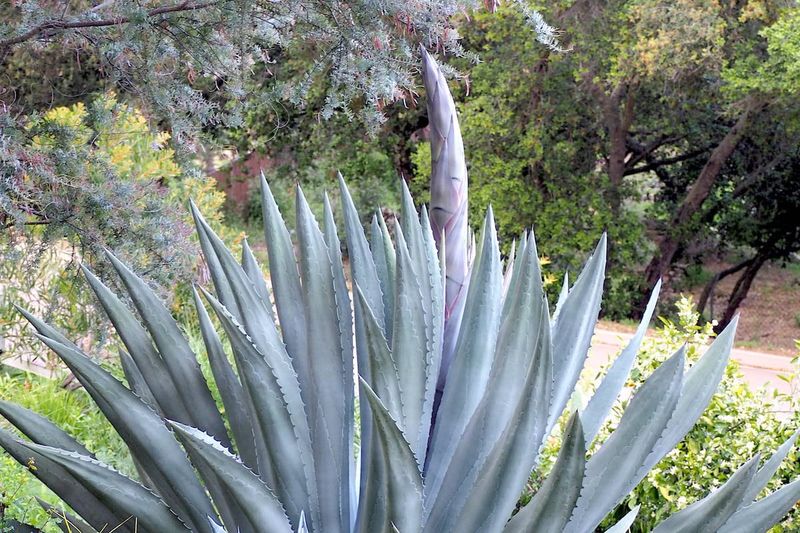
Perhaps the most counterintuitive tip for Texas gardeners accustomed to fussing over their plants is that agaves actually thrive on neglect once they’re established.
These remarkable succulents have evolved to survive in nutrient-poor soils with minimal water, and they simply don’t need or want the regular fertilization and irrigation that benefits most garden plants.
In fact, providing too much care often backfires, leading to weak growth, increased susceptibility to pests and diseases, or even the complete failure of plants that would have thrived if simply left alone.
Fertilizer is almost never necessary for agaves in Texas landscapes, as our soils typically contain sufficient nutrients for these low-demand plants.
Adding fertilizer encourages soft, rapid growth that looks lush initially but creates leaves that are more prone to damage and less tolerant of environmental stress.
Similarly, frequent watering beyond the occasional deep soak during extended droughts is unnecessary and potentially harmful once the plant has developed a mature root system that can access moisture deep in the soil profile.
The real secret to long-term agave success in Texas is planting them correctly in the right location with proper soil drainage, then stepping back and letting them do what they do best—grow slowly, steadily, and magnificently with almost no help from you.
Resist the temptation to treat them like typical garden plants that need regular attention, and instead appreciate them as the self-sufficient, low-maintenance sculptural beauties they truly are in our Texas landscapes.