11 Low-Maintenance Plants That Don’t Melt In Florida Sun
Florida summer doesn’t mess around. One afternoon in the sun is enough to show you which plants were never meant to survive here.
You deal with blazing heat, heavy humidity, sudden storms, and long stretches where the temperature barely drops at night. If your yard has struggled through past summers, it isn’t because you’re doing something wrong.
That’s because many common landscape plants simply aren’t built for this climate. You deserve a landscape that holds its color, shape, and life without demanding constant watering or weekly maintenance.
When you choose plants adapted to Florida conditions, your yard becomes more resilient, more attractive, and far easier to manage. You spend less time replacing wilted plants and more time enjoying your outdoor space.
Strong sun exposure doesn’t have to mean scorched leaves and bare spots. With the right selections, your garden can stay healthy, vibrant, and full of activity even during the toughest months of the year.
1. Firebush
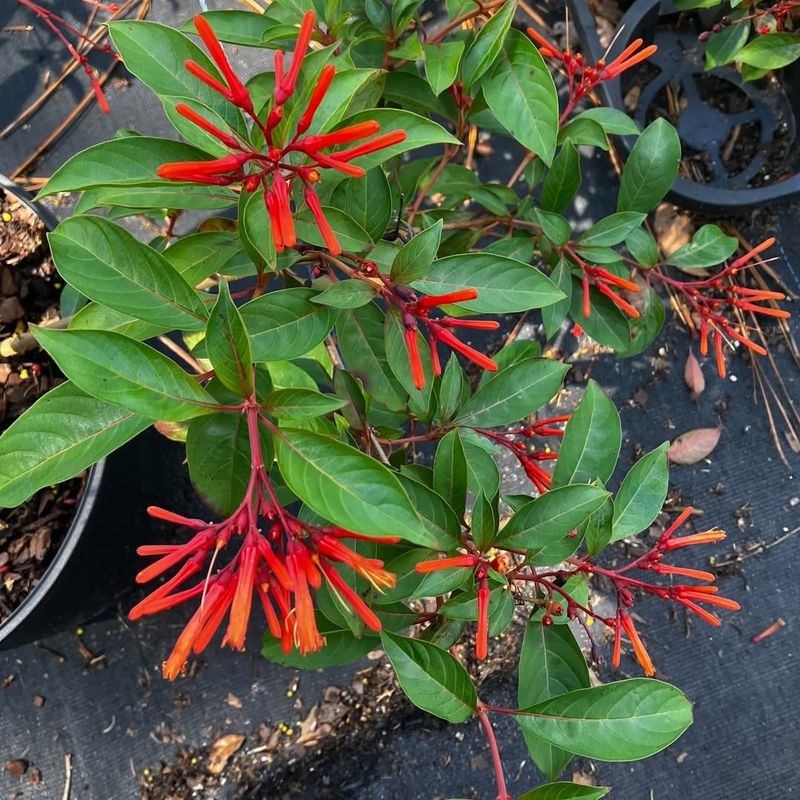
In many established Central Florida neighborhoods, this fiery native shrub stands out in July with bright orange-red tubular flowers that seem to glow under full afternoon sun.
This native shrub reaches four to eight feet in height and spreads nearly as wide, creating a dense mass of green foliage that stays lush through the most brutal summer months.
Hummingbirds and butterflies visit constantly, making your landscape feel alive even when other plants look stressed.
Once established after the first growing season, Firebush requires minimal supplemental irrigation in North and Central Florida. South Florida gardeners appreciate how it handles extended hot seasons and tropical sun exposure without wilting or burning.
The plant naturally maintains its shape with minimal pruning, though you can trim it lightly after winter if frost touches the tips in northern counties.
You’ll find Firebush used as a colorful hedge, a standalone specimen, or massed in larger landscape beds where its year-round blooming habit keeps visual interest high throughout summer and fall.
2. Coontie
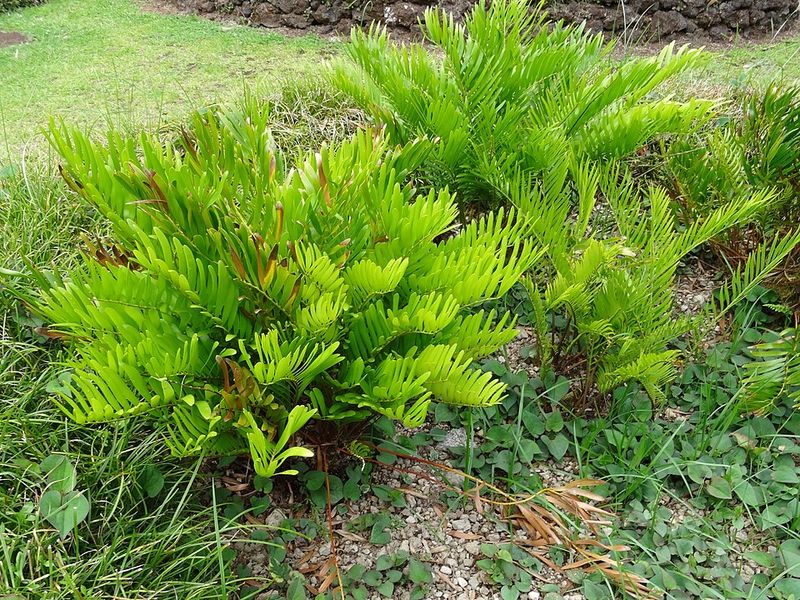
This ancient Florida native looks like a small cycad palm but actually belongs to a plant family that existed long before flowering plants appeared. This low-growing native typically stays under three feet tall, spreading at a slow growth rate, with dark green, glossy leaflets that radiate outward from a central trunk.
The plant tolerates full sun to partial shade, making it incredibly versatile for different landscape situations from open yards to beneath tree canopies.
Water needs drop dramatically after the first year, and established Coontie plants survive extended dry periods by storing moisture in their underground stems.
North Florida gardeners value its cold tolerance, while Central and South Florida homeowners appreciate how it performs through intense summer heat and humidity without showing stress.
Coontie serves as the only host plant for the rare Atala butterfly, so you might notice these striking blue and orange insects if you include several plants in your landscape.
Use Coontie as a foundation planting, border edging, or groundcover where you want texture without constant maintenance or watering throughout summer months.
Your Florida Garden Changes Every Week. Your Plan Should Too.
Gardening in Florida changes quickly throughout the season. Every Friday you’ll receive a simple weekly plan showing exactly what to plant, prune, fertilize, harvest, and protect so you never miss the right timing.
3. Dwarf Yaupon Holly
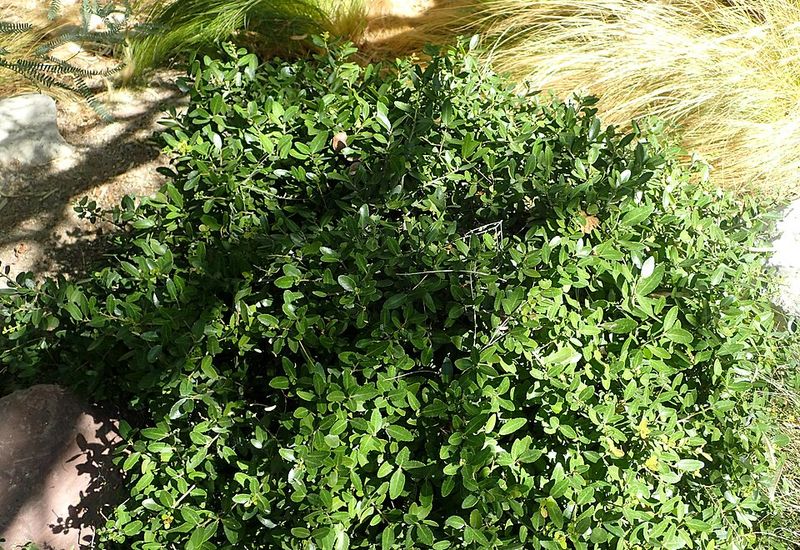
Compact and incredibly tough, Dwarf Yaupon Holly forms dense mounds of tiny evergreen leaves that stay vibrant green even when temperatures soar and rainfall becomes scarce during extended summer dry spells.
This native shrub typically reaches two to three feet in height and spreads slightly wider, creating a rounded shape that requires almost no pruning to maintain its natural form.
The fine-textured foliage adds a soft visual element to landscapes while remaining tough enough to handle reflected heat from driveways and sidewalks.
Established plants primarily rely on rainfall across most Florida regions, and the species adapts equally well to North Florida’s seasonal patterns and South Florida’s extended hot season.
Central Florida homeowners appreciate how Dwarf Yaupon Holly handles high humidity and intense midday sun without developing the leaf scorch that affects less adapted species.
Female plants produce small red berries in fall and winter when a male yaupon is nearby for pollination, attracting songbirds to your landscape during cooler months.
You’ll see this versatile shrub used as low hedges, foundation plantings, or massed groundcover in areas where you want year-round green coverage without weekly watering or constant trimming.
4. Simpson’s Stopper
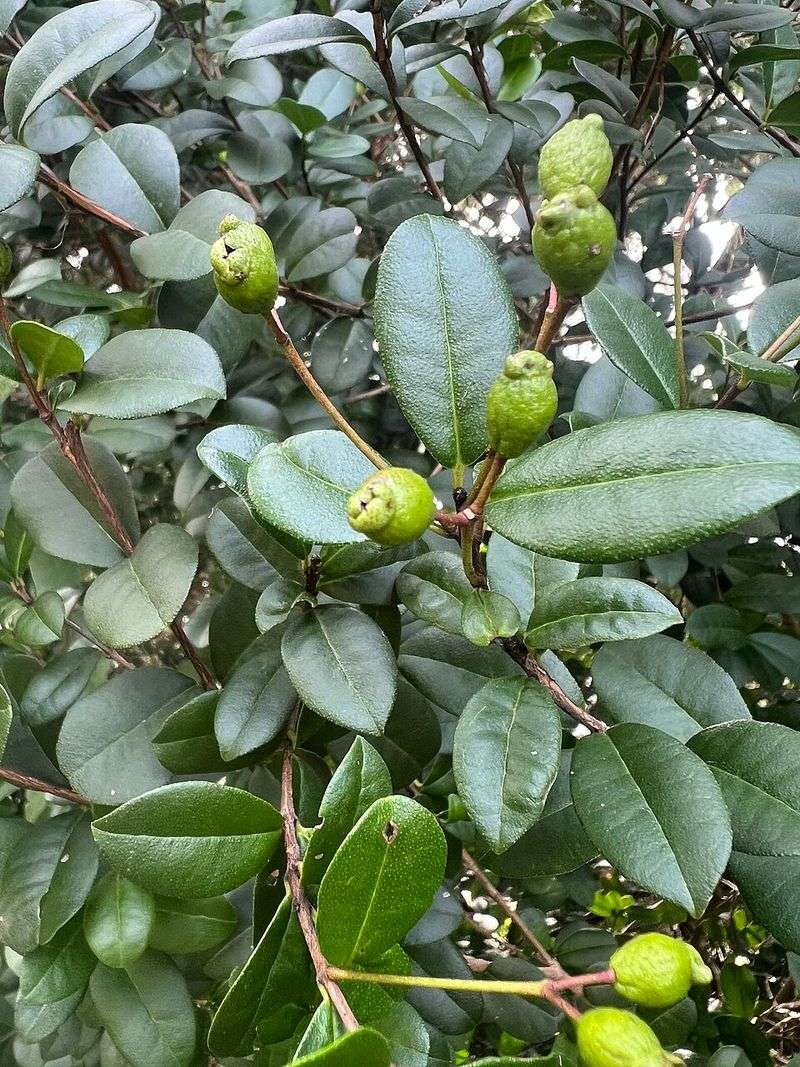
Valued for both beauty and durability, this native evergreen shrub brings a refined look to Florida landscapes while handling brutal summer conditions.
It can reach eight to fifteen feet tall with a dense branching habit that creates excellent screening. The glossy green leaves have a subtle fragrance when crushed, and new growth emerges with attractive bronze tints that add seasonal color variation.
Once roots establish deeply during the first growing season, Simpson’s Stopper requires minimal supplemental watering and thrives on natural rainfall patterns.
The species handles full sun exposure in coastal and inland locations, performing well in Central Florida’s humid summers and South Florida’s extended tropical heat.
North Florida gardeners can grow it successfully in protected locations, but the plant is best suited for Central and South Florida landscapes, though occasional winter cold may cause temporary leaf damage in the coldest counties.
Use Simpson’s Stopper as a privacy hedge, backdrop for lower plantings, or pruned into a small patio tree where you want shade and structure without constant irrigation or intensive care throughout the hottest months of the year.
5. Muhly Grass
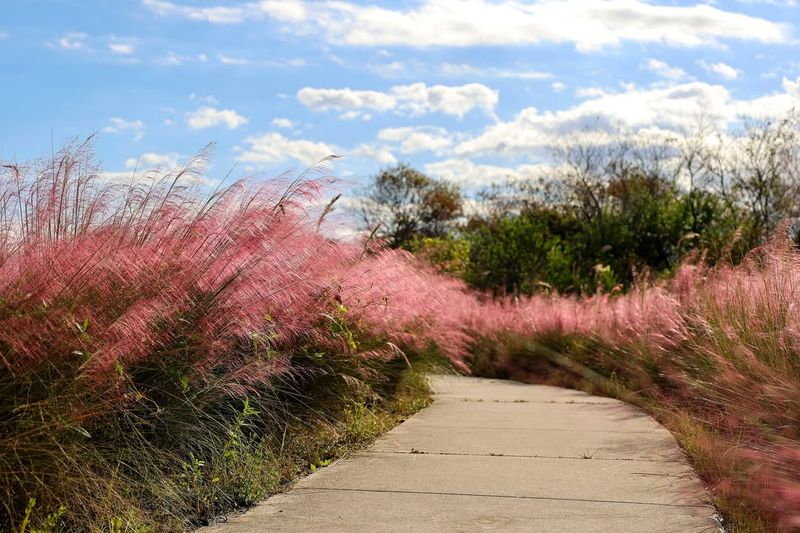
Few sights match the beauty of Muhly Grass in late summer and fall when airy pink to purple flower plumes rise above the foliage, creating clouds of color that seem to float in the landscape.
This native ornamental grass forms dense clumps of fine-textured green blades that reach two to three feet tall before sending up flowering stalks that can add another two feet of height.
The plant handles full sun and reflected heat exceptionally well, never wilting or browning even during the most intense afternoon exposure in open locations.
Established Muhly Grass primarily relies on seasonal rainfall in most Florida regions, and the deep root system allows it to access moisture during dry periods without showing stress.
North Florida gardeners enjoy the dramatic fall color display, while Central and South Florida homeowners appreciate how the plant performs through extended hot seasons with minimal care.
The grass requires only annual trimming in late winter to remove old foliage before new growth emerges in spring.
You’ll find Muhly Grass planted as dramatic accents, massed in large drifts, or used as border edging where its seasonal flower display creates spectacular visual impact without demanding weekly watering or constant attention.
6. Blanket Flower
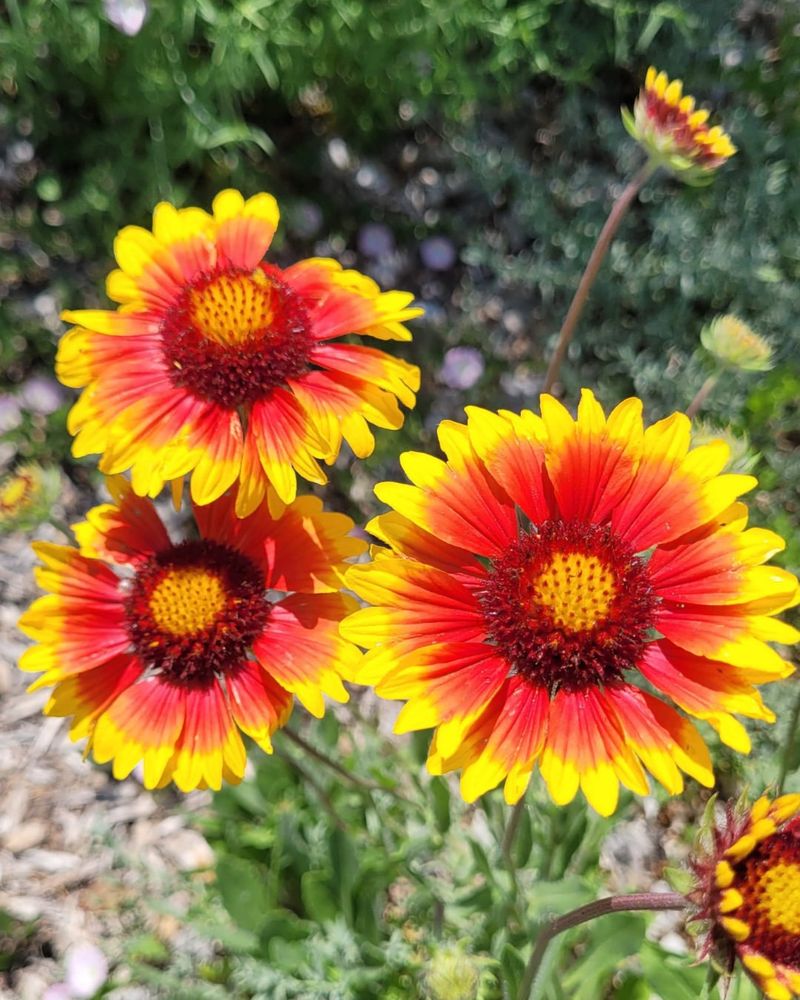
Bright, cheerful blooms bring nonstop color to Florida gardens when this native wildflower bursts into shades of red, orange, and yellow. This tough short-lived native perennial stays low to the ground, typically reaching twelve to eighteen inches in height, with gray-green foliage that tolerates full sun and sandy soils without complaint.
The flowers attract butterflies and bees constantly, creating movement and activity in your landscape even during the hottest afternoon hours when other plants look dormant.
Water requirements drop significantly after establishment in well-drained soil, and Blanket Flower actually performs better with less irrigation once roots develop fully during the first growing season.
The plant handles North Florida summer heat and seasonal rainfall patterns easily, while Central and South Florida gardeners appreciate its tolerance for intense sun and high humidity without developing fungal issues.
Deadheading spent blooms encourages heavier flowering, but even without this attention the plant continues producing color throughout warm months.
Use Blanket Flower in cottage-style borders, wildflower meadows, or mixed perennial beds where you want reliable color and pollinator activity without installing irrigation systems or spending hours on maintenance tasks each week.
7. Tickseed
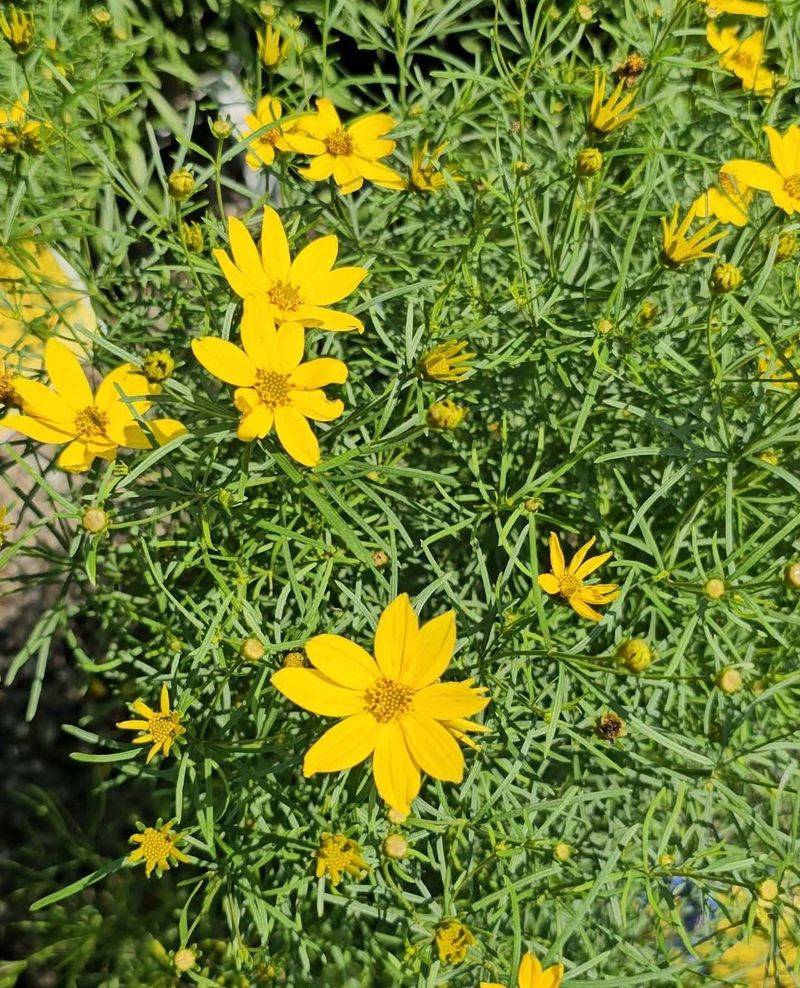
Bright golden-yellow flowers cover Tickseed plants from early spring through summer, creating masses of color that seem to intensify rather than fade under Florida’s relentless sunshine.
This group of native perennial and reseeding wildflower species grows twelve to twenty-four inches tall depending on the variety, with delicate ferny foliage that stays green and healthy even when temperatures climb and rainfall becomes unpredictable.
The cheerful blooms attract butterflies and native bees, and the plant self-seeds readily in favorable conditions, naturalizing into larger colonies over time without becoming invasive.
Established Tickseed requires minimal supplemental watering in most Florida regions, thriving on seasonal rainfall patterns from North Florida’s summer storms to South Florida’s wet season downpours.
The plant handles full sun and reflected heat from hardscapes without wilting, and it actually struggles in overly rich or constantly moist soils.
Central Florida gardeners appreciate how Tickseed performs through humid summers without developing the disease problems that affect less adapted species in similar conditions.
You’ll see Tickseed planted in wildflower meadows, naturalized along property edges, or massed in informal borders where its carefree nature and reliable blooming habit provide maximum visual impact with minimal time investment throughout the growing season.
8. Sunshine Mimosa
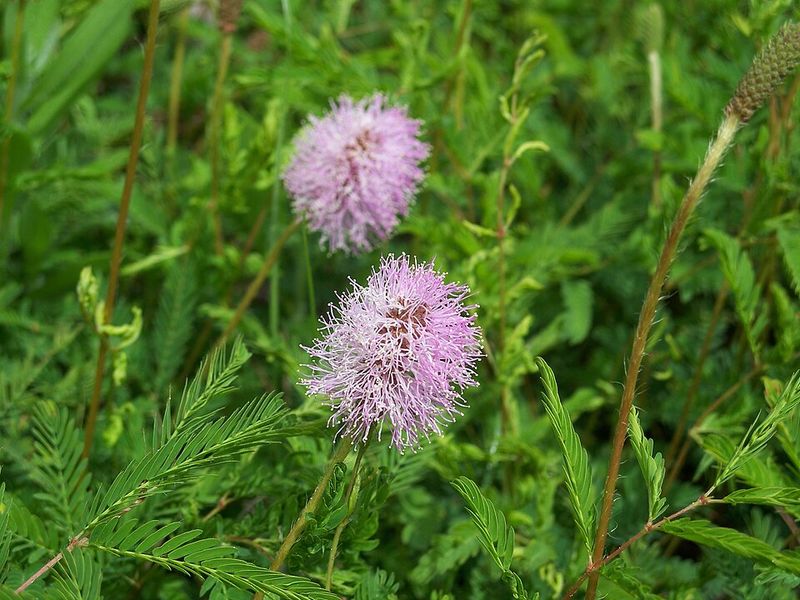
Sensitive, touch-responsive leaves and cheerful yellow blooms make this native groundcover a favorite for sunny Florida landscapes.
It spreads horizontally rather than vertically, typically staying under six inches tall while covering bare ground with ferny foliage that remains green and lush even during extended dry periods.
The plant tolerates full sun and reflected heat from patios and walkways, making it useful in locations where grass struggles to establish or maintain coverage.
Water needs become minimal after establishment, and Sunshine Mimosa actually performs better with less irrigation once roots develop during the first growing season.
South Florida gardeners use it extensively as a lawn alternative in areas receiving tropical sun exposure, while Central Florida homeowners appreciate how it handles high humidity and summer heat without constant attention.
North Florida gardeners can grow it successfully as an annual or in protected locations where winter cold stays moderate.
Use Sunshine Mimosa as a groundcover beneath trees, between stepping stones, or in areas where you want living coverage that requires no mowing and minimal watering throughout the hottest months of the year.
9. Frogfruit
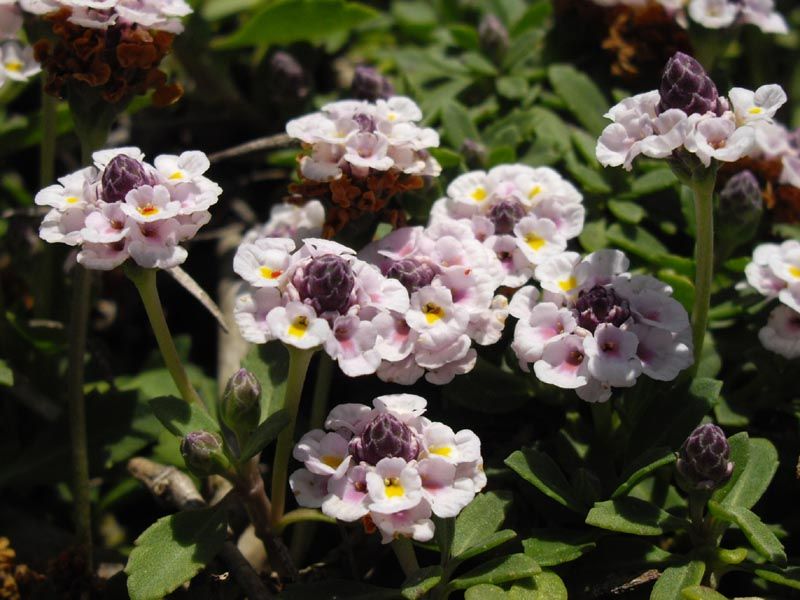
Frogfruit creates a dense mat of small green leaves that hug the ground and tolerate moderate foot traffic while supporting pollinators with tiny white to purple flower clusters that bloom continuously throughout warm months.
This native groundcover stays under three inches tall, spreading horizontally to cover bare soil in sunny locations where traditional turfgrass struggles with heat stress or requires excessive irrigation.
The plant handles full sun and reflected heat exceptionally well, never showing the wilting or browning that affects less adapted groundcovers during peak summer conditions.
Established Frogfruit primarily relies on rainfall across most Florida regions, and the plant actually performs better with less supplemental watering once roots develop fully.
North Florida gardeners appreciate its tolerance for both heat and occasional cold, while Central and South Florida homeowners value how it handles extended hot seasons and high humidity without developing fungal problems.
The flowers attract small butterflies and native bees constantly, creating subtle movement and activity at ground level throughout the growing season.
You’ll find Frogfruit used as a lawn alternative, planted between pavers, or allowed to naturalize in areas where you want living coverage that requires no mowing, minimal watering, and almost no maintenance beyond occasional edging to keep it within desired boundaries.
10. Saw Palmetto
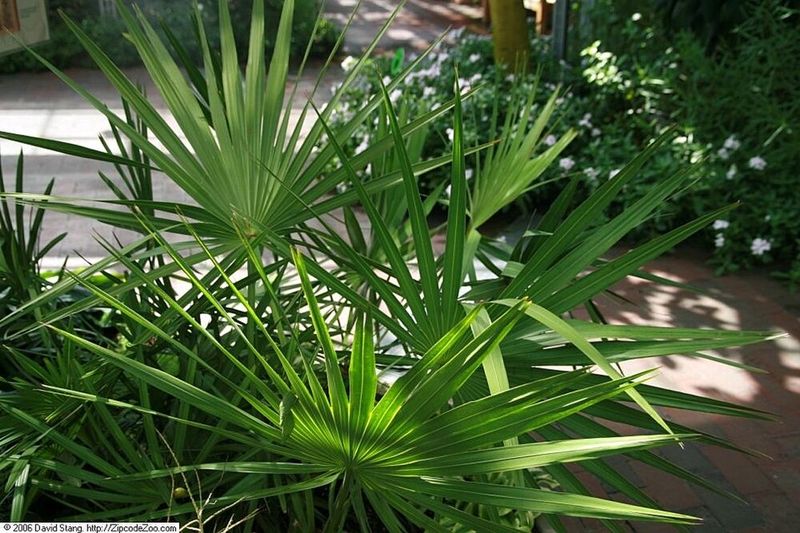
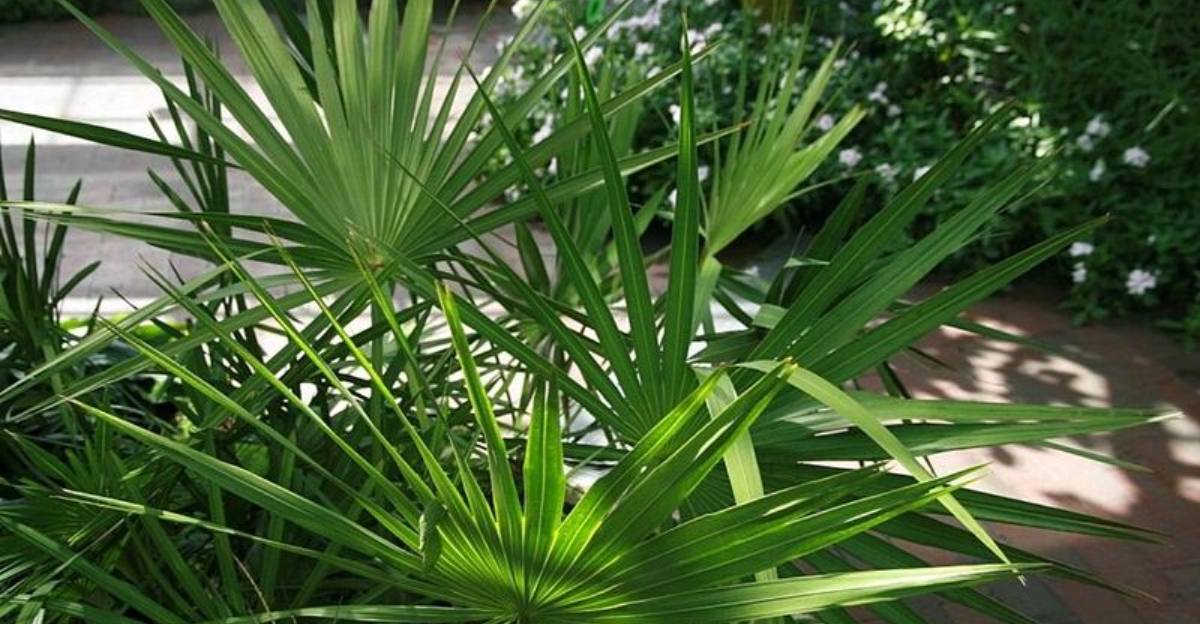
Few plants are more iconic in Florida landscapes than this rugged native palm with its bold fan-shaped fronds and extreme heat tolerance. It typically grows three to six feet tall, spreading slowly into colonies through underground stems that create natural-looking groupings over time.
The silvery-green to blue-green fronds radiate from a central point, creating bold architectural interest that remains consistent throughout the year regardless of weather conditions or seasonal changes.
Saw Palmetto primarily relies on seasonal rainfall once established across Florida, from North Florida pine flatwoods to South Florida coastal hammocks.
The plant handles full sun and reflected heat from buildings and pavement without wilting, and it tolerates both well-drained sandy soils and areas with seasonal flooding.
Central Florida gardeners appreciate how it performs through humid summers and periodic droughts with very little supplemental irrigation or special attention.
Use Saw Palmetto as a foundation planting, natural screening, or massed in native landscape designs where you want bold texture and year-round structure without installing irrigation systems or spending time on ongoing maintenance tasks throughout summer months.
11. Buttonwood
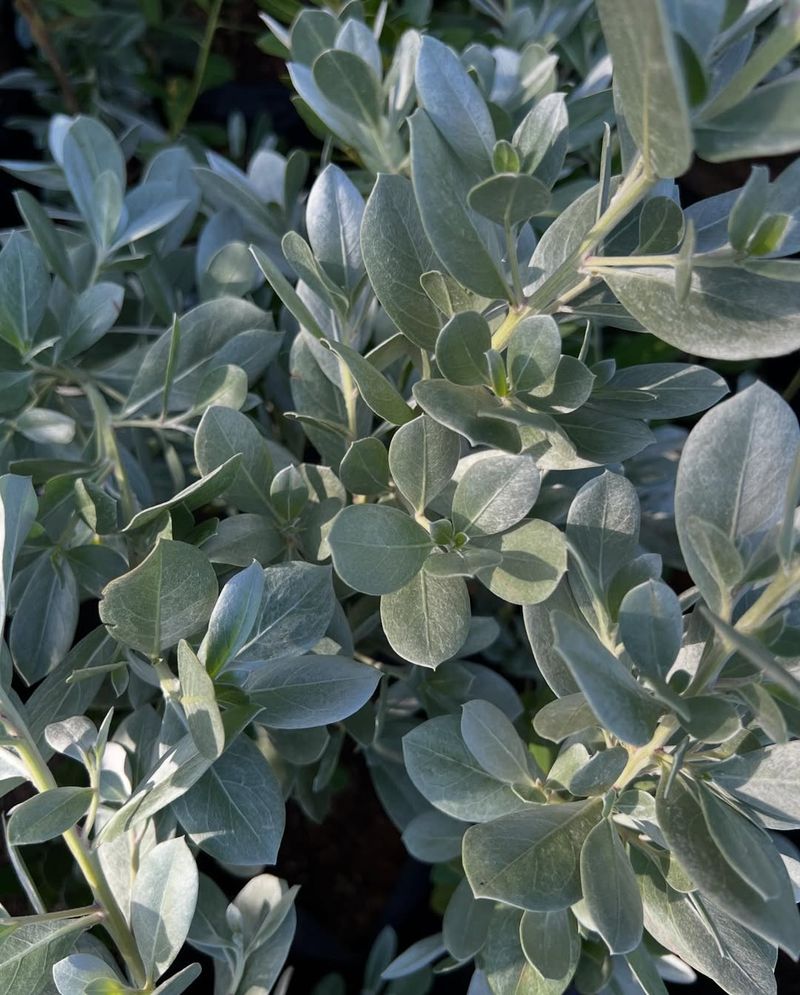
Buttonwood brings coastal toughness inland, handling full sun exposure and reflected heat with the same resilience it shows against salt spray and sandy soils in its native beachfront habitats.
This versatile native tree or large shrub grows naturally in South Florida coastal areas but performs well throughout Central Florida and into protected locations in North Florida counties, where freeze protection may be necessary.
The silvery-green foliage creates an attractive backdrop for other plantings, and the dense branching habit makes it useful for screening or shade depending on how you prune and train the plant over time.
Established Buttonwood requires minimal supplemental watering once roots develop deeply during the first growing season, surviving on seasonal rainfall patterns in most landscape situations.
South Florida gardeners appreciate how it handles extended hot seasons and tropical sun exposure without wilting, while Central Florida homeowners value its tolerance for high humidity and summer heat.
The plant responds well to pruning, allowing you to maintain it as a formal hedge or let it grow naturally into a small tree with interesting silver-gray bark.
You’ll see Buttonwood used as a street tree, privacy screening, or standalone specimen where you want salt tolerance, heat resistance, and low maintenance requirements combined in a single adaptable Florida-friendly plant selection.