10 Types Of Lilies Every Florida Gardener Should Know
Florida gardeners have a serious advantage that most of the country does not. While northern gardens shut down, our landscapes keep growing, blooming, and thriving nearly year-round.
The secret is choosing plants that actually love heat, humidity, and summer rain instead of fighting against it. Lilies are a perfect example.
Some varieties explode with color through the hottest months. Others thrive in shade, tolerate wet soil, or pop up with surprise blooms after storms.
The wrong choices struggle. The right ones turn ordinary yards into standout landscapes.
Knowing which lilies perform best in Florida can mean the difference between constant replanting and effortless beauty.
If you want bigger blooms, longer flowering seasons, and plants that keep coming back stronger every year, these Florida-friendly lilies are worth adding to your garden.
1. Daylily (Hemerocallis)
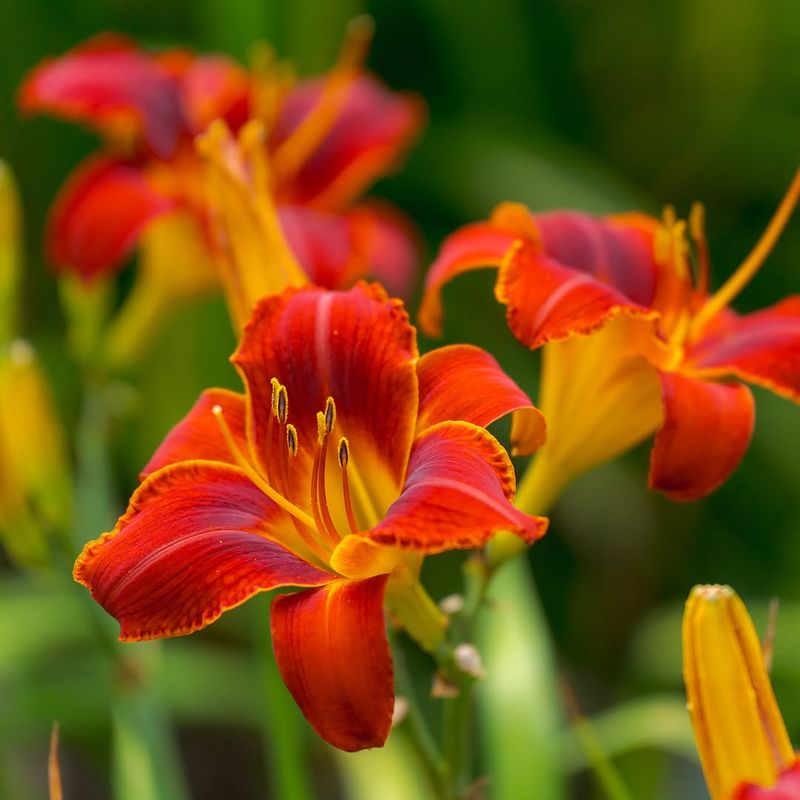
Although commonly called lilies, daylilies are not true lilies botanically, but they remain one of Florida’s most reliable flowering perennials. Daylilies earn their name because each flower lasts just one day, but plants produce so many buds that blooming continues for weeks or even months depending on the variety you choose.
These tough performers handle our heat and humidity without complaint, making them perfect for gardeners who want color without constant fussing.
You can plant daylilies from Pensacola to Key West with excellent results. They tolerate both full sun and partial shade, though flowering is heaviest with at least six hours of direct sunlight daily.
Modern hybrid varieties bloom repeatedly from spring through fall, giving your garden continuous color during our longest growing seasons.
Clumps expand steadily over time, and you can divide them every few years to create more plants or share with neighbors. Daylilies work beautifully as groundcovers on slopes, as border plants along walkways, or massed in large beds for dramatic impact.
Their grassy foliage stays attractive even when flowers fade, and they rarely suffer from serious pest or disease problems in Florida landscapes.
2. Crinum Lily
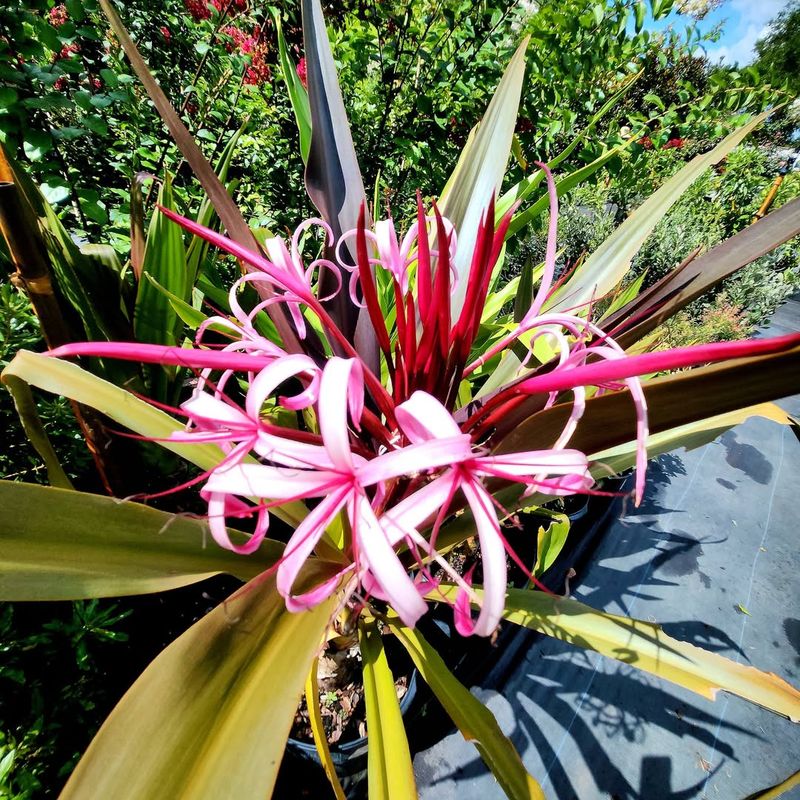
Massive strap-like leaves fountain outward from thick bulbs planted near mailboxes and front porches across older Florida neighborhoods.
Crinum lilies produce tall stalks topped with clusters of fragrant white or pink trumpet flowers that appear mostly in summer and fall when our gardens need fresh blooms most.
These old-fashioned favorites have been passed down through generations of Florida gardeners because they simply refuse to quit, even during our hottest, wettest months.
Crinums adapt to wet or dry conditions once established, making them ideal for areas with inconsistent moisture. They perform well in both sun and partial shade, though flowering increases with more light.
The large bulbs can grow quite substantial over time, creating impressive clumps that become focal points in the landscape.
You will find crinums thriving throughout all regions of Florida, from the Panhandle to the Keys. Many heritage varieties have naturalized in old home sites and rural areas, proving their exceptional durability.
Plant them where their bold foliage makes a statement, such as foundation beds, pond edges, or mixed borders. Their sweet evening fragrance adds another layer of enjoyment to patios and outdoor living spaces during warm summer nights.
Your Florida Garden Changes Every Week. Your Plan Should Too.
Gardening in Florida changes quickly throughout the season. Every Friday you’ll receive a simple weekly plan showing exactly what to plant, prune, fertilize, harvest, and protect so you never miss the right timing.
3. Spider Lily (Hymenocallis)
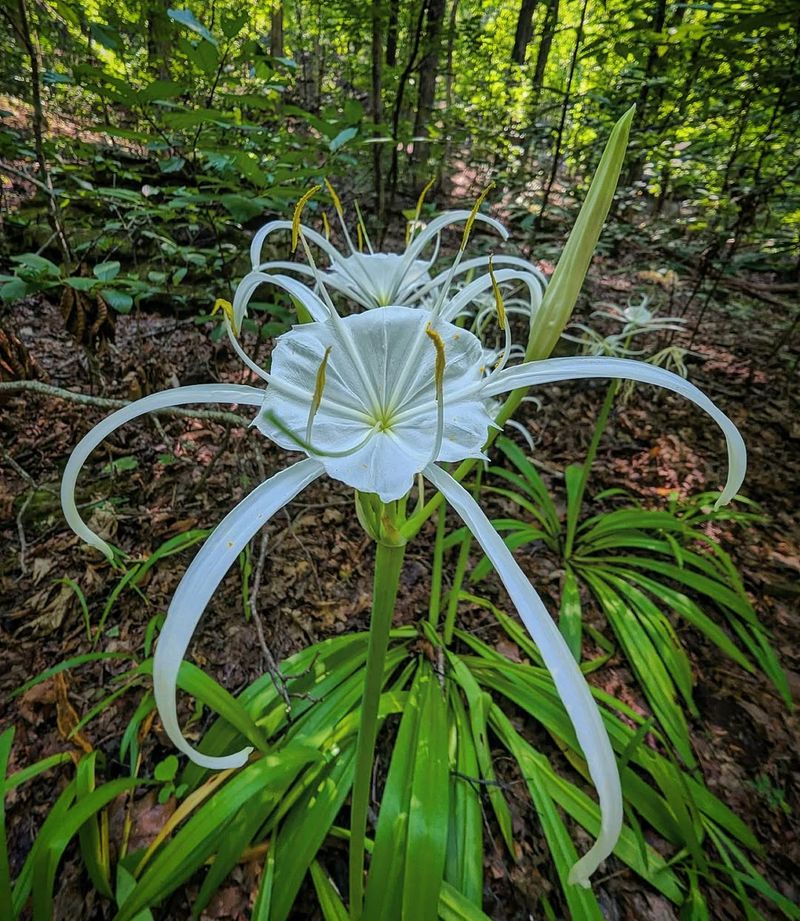
Delicate white petals radiate outward like spider legs from a central cup, creating one of the most distinctive flower shapes in Florida gardens. Spider lilies bloom primarily in late spring and summer, sending up tall stems crowned with fragrant white flowers that practically glow at dusk.
Some native species grow naturally along streams, lakeshores, and wetland edges throughout the state, showing their preference for moist conditions, while other commonly sold varieties are non-native but still perform well in Florida landscapes.
Hymenocallis performs beautifully in garden beds with regular irrigation, but truly excels when planted near ponds, rain gardens, or low spots that stay damp.
The foliage resembles amaryllis leaves and remains evergreen in South Florida while dying back partially during North Florida winters.
These lilies tolerate both full sun and light shade, adapting to various garden situations with ease.
You can find spider lilies naturalized in many Florida parks and natural areas, where they contribute to native plant communities. When you add them to your home landscape, place them where their unique flowers can be appreciated up close.
They work wonderfully in containers on patios, in bog gardens, or along the edges of water features where their roots can access consistent moisture throughout our growing season.
4. Easter Lily (Lilium longiflorum)
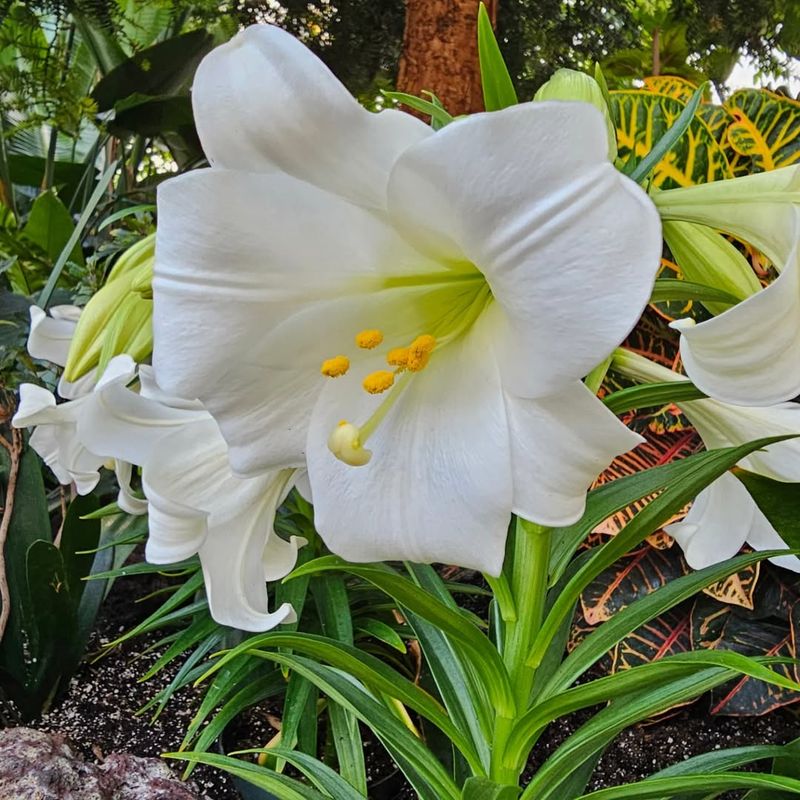
Pure white trumpets with golden throats bring thoughts of spring celebrations and church services to mind. Easter lilies arrive in garden centers and grocery stores each spring, already in bloom and ready to brighten your home.
While these lilies grow beautifully as temporary container plants in Florida, getting them to perform as long-term garden perennials requires understanding their preferences and our climate challenges.
Easter lilies prefer cooler conditions than most of Florida provides year-round. North Florida gardeners have better success keeping these lilies alive in garden beds, especially when planted in locations with afternoon shade and consistent moisture.
Central and South Florida gardeners typically enjoy Easter lilies as seasonal potted plants rather than permanent landscape additions, since summer heat and humidity stress these cool-season performers.
If you want to try planting Easter lilies outdoors after their initial bloom, choose a spot with morning sun and protection from intense afternoon heat. Amend your soil with organic matter to improve drainage, as these lilies dislike constantly wet roots despite needing regular water.
North Florida gardeners may see repeat blooms, while those farther south should consider Easter lilies beautiful but temporary additions that provide glorious spring color before being replaced with more heat-tolerant options for summer gardens.
5. Canna Lily
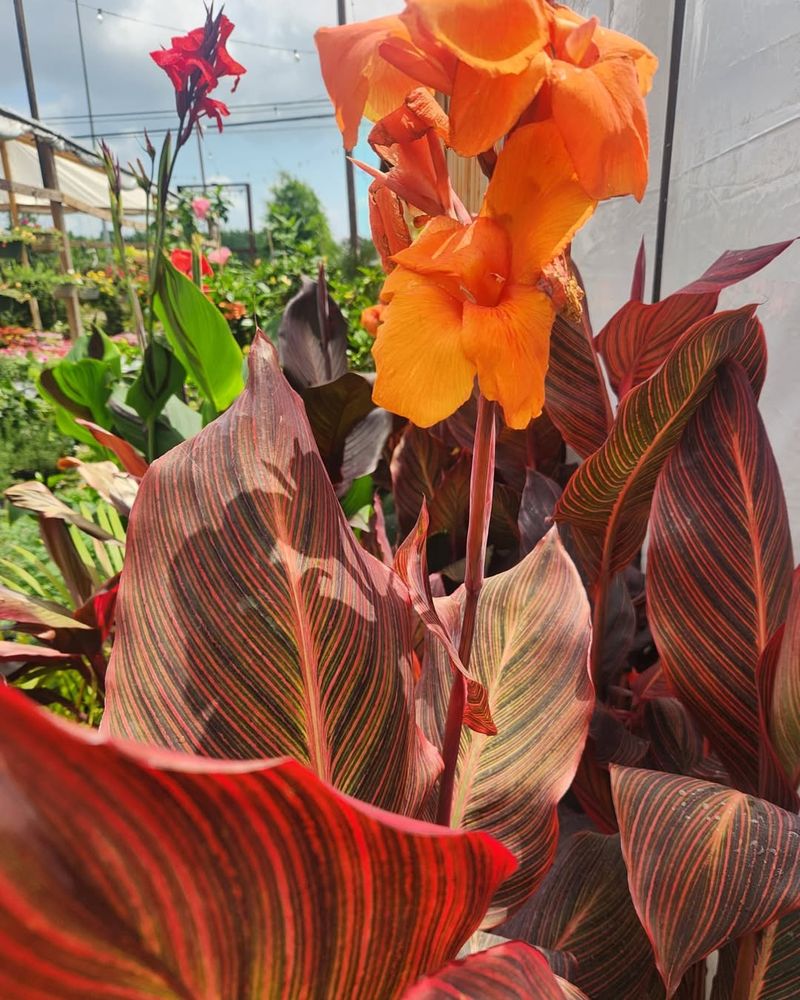
Bold tropical foliage in shades of green, bronze, or striped variegation towers over garden beds, creating instant drama before flowers even appear.
Cannas send up spikes of bright red, orange, yellow, or pink blooms throughout our warm months, offering nonstop color from late spring until the first cool weather arrives.
These vigorous growers love Florida heat and humidity, making them one of the most reliable choices for bold summer color in landscapes from the Panhandle to the southernmost Keys.
Plant cannas in full sun for best flowering, though they tolerate some afternoon shade in the hottest regions. They appreciate consistent moisture and perform beautifully near ponds, in rain gardens, or any spot with regular irrigation.
The large leaves create wonderful textural contrast against finer-leafed plants, and the flowers attract hummingbirds throughout the growing season.
Cannas spread through underground rhizomes, forming substantial clumps over time. You can divide them every few years to control size and create more plants.
Some older varieties, especially near natural waterways, can spread aggressively and may become invasive, so choose modern sterile hybrids for more controlled growth and avoid planting near wetlands or natural areas.
Their bold presence works perfectly as background plants in mixed borders, as foundation plantings, or massed together for tropical garden effects that celebrate Florida growing conditions.
6. Rain Lily (Zephyranthes)
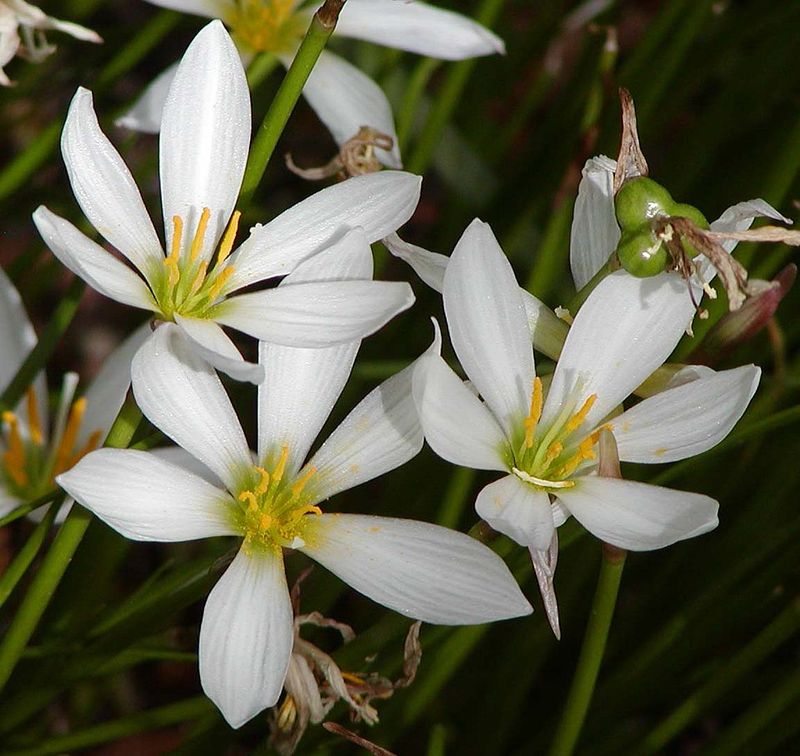
Small starry flowers pop up seemingly overnight after summer thunderstorms, carpeting garden edges with white, pink, or yellow blooms. Rain lilies get their common name from this magical habit of flowering within days of good rainfall, creating surprise shows throughout our wet season.
These charming little bulbs naturalize readily in Florida landscapes, forming dense colonies that require almost no care once established in your garden beds or lawn edges.
Zephyranthes thrives in full sun to partial shade and tolerates both moist and dry conditions, though flowering is most prolific with regular summer rains. The grass-like foliage stays low and unobtrusive between bloom cycles, blending naturally into lawn areas or groundcover beds.
Different species bloom at various times from spring through fall, and you can plant several types together for extended color.
Rain lilies perform wonderfully throughout all Florida regions, adapting to our various microclimates with ease. They work beautifully naturalized in lawn areas where you can enjoy their surprise blooms, tucked along walkway edges, or planted in containers on patios.
These tough little bulbs multiply readily, and you can dig and share extras with neighbors. Their low maintenance requirements and reliable flowering make them perfect for busy gardeners who want dependable color without constant attention during our active growing months.
7. Tiger Lily (Lilium lancifolium)
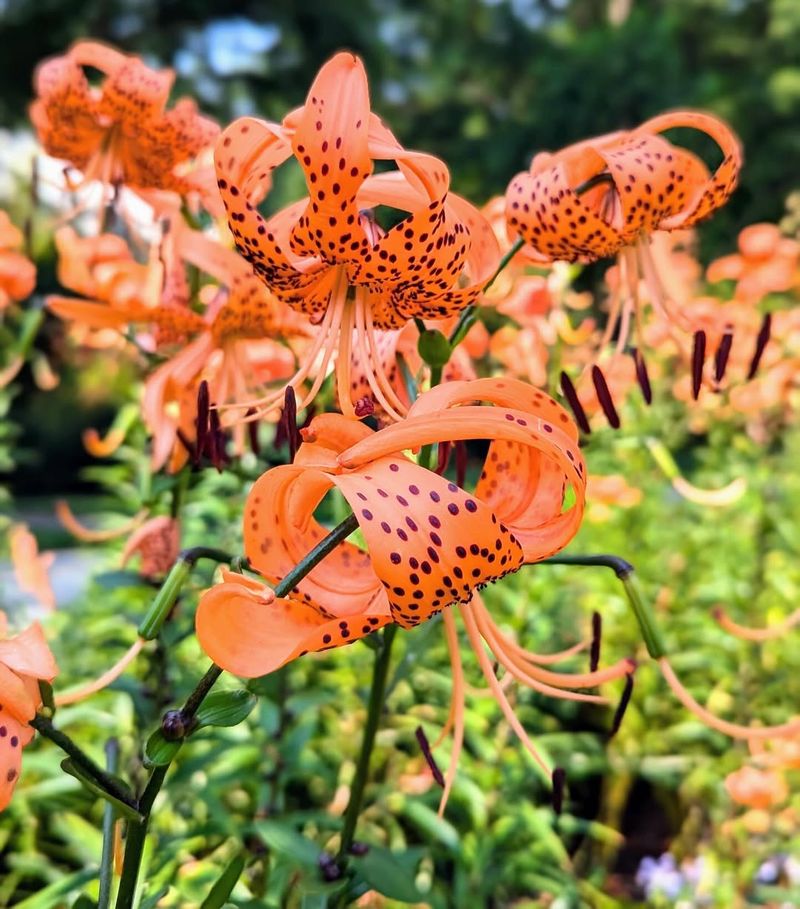
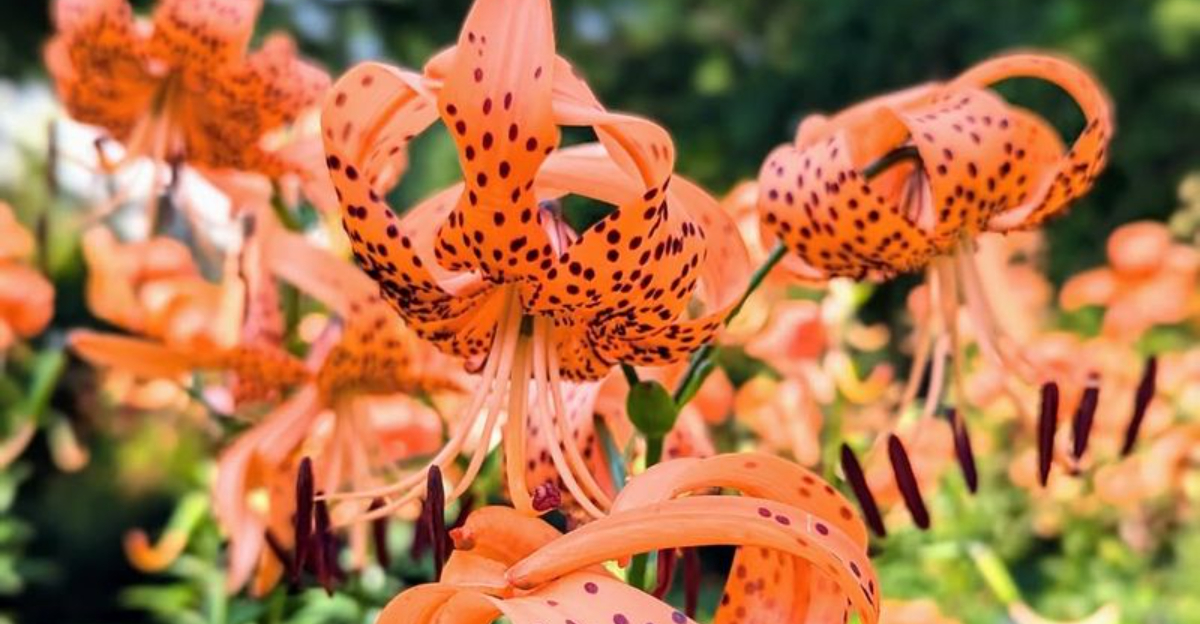
Spotted orange petals curve backward dramatically, revealing long stamens tipped with chocolate-colored pollen. Tiger lilies bring old-fashioned charm to gardens with their distinctive recurved flowers and dark spots that give them their common name.
While these lilies grow naturally in cooler climates, Florida gardeners can succeed with them by understanding their preferences and choosing the right planting locations for our warmer conditions.
North Florida offers the best environment for tiger lilies, though success is still inconsistent because these plants require colder winter temperatures than most of Florida provides. When winters are cool enough, bulbs establish better and produce stronger summer flowering.
Central Florida gardeners can try tiger lilies in protected spots with excellent drainage and shade during the hottest afternoon hours.
South Florida presents too much year-round heat and humidity for tiger lilies to thrive as perennials. Gardeners in tropical zones should consider these lilies temporary additions or focus on more heat-adapted options like crinums or spider lilies instead.
If you garden in North or Central Florida and want to grow tiger lilies, plant bulbs in fall, mulch well, and provide consistent moisture during their growing season.
Expect blooms in early to midsummer, when their spotted flowers add cottage garden appeal to mixed borders and cutting gardens throughout regions with adequate winter chill.
8. Calla Lily
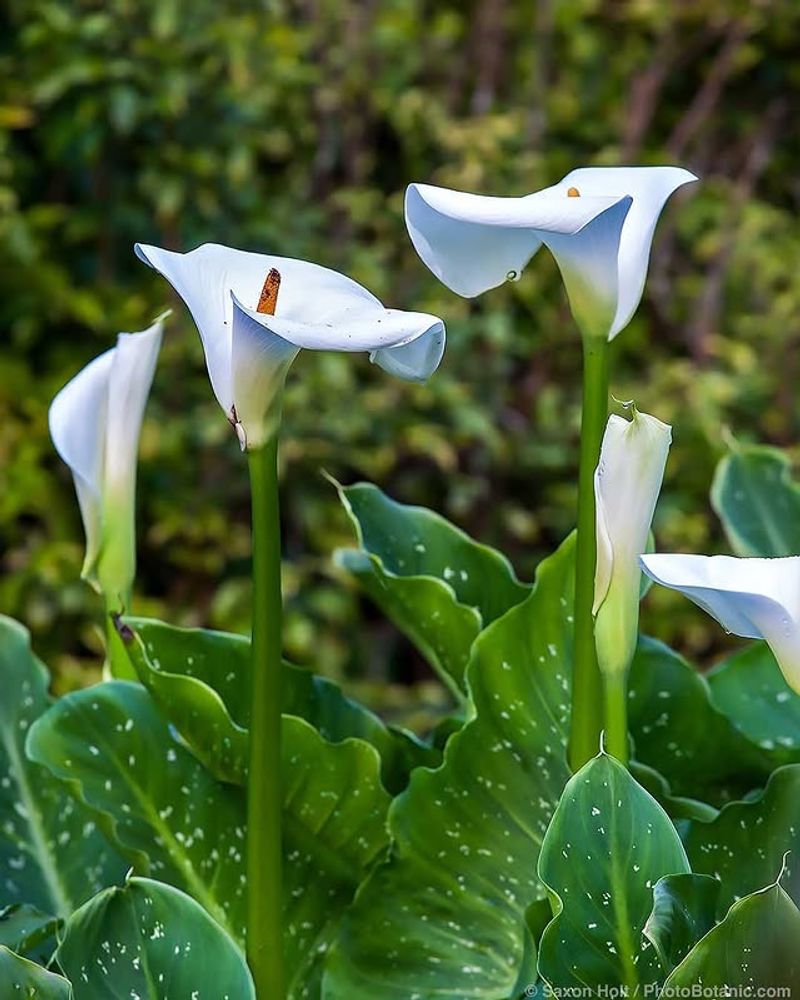
Elegant spathes wrap around central spadices in classic white or vibrant colors ranging from deep purple to sunny yellow. Callas bring sophisticated elegance to shaded gardens and container displays, though they are not true lilies botanically.
These South African natives adapt surprisingly well to Florida gardens when given the right conditions, particularly in areas with protection from intense afternoon sun and consistent moisture throughout their active growing period.
Calla lilies perform best in Central and North Florida, where slightly cooler winters encourage better dormancy and subsequent flowering. Plant them in partial shade with rich, moisture-retentive soil that drains well despite staying evenly damp.
They work beautifully in containers on shaded patios, in woodland garden settings, or near water features where humidity stays high and roots access reliable moisture.
South Florida gardeners can grow callas successfully in very shaded, protected locations, though performance may vary. The plants typically bloom in spring and early summer, then may go dormant during the hottest months.
White varieties tend to be most reliable, while colored hybrids can be more temperamental in our climate. Watch for yellowing foliage that signals overwatering or poor drainage, and reduce water when plants enter dormancy.
Their sophisticated flowers make excellent cuts for arrangements, adding another benefit to growing these refined beauties in your Florida shade garden.
9. Amazon Lily (Eucharis)
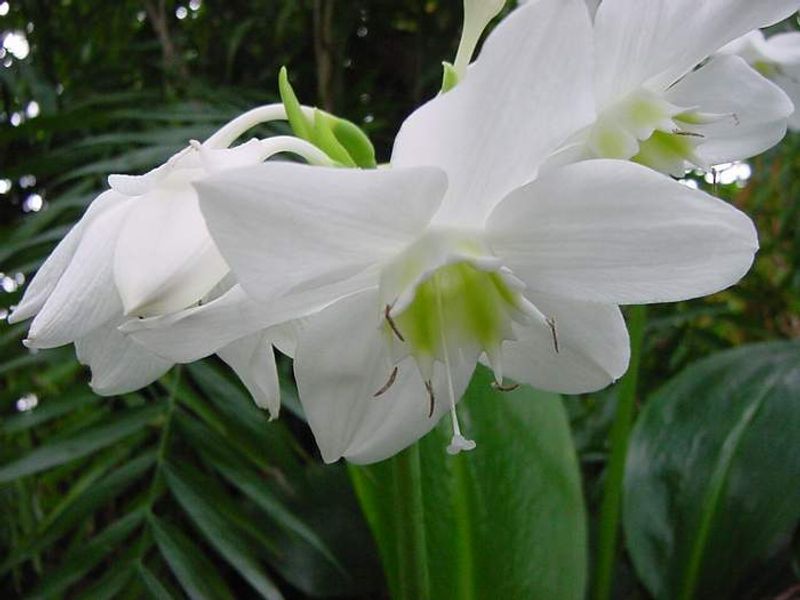
Clusters of pristine white flowers nod gracefully on tall stems above glossy dark green foliage. Amazon lilies bring tropical elegance to shaded gardens with their fragrant blooms and attractive evergreen leaves that remain beautiful even when flowers are absent.
These South American natives adapt wonderfully to Florida shade gardens, particularly in Central and South regions where warmth and humidity mimic their rainforest origins perfectly.
Eucharis thrives in bright shade or filtered light, making it ideal for planting under tree canopies, on north-facing walls, or in covered patios. The bulbs prefer rich, well-draining soil with regular moisture and dislike drying out completely.
Plants typically bloom in late winter to spring, with possible repeat flowering in fall when conditions are favorable.
South Florida gardeners enjoy the best success with Amazon lilies, as the plants remain evergreen and active year-round in tropical conditions.
Central Florida gardeners also achieve excellent results in protected locations, while North Florida growers should consider these lilies for containers that can be protected during occasional cold snaps.
The glossy foliage creates wonderful texture in shade gardens, and the sweetly scented white flowers add elegance to any protected spot. Plant them in groups for best visual impact, and divide clumps every few years to maintain vigor and encourage abundant flowering in your Florida shade garden throughout the year.
10. Native Swamp Lily (Crinum americanum)
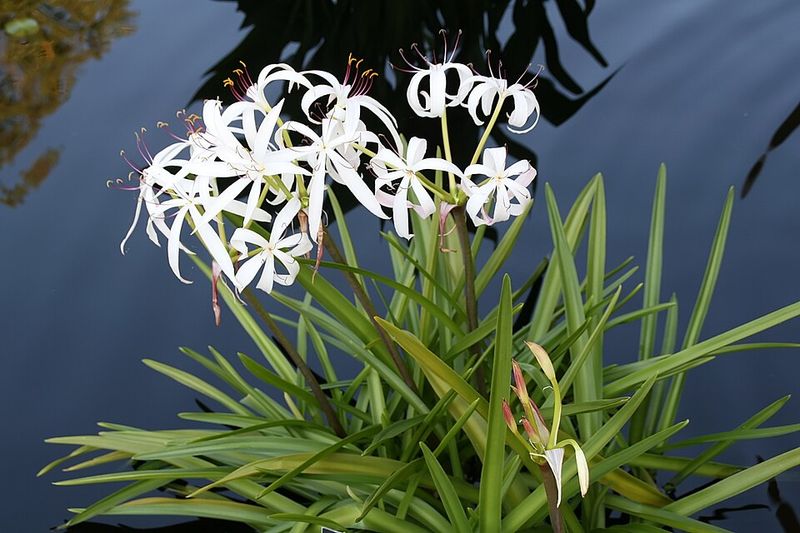
Spidery white petals with long stamens emerge from wetland edges and stream banks throughout Florida natural areas. Swamp lilies represent our native crinum species, perfectly adapted to fluctuating water levels and humid conditions found in Florida ecosystems.
These tough natives bloom prolifically from spring through fall, providing nectar for butterflies and creating beautiful naturalized displays wherever water collects or flows through the landscape.
Crinum americanum grows naturally throughout the entire state in marshes, swamps, pond edges, and drainage ditches. You can bring this native beauty into your home landscape by planting it in rain gardens, bog areas, or along pond margins where roots can access consistent moisture.
The plants tolerate full sun to partial shade and handle both standing water and occasional dry periods once established.
Unlike some aggressive wetland plants, swamp lily spreads at a moderate pace and plays an important ecological role in native plant communities. Using native swamp lily instead of non-native alternatives supports local wildlife and reduces risks of introducing potentially invasive species to natural areas.
The fragrant white flowers appear on tall stalks above the foliage, creating vertical interest in wet areas where few other flowering plants perform reliably.
Plant them where you can appreciate their blooms and support Florida ecosystems simultaneously, celebrating plants perfectly suited to our unique growing conditions and natural landscapes.