13 Fragrant Plants That Make Florida Backyards Smell Amazing
Florida backyards don’t have to just look good. They can smell amazing too.
On the right evening, the air can fill with gardenia, jasmine, citrusy blossoms, or tropical flowers that make your whole yard feel different the moment you step outside.
With Florida’s long growing season and warm climate, it’s easy to grow plants that release fragrance in the morning, afternoon, and even after dark.
Some work great near patios, others along walkways, fences, or pool areas where the scent carries on the breeze. A few of these plants are low maintenance, some attract butterflies and hummingbirds, and several bloom multiple times a year.
If you want your outdoor space to feel more inviting, more relaxing, and more memorable for guests and family, these fragrant plants can completely change the way your backyard feels.
1. Gardenia (Gardenia jasminoides)
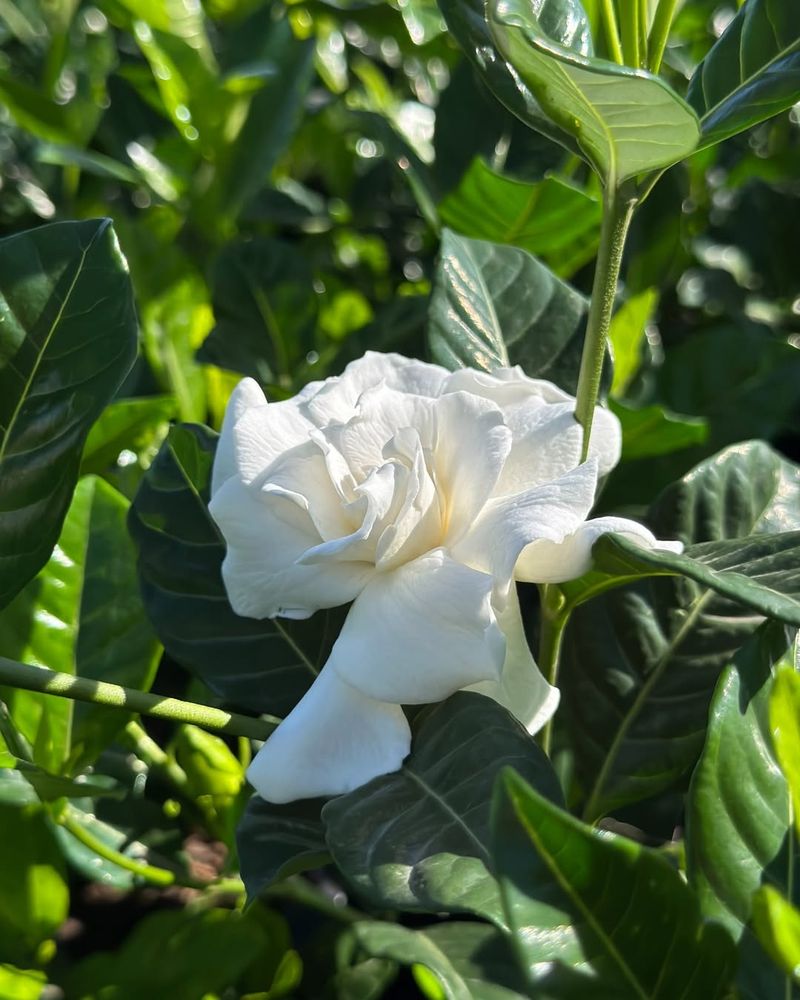
Walking past a blooming shrub on a May afternoon, you catch a wave of creamy sweetness so rich it stops you in your tracks. Gardenias deliver that unforgettable perfume from late spring through early summer, with glossy green leaves that look beautiful year-round.
Plant them near your front entryway or along pathways where you’ll brush past their blooms regularly.
Central and North Florida gardeners get the most reliable performance, though South Florida can succeed with afternoon shade and consistent moisture. Gardenias prefer acidic soil and appreciate regular feeding with an azalea or camellia fertilizer.
Morning sun with afternoon protection keeps the leaves from scorching in our intense summer heat.
Most homeowners notice the fragrance carries best on humid evenings when there’s just a slight breeze. The waxy white flowers bruise easily, so plant them where they won’t get bumped or handled too much.
Pair gardenias with ferns or hostas underneath to create a lush, shaded fragrance zone. Once established, they reward you with blooms that perfume entire outdoor rooms, making every gathering feel special and memorable.
2. Confederate Jasmine / Star Jasmine (Trachelospermum jasminoides)
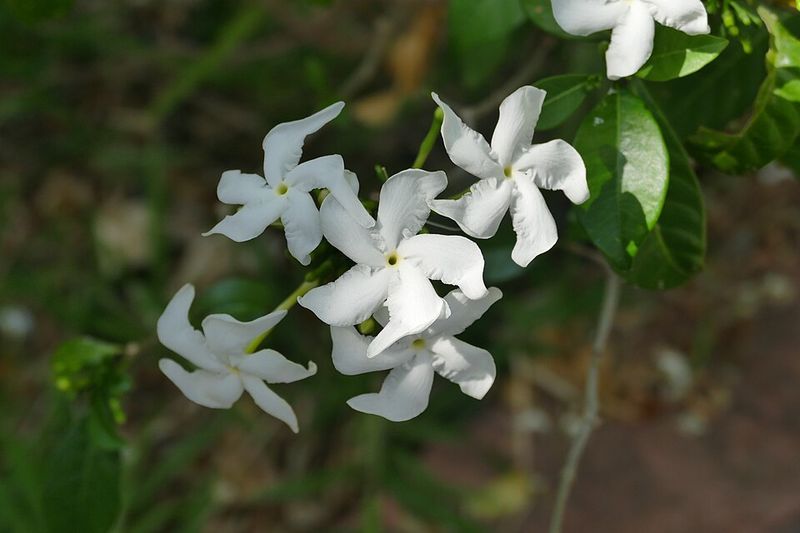
Your neighbor’s fence suddenly smells like heaven in March, and you trace the scent to a vine covered in tiny white pinwheel flowers.
Confederate jasmine climbs trellises, arbors, and fences with enthusiasm, creating fragrant curtains that bloom heaviest in spring but often surprise you with scattered flowers through fall.
The scent is sweet without being cloying, carrying on warm breezes across your entire yard.
This evergreen vine thrives statewide, tolerating both full sun and partial shade with equal vigor. It’s one of the most reliable fragrant plants for Florida because it handles our heat, occasional cold snaps, and even some drought once established.
Train it over a pergola where you sit outside, and the fragrance will drift down around you like an invisible blanket.
Homeowners love how low-maintenance this vine becomes after the first year. It rarely needs pruning beyond shaping, and pests generally leave it alone.
The fragrance peaks during warm afternoons when the sun hits the flowers directly.
Planting it near outdoor seating or bedroom windows means you’ll enjoy the scent both outside and drifting indoors on spring nights.
Your Florida Garden Changes Every Week. Your Plan Should Too.
Gardening in Florida changes quickly throughout the season. Every Friday you’ll receive a simple weekly plan showing exactly what to plant, prune, fertilize, harvest, and protect so you never miss the right timing.
3. Night-Blooming Jasmine (Cestrum nocturnum)
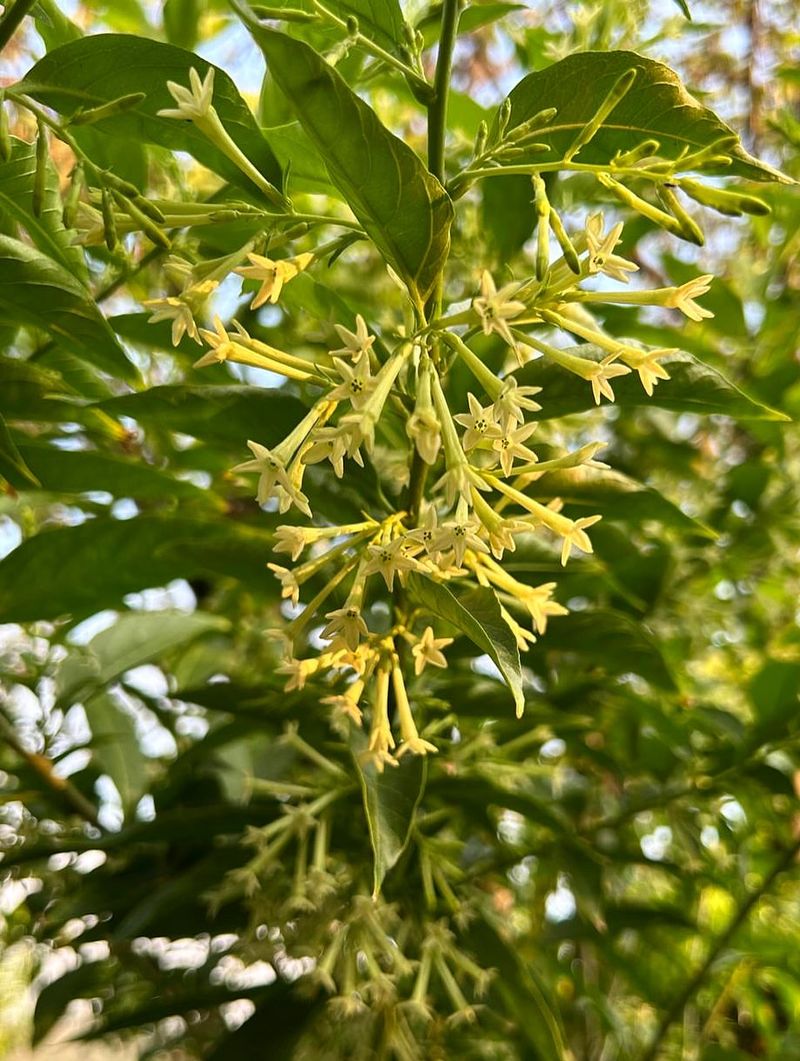
Darkness falls and suddenly your backyard smells like the most exotic perfume counter you’ve ever visited. Night-blooming jasmine releases its powerful fragrance only after sunset, with small greenish-white flowers that look unremarkable by day but become scent superstars after dark.
The perfume can travel across entire neighborhoods on warm, still nights, announcing its presence from blocks away.
South Florida gardeners find this shrub easiest to grow, while Central Florida can succeed with protected locations.
Important note: Night-blooming jasmine is considered invasive in South Florida and is toxic to pets and livestock. It can reseed aggressively, so plant only in managed landscapes, avoid natural areas, and remove volunteer seedlings promptly.
Best used in contained landscapes or managed beds where you can control its spread.
Plant it near patios or pools where you spend summer evenings, but not too close to bedroom windows because the fragrance can become overwhelming indoors. The scent is strongest on humid, windless nights when the air holds the perfume close to the ground.
Many homeowners notice moths and other nighttime pollinators visiting the flowers after dark, adding movement to the sensory experience your backyard provides each evening.
4. Sweet Almond Bush (Aloysia virgata)
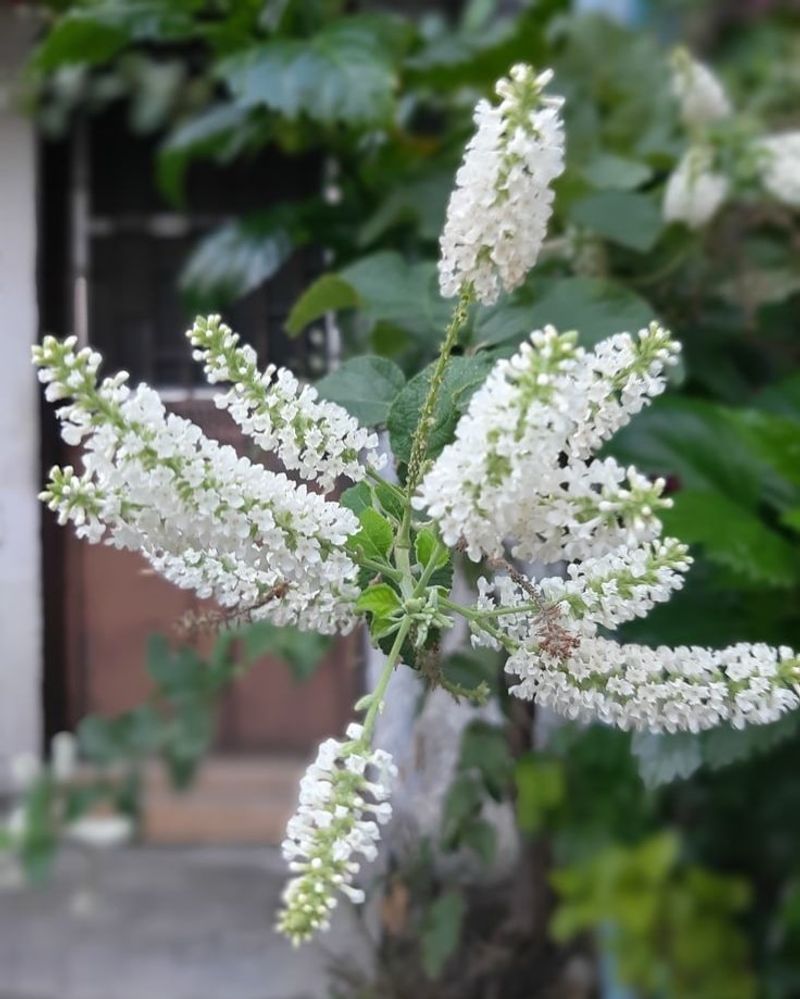
Brushing past a shrub releases an unexpected burst of almond extract and vanilla, stopping you mid-step to figure out where that delicious smell came from.
Sweet almond bush produces tiny white flowers nearly year-round in South Florida and from spring through fall in Central regions, with fragrance that intensifies in warm sunshine.
The blooms cluster along arching branches, creating clouds of scent that hover around the plant.
This Florida-Friendly plant tolerates our sandy soils and occasional dry spells beautifully once established. It grows best in full sun but accepts light shade, reaching about four to six feet tall and wide with minimal pruning.
North Florida gardeners may see it behave more like a perennial, freezing back in winter but returning from roots when warmth arrives.
The fragrance carries best during midday heat when the sun warms the flowers fully. Plant it along walkways or near garden benches where you’ll regularly pass close enough to catch the scent.
Butterflies adore the nectar-rich blooms, so you’ll enjoy both fragrance and fluttering wings throughout the growing season. Most homeowners report the almond scent is sweet but never heavy, making it perfect for smaller yards.
5. Simpson’s Stopper (Myrcianthes fragrans)
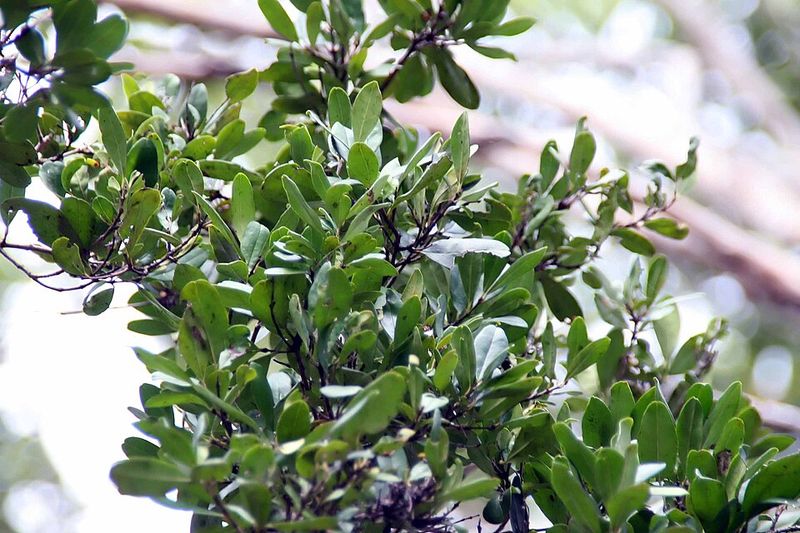
A native Florida shrub surprises you with fragrance that smells like orange blossoms mixed with spice, proving that beautiful scents don’t always come from exotic imports.
Simpson’s stopper blooms in late spring and early summer, covering itself with small white flowers that attract butterflies and bees while perfuming your entire garden.
The evergreen leaves release their own pleasant aroma when you brush against them or crush them gently between your fingers.
This tough native thrives throughout Florida, handling salt spray in coastal gardens and adapting to various soil types with ease. It naturally grows as a large shrub or small tree, reaching ten to fifteen feet if left unpruned, but it accepts shaping beautifully for hedges or foundation plantings.
The fragrance works best when you plant it where you’ll walk past regularly, releasing scent as you move through your landscape.
Homeowners appreciate how low-maintenance this native remains once established, requiring almost no fertilizer and tolerating dry periods after the first year. The flowers give way to small reddish fruits that birds enjoy, adding wildlife value to your fragrant landscape.
Morning sun brings out the strongest perfume, making it ideal near breakfast patios or kitchen windows you open during cooler months.
6. Plumeria (Frangipani)
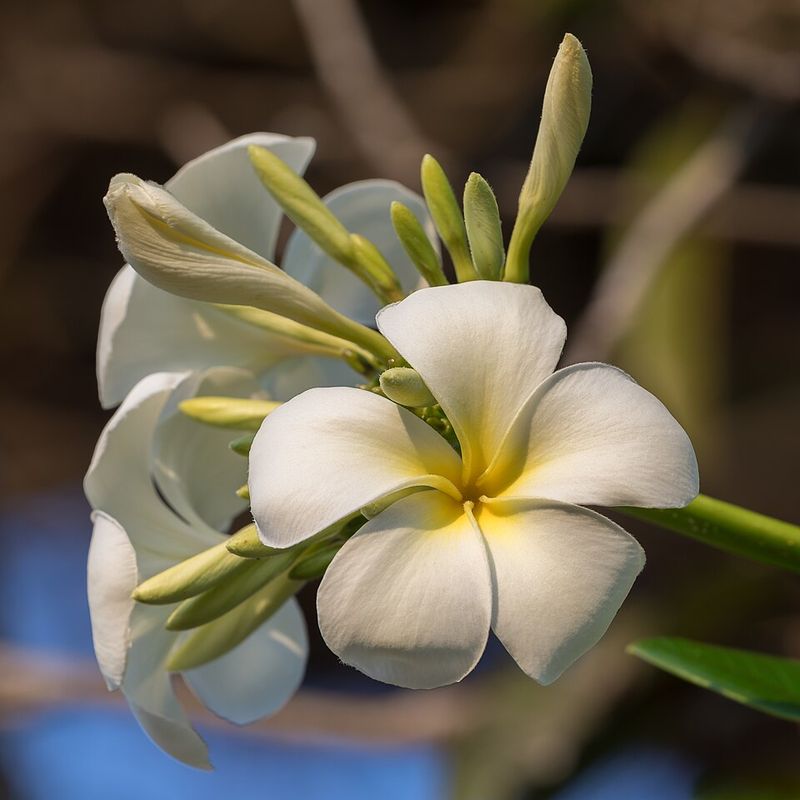
Stepping into your backyard feels like arriving at a Hawaiian resort when plumeria blooms release their legendary tropical perfume. The thick, waxy flowers come in colors ranging from pure white to deep pink and yellow, each variety offering a slightly different fragrance intensity.
The scent is sweetest during morning hours and again in early evening, floating on warm breezes that carry the perfume across your entire property.
South and Central Florida provide ideal growing conditions, while North Florida gardeners often grow plumeria in containers they can protect during occasional freezes. These small trees or large shrubs prefer full sun and well-drained soil, tolerating drought beautifully once established.
They naturally drop their leaves in winter, looking like bare sticks until spring warmth triggers new growth and flower spikes.
Plant them near pools, patios, or outdoor showers where their tropical fragrance enhances the vacation vibe of your backyard. The flowers make incredible cut arrangements that perfume entire rooms indoors.
Most homeowners discover that plumeria fragrance is powerful without being overwhelming, creating an inviting atmosphere that makes guests linger longer outdoors.
Butterflies occasionally visit, but the real reward is that intoxicating scent that transforms ordinary Florida afternoons into something special and memorable.
7. Arabian Jasmine (Jasminum sambac)
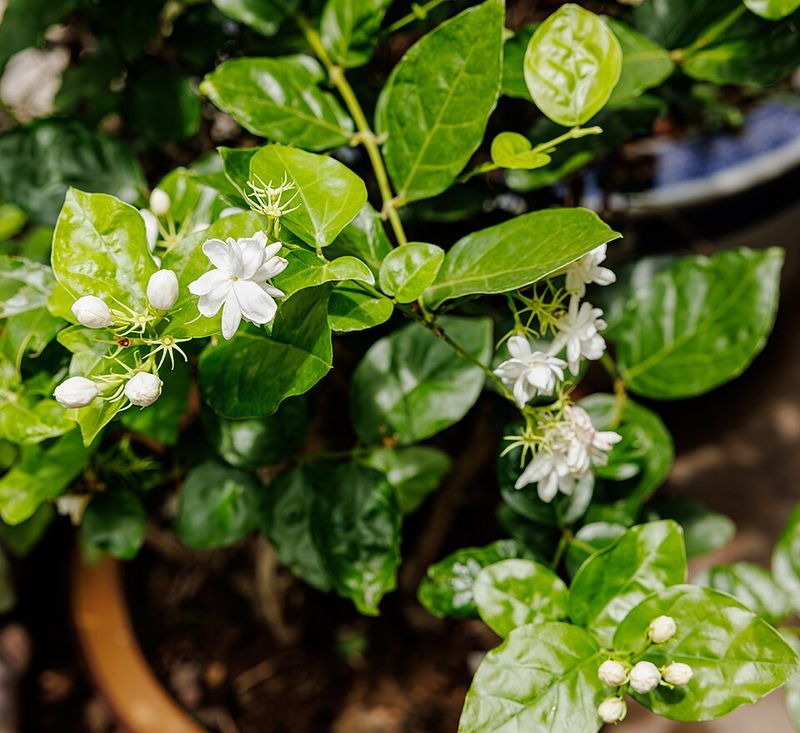
The national flower of the Philippines greets you with a fragrance so pure and sweet that it’s been treasured for perfumes and teas for centuries.
Arabian jasmine produces small white flowers that open in the evening and release their strongest scent after dark, though you’ll catch whiffs of perfume throughout the day.
The blooms appear nearly year-round in South Florida and most of the year in warmer Central regions, providing reliable fragrance for your landscape.
This evergreen shrub stays compact, usually reaching three to five feet tall, making it perfect for containers near seating areas or planted in the ground along pathways. It thrives in full sun to partial shade and appreciates regular watering during dry periods.
The fragrance is most intense on warm, humid nights when the air hangs still and heavy around your garden.
Many Florida gardeners plant Arabian jasmine near bedroom windows or outdoor sitting areas where evening fragrance can be fully appreciated. The flowers are traditionally used in jasmine tea and religious ceremonies throughout Asia, adding cultural richness to your landscape choices.
Most homeowners notice butterflies and moths visiting the blooms, especially after sunset. The scent is sweeter and lighter than confederate jasmine, never overwhelming but always present and welcoming throughout the warm months.
8. Port Wine Magnolia / Banana Shrub (Magnolia figo)
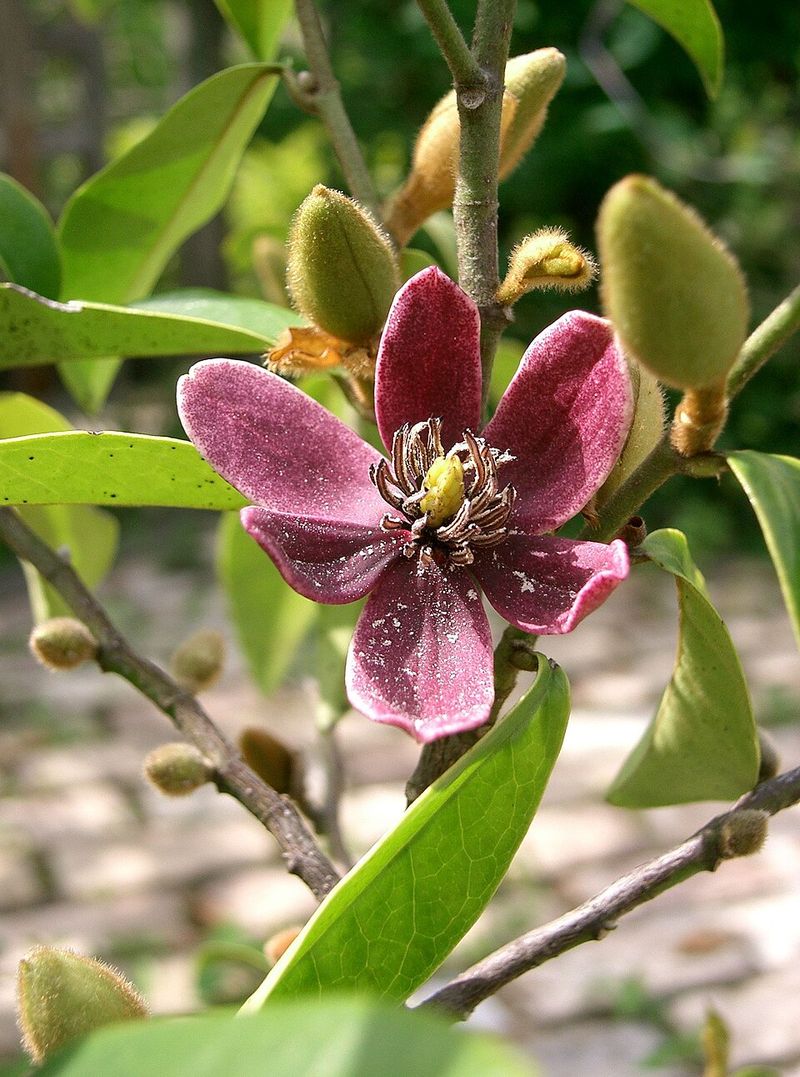
You walk past a shrub on a warm afternoon and suddenly smell ripe bananas and tropical fruit, making you stop in your tracks to find the source. Banana shrub, also called port wine magnolia, produces small creamy-yellow flowers that release one of the most unique fragrances found in Florida landscapes.
The blooms appear from spring through summer, with fragrance strongest during warm daytime hours when the sun heats the petals. Though the flowers are smaller than traditional magnolias, their scent easily fills patios, walkways, and garden corners.
This evergreen shrub thrives in North, Central, and South Florida, preferring partial shade and well-drained soil. It typically grows six to ten feet tall and wide, making it ideal for foundation plantings, privacy screens, or fragrant accents near seating areas.
Plant banana shrub near windows, garden benches, or pathways where its unusual scent can be fully appreciated. The glossy green foliage stays attractive year-round, adding structure and beauty even when the plant is not in bloom.
Homeowners love how low-maintenance banana shrub remains once established. Its combination of compact size, exotic fragrance, and Florida adaptability makes it a standout choice for gardeners who want something different from traditional floral scents.
9. Tea Olive (Osmanthus fragrans)
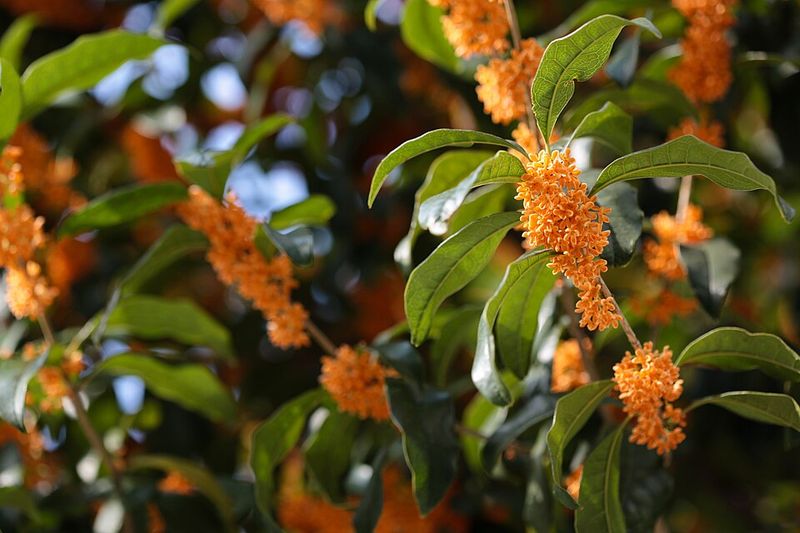
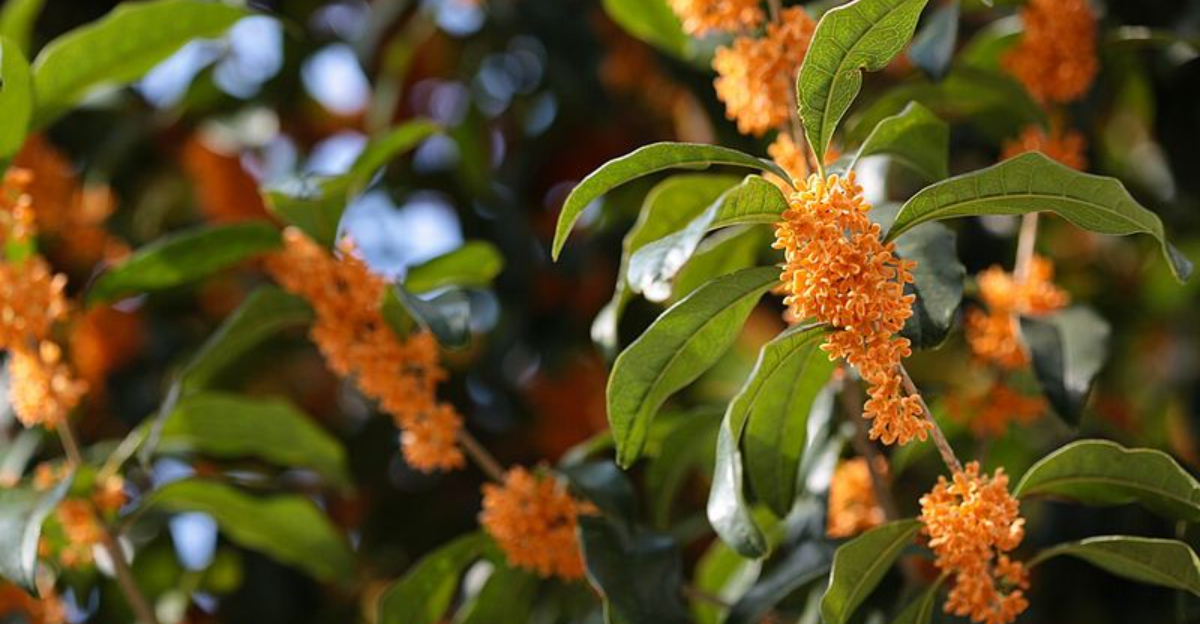
October air carries an apricot-like sweetness so strong you search the entire yard trying to locate its source, finally discovering tiny cream-colored flowers hiding among glossy leaves. Tea olive blooms most heavily during fall and again in spring, with fragrance so powerful that a single small shrub can perfume an entire neighborhood.
The scent is fruity and sweet, reminiscent of ripe apricots or peaches warming in sunshine.
Central and North Florida provide the best growing conditions, though South Florida can succeed with afternoon shade and attention to watering. This evergreen shrub grows slowly into a dense, rounded form that works beautifully as a foundation plant or specimen near entryways.
The flowers are almost invisible among the foliage, making the fragrance seem to appear magically from nowhere.
Plant tea olive near outdoor living spaces where you’ll spend time during cooler months when it blooms most reliably. The fragrance carries exceptionally well on cool fall breezes, announcing its presence from surprising distances.
Most homeowners report that guests always ask about the incredible smell, surprised to learn it comes from such a modest-looking shrub.
The scent is strongest during afternoon warmth and again in early evening, creating perfect timing for outdoor gatherings during Florida’s most pleasant seasons throughout the year.
10. Honeysuckle Vine (Lonicera sempervirens-Native Coral Honeysuckle)
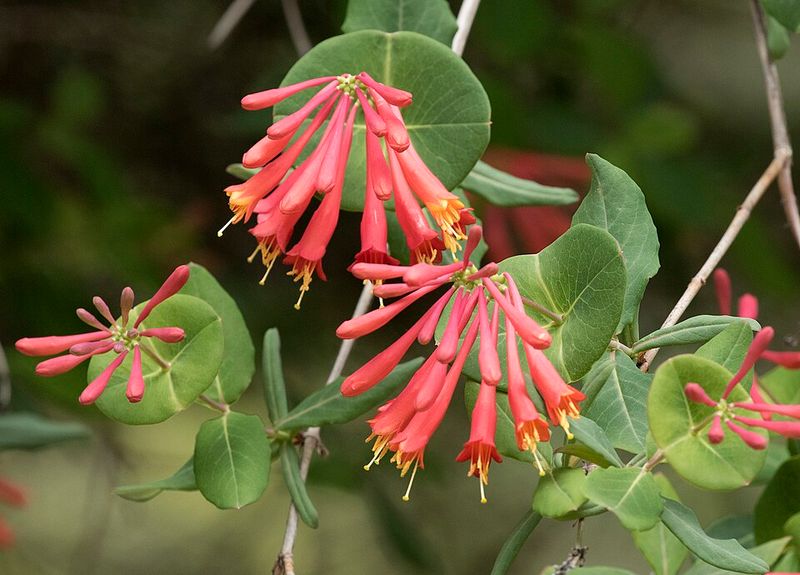
Hummingbirds zip past your face toward tubular coral flowers that release a light, sweet fragrance different from the heavy perfumes of tropical plants.
Native coral honeysuckle blooms from late winter through spring and sporadically through summer, offering nectar to hummingbirds and butterflies while providing gentle fragrance to your landscape.
The scent is subtle and fresh, never overpowering, making it perfect for smaller yards or near windows.
This Florida native vine thrives statewide, tolerating our heat and humidity while requiring minimal care once established. It climbs moderately, covering trellises, mailboxes, or arbors without the aggressive growth of some exotic honeysuckles.
Full sun to partial shade suits it well, and it handles dry periods better than most flowering vines after the first growing season.
The coral-red tubular flowers are more about visual beauty and wildlife value than intense fragrance, but the light sweetness they offer adds another sensory layer to your garden.
Most homeowners love watching hummingbirds visit throughout the day, adding movement and life to fragrant garden corners.
Plant it where you’ll see the hummingbird activity from windows or seating areas. The vine stays evergreen in most of Florida, providing year-round greenery with seasonal bursts of color and gentle perfume that complements rather than competes with stronger-scented neighbors.
11. Ylang-Ylang Tree (Cananga odorata)
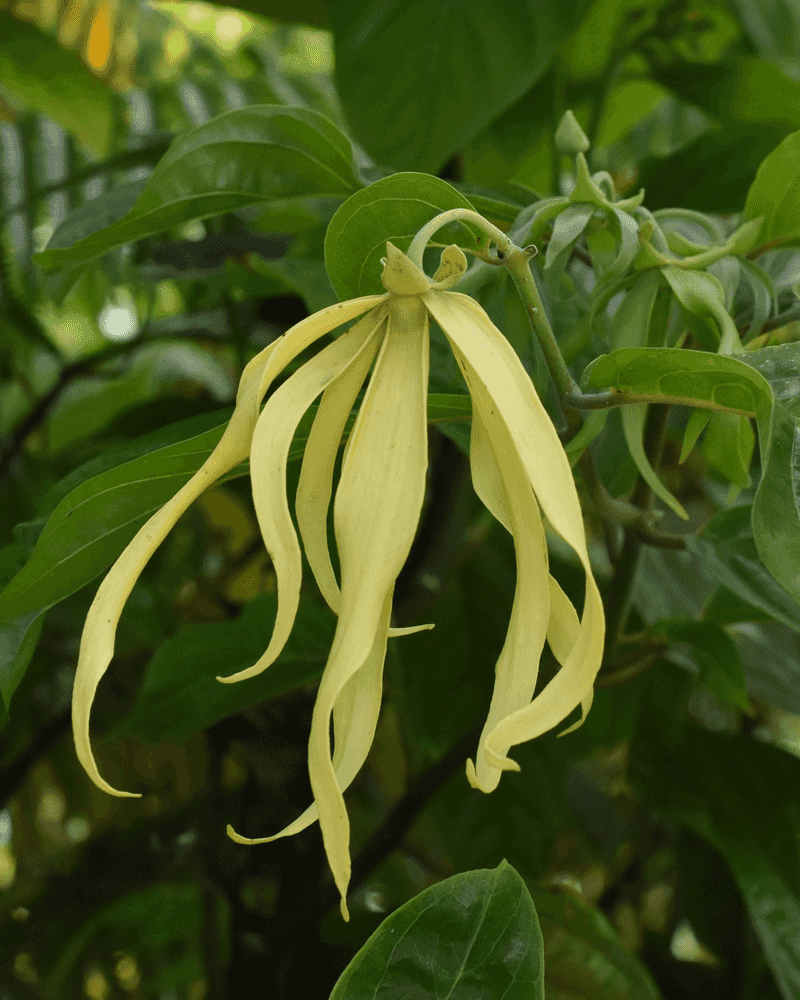
The exotic perfume industry’s most treasured scent grows right in your South Florida backyard, releasing waves of sweet, fruity fragrance from drooping yellow-green flowers.
Ylang-ylang blooms sporadically year-round in frost-free areas, with fragrance strongest during warm afternoons and humid evenings.
The scent is complex and layered, combining floral sweetness with subtle spicy and fruity notes that change as flowers mature.
This tropical tree thrives only in frost-free South Florida (USDA Zone 10b and warmer), where freezes never threaten. It grows into a medium to large tree that needs space to spread, reaching twenty to thirty feet tall with proper conditions.
Full sun and regular water during establishment help it thrive, though mature trees tolerate brief dry periods.
Plant ylang-ylang where its fragrance can drift toward outdoor living spaces without the tree itself crowding patios or structures. The flowers hang downward on long stems, releasing scent that falls and spreads outward on breezes.
Most homeowners discover the fragrance is most noticeable during evening hours when humidity holds the perfume close to the ground. The tree provides beautiful shade while perfuming your entire property, creating a truly tropical atmosphere that makes your backyard feel like an exotic destination rather than just another Florida landscape.
12. Florida Anise (Illicium floridanum)
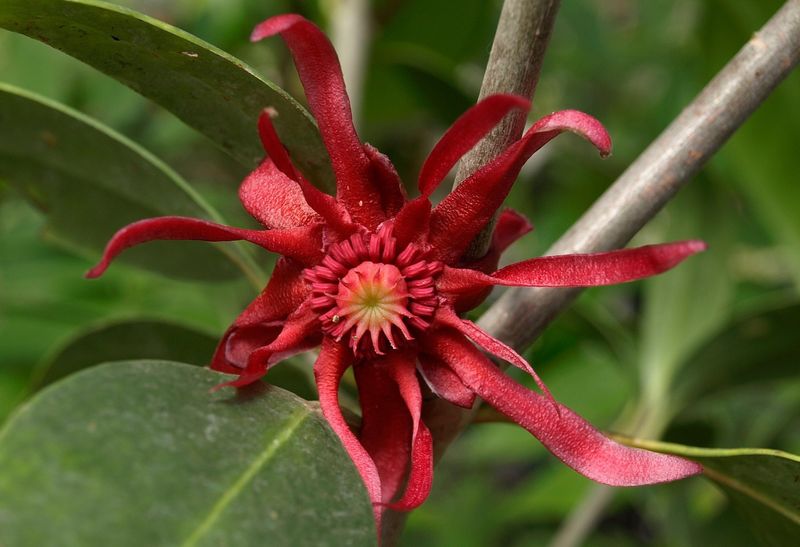
A native shrub growing in dappled shade releases a spicy, licorice-like fragrance when you brush against its leaves or when maroon flowers open in spring.
Florida anise offers fragrance different from the sweet floral perfumes dominating most gardens, providing an herbal, aromatic quality that adds complexity to your sensory landscape.
The unusual flowers look like small red stars, adding visual interest to shaded areas where few other fragrant plants thrive.
This Florida native prefers partial to full shade, making it perfect for woodland gardens or underneath tree canopies where sun-loving fragrant plants struggle. It grows throughout the state, handling our humidity and occasional dry spells once established.
The shrub reaches six to ten feet tall, creating a substantial presence in shaded landscape areas that often lack fragrance entirely.
Plant Florida anise along shaded pathways or near outdoor sitting areas under trees where you’ll appreciate its unique scent profile. The foliage fragrance is strongest when crushed or brushed, while flowers release their perfume naturally during bloom season.
Most homeowners enjoy the spicy, unexpected aroma that differs so completely from typical garden scents. The plant stays evergreen year-round, providing consistent structure and seasonal fragrance that makes shaded corners of your yard feel intentional and thoughtfully designed rather than just leftover space.
13. Sweet Acacia (Vachellia farnesiana)
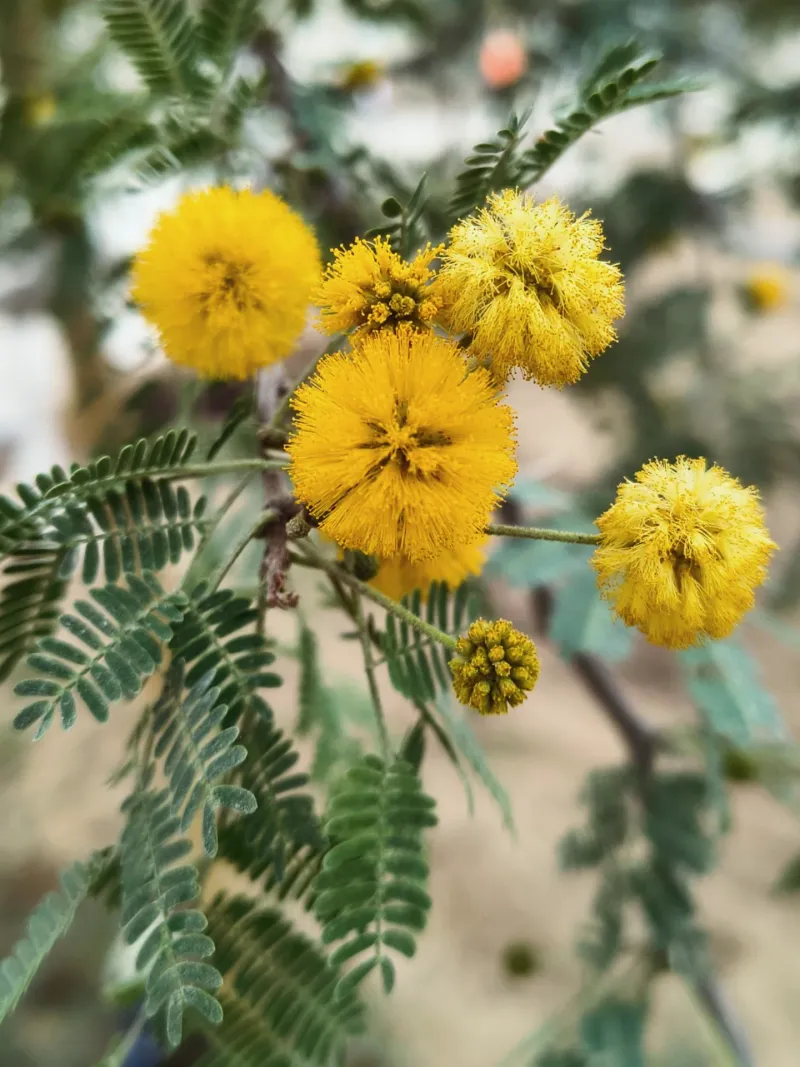
Bright yellow puffball flowers release a honey-sweet fragrance so intense it stops you mid-stride, announcing spring with both color and perfume. Sweet acacia blooms heaviest from late winter through spring, covering its thorny branches with golden spheres that attract bees and butterflies from across the neighborhood.
The scent is warm and sweet, reminiscent of orange blossom honey, carrying beautifully on warm breezes throughout your property.
This small tree or large shrub thrives in Central and South Florida, preferring full sun and well-drained soils. It is not recommended for North Florida due to freeze sensitivity.
It tolerates drought exceptionally well once established, making it perfect for low-maintenance landscapes. The thorny branches mean you should plant it away from pathways and play areas, but near property lines or as a background plant it provides both fragrance and security.
The fragrance peaks during warm, sunny afternoons when the flowers fully open and release their perfume. Most homeowners notice the scent carries surprisingly far, often perfuming areas well beyond the tree’s immediate location.
Bees love the nectar-rich blooms, so planting sweet acacia supports pollinator populations while beautifying your landscape.
The feathery foliage provides light, filtered shade, and the tree stays relatively small, making it suitable for medium-sized yards where you want big fragrance without overwhelming space or blocking views completely.