8 Rare Looking Ancient Flowers That Grow In Florida And Date Back Millions Of Years
Florida isn’t just home to beaches and palm trees. Hidden in backyards, ponds, and natural landscapes across the state are plants that trace their roots back to the age of dinosaurs.
Some of the flowers growing around you today belong to ancient plant families that once thrived when giant reptiles ruled the planet and continents looked completely different.
While modern species have evolved over time, these plants belong to ancient lineages whose ancestors existed millions of years ago.
That means when one of these blooms opens, you are seeing a living connection to Earth’s distant past.
From massive white blossoms that evolved before bees existed to aquatic flowers older than many fossilized forests, Florida quietly hosts some of the most prehistoric-looking plants on the continent.
Once you recognize them, it becomes impossible to look at your garden the same way again.
1. Magnolia (Magnolia grandiflora)
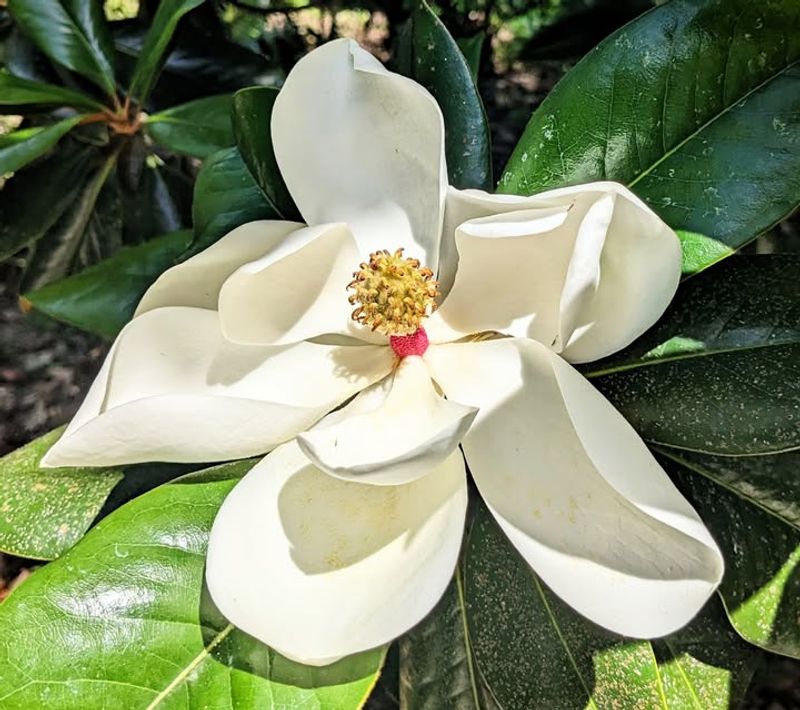
Walk into any Florida garden center and you might pass right by the magnolia, not realizing you’re looking at one of Earth’s oldest flowering plants. Fossil records show the magnolia lineage blooming over 95 million years ago, making it older than bees themselves.
Back then, beetles were the primary pollinators, which explains why magnolia flowers have such tough petals that can withstand crawling insects.
Your Southern magnolia produces those iconic white blooms that look almost prehistoric with their thick, waxy petals arranged in perfect spirals. The flowers can reach up to 12 inches across and release a lemony fragrance that fills your entire yard.
Each creamy blossom sits against dark, glossy leaves that have a rusty underside, creating a stunning contrast.
In Florida, magnolias thrive in zones 8 through 10, handling our heat remarkably well. Plant yours in full sun to partial shade with well-drained, slightly acidic soil.
They need regular watering during establishment but become quite drought-tolerant once mature.
The tree itself can grow 60 to 80 feet tall, though dwarf varieties stay much smaller for residential landscapes. Magnolias prefer minimal pruning and will reward your patience with decades of blooms that connect your garden directly to the Cretaceous period.
2. Sacred Lotus (Nelumbo nucifera)
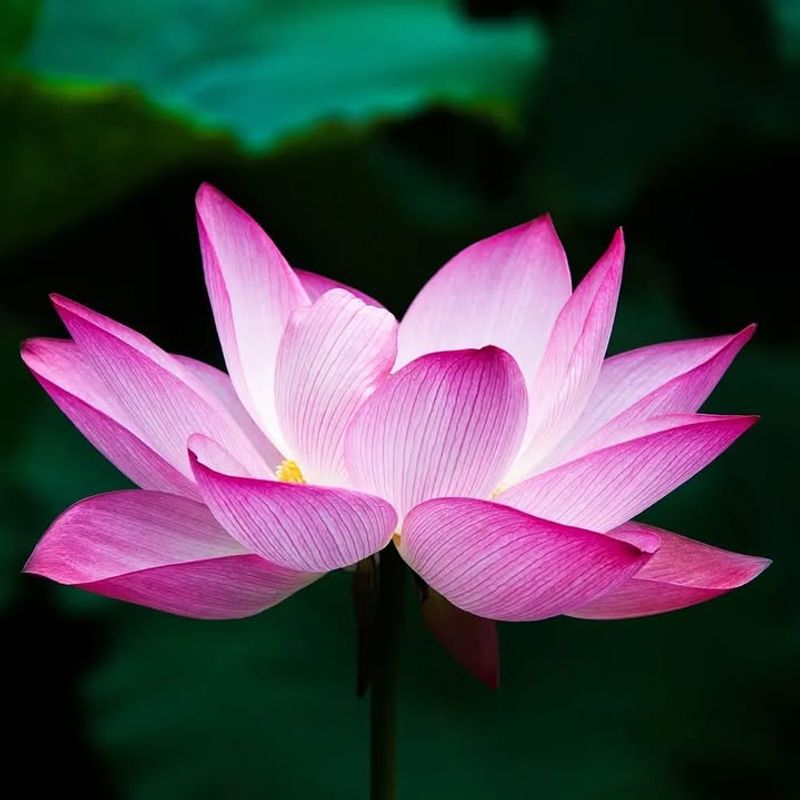
Few flowers command attention quite like the sacred lotus rising from your backyard pond. Scientists have discovered lotus seeds that remained viable for over 1,300 years, and the plant’s lineage dates back over 120 million years.
Ancient civilizations across Asia revered this flower, and now you can grow the same species that inspired countless temples and artworks.
The lotus produces enormous leaves that can span three feet across, sitting high above the water on sturdy stems. Water beads roll off these leaves like mercury, thanks to microscopic surface structures that scientists still study today.
The flowers emerge on separate stalks, opening pink or white petals around a distinctive seed pod that looks absolutely otherworldly.
Florida’s warm climate suits lotus perfectly, especially in zones 9 through 11. You’ll need a container at least 18 inches deep filled with heavy clay soil, then submerge it in your pond so the soil sits under 2 to 6 inches of water.
Your Florida Garden Changes Every Week. Your Plan Should Too.
Gardening in Florida changes quickly throughout the season. Every Friday you’ll receive a simple weekly plan showing exactly what to plant, prune, fertilize, harvest, and protect so you never miss the right timing.
Give your lotus full sun for at least six hours daily.
The plant goes dormant in winter but returns vigorously each spring. Feed it with aquatic plant tablets during the growing season, and watch as those architectural blooms transform your water feature into something that belongs in an ancient botanical illustration.
3. Water Lily (Nymphaea species)
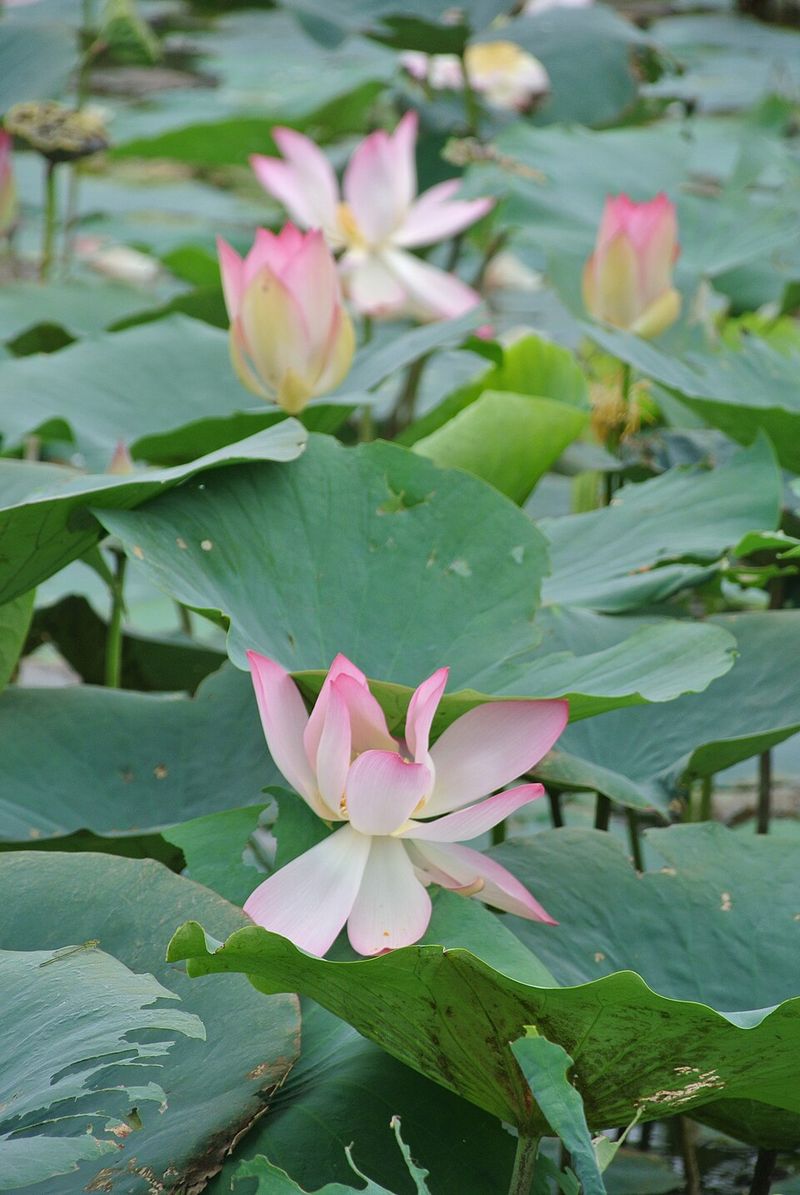
Before the sacred lotus evolved, water lilies were already floating on prehistoric lakes, their fossils dating back 130 million years. Your Florida pond can host these living relics whose basic form has remained recognizable since the age of dinosaurs.
Claude Monet made them famous in his paintings, but you get to experience their magic firsthand every morning when the blooms open to greet the sun.
Water lilies produce flowers that sit directly on the water surface, unlike lotus blooms that stand tall above. The petals come in whites, pinks, yellows, and even deep purples depending on the species you choose.
Each flower opens for three to four days, closing at night and reopening with the dawn.
Florida gardeners should focus on hardy varieties that tolerate our occasional cold snaps, or try tropical species that bloom year-round in South Florida. Plant your water lily in a wide, shallow container with heavy garden soil, keeping the crown at soil level.
Submerge the pot so 6 to 18 inches of water covers it.
Full sun brings the most blooms, though they’ll tolerate four hours of direct light. The lily pads themselves provide crucial shade for fish and help control algae.
Fertilize monthly during the growing season with aquatic plant tabs, and divide your lilies every few years to maintain vigorous blooming.
4. Coontie Cycad (Zamia integrifolia)
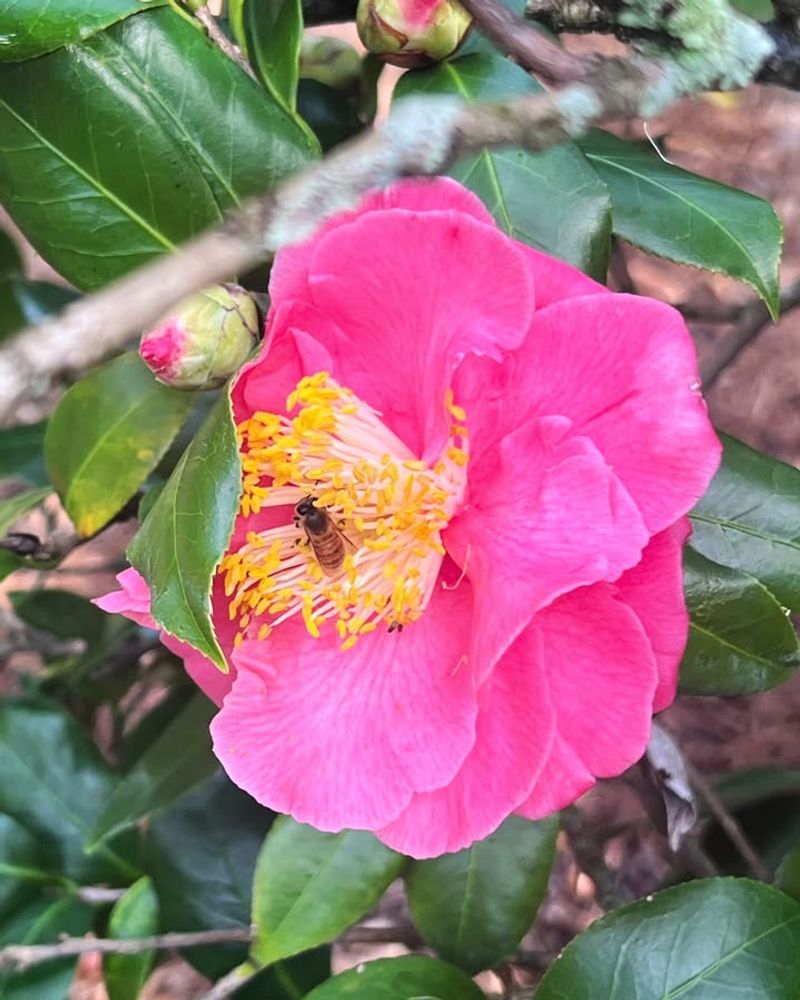
Cycads walked with dinosaurs, literally. Cycad ancestors dominated Earth’s landscape over 280 million years ago, long before flowering plants even existed.
The coontie represents Florida’s only native cycad, and it carries that ancient appearance in every stiff, palm-like frond. When you run your hand along those glossy leaflets, you’re touching a plant form that predates flowers themselves.
Coontie grows low to the ground, rarely exceeding three feet tall, with a thick underground stem that stores water and nutrients. The plant produces separate male and female cones rather than flowers, just as cycads did millions of years ago.
Male cones stand upright and release pollen, while female cones sit lower and develop bright orange seeds.
Your Florida landscape couldn’t ask for a tougher native plant. Coontie thrives in zones 8 through 11, handling full sun to deep shade with equal grace.
It tolerates our sandy soil, salt spray, and extended droughts once established. Plant it in well-drained soil and water regularly only during the first growing season.
This cycad works beautifully as a foundation plant, border edging, or understory specimen beneath palms and oaks. The Atala butterfly depends exclusively on coontie for reproduction, so you’re supporting a rare native insect while growing a prehistoric plant in your yard.
5. Passionflower (Passiflora incarnata)
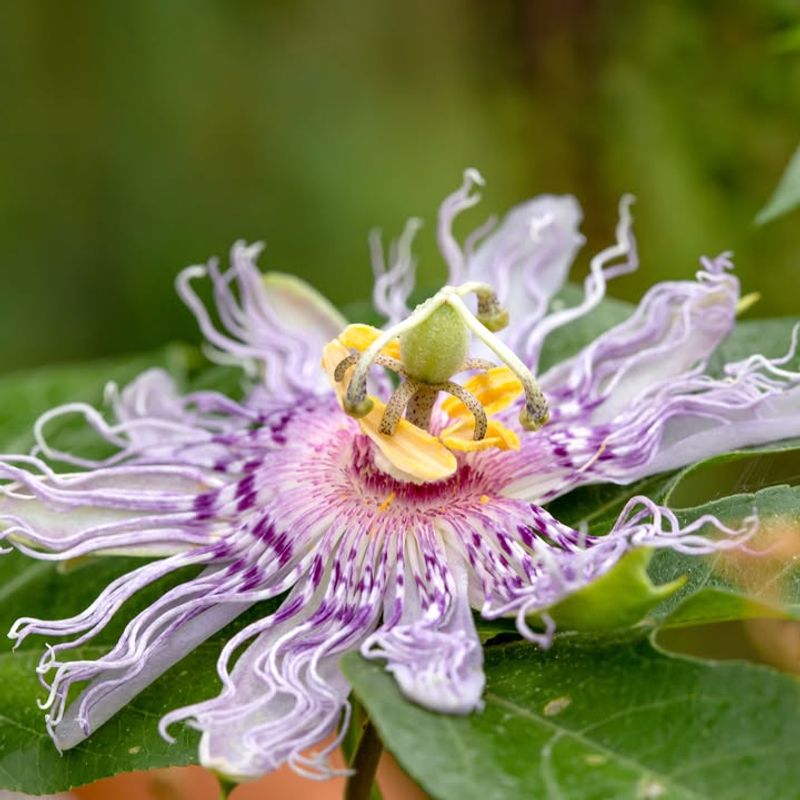
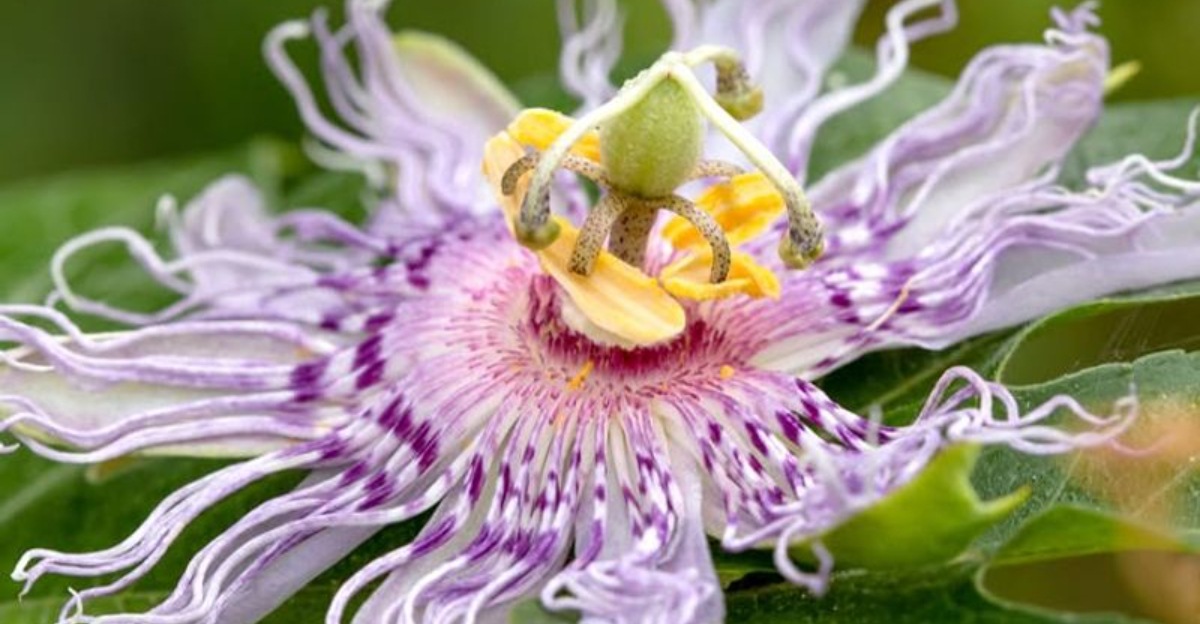
Nothing prepares you for your first encounter with a passionflower bloom. The intricate structure looks more like something from a science fiction movie than a flower that evolved tens of millions of years ago.
Spanish missionaries saw religious symbolism in its parts, but you’ll simply marvel at the alien beauty of those purple and white filaments radiating from the center like a living mandala.
Each flower spans three to four inches across with five petals and five sepals surrounding a corona of wavy, colorful filaments. The reproductive structures rise from the center on a distinctive column, with five stamens and three stigmas that look almost architectural.
The entire bloom lasts only one day, but your vine produces new flowers continuously throughout the warm season.
Florida’s native passionflower vine thrives in zones 6 through 10, climbing fences and trellises with its tendrils. Plant it in full sun to partial shade with well-drained soil.
The vine can grow 10 to 20 feet in a single season, so give it plenty of room to roam.
Water regularly during establishment, then let nature take over once the roots settle in. Passionflower attracts Gulf Fritillary butterflies that use it as their host plant, adding even more life to your garden.
The vine produces edible fruits called maypops that taste tropical and sweet when fully ripe.
6. Calla Lily (Zantedeschia species)
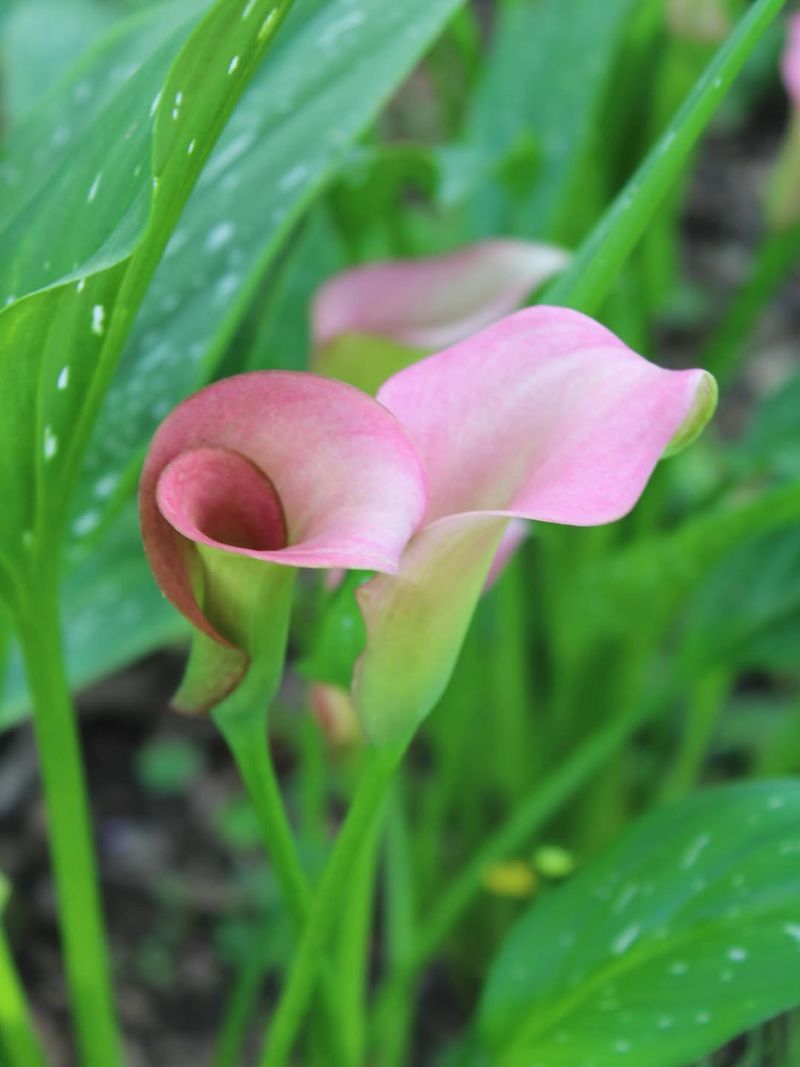
Elegant and architectural, calla lilies bring a sculptural quality to your Florida garden that feels timeless. While not prehistoric, calla lilies belong to the arum plant family, which evolved early among flowering plants and developed their distinctive form in wet habitats.
What you see as a petal is actually a modified leaf called a spathe that wraps around a central spike covered in tiny true flowers.
The spathe comes in colors ranging from pure white to deep purple, yellow, orange, and even near-black varieties. That smooth, trumpet-like shape has made callas favorites for weddings and formal arrangements, but they’re remarkably easy to grow in your Florida landscape.
The arrow-shaped leaves often feature white or silver spots that add interest even when the plant isn’t blooming.
In Florida, callas grow best in zones 8 through 11, preferring partial shade especially during our intense summer afternoons. They need consistently moist, rich soil and will even tolerate growing in shallow water at the edge of a pond.
Plant the rhizomes in spring after the last frost, placing them four inches deep.
Callas bloom heaviest in spring and early summer, though they may produce occasional flowers year-round in South Florida. Feed them monthly with a balanced fertilizer during active growth.
The plants may go dormant in winter in North Florida, but they’ll return reliably each year with minimal care.
7. Canna Lily (Canna indica)
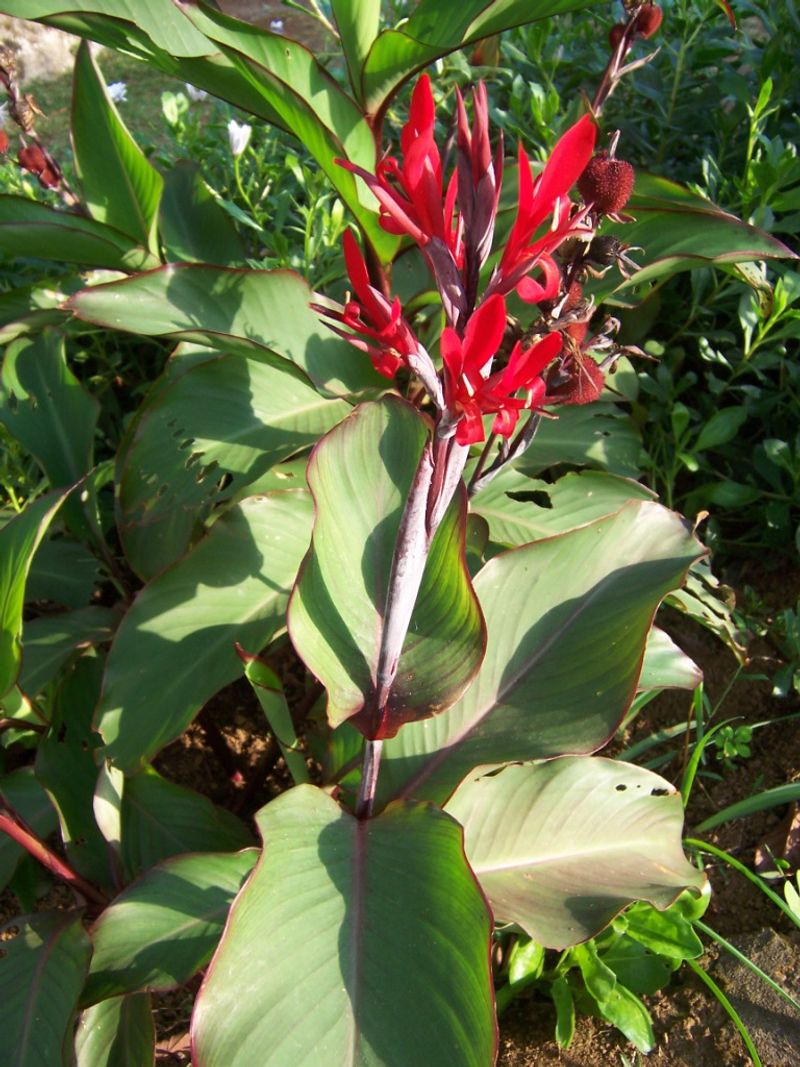
Tropical and bold, canna lilies bring prehistoric drama to your Florida landscape with their enormous paddle-shaped leaves and vibrant flower spikes. These plants descended from tropical plant lineages that evolved tens of millions of years ago, developing their distinctive form long before humans arrived.
Native Americans cultivated cannas for their edible roots, and today you can grow them for pure ornamental impact.
Canna flowers cluster at the top of tall stalks in shades of red, orange, yellow, pink, or combinations thereof. The blooms have an asymmetrical, almost orchid-like appearance with ruffled petals that unfurl in succession.
But the real show comes from those massive leaves that can reach two feet long, appearing in greens, bronzes, and even striped varieties.
Your Florida garden provides ideal conditions for cannas in zones 7 through 11. They want full sun and rich, moist soil with plenty of organic matter.
Plant the rhizomes in spring, covering them with two to three inches of soil. Space them 18 to 24 inches apart since they spread to form substantial clumps.
Water regularly and feed monthly during the growing season for the most impressive display. Cannas bloom from late spring through fall, and you can deadhead spent flowers to encourage more blooms.
The plants may go dormant in North Florida winters but return vigorously each spring, growing taller and fuller each year.
8. Pickerelweed (Pontederia cordata)
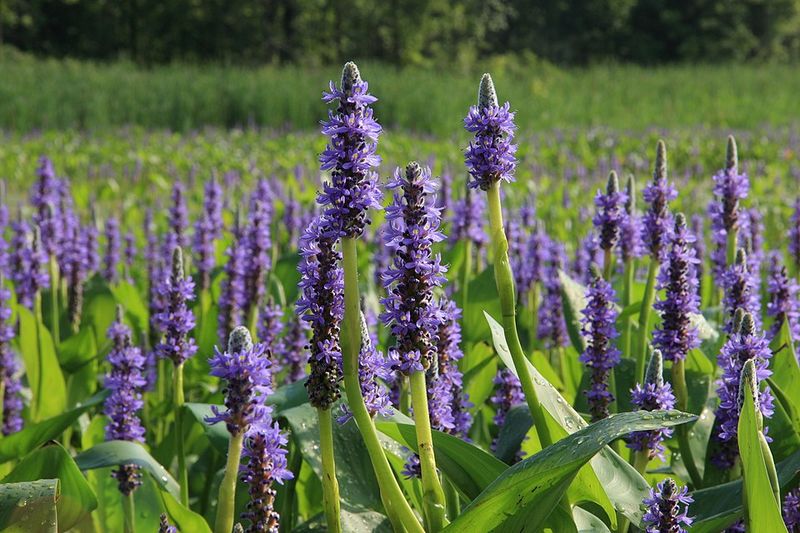
Along the edges of Florida’s natural waterways grows a native wildflower that belongs to a plant lineage that has thrived in wetlands for millions of years. Pickerelweed produces spikes of brilliant blue-purple flowers that rise above heart-shaped leaves, creating the kind of scene that reflects ancient aquatic ecosystems.
This plant thrives where land meets water, continuing an ecological role that predates much of Florida’s modern landscape.
The flower spikes stand six to twelve inches tall, densely packed with small tubular blooms that open from bottom to top over several weeks. Each tiny flower shows a distinctive yellow spot on the upper petal that guides pollinators to the nectar.
The blooms attract bees, butterflies, and hummingbirds throughout the warm season.
Florida gardeners can grow pickerelweed in zones 3 through 11, making it one of our most adaptable native aquatics. Plant it in full sun to partial shade in shallow water or consistently wet soil.
The plant grows best with its roots submerged under two to six inches of water, perfect for pond edges or bog gardens.
Pickerelweed spreads slowly by rhizomes to form attractive colonies that provide habitat for fish and frogs. It blooms from spring through fall in Florida, requiring virtually no maintenance once established.
The seeds feed waterfowl, connecting your garden to the natural food web that has sustained Florida wildlife for eons.