8 Fast-Growing Groundcovers That Will Keeps Weeds In Check
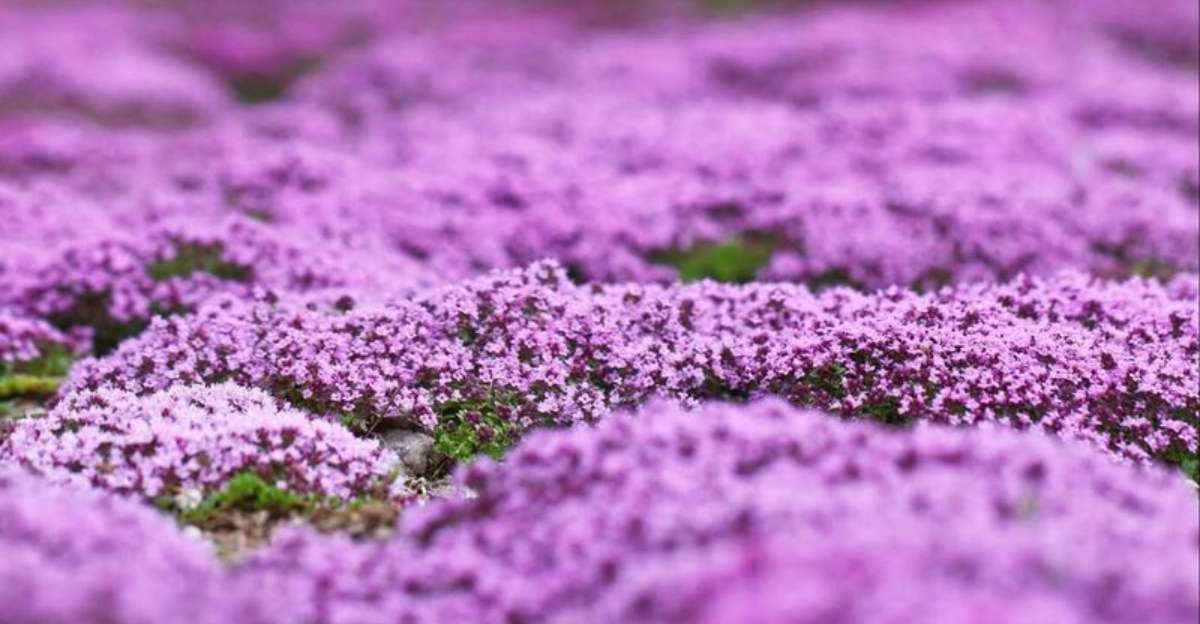
I’ve learned the hard way that weeds can take over a garden faster than you can say “springtime chaos.”
That’s why I swear by fast-growing groundcovers – they spread like wildfire, filling bare spots and keeping those pesky intruders at bay. One plant can save you hours of weeding.
With the right choices, your garden stays lush, low-maintenance, and weed-free without constant battle. Cover the ground, and the weeds don’t stand a chance.
I’ve seen bare patches transform into vibrant carpets of greenery in no time, making my garden both beautiful and hassle-free. A little planning now keeps the weeds out for good.
These speedy groundcovers aren’t just practical, they bring life, texture, and charm to every corner of your yard.
1. Ajuga (Bugleweed)
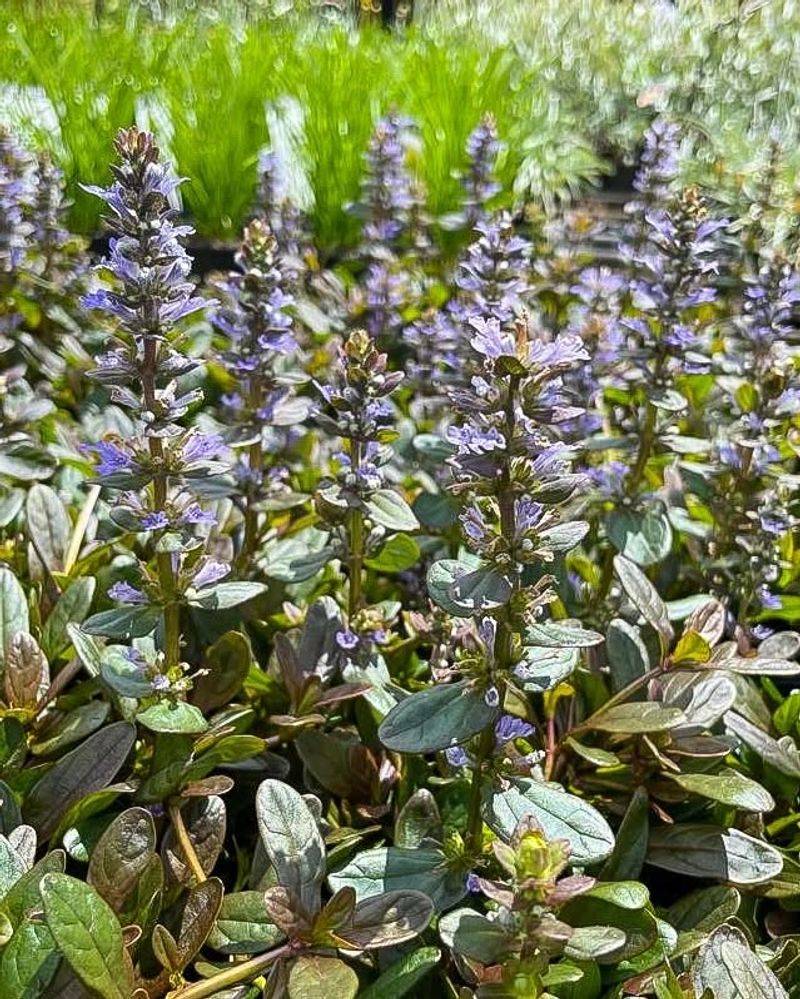
Ajuga is one of those groundcovers that makes you do a double-take with its glossy, colorful foliage and spikes of blue-purple flowers. The leaves come in shades ranging from deep burgundy to bronze and green, creating a tapestry of color even when it’s not blooming.
It spreads by runners, quickly forming a thick mat that chokes out weeds before they have a chance to establish themselves.
This plant is especially handy for shady areas where grass struggles to grow. Ajuga tolerates partial to full shade beautifully, though it can also handle some sun in cooler climates.
The flower spikes appear in spring, standing about four to six inches tall and creating a stunning display that lasts for several weeks.
Planting ajuga is straightforward. Space plants about six to twelve inches apart in spring or fall, and they’ll fill in relatively quickly, often within one growing season.
The plant prefers moist, well-drained soil but adapts to various conditions once established. One thing to keep in mind is that ajuga can be quite aggressive in its spreading habit.
While this is great for covering ground and suppressing weeds, you’ll want to keep an eye on it near garden beds where you don’t want it to wander. Regular edging can keep it in bounds.
The evergreen or semi-evergreen foliage means your garden won’t look bare in winter, which is a nice bonus.
Ajuga works wonderfully under trees, along slopes, or in woodland gardens where its spreading nature is an asset rather than a concern. The color variation in the foliage adds interest throughout the year, not just during the flowering period.
2. Creeping Thyme
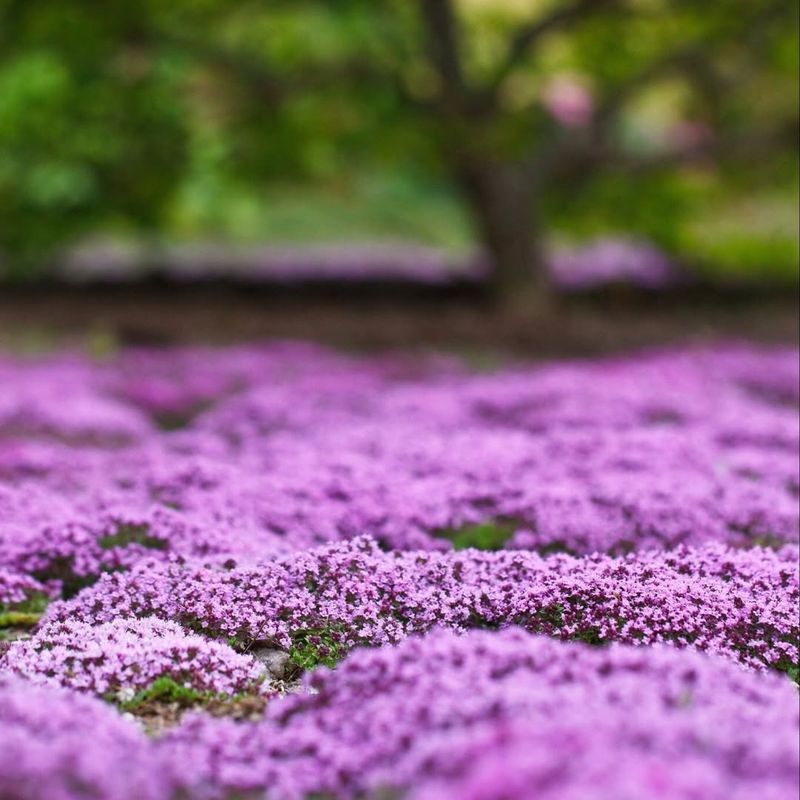
Walking across a carpet of creeping thyme releases the most wonderful herbal scent that instantly makes you feel like you’re in a Mediterranean garden. This low-growing plant spreads quickly once established, creating a dense mat that weeds simply can’t penetrate.
The tiny leaves pack a punch of fragrance, and the bonus is that you can actually walk on it without causing damage.
Creeping thyme works beautifully between stepping stones, along pathways, or anywhere you need a tough groundcover that can handle some foot traffic. It stays low to the ground, usually only reaching about two to three inches tall, so you won’t need to worry about constant trimming.
The small purple, pink, or white flowers that appear in late spring and early summer attract bees and butterflies, adding even more life to your garden.
This plant thrives in full sun and well-drained soil, making it perfect for those hot, dry spots where other plants struggle.
Once it gets going, creeping thyme is incredibly drought-tolerant and requires very little maintenance. You can plant it in spring or early fall, spacing plants about six to twelve inches apart.
The spreading habit means it will fill in those gaps fairly quickly, usually within a growing season or two. One thing that makes creeping thyme especially appealing is its versatility.
You can use it as a lawn alternative in smaller areas, though it won’t handle heavy traffic like regular grass.
It also works wonderfully cascading over walls or spilling out of containers. The fragrance alone makes it worth planting, and knowing it’s keeping weeds at bay is just the cherry on top.
3. Creeping Phlox
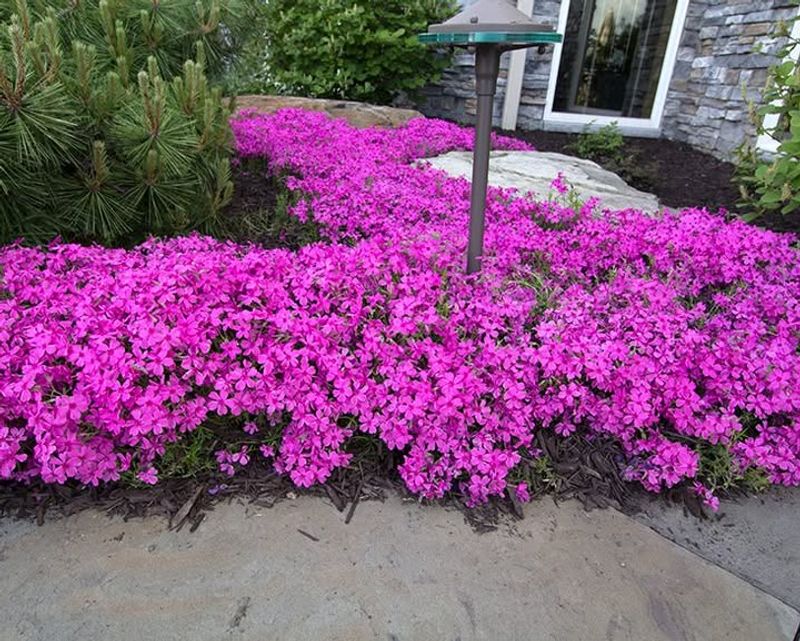
Few sights in spring are as cheerful as a hillside covered in creeping phlox blooming in waves of pink, purple, white, or red. This evergreen groundcover creates a spectacular carpet of color that stops people in their tracks.
The needle-like foliage stays green year-round, but it’s the spring flower show that really steals the spotlight.
Creeping phlox grows best in full sun and well-drained soil, making it ideal for slopes, rock gardens, or anywhere you need erosion control with a side of beauty.
The plants spread outward rather than upward, reaching only about four to six inches in height but spreading up to two feet wide. This spreading habit creates that dense coverage that keeps weeds from finding a foothold.
Plant creeping phlox in spring or early fall, spacing them about twelve to fifteen inches apart. They establish fairly quickly and will bloom reliably every spring once settled in.
After the flowers fade, you can give the plants a light trim to keep them tidy and encourage denser growth.
This groundcover is surprisingly drought-tolerant once established, though it appreciates occasional watering during extended dry spells. The evergreen foliage means your garden has structure and color even in winter.
One of the best things about creeping phlox is how it drapes over walls or edges, softening hard lines in the landscape.
It pairs beautifully with spring bulbs, creating layers of color and interest. The flowers also attract butterflies and hummingbirds, adding movement and life to your garden.
While it spreads steadily, creeping phlox isn’t as aggressive as some groundcovers, making it easier to manage in mixed plantings.
4. Sedum (Stonecrop)
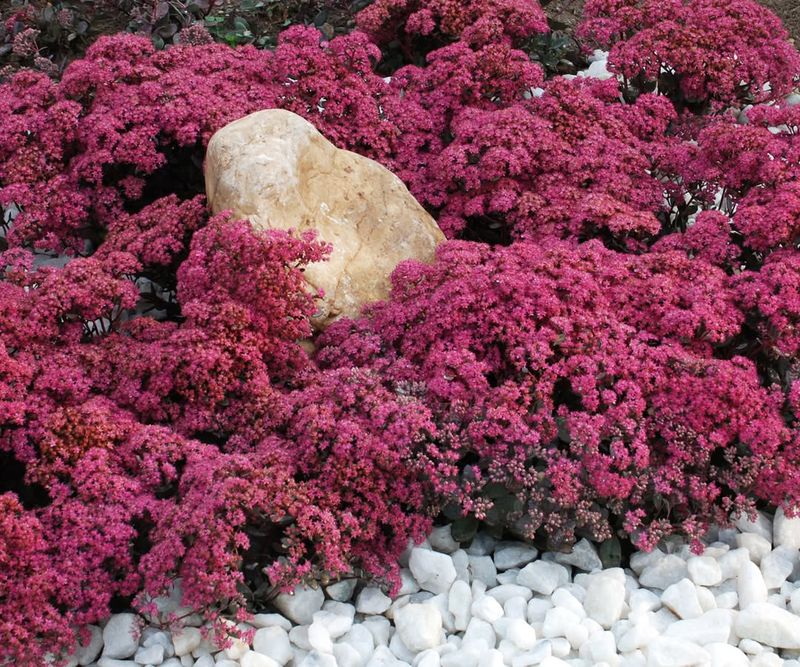
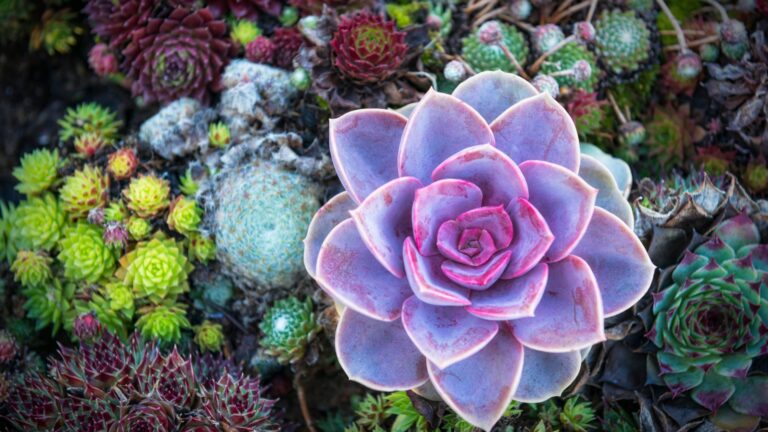
Succulents aren’t just for pots on your windowsill anymore. Low-growing sedum varieties make fantastic groundcovers that thrive on neglect and look great doing it.
The fleshy leaves store water, allowing these plants to survive drought conditions that would stress other groundcovers. They spread steadily, forming thick mats that weeds can’t penetrate.
Different sedum varieties offer various leaf colors and textures, from blue-green to burgundy to golden yellow. Many produce clusters of star-shaped flowers in summer that bees absolutely love.
The plants typically stay under six inches tall, creating a textured carpet that adds visual interest to your landscape.
Sedum thrives in full sun and well-drained soil, making it perfect for hot, dry areas, rock gardens, or green roofs. These plants are incredibly low-maintenance once established.
Plant them in spring or early summer, spacing them about six to twelve inches apart depending on the variety.
They’ll root easily and spread to fill in gaps within a season or two. One of the best features of sedum is its year-round interest.
The foliage looks good from spring through fall, and many varieties take on attractive bronze or red tones in cooler weather.
Some sedums are even semi-evergreen, maintaining their appearance through mild winters.
These plants rarely need fertilizing and actually prefer lean soil, making them ideal for challenging spots. Sedum works beautifully between pavers, in rock gardens, or cascading over walls.
The variety of colors and textures available means you can create interesting patterns and combinations. If a section gets damaged or looks scraggly, sedum recovers quickly with minimal intervention.
5. Vinca Minor (Periwinkle)
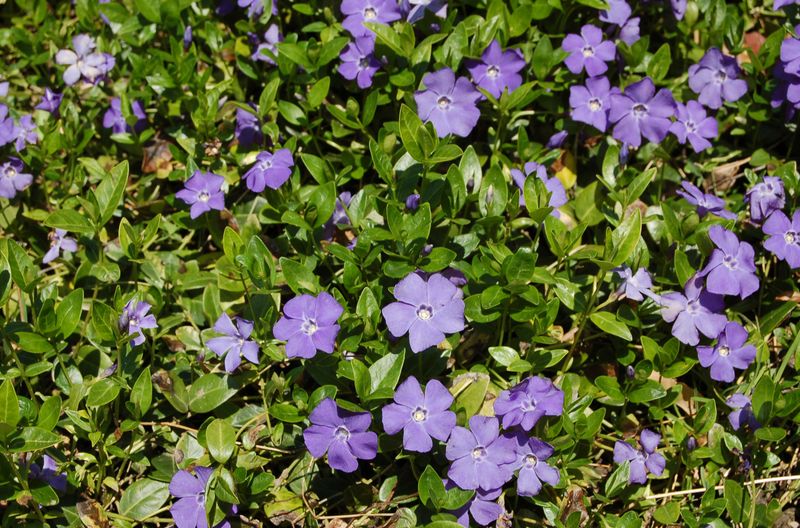
Periwinkle has been gracing gardens for generations with its glossy evergreen leaves and cheerful blue-purple flowers. This classic groundcover spreads by trailing stems that root wherever they touch the ground, creating an ever-expanding carpet.
The flowers appear in spring and often continue sporadically through summer, adding pops of color to shady areas.
Vinca minor excels in partial to full shade, making it perfect for those difficult spots under trees or along the north side of buildings. The plants grow about four to six inches tall and spread vigorously once established.
This aggressive spreading habit makes it excellent for weed suppression, though you’ll want to plant it where its wandering ways won’t cause problems.
Plant periwinkle in spring or fall, spacing plants about twelve to eighteen inches apart. They’ll fill in within a year or two, creating that dense coverage that keeps weeds at bay.
The glossy leaves reflect light, brightening up shady areas that might otherwise look dark and dull.
Some varieties offer variegated foliage, adding even more visual interest. Periwinkle tolerates a wide range of soil conditions and is fairly drought-tolerant once established, though it appreciates consistent moisture.
The evergreen foliage means your garden looks good year-round, not just during the growing season.
This groundcover works well on slopes for erosion control, under shrubs, or as a lawn alternative in shady areas. Keep in mind that vinca minor can become invasive in some regions, so check with your local extension office before planting.
Where appropriate, it’s a reliable, attractive groundcover that requires minimal maintenance once established.
6. Lamium
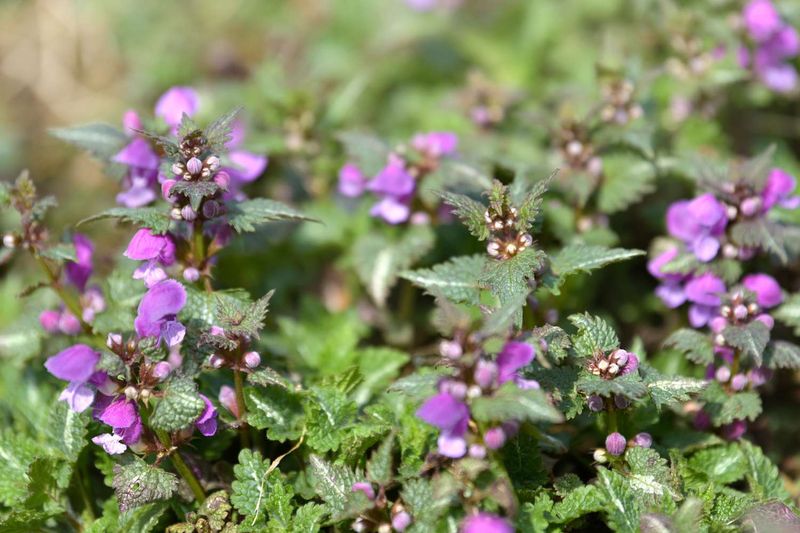
Lamium is far from dangerous when it comes to brightening up shady spots with its silvery foliage and cheerful flowers. The leaves often feature silver markings or variegation that practically glow in low light, making this groundcover a standout in shade gardens.
Pink, purple, or white flowers appear in late spring and early summer, adding another layer of interest.
Lamium spreads by stems that root at the nodes, quickly forming a dense mat that suppresses weeds effectively. The plants typically reach about eight to twelve inches tall, creating good coverage without overwhelming smaller plants.
This groundcover prefers partial to full shade and moist, well-drained soil, making it ideal for woodland gardens or shady borders.
Plant lamium in spring or early fall, spacing plants about twelve to fifteen inches apart. They establish quickly and will fill in within a growing season.
The variegated foliage provides color and interest even when the plant isn’t flowering, which is a huge advantage in shade gardens where color can be scarce.
One nice feature of lamium is that it’s semi-evergreen in many climates, maintaining its appearance through mild winters.
The plant tolerates dry shade once established, though it performs best with consistent moisture. You can trim it back after flowering to keep it tidy and encourage fresh growth.
Lamium works beautifully under trees, along shady paths, or mixed with hostas and ferns in shade borders. The silvery foliage creates a lovely contrast with darker-leaved plants.
While it spreads readily, lamium is generally easier to control than some aggressive groundcovers, making it suitable for smaller gardens.
7. Sweet Woodruff
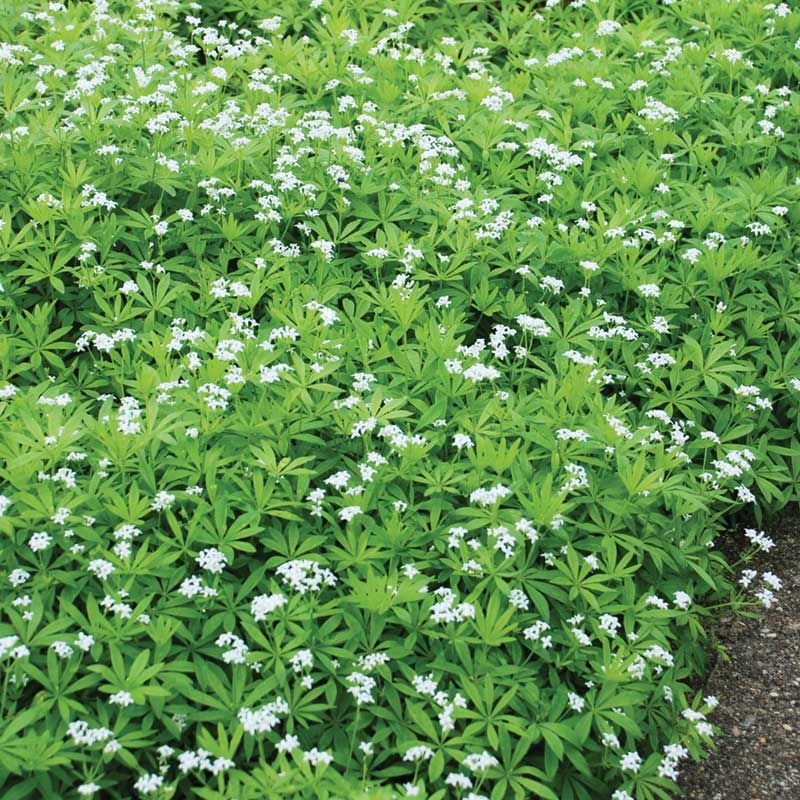
Imagine a groundcover that smells like vanilla when you brush against it or cut it for arrangements. Sweet woodruff offers exactly that, along with whorls of bright green leaves and delicate white flowers in spring.
This shade-loving plant spreads by rhizomes, creating a lush carpet that weeds struggle to penetrate.
The star-shaped white flowers appear in late spring, creating a cloud-like effect above the foliage. Sweet woodruff grows about six to twelve inches tall and spreads steadily once established.
It prefers partial to full shade and moist, well-drained soil rich in organic matter, making it perfect for woodland gardens or shady borders.
Plant sweet woodruff in spring or fall, spacing plants about eight to twelve inches apart. They’ll fill in within a year or two, creating that dense coverage you’re after.
The bright green foliage stays attractive throughout the growing season, and the plant often remains semi-evergreen in mild climates.
One charming feature is the sweet scent that intensifies when the foliage is dried, which is why it’s traditionally been used in May wine and potpourri. Sweet woodruff appreciates consistent moisture and benefits from a layer of mulch to keep the soil cool and moist.
It spreads at a moderate pace, not as aggressively as some groundcovers, making it manageable in smaller gardens.
This groundcover works wonderfully under trees, along shady paths, or mixed with spring bulbs and shade perennials. The fine texture and bright green color create a lovely backdrop for bolder plants.
While it prefers shade, sweet woodruff can tolerate some morning sun in cooler climates, giving you a bit more flexibility in placement.
8. Creeping Jenny (Lysimachia)
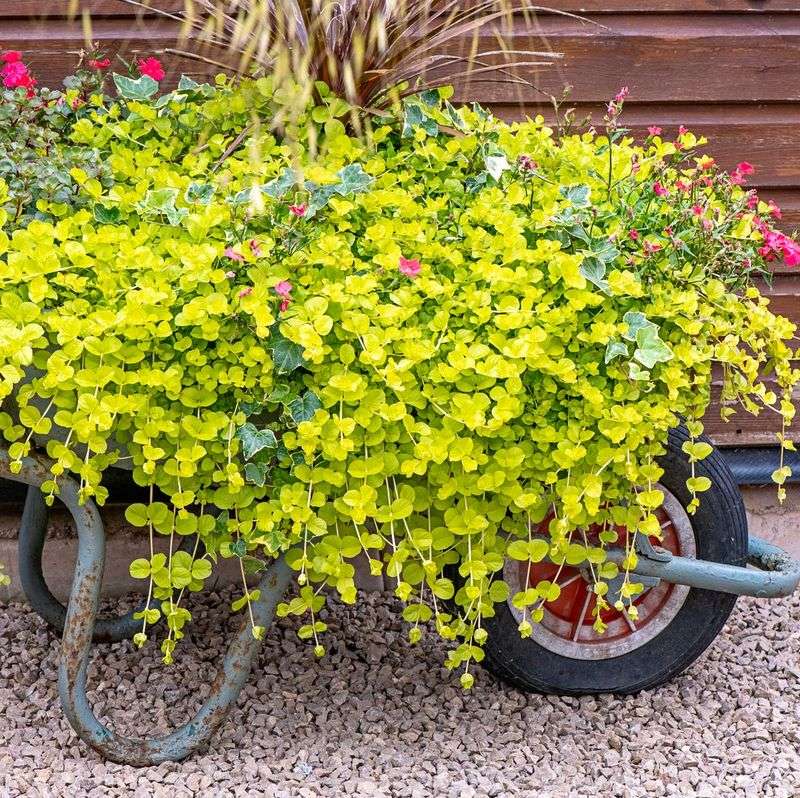
Bright chartreuse foliage practically glows in the garden, making creeping Jenny impossible to miss. This fast-growing groundcover spreads by trailing stems that root as they go, quickly covering bare ground with a carpet of round, coin-shaped leaves.
Small yellow flowers appear in summer, though the real star here is the vibrant foliage that brightens up any spot it occupies.
Creeping Jenny adapts to a wide range of conditions, growing in full sun to partial shade and tolerating both moist and moderately dry soils.
It actually thrives in areas that stay consistently moist, making it perfect for pond edges, rain gardens, or anywhere water tends to collect. The plants stay low, reaching only about two to four inches tall, but spread enthusiastically.
Plant creeping Jenny in spring or early fall, spacing plants about twelve to eighteen inches apart. They’ll fill in quickly, often within a single growing season.
The vigorous spreading habit makes this an excellent choice for weed suppression, though you’ll want to keep an eye on it as it can become invasive in some areas.
The golden foliage creates stunning contrast with darker-leaved plants and brightens up shady corners beautifully.
Creeping Jenny works well as an edging plant, spilling over walls or containers, or filling in between stepping stones. It tolerates foot traffic reasonably well, bouncing back quickly if damaged.
One consideration is that creeping Jenny can be quite aggressive in favorable conditions. While this is great for quickly covering ground and suppressing weeds, it may overwhelm smaller or slower-growing plants. Regular trimming or edging keeps it in bounds where needed.