Meet The 2026 Flower Of The Year Florida Gardeners Will Be Obsessed With
Florida gardeners love a good standout plant. The kind that stops neighbors mid-walk, floods social feeds with photos, and makes your garden feel fresh again.
Every year brings a new favorite, but this one is already creating serious buzz. It’s bold without being fussy.
Colorful without looking fake. Eye-catching in flower beds, containers, and cut arrangements.
It also brings that “wow” factor people chase when they want their yard to feel upgraded instead of ordinary. If you’ve been itching to try something new this season, this is the plant everyone will be talking about.
Expect taller blooms, dramatic color, and a look that feels straight out of a magazine spread. Florida gardeners are about to fall hard for one standout flower in 2026.
Say hello to delphinium!
1. Delphinium Takes Center Stage In 2026 Gardens
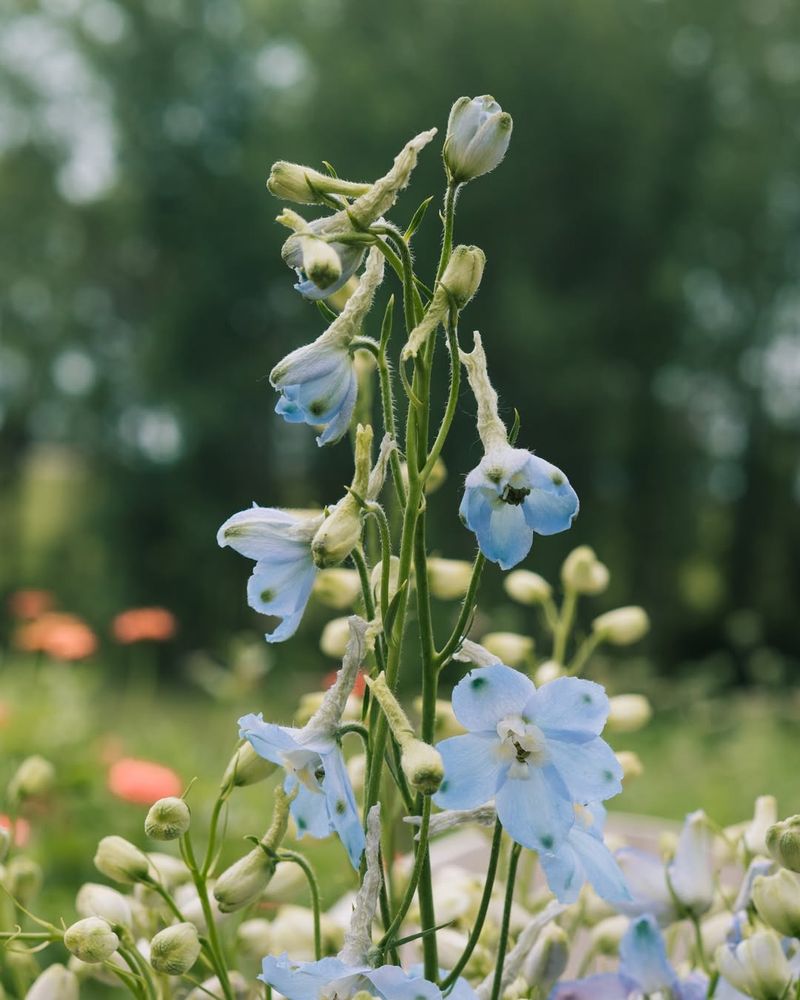
Walk through any Florida garden club meeting this spring, and you’ll hear the same excited chatter about one plant that’s stealing the spotlight. Gardeners from Pensacola to Key West are buzzing about towering flower spikes that bring vertical drama and eye-catching color to beds that once felt flat.
Delphinium has emerged as one of the gardening industry’s most talked-about flowers for 2026, and the timing couldn’t be better for Florida homeowners looking to refresh their landscapes.
This isn’t just another passing trend. When grown as a cool-season annual, Delphinium offers something many winter flowers struggle to deliver in Florida: genuine height combined with breathtaking color intensity.
When you plant Delphinium in your yard, you’re adding architectural interest that draws the eye upward and creates layered depth in flower beds.
The excitement around Delphinium centers on its ability to perform beautifully during Florida’s cooler months, particularly from late fall through early spring. North Florida gardeners can enjoy extended bloom periods when temperatures stay mild, while Central and South Florida growers often see blooms appearing as early as December.
This timing fills a gap when many summer bloomers have faded, giving your garden a fresh burst of energy right when you need it most.
Your neighbors will absolutely notice when those tall, stately spikes emerge, covered in densely packed florets that create a column of pure color.
2. The Tall Blue Blooms Everyone Is Talking About
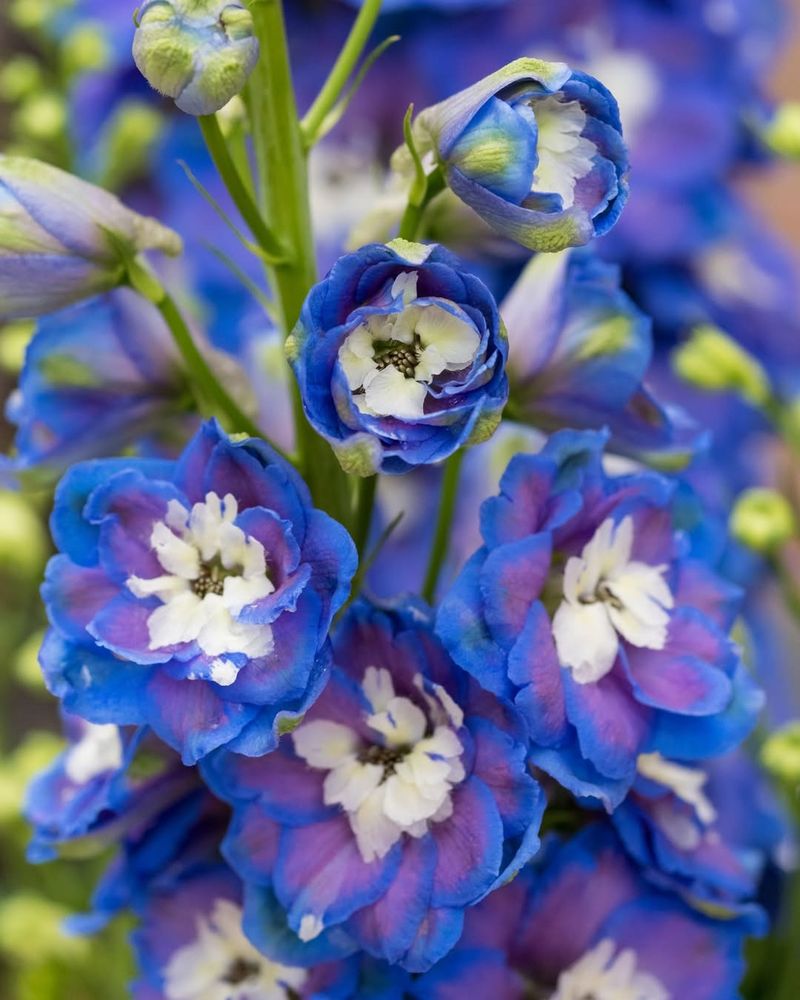
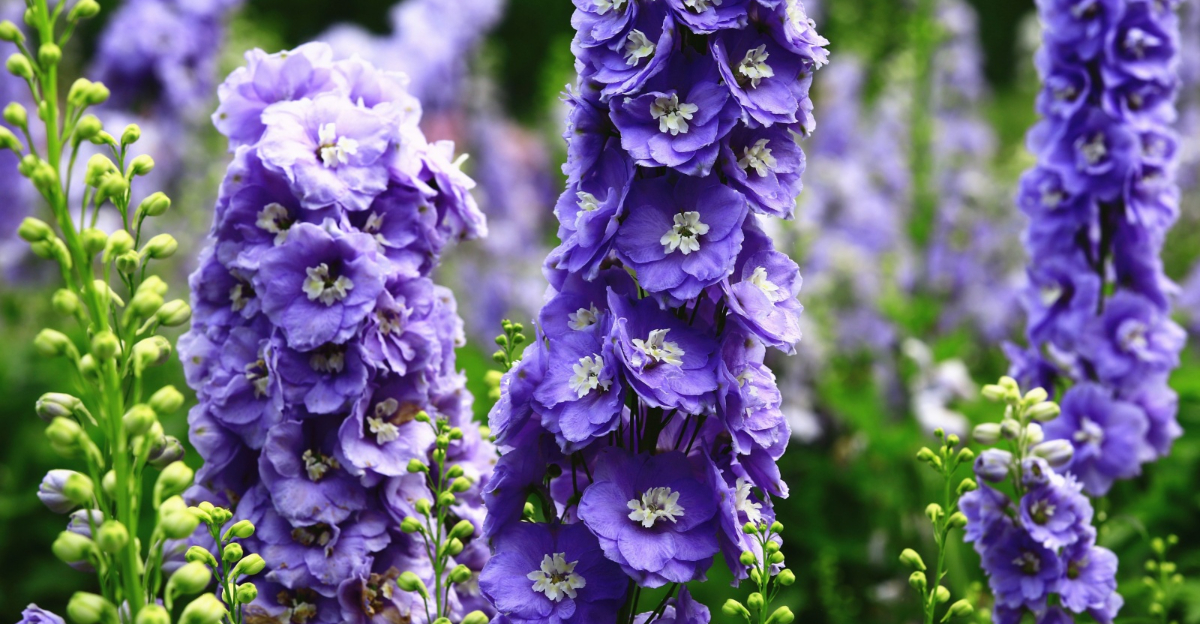
Something magical happens when you stand next to a mature Delphinium plant in full bloom. Those towering spikes can stretch anywhere from three to six feet tall, depending on the variety you choose and how well you care for them.
The sheer vertical presence transforms ordinary garden beds into dynamic displays that command attention from every angle.
Blue remains the signature color that made Delphinium famous, and it’s easy to understand why. The rich, true-blue shades are rare in the plant world, offering a cool contrast to the warm tones dominating most Florida landscapes.
When sunlight hits those petals, the color seems to glow with an almost electric intensity that photographs beautifully and looks even better in person.
In Florida gardens, the height advantage becomes especially valuable when you’re working with mixed borders or trying to create visual interest behind shorter plants. Delphinium naturally draws the eye upward, making your garden feel larger and more thoughtfully designed.
Your Florida Garden Changes Every Week. Your Plan Should Too.
Gardening in Florida changes quickly throughout the season. Every Friday you’ll receive a simple weekly plan showing exactly what to plant, prune, fertilize, harvest, and protect so you never miss the right timing.
The spikes also provide excellent cut flowers that last surprisingly well in arrangements, giving you indoor enjoyment alongside outdoor beauty.
Gardeners in Central Florida have reported spikes reaching four feet with proper support and consistent care, while North Florida growers sometimes see even taller growth when spring conditions stay cool and moist.
3. Big Color Impact For Florida-Friendly Landscapes
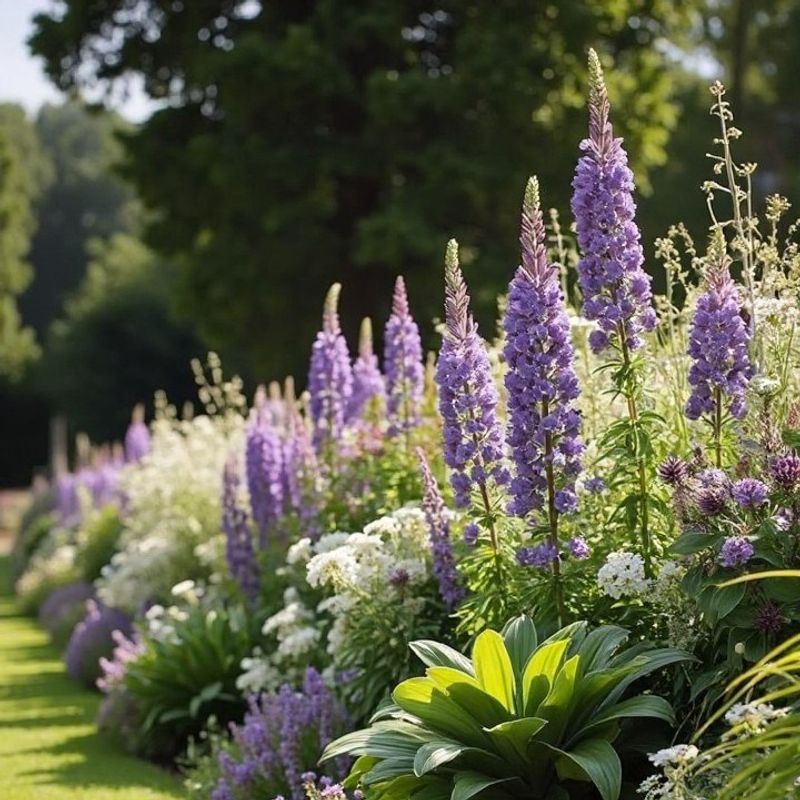
Florida gardeners increasingly look for plants that deliver maximum visual impact while still working within our unique climate challenges.
While not a Florida-Friendly native plant, Delphinium performs well as a cool-season annual, offering concentrated bursts of color during months when many native perennials are resting.
Water needs remain moderate when planting is timed correctly, and maintenance stays manageable compared to many warm-season flowering plants.
The color payoff from a single Delphinium plant rivals what you’d get from a dozen smaller annuals. Those densely packed flower spikes create solid columns of color that read as bold statements from across your yard or even from the street.
This efficiency means you can achieve dramatic results without overcrowding beds or overplanting, which aligns perfectly with sustainable gardening practices.
Spacing Delphinium plants about 12 to 18 inches apart allows for proper airflow while still creating a cohesive display. This spacing prevents moisture-related issues that can develop in Florida’s humid conditions, especially during our unpredictable winter rain patterns.
Proper air circulation keeps foliage dry and reduces the chance of fungal problems that sometimes plague densely planted beds.
South Florida gardeners should treat Delphinium as a winter annual, planting in November or early December for blooms through March, while North Florida growers can extend the season by planting in early fall.
Best results are typically seen in North and Central Florida, while South Florida gardeners may experience shorter bloom periods due to warmer winter temperatures.
4. The Showstopper Shades Gardeners Can’t Get Enough Of
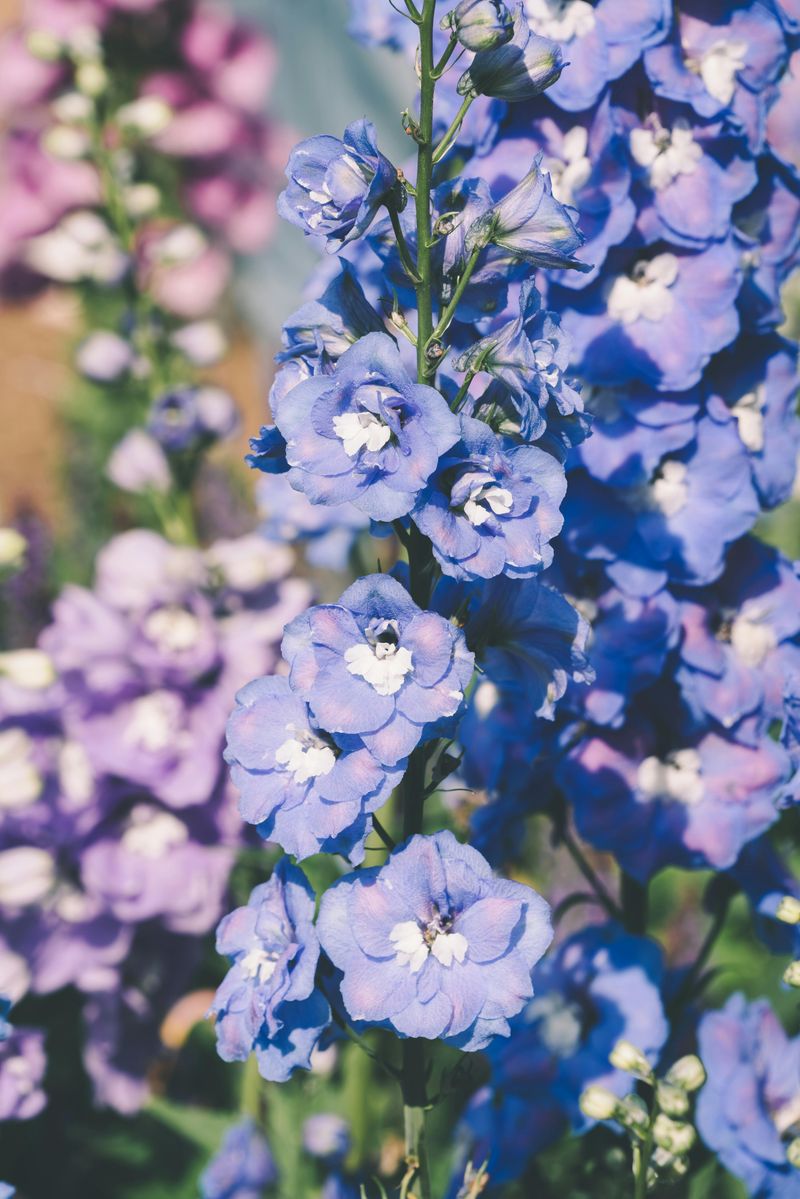
While classic blue Delphinium remains the most popular choice, the expanded color palette available in 2026 has Florida gardeners experimenting with shades they never imagined possible. Deep purples create moody, sophisticated displays that pair beautifully with silver-foliaged plants like dusty miller.
Soft pinks and lavenders offer gentler options for cottage-style gardens or romantic landscape designs that feel less formal.
White Delphinium varieties provide stunning contrast when planted alongside the blue and purple selections, creating a cool-toned color scheme that feels refreshing in Florida’s warm climate. Some newer cultivars even feature bi-colored blooms with contrasting centers, adding extra visual interest to each individual flower spike.
These multi-toned varieties photograph exceptionally well and create conversation pieces when guests visit your garden.
The color intensity remains strong throughout the bloom period, which typically lasts four to six weeks under ideal conditions. Unlike some flowers that fade quickly in bright light, Delphinium petals hold their color remarkably well, especially when plants receive morning sun and afternoon shade.
This color retention means your investment delivers consistent beauty rather than a brief flash of color that disappears within days.
Central Florida gardeners have had particular success mixing blue and white varieties together, creating a classic combination that never goes out of style.
5. A Pollinator Favorite With Major Visual Power
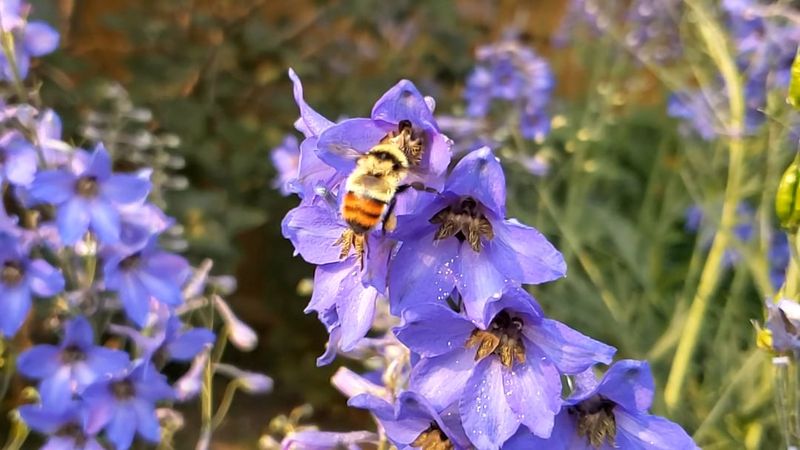
Watch your Delphinium plants on a sunny morning, and you’ll witness a parade of pollinators visiting those tall flower spikes. Bumblebees particularly love Delphinium blooms, crawling deep into the tubular flowers to access nectar while their fuzzy bodies collect pollen.
Butterflies may visit occasionally, though Delphinium is especially attractive to bees, including bumblebees, which are the primary pollinators.
Supporting pollinators has become increasingly important for Florida gardeners who understand the vital role these creatures play in healthy ecosystems. By planting Delphinium during our cooler months, you’re providing a valuable food source when many native wildflowers aren’t blooming.
This timing helps sustain pollinator populations through seasons when nectar sources can be scarce, making your garden a true wildlife haven.
The vertical structure of Delphinium spikes allows multiple pollinators to access nectar along the length of the flower spike, increasing overall pollinator activity around the plant. Smaller native bees work the lower florets while larger bumblebees tackle the higher blooms, creating a fascinating display of natural activity.
This multi-level feeding opportunity increases the overall pollinator value of each plant you add to your landscape.
Avoid using any pesticides on or near your Delphinium plants, as these chemicals can harm the beneficial insects you’re trying to attract and support in your Florida garden.
6. Simple Growing Tricks That Deliver Stunning Results
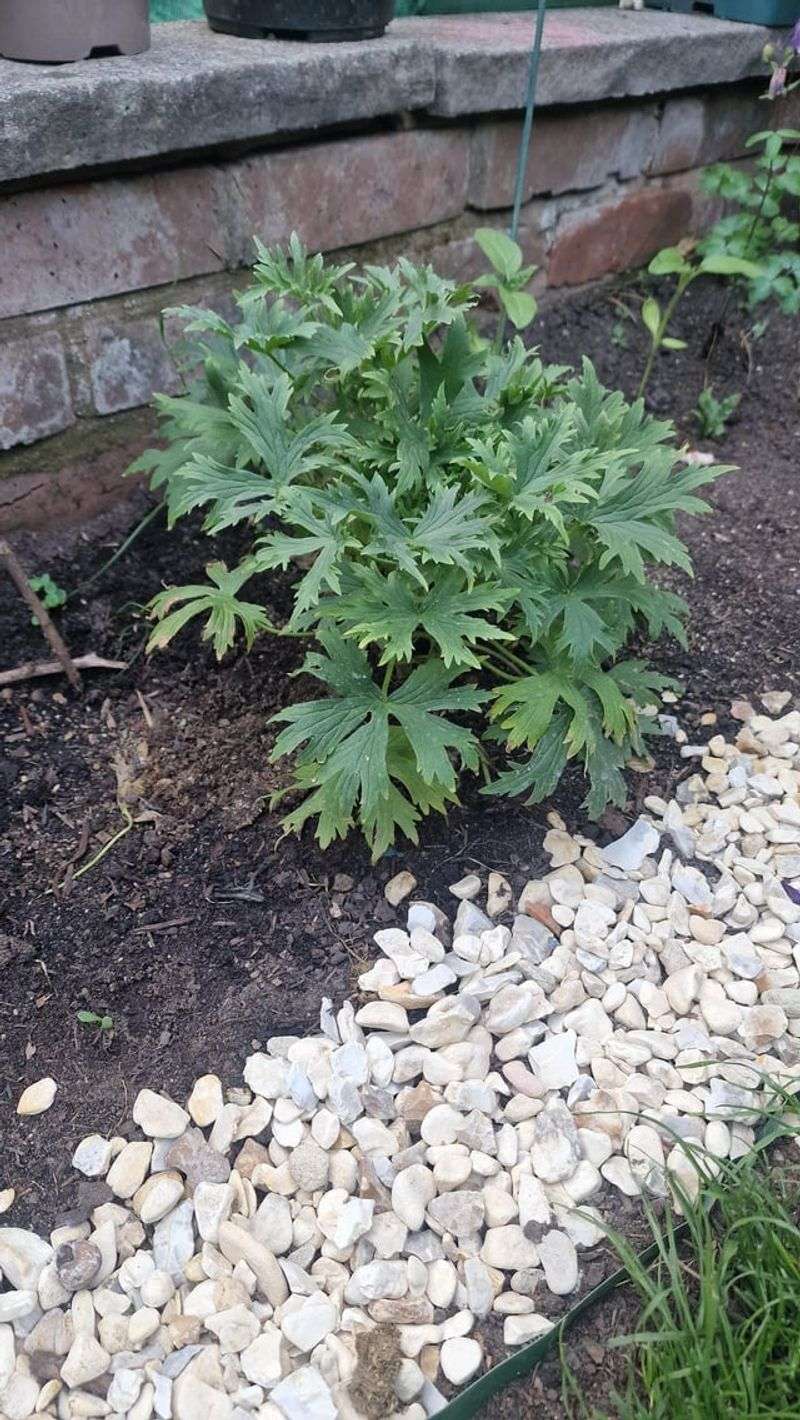
Success with Delphinium in Florida gardens starts with understanding one crucial fact: these plants perform best as cool-season annuals rather than perennials. Trying to keep them alive through our brutal summers leads to disappointment, so embrace the seasonal approach and you’ll enjoy spectacular results.
Plant transplants in fall, enjoy months of incredible blooms, then replace them with heat-lovers when temperatures climb.
Site selection makes an enormous difference in bloom quality and plant performance. Choose locations that receive morning sun and afternoon shade, especially in Central and South Florida where midday heat arrives earlier in the season.
This light pattern gives plants the energy they need for strong growth while protecting them from stress that can shorten bloom periods or reduce flower quality.
Soil preparation shouldn’t be complicated, but it does matter. Delphinium prefers well-draining soil enriched with compost or aged manure, which provides nutrients while improving soil structure.
If your native soil is heavy clay or pure sand, work in several inches of organic matter before planting to create the ideal growing environment.
Water consistently but avoid keeping soil soggy, as Delphinium roots need oxygen and will suffer in waterlogged conditions. A two to three-inch layer of mulch helps regulate soil moisture and temperature while reducing weed competition.
7. Smart Planting Moves That Boost Bloom Performance
Timing your Delphinium planting correctly separates gardeners who get decent results from those who achieve truly spectacular displays. North Florida gardeners should aim for September or October planting, giving plants time to establish strong root systems before cold snaps arrive.
Central Florida growers can wait until late October or early November, while South Florida gardeners often find November or even early December works best.
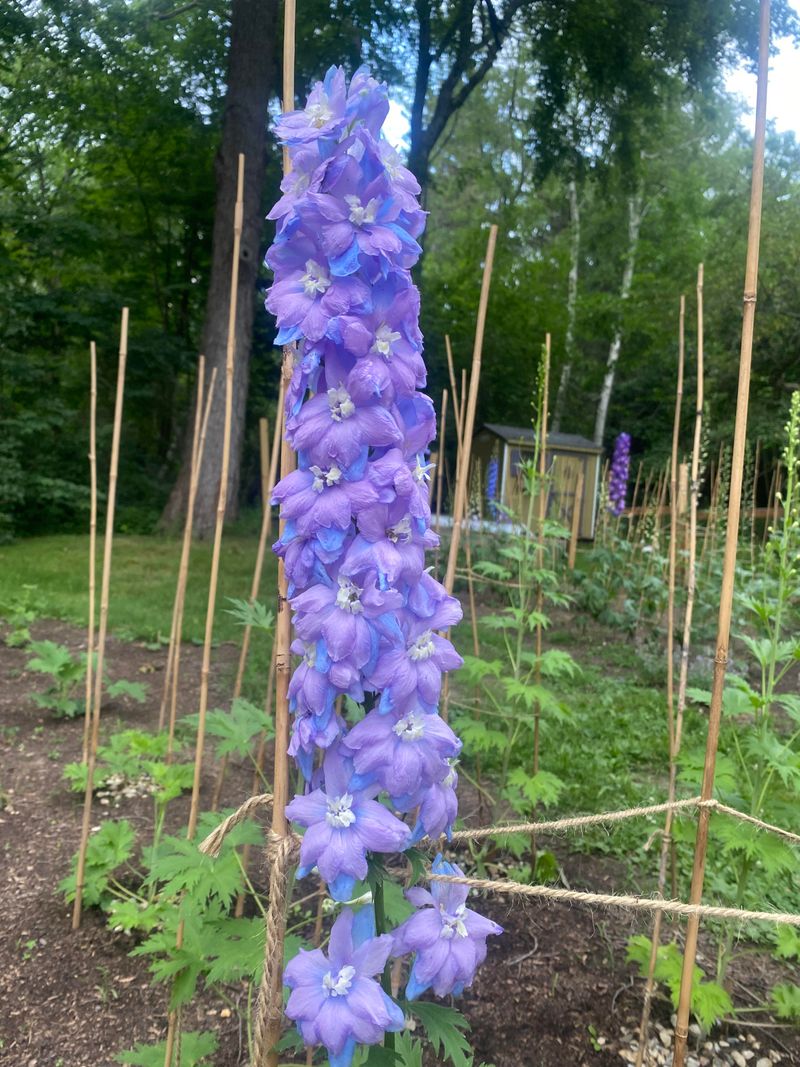
Staking becomes essential as flower spikes develop, especially if you’re growing taller varieties that can reach four feet or more. Install stakes or plant supports early, before spikes emerge, to avoid damaging roots later.
Bamboo stakes work well, or you can use decorative plant supports that add visual interest while serving a practical purpose.
Fertilization strategy affects both bloom quantity and spike height. Apply a balanced, slow-release fertilizer at planting time.
Avoid excessive phosphorus unless a soil test indicates deficiency, since Florida soils often already contain adequate levels. University of Florida IFAS Extension recommends avoiding excessive nitrogen, which promotes leafy growth at the expense of flowers.
Deadheading spent flower spikes encourages some varieties to produce secondary blooms, extending your display by several weeks. Cut the main spike back to a side shoot once flowers fade, and you might be rewarded with additional blooms before warm weather arrives and signals the end of the season.
8. Why Delphinium Belongs In Florida Yards This Year
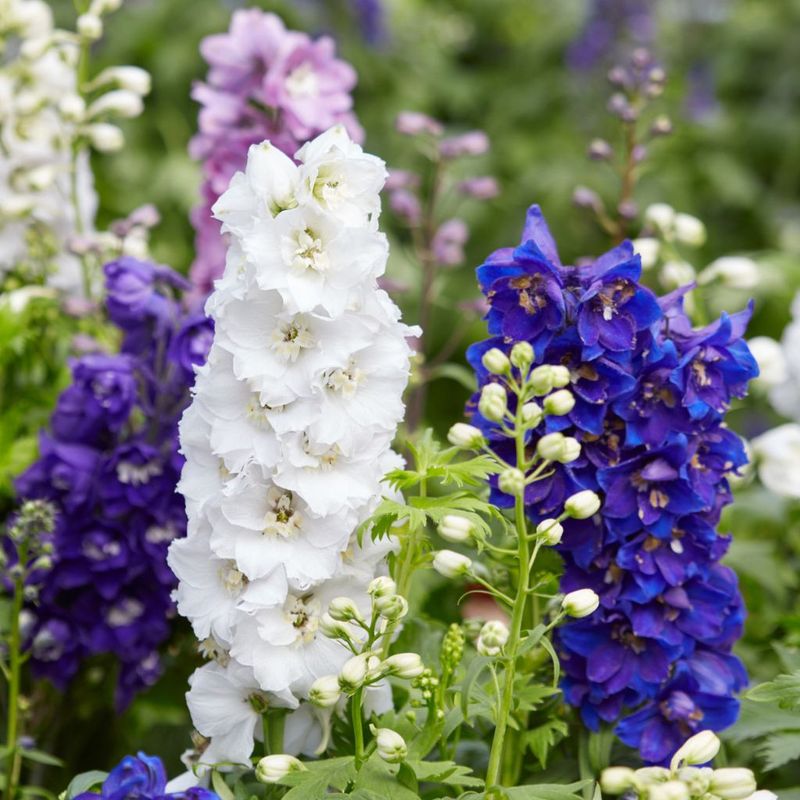
Garden trends come and go, but Delphinium’s rise to prominence reflects something deeper than fleeting fashion. Florida homeowners are increasingly seeking plants that deliver wow-factor without requiring expert-level skills or excessive maintenance.
Delphinium fits this description perfectly when grown as a seasonal spectacular, offering professional-looking results that feel achievable for gardeners at any experience level.
The architectural quality of Delphinium spikes adds a design element that’s difficult to replicate with other common garden plants. Those vertical lines create structure and formality when desired, or they can soften cottage gardens with their old-fashioned charm.
This versatility means Delphinium works in contemporary landscapes just as well as traditional settings, adapting to your personal style preferences.
Photography-worthy gardens have become important to homeowners who share their outdoor spaces on social media or simply take pride in creating beautiful surroundings. Delphinium plants photograph exceptionally well, providing focal points that make your entire landscape look more polished and intentional.
The dramatic height and intense colors create natural eye-catchers that elevate the overall impression of your property.
Economic value shouldn’t be overlooked either. A few Delphinium plants can deliver strong visual impact compared to many low-growing annuals, potentially helping reduce overcrowding while increasing design impact.