This One Fertilizing Trick Will Make Your Texas Tomatoes Bigger And Tastier
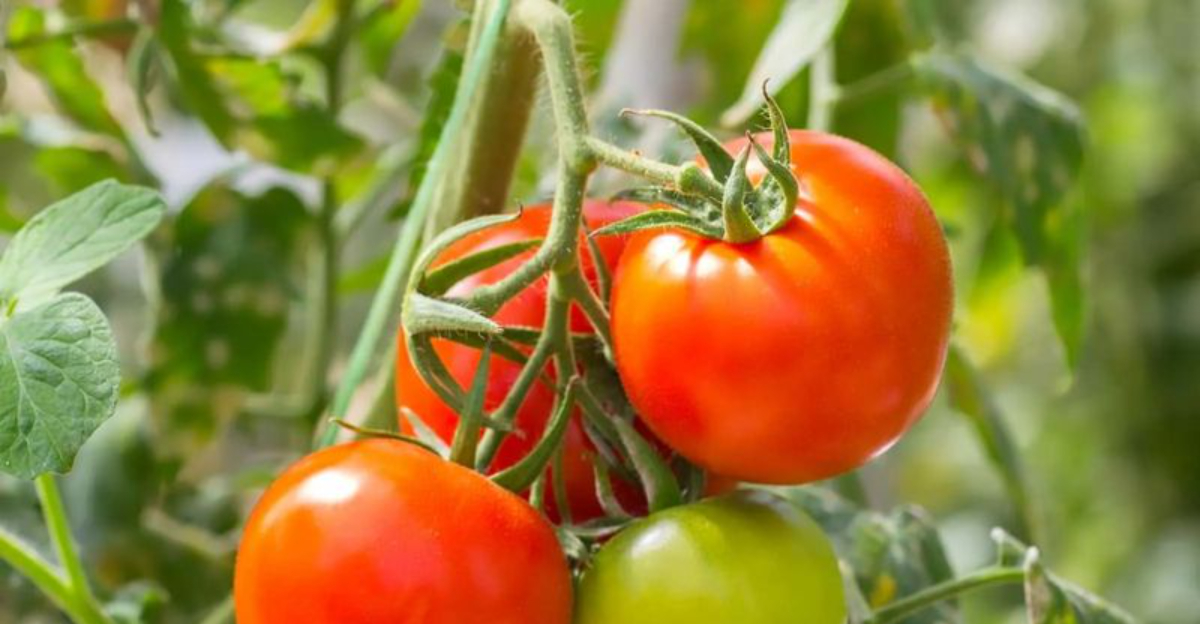
Want to grow bigger, juicier tomatoes in your Texas garden this year? There’s one simple trick that many gardeners overlook, and it all comes down to switching your fertilizer at just the right time.
Early in the growing season, tomatoes need a boost of nitrogen to build strong, leafy plants. But once flowering begins, continuing with high-nitrogen fertilizer can actually hold your tomatoes back.
That’s when it’s time to switch to a phosphorus-rich formula that supports healthy blooms and encourages fruit production. This small change in timing makes a big difference, helping your plants shift energy from leaves to tomatoes.
In Texas, where sun and heat are on your side, the right fertilizer at flowering can turn good tomatoes into great ones. If you’re ready for a bigger, tastier harvest, this one fertilizing trick could be the game-changer your tomato patch needs.
1. Why Fertilizer Timing Matters More Than Amount
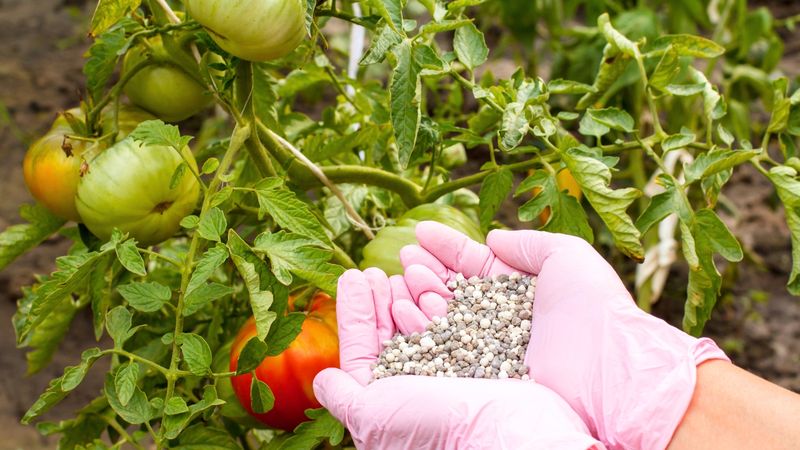
Many gardeners believe that more fertilizer equals more tomatoes, but that’s not how it works. The timing of when you feed your plants is far more important than how much you give them.
If you fertilize at the wrong time, you might end up with a huge, leafy plant that looks healthy but produces very few tomatoes.
Tomato plants go through different growth stages, and each stage needs different nutrients. Early on, tomatoes need nitrogen to build strong stems and leaves.
But once the plant starts flowering, too much nitrogen becomes a problem. The plant keeps making leaves instead of focusing energy on flowers and fruit. Think of it like feeding a child. A growing kid needs certain foods at certain times.
You wouldn’t give them a heavy meal right before bedtime because their body needs different things at night. Tomato plants work the same way.
When they’re young, they need building blocks for growth. When they start flowering, they need energy for making fruit.
Texas gardeners often see this problem during the hot growing season. Their tomato plants grow tall and bushy with dark green leaves, but the fruit production is disappointing.
This happens because they keep using the same fertilizer throughout the entire growing season. The nitrogen that helped early growth is now working against fruit production.
Understanding this timing difference is the first step to growing bigger, tastier tomatoes in Texas. Once you adjust your fertilizing schedule to match your plant’s needs, you’ll see amazing results.
2. The Common Tomato Fertilizing Mistake Texas Gardeners Make
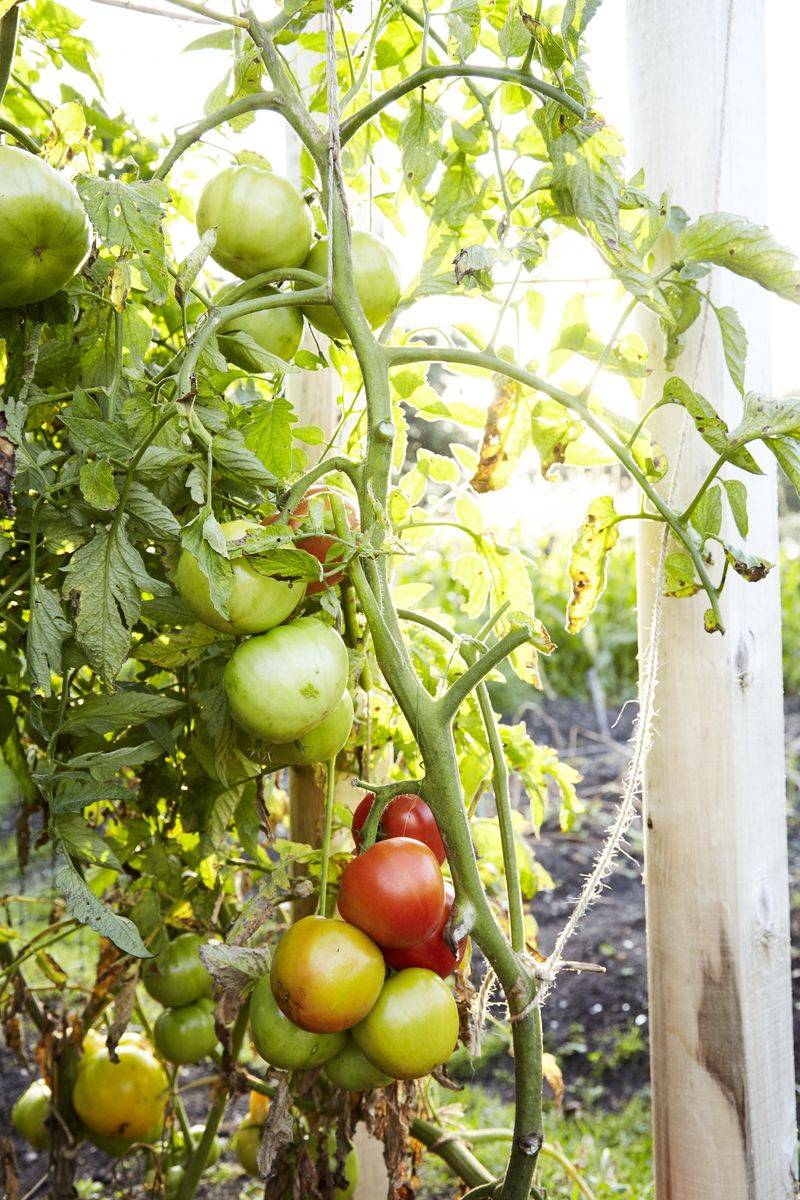
Walk into any garden center in Texas and you’ll see shelves packed with all-purpose fertilizers. These products usually have high nitrogen numbers on the label, like 10-10-10 or 20-20-20.
Many gardeners grab these fertilizers and use them all season long without thinking twice. This is the biggest mistake you can make when growing tomatoes.
Nitrogen is the first number on fertilizer packages, and it’s responsible for leafy green growth. When tomato plants are young seedlings, they do need some nitrogen to develop strong stems and healthy leaves.
Your Texas Garden Changes Every Week. Your Plan Should Too.
Gardening in Texas changes quickly throughout the season. Every Friday you’ll receive a simple weekly plan showing exactly what to plant, prune, fertilize, harvest, and protect so you never miss the right timing.
But if you keep feeding high-nitrogen fertilizer after the plants start flowering, you’re sending the wrong message. The plant thinks it should keep growing bigger and bushier instead of making tomatoes.
Texas gardeners fall into this trap more often than others because the long, hot growing season makes them want to keep their plants fed constantly. They see their neighbor’s tomato plants and think more fertilizer will make theirs better.
So they keep adding that high-nitrogen fertilizer every week or two. The result is massive plants that look impressive but produce small harvests.
Some gardeners even use lawn fertilizer on their vegetable gardens, which is extremely high in nitrogen. This makes the problem even worse.
Your tomato plants end up spending all their energy on leaf production instead of fruit development. Breaking this habit is essential for growing better tomatoes in Texas.
Once you stop overusing nitrogen-rich fertilizers, your plants can finally focus on what matters most: producing big, delicious tomatoes.
3. The One Fertilizing Trick That Changes Everything
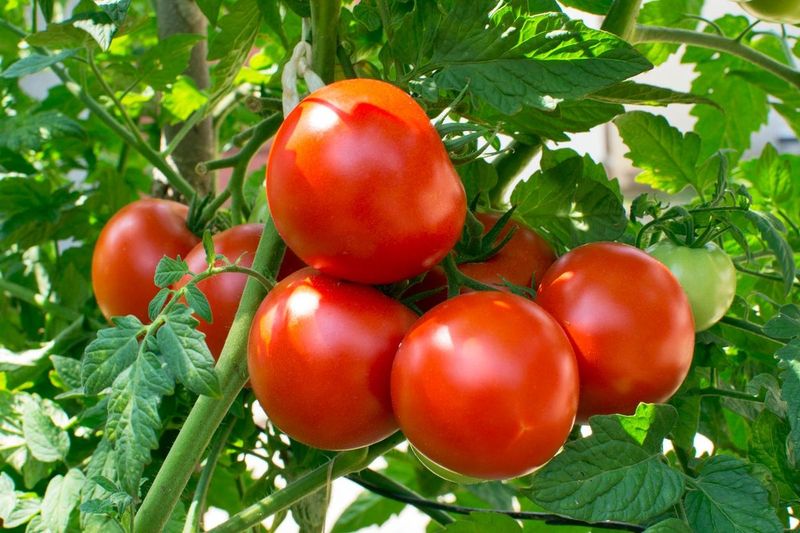
Ready for the secret that will transform your tomato harvest? Switch to a low-nitrogen, higher-potassium fertilizer as soon as your tomato plants start flowering.
This simple change tells your plants to stop making leaves and start making fruit. Potassium is the third number on fertilizer packages, and it’s the nutrient responsible for flower and fruit development.
Look for fertilizers with numbers like 5-10-10 or 4-6-8, where the first number (nitrogen) is lower than the others. Some fertilizers are specifically labeled as “tomato fertilizer” or “bloom booster,” and these work perfectly.
The higher potassium content signals your plant that it’s time to produce flowers and fruit instead of just growing bigger.
The best time to make this switch in Texas is when you see the first yellow flowers appearing on your tomato plants. This usually happens a few weeks after transplanting, depending on the variety.
Once those flowers show up, stop using your high-nitrogen fertilizer immediately. Mix up your new low-nitrogen, high-potassium fertilizer according to package directions and apply it to the soil around your plants.
You’ll notice a difference within a couple of weeks. Your plants will start setting more fruit, and the tomatoes will grow larger and develop better flavor.
Texas heat can stress tomato plants, but the right fertilizer helps them stay productive even in tough conditions. This trick works because you’re working with your plant’s natural growth cycle instead of against it.
The potassium helps flowers turn into fruit and improves the overall quality of your tomatoes, making them sweeter and more flavorful.
4. What Fertilizer To Use At Each Growth Stage
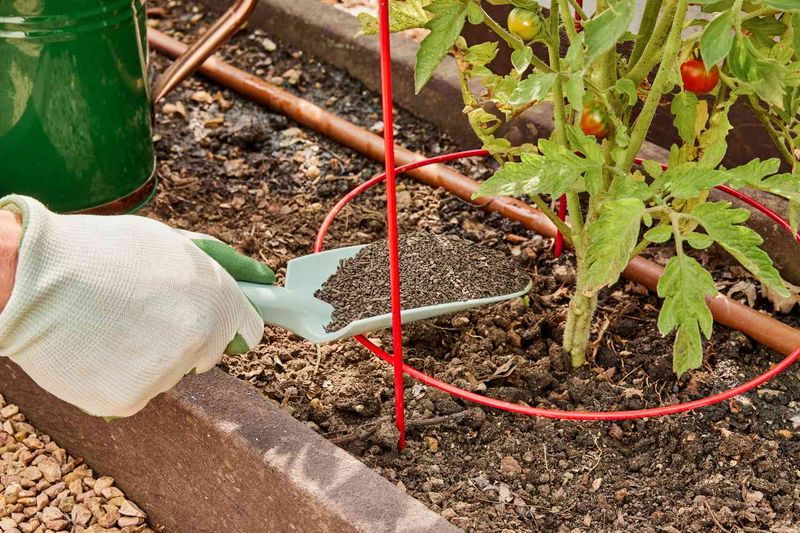
Breaking down your fertilizing schedule into specific growth stages makes everything easier. During the early growth stage, right after transplanting your tomato seedlings, you can use a balanced fertilizer with equal numbers like 10-10-10.
Apply this every two weeks for the first month. This helps your young plants develop strong root systems and healthy leaves.
When your plants reach about 12 to 18 inches tall and start showing flower buds, it’s time for the big switch. Stop the balanced fertilizer and move to a low-nitrogen option with higher potassium, like 5-10-10 or similar.
Continue feeding with this formula every two weeks throughout the flowering stage. This encourages your plants to produce more flowers, which means more tomatoes later.
Once your tomatoes start forming and growing larger, you’re in the fruiting stage. This is when your plants need the most potassium to develop big, flavorful tomatoes.
Keep using that same low-nitrogen, high-potassium fertilizer, but you might increase feeding to once a week if your plants are producing heavily. Some Texas gardeners also add a liquid fertilizer for faster absorption during this critical stage.
During the late season in Texas, usually in the hottest part of summer, your plants might slow down a bit. Reduce fertilizing to every two or three weeks during this time.
Too much fertilizer in extreme heat can actually stress plants more. As temperatures cool down in fall and your plants perk up again, resume regular feeding.
Following this stage-by-stage approach ensures your tomato plants get exactly what they need when they need it for maximum production.
5. How Texas Heat Affects Tomato Nutrient Needs
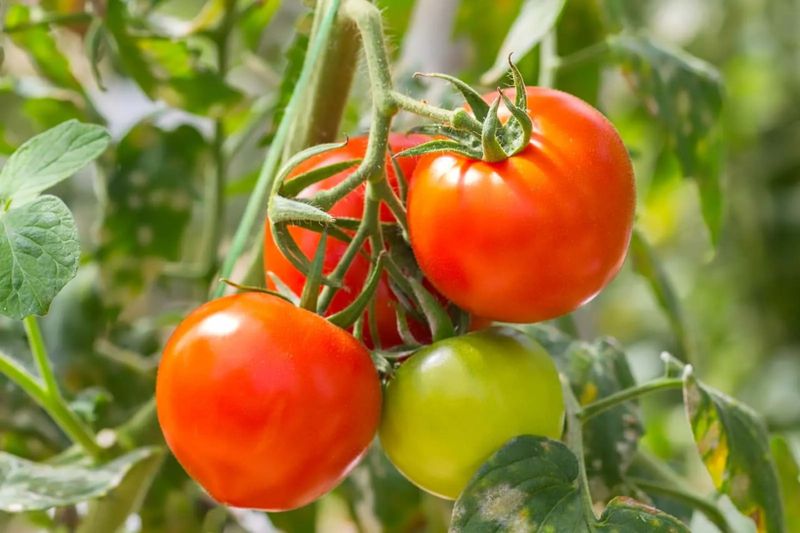
Texas heat changes everything about growing tomatoes, including how they use fertilizer. When temperatures climb above 90 degrees, which happens frequently during Texas summers, tomato plants go into survival mode.
They slow down their growth and fruit production to conserve energy. This means they also use nutrients differently than tomatoes growing in cooler climates.
High temperatures cause nutrients to break down faster in the soil. Nitrogen, in particular, becomes less stable in hot conditions and can leach away quickly.
This might make you think you need to add more fertilizer, but that’s not always the answer. Too much fertilizer during extreme heat can burn your plants’ roots and make them even more stressed.
The potassium fertilizing trick becomes especially important in Texas because potassium helps plants handle heat stress better. It strengthens cell walls and helps plants regulate water use, which is critical when temperatures soar.
Tomatoes with adequate potassium are more likely to keep producing fruit even during hot spells. They’re also better at fighting off diseases that thrive in warm, humid Texas conditions.
Another factor is that Texas soil varies widely across the state. Some areas have alkaline soil, which can lock up certain nutrients and make them unavailable to plants.
Using the right fertilizer at the right time helps overcome these soil challenges. The switch to higher potassium during flowering is even more crucial in Texas because your plants need that extra boost to perform well in the heat.
Many successful Texas tomato growers also water deeply before fertilizing to help nutrients reach the roots more effectively in the hot, dry soil.
6. Extra Tips To Boost Tomato Size And Flavor
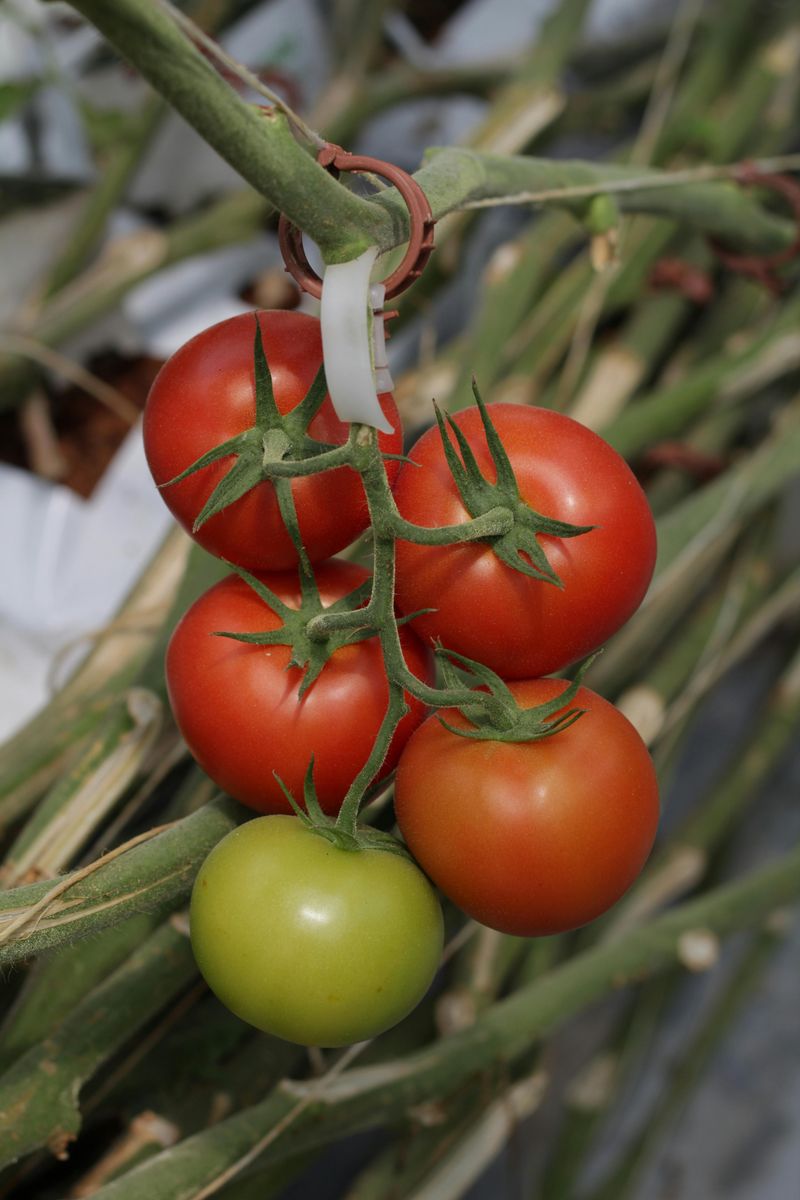
Beyond the main fertilizing trick, several other practices can help you grow even better tomatoes in Texas. Adding calcium to your soil is important because it prevents blossom end rot, a common problem where the bottom of tomatoes turns black and mushy.
You can add calcium by mixing crushed eggshells into the soil or using a calcium spray on your plants every few weeks.
Your watering schedule matters just as much as fertilizing. Tomatoes need consistent moisture, especially when they’re flowering and fruiting.
Water deeply two or three times per week rather than giving shallow water every day. Deep watering encourages strong root growth and helps nutrients move through the soil.
In Texas heat, morning watering is best because it gives plants moisture before the hottest part of the day.
Mulching around your tomato plants keeps soil temperatures more stable and holds in moisture. Use 2 to 3 inches of organic mulch like straw, wood chips, or shredded leaves.
This is especially helpful in Texas where soil can get extremely hot and dry out quickly. Mulch also prevents nutrients from washing away during heavy rains.
Finally, don’t overfeed your plants. More fertilizer doesn’t always mean better results.
Stick to a regular schedule of feeding every two weeks with your low-nitrogen, high-potassium fertilizer during flowering and fruiting. If your plants look healthy with dark green leaves and are producing well, they’re getting enough nutrients.
Yellow leaves or slow growth might mean you need to adjust your feeding, but resist the urge to dump on extra fertilizer. Patience and consistency will reward you with the biggest, tastiest tomatoes your Texas garden has ever produced.